Afghanistan War, Civil Liberties, FBI Intrusion, Guantanamo, Habeas Corpus, Human Rights, Iraq War, Military Tribunal, Surveillance, Targeting Muslims, Torture, Truth to Power
Podcast: Play in new window | Download
WBAI Listeners Click Here For June 1, Rundown
Torture And The Need For Justice – Wednesday June 3, at the New York Society For Ethical Culture.
Updates:
Obama’s Animal Farm: Bigger, Bloodier Wars Equal Peace and Justice
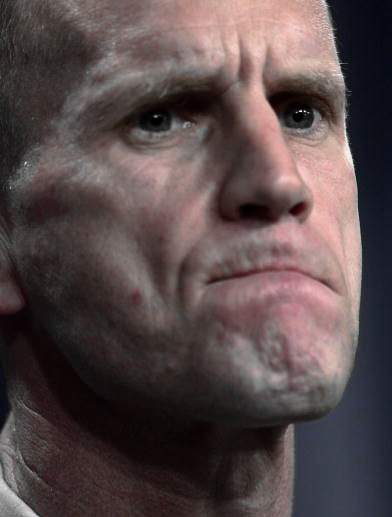
Here on Law and Disorder we recently talked with several guests on the escalation of war in Afghanistan under the Obama Administration. Last week Obama appointed General Stanley McChrystal to head the US and NATO military command in Afghanistan, – another decision revealing how Obama has restored the most notorious Bush era policies according to James Petra, a former Professor of Sociology at Binghamton University, New York. In his article titled Obama’s Animal Farm: Bigger, Bloodier Wars, Petra outlines how McChrystal’s past brutal leadership is marked by systematic torture, bombing of civilian communities and extrajudicial assassinations. Between September 2003 and August 2008, Petra writes – McChrystal directed the Pentagon’s Joint Special Operations Command which operates special teams in overseas assassinations. Petra also mentions that McChrystal is one reason why Obama is fighting to prevent the release of graphic photos that document torture by US soldiers and interrogators. Related: Mysterious Chip-CIA’s Latest Weapon Against Taliban.
Jim Petras:
- It’s very clear that Obama wants a bigger and more ferocious counterinsurgency program.
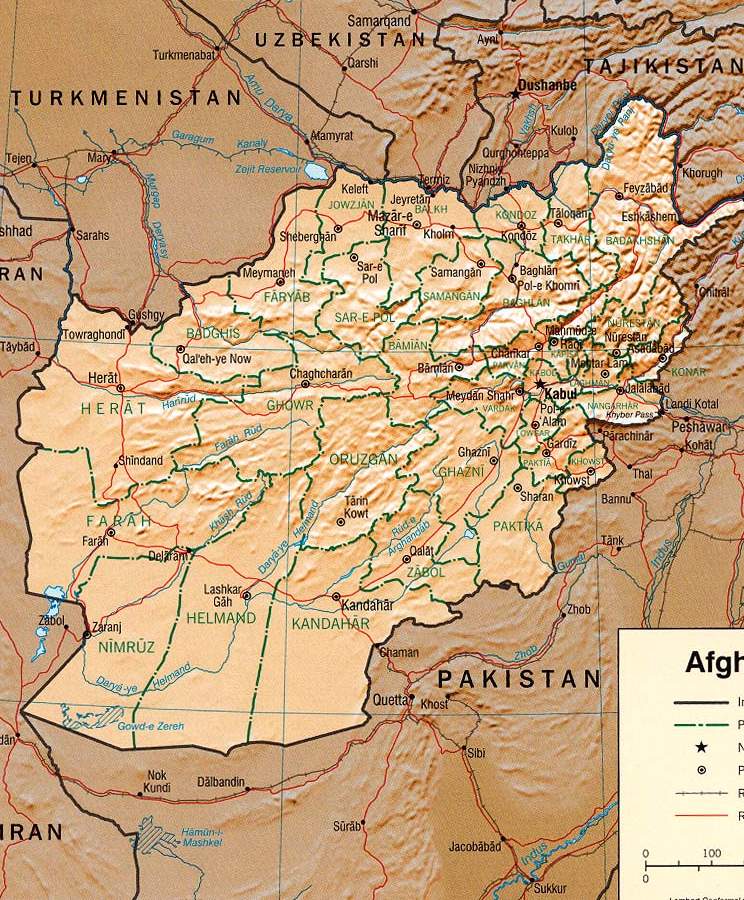
- Obama is also concerned because the entire Pakistan and Afghanistan borders are supporting resistance. Indigenous, anti-colonial forces have taken over.
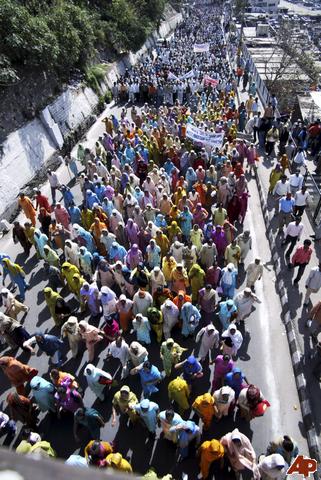
- He’s going all out now, he’s pressured the puppet president of Pakistan to launch this humanitarian crime against the Pakistani people, creating 2 million Pakistani refugees, destruction and civil war.
- The overall picture that we get is a tremendous boost in militarization. In the last couple of months it’s one attack after another on the Pakistan military.
- McCrystal is gung-ho, he’s a greater asset to destroy the social networks among the resistance. Similar to Vietnam, to go into villages and assassinate local leaders.
- General McCrystal is a proponent of direct action strictly involved in US terrrorist operations. Slitting throats and strangling anyone remotely connected with the armed resistance.
- There was effort to distinguish between civilians and armed resistors. McCrystals approach is to empty the pond to catch the fish. There going in to drive out millions of people in Pakistan to catch a few thousand resistance fighters.
- This is a monstrous humanitarian disaster compared to Rwanda.
- Torture Photos: You can’t publicize the worst activities of the person you appoint to be the head honcho in this phase of the war.
- Navy Seals, Delta Force, Special Operations Command. I was at Ft. Bragg, in a debate with military officers regarding death squads in Central America. These are killing operations, no surrender. The people that go into it are psycopaths.
- That Obama appointed McCrystal to this position builds bridges back to the worst part of the Bush Administration. Obama has accepted the general paradigm of the past presidents, he has a vision of military empire building, rather than realizing that much more power is achieved in economic expansion and investment.
- The US thought they could do both, economic and military empire building, but with the loss of manufacturing and rise of financial businesses there was no counterweight to the military side of empire. American power can only be realized through a massive military commitment.
- This is a war against a people, it’s going to be a long dirty war. It’s already shaping up. It’s a cost for big oil and manufacturing, rather than a benefit.
Guest – James Petras, a former Professor of Sociology at Binghamton University, New York, owns a 50_year membership in the class struggle, is an adviser to the landless and jobless in Brazil and Argentina, and is co_author of Globalization Unmasked (Zed Books). His latest books are The Power of Israel in the United States (Clarity Press, 2006); Rulers and Ruled in the US Empire: Bankers, Zionists, Militants (Clarity Press, 2007) and Zionism, Militarism and the Decline of US Power (Clarity Press 2008)
—

Gringo – A Coming of Age in Latin America
In the book Gringo – A Coming of Age in Latin America, author Chesa Boudin travels through parts of Venezuela, the streets of Guatemala and to protests in Santiago. Boudin’s narrative chronicles nearly a decade of on-the-road experiences in Latin America. He’s captured the transformation in Latin American politics through the voices of the wealthy and the desperately poor.
One review called Gringo, a quote – compelling firsthand account of the unregulated greed, social neglect, and deliberate misrule that has provoked so many Latin Americans to demand a better life for themselves and their children.”
Seymour Hersch says in another review, it’s quote – cheap beer, fried plantains, long dusty bus rides, radical politics, the repeated kindness of desperately poor people sharing what they have with an outsider, and Chesa Boudin’s eagerness to share what he’s seeing and what he’s feeling, with sympathy and empathy __ as he tries to sort it all out. There’s much to learn in this book.”
Chesa Boudin:
- This is a book that weaves together two different threads. One is my own personal journey, my own effort to make sense of my identity, my place in the world as a white, priveledged North American man. But also, in the context of where I was traveling, working and studying in Latin America at a time when the region was experiencing a dramatic political shift to the left.
- I had grown up in a very political family. All 4 of my parents had been very involved in the anti-war movement. Both of my biological parents Kathy Boudin and David Gilbert were incarcerated in New York State maximum security prisons.
- I grew up in two very different worlds, one of prison and one of privelege and opportunity.
- I took public buses mainly, interacted with the poorest and most humble as well as the elite rich.
- I went to Guatemala and from there I went to Chile, which was a classic example of what Naomi Klein writes about in the Shock Doctrine of the US with Pinochet imposing the neo-liberal model on the people.
- I sat for hours and hours in line to change money into pesos, I watched entire families digging through garbage on the street.
- The irony Michael is that I found time and again, the most downtrodden, the most humble, the ones living 17 people in a 2 bed room apartment that took me in. Those were the ones that were the most generous.
- When the political and economic models come out of Washington, it became difficult to fathom what another government approach would look like.
- In Venezuela, I watched the recreation of system based not on shutting people out but rather giving them a stake in the day to day functioning of their government and empowering poor people.
- Instead of having people from another country or economic class come in and tell them what they need to do.
- Venezuela is exciting, its hard to predict what may happen. Ten years into Chavez’s presidency, an opposition opinion poll places him at 60 percent.
- One of the controversies in Venezuela is the constitutional reform of term limits.
- The people voted for this not only for the president but for other offices as well, the New York Times framed it as the downfall of democracy.
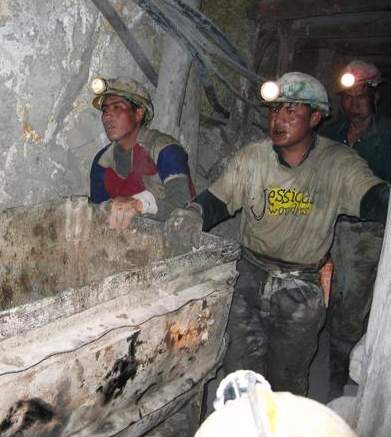
- Bolivia has been my favorite country to visit, it’s a beautiful country. Visiting the mines and talking with the miners is something I use as a lens to view the country’s current politics and the political development that led to the election of Evo Morales.
- One thing I’ve noticed in Bolivia is the left has gotten much more experience being critical from the outside then from actually learning to govern from the inside.
Guest – Chesa Boudin – a Rhodes Scholar, is a student at Yale Law School and author of Gringo: A Coming-of-Age in Latin America (Scribner)
—————————————————————————————-
Afghanistan War, Civil Liberties, Guantanamo, Habeas Corpus, Human Rights, Prosecution of the Bush Administration, Surveillance, Targeting Muslims, Torture, Truth to Power
Podcast: Play in new window | Download
Updates
——–

Jeremy Scahill – “Little Known Military Thug Squad Still Brutalizing Prisoners at Gitmo Under Obama”
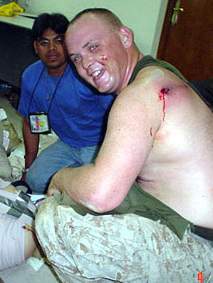
Author and independent journalist Jeremy Scahill delivers a rare report on the actions of the Immediate Reaction Force’s torture tactics with disturbing detail. While the Obama administration prevents the release of thousands of photos, Scahill describes the graphic imagery of the ongoing torture of prisoners in Guantanamo and in prisons abroad. Teams of men in padded gear enter the cell of a Guantanamo prisoner and are basically assigned body parts to restrain. Rarely heard about in the media, Scahill writes about the multiple accounts of severe beatings delivered by IRF teams that include sustained injuries such as broken noses, blindness and brain damage. In one incident a US soldier was IRF’d during a training exercise, he now suffers seizures up to 10 episodes a day.
Jeremy Scahill:
- The US has a one party system and Obama is showing that very clearly.
- On January 22, Obama said that Guantanamo would be closed in a year.
- Obama is continuing the use of a notorious military police unit at Guantanamo, known as the Immediate Reaction Force.
- They come into a cell, five men deep, they douse the prisoner with chemicals, each thug sent in is assigned a different body part and their job is to subdue restless or combative prisoners.
- This is not about stopping a riot in prison, or keep a prisoner from stabbing a guard. What’s going on is if a prisoner has an extra styro-foam cup in their cell, they are IRF’d.
- They have smeared feces of another prisoner onto the face of a prisoner.
- In one case that CCR has taken, a prisoner was doused with chemicals, beaten and the IRF team members urinate on his head.
- Scott Horton says this force was authorized at the highest levels of the Bush Administration.
- When you don’t prosecute those who set the tone for this torture, you encourage it, not allow it, you encourage it to continue.
- The Democratic Party is a shill for powerful corporations. Harry Reid implied that Guantanamo prisoners should not be moved to the US because they would be a threat to US security.
- The real danger here is to the US Constitution and the reality is that the torture program was bi-partisan.
- Nancy Pelosi’s participation in authorizing the torture program is not a partisan issue, it’s a law enforcement issue with grave implication to the United States and the world.
- Michael Ratner: Looking forward to a future without torture is guaranteed by prosecution, not impunity.
- I actually have people standing up and walking out on speeches, when I was criticizing Obama, a group of students at an American University walked out.
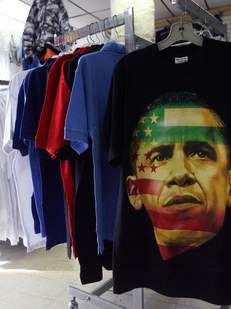
- Name the countries of the world where people walk around with the president’s face on their T-shirts.
- The facade is starting to crack. People are realizing now we are at a critical moment in history to reflect on the one party system that we have.
- Obama has sucked the air out of the social movements that were co-opted by the Democratic Party or willingly folded themselves into the Obama campaign mechanism.
Jeremy Scahill, an independent journalist who reports frequently for the national radio and TV program Democracy Now, has spent extensive time reporting from Iraq and Yugoslavia. He is currently a Puffin Writing fellow at The Nation Institute. Scahill is the author of Blackwater: The Rise of the World’s Most Powerful Mercenary Army. His writing and reporting is available at Rebel Reports.
—-
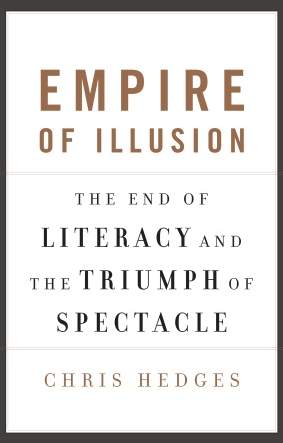
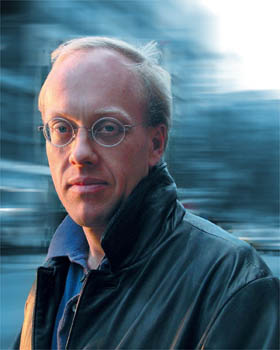
Chris Hedges – Buying Brand Obama
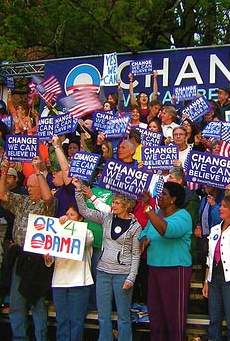
We’ve been duped. The global celebrity status of President Obama has been molded into a brand writes Chris Hedges, former Middle East bureau chief for the New York Times. Obama’s campaign was a marketer’s dream and won the vote of top marketer in Advertising Age magazine. Chris Hedges article, Buying Brand Obama takes a scathing look at how clever marketing diverts public attention away from critical issues such as the expansion of war, Obama’s rejection of single payer healthcare, his refusing to prosecute the Bush administration for war crimes and allowing Bush era surveillance and secrecy laws to remain intact.
Chris Hedges:
- There’s a wild disconnect between what Obama does and what he says that can only be cleverly bridged with illusion. That’s what his PR people do. That 600 million dollars of campaign funding had to go somewhere.
- Listen to the professionals: Obama Wins Ad.Age Marketer of the Year!
- He does one thing and he like any “brand” gets you to believe another.
- This started a while ago, if you remember Benetton ads, they used risque images and progressive politics to give themselves an edge. It is intended to make the passive consumer mistake a brand for an idea or experience.
- He (Obama) didn’t make many promises, it was sloganeering and the confusion of propaganda.
- It’s what Benjamin DeMott calls Junk Politics, in his book Junk Politics. Junk politics is not about demanding justice. It moralizes issues, it doesn’t clarify them. The result: Nothing Changes.
- Obama is a classic example of how re-branding allows for the disintegration of American democracy.
- Obama once again has followed the lead of the Bush Administration. It has spent, lent or guaranteed at this point 12 trillion dollars of tax payer dollars. Handed out to Wall St. and firms like AIG. It’s a bizarre effort to re-inflate a bubble through massive loans.
- This has forestalled catastrophe, but when that catastrophe comes, we’re going to be broke. . . that time will come at a profound crisis.
- The problem is not Obama, the problem is the American Left which forgot it’s place. Politics is a game of pressure and we don’t do that. Look at Moveon.org, it’s become an arm of the Obama campaign.
- I’m re-reading Notes From Underground by Fyodor Dostoevsky, what happens to a bankrupt liberalism which took hold of Russia in the latter part of the 19th century, moral nihilism.
- Allowing Americans to remain in this self delusional belief that everything is going to go back to the way it was and we are always going to be powerful and rich. . . . you’re essentially maintaining a population in a state of childishness. They never grow up because they never face reality.
- Book: Empire of Illusion – Post literate society, unable to discern lies from truth.
Guest – Chris Hedges, author of many books specializing in American and Middle Eastern politics and society. He spent nearly two decades as a foreign correspondent in Central America, the Middle East, Africa and the Balkans. He was also the Middle East bureau chief for The New York Times. Chris Hedges’ new book, “Empire of Illusion: The End of Literacy and the Triumph of Spectacle,” will be out in July and can be preordered at your local bookstore.
—————————————————————————
Censorship, Criminalizing Dissent, FBI Intrusion, Habeas Corpus, Human Rights, Impeachment, Iraq War, Prosecution of the Bush Administration, Supreme Court, Surveillance, Targeting Muslims, Truth to Power
Podcast: Play in new window | Download
Host Updates:
—

Unreasonable Intrusions Report
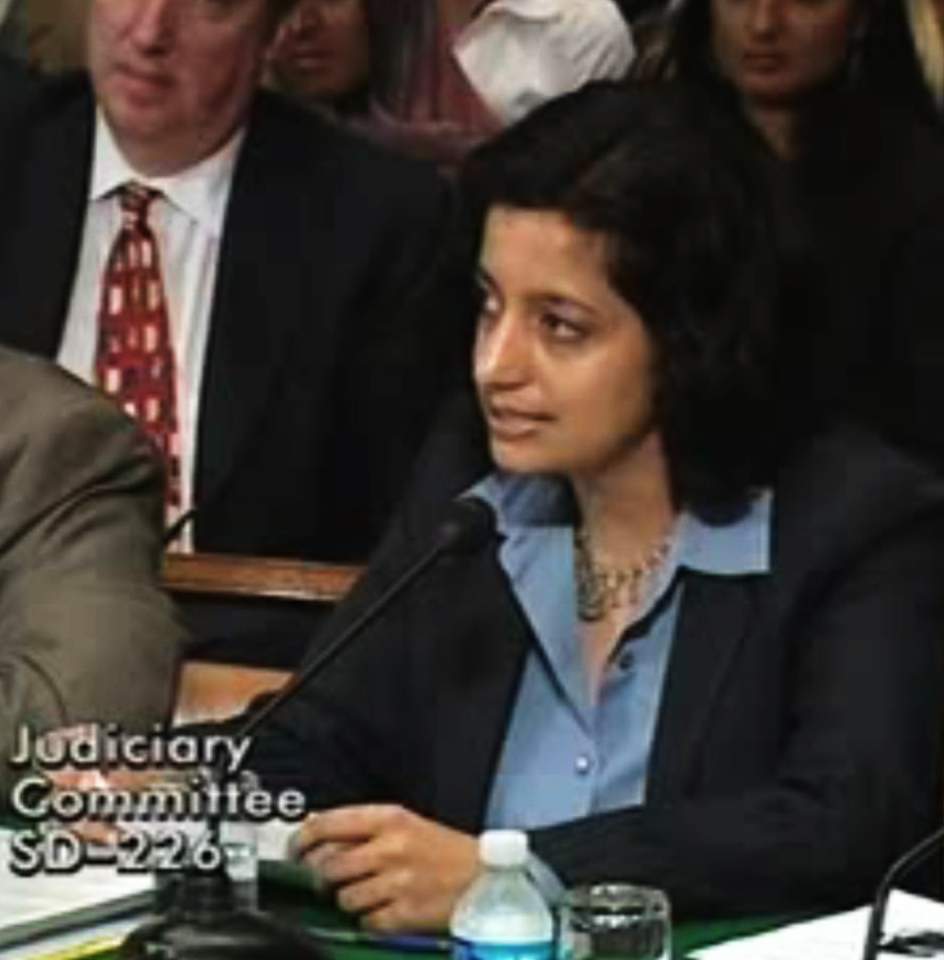
Last month, the Muslim Advocates released a report titled Unreasonable Intrusions: Investigating the Politics, Faith & Finances of Americans Returning Home. The report documents the systematic and widespread practice of federal agents interrogating Americans returning home after overseas travel at our nation’s borders and international airports. Muslim Advocates, a sister group with the National Association of Muslim Lawyers (NAML), which is a group of approximately 500 Muslim lawyers, law students and other legal professionals.
Farhana Khera:
- These are folks who are returning home from travel and they’re being stopped at borders, land crossings.
- After showing valid US passports, federal agents are engaging in very invasive questioning and searches of these Americans.
- Muslim or those Americans who may look Muslim.
- The questions (from border agents) go into first amendment protected areas. What mosque do you attend? How often do you pray?
- We want to educate federal policy makers, members of Congress, Homeland Security and the Obama Administration about this practice.
- Laptops, cameras and phones searched, in some cases asking about people in images, and how they particular individuals.
- Again, all of this without any evidence or suspicion.
- Ninth Circuit Decision US v Arnold, pretty much gives blanket authority to federal agents at the border to search laptops and electronic devices of law abiding Americans.
- We really need some standards in place that address the need of probable cause and reasonable suspicion before seizing personal data.
- We believe that Americans have the right to enter the country and not be compelled to answer questions, particularly about first amendment protected beliefs.
- We are giving practical advice in saying that you think this line of questioning is inappropriate. Get badge #’s of officers who have your stuff, then file a complaint.
- Traveler’s Privacy Protection Act – Proposed Legislation, to be re-introduced.
Guest – Farhana Khera, first Executive Director of Muslim Advocates and the National Association of Muslim Lawyers (NAML). Prior to joining Muslim Advocates and NAML in 2005, Ms. Khera was Counsel to the U.S. Senate Judiciary Committee, Subcommittee on the Constitution, Civil Rights, and Property Rights. In the Senate, she worked for six years directly for Senator Russell D. Feingold (D_WI), the Chairman of the Constitution Subcommittee. Ms. Khera focused substantially on the USA PATRIOT Act, racial and religious profiling, and other civil liberties issues raised by the government’s anti_terrorism policies since September 11, 2001. She was the Senator’s lead staff member in developing anti_racial profiling legislation and organizing subcommittee hearings on racial profiling.
—-
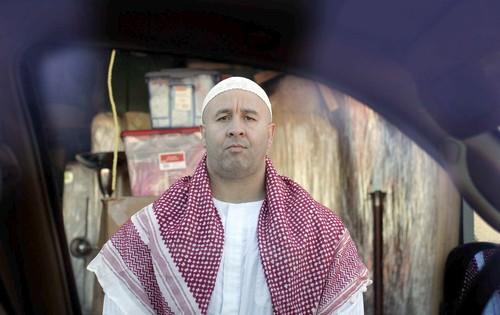

FBI Exposed: Federal Judge Orders FBI to Provide Full Muslim Surveillance Records
Last week a federal judge ordered the FBI to submit 100 documents detailing the bureau’s surveillance of Muslim leaders and organizations in Southern California and specifically, documents relating to the Council on American_Islamic Relations of Greater Los Angeles and its executive director. The court’s decision came in response to a 2007 lawsuit filed by the ACLU of Southern California that claimed the government’s incomplete and long_delayed response violated the Freedom of Information Act.
An attorney with the ACLU of Southern California says the surveillance records will show how the FBI infiltrated Southern California mosques and invasively monitored members of the Muslim community as if they were criminals.
“Truth can never be redacted. Only full disclosure will satisfy us and alleviate the pervasive fear in our communities and congregations,” said Shakeel Syed, executive director of the Islamic Shura Council of Southern California, who joins us today.
Shakeel Syed:
- It was confirmed in a court of law, under oath, that the FBI had employed informants, in one case, the informant was a former convicted felon.
- Craig Monteilh has multiple identities, he was given a different by the FBI and sent into one of the mosques.
- He embraced Islam proclaiming that he wanted to become Muslim and wanted to make his faith public.
- He abused the Islamic platform to gain trust in the community. The FBI told him the best way for you to infiltrate is to become Muslim and pretend to be a slow learner.
- The people at the mosque were alarmed when Craig Montel was encouraging others to blow up buildings in LA
- They called the FBI office on Craig Monteilh unaware that he was an informant. They brushed the report aside.
- Radiation monitoring of mosques
- We filed a FOIA request jointly not individually, which was good because what was suspected is now fully confirmed in the court of law that informants were paid as provocateurs in the area.
- In 2006, one of our members of the mosque, a student, ambushed an agent that was following him and he was apprehended by the University of Irvine campus police. We later filed a case against this individual and later never heard back from the campus police or the FBI.
- We received similar reports in our conversations with other community leaders in other areas such as Chicago, New York, Dallas, Detroit, Houston, Atlanta, Miami, San Francisco.
- It was revealed in some of the FBI surveillance documents that my private speeches were mentioned that were against the war in Iraq. Dalia Hashad – “They were in the mosque.”
- We continue to receive reports from the community on an almost ongoing basis from within the regions of Southern CA that the FBI has approached them to become informants, threatened them, intimidated them, offered them convenience of getting their naturalization papers expedited or immigration papers duly adjusted.
- I’m disgusted, but more emboldened to stand up and assert my rights.
Guest – Shakeel Syed, executive director of the Islamic Shura Council of Southern California.
———————————————————————————-
Afghanistan War, Civil Liberties, Extraordinary Rendition, Guantanamo, Habeas Corpus, Human Rights, Impeachment, Military Tribunal, Prosecution of the Bush Administration, Targeting Muslims, Torture, Truth to Power
Podcast: Play in new window | Download
Host Updates:
Hear more of the Jim Lehrer Newshour interview with Michael Ratner and Jeffrey Smith
—-
US To Escalate War in Afghanistan
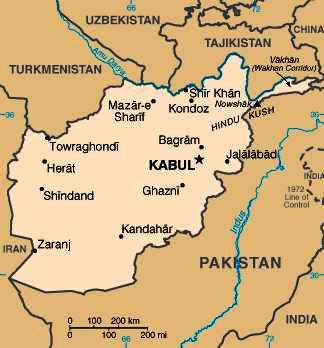
Nearly 15 thousand US troops have been recently committed to Afghanistan, and progressive think tanks are pushing the Obama Administration to send an additional 17 thousand which would bring the total to 70 thousand troops. Expansions are being built onto the Bagram prison, as mass incarceration is expected. Progressive Think Tank Tells Obama to Escalate
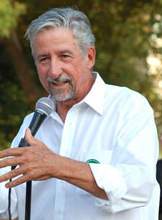
Tom Hayden:
- Global Phoenix Program – in testimony last week, 10 – 12 years overall to win the Afghanistan War. Two years of hard fighting, a couple extra billion dollars a month. I think they plan to send the troops into Southern Afghanistan and to take on the Taliban or who ever the local resistance forces are.
- I think people need to buckle their seat belts for a war. We’re going to have a war in Afghanistan that’s soft on torture. Where are the human rights groups, we’re sending US troops into a dirty war that incarcerates without evidence, tens of thousands of people.
- Center for American Progress – I’m disappointed in them, they’re usually good liberal democrats. Now they’ve come out for a military surge in Afghanistan.
- Obama has narrowed it down to one goal. Can we prevent Al-Quaeda from getting a base area from which they can attack Europe or the United States. The more we go into Pakistan with the predators and drones, the more Pakistan turns against us. It becomes a recruiting tool for more militants.
- The other way to go would be to address the grievances of the Muslim world that give al-queda some support base.
- 1. The US unconditional support for Israel
- 2. 150 thousand troops still in Iraq
- 3. US troops in countries where Muslims control their own oil.
- It’s all laid out in a book by Michael Scheuer -Imperial Hubris: Why the West is Losing the War on Terror
- I work very closely with Robert Greenwald at Brave New Foundation. Getting Afghanistan Right. There’s a huge sectarian problem in the anti-war movement. Nonetheless there’s always a peace and justice community in every city I go to.
- One wonders what it will take for someone in the House or Senate to stand up and say I want to lead the anti-war movement.
Guest – Political and social activist Tom Hayden joins us today to fill in the detail and time line in this escalation of war. Tom is also the author of Ending The War In Iraq.
—–
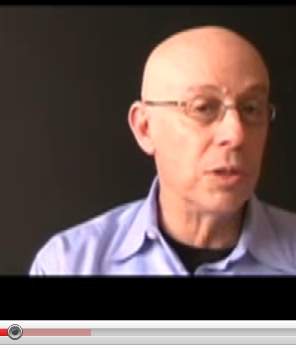
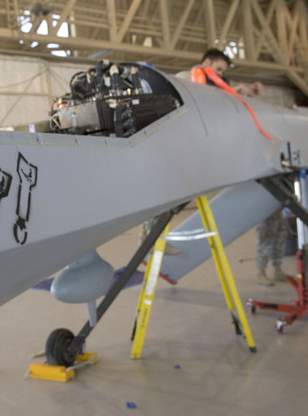
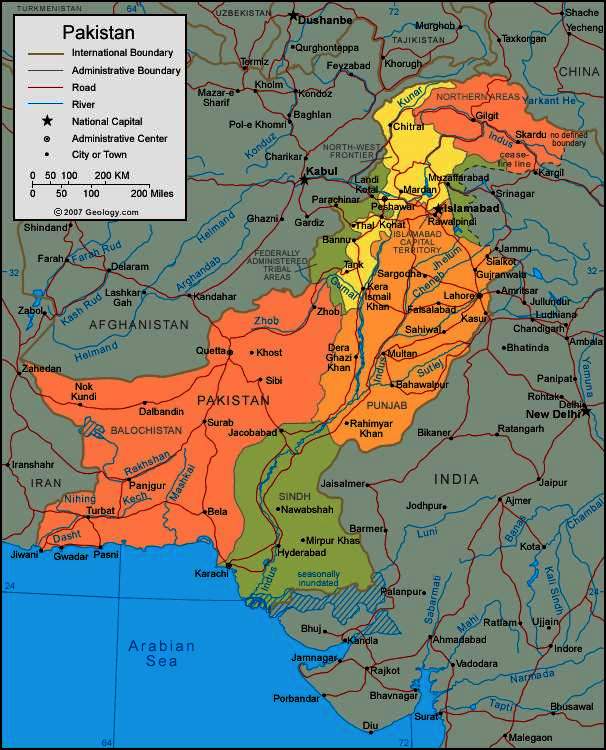
US War in Afghanistan and Pakistan – Follow Up
As tensions rise between Pakistan and the United States, President Obama recently mentioned that stability in Afghanistan depends on what will happen in Pakistan. The United States and Pakistan have been allies in their interest to purge Islamist extremism, however the two countries are now embroiled in miscommunication, drone wars and mistrust that is centered around a 10 billion dollar military aid fund. Analysts say the Obama administration is asking a lot from a fragile Pakistani government that has been in power for now only a year.
Michael Schwartz:
- President Obama’s speech – on Pakistan, tells the whole story. You have to unpack it.
- Not a lot of people have read the speech, Obama starts by saying a campaign against extremism will not succeed by bullets and bombs alone then he launches into the peaceful side of American policy.
- The US is planning to make Pakistan another outpost of globalization creating an opportunity for multinational corporations to invest into a local economy and basically take it over.
- What they’re saying is they’re trying to execute a policy to bring Pakistan into full economic domination of American capitalism. – a globalized version of American capitalism. The military aspect of this is only a part to secure the farthest reaches of the middle east, the part of instability.
- Obama’s speech is filled with being “adminstratively involved with Afghanistan and Pakistan.
- The delivery is profound American presence. American enterprises, adminstrators, experts, trainers, a kind of colonial presence, then on the other side of this, an integration into the global system.
- Private multinational enterprises will build schools, infrastructure.
- This same neo-liberal process has ocurred in Africa, South America and what we know about this process is that there is an extraction of large profits by these multinational corporations. The Taliban would set up a social organization that is incompatible with the globalized agenda, so you can see this as a counter-insurgency maneuver.
- The military part of this is that they’re not going to be able to do this in a peaceful way, they’re going to have to conquer the area.
- In a period of two years with more than 90 drone attacks have killed 5000 innocent Pakistanis. They want to kill civilians
- The sense that people are waiting to see whether Obama and Congress move to escalate the war is a big part of the lack of energy in the anti-war movement.
- These are colonial wars, because the United States seeks to have a real administrative hold over these countries.
- The United States can’t withdraw from Afghanistan because it borders on the three Caspian Sea oil companies. Those oil companies are gravitating toward China and Russia in the grand scheme of things.
- Regarding the Poppy agriculture in Afghanistan, the Taliban had gotten rid of the poppies, since the US had invaded Afghanistan, the poppy agriculture has come backWe talk today with Michael Schwartz about the current relations amid Pakistan, the United States and the war in Afghanistan.
- $1.5 billion in direct support to the Pakistani people every year over the next five years – resources that will build schools, roads, and hospitals, and strengthen Pakistan’s democracy. I’m also calling on Congress to pass a bipartisan bill co-sponsored by Maria Cantwell, Chris Van Hollen and Peter Hoekstra that creates opportunity zones in the border region to develop the economy and bring hope to places plagued by violence. And we will ask our friends and allies to do their part – including at the donors conference in Tokyo next month.
Guest – Michael Schwartz is a professor of Sociology and Faculty Director of the Undergraduate College of Global Studies at Stony Brook University, has written extensively on popular protest and insurgency as well as on American business and government dynamics. His books include the recently published War Without End.
———
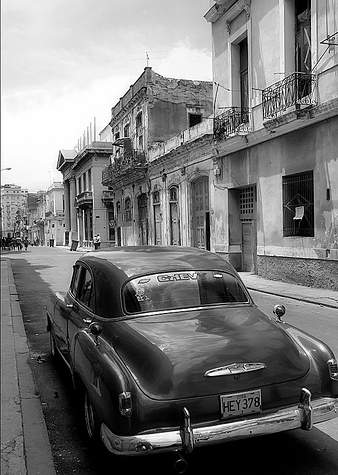
Cuba, South America and the Summit of the Americas
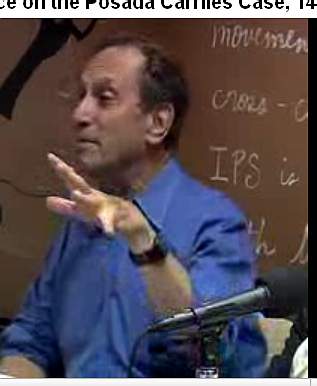
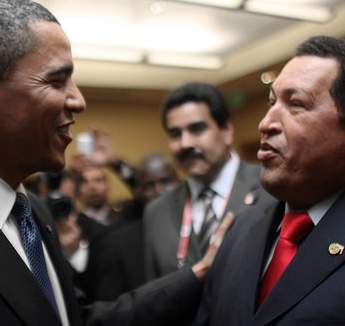
Earlier this year we spoke with film maker and Cuban scholar Saul Landau about the Cuban 50th anniversary and its significance. Now Saul describes the changes we can expect with regard to Cuban / US relations from the Obama Administration. The discussion also covers some detail of the recent talks at the Summit of the Americas in Trinidad.
Saul Landau:
- Obama has allowed Cuban Americans to travel freely to Cuba and allowing more loose travel regulations as well.
- What can Cuba really do except to promise to stop hitting the US in the fist with its face.
- What did Cuba do to the United States to merit 50 years of punishment?
- I don’t think Cubans are prepared to have 100 thousand Spring Breakers descend upon Havana.
- Nor are they prepared for American investors with big wads of cash, trying to buy up everybody and everything that they see.
- I think Obama is one of the cleverist, winsome, brightest people I can ever imagine, he’s a hard man to resist. But you have to get behind his optimistic rhetoric, his humility, his smile and his handshake and remember that prize fighters also shake hands before the first round.
- Cuba will have a lower profile in the future, we’ve seen the most publicity we’re going to see for quite a while now.
- I think things are little better, they’re a little quieter and less hostile. I think Cuba has its own problems that it really has to deal with
Guest – Saul Landau is an internationally known author, commentator, and film maker on foreign and domestic policy issues. Landau’s most widely praised achievements are the over forty films he has produced on social, political and historical issues, and worldwide human rights, for which he won the Letelier-Moffitt Human Rights Award, the George Polk Award for Investigative Reporting, and the First Amendment Award, as well as an Emmy for “Paul Jacobs and the Nuclear Gang.” In 2008, the Chilean government presented him withthe Bernardo O’Higgins Award for his human rights work. Landau has written fourteen books including a book of poems, “My Dad Was Not Hamlet.” He received an Edgar Allen Poe Award for Assassination on Embassy Row, a report on the 1976 murders of Chilean Ambassador Orlando Letelier and his colleague, Ronni Moffitt.
He is Professor Emeritus at California State University, Pomona. He is a senior Fellow at and Vice Chair of the Institute for Policy Studies.
————————————————————-
.
Afghanistan War, CIA Sponsored Terror, Civil Liberties, Extraordinary Rendition, Guantanamo, Habeas Corpus, Human Rights, Iraq War, Military Tribunal, Targeting Muslims, Torture, Truth to Power
Podcast: Play in new window | Download
Host Updates
———
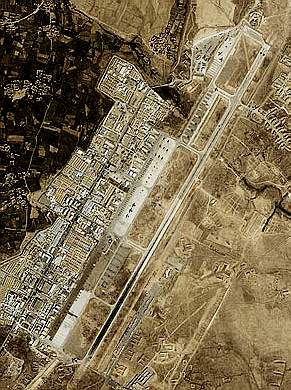
Some Prisoners at Bagram AFB, Afghanistan May Challenge Detention
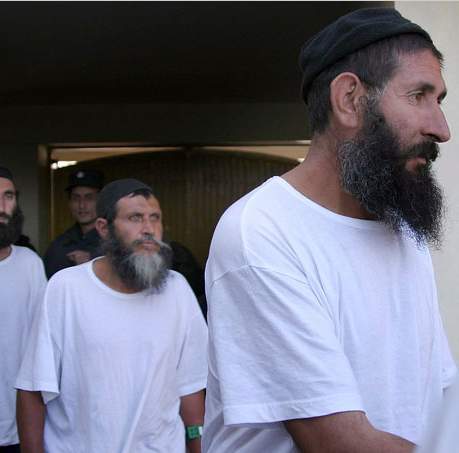
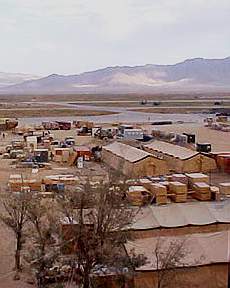
Last week a federal judge ruled that some prisoners held by the US military at Bagram Air Base prison in Afghanistan have the right to challenge their imprisonment. There are more than 600 people being held at the Bagram prison in Afghanistan without charges.
The federal ruling does not apply to prisoners captured on the battlefield in Afghanistan, citizenship and location of the capture will determine if prisoners could challenge their detention in court.
Tina Foster, the executive director of the International Justice Network said that the Bagram ruling meant that changes to the Bush detention policies would go beyond merely closing Guantánamo and extend “to any place where the United States seeks to hold individuals in a legal black hole.”
Attorney Tina Foster:
- Filed writ of Habeas Corpus for the 4 detainees to challenge their detentions.
- Judge Bates: The US cannot manipulate the jurisdiction of the courts by holding people deliberately in places where the courts have not traditionally exercised jurisdiction.
- Bagram is the main military base in Afghanistan, it was an old Soviet air hangar, that’s where they’ve established a prison.
- 600 in Bagram prison.
- There are other coalition forces at Bagram AFB with military presence, but as “guests” of the US.
- US Government: Unlike Guantanamo, Bagram is in the middle of a war zone.
- Bagram was the original Guantanamo, a lot of the people at Guantanamo first spent time at Bagram.
- A few years ago, working with you Michael (Ratner) one of the happy tasks I had, was to travel all over the world, contacting the families of the detainees at Guantanamo. It also became clear that there were people locked up in other places besides Guantanamo.
- Shockingly,the Obama Administration has adopted the Bush Administration policy on Bagram. All of their legal arguments, all of their secrecy, still deciding not to disclose any information.
- What has been different than the Bush Administration, is that when Obama signed orders to close Guantanamo, he set up a task force to look at detainee policy more broadly. That report is due in July.
Guest – Tina Monshipour Foster is the founder and Executive Director of the International Justice Network (“IJN”), and serves as lead counsel in several of IJN’s legal cases on behalf detainees imprisoned without charge at Bagram Airfield in Afghanistan. Ms. Foster’s work on behalf of prisoners and other victims of human rights violations has been featured in major media outlets in the US and abroad, including The New York Times, Wall Street Journal, Washington Post, Harper’s Magazine, Smithsonian, Al Jazeera channel, and others.
From November 2004 to May 2006, Ms. Foster was an attorney with the Center for Constitutional Rights (“CCR”) and Counsel for CCR’s Guantanamo Global Justice Initiative. Prior to joining CCR, she was a litigation associate at Clifford Chance US LLP and previously served as a law clerk for Hon. Delissa A. Ridgway at the United States Court of International Trade. Ms. Foster is a graduate of Cornell Law School, where she was an editor of the Cornell International Law Journal.
——
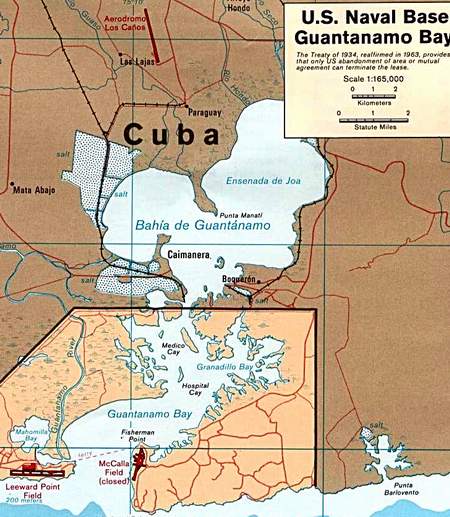
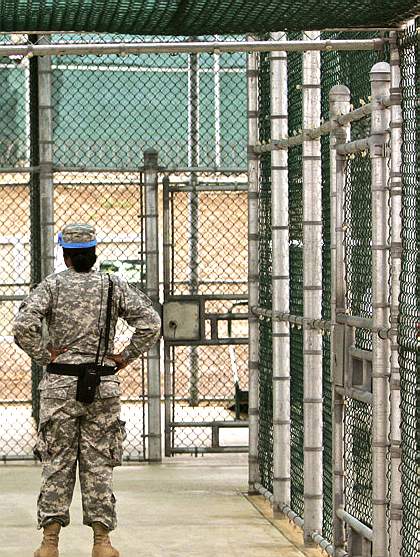
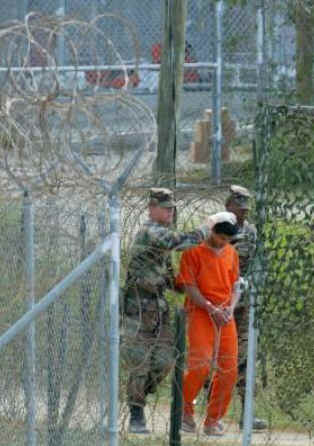
Guantanamo Bay Prison, Update
Today we talk with Emi MacLean, staff attorney for the Center for Constitutional Rights to get an update, an impression of where things stand with Guantanamo Bay prisoners, their status of Habeas Corpus, and the Obama administration’s position. There are also 17 innocent Chinese muslims called Uighurs asking, again for their release. Our guest Emi MacLean has worked with the Guantánamo Global Justice Initiative and other forms of executive detention, including secret prisons and transfers to torture.
Attorney Emi MacLean:
- More Guantanamo prisoners have left in the last weeks of the Bush Administration then the first 100 days of the Obama Administration.
- 240 people at Guantanamo right now. Approximately, 20 Guantanamo prisoners will face any prosecution.
- We’ve held more than 775 people at Guantanamo
- The people at Guantanamo right now are not there because of some greater threat assessment, they are there because of their country of nationality.
- Almost all the Europeans were released early on, almost all the Yemenis remain behind.
- A federal district judge ordered the release of the Uighers last October, the Bush Administration challenged the release.
- When we asked the Obama Administration to drop the challenge, they have yet to do so.
- I remember seeing civil liberties groups celebrating the executive order calling for the closure of Guantanamo in one year. But nothing has really changed for the reality of those men in Guantanamo. This is a consistent devaluation of the life of the men imprisoned there.
- We’ve seen the Obama Administration lawyers refuse to back away from the Bush Administration’s position on states secrets.
- It’s very hard for people to give up power.
- What makes our work difficult, is that it usually takes a couple of weeks for our communications to clear. The communication between counsels on what the Guantanamo conditions are.
- The Obama Review Team determined that the conditions at Guantanamo complied with Geneva Convention, which was certainly not what we were hearing and certainly not what we were seeing.
- The overwhelming majority of the men at Guantanamo were still in brutal conditions of solitary confinement and still reporting severe psychological and religious abuses at Guantanamo.
- No middle ground, these men should be tried or released.
Guest – Attorney Emi MacLean has worked at the Center for Constitutional Rights (CCR) with the Guantánamo Global Justice Initiative (GGJI) since June 2006. She works on issues related to Guantánamo and other forms of executive detention, including secret prisons and transfers-to-torture. She helps coordinate the pro bono attorneys representing the hundreds of men still detained at Guantánamo and supports CCR’s direct representation of a number of current detainees.
In addition, Emi is involved in civil actions brought on behalf of former prisoners released from Guantánamo (Rasul v. Rumsfeld and Celikgogus v. Rumsfeld) and actions under the Freedom Of Information Act (FOIA) challenging the government’s refusal to disclose information about the NSA’s warrantless surveillance of Guantánamo attorneys (Wilner v. NSA) and the CIA’s secret detention program (Amnesty International, CCR, et al. v. CIA). In addition to direct litigation, Emi’s work with CCR includes legislative and international advocacy.
Emi has previously worked or volunteered with the United States Senate Judiciary Committee, Center for Justice and International Law (CEJIL), Human Rights First, and the American Civil Liberties Union (ACLU). Prior to law school, Emi worked with South Africa’s National Association of Democratic Lawyers (NADEL), and Médecins Sans Frontieres (Doctors without Borders). Emi graduated magna cum laude from Harvard College and Georgetown University Law Center.
———————–
Criminalizing Dissent, Human Rights, Surveillance, Targeting Muslims, Torture
Podcast: Play in new window | Download
Update news stories:
—-

Code Pink Delegation Returns From Gaza
Recently a delegation from Code Pink and other organizations brought humanitarian and emotional support to women and women organizations in Gaza. They also pressured the US, Egyptian and Israeli governments to lift the blockade against the Palestinians. According to the United Nations Children’s Fund, the Israeli attack that began on December 27 left over 1,000 dead, including 412 children and 110 women, and more than 5,000 injured which include – – (1855 children and 795 women).
The UN also reports that hundreds of millions of dollars in humanitarian aid are needed to help Gaza’s 1.4 million people.
Helen Schiff / Felice Gelman:
- Helen Schiff: Growing up in Great Neck in the 50s, a lot of Jewish community were liberal and in support of civil rights movement. I learned about colonialism, and that Israel was created at the behest of US and British colonialism. I learned that Israel supported the French in Algeria, they supported France and British against Egypt in a war for the Suez Canal.
- So I realized the Palestinian struggle is a colonial struggle.
- Code Pink organized a delegation to Gaza and we did bring 10 thousand dollars in aid. We are drawing attention to the blockade also.
- We throw around the words siege and blockade, modern war doesn’t have sieges.
- The last siege was the battle of Leningrad, which is people blocked in to an area and attacked with all military armament.
- Gaza is about the size of Philadelphia. The current number of trucks that bring supplies into Gaza are about 100 a day. , 8700 supply trucks arrive in Philadelphia, on just one bridge in one day.
- The claim that Hamas broke the truce by firing missles is false. The truce also meant to open up borders. That hasn’t happen since Hamas were elected.
- We brought baskets for a thousand women, filled with different products that women would appreciate. We brought this on International Women’s Day.
- Psychiatrists say that the children of Gaza are exhibiting caged rat syndrome.(PDF link)
- When you are in Gaza you say to yourself, why does Israel care about Gaza, what’s the big deal?
- Two things, Gaza is an example to the West Bank and in 1999 natural gas reserves where discovered in the coastal waters of Gaza. 1.4 trillion cubic feet of natural gas. Israel has tried to negiotiate for control of the reserves since 1999.
- They have two drilling platforms north of Gaza that some believe are slant drilling into the natural gas reserves.
- The Israelis are wearing down the fighting spirit of the people in Gaza by forbidding pasta, jam, candy and any building materials. Desalinization plants have been bombed, children have kidney disease because Israelis have siphoned off the good water and there’s too much salt seeping into the wells.
- It was a targeted attempt to breakdown the infrastructure. Wanton killing of civilians and destroying infrastructure.
- Every single day we were in Gaza there was bombing or shelling. Tunnels being bombed and fishermen being shelled. Permanent tent cities.
- More delegations planned to visit Gaza to open borders. May 22 – June 14
- Palestinian Committee For Human Rights – accountability – documenting evidence.ple and billions of dollars will be required to rebuild its shattered buildings and infrastructure.
Guests – Code Pink members/activists Helen Schiff and Felice Gelman, they both had boots on the ground in Gaza and give their first hand accounts of the devastating aftermath.
—
Left Forum – Vivek Chibber: American Violence: Actually Existing Barbarism?
This year’s Left Forum panels are addressing the many facets in the current global economic crisis and subsequent political conditions. Author and professor Vivek Chibber joins us today in the studio to tell us about the 2009 Left Forum at Pace University and the panel titled American Violence: Actually Existing Barbarism? The panel will explore the roots of violence, military, terrorist, criminal and casual in contemporary society that includes America’s inner cities and prisons.
Vivek Chibber:
- The Left Forum used to be known as the Socialist Scholars Conference.
- My panel on America Barbarism is from the annual volume of the Socialist Register, this years theme is around the issue of violence. The various forms violence takes under capitalism.
- I’ll be focusing on the violence of American foreign policy. Iraq in particular. The motives and interest behind Bush’s invasion of Iraq.
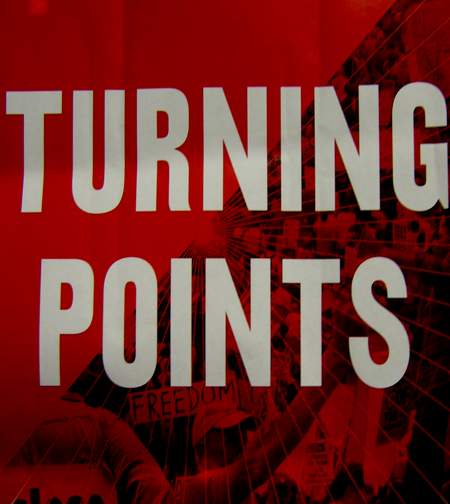
- Turning Points – theme for Left Forum. We’re seeing tremors in American power, which historically is the time to build progressive movements. Social welfare, pro-labor policies in favor of women, recognizing the plight of minorities.
- It’s the largest Left Forum conference ever. Everyone realizes that this is a time when we got to get some analysis of what’s going on.
- Right now, there’s a complete loss of legitimacy for the economic model of neoliberalism and a corresponding loss for all the journalists, the media gurus and intellectuals who were promoting it all this time.
- If you look carefully at Obama , his primary worry, has been not to take advantage of the opportunity of this crisis to enact any type of progressive social agenda. His main worry is to contain the pressure and not take advantage of that.
Guest – Vivek Chibber, professor of sociology at NYU and the author of Locked in Place: State_Building and Late Industrialization in India.
—————————————————