Law and Disorder hosts discuss details of this story. Articles say the CIA has destroyed hundreds of hours of video tapes of the likely 2002 water torture of three men. Although the CIA has not acknowledged that the videos are of water torture. The Justice Department and the Central Intelligence Agency have launched a joint probe into the CIA’s destruction of at least two videotapes documenting prisoner interrogations at a secret CIA prison. House Votes to Outlaw Waterboarding.
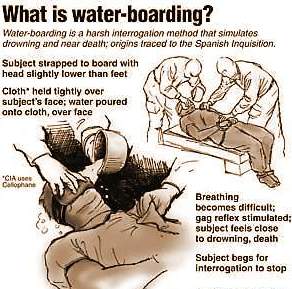
As we all now know, the CIA has destroyed hundreds of hours of video tapes of the likely 2002 water torture of three men, allegedly involved with al-Qaida, by its agents. Although the CIA has not acknowledged that the videos are of water torture – often known euphemistically as “waterboarding†– a former CIA agent, John Kiriakou, has said that the waterboarding was authorised from the highest levels of the Bush administration. Read More at Just Left.
“In accepting this remarkable award I do not stand here alone. I stand with the generations that have gone before—those particularly at the Center for Constitutional Rights that have always been willing to upend the status quo and take personal and political risks. I stand especially on the shoulders of our founders of 40 years ago—William Kunstler, Morton Stavis, Arthur Kinoy, and Ben Smith. Read also Michael Ratner’s article in the Guardian UK
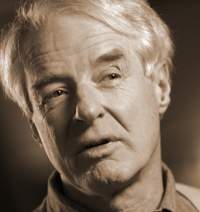
Hosts examine the Violent Radicalization and Homegrown Terrorism Prevention Act with former National Lawyers Guild President Peter Erlinder. Peter says the legislation appears an effort to re-create the House Committee on Un-American Activities, which was a standing commission in the fifties and sixties to root out “un-American” ideas among political activists.
RADICALIZATION– The term ‘radicalization’ means the process of adopting or promoting an extremist belief system for the purpose of facilitating ideologically-based violence to advance political, religious, or social change.
IDEOLOGICALLY-BASED VIOLENCE– The term ‘ideologically-based violence’ means the use, planned use, or threatened use of force or violence by a group or individual to promote the group or individual’s political, religious, or social beliefs.
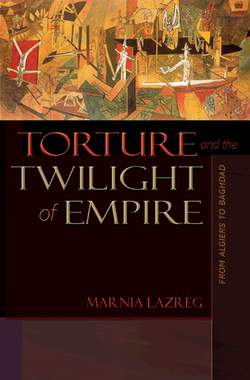
Professor Marnia Lazreg’s new book, links the use of torture to the demise of empire using two examples. France in Algeria and the United States in Iraq. Lazreg also points out how occupying nations justify the use of torture as a regrettable but necessary means of saving Western civilization from those who challenge their rule. She traces back most of the brutal torture techniques as borrowed material from totalitarian movements throughout history. One review writes how Torture and the Twilight of Empire holds disturbing lessons as the War on Terror is carried out.
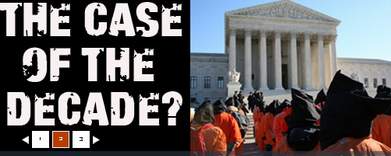
Last week the Center for Constitutional rights directly challenged the Bush administrations’ use of torture in violation of domestic and international law and the assertion that anyone can be held indefinitely anywhere in the world on the president’s word alone. The case also challenges the 2006 Republican Congress’s attempt to clear the way with its passage of the Military Commissions Act. (Senate Bill 3930)“The precedent set in past Guantanamo Supreme Court cases—that every person detained has the right to a fair hearing, including those jailed at the detention center for almost six years—is a necessity for any country calling itself a nation under law,†CCR President Michael Ratner.This case may determine once and for all whether there is a constitutional right to habeas corpus – that is, a fair hearing before a real court – for everyone detained by the U.S. government at Guantánamo.
Earlier this year Law and Disorder covered the case of Dr. Catherine Wilkerson. Police used excessive force when they attacked peaceful protestors who rallied at a University of Michigan event sponsored by the American Movement for Israel. As the senior medical professional on scene, Dr. Catherine Wilkerson took responsibility for the well-being of a middle-aged man who claimed he couldn’t breath and lost consciousness. She exhorted the police to get off of him, and was allowed to check his pulse and breathing.Wilkerson later protested when Emergency Medical Service (EMS) personnel breached ethical medical practices by forcing ammonia into the man’s nostrils and face. It was at this time that she was physically assaulted and detained by Ann Arbor police.No charges were filed until after Dr. Wilkerson wrote a complaint to authorities about the actions of the police officers. A week since writing the letter, Dr. Wilkerson was charged by the Washtenaw County Prosecutor Brian Mackie’s office, at the request of the UM police, with two attempted felonies—one against Officer Warner and one against the EMS personnel. Check out Counter Punch article.
Guest – Dr. Catherine Wilkerson,a physician who practices primary care at a clinic in Ann Arbor that providing care to underserved members of the community.
Today we welcome back author and journalist Adam Hochschild to talk with us about his recent book Bury the Chains. The book takes the reader back to the late 18th century when a small group of Englishmen put forward the radical notion that slavery was wrong.They proposed that Enlightenment ideals of equality and liberty should extend to African slaves held in British colonies.
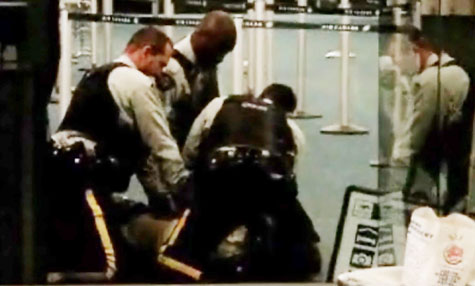
United Nations Torture Panel Says Taser Shock Is Torture – Hosts discuss numerous reports of taser-related deaths including the incident in Vancouver, B.C
—
Palestinian Activist Sentenced to 11 Years in Prison
Here on Law and Disorder we’ve followed the pivotal moments in the Mohammed Salah case. Earlier this year, Salah was cleared of terrorism charges but recently convicted of lying about his ties to the Palestinian group Hamas. He faces nearly two years in prison. The sentence for a minor charge of obstruction of justice comes as a major setback for prosecutors who have spent a decade investigating charges that could have put Salah behind bars for life.
Recently however Abdelhaleem Ashqar was sentenced to 11 years, 3 months in prison for refusing to testify before a grand jury about activities of Hamas. U.S. District Judge Amy St. Eve told Ashqar that regardless of his political beliefs, he had an obligation to follow U.S. law. She said that once he was granted immunity, he could not refuse to testify before the grand jury.
We hear the first speech by our own co-host Michael Smith based on his own research into Che Guevara’s life. Michael tells the audience at the Brecht Forum about his travels to Cuba, his research work with co-host Michael Ratner and lays out the case of how Che could have been murdered. This was one of 3 compelling speeches held at the Brecht Forum. Author and historian Jane Franklin and attorney/civil rights activist Len Weinglass also spoke – Law and Disorder will air those speeches in the weeks to come.
The Torture of Abdallah Higazy– By Michael Ratner on Justleft.org.Two weeks ago the struggle against the use of torture in the U.S. got a boost, by accident. A federal court in New York City published an opinion in a civil suit that includes a graphic description of the FBI extracting a false confession from a completely innocent man by threatening to have his family tortured. Making such a threat is considered torture. View redacted opinion here.
Ousted Arabic School Principal Debbie Almontaser plans to sue the city for violating her freedom of speech after reapplying for her position last month as principal of Kahlil Gibran International Academy. The ousted principal of the city’s first public Arabic-language school was forced to resign after she was quoted explaining that the word “intifada†literally means “shaking off†in Arabic. This was in reference to a controversy arising over a t-shirt that read “intifada NYC†created and worn by a group called Arab Women Active in the Arts and Media.
Debbie Almontaser says she was forced out under pressure from Mayor Bloomberg and calls the offense a serious injustice to Arab and Muslim communities of New York City. Communities in Support of KGIA
Guests – Donna Nevel and Mona Eldahry who are involved in organizing Debbie Almontaser’s defense.
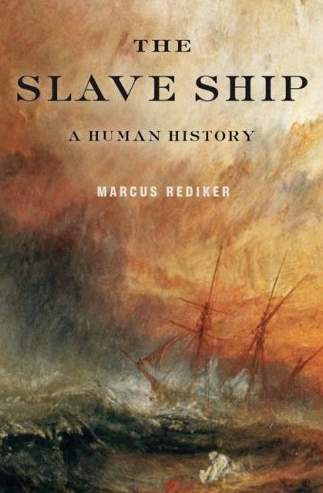
“This has been a painful book to write,” he said, “and if I have done any justice to the subject, it will be a painful book to read. There is no way around this, nor should there be.” says Marcus Rediker author and history professor at the University of Pittsburgh.
Rediker has scoured through letters, diaries, memoirs, captain’s logbooks, shipping company records to piece together the intimate realities of these 18th-century sailing vessel carrying enslaved Africans. Rediker draws startling parallels to global economy structures then and now, tracing back as New England timber was used to build Slave Ships yet nails and ropes were purchased from Liverpool at discounts, ship captain stock options and more. In his book, Marcus also documents revolts among underpaid sailors and the solidarity that evolves amid slaves and servants.
One review describes Slave Ship as “ a tale of tragedy and terror, but also an epic of resilience, survival, and the creation of something entirely new. Marcus Rediker restores the slave ship to its rightful place alongside the plantation as a formative institution of slavery, a place where a profound and still haunting history of race, class, and modern economy was made.â€
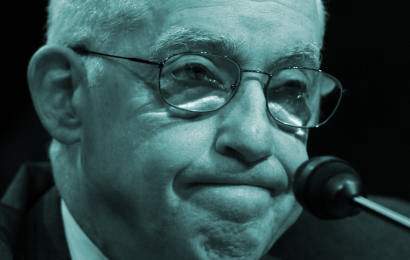
Vote down the Attorney General Nomination of Judge Michael Mukasey.
“Michael Mukasey professes ignorance as to whether water-boarding is a form of torture unless he knows “the actual facts and circumstances” of its use. The “facts and circumstances” of water-boarding are quite straightforward. When a person is water-boarded, their head is held under water until the person begins to involuntarily “inhale” water. At that point, the victim is certain they will drown if not allowed to get air. It is a technique from the Spanish Inquisition and illegal under international and domestic law. Instilling fear of imminent death as an interrogation technique is the very essence of torture, and no amount of legal analysis can come to any other conclusion.” Read full CCR Press Release.
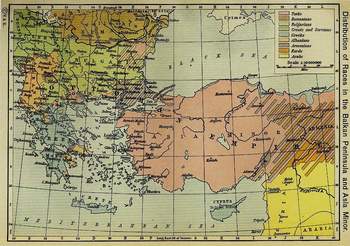
Recently, the Foreign Affairs Committee of the U.S. House of Representatives took a major step toward ending U.S. complicity in Turkey’s denial of the Armenian Genocide. Despite an intense campaign of threats and intimidation by the Turkish government and its lobbyists in Washington, DC the Committee adopted HR 106, the Armenian Genocide Resolution.
Introduced on January 30, the resolution calls on the President to ensure that the foreign policy of the United States reflects appropriate understanding and sensitivity concerning issues related to human rights, ethnic cleansing, and genocide documented in the United States record relating to the Armenian Genocide.
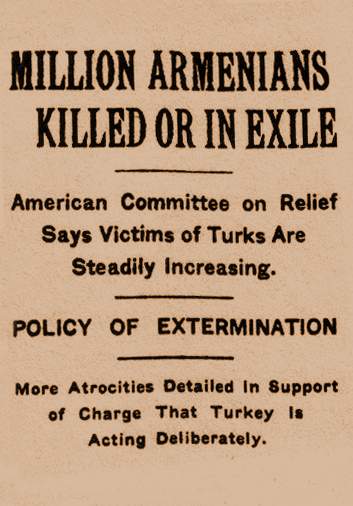
One day after the House Foreign Affairs Committee approved the resolution, 27-21, Turkey withdrew its ambassador for consultations, and Turkish legislators on October 17 authorized the use of military force against Kurdish rebels in northern Iraq, a step that may further destabilize Iraq and disrupt oil supplies. Despite overwhelming evidence documenting the Genocide, the Republic of Turkey continues to pursue a well-funded campaign – in Washington, DC and throughout the world – to deny and ultimately erase from world history the 1.5 million victims of Ottoman Turkey’s and later the Republic of Turkey’s systematic and deliberate massacres and deportations of Armenians between 1915 and 1923. According to the International Association of Genocide Scholars, the historical record on the Armenian genocide is quote – unambiguous.
Since 1982, successive U.S. Administrations, fearful of offending Turkey, have effectively supported the Turkish government’s revisionism by opposing passage of Congressional Armenian Genocide resolutions and objecting to the use of the word “genocide” to describe the systematic destruction of the Armenian people.
Hosts Michael Ratner and Michael Steven Smith interview Henri Alleg for the first half hour. Alleg, a French journalist living in Paris, supported Algerian independence during the French Algerian War (1954-1962). He was arrested by French paratroopers during the Battle of Algiers in June 1957 and interrogated.
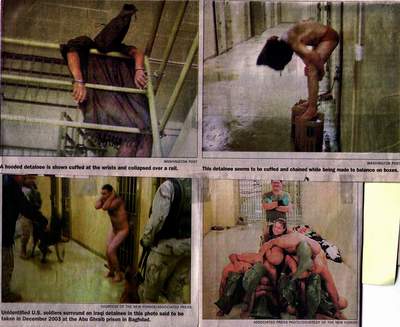
Henri Alleg describes to Law and Disorder hosts in this exclusive interview how he was questioned hung from his feet and tortured with a similar brutality and sadism often described by prisoners in Guantanamo and Abu Ghraib. Alleg’s republished book The Question is a moving account of that month of interrogation and his triumpj over his torturers. Jean-Paul Sartre has written the preface that remains a relevant commentary on the moral and political effects of torture on the both the victim and perpetrator.
Guest – Henri Alleg, a French-Algerian journalist, director of the “Alger républicain” newspaper, and a member of the French Communist Party. After Editions de Minuit, a French publishing house, released his memoir La Question in 1958, Alleg gained international recognition for his stance against torture, specifically within the context of the Algerian War.
His speech is titled Imperialism in the American Century. Viveck describes what “progressives can expect in the near future in terms of basic principles of justice. Viveck also references how the (PNAC) Project for the New American Century draft is shaping foreign policy.
—
Co-hosts Heidi Boghosian and Michael Smith discuss the recent news – The military is accusing two attorneys for Guantanamo detainees of smuggling underwear to their clients. Michael and Heidi also read the two letters detailing the dispute. Read Shane Kadidal’s blog post here: Underwear Gnomes Infest Guantanamo
—
Michael Ratner’s letter published in the New York Times Oct. 10, 2007 – Torture and the Shame of a Nation.Responding to this New York Times Editorial: On Torture and American Values.To the Editor:“On Torture and American Values†lets Congress off the hook too easily regarding the torture and secret detention program. As with the Iraq war, many Republicans and Democrats were and still are willing to be misled (or claim to have been so) rather than appear to be perceived as weak on terrorism. Sadly, Congress by its actions and inactions is the handmaiden of the torture program. Despite the publicly revealed memos authorizing torture and the testimony of its widespread use, Congress, even under the Democrats, has yet to hold even one hearing regarding the responsibility of high administration officials. Perhaps had it done so, the administration would not have felt emboldened to continue the program.Instead, Congress affirmatively aided the torture program. Examples abound: removing habeas corpus from detainees and failing in its restoration (habeas is key to protecting against torture — lawyers and courts have access to detainees); granting amnesty to officials who may have violated the torture and war crimes provisions of our law; allowing a defense for future abusers if they relied upon legal advice; authorizing the president to redefine cruel, inhuman and degrading treatment; and permitting the use of evidence derived from torture and coercion.Now with the nomination of a new attorney general, Congress again has an opportunity to make its voice heard: no attorney general who does not clearly and unequivocally repudiate the new torture memos and the secret sites at which torture is carried out should even be considered for the job. Michael Ratner, President of the Center for Constitutional Rights