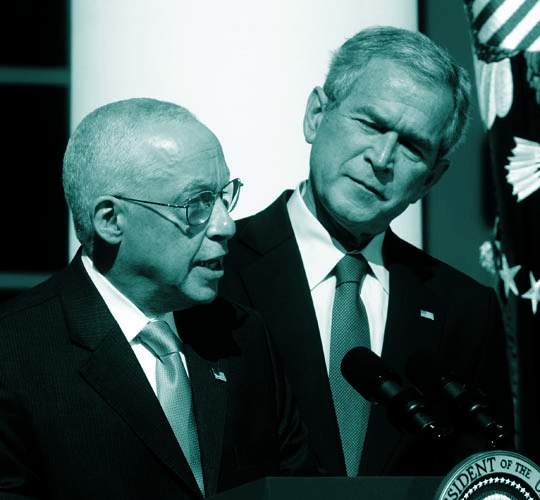
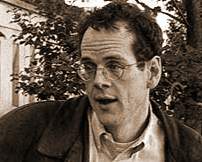
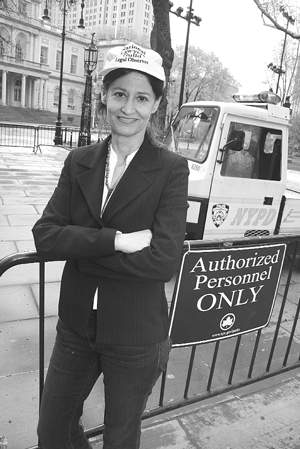
Are we the only ones who are ready to retch at the constant stream of praise for the president’s choice for attorney general? asks attorney Shane Kadidal in his latest Huffington Post blog Mukasey Will Suck (And He Hates Us) Shane goes on to list how US attorney general nominee Judge Michael Mukasey wrongly describes the role of the Center for Constitutional Rights defending Guantanamo detainees and other mis-characterizations.
Guest – Shane Kadidal, staff attorney at the Center for Constitutional Rights and has been at CCR since 2001. He works on the Center’s major case on the illegal NSA domestic spying program, CCR v. Bush, as well as the Center’s Patriot Act case, and testified before Congress this past spring on the material witness statute. He also works on Turkmen v. Ashcroft, representing people swept up on immigration charges after 9/11 and unlawfully detained and abused; with the Vulcan Society of Black Firefighters challenging discriminatory hiring policies of the New York City Fire Department; and with the Sikh Coalition against religious discrimination by New York’s Transit Authority, among other cases.
Guest – attorney Jesse Berman. Berman was an attorney for Osama Awadallah, a US citizen, Palestinian and Muslim. Awadallah was a student at a San Diego college when he was arrested as a material witness shortly after 9/11. Berman describes how federal Judge Mukasey responded to an attorney claiming Awadallah had been beaten while in jail. Mukasey says “he looks fine to me.”
Recently the Ninth Circuit Court of Appeals dismissed the Center for Constitutional Rights’ case charging Caterpillar, Inc with aiding and abetting war crimes. Caterpillar is the company that provided bulldozers to Israel knowing that would be used to demolish homes and endanger civilians in the Occupied Palestinian Territory.
The case, Corrie, et al. v. Caterpillar Inc. was brought by the parents of Rachel Corrie and four Palestinian families whose family members were killed or injured when Caterpillar bulldozers demolished their homes. Corrie, a 23-year-old American peace activist and student at Evergreen State College in Olympia, Washington, was killed March 2003, in the Gaza Strip by a Caterpillar D9 bulldozer while protecting a home from illegal demolition. [Click here to download the Decision] from a three-judge panel of the Court of Appeals found that it did not have jurisdiction to decide the case because Caterpillar’s bulldozers were ultimately paid for with money from the United States. For years, Caterpillar has had notice that the IDF was using its D9 bulldozers for human rights violations; despite this, the company has continued to provide them to the Israeli government.
Today on Law and Disorder we talk with the Executive Director and Legal Director of the Sugar Law Center for Economic and Social Justice. They’re a national, non-profit organization, that provides legal support and advocacy for working people and their communities.
Basically holding corporations and goverments accountable to their legal and moral responsibilities regarding illegal and abusive working conditions. Recently the Sugar Law Center has handled cases involving Wal-Mart and Wackenhut, the private prison corporation.
After the 2001 attacks on the United States, attention has been drawn to marginalize nuclear weapons and increase global cooperation on the control and non-proliferation of nuclear weapons and nuclear material. As of 2006, there are estimated to be at least 25,000 nuclear weapons held by at least eight countries, 96 percent of them in the possession of the United States and Russia
Rather than intensifying such efforts, the U.S. has adopted a policy of elevating the role of nuclear weapons in its overall military strategy. John Burroughs, Executive Director of the Lawyers’ Committee on Nuclear Policy, claims that this will reduce U.S. and global security, not increase it.
Guest – Dr. John Burroughs, adjunct professor of law at Rutgers Law School and serves as Executive Director for the Lawyer’s Committee on Nuclear Policy. The LCNP was instrumental in bringing the landmark case before the International Court of Justice in 1995 that resulted in the advisory opinion of 1996, which stated that the threat or use of nuclear weapons is illegal.
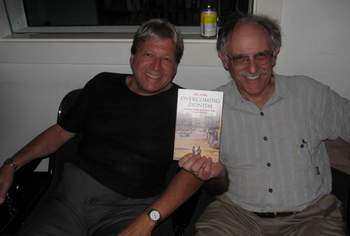
Late last month, the blog, Dissident Veteran for Peace — printed what it says is an e-mail from Pochoda, the press director, to Kovel, explaining why distribution was halted. Pochoda declined to comment on the e-mail, but Kovel said it was accurate. The e-mail reads: “Because it is a distributed title for Pluto Press, no one at UMP had read Overcoming Zionism prior to the Stand/With/Us diatribe. I and others read it after that assault, and had fully expected to gear up for, at least, a free speech defense. Though I had no trouble with the one-state solution your book proposes nor with a Zionist critique, per se … I (and faculty members I asked to read the book, as well) were apalled [sic] by your reckless, viscious [sic], and unmodulated attack on Zionism and all Zionists.”
How did Kovel, a Jew from Brooklyn, the oldest son of Ukrainian immigrants who did well – moving with Joel to “the purgatory of Baldwin, Long Island†– come to this radical critique and equally radical solution? Joel graduated from Yale and became a successful psychiatrist. He taught at medical school before switching careers and taking a social science professorship at Bard, where for a time he held the Alger Hiss chair. He is still there, the only Marxist on the faculty. This book is not going to further his career.
“What kind of Jew am I?†he asks, and answers “a very bad one.†More accurately, he defines himself as what Isaac Deutscher called “a non-Jewish Jew.†Not that he is not spiritual; he writes of reaching for the infinite. But he is not religious. Being part of a sect is too narrowing and confining. He identifies with the Jewish heretics who transcended Jewry, but who are nonetheless part of the Jewish tradition – he lists Spinoza, Marx, Freud, Proust, Einstein, Kafka, Wittgenstein, and Luxemburg – and for whom “the true glory†of being Jewish is to live “on the margin and across boundaries.â€
(CCR) attorneys and co-counsel submitted a ground-breaking brief to the Supreme Court in the case that will determine whether detainees at Guantánamo possess the fundamental constitutional rights to due process and habeas corpus.
“These men have been held unlawfully in abusive conditions while the courts and Congress debate whether they should have any rights,” said CCR President Michael Ratner. ” Read more.
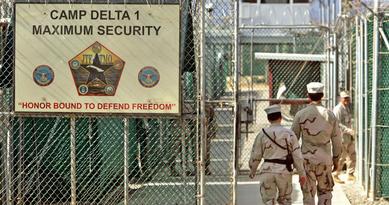
The US Supreme Court said it would not prevent Ahmed Bel Bacha, an Algerian army veteran detained at Guantanamo Bay from being transferred to his home country. Bel Bacha, who has been held at Guantanamo for five years, had argued he would be tortured if turned over to Algerian officials. He is one of nearly 20 Guantanamo detainees who say they will face abuse if sent back to their country. Human Rights Watch article.
Recently, Isa Al Murbati was returned home after six months in Guantanamo Bay’s Camp Six. He was kept under the most cruel conditions of the prison, they include communication lock downs and sleep deprivation.
Lyra Porras Garzon is a documentary filmmaker and creator of the recent film Flying While Muslim. This film explores the personal stories and debates surrounding racial profiling post 9/11 in the United States. As Lyra researched the many personal stories, she unearthed countless reports of racial profiling from detainment in airports to illegal detention of Muslims, Arabs and even South Asians. This, along with the imprisonment of those individuals without access to lawyers or the right to habeas corpus.
When we think of doctor closing a wound many things come to mind – sutures, staples, band aids or the like. It might astound many to learn that some doctors use Krazy glue on inmate patients. During a time when government transparency is nearly obsolete, we find the few that act as beacons of hope. When he first requested the records for medical malpractice cases involving inmates in 2000, Paul Wright never imagined how much trouble it would be.
Guest – Paul Wright, editor of Prison Legal News, a publication that looks into our correctional facilities and reports on prisoner’s rights. Paul is also on the board of the National Lawyers Guild.
Police used excessive force when they attacked peaceful protestors who rallied at a University of Michigan event sponsored by the American Movement for Israel. As the senior medical professional on scene, Dr. Catherine Wilkerson took responsibility for the well-being of a middle-aged man who claimed he couldn’t breath and lost consciousness. She exhorted the police to get off of him, and was allowed to check his pulse and breathing.
Wilkerson later protested when Emergency Medical Service (EMS) personnel breached ethical medical practices by forcing ammonia into the man’s nostrils and face. It was at this time that she was physically assaulted and detained by Ann Arbor police.
No charges were filed until after Dr. Wilkerson wrote a complaint to authorities about the actions of the police officers. A week since writing the letter, Dr. Wilkerson was charged by the Washtenaw County Prosecutor Brian Mackie’s office, at the request of the UM police, with two attempted felonies—one against Officer Warner and one against the EMS personnel.
Here on Law and Disorder we’ve followed the pivotal moments in the Mohammed Salah case. Earlier this year, Salah was cleared of terrorism charges but recently convicted of lying about his ties to the Palestinian group Hamas. He faces nearly two years in prison. The sentence for a minor charge of obstruction of justice comes as a major setback for prosecutors who have spent a decade investigating charges that could have put Salah behind bars for life.
In his latest article in the New York Review of Books, David Cole, professor of law at Georgetown University reviews several books including, John Ashcroft’s Never Again: Securing America and Restoring Justice, General Ashcroft: Attorney at War by Nancy V. Baker and It Can Happen Here: Authoritarian Peril in the Age of Bush, by Joe Conason and also Unchecked and Unbalanced: Presidential Power in a Time of Terror by Frederick A.O. Schwarz Jr. and Aziz Z. Huq.
These publications create an outline of how former Attorney General John Ashcroft helped create a platform that allowed the Bush administration to torture, allow coerced confessions and hold defendants indefinitely without trial.
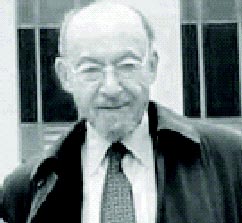
Peter Weiss is Vice-President, former President, of the International Association of Lawyers Against Nuclear Arms and its US affiliate, the Lawyers’ Committee on Nuclear Policy; Vice-President, Federation Internationale des ligues des Droits de l’Homme; and Vice-President, Center for Constitutional Rights. Mr. Weiss is a graduate of Yale Law School and has lectured and written widely on the international law of war and peace, nuclear weapons and human rights. He was the principal author of the draft brief on the illegality of threat or use of nuclear weapons used by many countries in making written submissions to the International Court of Justice in the 1996 nuclear weapons advisory opinion, and served as counsel to Malaysia at the hearings.
He has published several articles on the ICJ opinion, including in the fall 1997 issue of Transnational Law and Contemporary Problems. Mr. Weiss is also a leading human rights lawyer with the Center for Constitutional Rights, and litigated the seminal case establishing the right of victims of torture to sue their torturers in US courts (Filartiga v. Pena-Irala). Since his retirement in 1996 from Weiss Dawid Fross Zelnick & Lehrman, a leading trademark firm, he has been Senior Intellectual Property Counsel to The Chanel Company Limited. He is also a founder and former President of the American Committee on Africa and former Chairman of the Board of the Institute for Policy Studies in Washington. He has also long been an activist for peace in the Middle East and is currently a member of the Arab-Jewish Peace Group in New York and of the Executive Committee of Americans for Peace Now, which supports the Peace Now movement in Israel.
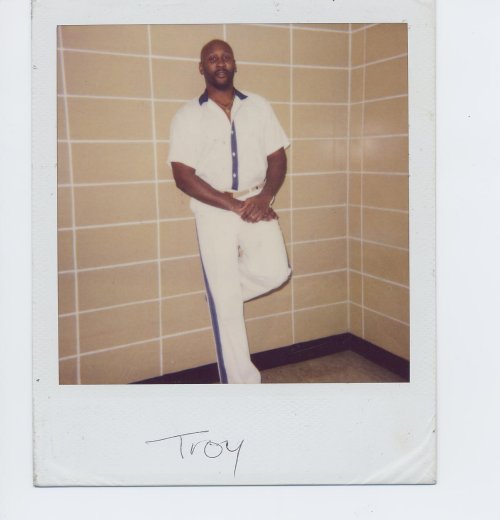
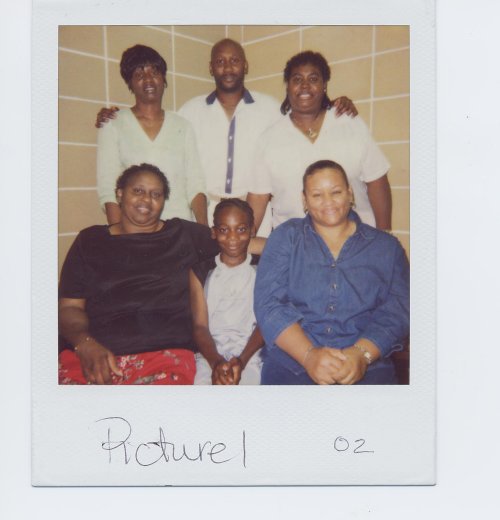
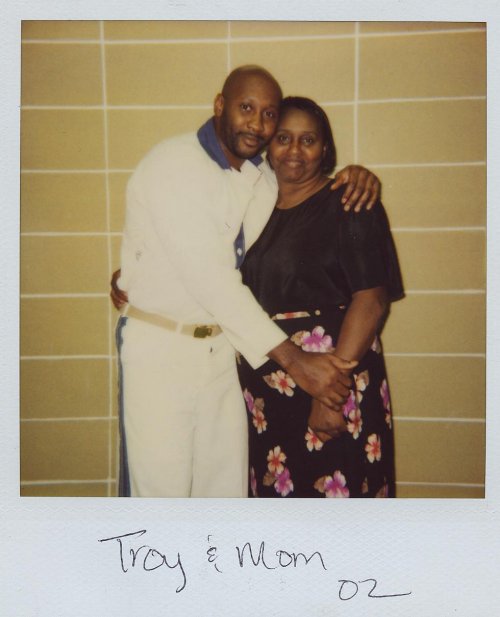
The Georgia State Board of Pardons and Paroles granted a 90-day stay of execution to Troy Davis. On July 16, less than 24 hours before Troy Davis was scheduled to be executed in Georgia, the state Board of Pardons and Paroles issued a stay of execution, to be not longer than 90 days, “for the purpose of evaluating and analyzing” the information submitted to it during the clemency hearing earlier in the day. Act today to ensure that the the Georgia State Board of Pardons and Paroles grants Troy clemency!
Troy Davis was sentenced to death in Georgia, for the murder of a police officer. The case against him consisted entirely of witness testimonies that were full of inconsistencies, even at the time of trial. Since then, all but two of the states’ nine non-police witnesses from the trial have recanted their testimony. Many state in sworn affidavits that they were pressured or coerced by police into testifying or signing statements against Troy Davis. Listen to Law and Disorder interview with Troy’s sister Martina Correia.
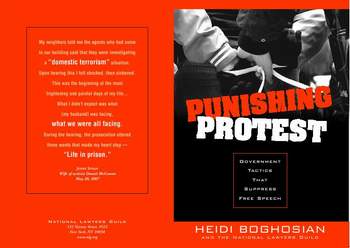
Co-Host Heidi Boghosian and National Lawyers Guild members publish a powerful report chronicling government tactics employed on city, state and federal levels aimed at suppressing public dissent. The report outlines the hierarchy of government attacks on free speech, from sophisticated data collecting agencies to arresting demonstrators without probable cause. Order yours here $3
National Lawyers Guild President, legal scholar and co-author of Cameras in the Courtroom: Television and the Pursuit of Justice, Marjorie Cohn has written a new book titled, Cowboy Republic, Six Ways the Bush Gang Has Defied the Law. She provides an in-depth analysis of six significant ways in which the Bush administration has undermined the rule of law in this country. Professor Cohn details the illegal invasion and occupation of Iraq; the policy of torture; war crimes; the kangaroo courts of Guantanamo; unconstitutional laws; and the unlawful surveillance of American citizens. Her book contains practical ways to strengthen the rule of law domestically and internationally, including both political and legal remedies.