CIA Sponsored Terror, Civil Liberties, Criminalizing Dissent, Guantanamo, Military Tribunal, Political Prisoner, Prison Industry, Targeting Muslims, Torture
Podcast: Play in new window | Download
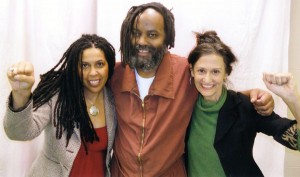
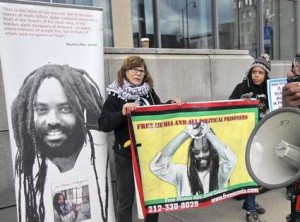
Mumia Abu-Jamal Update October 2018
Last week, attorneys for Mumia Abu Jamal argued in court that conflicts of interest led to unfair rulings against him in his longstanding case. As many know, Abu-Jamal was sentenced to death for the 1981 killing of Philadelphia police officer Daniel Faulkner. The case was riddled with constitutional violations, and his sentence was later commuted to life in prison without parole.
Recently, in the wake of the U.S. Supreme Court’s decision in Williams v. Pennsylvania, Mumia’s attorneys argued that his rights were violated after former district attorney Ron Castille failed to recuse himself in an appeals decision. At the time Castille was a state Supreme Court judge.
Judge Leon Tucker had asked the Philadelphia district attorney’s office to produce an internal memo that might show Castille— back when he was city district attorney — had direct involvement in pursuing Abu-Jamal’s death sentence. If he did, his later denial as Supreme Court justice of Abu-Jamal’s appeal, could be deemed biased.
Defense attorney Judy Ritter said: “Justice Castille has shown himself to be involved in this case, to be biased against a certain class of cases that our client falls into.” The Commonwealth argued that as district attorney, Castille was simply doing his job.
“It’s nothing remarkable that a DA would send a letter to the governor asking him to sign death warrants which the governor was required to do,” said attorney Tracey Kavanaugh. Emotions ran high, both inside and outside of the courtroom. Maureen Faulkner, the widow of Daniel Faulkner, stood up and cried in the middle of court proceedings when the judge announced that both sides would need to wait until December for any possible closure in the case. Presiding Judge Leon Tucker has indicated that he will make a ruling in the case some time after December 3, 2018.
Guest – Professor Johanna Fernandez, is a native New Yorker. She received a PhD in History from Columbia University and a BA in Literature and American Civilization from Brown University. Professor Fernández teaches 20th Century U.S. History, the history of social movements, the political economy of American cities, and African-American history. She has previously taught at Carnegie Mellon University in Pittsburg, PA and Trinity College in Hartford, CT and is, most recently, the recipient of a Fulbright Scholars grant to the Middle East and North Africa that will take her to Jordan in spring 2011, where she will teach graduate courses in American History. She is with the Campaign to Bring Mumia Home.
—-
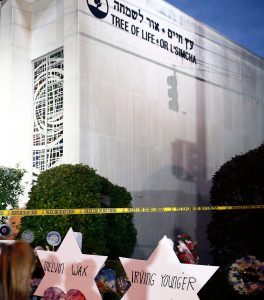
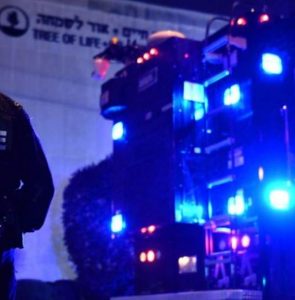
In Response to Pittsburgh, We Must Come Together as One
Last week, acts of hatred claimed the lives of 13 innocent persons in the United States. A white supremacist killed two African American persons in Kentucky. An anti-semite killed 11 Jewish persons in a synagogue in Pittsburgh where even more were wounded, including first responders and police officers.
Not surprisingly, the slaughter of the 11 Jews brought forth calls of the need for a strong Israel; the same response that followed anti-Semitic killings in France and Brussels.
It also inflamed political and theological differences between Israelis and American Jews. Israel’s Ashkenazi chief rabbi avoided saying “synagogue” because it is not Orthodox, but Conservative, a liberal branch of Judaism — because it is not Orthodox, but Conservative, one of the liberal branches of Judaism rejected by religious authorities who define the state’s Jewishness.
The attacker’s anti-refugee, anti-Muslim rants prompted some on the Israeli left — like many American Jewish liberals — compare the views of nationalistic leaders who influence their governments.
In Israel, longstanding animosity between left and right has escalated. Orthodox parties are hoping to increase their influence and Jewish law on day to day life; disputes about who cdan serve in the military and what stores can open on the Sabbath are rampant.
Guest – Phyllis Bennis is a fellow of the Institute for Policy Studies, where she works on anti-war, US foreign policy and Palestinian rights issues. She has worked as an informal adviser to several key UN officials on Palestinian issues. Her books including Calling the Shots: How Washington Dominates Today’s UN, and Understanding the Palestinian-Israeli Conflict.
—-
VICTORY: How Pennsylvania Beat Gerrymandering and How Other States Can Do the Same
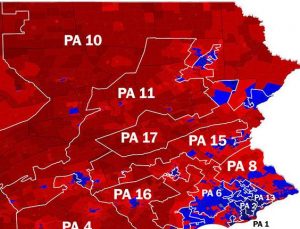
An important victory against gerrymandering was recently won in the State of Pennsylvania in the case of League of Women Voters of Pennsylvania v. Commonwealth of Pennsylvania.
The first paragraph of the complaint lays it out. “This case is about one of the greatest threats to American democracy today: partisan gerrymandering. A partisan gerrymandering occurs when the political party in control of redistricting redraws congressional or state legislative districts to entrench that party in power and prevent voters affiliated with the minority party from electing candidates of their choice. The result is that general election outcomes are rigged – they are predetermined by partisan actors sitting behind a computer, and not by the voters.“
In Pennsylvania although the Democrats have more supporters than the Republicans Republicans had 13 seats in the US Congress and the Democrats had only five.
The U. S. Supreme Court has not been willing to rule on gerrymandering taking the position that there is no clear way to determine if there has been gerrymandering and therefore it is a non-judicable issue.
To get around this in 2018 Pennsylvania activists engineered a brilliant legal effort in the the state courts of Pennsylvania to attack the lopsided redistricting, and won after fighting pitched battles all the way up to the state Supreme Court. Now activists around the country can do the same. The next congressional redistricting occurs after the 2020 census: progressive need to be ready well before then.
We speak today with constitutional litigator James R. Lieber who has provided a real time report on effective trial lawyers, working to facilitate the will of the people. He explains the strategies of counsel and the evidence presented and has provided a roadmap to social justice litigants for pursuing constitutionally protected claims in state court based on the state constitution and avoiding federal review.
Guest – Attorney James B. Lieber is the author of 3 previous books, and a lawyer who focuses on constitutional, civil rights, and discrimination cases. He has won two cases before the U. S. Supreme Court and is widely published in magazines of national stature.
—————————————–
—————————————–
Censorship, CIA Sponsored Terror, Civil Liberties, Habeas Corpus, Human Rights, Torture, War Resister
Podcast: Play in new window | Download
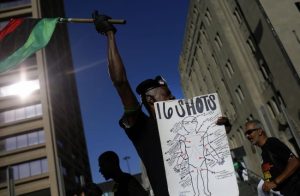
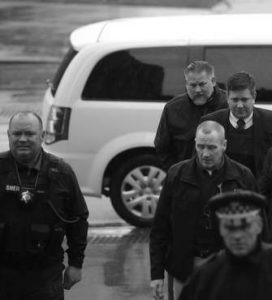
The Power of Public Outrage: Laquan McDonald’s Place in History
Jason van Dyke, the Chicago police officer who four years ago shot 17-year-old Laquan McDonald 16 times in the back, was found guilty on October 5th of second-degree murder and 16 counts of aggravated battery by Chicago jury.
This was the first time in 50 years that a Chicago police officer has been found guilty of murdering somebody while he was on duty.
The McDonald murder was massively covered up beginning with the cops who were on the job with van Dyke, the commanding officers of the Chicago police department, up to the office of the Mayor Rahm Emanuel.
Key to the conviction was video footage taken by a police car dash camera. This video was suppressed by the police, and the mayor for three years and only revealed after a massive campaign by a number of Chicago grassroots organizations. Nationally, there have been no convictions in the murders of Eric Gardner, Michael Brown, or Trayvon Martin.
Chicago is one of the most segregated cities in the USA. Recently 50 Chicago schools have been closed as well as many mental health clinics. Even the parking meters have been sold in a wave of divestment from the inner-city.
Guest – Attorney G.Flint Taylor, a graduate of Brown University and Northwestern Law School, is a founding partner of the People’s Law Office in Chicago, an office which has been dedicated to litigating civil rights, police violence, government misconduct, and death penalty cases for more than 40 years.
—-

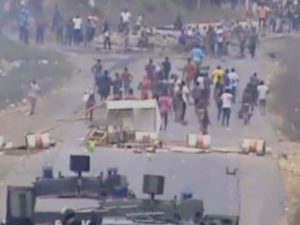
Neo-Colonial Regime Kill Peaceful Ambazonian Protesters in Africa
Ambazonia is an English-speaking territory located between Cameroon and Nigeria in West Africa. Also known as the Southern Cameroons, for most of its recent history it has been under military occupation by the French neo-colonial regime in Cameroon. A majority of Ambazonians reject the legitimacy of this regime and its military control.
In violation of an agreement to create an equal confederacy between the two autonomous states, French Cameroon has been dismantling and defunding Ambazonian systems, and pillaging its resources since the country was created in 1961.
Since December 2016, French Cameroon military has responded to peaceful protests with force, killing over 400 civilians. 200 more have been disappeared and are feared dead. More than 90 villages burnt down, resulting in 60,000 people fleeing to neighboring Nigeria.
More than 2,500 activist and peaceful protesters imprisoned, some tried in military courts, a violation of international law, and some sentenced for terrorism and other unjustifiable charges. Prisoners include prominent nonviolence advocate Julius AyukTabe and 11 of his senior aides, arrested in January 2018, and unlawfully repatriated. Julius’s appeal hearing just happened last Thursday.
On January 26, 2018—with no extradition treaty between Cameroon and Nigeria, and without a presiding judge—Nigeria forcibly handed 10 of the prisoners and 37 other refugees to Cameroon. That was in violation of international law forbidding a country receiving asylum seekers from returning them to a country where they likely face persecution. This action drew condemnation from Amnesty International, the UNHCR, the U.S. Department of State, and other leading human rights advocates. The Ambazonia Prisoners of Conscience Support Network, or APOCS, was recently formed to address this crisis.
Guest – Sphynx Eben, a founding member of APOCS and also a longtime media organizer with the Indymedia Africa Working Group. https://www.facebook.com/apocsnetwork/
——————-
——————-
CIA Sponsored Terror, Civil Liberties, Climate Change, Human Rights, Prison Industry, Surveillance, Torture, Truth to Power
Podcast: Play in new window | Download
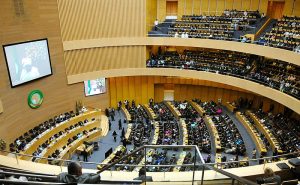
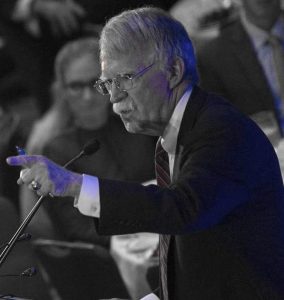
Bolton Threatens ICC Over Probes Into US War Crimes
On September 10, 2018 in Washington DC, President Donald Trump‘s national security adviser John Bolton gave an important and widely publicized speech to the rightist Federalist Society threatening International Criminal Court judges and court personnel if they dared to probe into U.S. torture practices in Afghanistan and three European black sites. The United States is being investigated for torturing captives in Afghanistan, Poland, Estonia, and Lithuania. The charges have been documented by the U.S. Senate in its report of December 14, 2017.
The International Criminal Court is also investigating Israeli war crimes in Gaza where in 2014, 3000 people including more than 500 children were killed by Israeli invaders. This has been documented by the United Nations’ Goldstone Report.
Bolton said that “the United States will use any means necessary to protect our citizens and those of our allies from unjust prosecution by this illegitimate court including tariffs and prosecution.“
He added that “if the court comes after us, Israel, or other allies we will not sit quietly.“
Bolton also announced that the US is shutting down a Palestinian diplomatic office in Washington because Palestinians have indicated that they will request that the ICC prosecute American ally Israel for war crimes and crimes against humanity.
In addition, the United States has cut off payments to the United Nations organization that has provided funds for refugees displaced by Israel when it conquered Palestine in the 1948 war. The funds were used for schools and hospitals in the West Bank and Gaza.
Guest – Attorney Reed Brody, with Human Rights Watch, is a former colleague Michael Ratner, Brody has spent much of his career prosecuting international war criminals for crimes that the International Criminal Court investigators are contemplating with respect to the United States and Israel.
—-
Protect The Protest Coalition Launches To Fight Against SLAPPs
Anti-corporate sentiment in the United States of America is getting increasingly wide and deep. This is especially true when it comes to corporate responsibility for environmental degradation.
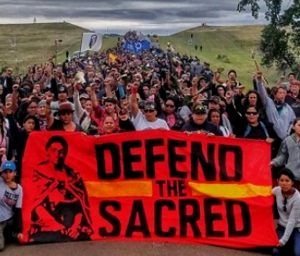
The most spectacular example of this is the nationwide mobilization in support of the water protectors at Standing Rock a year ago. The Energy Partners Transfer Corporation was attempting to build a pipeline through land sacred to native peoples in North Dakota. The pipeline went under the Missouri River threatening the water supply.
One of the many organizations supporting the Water Protectors was Greenpeace . As a consequence, they were sued by Energy Transfer Partners and accused of racketeering under the RICO act, a law originally passed to be used against organized crime.
The suit was designed to tie up the resources of Greenpeace , harass them, and cost them money. The lawyers for the corporation are the same firm used by Donald Trump. These legal actions by big corporations are called SLAPP suits. This stands for Strategic Litigation Against Public Participation.
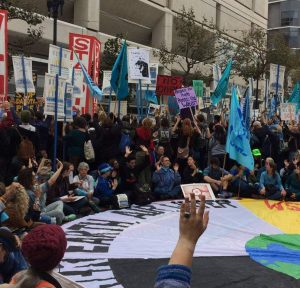
In recent times these lawsuits have been proliferating. Two weeks ago 18 organizations including the Center for Constitutional Rights banded together to fight back.
Guest – Attorney Deepa Panmanabha, the assistant general counsel with Greenpeace since 2011 and is based in Washington DC. Deepa is involved in defending Greenpeace against two lawsuits attempted to silence the organizations advocacy work brought by Resolute Forest Products and Energy Transfer Partners. She also advises on a variety of legal matters and managers criminal law cases where green peas after this engage in civil disobedience. Deepa represents Greenpeace USA in the Protect the Protest Task Force, a recently formed coalition created to confront corporations that file lawsuits design to silence dissent and provide resources to individuals and groups facing these suits.
————————
————————
Civil Liberties, Criminalizing Dissent, Human Rights, Hydraulic Fracturing, Political Prisoner, Prison Industry, Surveillance, Targeting Muslims, Torture, Truth to Power
Podcast: Play in new window | Download
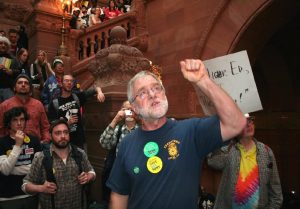
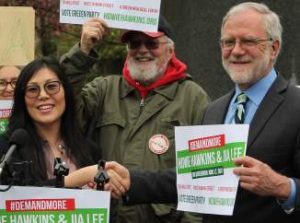
Green Party Candidate for New York Governor: Howie Hawkins
Former United States President Jimmy Carter has pointedly observed that the United States is not a democracy, it is an oligarchy. That is, it is a country ruled by a handful of rich people, the 1%, at the expense of the vast majority, the 99%, the famous description by the Occupy Movement.
The political and ideological mechanism for keeping this state of affairs Is the two party system in the USA, which in reality, as independent presidential candidate Ralph Nader has written, is really one party of big business with two wings, the Republicans and the Democrats.
Although the two party system was not mentioned in our constitution, state laws make it extraordinarily difficult for a third, independent, party to get on the ballot. Their ideas receive little media exposure reinforcing their exclusion.
This lack of the political process even as we are witnessing a radicalization, especially among young people, has led to a discussion on the left among socialists, democratic socialist, and progressives generally about how to move forward. The main question being debated is “do we support socialists who run on the democratic party ticket“ or do we stay independent of the democratic party or, do we work both inside and outside of the Democratic Party? Ballot Access News
Guest – Howie Hawkins, retired teamster from Syracuse, New York and the Green party candidate for New York governor. He previously ran as a The Green Party’s gubernatorial candidate in 2010 and 2014. During the later campaign he received 5% of the vote. He is the author of the recent article “the case for an independent left party: from the bottom up.“. It was published in Black Agenda Report.
—-
Nationwide Prison Strike 2018
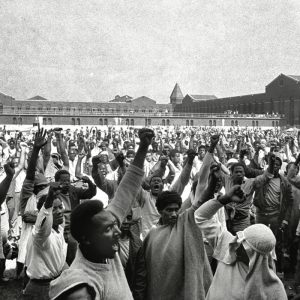
Slavery never ended, human rights attorney Bryan Stevenson has observed, it just evolved. One form of this evolution is the huge number of African-American men in America’s prisons and the conditions of their confinement.
More than half of America’s 2.3 million prisoners are African-American. Many prisoners, black, brown, and Latino, went on strike on August 21. The strike ended on September 9, 2018. The prisoners did work stoppages, sit-ins, commissary boycotts , and hunger strikes to demand major reforms to our country’s prison and criminal justice systems. They demanded humane living conditions, access to rehabilitation, sentencing reform, and an end of what they termed “modern day slavery.“
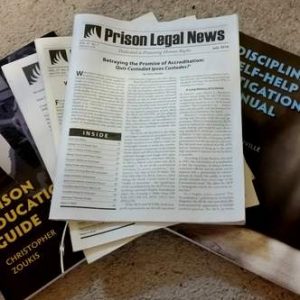
Guest – Paul Wright, founder and Executive Director of the Human Rights Defense Center. He is also the editor of Prison Legal News, the longest running independent prisoner rights publication in US history. A former prisoner himself, Paul Wright was behind bars for 17 years in the state of Washington until his release in 2003.
——————
——————
Civil Liberties, Criminalizing Dissent, Human Rights, Human Trafficking, Torture, Truth to Power
Podcast: Play in new window | Download
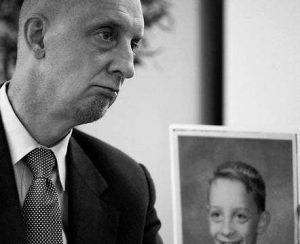
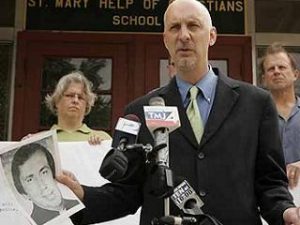
Beyond Apology: Child Torture and Cover Ups In the Catholic Church
“How does the Catholic Church evaluate cases of pedophilia committed by priests?” This is the first question posed in the pamphlet titled “Pedophilia and the Priesthood,” written by Monsignor Raffaello Martinelli. The answer reads in part: These crimes of pedophilia have been labeled as “a crime against the most weak,” “a horrendous sin in the eyes of God,” a crime “that damages the Church’s credibility.”
The most severe condemnation, a source of clear and unequivocal blame, is found in the words of Jesus when, identifying himself with the little ones, affirms in the synoptic Gospels: And whoever receives one child such as this in my name receives me. Whoever causes one of these little ones who believe in me to sin, it would be better for him to have a great millstone hung around his neck and to be drowned in the depths of the sea (Matthew 18:5-6, Mark 9:42, Luke 17:1-2).
In August 2018 it came to light that for over 70 years, Roman Catholic Bishops and other Church officials in Pennsylvania covered up child sexual abuse by more than 300 priests. They dissuaded victims from reporting the abuse and they convinced police not to investigate it. This is all according to a grand jury report issued last month.
The report, initiate by Attorney General Josh Shapiro, is the widest inquiry by a US government agency into Catholic Church sexual abuse of children. It covers six of the state’s eight Catholic dioceses. It found more than 1,000 identifiable victims but says there are likely thousands more whose records have been lost or who were too afraid to come forward. Shapiro said in a press conference that the cover up by senior officials in the church reached at times up to the Vatican.
At the same time, allegations have been raised that Pope Frances knew Cardinal Theorore McCarrick had abused seminarians, but that he lifted penalties imposed on him by Pope Benedict the 16th.
With these news reports, the Catholic Church has been thrown into turmoil. On the one side are traditional members who argue that sexual abuse can be stopped with stricter adherence to church doctrine. On the other side are reformists urging that the church stop condemning homosexuality and permit gay priests to be open about their sexual preferences.
Today on Law and Disorder we bring you a special examination of the continuing revelations into the extent of sexual abuse of children by Catholic priests, and cover-ups of abuse by Church officials.
After PA Grand Jury Report, Survivors Renew Demand For Federal Investigation Into Church Sexual Violence And Cover-Up
Guest – Attorney Pam Spees from the Center for Constitutional Rights. She has worked closely with SNAP, the Survivors Network of those Abused by Priests, since 2011 with the filing of a complaint at the International Criminal Court. The complaint called for an investigation and prosecution of high-level Vatican officials, including then-Pope Benedict, for the widespread and systematic rape and sexual violence within the Catholic Church.
Guest – Peter Isely founding member of End Clergy Abuse, a new global organization, launched in Geneva in June, of survivor leaders and human rights activists from five continents and 28 countries. Peter wrote a 2003 SNAP white paper to the Department of Justice calling for federal intervention into the matter of clergy sexual abuse. He is a survivor of childhood sexual assault by a Wisconsin priest, one of the founding members of SNAP and previous Midwest Director. A graduate of Harvard Divinity School and a psychotherapist in private practice, Peter established and directed the nation’s only inpatient program for victims of clergy sexual trauma at Rogers Memorial Hospital located outside Milwaukee.
New York Attorney General Underwood Announces Clergy Abuse Hotline: 1-800-771-7755 or File Complaint Online
—————–
—————–
Civil Liberties, Criminalizing Dissent, Habeas Corpus, Human Rights, Political Prisoner, Prison Industry, Supreme Court, Surveillance, Torture, Truth to Power
Podcast: Play in new window | Download


Holding Smart City Projects Accountable – Sidewalk Labs Toronto
Around the world, countries are talking about the idea of, and developing plans to implement, so-called “smart cities.” Smart Cities are urban areas that use electronic data to collect information, which is then used to manage financial assets and other municipal resources. Data is collected from citizens and electronic devices, and is then processed and used to monitor and inform the management of traffic, transportation systems, hospitals, schools, law enforcement, water supplies, and other community services, such as libraries.
The Smart City concept uses information and communication technology to interact with the cities infrastructure and to monitor its development and evolution. Proponents claim it will increase efficiency. Information and Communication Technology is used to increase the contact between local citizens and government to reduce costs and enhance the quality and interactivity of urban spaces within cities. Critics say it vests too much power in profit-minded corporations, and that total connectivity may makes smart cities a hacker’s dream.
In 2018, the Canadian government launched a Smart Cities Challenge offering prizes up to $50 million dollars for towns and cities that will work to improve residents’ lives through innovation, data, and connected technology. A few months earlier, in October 2017, the Google-affiliated company Sidewalk Labs announced plans to build a neighborhood “from the Internet up” along Toronto’s waterfront in a spot known as Quayside. The goal is to create an “advanced microgrid” to power electric cars, bring down housing costs, improve recycling and use data to improve public services. The project has had support from Prime Minister Justin Trudeau who declared it a “testbed for new technologies.”
Guest – Bianca Wylie, an open government advocate with a background in technology and public engagement, Bianca leads work on public sector technology policy for Canada at Dgen Network and is a co-founder of Tech Reset Canada.
—-
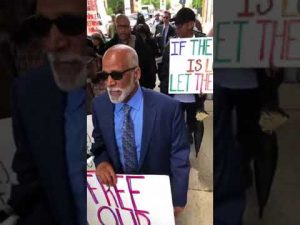
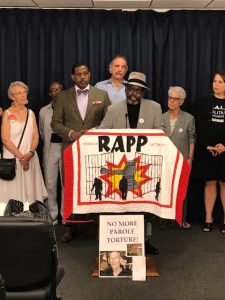
The New York State Parole Board: Failures in Staffing and Performance
“All people have in them a dream of being free again,” writes D.B., a 40-year-old who has spent 21 years in prison. During this time, D.B has had a total of 12 hearings at the Department of Corrections: four postponements, two de novo hearings, and eight board hearings.
Like D.B., many inmates have the same dream of being free, but for those being reviewed by parole commissioners W. William Smith and Marc Coppola, their chances are slim. In an extensive report co-authored by the RAPP (Release Aging People in Prison) and the Parole Preparation Project, “The New York State Parole Board: Failures in Staffing and Performance” outlines the serious problems within the New York State Parole Board, focusing on the board’s inability to perform while significantly under-staffed and allowing the continued malpractice of board commissioners Marc Coppola and W. William Smith.
W. William Smith has been on the board since 1996 when he was appointed by Governor George Pataki. He was re-appointed by Governor Cuomo in 2017. Although the rules and regulations around the Parole Board have been updated and modernized, Smith continues to deny parole to people convicted of violent crimes despite demonstrated rehabilitation.
Marc Coppola, like Smith, frequently denies parole because of a person’s crimes rather than their demonstrated low level of risk to public safety. His political ties and financial gifts to the elected officials in charge of confirming parole board members suggests that he is not a fair or ethical candidate for the position of Parole Commissioner. Both Smith and Coppola have been known to be condescending and unprofessional in their interviews for the parole board.
Guest – Dave George, Associate Director of RAPP or Release Aging Persons in Prison.
Guest – Jose Saldana, Jose was recently released from prison after serving 38 years. He works with parole reform organizations and RAPP.
—————-
—————-