CIA Sponsored Terror, Civil Liberties, FBI Intrusion, Habeas Corpus, Human Rights, Surveillance, Targeting Muslims, Torture, Truth to Power, War Resister
Podcast: Play in new window | Download
Updates:
- Michael Smith and Heidi Boghosian Discuss May Day Events
- Michael Smith Reads A May Day Letter From Lynne Stewart
- Retired Chemistry Professor Tried For Jury Tampering Represents Self and Wins.
- Federal Lawsuit Filed Against NYPD For Improper Use Of Barricades
- Four City Council Members File Suit Against NYPD For Police Abuse
—–
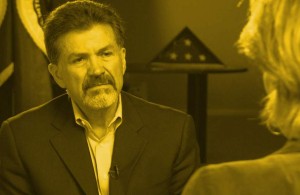
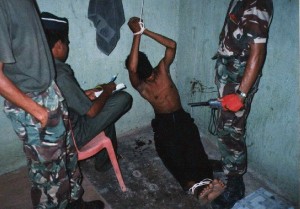
Former Head of CIA Clandestine Service Justifies Torture On CBS 60 Minutes
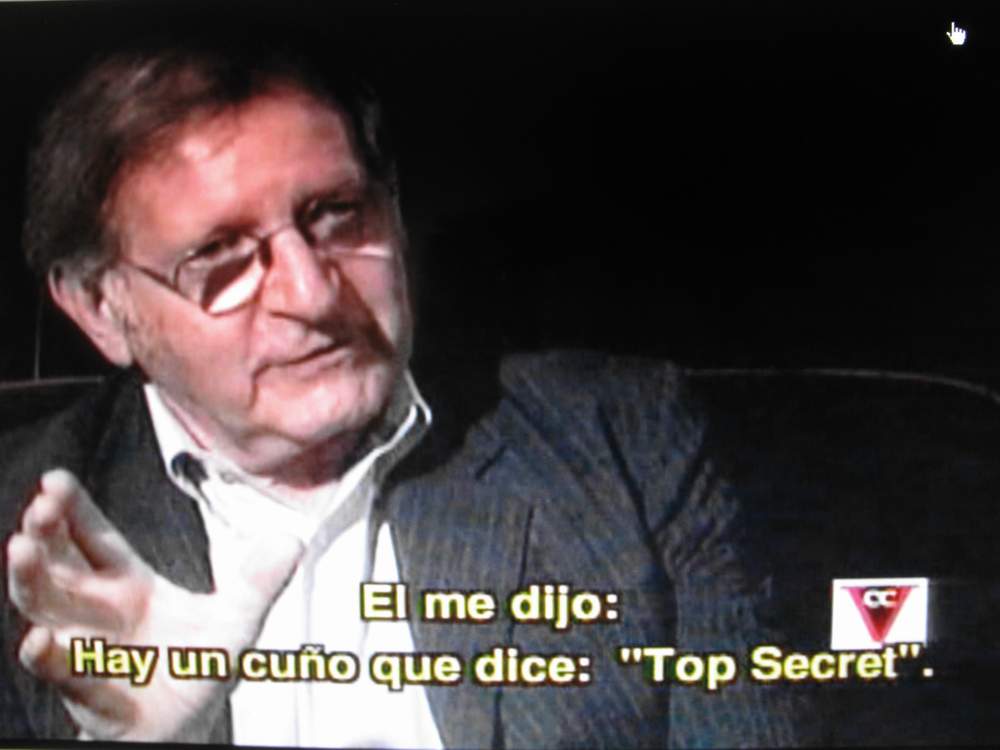
In a recent interview on CBS news, former head of the CIA’s clandestine service Jose Rodriguez discussed the destruction of 92 tapes in which terrorism suspects were subjected to water boarding and other forms of torture. Rodriguez told CBS that he destroyed the tapes to protect the people who worked for him at various black sites. But critics say Rodriguez is afraid of criminal prosecution because those 92 tapes contained compelling evidence of criminality and are a threat to Rodriguez and those who approved the use of torture. Rodriguez, a thirty-year veteran of the CIA, and spent most of his entire career in Latin America, supports the idea that torture works to get information.
Attorney Scott Horton:
- We know the government in response to FOIA requests, and litigation requests has released photographs and tapes repeatedly in the past, and always obliterates the faces involved, so of course the identities are not released.
- Obama announced in his speech from Kabul, al-Qaeda’s been defeated. It’s a faint shadow of what it was before.
- The tapes contained evidence of crimes, it showed water boarding and other torture techniques. It documented those techniques, and that presented a risk to Jose Rodriguez and to the the people up above Rodriguez who are responsible for putting through torture policy.
- George Tenet was involved, Bybee, a judge in the Ninth Circuit in Las Vegas, John Yoo who is a professor at the University of California, Steven Bradbury who is now a partner in a law firm in Washington DC and then it went into the White House where it went into the National Security Council.
- The trail consistently leads straight into the office of former Vice President Dick Cheney. He was the key mover for the introduction of torture policy.
- Domestically, we have an anti-torture statute that includes for conspiracy to torture, both of those things were violated. They apply outside of the United States, so they would have applied to the conduct of a CIA agent operating in Poland or Thailand for instance.
- Jose Rodriguez: He’s trying to make money, he’s selling a book, what you saw was a 36 minute advertisement for his book, published by an affiliate of CBS.
- Beyond that I’d say he’s trying to build sympathy and beat back calls for his own prosecution.
- I think this was an ill advised strategy and I think he confessed to criminal conduct in the course of this interview.
- At one point they claimed that they were able to track down and pick up Jose Padilla through the use of water boarding, which is very very interesting because Padilla was arrested and in custody before the first case of water boarding was applied.
- Mitt Romney has been out there punching away constantly on the advocacy of torture and the response from the Obama campaign has been silence. Silence.
- The guy came across to me as something of a psychopath (Jose Rodriguez)
Guest – New York attorney Scott Horton, Scott is known for his work in human rights law and the law of armed conflict. Scott is also the contributing editor to Harper’s Magazine.
—–
Common Cause Files IRS Whistleblower Complaint Against ALEC
The American Legislative Exchange Council, or ALEC, is a tax exempt charity that spends millions of dollars annually to lobby for hundreds of bills in state legislatures around the United States. It came to the attention of the public for having drafted and pressured passage of the so-called stand your ground legislation after the shooting death of Trayvon Martin in February. The watchdog group Common Cause has asked the IRS to review ALEC’s status claiming that ALEC is “a corporate lobby masquerading as a charity,” and that contributors should not be allowed to claim the gifts as charitable contributions.
Nick Surgey:
- ALEC describes itself as nonpartisan although the majority are members of the Republican Party.
- It’s concerning from a tax perspective, ALEC is operating as 501c non-profit, which means its a charity.
- Therefore corporations who are members of ALEC are allowed to take a tax deduction, when they contribute up to hundreds of thousands of dollars.
- If Visa, Verizon or Amazon then those lobbying would not be tax deductible, they would be subject to tax, but they do the same lobbying through ALEC.
- All of those contributions are subsidized by us – the tax payer. And that’s wrong.
- We shouldn’t be subsidizing the activities of any corporation.
- Until recently ALEC operated 9 Task Forces, they were forced to close one 2 weeks ago.
- Stand Your Ground Bill / Drafted by the NRA, lobbied by them and presented to legislators in Florida 2005.
- The NRA took it to ALEC, who they’re a member of, Walmart chaired the taskforce. Walmart the largest retailer of weapons in the United States.
- The Stand Your Ground bill is now law in 20 states.
- ALEC organizes around these 9 task forces. They have bills that really cover almost every policy area.
- Other areas include rolling back environmental protection, they have a commerce task force, where a lot of anti-union bills, the right to work legislation, it comes from that task force.
- Corporations will use the state essentially to lobby on their behalf.
- Common Cause has a very good picture of what ALEC has been doing in the last 2 years and this formed the basis of this massive IRS submission.
- One document are these scorecards which they send to their corporate members, where they celebrate the success that they have. Some of the early scorecards, they mapped out the complete picture of the United States and where all of their model bills have been introduced.
- A source provided us with emails going between ALEC and state legislators. We were very greatful to be represented pro-bono by one of the country’s leading whistle-blower firms, Phillips and Cohen.
- Voter ID has been increasingly connected to ALEC.
- We believe the bigger fraud is disenfranchising millions of predominantly African American, elderly or young student voters. In wasn’t until 2009 when ALEC took it up, that it really injected energy into it at the state level and its been introduced in 34 states. (Voter ID)
- ALEC has an ability to take a law, not always a new law and sell it to their almost 2000 state legislator members.
- ALEC has about a third of all state legislators in the entire country as members.
- There was a fracking bill, and it was sponsored by Exxon Mobile.
- ALECExposed.org
Guest – Nick Surgey, Nick conducted the research helping to expose the American Legislative Exchange Council. Nick joined Common Cause in March 2011 as a Legal Associate. He formerly worked at the British Refugee Council in Leeds, England, where he advocated on behalf of asylum seekers. He previously worked at an immigration law firm, as an elected student union officer and as a paid campaigner. Nick holds an undergraduate degree in History and Politics and a post-graduate diploma in law.
—————————————–
Afghanistan War, Civil Liberties, Criminalizing Dissent, Human Rights, Iraq War, Prison Industry, Supreme Court, Surveillance, Targeting Muslims, Torture, Truth to Power, War Resister
Podcast: Play in new window | Download
Updates:
————
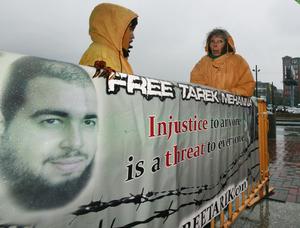
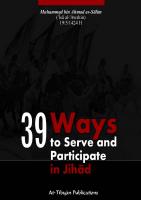
39 Ways To Limit Free Speech
39 Ways To Limit Free Speech is the title Law Professor David Cole’s recent article. Earlier this month, a 29-year old citizen from Sudbury, Massachusetts named Tarek Mehanna was sentenced to seventeen and a half years in prison for translating a document. The text he translated from Arabic is “39 Ways to Serve and Participate in Jihad” and its all over the internet, you can read it says David Cole, but don’t try to translate it. One issue in the government’s prosecution of this case is the use of the decision from the Brandenburg v. Ohio case in which the Supreme Court established that standard in ruling that the First Amendment protected a Ku Klux Klansman who made a speech to a Klan gathering advocating “revengeance” against blacks and “Jews.”
Professor David Cole:
- He was accused of providing material support to al-Qaeda by translating various documents and videos from Arabic into English. There’s no allegations that Mehanna ever met with or even talked to a member of al-Qaeda. There are no allegations that the translations were delivered to or provided to al-Qaeda which was the designated group.
- The government argued that because he translated these documents and put them up on the web and hoped to encourage people to support jihad and support al-Qaeda, that’s enough to constitute material support.
- Here’s an instant in which the government is prosecuting pure speech but no showing that the speech was connected to illegal conduct, no showing that it was intended to produce eminent lawless action, which the Supreme Court said is required to produce under Brandenburg.
- It’s enough that he put it up on the web and wanted to support al-Qaeda.
- If that’s a crime what about the New York Times when it does a report on one of the many messages Osama Bin Laden put after 9-11?
- I represented the Humanitarian Law Project in the case that went to the Supreme Court in 2010, in which the HLP was in engaging in advocacy of human rights and peace, clearly non-violent, non-criminal conduct.
- But because they wanted to do it to and with the Kurds in Turkey and particularly the political representatives of the Kurds in Turkey which is the Kurdistan Workers Party (designated as a terrorist organization) the government argued that it was a crime to teach the KWP to bring human rights claims in Geneva and work with them in peace overtures to the Turkish Government.
- The Supreme Court upheld that, but doesn’t apply to independent advocacy. (until now)
- Now if you wanted your speech to support terrorist organizations, even if you did it independently of that organization, even if you never met or talked to anyone in that organization, we can make it a crime.
- Very much about declaring a “new front” in the war on terror and the front is going after internet propaganda.
- To me it recalls the kind of aiding the enemy prosecutions we saw in World War 1.
- We as citizens need to be active in monitoring and pushing back against this material support statute.
Guest – Professor David Cole teaches constitutional law, national security, and criminal justice at Georgetown University Law Center. He is also a volunteer attorney for the Center for Constitutional Rights, the legal affairs correspondent for The Nation, a regular contributor to the New York Review of Books, and a commentator on National Public Radio’s All Things Considered. He has been published widely in law journals and the popular press, including the Yale Law Journal, California Law Review, Stanford Law Review, New York Times, Washington Post, Wall Street Journal, and Los Angeles Times.
——————-

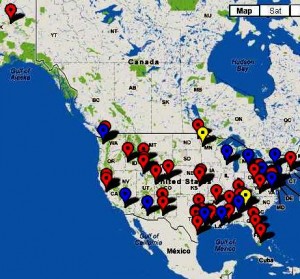
FAA Releases Lists of Drone Certificates—Many Questions Left Unanswered
Earlier this year we discussed the partnership with Cornell University and Technion-Israel Institute of Technology. The two institutions are working together to build a campus in New York City. Technion is involved with developing robotic weapons systems, which include aerial drones, and unmanned combat vehicle technology. There are many more universities involved with drone technology. Through a series of Freedom of Information requests by the Electronic Frontier Foundation, the FAA has been forced to reveal approximately 63 active drone sites. These sites are located in 20 states and their owners include military and universities. Universities include Cornell, (which we just mentioned) the University of Colorado, Georgia Tech, Eastern Gateway Community College and many more.
Attorney Jennifer Lynch:
- We filed a FOIA request with the FAA last April asking for copies of all the certificates of authorization and the special air-worthiness certificates that the FAA issues to anybody to wants to fly a drone in the US.
- We asked for these lists which are called COAs, or Certificates of Authorization. The COAs apply to public entities like state and local law enforcement, universities, the federal government.
- We got two lists from the FAA and the FAA says these cover all of the entities that applied for an authorization to fly a drone in United States.
- They’re very interesting, the COA list includes some unsurprising entities like DARPA, DHS, Customs and Border Protection, the FBI, various branches of the military. We already knew those entities were flying drones.
- What was more surprising was the number of universities and colleges on the list.
- Universities that have an aerospace engineering program they may be seeking authorization so the students can learn about and design drones.
- The Electronic Frontier Foundation is a civil liberties non-profit, we focus on civil liberties and new technology, and we’re concerned about surveillance equipment used by the government.
- Drones are a duel use technology, they can be used for good or for bad.
- They can see inside buildings, survey an area at night with heat sensors, they also have the ability to carry communications intercept tools. You could swap out various payloads on a drone.
- Then of course these drones can carry weapons.
- You can build your own drone, DIYDrones.
- We don’t know too much about what’s going on now. The reason the EFF file the FOIA request in the first place is that we just don’t know how agencies are using these drones.
- What we found is that a lot of the police forces that have drones are required to fly them under 600 feet. If its something that flying under 600 feet you’re going to be able to see that.
- Congress was getting a lot of pressure, and the FAA was getting a lot of pressure from state and local law enforcement, the military and the federal government to authorize more drones to be used in the United States.
- We’ve heard from the Congressional Research Service that 1 in 3 warplanes right now is a drone.
- The wars are going to end and the military is going to want to something with these drones.
Guest – Jennifer Lynch, staff attorney with the Electronic Frontier Foundation and works on open government, transparency and privacy issues as part of EFF’s FOIA Litigation for Accountable Government (FLAG) Project. In addition to government transparency, Jennifer has written and spoken frequently on government surveillance programs, intelligence community misconduct, and biometrics collection. Prior to joining EFF, Jennifer was the Clinical Teaching Fellow with the Samuelson Law, Technology & Public Policy Clinic at UC Berkeley School of Law. At the Samuelson Clinic, Jennifer specialized in privacy and intellectual property issues, including investigations on social media, privacy and the smart electrical grid, digital books, and open source regimes for biotech. Before the Clinic, Jennifer practiced with Bingham McCutchen in San Francisco and clerked for Judge A. Howard Matz in the Central District of California. She earned both her undergraduate and law degrees from UC Berkeley.
—————————–
Afghanistan War, Civil Liberties, Criminalizing Dissent, FBI Intrusion, Habeas Corpus, Human Rights, Iraq Veterans, Iraq War, Surveillance, Torture, War Resister
Podcast: Play in new window | Download
Updates:
————————–
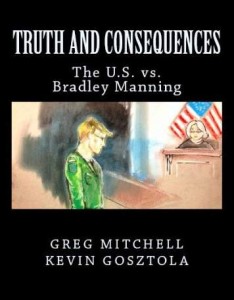
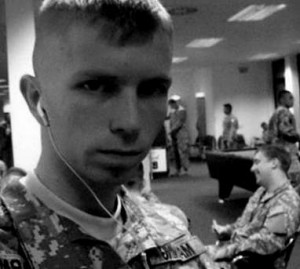
Truth and Consequences: The U.S. vs. Bradley Manning
In the past year, we’ve covered Wikileaks and specifically the Bradley Manning case in our updates. We talk today with Greg Mitchell co-author of the new published book, Truth and Consequences: The U.S. vs. Bradley Manning. In the first part of the book titled Solitary Man, Greg Mitchell gives readers a detailed look into the character of Bradley Manning. The second part of the book details the Bradley Manning trials written by co-author Kevin Gosztola. Hard journalism let the voices of friends and family document the important details in Manning’s life leading up to Wikileaks and then the book dives into the complexities of the trial. In the preface Greg writes “Ultimate truths, in this case, may lead to ultimate consequences for one who would not be silent.
Greg Mitchell:
- The second half of the book is really the only thing out there that covers in depth what has happened to him in the last few months.
- Namely his court martial proceedings after he was imprisoned for a year and a half. His first hearing was last December. He is awaiting what is expected to come out as a formal court martial in August. If it does start in August, it will be well over 2 years since he was arrested.
- A lot of the charges are related to passing along to Wikileaks, this classified secret information. Course the most dynamite charge is that he gave aid to the enemy.
- Who is the enemy? The government was forced to say that it was Al-Qaeda. That charge potentially carries the death sentence.
- They’re interested in punishing Manning, the big fish they’re after is Julian Assange.
- Last year there was global outrage when he was kept in solitary confinement, being forced to sleep naked, and stand at attention naked.
- All the top media outlets had a falling out with Wikileaks, and I think there’s a spill over from that.
- There hasn’t been any media coverage that really probes into what’s going on here.
- Over and over he (Bradley Manning) cited his outrage at what he was seeing in those cables and in Iraq, and things he was asked to participate in.
- The court martial will be extremely embarrassing to the military because they gave him access to these documents.
- He was a kid who grew up in Oklahoma, his parents eventually got divorced. He was a computer nerd, growing up. He realized in his teens, he was gay.
- He wasn’t a longtime peacenik or things like that, he always had some social conscience, and when he got to Iraq, he saw things that upset him.
- It may have never come out, that he would be arrested, except that he had these online chats with Adrien Lamo, who is a convicted hacker. Lamo decided Manning was talking too much about what he did and went to the authorities.
- The Manning case shows this incredible legacy of our wars in Iraq and Afghanistan, which have gone on for a decade, its never ending and yet the American public has never been brought face to face with what the US has done in those countries, civilian casualties.
Guest – Greg Mitchell writes daily for The Nation magazine’s web site. He is the author of more than a dozen books, including The Campaign of the Century (winner of the Goldsmith Book Prize), So Wrong for So Long: How the Press, the Pundits and the President Failed on Iraq, Why Obama Won, Tricky Dick and the Pink Lady, The Age of WikiLeaks, and with Robert Jay Lifton, Hiroshima in America and Who Owns Death? His most recent books are Atomic Cover-up and Journeys With Beethoven. He was the editor of Editor & Publisher from 2002 to 2009. He also served as longtime editor of Nuclear Times magazine, and before that was senior editor at the legendary Crawdaddy. Hundreds of his articles have appeared in leading publications and he has served as chief adviser for two award-winning documentaries.
—-

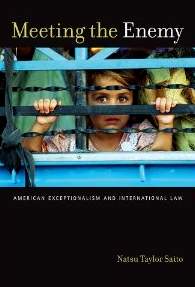
Lawyers You’ll Like – Attorney Natsu Saito
For our Lawyers You’ll Like series, we welcome back attorney and professor Natsu Saito. In our last interview, Professor Saito mentioned how the current system of international law evolved from the a broader agreement between the European colonial powers based on how they were not going to destroy each other in the process of taking over the rest of the world. It is this duality that Natsu writes about in her book Meeting the Enemy: American Exceptionalism and International Law. Professor Saito joined the College of Law faculty in 1994 and teaches international law, human rights, race and the law, immigration, criminal procedure, and professional responsibility. Her scholarship focuses on the legal history of race in the United States, the plenary power doctrine as applied to immigrants, American Indians, and U.S. territorial possessions, and the human rights implications of U.S. governmental policies, particularly with regard to the suppression of political dissent.
Professor Natsu Saito:
- The duality that the US does exempt itself (from international law) very consistently and very frequently and yet promotes international law very strongly and relies upon it.
- It has relied upon certain premises that are fundamental to the whole outlook and paradigm of colonialism – which is that there is a higher good, a more civilized approach the US embodies.
- The law doesn’t apply because we have a higher aim of civilization and that justifies not playing by the rules.
- The United States making others comply with human rights standards while exempting itself
- Moving humanity toward this higher goal is so critical because if you strip that away and you look at the realities on the ground, you see what has been termed Western civilization has been incredibly barbaric.
- In order to get around that analysis, you have to say it was for a higher good.
- I think the “left” tends to accept the general framework, and to make particular criticisms of policies and practices that are obviously problematic. The US government engaging in torture for example, but each instant is accepted as anomalous instead of the larger picture.
- It is too frightening even for the people on the left to deal with the reality that this is a country that sits on occupied land, illegally occupied by its own rules. People on the left want to make it a kinder, gentler colonialism.
- I started out thinking I was writing a book about the failure of the United States failure to comply with international law, as I got into it, the more interesting questions were the push / pull dynamics between reliance on international law
- The current system of international law evolved from the international law which was the agreement between the European colonial powers of how they were not going to destroy each other in the process of taking over the rest of the world.
Guest – Professor Natsu Saito, Department of Ethnic Studies, University of Colorado. Co-Sponsors: UCI Department of Asian American Studies; UCI Department of Planning, Policy, and Design; UCI Department of Criminology, Law and Society; The Center for Unconventional Security Affairs; The Center for Research on Latinos in a Global Society. Legal scholar Dr. Natsu Saito delivered a lecture on homeland security. Her lecture examined the implications of the USA Patriot Act on Civil liberties for immigrant groups and for the rest of the population
——————————————-
Civil Liberties, Human Rights, Torture
Podcast: Play in new window | Download
Updates:
- Mumia Abu-Jamal Appeal Rejected
- Supreme Court Ruling Allows Strip Search For Any Arrest – Targets Minorities
- ICC Declined Investigation Into Operation Cast Lead
————-
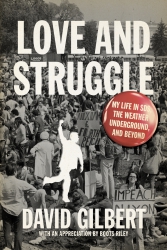
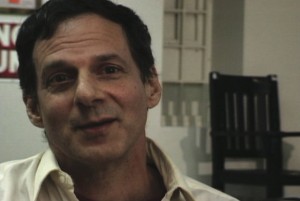
Love and Struggle: My Life in SDS, the Weather Underground, and Beyond
Love and Struggle: My Life in SDS, the Weather Underground, and Beyond is the title of a new book chronicling the militant career of radical activist David Gilbert. As many listeners may know David Gilbert was the founder of SDS, Students for a Democratic Society at Columbia University and he helped build an underground resistance to war and racism known as the Weathermen, one of the most radical movements in the United States. Gilbert was incarcerated because of his involvement in the 1981 Brinks robbery that resulted in four deaths. His book is a very personal account told from first person that marks his various stages as a liberal, a radical and then revolutionary. Gilbert has been in jail for the past 3 decades and readers get a rare glimpse into this retrospective.
Dan Berger:
- David has been in prison my whole life. As a teenager and activist I needed a mentor.
- I started writing political prisoners and David Gilbert was one of them.
- He was patient and gracious in answering my many questions. Helping me think about race and empire and my role in the world.
- I think he’s done a phenomenal job of walking us through the thought process.
- In his own case, David was reluctant to write about prison conditions, and Love and Struggle is not at all a prison memoir.
- I think its quite rare to have a prisoner write a book that’s not about prison conditions.
- The humanizing effect he writes about is not about the abuse he’s suffered inside. Video with readings
—–
Naomi Jaffe:
- David and I met when we were both graduates at the New School in New York, in ’67 it must’ve been.
- We were co-founders of New School SDS, we were fire-y young students together for several years in New York.
- David wrote (Love and Stuggle) because young people were asking him, what the lessons were from that period. Lessons- the way that our generations have much to learn from each other, passing a legacy from generation to generation.
- There’s a huge amount on racism and white supremacy and being a white ally, an analysis of how you move in a way as a white person to oppose white supremacy.
- To me, its not only the connection but learning from who you learn from.
- His (David Gilbert) ability to figure out that the clearest analysis of an oppressive system comes from people who are on the receiving end of it.
- David says Malcolm X opened the eyes of his generation.
- People are beginning to read it for the transfer of information from one generation to another.
- I think one of the lessons is how has David survived as a prisoner.
- He wrote an earlier book which was a collection of essays called No Surrender. It meant; how do you maintain your spirit?
- From the point of view of the Occupy Movement, the ability to center the narrative of people of color and of the most oppressed people.
Guest – Dan Berger, a writer, activist, and the George Gerbner Postdoctoral Fellow at the University of Pennsylvania. He writes about race and postwar American social movements. His latest book is The Hidden 1970s: Histories of Radicalism
Guest – Naomi Jaffe, writer and prison activist who helped to proof read Love and Struggle, add political and other detailed commentary.
————-
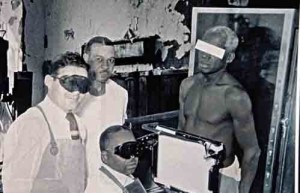
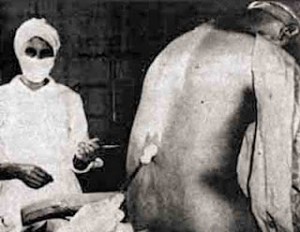
Guatemalan People Experimented On And Used As Test Subjects
We discuss a very shocking story today, about tests conducted by the U.S. Public Health Service on more than five thousand individuals in Guatemala. From 1946 to at least 1953, more than a thousand people were deliberately infected with sexually transmitted diseases. The victims included prisoners, soldiers, the mentally ill and commercial sex workers none of the had consented to this egregious treatment.
In November 2010, President Obama demanded an investigation regarding what he called the “intentional infection of vulnerable human populations.” He noted that “The research was clearly unethical.” President Obama, Secretary Clinton, and Secretary Sebelius have publicly apologized. Last fall, the Presidential Commission for the Study of Bioethical Issues released a report on its investigation into medical experimentation that took place in Guatemala. The Commission called these experiments “especially egregious”.
It’s important to note that the experimentation in Guatemala was overseen by the same lab — the Public Health Services Venereal Disease Research Laboratory — as the STD experiments at Tuskegee. In fact, some of the same researchers were involved and some of the same diseases. In the Tuskegee matter, the parties reached a $10 million settlement in 1974 in which the United States promised to provide medical benefits to the participants and established the Tuskegee Health Benefit Program (now the CDC’s National Center for HIV/AIDS, Viral Hepatitis, STD and TB Prevention).
Meanwhile, a class action lawsuit was filed on behalf of 8 individuals who claim to have been victims in the Guatemalan case, spouses or descendants of victims and is now moving its way through federal courts.
Attorney Piper Hendricks:
- There were experiments going on in Terra Haute, Indiana and Tuskegee, Alabama.
- There were ethical limitations with what they could do within the United States.
- The US medical researchers went down to Guatemala and targeted vulnerable populations including ophans, mental health patients, prisoners, soldiers; people who never gave consent to be part of these experiments.
- They used different methods, bringing fluid out of the spinal column, mixing that with Syplitic material and injecting that back into the person. Mixing material from genitalia into water and having people drink it.
- The populations that they were working with were in institutions already.
- Susan M. Reverby is the Marion Butler McLean Professor in the History of Ideas and Professor of Women’s and Gender Studies at Wellesley College, and an historian of American women, medicine, public health and nursing.
- There wasn’t a known treatment for syphilis at the time and they wanted to watch the course of the disease, what does it do to the human body left untreated.
- But when penicillin became a known remedy for syphilis, the fact that it was withheld, and that people were intentionally misled.
- In Tuskegee, you have a population that’s not as well protected, not respected, this pre-civil rights movement.
- We’ve brought several claims, some under International Law and some as Constitutional violations.
- International law claims, look at specifically the non-consensual human medical experimentation and also bring a claim of cruel and degrading treatment.
- The statute that we’re proceeding under, the Alien Tort Statute is one you can’t use in court unless you clear the hurdle of having a violation of international law.
- Given the nature of the disease this is something pass on to your spouse, and potentially to your children.
- The defendants in this case are the US Government and the Pan American Health Organization which is the subsequent organization from the Pan American Sanitary Health Bureau.
- They’re arguing that they should be substituted under the Westfall Act for any individual defendants.
- When you substitute the US Government you’re then proceeding under the Federal Tort Claims Act.
- In sum, you can only sue the US Government when the US Government gives you permission to do so.
- Change.org link
Guest – Piper Hendricks, an attorney working on the Guatemalan case, she has served as the International Justice Project Director of The World Organization for Human Rights USA in Washington, D.C
————————————————————–
Civil Liberties, Habeas Corpus, Human Rights, Military Tribunal, Political Prisoner, Surveillance, Torture, War Resister
Podcast: Play in new window | Download
Updates:
- Bradley Manning Update: Michael Ratner – We Have A Secret Trial Going On Right Now
- Park Slope Food Co-op Vote
- Len Weinglass Remembrance
—-

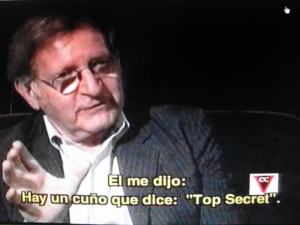
Leonard Weinglass TV Interview: Cuba 2004
We hear excerpts of an interview with attorney Leonard Weinglass and Miguel Alvarez, adviser on international and political affairs to Ricardo Alarcon, president of Cuba’s National Assembly. In this interview Len Weinglass discusses his early career representing the first African-American mayor of Newark, New Jersey, Daniel Ellsberg and the Pentagon Paper, plus crucial turning points that shaped his life story as a people’s lawyer.
———
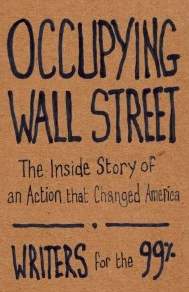
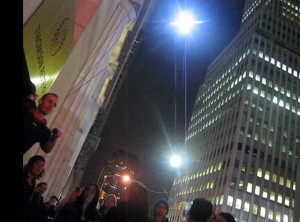
Occupying Wall Street: The Inside Story Of An Action That Changed America – Writers For The 99%
A collective of writers for the 99 percent have created a very interesting new book for OR Books, distributed by Haymarket Books. They’ve employed a unique writing method to chronicle the many details within the movement of Occupying Wall Street. A team of nearly 60 writers with rotating membership, collaborated on the describing the intricate structures and daily life of the movement such as running the general assembly, how the security and medical center operate and then the stories of the activists involved.
Colin Robinson:
- We were supportive of what was going on down in Zuccotti and I thought we should do a book about this too.
- Beginning of October I went down to the trash cans outside my apartment and pulled an old Budweiser carton out of the trash and cut it into the shape of a book cover and wrote on it with a Sharpie, “Occupying Wall Street, By Writers With the 99%.
- I photographed it with my iPhone at home, and sent it out with a press release, and New York Magazine picked it up saying Occupy Wall Street has a book and it then went everywhere.
- The journalists were calling me up saying, who are the writers for the 99 percent?
- So then I had to get some volunteers. We went down to Zuccotti and talked to some of the facilitators down there. They said you should just come to a General Assembly and we’ll put it on the agenda.
- Tell the GA about the book, get some volunteers and you’ll be fine.
- So we went down on a Wednesday night, in early October. I was not feeling comfortable about this.
- I was a little nervous about speaking at the GA to try and get permission to publish the book.
- They suggested to go to and Education and Empowerment Meeting Committee at 60 Wall Street and take it up there and ask for volunteers there.
- The following week we went the meeting and the response at that point was not very encouraging.
- People were suspicious of who we were. Whether this book was going to be seen as the official book of Occupy Wall Street, which we were saying it wasn’t but they thought it would be. And that it was going to develop an analysis that they didn’t agree with.
- No, we were saying its going to be descriptive, it’s not analytical. A lot of the twinkling was out flat, some of it was down. In the end, some guy stood up in the back and said I don’t think we should support this.
- We got blocked, he crossed his arms in front of chest. If this goes through, I’m walking out. We felt really wounded by it.
- But afterward some people from the committee came up and said we feel badly about the way you were treated, we’ll volunteer to help. We started meeting weekly at 60 Wall Street and the meetings got bigger and bigger.
- We came up with a structure, chapter by chapter. There were 2 themes in the book, one was a chronological account of the action. The day the occupation started on September 17.
- The drilling down of the daily detail for what life is like in the square. We’ve got sections in the book of how the kitchen worked, how the library worked, how the general assembly worked.
- I thought at first, what I would do would be to interview the people who are volunteering to write, pick the ones who could write well, and as kindly as possible tell the ones who couldn’t write they couldn’t be part of it.
- I soon realized that was not is the spirit of Occupy Wall Street.
- We were trying to reproduce the book in a way that reflected the values of Occupy Wall Street that meant it was produced in a very democratic, horizontal fashion. Anyone who wanted to participate could.
- We came up with a chapter structure, we sent people out into the square and we did about 200 interviews in the square. We allocated the interviews to each chapter and we tried to find 3 or 4 people to write each chapter.
- The whole book was written by 60 people in 2 weeks. This book absorbed the ethos of Occupy Wall Street.
- If you repress a little bit of it, its going to spring up somewhere else.
Guest – Colin Robinson, former Publisher, Verso Press and The New Press, and Scribner senior editor; John Oakes, former Grove Press Editor and founder of 4 Walls, 8 Windows and ORBooks. He’s written for magazines and newspapers including the New York Times and the London Guardian.
——————————————————
Civil Liberties, Habeas Corpus, Human Rights, Surveillance, Targeting Muslims, Torture, Truth to Power
Podcast: Play in new window | Download
Updates:
——

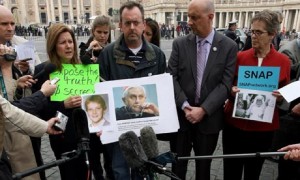
Church Puts Legal Pressure on Abuse Victims’ Group
Earlier last year, we reported on the Vatican revising its laws making it easier to discipline sex abuser priests. This month, lawyers for the Roman Catholic Church and priests accused of sexual abuse and pedophilia have used the courts to force the group SNAP Survivors Network of those Abused by Priests to disclose more than two decades of e-mails that could include correspondence with victims, lawyers, whistle-blowers, witnesses, the police, prosecutors and journalists. A Kansas City judge decided SNAP must comply with lawyers because it had relevant information regarding 2 cases in Missouri.
Attorney Barbara Blaine:
- As you know we are a not for profit, self help support group run by and for people who have been victims of clergy sexual abuse. We have been providing support information to each other since 1988.
- The church officials have taken an unprecedented move and they have subpoenaed records from our SNAP leaders.
- We are an international group, we have groups forming in other countries as well.
- Here in the United States, we have support groups meeting in about 70 cities. In these support groups people share their feelings and tidbits of information on how to cope with the repercussions of sexual violence.
- There are subpoenas from 2 different cities, 2 different cases, both from the state of Missouri.
- In Kansas City, what’s happen in the past year, is a lot of sex abuse by priests has been uncovered, exposed and brought to light. In the process, the Bishop himself was indicted for failure to protect children.
- In one particular civil case, the church attorneys have subpoenaed the records of our national director and they are looking for very extreme information.
- These subpoenas are not tailored to be helpful to get information for the case, SNAP is not a party to either of these cases. They ask for records with no date, from the very beginning of SNAP, from 1988.
- They’re asking for all the information in our emails, in our files, and they’re looking for any information that names any priest from the diocese of Kansas City, St Joseph.
- We do believe that the victims who have spoken out in Kansas City, have had an impact. I think its empowered other victims to come forward. I think they’re trying to shut down SNAP in Kansas City.
- The biggest concern we have now is the fear that this is spreading. In many ways, the intended effect has already taken place.
- I started SNAP, I did so, after I was raped and sexually violated by a priest in my parish growing up.
- Stop The Legal Bullying Petition.
Guest – Attorney Barbara Blaine, founder of SNAP the nation’s oldest and largest self-help organization for victims of clergy sexual abuse 10 thousand survivors.
——–
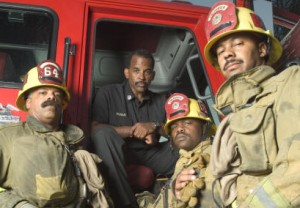
Court Rules FDNY Liable for Up to $128 Million in Back Pay to Black and Latino Applicants
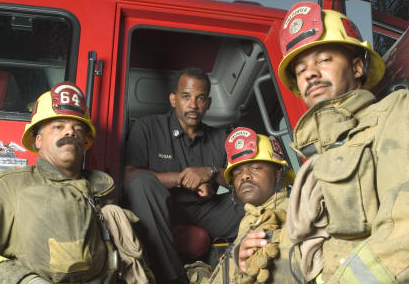
Last week, a US District judge awarded plaintiffs back pay in a class action lawsuit that found the New York Fire Department to have racially discriminatory hiring practices. US District Judge Nicholas Garaufis also ruled that the City of New York is liable for nearly 129 million in lost wages. This amount will be distributed to Black and Latino applicants, 82 and 42 million dollars respectively. The judge also ordered the FDNY to hire 186 Black firefighters and 107 Latino firefighters.
Attorney Darius Charney:
- The Vulcan Society which is the Black fraternal organization for New York City brought a lawsuit in the early 1970s challenging the hiring practices of the department as violative of the equal protection clause of the Constitution, saying that they racially discriminated.
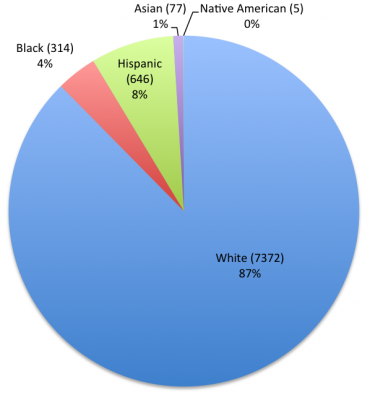
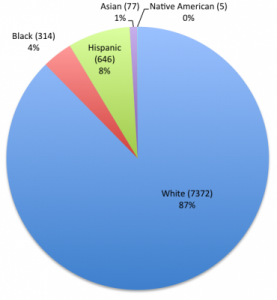
- Blacks and Latinos, its over half of the city’s population today. If you look at the fire department today, its roughly if you combine Blacks and Latinos about 10 percent.
- A federal judge in New York found that the hiring practices were discriminatory and violated the 14th amendment, the 2nd Circuit Court of Appeals upheld that decision and the Fire Dept was ordered to make some changes in 1970s.
- As of 2002 when we actually formerly brought this case, the department was 3 percent Black, 5 percent Latino, which is not much different than it was in 1970. The city was asked to work out a settlement, the city refused for 2 years.
- So, the EEOC referred the case to the Department of Justice, Civil Rights Division. This was during the Bush Administration and as you know the Civil Rights Division didn’t do much.
- We’ve proven discrimination about 3 times over now to the judge. Last year we had a big federal trial in Brooklyn on what relief the court should order because of the discrimination that was found.
- If you try to obstruct a federal court order, that could lead to some serious penalties.
- Our clients, the Vulcans first met with Mayor Bloomberg when first came to office in 2002 about this problem.
- We felt it was a purposeful and intentional effort by the city to exclude people of color.
- There have been incidence, we think retaliatory incidence we think against Vulcan members for there efforts in this case.
- The FDNY has really dropped the ball in responding to these acts of discrimination.
- The court has to oversee a lot of different aspects to this case. There’s a new test being developed, they’re going to start administering this week. There’s now the piece about the compensation for the plaintiffs.
- Federal judges can’t closely supervise the case so they appoint these monitors to simply act in the role of the judge and oversee each of these aspects of the case.
- We hope that the city will at some point stop fighting because all the things the judge has ordered for changing, I think benefits the fire department.
- A group of women sued in the early 1980s alleging sex discrimination and again they pointed to the test and other aspects of the hiring process.
- They were victorious and the court ordered them to hire 50 women, which they did do.
Guest – Attorney Darius Charney, senior staff attorney in the Racial Justice/Government Misconduct Docket. He is currently lead counsel on Floyd v. City of New York, a federal civil rights class action lawsuit challenging the New York Police Department’s unconstitutional and racially discriminatory stop-and-frisk practices, and Vulcan Society Inc. v. the City of New York, a Title VII class action lawsuit on behalf of African-American applicants to the New York City Fire Department which challenges the racially discriminatory hiring practices of the FDNY.
—————————-