Civil Liberties, Criminalizing Dissent, Crony Capitalism, Human Rights, Prison Industry, Torture, Truth to Power
Podcast: Play in new window | Download
Updates:
—

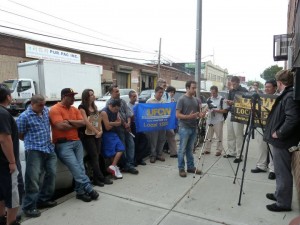
Workers Win Large Settlement at Supplier to Chinese Restaurants After Hard Fought Campaign
A bitterly contested campaign against Pur Pac, a food distribution warehouse giant reached a settlement of 470 thousand dollars for workers who had their wages illegally withheld and more. The workers organized with Focus on the Food chain, Brandworkers and International Workers of the World to challenge sweatshop conditions, wage theft, retaliation and discrimination in the sprawling industrial corridor of food processing and distribution that service New York City markets and restaurants. Daniel Gross, the executive director of Brandworkers said – quote – The conditions in the sector are deplorable and systemic but, as the Pur Pac workers have shown, positive workplace change can and will be won.”
Attorney Daniel Gross:
- Pur Pac is typical of an industrial corridor of food processing and distribution warehouses that service a tremendous amount of food to restaurants and supermarkets in New York. Much of what we eat in restaurants is processed in sweatshops.
- Pur Pac is a distributor of restaurant and food supplies to Chinese Restaurants, cafes and bakeries. They distribute huge quanitities of rice, cooking oil, chopsticks.
- Sweatshop, tremendous amount of wage theft, hundreds of thousands of dollars. Vicious retaliation for workers who stand up for their rights, exhausting long shifts, very heavy work.
- We facilitate worker led, comprehensive campaigns. The company used several tactics to avoid accountability here, the main approach that they used is they engaged in sham sales.
- They would fraudulently transfer assets, rebrand the company. The company was originally called Easy Supply. Easy Supply escaped accountability by purporting to go out of business, now same factory, same trucks, same products was called Sunrise Plus. We caught up with Sunrise Plus and they engaged in another sham sale and that created Pur Pac.
- We were also able to win a binding code of conduct, which creates very powerful protective mechanisms for collective activity, going forward.
- We were able to win recognition for the IWW, as exclusive bargaining agent for Pur Pac workers. It was really the biggest victory for Focus On The Food Chain.
- I was a low wage worker mostly in retail and fast food. I was working at Borders Books and Music and really felt the sting of a multi-national employer which at the time was highly profitable. It didn’t pay a fair wage, offered an insecure and unpredictable schedule.
- It employed a management force that really showed tremendous disrespect for rank and file workers.
- We had 44 Starbucks stores that were infested with rats and insects. We did worker-citizen journalism and we got photos and video of these rats and roaches, we inflated a huge, inflatable rat in front of the stores and shared our video and photographic evidence.
- Starbucks is still engaged in really a scorched Earth effort, complete disrespect for the right to organize and free association.
- The National Labor Relations Board (NLRB) is the administrative agency charged under federal with administering union management affairs. They have jurisdiction over cases under the National Labor Relations Act.
- Mezonos Maven Bakery is a food production sweatshop. Mezonos Maven was cheating workers out of their wages, disrespecting workers, and the workers came together, they didn’t join a union but they came together with community groups, etc. Mezonos Maven, started illegally firing workers.
- When the workers stood up to the most basic worker’s rights, they were subjected to fierce immediate retaliation.
Guest – Attorney Daniel Gross, Executive Director of Brandworkers, a non-profit organization protecting and advancing the rights of retail and food employees.
—–

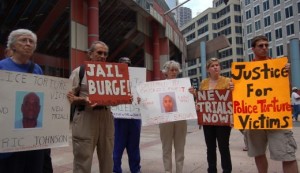
Federal Judge Rules Former Mayor Daley Can Be Sued For Alleged Torture Cover Up
We continue to bring updates on the ongoing police torture and abuse scandal revolving around former Chicago police commander Jon Burge. Recently, a federal judge has now ruled that former Chicago Mayor Richard Daley can be allowed to be kept in the lawsuit where he is charged with conspiracy to cover up police abuse and torture. As many listeners may know, Burge has been sentenced to 4 and a half years in prison for obstruction of justice and lying about torturing prisoners to obtain coerced confessions. The People’s Law Office brought the case in 2005 and the city of Chicago refused to settle while pumping hundreds of thousands of dollars into the case.
In the beginning of September, attorney Flint Taylor will depose former mayor Richard Daley which will force him to answer questions about the abuse of African Americans under Burge’s command. This case has already cost Chicago taxpayers more than 43 million dollars in settlements and legal fees. Past shows with Attorney Flint Taylor
Attorney Flint Taylor:
- Daley was the state’s attorney for Cook County for eight years in the 80s during that time he was specifically informed of police torture.
- Instead of doing anything about it and dealing with the torturers, Jon Burge and company, he continued to encourage it by prosecuting men who had been falsely arrested and charged based on tortured confessions sending as many of them to death row.
- When he became mayor, he continued to have an active role in the cover up of the torture practice.
- He had at various times as chief of law enforcement and chief executive of the city of Chicago, the power and obligation to act and if he did, we wouldn’t have had all these men on death row, and in the penitentiary and we wouldn’t have had all these men tortured.
- We brought it several times in lawsuits starting in 2003. Judges had consistently turned their backs on that claim.
- The new Chicago mayor Rahm Emmanuel who has successfully tip toed past this both in his campaign and now as the first 100 days of being mayor had to respond to it.
- They’ve paid over 13 million dollars to defend these civil cases that we’re in. We take the mayor at his word, and we hope this leads to settlements and compensation for the men who’ve been tortured.
- There are six men who have lawsuits in court. Unfortunately because of statute of limitations most torture survivors don’t have lawsuits.
- There are still 15 men behind bars in Illinois, based on tortured confessions that Jon Burge and the Area 2 torturers coerced from them. We’re fighting to have them all get new hearings.
- I don’t know if a Daley denial in some of the actions in this case would tantamount to perjury that Fitzgerald would be interested in.
- There is a major memoranda that was sent from the police superintendent at that time to Daley, a kind of CYA saying “I’ve been giving this powerful evidence of torture from a doctor over at the county hospital.
Guest – Attorney Flint Taylor, a graduate of Brown University and Northwestern University School of Law and a founding partner of the Peoples Law Office. More bio
———————————————-
Civil Liberties, Criminalizing Dissent, Death Penalty, Guantanamo, Habeas Corpus, Human Rights, Political Prisoner, Torture, Truth to Power
Podcast: Play in new window | Download
Updates:
—
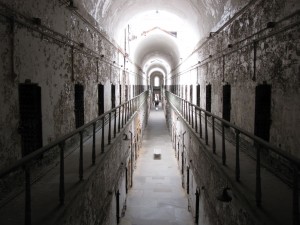

Cruel Solitary Confinement In Pennsylvania Prisons
Earlier this year the National Lawyers Guild called on Superintendent Louis Folino to support the Program Review Board’s recommendation to release Russell Maroon Shoatz into the general prison population at SCI Greene in Waynesburg, Pennsylvania.
Jerome Coffey, a political prisoner currently being held in Pennsylvania’s SCI Forrest. Jerome’s social work while in prison include sending clothes to villages in Uganda and to women prisoners in the Philippines. That work has labeled him an instigator and he’s been placed in solitary confinement for more than 5 and a half years.
Bret Grote:
- The Human Rights Coalition was founded by state prisoners at the State Correctional Institution in Greene, Pennsylvania in 2000. The Pittsburgh chapter where I work was founded in 2006-2007.
- The main mission of the Human Rights Coalition was to bring the voices of the most excluded from criminal, legal, criminal justice discussions, namely those of prisoners, their family members and effected communities.
- We base our work in building relationships with prisoners and to bring support and advocacy to those most impacted by the prison system and that has led us straight into solitary confinements where people’s lives are being micro-managed down to the most minute details.
- The justifications for solitary confinement shift from to another, it used to be based on escapes. Now that Russell Maroon Shoatz is approaching his 70th birthday, they’re claiming its because of his past efforts of organizing hunger strikes, and they cite an incident where he was forced to defend himself against another prisoner.
- In Maroon’s case he met with a prisoner mental health staff person because there was some movement towards releasing him from solitary confinement that ended up being blocked.
- This staff person told him there was an allegation that he tried to organize an armed prison uprising in the 80’s. This has been following him around for over 25 years in his file, but he has not been able to challenge this because he was not informed of this at all.
- He is not represented by legal counsel. He is ripe for representation under the 8th amendment clause of cruel and unusual punishment.
- The prison authorities typical treatment for somebody who is the restrictive housing unit is a cursory interview at the cell, maybe once every 30 days with a staff worker, which is to say they’re not really giving them effective mental health treatment.
- You spend 23 hours in the cell, maybe 24 if the guards don’t take you to yard or shower.
- The things that one may witness on the whole are constant screaming, banging, and yelling and crying and cursing and talking to one’s self by prisoners who are psychologically disturbed. According to the figures up to 2500 or 3000 prisoners can be in solitary confinement on any given day in Pennsylvania. The total prisoner population in Pennsylvania is 52 thousand.
- We are constantly looking for serious and committed civil and human rights lawyers to work with us. We have a massive body of evidence. The solitary confinement system is an invisible system inside of a larger invisible system of the prisons.
Guest – Bret Grote, law student and volunteer with the Human Rights Coalition, an organization bringing the voices of the most excluded from criminal, legal, criminal justice discussions, namely those of prisoners, their family members and effected communities. The HRC works to build relationships with prisoners and bring support and advocacy to those most impacted by the prison system.
——

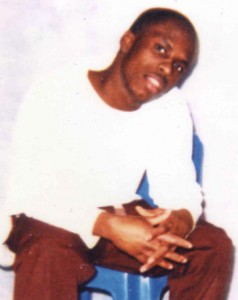
Andre Jacobs
Andre Jacobs is another Pennsylvania state prisoner in solitary confinement. Andre, a 27 year-old jailhouse lawyer, has been held in retaliatory solitary confinement for more than 8 years. In 2009, Andre was awarded 185 thousand dollars in a case against the Pennsylvania Department of Corrections, an action that has resulted in his being singled him out for abuse within the prison system. In January of this year, he was physically abused, issued death threats and denied medical treatment.
Liz Springer:
- It’s been rough, there had been days where I thought he wasn’t going to make it. I thought I was going to get a call saying he was dead. I send him inspiration cards, and support him, send him some Bible verses to keep him strong.
- There have been times he said to me, I can’t do it no longer, I can’t do it.
- They were beatin’ him in the court room. They said he had an attitude and when he was leaving the court room, I witnessed them beating him, and I said, “I love you Andre.” He turned around and said “I love you too.”
- They started beating him because they said he wasn’t supposed to speak to me.
- He lost that case because the guards got on the stand and said he hurt one of the guard’s wrist.
- He ended up with 18 years because of that. Lately he has a little hope.
- He was strapped to a chair for 12 hours not being able to move anything but his head. Didn’t eat, had to go the bathroom and he just went.
Guest – Liz Springer, activist and the grandmother of Andre Jacobs.
———

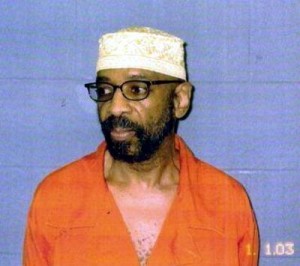
Russell Maroon Shoatz
As many listeners may know, former Black Panther Russell Shoatz has been in prison since 1972, and the past 21 of those years has been spent in solitary confinement. He’s 67, his spirit unbroken and in addition to his record of good conduct, members of the Pennsylvania Prison Society who visit Mr. Shoatz regularly attest to his peaceful disposition. Earlier this year the National Lawyers Guild called on Superintendent Louis Folino to support the Program Review Board’s recommendation to release Russell Maroon Shoatz into the general prison population at SCI Greene in Waynesburg, Pennsylvania. His daughter Theresa Shoatz joins us talk more about his advocacy work and life as a political prisoner.
Theresa Shoatz:
- The solitary confinement has had the worst effect on us. Within the 39 years we was able to have contact visits.
- The unit he’s in now, there’s no contact, you’re behind a glass when you visit.
- He’s had grandchildren since that time, and he hasn’t touched the grandchildren either. Our family is dedicated to visiting him, every 3 months.
- Russell Shoatz being known throughout the country. I notice now, his conversations are laid back, he’s not as upbeat as he used to be.
- He keeps stressing almost on our weekly calls, you gotta get me outta here.
- They told me Daddy’s a leader, I said no, he’s a grandfather. The Panthers didn’t say we want to battle the police. They said, we want to educate our youth, we want to feed them, we want to take control of our community. When it became war, and the Panthers were under attack, they said we got to protect ourselves.
- That’s what happened, and of course, Daddy’s a political prisoner. He took a stand and stood on the front line for his people and his community.
- I had a little attitude with him, I said why would you leave us, this was some years ago. He said, (I did it for my people. How could I allow you to be raised in that type of system?) It hit me like a ton of bricks.
- The guards, they called themselves the “wolfpack” when you’d see them comin, they would roll one pants leg all the up to the knee.
- I went to Governor’s office, the Governor of Pennsylvania. I was on trains, back and forth.
- It’s the same thing, when our people get in the streets and march, you really can’t do one march.
- At SCI Greene, over 20 young men in their 20’s hung themselves there (lynching) within a short time of solitary confinement.
- Daddy was constantly yelling to the guys, what to do. They come in strollin. Strollin down the solitary unit.
- This prison bubble is going to burst. There are people fighting on all levels, this prison bubble is going to burst.
- It’s going to end, we’re going to make sure of that.
Guest – Theresa Shoatz, daughter of political prisoner Russell Shoatz and activist with the Human Rights Coalition.
————————————————————
Afghanistan War, Civil Liberties, Human Rights, Iraq War, Targeting Muslims, Torture, Truth to Power, War Resister
Podcast: Play in new window | Download

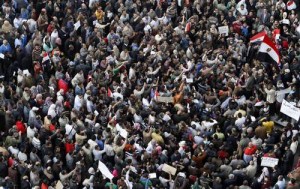
A People’s History of the Egyptian Revolution
Egypt’s revolution didn’t suddenly happen overnight, there was long important history. Beginning with Egypt and Israel signing the Camp David Accords in 1979 Egypt was rewarded with billions in US military aid that paved the way for neo-liberal style policies under Hosni Mubarak. By 2000, the first signs of widespread opposition started in solidarity with the Palestinian Intifada. The protests centered around poverty, corruption and need for democracy. A second wave of mass opposition ignited in 2003 in response to the US invasion of Iraq and Egypt’s support for the war. Then the April 6 movement rose in 2008, protesting against rising food costs and low wages. By 2010 social media and blogs were outlets for organizing and dissent.
Guest – Co-writer of the article and founder of Left Turn Magazine Rami El-Amine.
Guest – Activist Mostafa Henaway who also contributed to the article A People’s History of the Egyptian Revolution.
—-

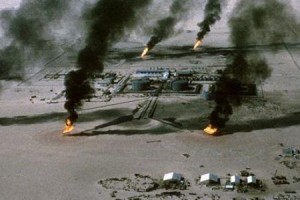
Former U.S. Attorney General Ramsey Clark on War of Aggression in Libya
As many listeners know, the military operation in Libya is not a humanitarian intervention, it is part of the global war and effort to militarize North Africa. The Chinese have sizable interests in Libya in the battle for oil. Meanwhile, the Gaddafi leadership has continued to function despite the NATO bombing campaign in the last four months and the loss of significant parts of the the country. Congresswoman Cynthia McKinney had recently returned from a fact finding mission in Tripoli during a time of intense bombing. She has organized speakers to discuss how billions are spent in this military operation while we’re being told there are no funds available for jobs, health care and education. Former US Attorney General Ramsey Clark was among the speakers, he’s been following the US and NATO involvement in brutal attempts to overthrow the Gaddafi government.
Attorney Ramsey Clark:
- The reality is that its a war of aggression, which the Nuremberg charter and judgement defined as a supreme international crime.
- What we’ve done is used the appearance of a civil war, people rising up against their own government, to wage a massive assault. – really unrelated to their activities, the first place we hit was Tripoli, they were no where near Tripoli and we bombed the daylights out of it.
- The bombing is spreading away from the compound, its hitting areas outside of the city. Interesting to note, people are still fleeing from Iraq to Syria. It’s safer in Syria, we read in our newspapers it’s violent in Syria.
- If you go back to Rwanda, and remember how everybody was outraged afterward but nobody intervened.
- A clearer illustration is what’s happening in the Democratic Republic of Congo, where hundreds of thousands of people have died and are dying by armed troops. Nobody bothers to intervene.
- What you do is, you want to go in anyway, you use humanitarian intervention as justification.
- The poor Congress is defaulting on its responsibility. The military budget exceeds all of the civilian budget. They can gloss over it but until we address the issue of US military expenditures, our country will be a threat to peace in the world.
- We spend more on the military then the rest of the world combined. It’s almost impossible to think that the United States will curtail its foreign aggressions, while the military expenditures are at what they are.
- We’ve got in the Pacific Ocean today, 8 Trident nuclear submarines, the cost is enormous each one carries 140-145 nuclear warheads, anyone of which can destroy the biggest city in the country and go beyond it, their largest warhead will leave a crater with a 25 mile diameter.
- Hard to sleep in Tripoli and other places that are under direct attack by us.
- We tolerated him for 40 years while he created the highest standard of living in all of Africa. Highest per capita income, highest levels of education. Health care and more public housing then they can use for their own citizens. – almost enough for their foreign labor. He doesn’t submit to the will of the United States.
- Sub-Sahara Africa primarily, all the places on Earth are dying. It’s not just the conditions of weather in East Africa, but everyplace you go, structure’s crumbling. The chaos seems to be spreading and we seem to prefer it.
- Rebel Forces: It’s a group that doesn’t always know each other and doesn’t always like each other.
- We took out all of Gaddafi’s planes which was easy to do. It’s easy to hit his armor.
- They’ve held their own against the might of West Europe and the United States for months and months.
- We (U.S.Government) agreed to pay without admitting liability 300 million dollars for the people killed in 1986 by our bombing.
- People have to organize and rise up. I don’t think we’re going to get anything accomplished as far as peace and reduction of US militarization except by an enormous demand by the people.
- We can cut 90 percent of the military spending in my opinion and be safer, and not be engages in all these interventions – which we can’t handle anymore.
Guest – Attorney Ramsey Clark was the former Attorney General of the United States, under President Lyndon B. Johnson. He was the first Attorney General at the Justice Department to call for the elimination of the death penalty and all electronic surveillance. After he left the Johnson administration, he became a important critic of the Vietnam War and continued defending the rights of people worldwide, from Palestinians to Iraqis, to anyone who found themselves at the repressive end of government action.
—
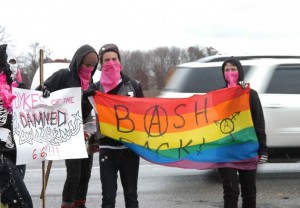

National Lawyers Guild Lawyers Victorious in Internet Free Speech Case
At a 2008, Sunday Service at the Mount Hope Baptist Church in Lansing, Michigan, members of the queer rights group Bash Back! disrupted the service to protest anti-gay policies. Months later, the church and the Alliance Defense Fund, a reactionary Christian nonprofit organization, sued Bash Back! and 15 named activists under the Freedom of Access to Clinic Entrances Act. The church and Defense Fund subpoenaed identifying information in an attempt to find out the protesters’ identities; Risup.net, a provider of online communication tools for individuals and groups working for social change, was the only email provider to challenge the subpoenas. Federal judge Richard A. Jones ruled that Riseup.net did not have to turn over the records, finding that “the Users’ First Amendment right to speak anonymously online outweighs Mount Hope’s right to discovery.” National Lawyers Guild members Larry Hildes of Bellingham, Washington, Devin Theriot-Orr of Seattle, and Mark Sniderman of Indiana successfully defended several activists who received subpoenas from Mt. Hope Baptist Church demanding they turn over their internet account records. Once again, this shows how readily corporations share private personal data on activists with the government or other private entities.
Attorney Larry Hildes:
- This church is particularly virulent with their ministry aimed at turning gay people straight.
- The group picketed outside and tried to pass out leaflets inside. Two women ran to the front of the sanctuary and kissed each other at the alter.
- Mount Hope Baptist Church called the police. The police showed up and said there’s no criminal activity here.
- The Alliance Defense Fund, a huge fundamentalist law firm and fund raising empire in Scottsdale, Arizona contacted the church and said we’ll take on your case.
- They sued the Bash Back folks under the “Faith Act” – Freedom To Access To Clinics Act. They sued them and settled for 2500.00 and a consent decree that they would never disrupt a religious service in the United States again.
- In the meantime they went to look for anyone connected with Bash Back in any way. They went to Yahoo and subpoenaed records from list-serves and Yahoo without telling anybody gave them what they wanted.
- Then they went after RiseUp and RiseUp prides themselves on two things, the internet voice of the left and privacy for their subscribers.
- Riseup attorney Devin Theriot-Orr outlined the internet case law, there is some good law.
- In order to engage in free speech you need to have some degree of security and safety that your privacy is going to be protected otherwise, it chills the climate so that very few people are going to be able to take that risk.
- The victory is that there is a first amendment right to be on a list-serve of a group, even a group whose actions can be seen as civil disobedience or illegal. Your information is still protected and private and the Freedom of Association Privilege goes to that.
- We were awarded by the court 28 thousand dollars in fees.
—————
Attorney Devin Theriot-Orr:
- I’m the pro-bono lawyer for RiseUp.net. The identity information of subscribers is protected by a longstanding precedent going back to 2001.
- Obviously the first amendment has its limits, you can’t speak anonymously about threatening to kill people.
- One of the caveats of the first amendment is that if you have a bona fide law suit and you’re trying to uncover the identity of the defendants there’s a whole balancing test to go through before you should be able to identify the defendants.
- They also provided identical subpoenas to Yahoo and Google, and even though these companies are located in silicon valley with very good federal benches, and they’re in the ninth circuit, its kind of amazing to me that other companies don’t take a stronger stance to protect their users privacy.
- We’re hoping this is a warning to overly zealous attorneys who are abusing discovery process.
Guest – Attorney Larry Hildes, National Lawyers Guild attorney in the case, Bellingham Washington.
Guest – Attorney Devin Theriot-Orr, National Lawyers Guild attorney in Seattle and pro-bono attorney for RiseUp.net.
——————————————-
Afghanistan War, Civil Liberties, Extraordinary Rendition, FBI Intrusion, Guantanamo, Habeas Corpus, Human Rights, Surveillance, Targeting Muslims, Torture, Truth to Power, War Resister
Podcast: Play in new window | Download
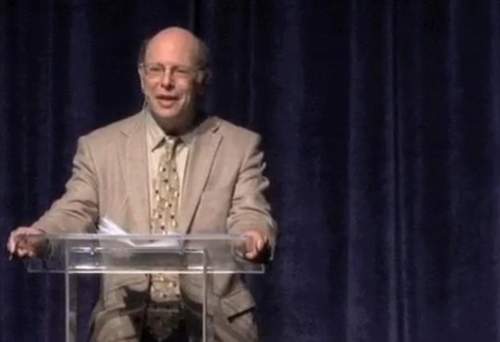
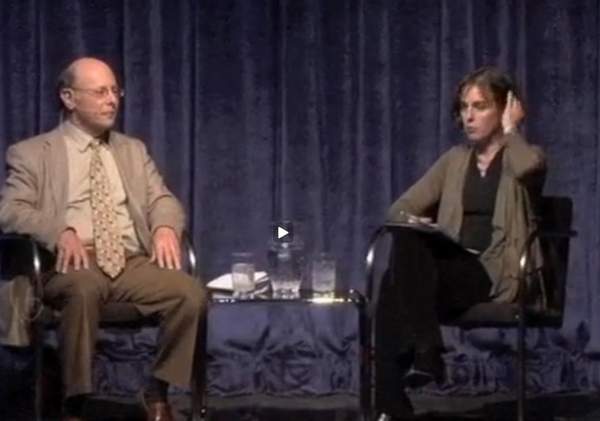
Ten Years after 9/11: War, Operation American Condor (Guantanamo) , Civil Liberties and Hope
We hear a talk from our own Michael Ratner who spoke at the James A Little Theater in Santa Fe, New Mexico. He was also in conversation with radio host Mary Charlotte Domandi. The event was titled – Ten Years after 9/11: War, Operation American Condor (Guantanamo) , Civil Liberties and Hope.” Michael is introduced by Mary-Charlotte Domandi producer and host of the Santa Fe Radio Cafe on KSFR 101.1 FM (Santa Fe, NM, Public Radio)
Michael Ratner is President of the Center for Constitutional Rights (CCR) in New York and the European Center for Constitutional and Human Rights (ECCHR) in Berlin. Both are non-profit human rights litigation organizations. He was part of the small group of lawyers that first took on representation of the Guantánamo detainees in January 2001, a case that resulted in a victory in the Supreme Court in 2004. CCR established a network of over 600 pro-bono lawyers to represent Guantánamo detainees and continues that work.
He has filed criminal complaints in the courts of Germany, France and Spain against former US officials including Secretary of Defense Rumsfeld seeking the initiation of criminal prosecutions against them for the Abu Ghraib abuse and torture as well as for their actions at Guantánamo. Recently, CCR and ECCHR prepared papers to file in Switzerland against George W. Bush for torture. As a result Bush canceled his trip. A major area of Mr. Ratner’s litigation and writing is the enforcement of the prohibition on torture and murder against various dictators and generals who travel to the United States. He has sued on behalf of victims in Guatemala, East Timor, Haiti, Argentina, among other countries. He has also litigated numerous suits to prevent or stop illegal US wars ranging from Central America to Iraq. A constant in his work has been litigation against government spying and surveillance of activists.
Michael Ratner’s books, authored or coauthored, include the soon to be published, Hell No: Your Right to Dissent in 21st-Century America (2011) and Killing Che: How the CIA Got Away with Murder (2011). Other books include International Human Rights Litigation in U.S. Courts, Second Edition (2008); Against War with Iraq (2003); Guantánamo: What the World Should Know (2004); and The Trial of Donald Rumsfeld: A Prosecution by Book (2008). Ratner has taught human rights litigation at Yale and Columbia Law Schools. A past president of the National Lawyers Guild, Ratner has received many awards including Trial Lawyer of the Year, the Columbia Law School Medal of Honor (2005), the North Star Community Frederick Douglass Award, Honorary Fellow at the University of Pennsylvania Law School (2005), and The Nation Institute/Puffin Foundation Prize for Creative Citizenship (2007). In 2006, the National Law Journal named Ratner one of the 100 most influential lawyers in the United States.
—-

Right-Wing Firms Train Public Servants on Terror Threats
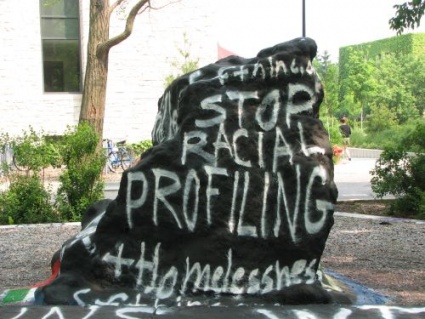
There is a sprawling hidden world of counter-terrorism organizations growing beyond control in the United States. Twenty-four of them were created by the end of 2001, including the Office of Homeland Security and the Foreign Terrorist Asset Tracking Task Force. The next year, 37 more were created to track weapons of mass destruction and collect threat tips. By 2009, nearly 260 organizations were created as 854 thousand civil servants, military personnel and private contractors with top-secret security clearances monitor national security concerns. However, according to a report from the Public Research Associates, those same concerns have bolstered a class of self-proclaimed terrorism experts who decry Islam as an evil religion of terrorists and routinely brand Muslims as primitive, vengeful, duplicitous, and belligerent people who oppress women and gays, and have values irreconcilable with “western Judeo-Christian civilization.”
In fact, when PRA discovered earlier this year that the Massachusetts Bay Transportation Authority (MBTA) had contracted with Security Solutions International to conduct a training on radical Islam, they notified the Muslim American Society, ACLU, and our other advocacy partners, who used PRA’s research to compel the MBTA to cancel the agency’s training.
Chip Berlet :
- As part of the Homeland Security Initiatives and working with the FBI in other aspects of the national security apparatus, there was a need to train thousands as part of a local state and federal counter-terrorism “experts.”
- Some of these trainings are quite good. The problem is that there are a handful of groups that train hundreds and hundreds of local, state and federal counter-terrorism experts, with rhetoric that is basically Islamophobic.
- In the late 1970s there was an attempt to restrain this illegal surveillance. I’d have to say right now it’s worse.
- What used to be done illegally and covertly is now done ostensibly legally and openly and in fact proudly by both Democrats and Republicans who should be ashamed.
- The whole strategic suspicious reporting initiative which basically is a pipeline for unverified rumor and innuendo through local police departments up through a chain of information agencies to the federal government. We know in Europe this kind of reporting is unconstitutional and bad for society.
- Now, everyone that was considered illegal and unconstitutional for which there were Congressional hearings and reforms under Jimmy Carter, now we do it.
- In proper training that is actually looking for criminal activity, not people of color who wear garb that we’re scared of. What’s going on here is untrained, badly trained officers are reporting the names of people up into a huge infrastructure of information data storage, based on bias they’ve not been trained to resist or confront within themselves.
- We described this whole process as a platform for prejudice in a report by Tom Cincotta
- Tom has on his wall a wall chart of all the agencies of this information reporting system and it has 150 dots so inter-connected, no one can control this.
- I’m urging people to form broad coalitions across the political spectrum.
Guest – Chip Berlet, (senior analyst) is a veteran freelance writer and photographer who specializes in investigating right-wing social movements, apocalyptic scapegoating and conspiracism, and authoritarianism. A PRA staffer since 1982, he has written, edited and co-authored numerous articles on right-wing activity and government repression for publications as varied as the Boston Globe, the New York Times, The Progressive, The Nation, The Humanist, and the St. Louis Journalism Review.
Afghanistan War, Civil Liberties, Criminalizing Dissent, FBI Intrusion, Habeas Corpus, Human Rights, Surveillance, Targeting Muslims, Torture, Truth to Power
Podcast: Play in new window | Download
Updates:
—————

Blair Mountain March
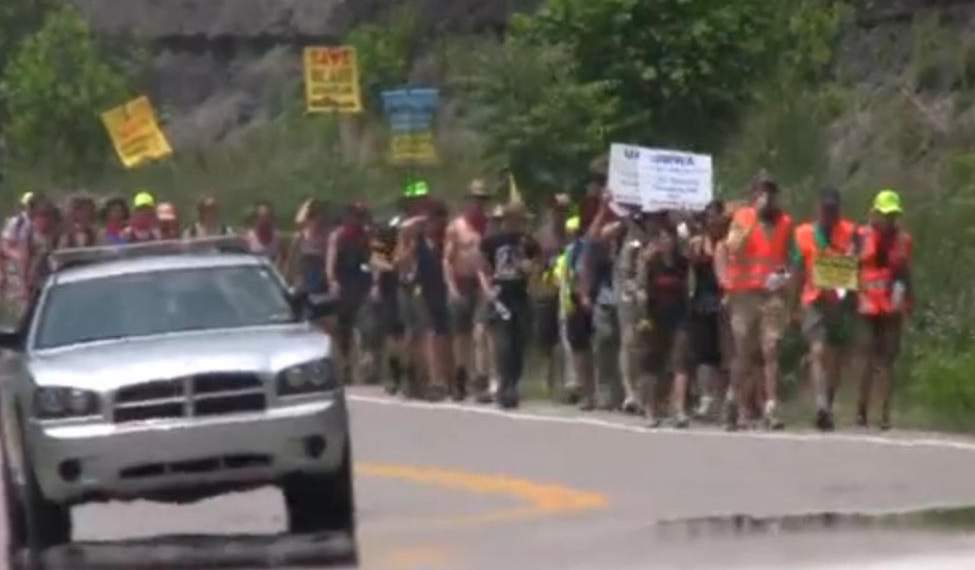
In protest to stop mountain top removal mining, hundreds of activists finished a five day fifty mile march earlier this month from Marmet, West Virginia to Blair Mountain in West Virginia. The massive under publicized march also marked the historic Battle of Blair Mountain, the largest armed conflict in US labor history. In 1921, thousands of miners near the area marched to organize non-union coal mines. This demonstration ended in a rally of speakers, musicians, celebrities, union workers and picketing at the top of Blair mountain. The demonstration drew attention to the demand of sustainable job creation in all Appalachian communities, abolish mountaintop removal, strengthen labor rights and preserve Blair Mountain. As many listeners know, mountain top removal is a highly destructive extraction coal mining process with usually no environmental remediation.
Attorney Dan Gregor:
- It is not an exaggeration to say that big coal owns southern Virginia.
- Logan and Boone Counties where we walked through, big coal has more or less owned the politics, the citizenry, the economy for a century.
- The Congressional Delegation is very sympathetic to what they perceive as coal jobs.
- During the marches we had 200-250 people at any given time.
- Putting myself in the best way that I can do legal support, and one of the core logistics organizer of the event, best do organizing support, it put myself in a position where I was knowingly arrestable.
- It was alternately exciting and freeing and terrifying. It’s a very activist lawyer, resistance approach.
- There are locals who don’t understand this doesn’t mean more jobs or it means a fraction of unionized jobs for organized coal workers.
- The Boone County Sheriff department was somewhat less then helpful. For the most part, the West Virginia State Police were professional and did their jobs carefully. We didn’t see police misconduct, or police brutality as you would see in most mass protest situations.
- The broader strategy is calling for an end to mountain top removal coal mining, transitioning to a cleaner economy with wind and solar.
- One of the reasons you don’t see mountain tops blown up in Tennessee for example, is that the Congressional Delegation there, has been resistant to it, in West Virginia, historically it hasn’t.
- Mountain top removal coal mining produces very high quality, pure Anthracite Coal, this is part of Obama’s “Clean Coal” strategy.
- A great deal of my practice is resistance law, and is assisting resisting communities.
- I’ve been able to make this a significant focus of my life as an attorney.
- Ilovemountains.org / allianceforapplachia.org
- We can always use more people, more attorneys. It took six months to organize this March on Blair Mountain, no ordinary task for volunteers.
Guest – Dan Gregor, activist attorney whose practice includes protest defense, criminal defense, immigration, and human and civil rights law. This has included assisting and representing activists involved with the annual School of the Americas Watch vigil, the Immigrant Workers Freedom Ride, people being harassed by Green Scare grand juries, and many other activist causes. Dan is a graduate of Northeastern University School of Law and Hampshire College. He is an active member of the National Lawyers Guild, and former National Vice President of the Guild.
——————
National Lawyers Guild Report: Human Rights In Tunisia
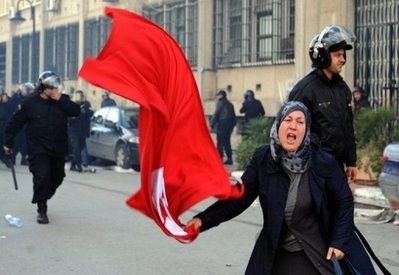
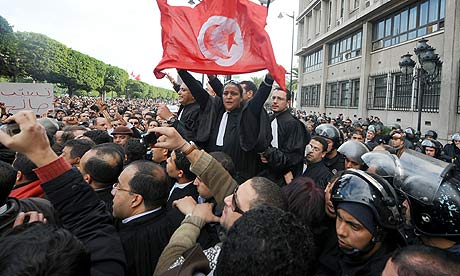
A wave civil resistance continues throughout the country of Tunisia, Africa sparked from high unemployment, food inflation, corruption, and lack of freedom of speech. During the country’s civil unrest, President Zine El Abidine Ben Ali was ousted as president, fleeing to Saudi Arabia after 23 years in power. Now, human rights violations are being investigated. A group of lawyers from the U.S., U.K. and Turkey have been investigating U.S. and European complicity in human rights abuses committed by the Ben Ali regime. The group has recently issued a warning that the U.S. and other Western governments must respect Tunisian sovereignty and not interfere in that country’s path to democracy. Atlanta attorney and National Lawyers Guild Executive Vice President Azadeh Shahshahani, was a member of the delegation and is on a speaking tour.
Azadeh Shahshahani:
- The Tunisian government passed this law, the 2003 anti-terror act. US State Department very supportive.
- If you go back to look at the US State Department Human Rights report on this, you can see the human rights violations are documented in the reports.
- It’s not like the US government didn’t know what was happening in those jails. Particularly the Islamists, after the legislation went into effect, a lot of people were picked up, for being a Muslim, for being a devout, perhaps engaging in religious discussions with your friends,
- A lot of youth were arrested and subjected to torture. Torture seemed to be really systematic, you’re arrested, detained, then tortured and confession is obtained.
- One family of a young man arrested, the father asked authorities why his son was arrested, he hasn’t done anything? They said, well, he does pray, doesn’t he?
- That was the sole basis of having been picked up. Arrests: one per day under the auspices of the Tunisian 2003 anti-terror act.
- Revolution in Saudi Arabia? Michael Ratner: That could the greatest thing that could happen.
- This “war on terror” provided the Ben Ali regime, was an enabling mechanism and justification to continue his repressive tactics.
Guest – Azadeh Shahshahhani, the Director of the National Security/Immigrants’ Rights Project at the ACLU of Georgia. The project is aimed at bringing Georgia and its localities into compliance with international human rights and constitutional standards in treatment of refugee and immigrant communities, including immigrant detainees. To that end, a variety of strategies are employed, including the development of impact litigation, legislative advocacy, providing training to attorneys, human rights documentation and the publishing of reports, public education, and coalition and movement building. The current focus areas of the project include: immigration detention, racial profiling and local enforcement of immigration laws, governmental surveillance, discrimination faced by Muslim, Middle Eastern, and South Asian communities, immigrant access to higher education, and language access in the court setting.
——————————————————
Civil Liberties, Criminalizing Dissent, FBI Intrusion, Habeas Corpus, Human Rights, Political Prisoner, Surveillance, Targeting Muslims, Torture, Truth to Power, War Resister
Podcast: Play in new window | Download
Updates:
——–
FBI to Expand Domestic Surveillance Powers
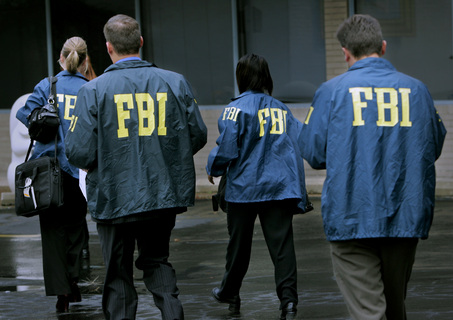
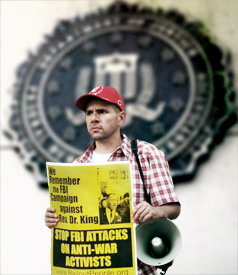
On many of our shows, we’ve discussed the broad over reaching powers and underhanded tactics the FBI use when targeting environmental or pro-Palestine activists, Mosques and Muslim-Americans. Now, new expanded FBI guidelines would allow agents easier access to search commercial or law enforcement databases, conduct lie detector tests, search people’s trash and conduct physical surveillance. Read: Anything Goes: The New FBI Guidelines
Though the guidelines are still under review, they would allow agents further access into people’s lives without suspicion of wrongdoing. The guidelines will be part of a new edition of the FBI manual, the Domestic Investigations and Operations Guide. Civil libertarians criticize the guidelines in light of recent cases such as the Fort Dix Five, the Newburgh Four and Yassin Aref in Albany, where the FBI is accused of entrapping people by infiltrating poor or specific ethnic and religious communities. Michael Ratner’s Forthcoming Book: Hell No, Your Right To Dissent
Attorney Mike German:
- The government is saying they have unfettered authority to look into your private life without any justification, and they’re claiming they don’t need any factual basis to suspect you of wrongdoing.
- National Security Letters were initially a tool to go after KGB spies, it was expanded to international terrorists. What the Patriot Act did is expand it to anyone who’s relevant to an investigation of spies or terrorists.
- The fact that the government had no reason to suspect you was no longer relevant if they could use this tool.
- That was originally set to sunset in 2005. Inspector General audit on the FBI’s use of this tool. There were five IG reports, that found the FBI were using these tools against people two or three times removed from the person of the investigation.
- Phone records, bank records, credit history and they gag the bank or place from telling you.
- IG audit found between 2003 and 2006 there were over 200 thousand National Security Letters.
- Its the FBI manual, the Domestic Investigations and Operations Guide, the FBI’s internal policy. Their internal authority created by the Department of Justice.
- These were initially designed to curb the abuse. As an FBI agent for 16 years, I found it useful to focus on the people doing bad things, not straying from that and focusing on people saying things I didn’t like, or doing things I didn’t think were right but wasn’t illegal.
- The outgoing administration in 2008 had radically altered the guidelines. People who are completely innocent and not suspected of doing anything wrong can come under suspicion and investigation under these assessments.
- The 2008 guidelines allowed the FBI to map communities based on race and ethnicity and track racial and ethnic behavior and facilities.
- Under these new guidelines 2011, an FBI agent would be allowed to search private databases, data aggregaters, that pull together all sorts of information based on marketing, state and local law enforcement information – includes if you’ve also been a victim of crime or witness to a criminal act. No factual predicate required.
- It doesn’t require attorney general approval to open an assessment. There’s no necessity to identify what federal crime they think you’re violating.
- The tools include physical surveillance, they can stand outside your house, follow you around 24/7. They can get an informant to start engaging you in a false pretense, and your friends or neighbors.
- They can interview your neighbors, they can interview your employer.
- When you become a subject of investigation you get on the terrorist watch list.
- The scary thing the Inspector General revealed, is that these (abuses) were all under the 2002 guidelines. He said where he found violations, under the 2008, this would all be perfectly legitimate.
- We at the ACLU are not just seeing the abuse with the FBI but within state and local law enforcement. You can visit www.aclu.org/spyfiles we’ve documented spying and obstruction of first amendment activity in 31 states and the District of Columbia.
- It was predictable because these laws were put in place to prevent exactly that, because that’s what the state and local police and the FBI were doing in the absence of rules.
- It’s not surprising when you take those rules away, they go into political spying mode.
- It’s very frustrating, because so much of what’s happening is happening is secret.
- Scott Crow: He found under a FOIA request, the FBI had gone to the IRS to find some small tax violation that they could put him in jail for. Because they suspected him of something, yet they had years of investigation and found no wrong doing.
- Mike German’s book – Thinking Like A Terrorist, it’s a look at what terrorists are trying to accomplish, that is to coerce the government into taking measures that actually take away the government’s legitimacy.
- Past Law and Disorder interview with Attorney Mike German.
Guest – ACLU attorney and former FBI agent, Mike German, German develops policy positions and proactive strategies on pending legislation and executive branch actions concerning domestic surveillance, data mining, freedom to travel, medical and financial privacy, national ID cards, whistleblower protection, military commissions and law enforcement conduct. German currently serves as an adjunct professor for Law Enforcement and Terrorism at the National Defense University and is a Senior Fellow with GlobalSecurity.org. German graduated from the Northwestern University Law School , and graduated cum laude from Wake Forest University with a B.A. in Philosophy. A sixteen-year veteran of federal law enforcement, German served as a special agent with the Federal Bureau of Investigation, where he specialized in domestic terrorism and covert operations. As an undercover agent, German twice infiltrated extremist groups using constitutionally sound law enforcement techniques. These operations successfully prevented terrorist attacks by winning criminal convictions against terrorists.
——————————————————————–