World Marks GTMO’s Sixth Year
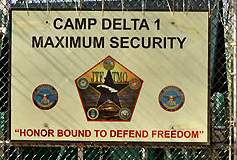
January 11th marks six years of imprisonment for the more than 300 prisoners at Guantanamo Bay Naval Base in Cuba. Last year on Law and Disorder we had taken listeners through a brief history of the Guantanamo Bay Prison, how they got there and what it means for civil liberties in the United States. We continue to examine the civil liberties issues and we’ll look at how attorneys and activists are involved in getting prisoners released.
Hosts Update: Settlement on Use of Central Park’s Great Lawn – Congratulations to NLG members Mara Verheyden-Hilliard and Carl Messineo in this important victory for the First Amendment in NYC! In addition to rescinding the rule limiting public events on the Great Lawn, the National Council of Arab Americans and ANSWER will each receive $25K and the City will reimburse $500,000 in attorneys costs and fees.
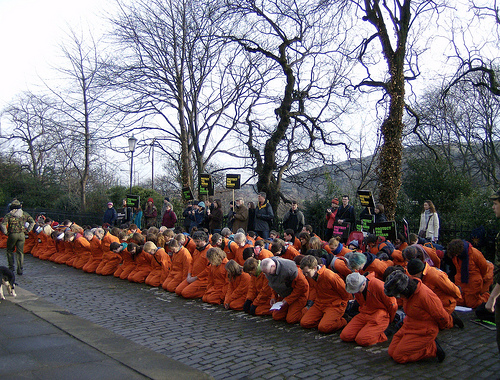
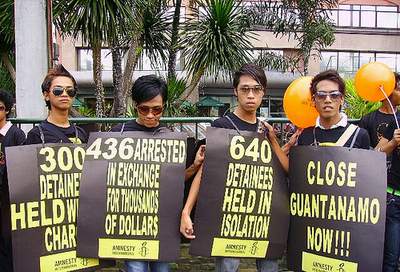
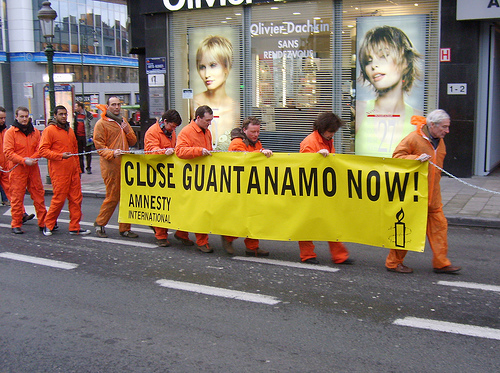
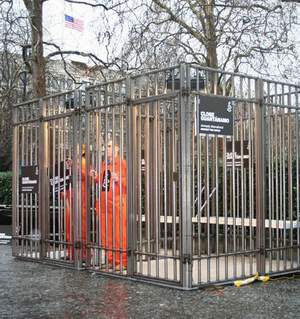
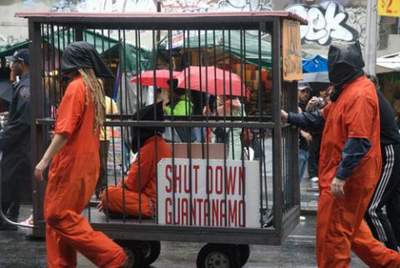
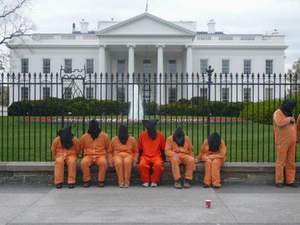
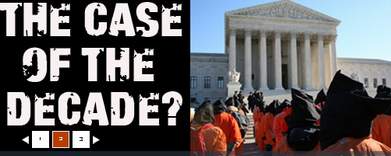
Many organizations and activists are staging powerful demonstrations this week protesting the sixth anniversary of the US detention camp at Guantánamo Bay and demanding the release of the men held there. Protesters will again don masks and the trademark orange suits associated with the prisoners and shuffle through public spaces.
Guest – Jumana Musa a human rights attorney and activist. She is currently the Advocacy Director for Domestic Human Rights and International Justice at Amnesty International, where she addresses the domestic and international impact of the Bush administration’s “war on terror” on human rights. She has also served as Amnesty International’s legal observer at military commission proceedings at the U.S. naval base in Guantanamo Bay, Cuba.
Though this sixth anniversary is a day of acknowledgment of the illegal imprisonment and torture of prisoners in Guantanamo, it also a call on governments across the world to lobby for the release of their residents. About 100 Yemenis are being held at Guantanamo, making them the biggest group among the approximately 275 detainees there, according to Yemen’s media.
A conference held in Yemen this week is aiming to secure the release of more Yemeni prisoners from Guantanamo. The conference is encouraging a wide coalition of religious leaders, NGOs and family members of prisoners to press for the release of the men. Since 2002, 12 Yemeni prisoners have been released from Guantanamo Bay prison. More than a third of Guantanamo prisoners are from Yemen. Yemen is on the Arabian Peninsula in Southwest Asia, bordered by Saudi Arabia to the North and the Red Sea to the West.
Guest – Pardiss Kebriaei, an attorney with the Center for Constitutional Rights. She specializes in international litigation, working within the Inter-American, European and UN human rights systems, and in foreign jurisdictions including the Philippines, India, Nepal, Thailand, and Colombia.
Accounts of cruel, inhuman and degrading treatment have been condemned by the United Nations, Human Rights Watch and other reputable bodies. The Center for Constitutional Rights has led the effort to get Guantanamo closed down and get prisoners the rights they’re entitled under International Law and the U.S. Constitution.
Guest – Vince Warren, executive director of the Center for Constitutional Rights was at one the many demonstrations in Washington DC. He spent seven years as national senior staff attorney with the American Civil Liberties Union (ACLU), where he led national constitutional and impact litigation to advance civil rights and civil liberties.
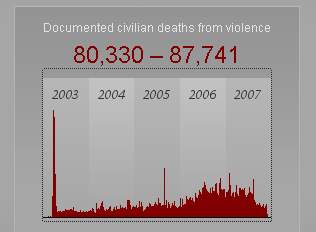
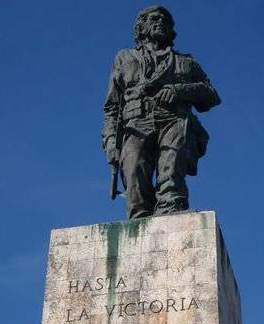
This week Law and Disorder hosts update on Guantanamo Bay demonstrations, assess the violence and death amid the illegal wars in Iraq and Afghanistan and acknowledge the 49th anniversary of the Cuban Revolution. Hosts also find out where our own Dalia Hashad has been for the last few months.
Co-hosts Michael Ratner and Michael Smith discuss the 49th Anniversary of the Cuban Revolution. We also hear the next 2 speeches from the Brecht Forum event, Who Killed Che’. Author and historian Jane Franklin and attorney/civil rights activist Len Weinglass deliver compelling talks on Cuba’s history, a background on the Cuban Five and accounts from the quiet US war.
Co-host Michael Ratner discusses presidential candidates views on torture and “soft facism.”
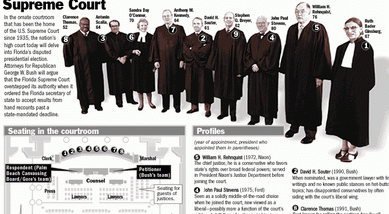
On this last day of 2007, Law and Disorder will look at the stories that have taken civil liberties in this country many steps in the wrong direction. We start with the question of impeachment, what happened, why it stalled, we’ll look at damaging supreme court decisions and draconian legislation that took large bite out of the right to free speech and dissent in this country.
Co-host Michael Ratner enumerates several key stories of torture in 2007, including the destruction of the CIA videotapes, the Mahar Arar case, and the confirmation of Attorney General Michael Mukasey who says he’s not certain if water-boarding is torture.
Law and Disorder hosts then talk about the recent Supreme Court arguments regarding the remaining Guantanamo Bay Cuba detainees and the horrible failure to restore habeas corpus. This case may determine once and for all whether there is a constitutional right to habeas corpus – that is, a fair hearing before a real court – for everyone detained by the U.S. government at Guantánamo.
Increases in surveillance powers were also on the list of wrong-turn stories this year, co-host Heidi Boghosian points out the legislation that extends the Foreign Intelligence Surveillance Act. In the wake of Congress approving a dramatic expansion of U.S. warrant-less wiretapping powers, the Center for Constitutional Rights has argued that the NSA’s program is unconstitutional and should be struck down. The argument in CCR v. Bush comes after Congress and the Bush administration passed the Protect America Act of 2007 which broadly expands the government’s power to spy on Americans without getting court approval.
The 5-4 ruling that race cannot be a factor in the assignment of children to public schools. Free speech not an option for students regarding (Bong Hits For Jesus).
Campaign Finance Reform – The Supreme Court has thrown out part of the McCain-Feingold campaign finance law that placed restrictions on corporations and unions from buying television ads close to elections
The citizens’ ability to challenge government violations of the separation of church and state, Hein v. Freedom from Religion Foundation 5-4, the Justices ruled that taxpayers do not have standing to challenge the White House program on federal aid to faith-based organizations.
“One of the country’s foremost defenders of human rights and civil liberties, Michael Ratner has led the fight to demand due process for Guantánamo detainees, adequate safeguards against intrusive government surveillance, and an end to torture and extraordinary rendition.”
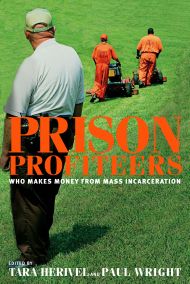
Incarcerating 2.3 million people isn’t cheap. Paul Wright unearths astonishing facts on the private prison industry and it needs to maintain occupancy rates to make a profit. Prison Profiteers will tell you where your tax dollars are going as you help to bankroll the biggest prison machine the world has ever seen. Prison Profiteers was also written by Tara Herival, co-editor of Prison Nation.
37,000 Americans asked CCR to send a copy of the U.S. Constitution to George W. Bush as an early holiday present in the hope that he might actually read it. Santa made the trip down from the North Pole in his sleigh to try to deliver the law.
United Nations Torture Panel Says Taser Shock Is Torture – Hosts discuss numerous reports of taser-related deaths including the incident in Vancouver, B.C
—
Palestinian Activist Sentenced to 11 Years in Prison
Here on Law and Disorder we’ve followed the pivotal moments in the Mohammed Salah case. Earlier this year, Salah was cleared of terrorism charges but recently convicted of lying about his ties to the Palestinian group Hamas. He faces nearly two years in prison. The sentence for a minor charge of obstruction of justice comes as a major setback for prosecutors who have spent a decade investigating charges that could have put Salah behind bars for life.
Recently however Abdelhaleem Ashqar was sentenced to 11 years, 3 months in prison for refusing to testify before a grand jury about activities of Hamas. U.S. District Judge Amy St. Eve told Ashqar that regardless of his political beliefs, he had an obligation to follow U.S. law. She said that once he was granted immunity, he could not refuse to testify before the grand jury.
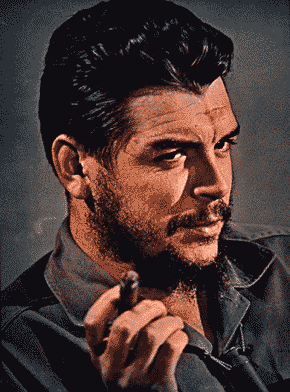
We hear the first speech by our own co-host Michael Smith based on his own research into Che Guevara’s life. Michael tells the audience at the Brecht Forum about his travels to Cuba, his research work with co-host Michael Ratner and lays out the case of how Che could have been murdered. This was one of 3 compelling speeches held at the Brecht Forum. Author and historian Jane Franklin and attorney/civil rights activist Len Weinglass also spoke – Law and Disorder will air those speeches in the weeks to come.
The Torture of Abdallah Higazy– By Michael Ratner on Justleft.org.Two weeks ago the struggle against the use of torture in the U.S. got a boost, by accident. A federal court in New York City published an opinion in a civil suit that includes a graphic description of the FBI extracting a false confession from a completely innocent man by threatening to have his family tortured. Making such a threat is considered torture. View redacted opinion here.
Ousted Arabic School Principal Debbie Almontaser plans to sue the city for violating her freedom of speech after reapplying for her position last month as principal of Kahlil Gibran International Academy. The ousted principal of the city’s first public Arabic-language school was forced to resign after she was quoted explaining that the word “intifada†literally means “shaking off†in Arabic. This was in reference to a controversy arising over a t-shirt that read “intifada NYC†created and worn by a group called Arab Women Active in the Arts and Media.
Debbie Almontaser says she was forced out under pressure from Mayor Bloomberg and calls the offense a serious injustice to Arab and Muslim communities of New York City. Communities in Support of KGIA
Guests – Donna Nevel and Mona Eldahry who are involved in organizing Debbie Almontaser’s defense.
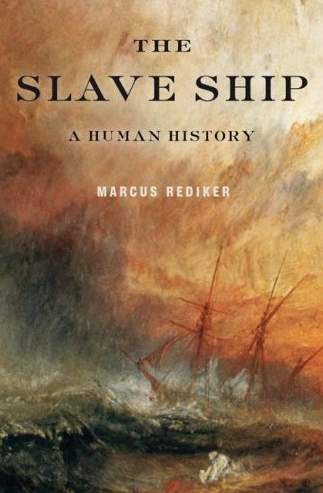
“This has been a painful book to write,” he said, “and if I have done any justice to the subject, it will be a painful book to read. There is no way around this, nor should there be.” says Marcus Rediker author and history professor at the University of Pittsburgh.
Rediker has scoured through letters, diaries, memoirs, captain’s logbooks, shipping company records to piece together the intimate realities of these 18th-century sailing vessel carrying enslaved Africans. Rediker draws startling parallels to global economy structures then and now, tracing back as New England timber was used to build Slave Ships yet nails and ropes were purchased from Liverpool at discounts, ship captain stock options and more. In his book, Marcus also documents revolts among underpaid sailors and the solidarity that evolves amid slaves and servants.
One review describes Slave Ship as “ a tale of tragedy and terror, but also an epic of resilience, survival, and the creation of something entirely new. Marcus Rediker restores the slave ship to its rightful place alongside the plantation as a formative institution of slavery, a place where a profound and still haunting history of race, class, and modern economy was made.â€