Civil Liberties, Extraordinary Rendition, Guantanamo, Iraq War, Surveillance, Torture, Truth to Power
Podcast: Play in new window | Download

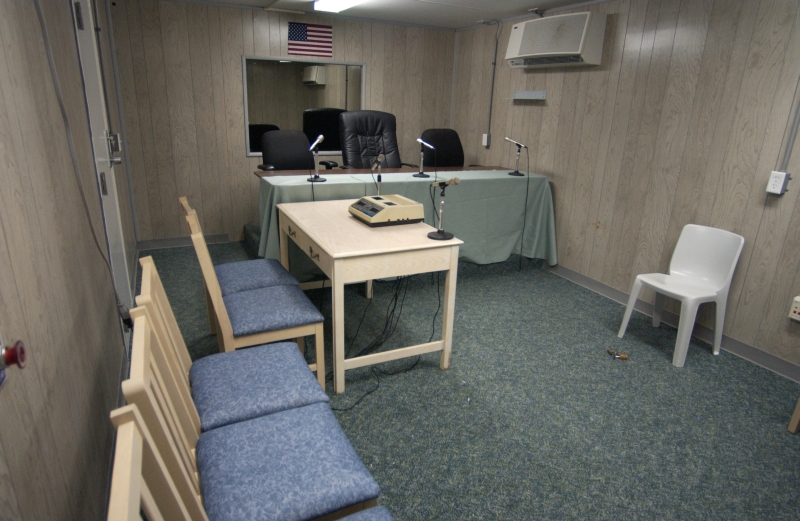
Combatant Status Review Tribunals
Co-hosts Michael Ratner and Dalia Hashad discuss the legal efficacy of these tribunals for Guantanamo Bay detainees. From the Amnesty International USA site – “In the “war on terror”, detainees in US custody have been treated as potential sources of information first and criminal suspects a distant second. However, this secondary aspect is now coming into focus. Plucked from years of secret or virtually incommunicado detention, a few people held in the US Naval Base at Guant?namo Bay in Cuba are facing trial by military commission.”
Combatant Status Review Tribunals Proceedings:
- Detainees do not receive the presumption of innocence.
- Detainees do not get access to legal advice.
- Detainees are not entitled to access to the evidence against them, or in their favor.
- Hear-say evidence is allowed to be used against the detainees.
- The use of evidence acquired through coercive interrogation is allowed, there is no protection against self-incrimination.
- Evidence acquired through the torture of other suspects was allowed.

Architect of Torture
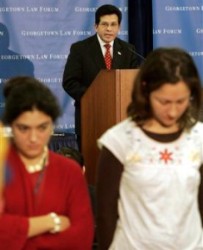
Co-host Michael Ratner adds perspective to the real reasons US Attorney General Alberto Gonzales should resign immediately.
————————————————————–
Law and Disorder sit down with authors Giuliana Sgrena and Anthony Arnove.


It’s two years since U.S. forces gunned down Italian intelligence agent Nicola Calipari in Iraq, and recently Washington is refuses to hand over the U.S. soldier charged in the case to be tried in Italy. Calipari the number two man in the Italian military intelligence was killed while escorting Italian reporter Giuliana Sgrena after securing her release from a month-long abduction in Iraq.
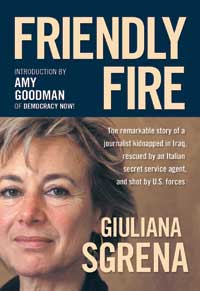
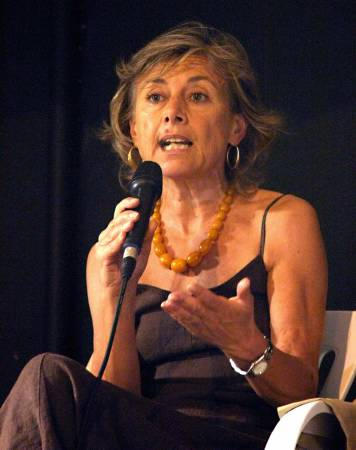
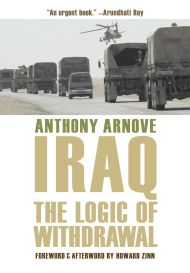
Giuliana Sgrena has written about her experience in, “Friendly Fire: The Remarkable Story of a Journalist Kidnapped in Iraq.” As a veteran foreign correspondent for the Italian newspaper Il Manifesto she has reported frequently from Afghanistan and Iraq. Sgrena joins Michael Ratner and Michael Smith today on Law and Disorder. We are also joined by editor and author Anthony Arnove who recently wrote the new book Iraq: The Logic of Withdrawal.

Left Forum 2007 – CCR Executive Director Vince Warren
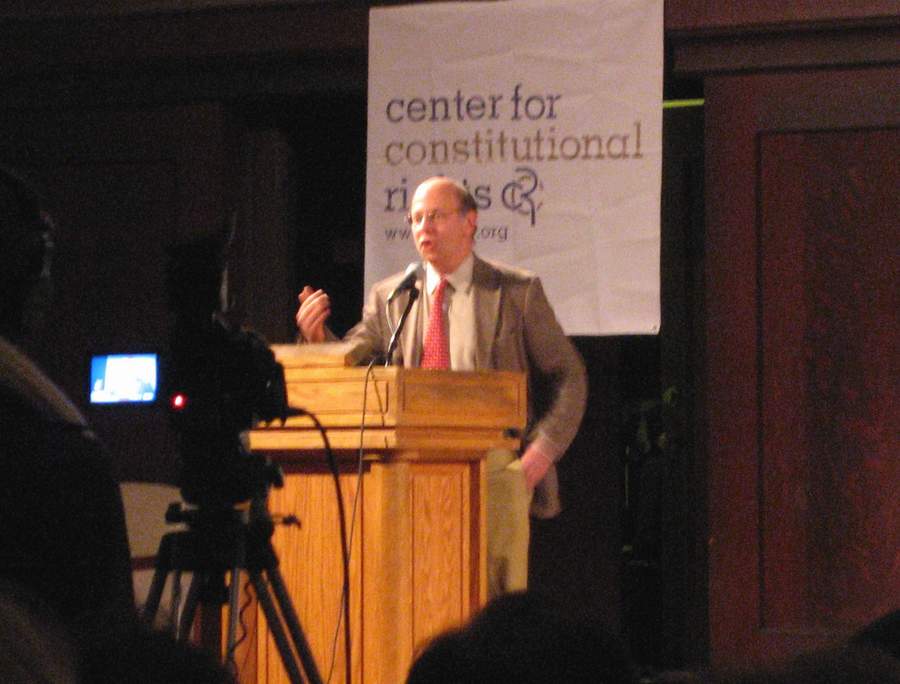
We play part of a speech by the Center for Constitutional Rights Executive Director Vince Warren. He spoke at the Left Forum earlier this month on the state of current state civil liberties in this country. The panel, moderated by our own Michael Steven Smith examined the long term implications of eroding civil liberties and the laws that have allowed a surveillance police state. We will hear more speakers from this years Left Forum in the weeks to come.
Civil Liberties, Supreme Court, Surveillance, Torture, Truth to Power
Podcast: Play in new window | Download

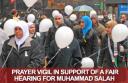
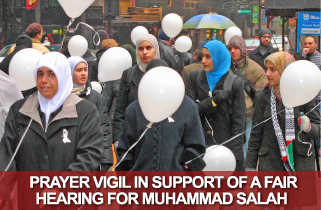
Muhammad Salah Cleared Of Federal Charges
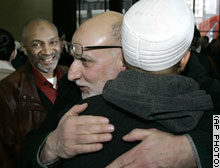
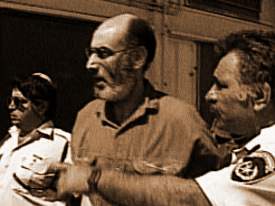
For more than a year, Law and Disorder has followed the case of Muhammad Salah and co-defendant Abdelhaleem Ashqar. In a major victory both were recently acquitted on charges that they engaged in a “racketeering conspiracy” to provide support to the Palestinian organization Hamas in the early 90s. The two were convicted of several lesser charges unrelated to terrorism. Salah says his confession to Israeli Security agents was false and the end product of 53 days in custody, during which Salah’s lawyers say he was tortured. He was kept awake, beaten and forced to sit in excruciating positions for long periods of time.
Guest – Michael Deutsch from the People’s Law Office in Detroit. Mr. Deutsch says this verdict is a significant breakthrough in that the jurors were not swayed by government attempts to apply the terrorism label without adequate evidence.
Dear listeners to send letters of support – Please make them out to the Honorable Amy J. St. Eve Addressed to: Michael Deutsch People’s Law Office 1180 N. Milwaukee Chicago, IL 60622
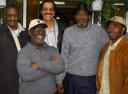
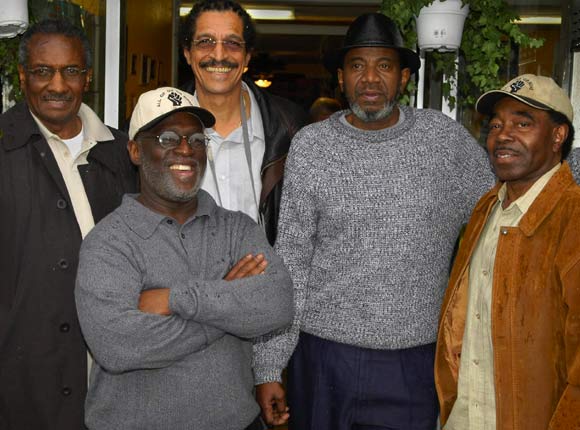
Coerced confessions based on torture are at the center of many cases discussed on this program. From French revolutionary Henri Alleg to the recent victory in the Muhammad Salah case in Chicago. Black Panthers were no exception, in the early seventies eight former Black Panthers were arrested in California, New York and Florida on charges related to the 1971 killing of a San Francisco police officer. Two men charged have been held as political prisoners for over 30 years ? Herman Bell and Jalil Muntaqim are both in New York State prisons. But a judge tossed out the charges, finding that Taylor and his two co-defendants made confessions after police in New Orleans tortured them for several days employing electric shock, cattle prods, beatings, sensory deprivation, plastic bags and hot, wet blankets for asphyxiation.
Guest – attorney Bob Bloom speaks on new developments in the case.
To hear the voices of Harold Taylor, John Bowman and Hank Jones describe how they were tortured visit the Listening Library and scroll down here the event from March 2006 at the Riverside Church sponsored by the Center for Constitutional Rights.



US Government Not Allowing Families of Cuban Five Prisoners Visitation
Amnesty International calls for temporary visas to be granted to two wives of the ‘Cuban Five’
In the past month several legal developments have occurred in the case of the Cuban Five. In January the defense argued four key issues in a supplement brief. Those issues are: first, the conspiracy to commit murder charge should be discharged; second, the conspiracy to espionage should be reversed for insufficiency of evidence; third, the sentencing on the espionage charges were grossly out of line with existing law; and forth, the prosecution committed misconduct. Finally application of the Classified Information Procedures Act provisions was wrong in this case. Here’s the situation: If the two judges can’t agree, the chief judge of the 11th Circuit appoints a third judge to join in the decision-making. You must have two judges in agreement in order to have a valid decision by the appellate court. If the two judges agree, however, that’s the end of it. For more information visit They Will Return.
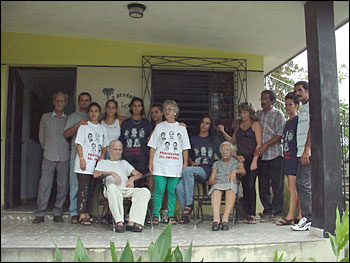
Guest – Leonard Weinglass, lawyer for Antonio Guerrero, to talk about yet an additional aspect that has plagued the case since the five were incarcerated: the US government’s failure to allow families to visit the Five.
—-

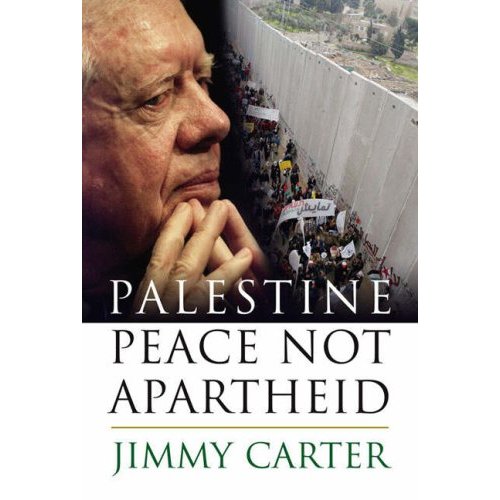
Jimmy Carter’s Recent Book – Palestine: Peace Not Apartheid – Drawing Criticism
With the release of former President Jimmy Carter’s new book, Palestine: Peace Not Apartheid, controversy has arisen about the use of the word “apartheid” to describe the occupied Palestinian territories. The contention is that Carter begins with the premise, “inside Israel there is equality while in the occupied Palestinian territories there is not.”
Guest – Jamil Dakwar, a former senior attorney with Adalah: The Legal Center for Arab Minority Rights in Israel.
Just as the US and Europe once opposed apartheid in South Africa, Israel’s discrimination against Palestinians must be similarly exposed and dismantled. – – Read Jamil Dakwar’s commentary It’s Simple Apartheid.
Civil Liberties, Extraordinary Rendition, Guantanamo, Torture, Truth to Power
Podcast: Play in new window | Download
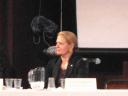

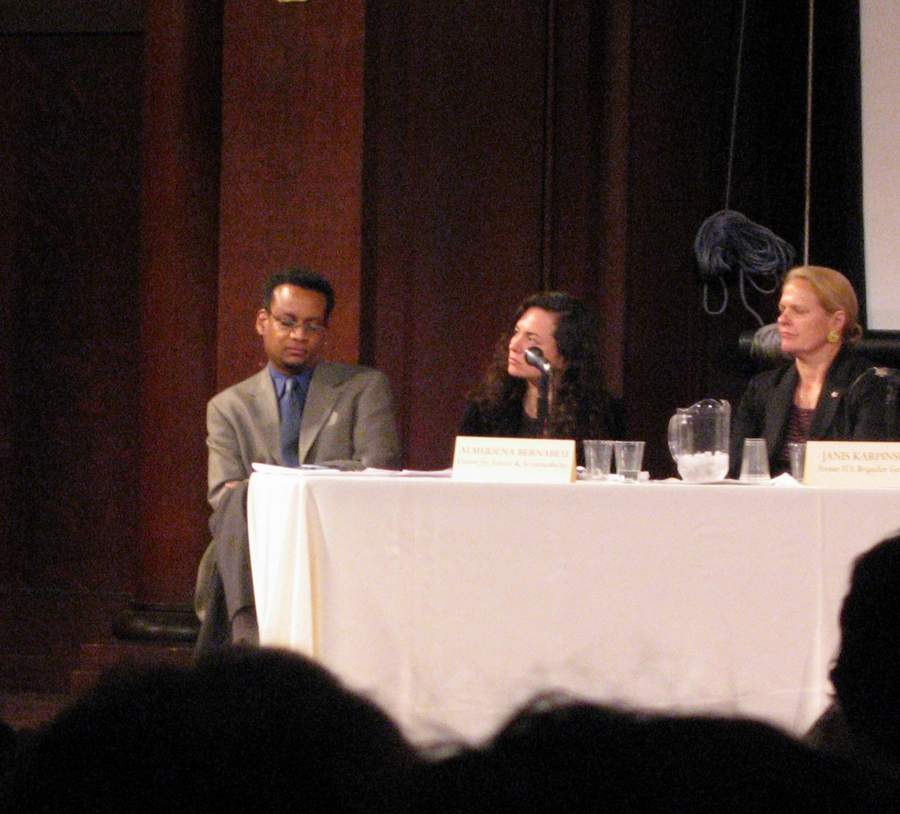
Today on Law and Disorder we run excerpts from an event sponsored by the Center for Constitutional Rights. From Pinochet to Rumsfeld: Accountability of US officials for torture. Speakers include Janis Karpinski, former US Army Brigadier General at Abu Ghraib prison, Iraq. She was the commander of three large US- and British-led prisons in Iraq in 2003, eight battalions, and 3400 Army reservists. In October 2005 she published an account of her experiences, One Woman’s Army, in which she claims that the abuses were perpetrated by contract employees trained in Afghanistan and Guantanamo Bay and sent under orders from Secretary of Defense Donald Rumsfeld, and that her demotion was political retribution.

Also on this program, Law and Disorder co-host Michael Ratner president of the Center for Constitutional Rights and Scott Horton, chair of the International Law Committee, New York Bar Association. We hear about the long term effects of torture from another perspective. Kate Porterfield, Ph.D. who works with torture survivors describes the health consequences of torture.

In the wake of CCR’s groundbreaking filing of war crimes charges against Donald Rumsfeld, this Center for Constitutional Rights event aimed to examine different strategies for holding international officials accountable for their actions. We’ll hear an exploration of the devastating effects of torture techniques employed by the U.S. Government. Certainly not for the faint of heart but important in beginning to understand how torture used in the name of the people in the United States must end immediately.
Civil Liberties, Extraordinary Rendition, Guantanamo, Supreme Court, Torture, Truth to Power
Podcast: Play in new window | Download
Guantanamo – Five Years

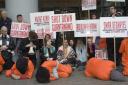
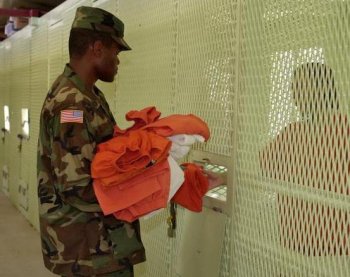
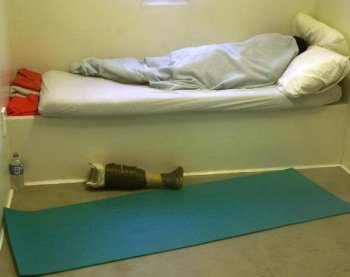
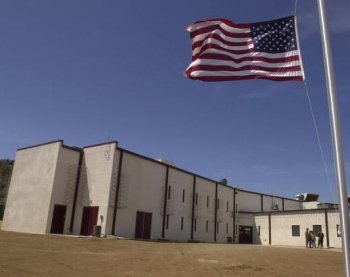
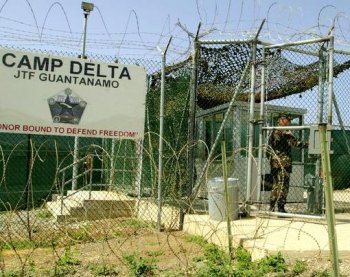
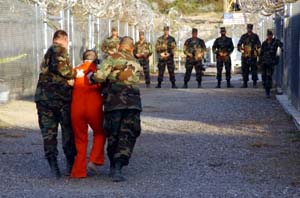
January 11th marks five years of detainment for the more than 400 people at Guantanamo. For the full hour, Law and Disorder co-host and President of the Center for Constitutional Rights, Michael Ratner takes listeners through the history and chronology of the US involvement at the Guantanamo Bay detainment camp. Michael Ratner begins with the US acquiring the 4500 square mile base near a harbor at the southeastern end of Cuba.
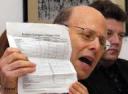
Guantanamo – A Law Free Zone – Haitian Camps – Read more

In the last quarter of the 20th century, the Guantanamo Bay Naval Base was used to house Cuban and Haitian refugees. In the early 1990s, it held refugees who fled Haiti after military forces overthrew democratically elected President Jean-Bertrand Aristide. These refugees were held in a detainment area called Camp Bulkeley until United States District Court

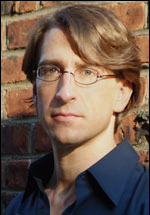
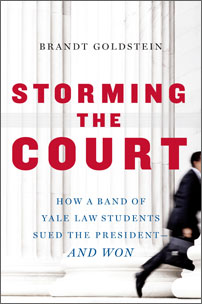
Storming The Court – We hear a clip from an interview with attorney and author Brandt Goldstein. Before Guantanamo Bay, Cuba became notorious for its human rights violations against Muslims, it was the holding center for thousands of HIV-positive Haitian refugees. More than ten years ago a team of Yale law students and activists took up this cause. They worked victoriously to stop the US government from detaining these refugees indefinitely at Guant?namo, without charges or access to counsel.
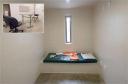

David Hicks – Australian prisoner held at Guant?namo Bay, Cuba. He’s been detained for more than five years as an “unlawful combatant” and thus, it was claimed, outside the normal protections of U.S. law and those provisions of the Geneva Conventions which are specific to soldiers of an official military organization. His trial before a U.S. military commission was due to begin in November 2005. However, proceedings were cancelled following the Supreme Court Hamdan v. Rumsfeld ruling invalidating the constitutionality of the commission process.
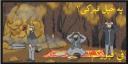
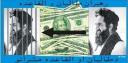
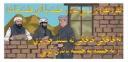
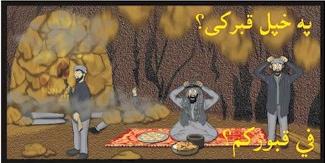
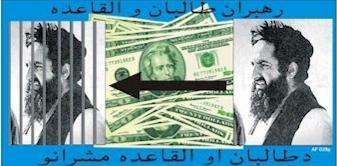
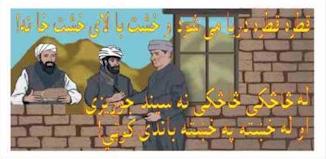
Bounty Hunter – U.S. PSYOPS distributed flyers and leaflets
How did prisoners get to Guantanamo?
Many Guantanamo prisoners were rounded up by bounty hunters and sold to the U.S. It’s unknown how many were victims of being in the wrong place at the wrong time. In the days during and following the Afghan invasion, the U.S. military blanketed parts of Afghanistan and Pakistan with flyers encouraging people to turn in suspects, in return for large sums of money. “Get wealth and power beyond your dreams,” read one flyer. “You can receive millions of dollars helping the anti-Taliban forces catch al-Qaeda and Taliban murderers.”
See more PSYOPS leaflets/flyers here

How other prisoners arrived at GTMO
Uiger Muslims Transferred From Guantanamo To Albania – Recently, the Uiger Muslims were quietly sent to Albania to a larger compound. It was explained to Law and Disorder that in Albania, the Uigers can move about freely within the compound and cannot leave. We play a clip from the January 2006 interview with attorney Sabin Willet.
We play a clip from a Law and Disorder interview with Tausif Paracha. His Uncle, Saifullah Paracha, 58 was “kidnapped” and is detained in Guantanamo and Tausif’s cousin Uzair Paracha, 24 is detained in one of New York’s worst prisons. You can read more about this case at www.freeparachas.org
Mark P. Denbeaux – Seton Hall Report – One of most comprehensive reports of who is at Guantanamo.


Describe Guantanamo Bay, Cuba
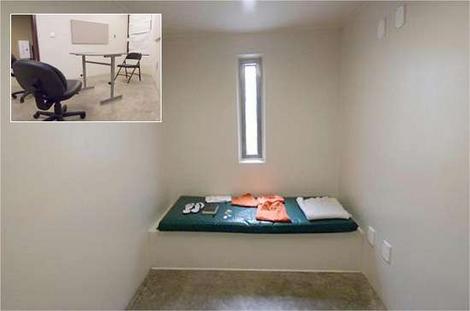
Gita Guitierezz – attorney with the Center for Constitutional Rights defending Guantanamo Bay detainees gives listeners a first hand description of the camp.
Torture
Co-host Michael Ratner describes his experience of first learning that the US military was involved with torturing detainees. Torture, including waterboarding and sleep deprivation.
Tipton Three is the name given to three young men from Tipton, United Kingdom, who were held in extrajudicial detention for 2 years in Guant?namo Bay detainment camps
Evidence of Torture – Gita Guitierezz – in an interview last November we listen to a clip where Gita describes how her client Mohamed Mani Ahmad al-Kahtani. was sleep deprived and tortured.
Torture and Waterboarding; ancient practice – Henri Alleg, Author of The Question – We listen to a clip of Henri Alleg describing waterboarding. He was revived then brought to the brink of death, then revived again. An similar brutality and sadism often described by prisoners in Guantanamo and Abu Ghraib. Hosts Michael Ratner and Michael Steven Smith interview Henri Alleg a French journalist living in Paris. He supported Algerian independence during the French Algerian War (1954-1962). He was arrested by French paratroppers during the Battle of Algiers in June 1957 and interrogated.

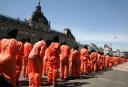
Fighting back in the Courts, Congress and in the Streets
The effort to get Guantanamo closed down and to get prisoners the rights they’re entitled under International Law and the Constitution. It’s a difficult fight explains co-host Michael Ratner but the opposition is growing.
We hear clips from a demonstration against the Guantanamo Prison Camp in Herald Square and also from Amnesty International’s anti-torture rally in Portland, Oregon, recorded from interviews by co-host Dalia Hashad. Amnesty International staff members and activists who gathered to speak out, listen and share their stories.
Take Action Now – Fight Back – Thursday January 11, 2007
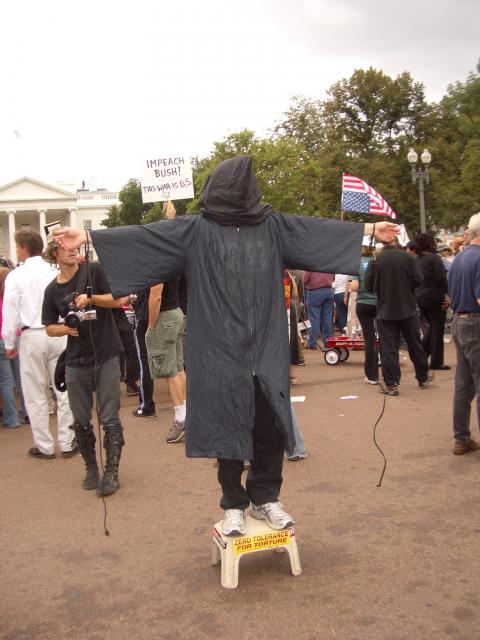
Witness Against Torture – Fight Back – January 11, 2007 Thursday: The 5 year anniversary of the first prisoners being brought to Guant?namo. March, Press Conference and Nonviolent Direct Action in Washington, DC. Endorsed by Center for Constitutional Rights, CodePink, Network of Spiritual Progressives, Pax Christi USA, School of Americas Watch, United for Peace and Justice and other groups such as FIDH and Reprieve.
Civil Liberties, Death Penalty, Guantanamo, Torture, Truth to Power, Uncategorized
Podcast: Play in new window | Download



Eric Schlosser on the United States Prison System
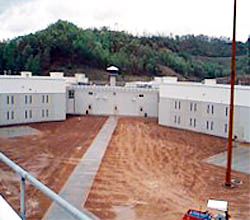
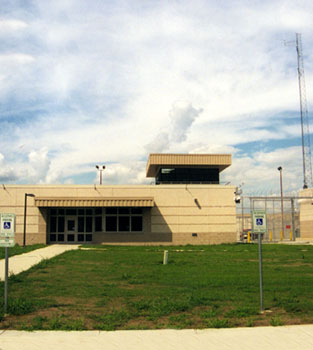
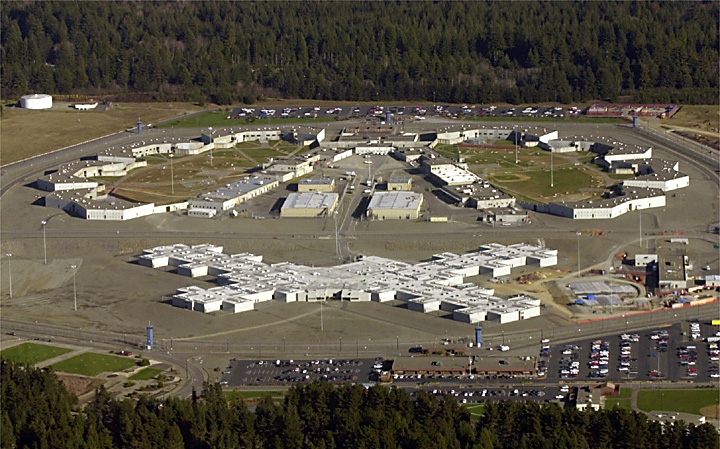
We’ve covered in depth on Law and Disorder the US run prison industry abroad, from Guantanamo Bay prison, Cuba, Bagram prison in Afghanistan and Abu Ghraib in Iraq. These are the exports of one of the most highly profitable businesses in the United States. The prison industrial complex in this country has reached record breaking occupancy. Nearly 2.1 million Americans are behind bars, the majority of them nonviolent offenders, they’re usually poor, many have substance abuse problems and many have are mentally ill. This according to exhaustive research by Fast Food Nation author Eric Schlosser who spoke at Bluestockings Bookstore in New York about his compendium on the American Prison system.

Law and Disorder caught up with Eric during this talk and we listen to the second part of his one hour speech. In his talk he warns our society of the perils of a profit driven penal system and backs his research with well-documented facts and staggering statistics.
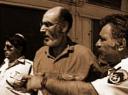
Muhammad Salah Case – Update
Hosts talk with Salah’s attorney Michael Deutsch on the latest in the case involving a Palestinian businessman accused of funding Hamas in 1993. His defense argues he was tortured and his confessions coerced.
The government also called to the witness stand former New York Times reporter Judith Miller. Law and Disorder hosts fill in the background of this reporter who was fired from the NY Times for writing numerous stories backing the Bush administration’s war campaign chant, “weapons of mass destruction.” Miller was allowed to witness Israeli agents interviewing Salah in 1993. She testified a month ago that Salah seemed comfortable and that he boasted about Hamas operations.
Guest – Michael Deutsch, Muhammad Salah’s attorney with the People’s Law Office in Chicago.
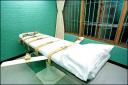

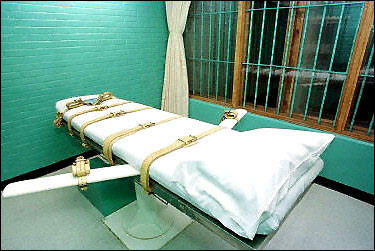
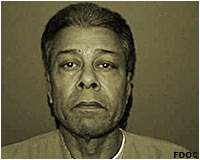
The Mishandled Lethal Injection of Florida death row inmate Angel Nieves Diaz
Angel Diaz was executed by lethal injection for killing a Miami topless bar manager 27 years ago. He was given a rare second does of deadly chemicals as he took more than twice the usual time to succumb. Needles that were supposed to inject drugs in the 55 year old man’s veins were instead pushed through the blood vessels and into the surrounding soft tissue.
The error in Diaz’s execution led Florida Governor Jeb Bush to suspend all executions. Bush still defends the death penalty itself and rejects calls for its abolition. In a separate case, a federal judge extended a moratorium on executions in California, declaring that its method of legal injection violates the constitutional ban on cruel and unusual punishment.
Those are just the latest challenges to lethal injection, which is the preferred method in 37 states. Missouri’s injection method, similar to California’s was declared unconstitutional last month by a federal judge.
Guest – Kristin Houle with the Amnesty International Program to Abolish the Death Penalty

Lynch Mobs and the Killing State
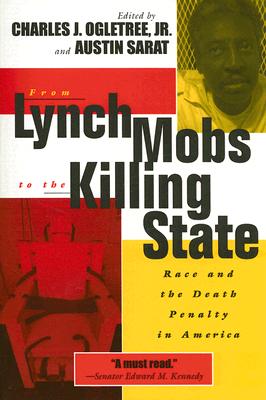
Lynchings. That word alone is at the root of racism in the United States. Those who may regard lynching as a shameful part of the past need only read the book “From Lynch Mobs to the Killing State” edited by Austin Sarat and Charles Ogletree to realize that state-sanctioned executions are sanitized forms of lynching justified by society.
Professors Charles Ogletree and Austin Sarat have assembled a lucid and intelligent work in which essays from sociologists, historians, criminologists and lawyers weave toegether a social history that starkly reveals how this country’s death penalty is rooted in lynchings.
Racism informs both kinds of killings. The 985 lives lost to official lynchings in the United States since the practice resumed in 1976 symbolize according to one of the book’s contributors, a much broader and enduring culture of American apartheid.

Guest – Austin Sarat, the William Nelson Cromwell Professor of Jurisprudence and Political Science at Amherst College. His books include Mercy on Trial: What it Means to Stop an Execution.
Civil Liberties, Guantanamo, Supreme Court, Torture, Truth to Power
Podcast: Play in new window | Download

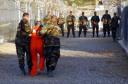
Co-hosts Dalia Hashad and Michael Ratner discuss the Hamden Case, the Military Commissions Act of 2006 and Habeas Corpus.
 Download/Listen to this segment [15 MB]
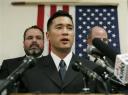
Lt. Ehren Watada, the First Commissioned Officer Refuses Iraq Deployment Orders
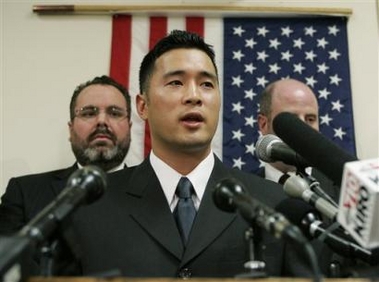
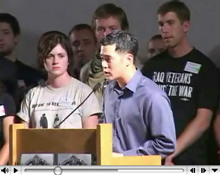
Lieutenant Ehren Watada is the first commissioned officer to publicly refuse to deploy to what many believe a historic illegal war in Iraq. He is a First Lieutenant in the United States Army, a member of the 3rd Brigade, 2nd Infantry Division Stryker Brigade Combat Team, who in June 2006 publicly refused to deploy to Iraq, saying that he believed the war to be illegal and that it would make him party to war crimes.
Watada is charged with one count of missing troop movement and two counts of speaking contemptuously of the president. The contempt charges were dropped in November.
Recently, a US military prosecutor is seeking testimony from Truthout reporters to prove that Watada engaged in conduct unbecoming an officer, directly related to disparaging statements the Army claims Watada made about the legality of the Iraq War during interviews with Truthout. Ehren Watada faces six years in prison.
Today we speak with Carolyn Ho, the mother of Lt. Ehren Watada, the first officer to publicly refuse to serve in Iraq. Ho is on a tour throughout the country bringing awareness and garnering support for her son’s case.

We also play Lieutenant Watada’s entire speech delivered in August 2006 at the Veterans for Peace National Convention. Just as Watada took the stage and began to speak, more than 50 members of Iraq Veterans Against the War filed in behind him. Watada, surprised by the support, draws a deep breath and begins his speech.
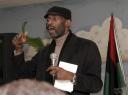
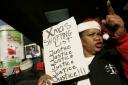
Communities Reeling From Police Shooting “Massacre”
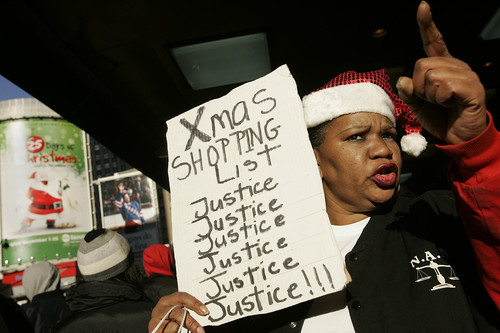
Tens of thousands of protesters silently marched down Manhattan’s Fifth Avenue Saturday as seasonal shoppers looked on. Many held banners and called for the resignation of New York City Police Commissioner Ray Kelly. All of this protesting the fatal police shooting of 23-year-old Sean Bell last month on his wedding day. Bell’s friend and fellow shooting victim Trent Benefield led the march in a wheelchair pushed by the Rev. Al Sharpton.
The death of unarmed Sean Bell, killed by undercover police in a hail of 50 bullets in Queens, New York outraged communities and sent shockwaves through the country. As the investigations into the case proceed, the fallout from the shooting raise new questions about racial profiling and stirred distrust among police and minority communities.
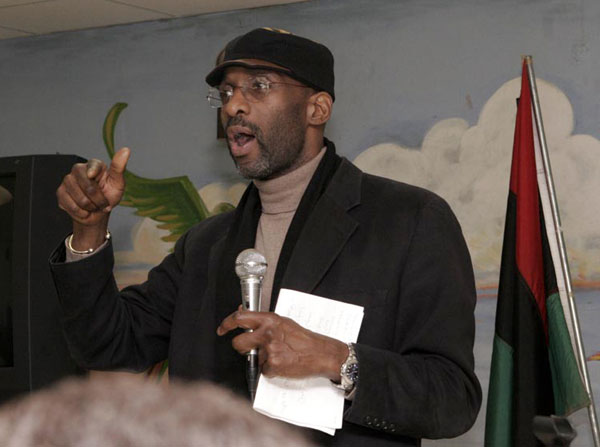
Guest – Roger Wareham attorney and political activist for nearly three decades. He’s a member of the December 12th Movement, organizing in the Black and Latino community around human rights violations, particularly police brutality.
Committee on the Elimination of Racial Discrimination (CERD) – This Convention against Racial Discrimination commits States parties to change national laws and policies that create or perpetuate racial discrimination and aims, among other things, to promote racial equality, which allows the various ethnic groups to enjoy the same social development. The Convention against Racial Discrimination defines racial discrimination as: “any distinction, exclusion, restriction or preference based on race, colour, descent, or national or ethnic origin which has the purpose or effect of nullifying or impairing the recognition, enjoyment or exercise, on an equal footing, of human rights and fundamental freedoms in the political, economic, social, cultural or any other field of public life.”