Civil Liberties, Human Rights, Political Prisoner, Prison Industry, Surveillance, Truth to Power
Podcast: Play in new window | Download
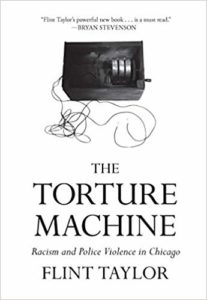
The Torture Machine: Racism and Police Violence in Chicago
Although torture is illegal under both American law and international law the USA has practiced torture for the last half century from Vietnam to Afghanistan, from Iraq to Guantánamo Cuba, and here at home in Chicago, Illinois.
President Obama refused to prosecute the torturers of the Bush era. Bush’s Vice President Dick Cheney greenlighted the torture saying we must go over to the darkside.
President Trump, who approves of waterboarding and worse, said during his campaign that torture works. It doesn’t. Tortured people will say anything to relieve their agony.
Over 100 Black men in Chicago were tortured in the 1970s and 1980s. They confessed to crimes although many of them were innocent. But in Chicago, unlike under President Obama who refused to enforce the law saying that “we must look forward not backward”, something was done about it.
Our guest attorney Flint Taylor, his office the People’s Law Office, many groups in the community, several dedicated journalists, law students, and even Amnesty International worked together and won an historic victory.
What they did and how they did it is the story told in Flint Taylor‘s new book, a tour de force, published by Haymarket Books, called The Torture Machine: Racism and Police Violence in Chicago.
For the first time in American history reparations were paid to Black persons. The torture ringleader Police Commander John Birge was sent to prison. Every Chicago public school student is now taught about what happened in their city. A monument for the victims has been put up and free college tuition and psychological counseling are available to the victims.
Guest – Flint Taylor is a founding partner of the Peoples Law Office. He was one of the lawyers for the families of slain Black Panther leaders Fred Hampton and Mark Clark, has represented many survivors of Chicago police torture over the past 30 years, and was also trial co-counsel in the landmark civil rights case against the KKK, Nazis, and Greensboro, North Carolina police in the murder of five anti-Klan demonstrators.
—-

Eugene V Debs: A Graphic Biography
Eugene V. Debs, the greatest American Socialist and the foremost agitator for socialism that we have ever had , is back in the public guy eye again after a century. Back then, with Debs as it’s outstanding spokesman, socialism began for the first time to get a hearing in this country.
Debs talked about a new social order based on cooperation and comradeship. He and the newspaper “Appeal to Reason“ for which she wrote inspired a whole generation of native radicals with the great promise of socialism.
Socialism is no longer a dirty word. Google reports that the word “socialism“ got more hits than any other word last year. A 2016 poll showed Democratic primary voters “in every age group, every gender, and every race view socialism favorably.“ Candidates are openly advocating for socialism and getting elected.
In 1894 Debs, though not yet a socialist but an militant beloved labor leader, was jailed for six months after leading the nations railroad workers in a failed strike against the powerful railroad owners. He was defended by the magnificent attorney Clarence Darrow.
In 1919 Debs was again convicted, this time for violating the Espionage Act which was used against war war one antiwar activists. He was incarcerated for a second time at age 63. He was given a 10 year sentence of hard labor in a federal penitentiary in Atlanta, Georgia. His crime was making a speech opposing America’s participation in World War I.
It is the Espionage Act which will be used against WikiLeaks publisher and truth teller Julian Assange if United States Government is Able to arrest him and London where he has been granted political asylum in the embassy.
Deb’s Socialist Party of America was formed in 1901 and heralded a wave of broad popular support for the ideas of socialism. We see this phenomena currently unfolding in these dire times of permanent war and austerity.
Paul Buhle along with Attorney Dave Nance are authors of the just published by Verso Press book Eugene V Debs: a Graphic Biography.
Guest – Paul Buhle, formally a senior lecturer at Brown University, produces radical comics. He founded the journal “Radical America” and co-edited with Dan Georgakas and Mari Jo Buhle, the invaluable “Encyclopedia of the American Left”.
———-

———-
Civil Liberties, Criminalizing Dissent, Human Rights, Political Prisoner, Surveillance, Truth to Power, War Resister
Podcast: Play in new window | Download
Prison Visitation and Support
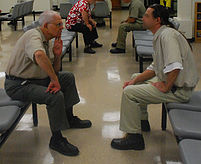
In hundreds of correctional facilities across the nation, in person visits are being phased out. Instead, video technology run by Securus and other companies is used to replace these visits. One researcher at the Prison Policy Initiative has pieced together hard to gather stats that suggest at least 600 US prisons have video visitation programs in place. In Florida, for example, on retired prison inspector who writes about video visitation, says that over the past five years, most jails there are using only video visitation and have altogether stopped in-person visitation.
The Prison Policy Initiative’s data suggests that 74% of US correctional facilities that implement video calling end up either reducing in-person visits, or totally eliminating them. Is the elimination of prison visits a human rights violation? Most prisoners receive few, if any visitors, or human contact.
Guest – Steve Gotzler, executive director of the Prison Visitation and Support. Steve is the former program director at the Pennsylvania Prison Society, and he knows firsthand what it’s like to spend time in federal prison.
—-

Supreme Court Rules On Civil Forfeiture
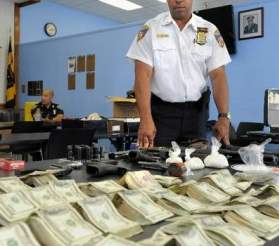
In a unanimous decision, the U.S. Supreme Court recently ruled that the Constitution limits the ability of state and local law enforcement to seize and then use cash, property, and other assets that may have been used the commission of crimes, especially when used to fill the coffers of police departments. Law enforcement need only suspect the property has been used as a crime; they don’t need to charge you.
Ruth Bader Ginsburg wrote the opinion on her first day back at the court. Civil liberties organizations have criticized this practice for years. That’s because many local governments use these fines to raise revenue, increasing incentives for arrests.
Not surprisingly, civil asset forfeiture disproportionately affects vulnerable communities, notably African Americans and lower-income neighborhoods. In the state of South Carolina, for example, The Greenville News reported that the state took $17 million from seizures from 2014 to 2016. Sixty-five percent of those targeted were African American. The high Court said that fines may not be excessive, and that states are currently using excessive fines for improper purposes, including for raising revenue.
Guest – Josie Duffy Rice is a lawyer and writer in New York. Josie is a former research director with the Fair Punishment Project.
Civil Liberties, Human Rights, NSA Spying, Political Prisoner, Surveillance, Truth to Power, War Resister
Podcast: Play in new window | Download
Cyber Threats And US Cyber Security
Russian hackers need only 19 minutes after breaking into a computer to wreak greater destruction and data theft, according to a recent CrowdStrike report. The Kremlin beat out North Korean and Chinese hacker groups who needed two and four hours respectively to go from breaching one computer to another. Cyber threats from Russia are sophisticated and aggressive, according to earlier findings and many experts. As a results Russian saboteurs have moved beyond network intrusion into data manipulation and taking down power systems.
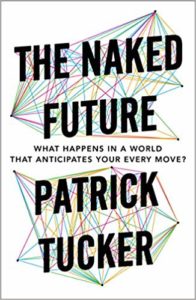
Guest – Patrick Tucker, technology editor for Defense One. Patrick is the author of the 2014 book, The Naked Future: What Happens in a World That Anticipates Your Every Move? Previously, Tucker was deputy editor for The Futurist. He has written widely about emerging technology for such publications as Slate, MIT Technology Review, and BBC News Magazine.
—-


10 Years Since Operation Cast Lead
Last month marked the 10 year anniversary of Israel’s illegal massive deadly attack on the Palestinian people living in the open air prison of the Gaza Strip along the Mediterranean sea in the south of Israel-Palestine.
The attack was carried out with the political and military support of the George W. Bush regime during its final few days. Some 1200 Palestinians were killed including 500 children. This has been documented in the United Nation’s sponsored Goldstone Report.
Israel’s continuing illegal settlement of Palestinian land and it’s dispossession of Palestinian people is made possible by American political, military, and economic support. But this support is coming under increasing challenge with Israel’s violation of human rights and of international law being more widely exposed and discussed.
Guest – Helena Cobban is the publisher of Just World Books and is active through her new not-for-profit organization Just World Educational. She works in broad community education campaigns on matters of war, peace, and justice in the Middle East.
——————-
——————-
CIA Sponsored Terror, Civil Liberties, Criminalizing Dissent, Human Rights, Political Prisoner, Prison Industry, Supreme Court, Surveillance, Targeting Muslims, Torture, Truth to Power, War Resister
Podcast: Play in new window | Download

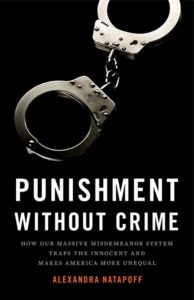
Punishment Without Crime: How Our Massive Misdemeanor System Traps the Innocent and Makes America More Unequal
In the overburdened U.S. criminal justice system, with its burgeoning prison population, we hear a lot about felony convictions. Felonies are crimes usually punishable by a term of more than one year, or the death penalty. What we don’t hear much about are misdemeanors, low level offenses punishable by fines or short terms of imprisonment in local jails.
With ten million petty cases filed annually, most U.S. convictions are misdemeanors. Unlike felonies, however, their processing is typically informal and deregulated. Much like fast-food justice, they have high-volume arrests, weak prosecutorial screening, an overtaxed defense bar, and high plea rates. There is often little meaningful scrutiny to see if convictions are supported by evidence. Innocent people who can’t afford bail often plead guilty just to get out of jail.
What the result of misdemeanor convictions? It’s pretty serious: stigma of a criminal record, misdemeanants are often heavily fined, incarcerated, and/or lose jobs, housing, and educational opportunities. Petty convictions are more frequent and burdensome even as we devote fewer institutional resources to ensuring their validity.
The misdemeanor phenomenon has profound systemic implications. It invites skepticism about whether thousands of individual misdemeanants are actually guilty. It reveals an important structural feature of the criminal system: that due process and rule-of-law wane at the bottom of the penal pyramid where offenses are pettiest and defendants are poorest. Misdemeanor processing is the way poor defendants of color are swept up into the criminal system with little or no regard for actual guilt.
In her new book, Punishment Without Crime: How Our Massive Misdemeanor System Traps the Innocent and Makes America More Unequal, Law Professor Alexandra Natapoff takes an in-depth look at the misdemeanor process is an institutional gateway that explains many of the criminal system’s dynamics and dysfunctions.
Guest – Alexandra Napatoff, University of California Irvine law professor and a member of the American Law Institute. She’s also a former federal public defender, a community organizer, and the recipient of an Open Society Institute Community Fellowship.
—-
Kings Bay Plowshares 7
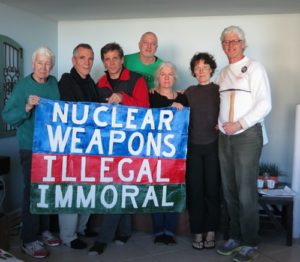
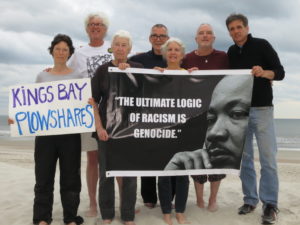
In our society nuclear weapons that can destroy all creation are taken as a normal, even an inevitable, part of life. In a dramatic action to break what they call “the crime of silence“ seven Catholic peace activists entered the Kings Bay trident submarine base in Georgia last April to perform an act of symbolic disarmament.
They used hammers to follow the prophecy of Isaiah “to beat swords into plowshares” and poured blood to make holy what was evil in a sacramental action.
Kings Bay is homeport to six ballistic missile trident submarines, each of which deploy 16 trident missile’s carrying four or more warheads of at least 100 kilotons. The Hiroshima bomb was 14 kilotons. Each submarine thus has the distructive power of at least 500 Hiroshima bombs.
The plowshares seven face up to 25 years in federal prison. Their trial is coming up in the next month. Theirs was the latest of 100 plowshares actions around the world since 1980.
Guest – Martha Hennessey, Kings Bay Plowshares 7 co-defendant, activist and volunteer with the New York Catholic Worker.
Guest – Carmen Trotta, Kings Bay Plowshares 7 co-defendant, activist and volunteer with the New York Catholic Worker.
——————
——————
CIA Sponsored Terror, Civil Liberties, Habeas Corpus, Human Rights, Supreme Court, Truth to Power
Podcast: Play in new window | Download
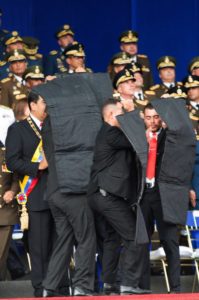
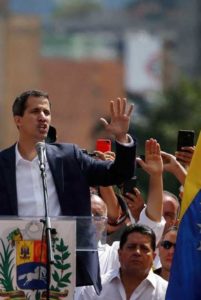
Venezuela Coup d’Etat
The last coup d’état the United States of America sponsored in 2009 in Latin America was under the Obama administration and supported by his Secretary of State Hillary Clinton when they overthrew a mildly social democratic president of Honduras. At that time the USA denied its role.
Today we are witnessing a quite open and blatant coup d’état in oil rich Venezuela against their recently and democratically elected socialist president Nicolas Maduro. The US boldly announced it no longer considered Maduro the legitimate president of his country.
In his stead the USA has recognized Jose Guida, an obscure legislator from the most right wing of the opposition parties after Vice President Mike Pence called him on the phone and gave him the blessings of United States government.
Venezuelan oil assets in the United States which amount to over $7 billion have been frozen. Likewise it’s $1 billion plus bank deposits in the United Kingdom have been seized. The United States has succeeded, in the infamous words of former Secretary of State Henry Kissinger, who engineered the coup against the elected Democratic Socialist President Salvador Allende in Chile on September 11 of 1973, “ to make their economy scream”.
The Venezuelan economy is now half its former size and hobbling along at a depression level. Food and medicine there is increasingly scarce. Tens of thousands of people have been forced to leave their country. Nevertheless, President Maduro has retained popular support including the support of the Venezuelan army.
Guest – Greg Grandin, a professor of history at New York University and a Nation editorial board member, is the author of a number of prize-winning books, including The Empire of Necessity, which won the Bancroft Prize; Fordlandia, which was a finalist for the Pulitzer Prize, the National Book Award, and the National Book Critics Circle Award; Empire’s Workshop; The Last Colonial Massacre; The Blood of Guatemala; and, most recently, Kissinger’s Shadow: The Long Reach of America’s Most Controversial Statesman. His new book, forthcoming this spring, is The End of the Myth: From the Frontier to the Border Wall in the Mind of America.
—-

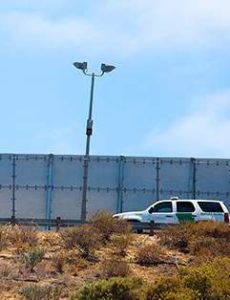
United States Executive Authority in Declaring Emergency Powers
U.S. presidents have the discretion to declare a “national emergency.” As soon as he does, he can sidestep many existing limits to presidential authority. In fact, 100 or more special provisions become available to him. Some provide reasonable responses to real emergencies, while others seem to bolster the power of a so-called unitary executive who wants to amassing or retain power. The president can activate laws allowing him to, for example, shut down many kinds of electronic communications inside the U.S. or to freeze Americans’ bank accounts. Other powers are available without a declaration of emergency, including laws that allow the president to deploy troops inside the country to subdue domestic unrest.
The rationale for having emergency powers is simple: The government’s ordinary powers may not be enough in times of crisis, and amending the laws to provide greater ones would take too long. Emergency powers are intended to give a temporary boost until the emergency passes or there is time to change the law through the regular legislative process. The problem comes when presidents don’t have the best interest of the country in mind.
Guest – Andrew Boyd, Counsel in the Brennan Center’s Liberty and National Security Program. Andrew spent 7 years prosecuting senior Khmer Rouge leaders on behalf of the UN for war crimes, crimes against humanity and genocide. He also worked on cases resulting from the 1994 Rwandan genocide at the International Criminal Tribunal for Rwanda.
———–
———–
Civil Liberties, Human Rights, Truth to Power
Podcast: Play in new window | Download
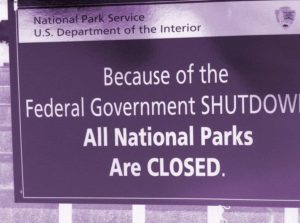
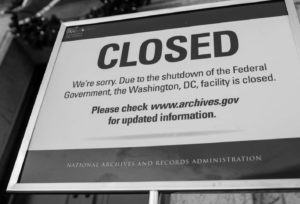
Government Shut Down Impacts
President Donald Trump set a record for the longest-ever government shutdown in history lasting nearly 35 days. There are many ways that the public will feel the impact of a government shutdown. 800,000 federal workers were either barred from working or forced to work without pay. That, despite the continued operation of so called essential services – many of which relate to public safety – that continued to operate. In prior shutdowns these have included border protection, in-hospital medical care, air traffic control, law enforcement, and power grid maintenance.
In 1996, for example, more than 10,000 Medicare applicants were turned away each day of the shutdown. In 2013, the Environmental Protection Agency halted site inspections to 1,200 different sites that included hazardous waste, drinking water, and chemical facilities. The Food and Drug Administration delayed almost 900 inspections.
We examine some of the lesser-reported impacts from the most recent government shutdown such as cybersecurity and food and chemical testing.
Guest – Attorney Melanie Benesh – As EWG’s Legislative Attorney, Melanie provides legislative and regulatory analysis of federal food, farm and chemical law. Melanie grew up in Omaha and received her B.A. from Marquette University. After college, she worked as a research assistant studying Fair Trade coffee in Chiapas, Mexico, and later as a community organizer for Voces de la Frontera in Milwaukee.
Guest – Larry Loeb has written for many of the last century’s major “dead tree” computer magazines, having been, among other things, a consulting editor for BYTE magazine and senior editor for the launch of WebWeek. He has written a book on the Secure Electronic Transaction Internet protocol. His latest book has the commercially obligatory title of Hack Proofing XML. Securitynow.com