Civil Liberties, Habeas Corpus, Human Rights, Prosecution of the Bush Administration, Targeting Muslims, Torture, Truth to Power, War Resister
Podcast: Play in new window | Download
Updates:
- Supreme Court Decision on Qualified Immunity: Dick Cheney
- NYPD Turned Young Man Into Informant: Mosque Crawler
—–
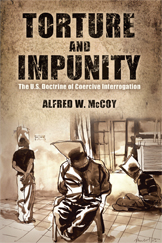
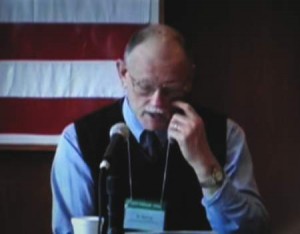
Torture and Impunity: The U.S. Doctrine of Coercive Interrogation
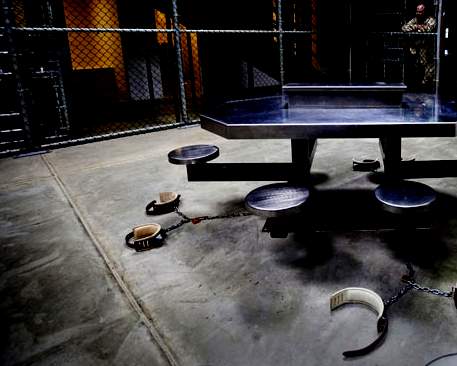
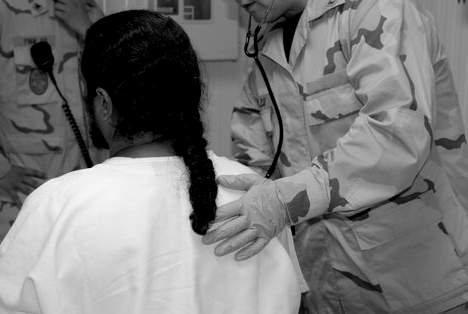
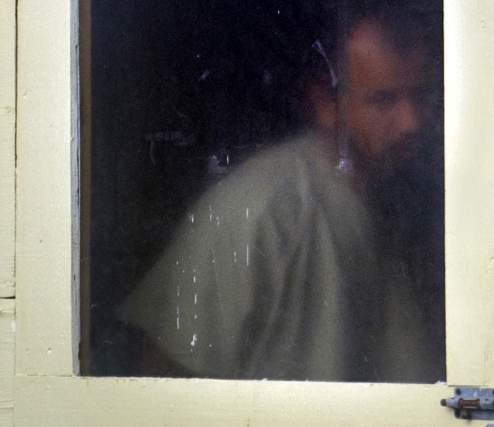
It’s an undisputed fact: both the George W. Bush and Obama administrations actively engaged in various methods of torture, and have done so with impunity. Despite initial public outrage at graphic images from the bowels of Abu Graib and Guantanamo prisons, government-sponsored torture has, on one level, come to be accepted as integral in the several perpetual wars waged by the United States. References to torture are now commonplace, sprinkled throughout the mainstream media and in popular culture references. Even discussion of different forms of torture has, in ways, become abstract.
We’ve reported, for example, that Cornell University Medical Center scientists have deemed so-called “forced standing” the most devastating mode of torture. Standing motionless for hours can shut down the kidneys, cause hallucinations and wreak much more damage.
And we’ve looked at numerous cases in which the perpetrators of US-sponsored terror have gone unpunished. In one case, while Italy’s high court upheld sentences of 23 CIA operatives convicted of kidnapping a Muslim cleric under the US program of “extraordinary rendition, more than 10 years later, the commanders who authorized the torture yet to face charges. This country’s practice of torture have become virtually sanitized, and in the process, does lasting damage to America’s moral authority as a world leader.
Professor Al McCoy:
- In the 1950s, the human mind was like the last continent to be discovered.
- People in Washington, the CIA were concerned that Russia was capable of programming people to do things against their will.
- Initially defensively and very quickly offensively the CIA led the US intelligence community, the British and Canadians on a massive search that lasted 12 years for sophisticated mind control techniques.
- It went through an exotic phase where they explored hypnosis and very famously almost notoriously drugs, that led to dead ends.
- They outsourced the mundane research to top ranking cognitive scientists. This produced two breakthroughs.
- One is sensory deprivation, second is stress positions.
- These two techniques self afflicted pain and sensory disorientation were combined in the CIA’s counter intelligence and interrogation manual in 1963.
- It was disseminated withing the US intelligence community and then through a bunch of CIA blinds then to international police training to US allies worldwide . . .leading to a global proliferation of torture on our side of the Iron Curtain.
- The UN Convention barred with equal weight the physical and psychological torture.
- We illegally took people and seized them, transferred them to allied nations where they would be likely to be subjected to torture.
- One of the favorite blinds of the CIA was the office of Naval Research.
- President Bush authorized the CIA to open up its own prisons, lease its own fleet of executive jets in order to move them around from prison to prison.
- Torture became normalized for the American people. Torture became omnipresent on screens large and small across America.
- The show 24 became enormously popular with 15-20 million views per episode. We’ve had torture normalized within the mass media.
- This process of impunity is really a transnational process.
- Rewriting history so that the fabric of the past is radically reconstructed to justify the use of torture.
Guest – Al McCoy, Professor of History at the University of Wisconsin-Madison and author of “Torture and Impunity: The U.S. Doctrine of Coercive Interrogation.” Al is also the author of “A Question of Torture: CIA Interrogation, From the Cold War to the War on Terror” and “The Politics of Heroin: CIA Complicity in the Global Drug Trade. The first edition of his book, published in 1972 as The Politics of Heroin in Southeast Asia, sparked controversy, but is now regarded as the “classic work” about Asian drug trafficking.
—
ACLU: When Boston Police Spy on Free Speech, Democracy Suffers
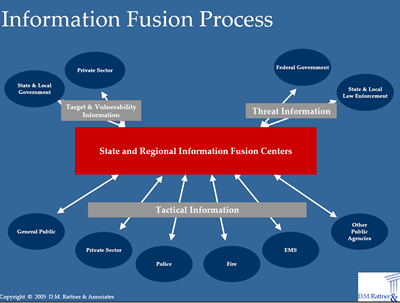
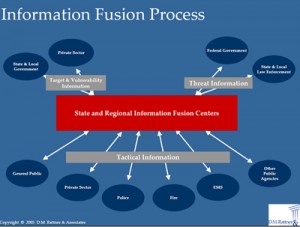
The Massachusetts National Lawyers Guild, along with the ACLU, recently issued a report detailing how the Boston Police Department has worked with its local fusion center to spy on lawful activities. The Center was established in the wake of 9/11 to more effectively share “terrorism-related” information among federal, state and local law enforcement agencies as well as with private entities.
Public police records, including documents and videotapes, obtained with a court order reveal a pattern of police surveillance of peaceful demonstrations, coupled with the practice of interrogating activists and labeling peaceful groups as extremists. Local groups and activists have long suspected that spying was taking place.
Urszula Masny-Latos:
- We know that various law enforcement agencies monitor peaceful activists.
- Even though COINTELL PRO ended in the 70s, we know that law enforcement agencies have continued spying.
- In 2009 when Israel attacked Gaza, there were many protests in Boston, one of those protests happened at the Israeli consulate.
- Four activists were arrested and the NLG represented them and eventually charges were dropped.
- While in jail the activists were interviewed by plain clothes officers.
- One of the activists was threatened because she refused to answer questions.
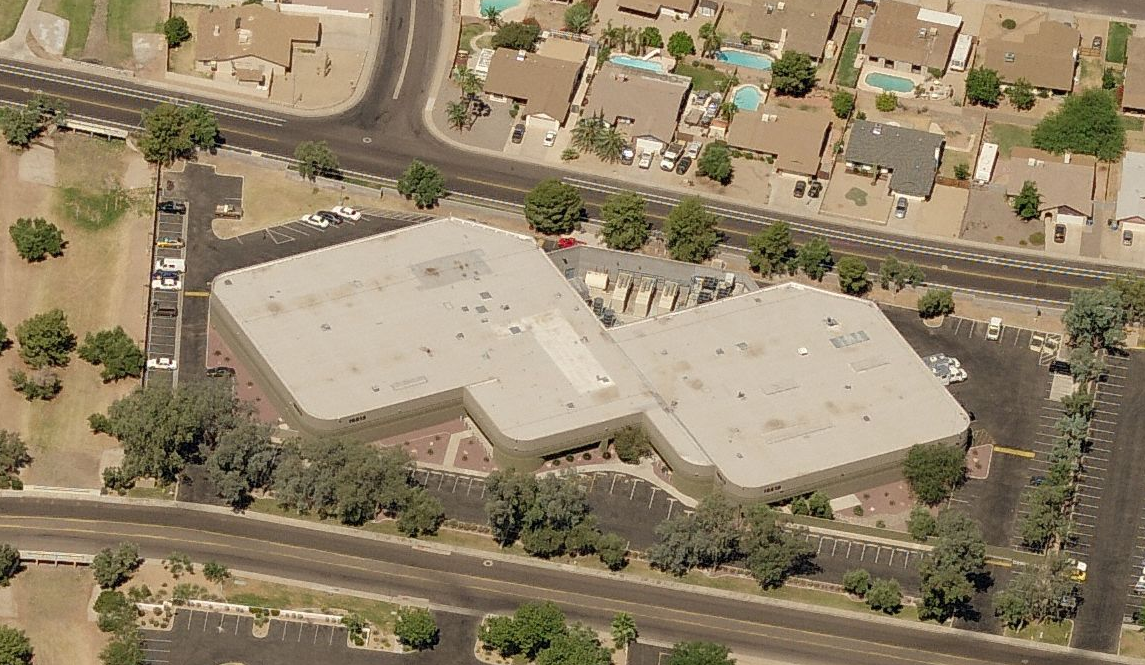
- Four BRIC officers interviewed those activists. BRIC (Boston Regional Intelligence Center) is one of two fusion centers we have in Massachussetts.
- We know that BRIC is not supposed to gather information or evidence from activists or anyone else.
- The Boston Police Department says BRIC officers only said they were available to talk with.
- Not only in Boston, people have to be very aware of it, fusion centers have been put in all states.
Guest – Urszula Masny-Latos, Executive Director of the Massachusetts National Lawyers Guild since 1996. She grew up in Poland, where she was active in the student movement. After moving to the U.S., she attended University of California at Santa Cruz where she majored in sociology and legal studies; her graduate work in arts management was done at the New School for Social Research in New York City. Prior to her Guild employment, Urszula organized arts festivals, managed a theater company, and worked as an organizer for a union in Boston.
——————————————————————-
Afghanistan War, Civil Liberties, Criminalizing Dissent, Extraordinary Rendition, Gaza, Guantanamo, Habeas Corpus, Human Rights, Military Tribunal, Political Prisoner, Targeting Muslims, Torture, Truth to Power, War Resister
Podcast: Play in new window | Download
Updates:
—
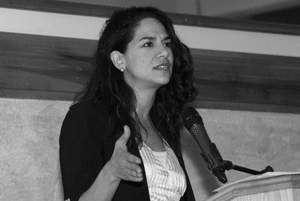
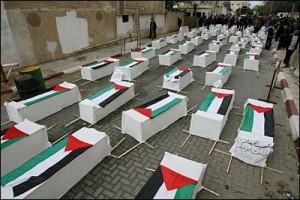
Russell Tribunal on Palestine Findings
We follow up on the findings of the Russell Tribunal on Palestine. As many listeners may know, the tribunal was created in response to the international community’s inaction regarding Israel’s recognized violations of international law. Jury and speakers included Angela Davis, Noam Chomsky, Ilan Pappe, Peter Hansen, Diana Buttu, Phyllis Bennis, Katie Gallagher and Russell Means.
Attorney Noura Erakat:
- Each of the sessions focuses on a different component of the problems that has led to a failure to achieve a solution to what some may describe as the Palestinian-Israeli conflict.
- More specifically to achieve Palestinian self-determination and equality with their Jewish-Israeli counterparts.
- The first tribunal explored the EU complicity. A condition for Israel’s acceptance into the United Nations was its acceptance of returning refugees to their homes per UN Resolution 194.
- Since the 1967 war they’ve been supported by unequivocal US financial, military and diplomatic support.
- Corporate complicity: The corporations that are involved in funding the Israeli military arsenal and its construction arsenal to expand its colonial settlements in the Occupied Territory as well as building a wall deemed illegal by the National Court of Justice.
- This fourth and final session brought everything back to the U.S.
- To New York specifically because the U.S. has proven to be the primary obstacle in resolving this conflict.
- Consider first that Israel has received 115 billion dollars in aid since World War 2. Making it the highest recipient of US foreign aid.
- In addition to that Israel receives approximately 3 billion dollars a year. It receives money without any review in US law, specifically the Arms Export Control Act which conditions that all US aid to foreign countries must be used to further human rights or in self defense.
- The US is shielding Israeli responsibility in the UN Security Council
- The resolution process is stonewalled internationally.
- One of the things that we’d love to do is remove the veto power from the five permanent members of the UN Security Council.
- BDS Movement: 2011 – Dock Workers refused unload Israeli products from a boat.
- EndtheOccupation.org
Guest – Attorney Noura Erakat, human rights attorney and activist. She is currently a Abraham L. Freedman Teaching Fellow at Temple University, Beasley School of Law and the U.S. based Legal Advocacy Consultant for the Badil Resource Center for Palestinian Refugee and Residency Rights. She has taught international human rights law in the Middle East at Georgetown University since Spring 2009. Noura also has helped seed BDS campaigns as a national grassroots organizer with the US Campaign to End the Israeli Occupation.
———-
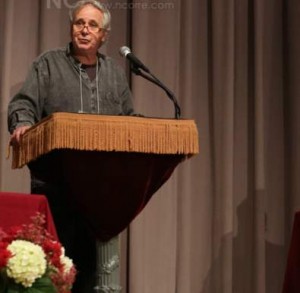
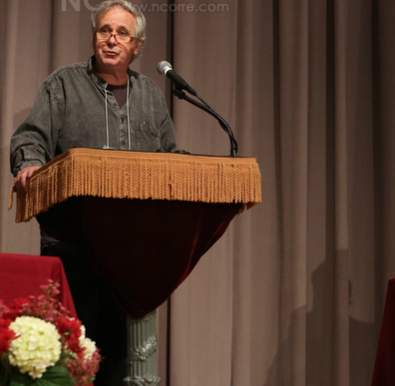
Russell Tribunal on Palestine: Ilan Pappé Speech
The final session of the Tribunal focused on the responsibility of the United States of America and the United Nations regarding the Israeli breaches of international law towards Palestine and Palestinians. There is now a situation in which Israel has achieved a status of immunity and impunity, facilitated by the US, despite its complete disregard for the norms and standards of international law.
Speaker – Ilan Pappé, an Israeli historian and activist. He is currently a professor with the College of Social Sciences and International Studies at the University of Exeter in the UK, director of the university’s European Centre for Palestine Studies, and co-director of the Exeter Centre for Ethno-Political Studies. He is the author of The Ethnic Cleansing of Palestine (2006), The Modern Middle East (2005), A History of Modern Palestine: One Land, Two Peoples (2003), and Britain and the Arab-Israeli Conflict (1988)
——————————————————————————-
Afghanistan War, Civil Liberties, Criminalizing Dissent, Human Rights, Iraq Veterans, Truth to Power, War Resister
Podcast: Play in new window | Download
Updates:
—-
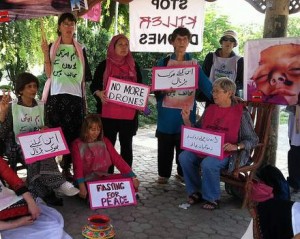
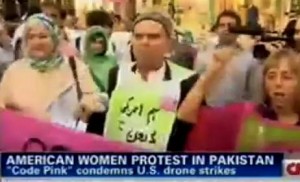
Anti-Drone Action: Code Pink Delegation to Pakistan
Two weeks ago a delegation of 40 members from Code Pink traveled to Pakistan protesting US drone strikes. The group is also visiting families of those injured or killed by drones and to encourage relations amid the broader Muslim world. The delegation is made up of students, doctors, veterans, retirees and artists. Recently the group set out on a massive anti-drone march in Waziristan where drones have killed many civilians. In one statistic, within two years more than 90 drone attacks have killed 5000 innocent Pakistanis. We get an update on the delegation from Code Pink member Rae Abileah. Rae is the co-director of CODEPINK Women for Peace. She is also a founding member of Young Jewish Proud, the youth wing of Jewish Voice for Peace. Rae has visited Israel and the West Bank several times, and has traveled to Gaza and Iran.
Rae Abileah:
- I’m the co-director of Code Pink nationally. Medea Benjamin, co-founder of Code Pink has been doing work on drones for the past year and a half. She recently wrote a book Drone Warfare: Killing By Remote Control
- She partnered with PTI, the Pakistani Political Party and their leader and a well known lawyer for drone victims.
- They got this delegation rolling and ended up with 35 Americans in Islamabad setting out on this caravan to march to a place where really in the past decade no Americans have gone to.
- They put their bodies on the line and joined these Pakistanis going on this march.
- People in Waziristan are living with drones overhead, they don’t know when the next attack is going to come.
- It started out as a car caravan with more than 100 vehicles, they drove for hours.
- The goal was to get to south Waziristan the epicenter of the US drone attacks.
- President Obama has declared all young men in Pakistan to be potential militants. It gives the green light to shooting civilians.
- These soldiers are sitting there all day looking at the screen as if its a video game.
- These military pilots are going to work all day, pressing buttons that kill people thousands of miles away and going home to their dinner table in Vegas at night.
- It’s a primary tool for attracting militants to join the Taliban.
- We’re continuing to build grassroots support to oppose Obama’s drone program.
- During the delegation we were actually able to deliver thousands of signatures collected on a stop drones petition directly to Obama at one of his fundraisers in San Francisco.
- In Congress there’s also a Drones Caucaus, the leaders such as Bill Buck McKeon are taking hundreds of thousands of dollars from drone manufacturers.
- Soda Stream is manufactured in an illegal settlement in the occupied territories.
Guest – Rae Abileah, co-director of CODEPINK Women for Peace and is a co-organizer of Occupy AIPAC, Stolen Beauty boycott of Ahava cosmetics, and Women Occupy. Rae is a contributing author to 10 Excellent Reasons Not to Join the Military; Sisters Singing: Incantations, Blessings, Chants, Prayers, Art and Sacred Stories by Women; Beyond Tribal Loyalties: Stories of Jewish Peace Activists; and Beautiful Trouble: A Toolbox for Revolution. She lives in San Francisco, CA.
——

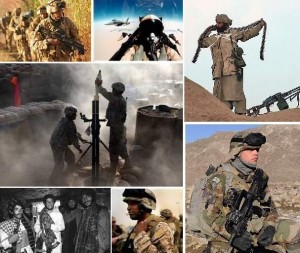
11 Years of War In Afghanistan
This month marks 11 years since the colonial war in Afghanistan was launched. Operation Enduring Freedom armed forces include the United States, the UK, Australia and the Afghan United Front. We’ve talked with past guests about how multi-national corporations are involved to integrate Afghanistan into the global system by building schools and infrastructure. We’ve also talked about the strategic energy alliances forming between Russia and China on one side and how three Caspian Sea oil companies continue to lock the US in to the war.
Phyllis Bennis:
- This already the longest war in history.
- We hear from President Obama that within the year 2014 combat troops will be withdrawn.
- We’re hearing new calls from different forces including most recently the Secretary General of NATO indicating there was a possibility that NATO may pull out its troops earlier then the end of 2014 because of the insider killings.
- The only figures we have began in 2007, they began counting some confirmed deaths. About 13 thousand Afghan civilians only since 2007.
- The US is there in two ways, the US has a commander happens to be the NATO commander. Other US troops are there separately. The US has almost 70 thousand troops there now, NATO has 40 thousand other troops and there are about 90 thousand US paid contractors.
- US troop casualties: Even that now is unclear.
- Last week a number of press outlets reported the 2000th US military casualty.
- Young people in Afghanistan join the military for the same reasons young people in the United States join the military, because they’re desperate for a job.
- Remember a couple of weeks ago 9 Afghan women and little girls were killed gathering wood before dawn to build a fire, to make breakfast.
- The Pentagon said, oh sorry, and somehow think that its going to make it ok.
- Add to that the lack of cultural sensitivity, the lack of language training so there’s no sense from soldiers on the ground that they have any idea what this culture is about, who these people are.
- Afghanistan is about 25 million people, the vast majority don’t live in the cities. They live in tiny hamlets and small towns, small villages, very scattered.
- What we’re seeing is an expansion of the global war on terror.
- There is an anti-war movement it’s just not as visible as we’ve seen in earlier times.
- That’s the hardest part of our work, its not building an anti-war movement, its making our government take into account the opinions of not only a movement but the American people.
- Understanding the Palestinian Israeli Conflict.
Guest – Phyllis Bennis, director of the New Internationalism Project at the Institute For Policy Studies. She is also a fellow of the Transnational Institute in Amsterdam. She has been a writer, analyst, and activist on Middle East and UN issues for many years. In 2001 she helped found and remains on the steering committee of the U.S. Campaign to End Israeli Occupation. She works closely with the United for Peace and Justice anti-war coalition, co-chairs the UN-based International Coordinating Network on Palestine, and since 2002 has played an active role in the growing global peace movement. She continues to serve as an adviser to several top UN officials on Middle East and UN democratization issues.
———————————————————————-
Civil Liberties, Criminalizing Dissent, Gaza, Human Rights, Targeting Muslims, Torture, Truth to Power, War Resister
Podcast: Play in new window | Download
Updates:
—–
The Russell Tribunal on Palestine
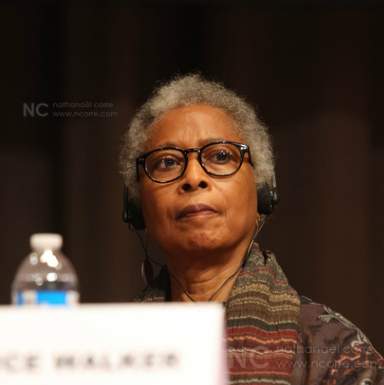
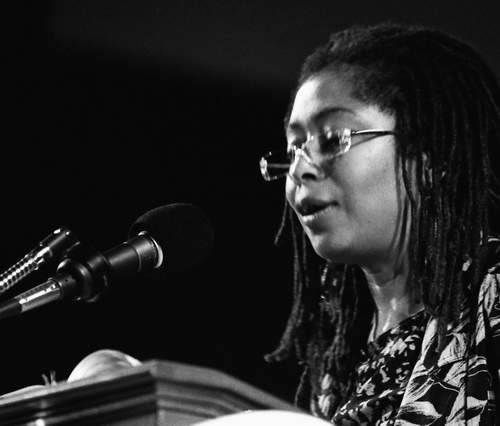
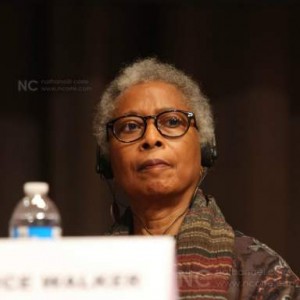
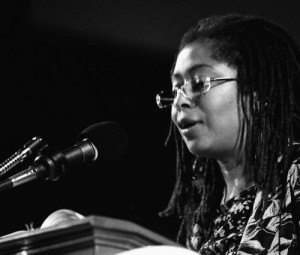
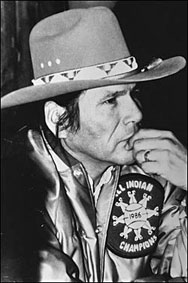
The Russell Tribunal on Palestine is holding its fourth and last session in New York City, October 6 through the 7th. This public session focuses on the denial of the Palestinian right to self determination and the role of the US and the United Nations. This tribunal will draw attention to the ongoing Israeli occupation of Palestinian Territories and how Israel continues to act with impunity under international law. There will be many speakers at this event including Ilan Pappe, Noam Chomsky, and Cynthia McKinney. We talk today with Pulitzer Prize winning novelist and poet Alice Walker and Dennis Banks, a Native American leader, activist and author. Both of whom will be speaking at the tribunal.
Alice Walker:
- Citizens around the world are very concerned that nothing seems to move forward between the Israelis and the Palestinians.
- The traditional one (tribunal) that came into being because of Vietnam and the American war against the Vietnamese people.
- I was in Gaza shortly after the bombing and that would’ve made anyone want to have a tribunal because it was so completely devastating and horrible.
- The Israelis just sailed along as if everything was ok to kill 1400 people and 300 children, destroy the water system. We don’t have a lot of power in terms of making things change, but I think consciousness is our only hope in any case.
- The UN has been relatively helpless against the US and Israeli veto of their resolution. We want to look at – Why is that?
- How is it that we can’t get any movement in the UN toward justice for the Palestinian people?
- I think the United States and Israel are in agreement they want that territory.
- We have to remember this is an entrenched long standing pattern of how you treat indigenous people when you want what they have.
- In this country what they did is destroy the Indians.
- The Palestinians are just seen as obstructions to this grand vision. When people say real politic, they mean no matter what they have to do to implement their plan. Their plan whatever it is is supreme.
- They just gonna do that if it takes 100 years, 200 years.
- I remember sitting in Gaza after the bombing. The thing that got me was they bombed this school, not only a school but it was the American school.
- We must as human beings gather together. Gather ourselves and address these issues of destruction and they’re coming faster and faster.
Guest – Alice Walker, American author, poet, and activist. She has written both fiction and essays about race and gender. She is best known for the critically acclaimed novel The Color Purple (1982) for which she won the National Book Award and the Pulitzer Prize.
——
Dennis Banks:
- It seems that they’re taking a page out of Native American history and using it over there.
- You look at the burning of the sweat lodges. The whole experiment to take Native people away their parents and destroy them, put them in foster homes, boarding schools, military boarding schools.
- And keep them there for five, six, seven years. In my case it was six years before I was even allowed to see my parents.
- The whole thing is all over again.
- What can I say to warn people, to warn people about the future?
- I know they’re gonna dispossess the land from the Palestinians.
- I will not forgive the government for what it did not only to me but to thousands of thousands of young Native children.
- I’m speaking against the American people, I’m speaking against the policies of the American government.
Guest – Dennis Banks, a Native American leader, teacher, lecturer, activist and author, is an Anishinaabe born on Leech Lake Indian Reservation in northern Minnesota. Banks is also known as Nowa Cumig (Naawakamig in the Double Vowel System). His name in the Ojibwe language means “In the Center of the Ground.” He has been a longtime leader of the American Indian Movement, which he cofounded in 1968 with Native Americans in Minneapolis.
——
Chicago Teacher Strike
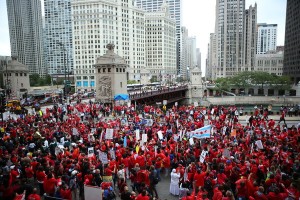
The Chicago teachers, with deep community support, have won a good victory last week in their ten day strike. their victory, while not complete, defends one of the great gains of the American people, public education, against the neo-liberal goal of supplanting it with private for profit non union charter schools. The teachers strike was about more than wages and hours. They fought against the dismantling of public schools in favor of for profit charter schools, a project that both the democrats from Obama down to Chicago Mayor Rahm Emannuel, champion.
The teachers demanded smaller class size, school aids, school supplies, and an end to the use of standardized tests. The new leadership of the teachers union gained its strength by being democratic and being rooted in the community, largely Black and Latino, and allied with the families of the students they teach. They began organizing in defense of their students 3 years ago.
Debby Pope:
- I started out the week as a strike coordinator. We went out and worked with 8 to 12 schools in a particular area on the picket lines and then someone else moved in to a communications role.
- Right now I’m working in a grievance department working on contract enforcement issues.
- I think the fundamental issue is the defense of public education and the defense of teaching as a profession.
- Let me make it clear that we were not legally able to bargain on some of the issues I talk about due to restrictive labor laws in Illinois.
- They have made over a hundred charter schools in Chicago in the last decade or so.
- They’ve eliminated bargaining in those schools, they’ve eliminated Chicago Teacher’s Union membership, they’ve eliminated the decent working conditions and the rights that we’ve fought for.
- They’ve given the billionaire business men a huge control over their schools.
- They have systematically defunded neighborhood schools.
- They allowed our buildings to crumble. They’ve given us computers that are decades old.
- This is an example of how they’ve been starving the public schools and then blaming us when the schools don’t work.
- We went out to the schools. We started contract action committees in all the schools. We helped teachers to understand what their rights were.
- We resumed our place as one of the largest unions in Illinois as a part of the labor movement.
- Is a teacher’s effectiveness related to his or her class size?
- Can a teacher teach 40 kids as well he or she can teach 25 kids?
- We want a better school day with a richer curriculum with art, music and drama.
- The enemies of poor children, the enemies of public education, the enemies of giving every child an opportunity are within both parties.
- We put ourselves in a position where the schools are failing.
- We blamed the schools for failing when in fact as a society set them up to fail.
- Then of course the billionaire rescuers . . . came in and said Oh my God look at what a mess the schools are. We have to privatize them, we have to charter them. We have to turn them into little business models.
- These people believe in factory schools.
- The next fight on the horizon is against school closings.
Guest – Debby Pope, member of the executive board Chicago Teachers Union and delegate. Debby Pope is a retired teacher and currently works on the CTU grievance board in contract dispute.
———————————————————————–
CIA Sponsored Terror, Civil Liberties, Guantanamo, Habeas Corpus, Human Rights, Political Prisoner, Prison Industry, Targeting Muslims, Torture, Truth to Power
Podcast: Play in new window | Download
Updates:
- US Refuses To Extradite Former Bolivian President
- Jose Padilla Re-Sentencing
- Ward Churchill Case Update – Are University Board of Regents Immune?
- Armenia Protests Extradition of Axe Murderer
——

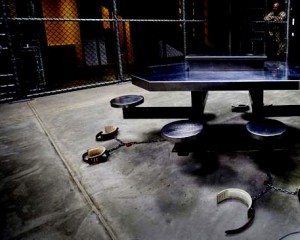
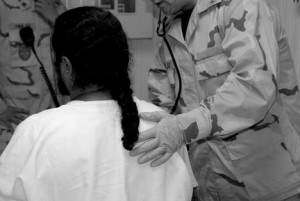
Department of Defense Declassifies Report on Alleged Drugging of Detainees
Hosts discuss a recently declassified report on alleged drugging of Guantanamo detainees with Attorney Shane Kadidal.
Guest – Attorney Shane Kadidal, senior managing attorney of the Guantánamo Global Justice Initiative at the Center for Constitutional Rights in New York City. He is a graduate of the Yale Law School and a former law clerk to Judge Kermit Lipez of the United States Court of Appeals for the First Circuit. In his eight years at the Center, he has worked on a number of significant cases in the wake of 9/11, including the Center’s challenges to the detention of prisoners at Guantánamo Bay (among them torture victim Mohammed al Qahtani and former CIA ghost detainee Majid Khan), which have twice reached the Supreme Court, and several cases arising out of the post-9/11 domestic immigration sweeps.
——
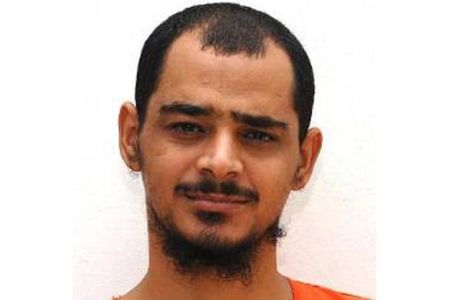
Adnan Latif – the Face of Indefinite Detention – Dies at Guantánamo
A prisoner held at Guantanamo Bay Naval Base since 2002 died last week. Adnan Farhan Abdul Latif was a 32 year old from Yemen who was allegedly suicidal and mentally ill. Latif won a U.S. court order for his release but it was overturned on appeal. In 2009, President Obama imposed a moratorium on Guantanamo prisoners from Yemen after a Yemeni trained Nigerian was found with a bomb in his underwear on a Detroit bound plane in 2009. Latif is the ninth prisoner to die at Guantanamo Bay prison.
Attorney David Remes:
- We decided to put out a statement by the lawyers. We wanted to call his family but the government said let the ICRC do it.
- He was approved in 2004, he was approved in 2007, and approved in 2009 for transfer out of Guantanamo.
- Adnan filed a habeas corpus petitions in 2004. In 2008 those cases began to move forward, Adnan was among them. He won his habeas case. The whole case against him hinged on an intelligence report that the district court judge said was unreliable. The case was appealed by the Obama Administration.
- He was a very sweet man, he was small, he was thin.
- He was very sensitive and a fine poet. He felt everything more keenly, perhaps more keenly than any of the other detainees.
- He felt that his spirit was being crushed. That he was always being roughed up by the guards. He was on long hunger strikes, he was held in isolation for the majority of his time in Guantanamo.
- He was mentally very fragile.
- At one point in my representation of him in 2009, he slit his wrists as I was speaking with him . . by chipping formica from under the table and cutting into his vein let the blood drip into a little cup and then threw his blood on me.
- I took an inventory of his various bumps, bruises and swellings. It was almost like a doctor’s visit.
- He was a small guy.
- He could be very lucid, he was very intelligent.
- You just have to question the NCIS reports from the beginning.
- Whatever the conclusions that were announced it was Guantanamo that killed Adnan. It ruined his health, it ruined his spirit, it may have led him to suicide.
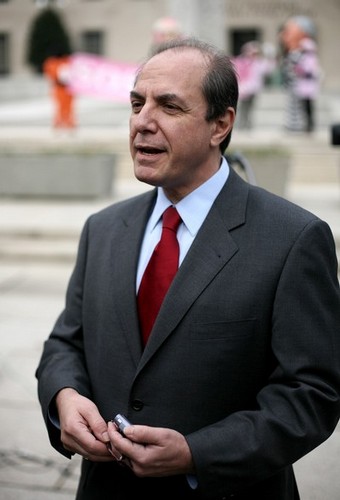
Guest – Attorney David Remes, a human rights lawyer who has been deeply involved in the litigation on behalf of Guantanamo prisoners since 2004. He represents 16 Yemenis and has made several visits to Yemen to press for his clients’ release and brief their families. He was among the first lawyers to visit Guantanamo after the Supreme Court ruled in Rasul v. Bush in 2004 that the prisoners had a right to legal counsel.
————————————————————————–
Civil Liberties, Criminalizing Dissent, Human Rights, Torture, Truth to Power
Podcast: Play in new window | Download
Updates:
- Bradley Manning Trial Update: System of a Star Chamber
- Julian Assange Extradition / Asylum
- Occupy Chicago Tribune WIPO Lawsuit Update:
- Donating to Wikileaks
—
Judge Dismisses Lawsuit Filed Over Boycott of Israeli Goods
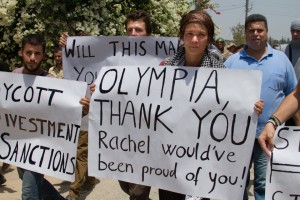
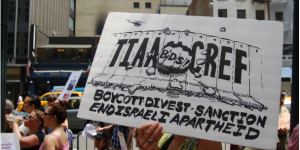
We follow up on the Olympia Food Co-op lawsuit filed over boycott of Israeli goods earlier this year. For listeners unfamiliar with the case, a judge in Olympia, Washington dismissed a lawsuit tailored to force the Olympia Food Co-op to rescind its boycott of Israeli goods. The judge ruled that the lawsuit brought by opponents of the boycott violated a Washington State law designed to prevent abusive lawsuits which are aimed at suppressing lawful public participation. Interestingly, an investigation by ElectronicIntifada had unearthed that the lawsuit against individuals with the Olympia Food Co-op Board was also planned in collusion with a national anti-Palestinian organization called StandWithUs that was working with the Israeli government. Lawyers with the Center for Constitutional Rights argued that the lawsuit qualified as a SLAPP, that stands for – – Strategic Litigation Against Public Participation. SLAPPs are lawsuits that target the constitutional rights of free speech and petition in connection with an issue of public concern. Recently, the five Olympia Food Co-op members who had sued to overturn the store’s boycott of Israeli goods must pay $160,000 in damages.
Attorney Barbara Harvey:
- The judge had before him the issue whether to assess a single statutory penalty of 10 thousand dollars on behalf of all 16 co-op members who served on co-op board members who were sued by the defendants, or would the judge order each individual statutory penalties to each defendant.
- He decided to order individual statutory penalties to each defendant for a total 160 thousand dollars.
- The plaintiff sued 16 board members past and present. Standwithus produced a youtube video of the five plaintiffs just before they filed the litigation.
- The five co-op members didn’t look upset given the judge’s decision. If they’re not upset, why not? – which suggests the costs will be covered but we really have no way of really knowing that.
- This victory discourages the opponents of the movement for Palestinians to engage in this kind of litigation.
- TIAA-CREF which manages financial assets of 470 plus billion dollars announced that they had decided to remove Caterpillar from their Socially Responsible Investing Accounts.
- That’s because Caterpillar supplies Israel with these militarized bulldozers that are sold under Department of Defense contracts to Israel which are used to tear down civilian homes in Palestine.
- Caterpillar is the poster child of divestment and boycott and TIAA-CREF has done that.
- All other customers that use that SRIA account will be divesting from Caterpillar.
- Our campaign is to persuade companies like TIAA-CREF to divest from companies around the world that profit from the occupation.
Guest – Barbara Harvey, a Detroit attorney who has worked with BDS activists and a former JVP Board Member
———
Occupy the Economy: Challenging Capitalism PART 1
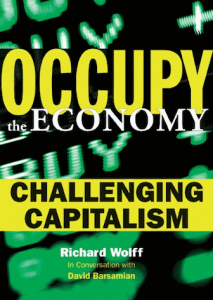
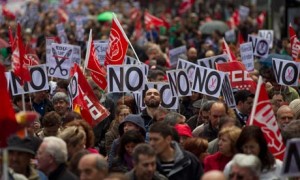
Occupy the Economy: Challenging Capitalism is the title of Professor Rick Wolff’s new book. After more than a dozen interviews with Rick Wolff since 2008, the theme is consistent, beyond the corrupt banks and stock markets is a flawed economic system. A system that at worst needed to change direction in the 1970s when wages stopped increasing and the cost of living continued to rise. As we look around, the collapse has been coming down in steps, and many have been trying to dial back, save and prepare. This, as millions have lost their jobs, 401ks, pensions, and homes. Overseas, the waves of austerity continue to push through Europe as protests have erupted again in Spain.
Professor Rick Wolff:
- The book is an interesting venture for me, it’s done with David Barsamian, with Alternative Radio.
- He did 3 major interviews with me, the response was so heartwarming, we published a written version of them.
- The book is an overview of how we got into this mess, why it’s lasting so long, why it’s hurting so badly, why government policies have in fact, not succeeded.
- A number of the economies in Europe are on the edge of major breakdown. Spain is already in that situation, Italy is right on its heels. This is not like Greece or Portugal, Ireland or Hungary who are smaller economies, these are major economies.
- There is active debate in the highest circles of Europe, both critics of capitalism and its leaders, questioning whether the European Union can survive . . its a measure of how serious the problem is.
- China, by its own announcing running at a rate of growth of 7- 8 percent which is half of what it had very few years ago.
- It can’t also escape the effect of Europe which is its second most important market.
- China is trying to reorient the economy away from their dependence from exports to the rest of the world because frankly that’s not a reliable situation for them. To give you one index.
- As wages in the United States stagnated, wages in China have gone up 20 percent.
- The slow downs in India, very sharp. The slow downs in Brazil, very sharp.
- The consensus is what Bernanke said. Things are very poor, very weak and we really have to be alert.
- The situation is only going to deteriorate over the rest of 2012 and into early 2013.
- When a capitalistic economic system begins to unravel. . . we’re in the fifth year of this crisis. It officially began in December 2007.
- Every major government program, the bailouts, the stimulus has not achieved the goals it said it could and would.
- The biggest capitalist institutions in this country at this time, the banks. . .are in such trouble are so worried about their own prospects in an economy in such difficulty that what they are doing is taking excessive risks, pushing the envelope of what’s ethical and moral and crossing the thin and blurry lines of legality.
- LIBOR – London Interbank Offered Rate – Starting in the 1980s, London which had been the financial center of the world economy realized what we all understood at that time which was the world economy was becoming dependent on credit.
- Every corporation was borrowing money all the time, every government was borrowing money on a scale we’ve never seen before, the really innovative thing was the development of consumer credit.
- The LIBOR became the benchmark for the world.
- Everyday the British Bankers Association polls the 16 biggest banks who have offices in England, what they are charging each other.
- It takes an average and it announces that. That number is a standard number for example, variable rate mortgages in the US where the mortgage goes up and down those are based on LIBOR.
- It’s factored into everybody’s borrowing. If you’re going into store to buy a pair of pants, that store also borrowed money which is also shaped by a relationship to LIBOR.
- These banks are the biggest holders of debt instruments. Derivatives of all kinds, mortgages of all kinds. You are relying on information from somebody who has an active interest in the information they’re supplying.
- What we now know is these banks often reported an interest rate different from what they were actually charging.
- There was no oversight.
- The world of superbanking is a very cozy world. Barclay’s had admitted to reporting a number that was actually the case. . . and had paid fines now totalling 450 million dollars to both US and British authorities.
- To be blunt they screwed everybody to save themselves.
- How could we defend private banking on this scale ever again?
- The big ones are Bank America and Wells Fargo.
- Both of them have both agreed to pay fines. Bank of America – 300 million. Wells Fargo 175 million.
- Here was what their fine was for. They went and charged African American and Hispanic families more interest for mortgages than they did for whites who had identical credit scores.
- Five of the biggest banks in the world Barclays, Wells Fargo, HSBC, and JP Morgan Chase have all admitted major breaches of minimal ethics, minimal morality, legality all to advantage themselves at the expense of the public.
- Private monster banks are an unsafe way for any society to manage the credit that has now become central to the economy. It is inappropriate for us to have banks that have more money than the government supposedly regulating them.
Guest – Richard D. Wolff is Professor of Economics Emeritus, University of Massachusetts, Amherst where he taught economics from 1973 to 2008. He is currently a Visiting Professor in the Graduate Program in International Affairs of the New School University, New York City. He also teaches classes regularly at the Brecht Forum in Manhattan.
————————————————-