CIA Sponsored Terror, Civil Liberties, Criminalizing Dissent, Human Rights, NSA Spying, Political Prisoner, Prison Industry, Surveillance, Targeting Muslims, War Resister
Podcast: Play in new window | Download
Law and Disorder hosts Heidi Boghosian and Michael Smith remember New York City Attorney and publisher Bill Schaap.
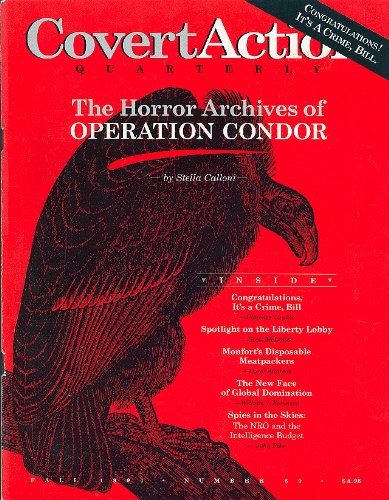
Bill Schaap died in his home on February 25th after a long illness. He was 75. After graduating from the University of Chicago Law school in 1964 Schaap worked for the Center for Constitutional Rights on its project in Japan representing antiwar GIs during the Vietnam war. For 20 years he and his companion the late Ellen Ray lived in Washington DC and published and wrote for the magazine “Covert Action Quarterly” which exposed the crimes of the CIA. In its early years they named CIA agents, until a naming names act was passed by Congress making the exposure of agents a crime. In the early 80s they moved to New York City and founded Sheridan Square Press. They published books about the CIA by former CIA agents. Most prominently they published New Orleans district attorney Jim Garrison’s book “On the Trail of the Assassins” showing CIA involvement in the Kennedy assassination. The book became a New York Times bestseller and was the basis for the Oliver Stone movie “JFK”. In the early 90s they founded the Institute For Media Analysis and began publishing the magazine “Lies of Our Times”, a magazine of media criticism. Bill Schaap was a recognized expert in government propaganda and wrote and spoke widely and frequently on the topic.
—-
Lawyers You’ll Like: Attorney Bill Schaap
Attorney William Schaap graduated from the University of Chicago Law School in 1964 and has been a practicing lawyer since. Bill specialized in military law and practiced in Asia and Europe. He later became the editor in chief of the Military Law Reporter in Washington for a number of years. In the 70’s and 80’s he was a staff counsel of the Center for Constitutional Rights in New York City. In the late 80s, he was an adjunct professor at John J. College of Criminal Justice of the City University of New York where he taught courses on propaganda and disinformation.
Attorney William Schaap:
- One of first cases at this big Wall Street firm, they had some outside counsel working on it, one of whom was David Lubel, and Dave Lubel who had I think been a recruiter for the Communist Party in his youth, was always good at spotting somebody who was always worth recruiting and he started to tell me there was this convention of this lawyers group.
- It was this 1967 Lawyers Guild Convention in New York. He dragged me to one event, I met Bill Kunstler, I met Arthur Kinoy, I met Victor Rabbinowitz. I’d been on Wall Street for a year or two, I said I didn’t know there were lawyers like this.
- I joined the same day and met Bernadine Dorhn and a few weeks she called me and said we need your help.
- She said you gotta defend a bunch of Columbia students. The next thing I knew the riot started at Columbia and she said you have to go down there and defend them.
- I signed up to be staff counsel on the National Lawyers Guild Military Law Project in Okinawa, Japan.
- When you work overseas in that kind of a climate with the military you learn a lot fast about American imperialism.
- Once you learn that, you learn about the CIA.
- That led us to originally working on Counter Spy magazine and then on Covert Action Magazine.
- The original purpose was to expose the CIA. We worked with Lou Wolf who is an expert in uncovering CIA agents in US embassies, not through any classified documents but because if you knew how to read the paperwork and State Department things, you could tell who are the “ringers.”
- We were so successful that Congress passed a law against us.
- Our goal was to make these people ineffective because the only way most CIA could work, particularly the ones that were assigned to an embassy was to have to pretend to be something else.
- They were all third assistant political secretaries and those were all phony things. Their job was to finagle their way into various community organizations in whatever foreign capital they were posted to recruit people to turn against their own countries and become traitors to their own countries, to become spies for the U.S.
- We thought if we identified these people, it might make their job a little bit harder, which it did.
- Of course, the problem with that is the government said we were trying to get them killed which we weren’t trying to do and nobody we did expose ever did get killed.
- He (Philip Agee) had been an adviser to Counter Spy. Counter Spy folded when Welch got killed, cause the pressure was too much and started Covert Action Quarterly.
- He was not the person discovering who the under cover people were, Lou Wolf was doing that.
- Phil wrote articles for us in every issue and we worked very closely with him.
- Once you start exposing these things, they really don’t have any defense.
- They tried to catch us in something phony. We would get tips that would turn out to be CIA trying to get us to print some story that wasn’t true so they could then discredit us.
- We had more interference from the government when we were doing military law work, before Covert Action Quarterly.
- They would plant bugs in our attic in Okinawa, things like that.
- The Intelligence Identity Protection Act has 2 parts. One makes it a crime for someone in the government who has classified information to reveal someone’s identity. The second part makes it a crime to reveal the identity of someone you did not learn from classified information or you position. (But if you were in the business of exposing these people . . .)
- Regarding his newsletter The Lies of Our Times – It was in the 90s, from 1990 to 1995 I think. To a certain extent, the abuses we were crying about got a little bit less over time because that’s sometimes the helpful result of that kind of exposure.
- We were just tired of people thinking that if it was in the New York Times it must be true.
- The fact is that those people lie all the time.
- I think we’ve gotten to a point where people recognize that the government lies to them and that there’s an awful lot that goes on that they don’t know.
Guest – Attorney William Schaap graduated from the University of Chicago Law School in 1964 and has been a practicing lawyer since. Bill specialized in military law and practiced in Asia and Europe. He later became the editor in chief of the Military Law Reporter in Washington for a number of years. In the 70’s and 80’s he was a staff counsel of the Center for Constitutional Rights in New York City. In the late 80s, he was an adjunct professor at John J. College of Criminal Justice of the City University of New York where he taught courses on propaganda and disinformation.
In addition to being a practicing lawyer, Bill was a journalist, publisher and a writer specializing in intelligence as it relates to media. He was the co-publisher of a magazine called the Covert Action Quarterly for more than 20 years. He also published a magazine on propaganda and disinformation titled Lies Of Our Times. Attorney Bill Schapp has written numerous articles and edited many books on the topic of media and intelligence.
—-
Clinton Administration Sets Back African-Americans
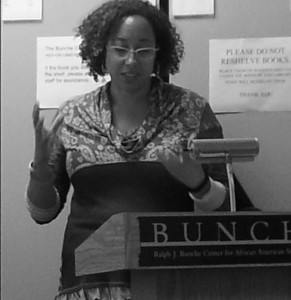
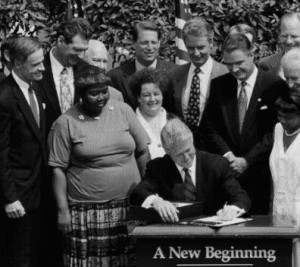
A recent article by our next guest documents the Clintons shared responsibility for the disastrous policies of mass incarceration and the subsequent war on drugs. A topic Hillary Clinton has been confonted with by Black Lives Matter activists while on the campaign trail. The recently published article in Republic Magazine is titled “The Clinton’s War On Drugs: When Black Lives Didn’t Matter” by Professor Donna Murch.
Guest – Donna Murch, Professor of History at Rutgers University and author of Living In The City: Migration, Eduation and the Rise of the Black Panther Party. She also contributed an article to the forthcoming verso press book “False Choice: The Faux Feminism of Hillary Clinton.
——————————————————-
Academic Freedom, CIA Sponsored Terror, Civil Liberties, Criminalizing Dissent, Crony Capitalism, Habeas Corpus, Human Rights, Surveillance, Targeting Muslims, War Resister
Podcast: Play in new window | Download
Update:
—-
Black Women, LGBT And Police Abuse
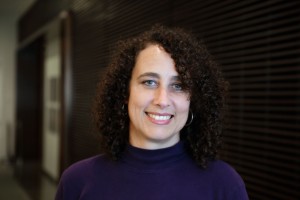
Attorney Andrea Ritchie has dedicated the past two decades to challenging abusive and discriminatory policing against women, girls, and lesbian, gay, bisexual, and transgender people of color. An accomplished litigator, she is a highly-respected commentator –and recent Soros Fellow– on policy reforms and litigation strategies addressing the ways in which discriminatory policing impacts women of color.
Guest – Andrea Ritchie is the co-author of Queer (In)Justice: The Criminalization of LGBT People in the United States (published in 2011) and Caught in the Net, a report on women and the so-called war on drugs. She works closely with a range of local and national organizations, including Streetwise & Safe, an organization focused on policing of LGBT youth of color, and is a member of INCITE! She is also involved in #SayHerName, a gender-inclusive racial justice movement that campaigns against police brutality and anti-Black violence against black women. It aims to highlight the gender-specific ways in which police brutality and anti-Black violence disproportionately affect black women, especially black queer women and black trans women. Andrea’s Website.
—-
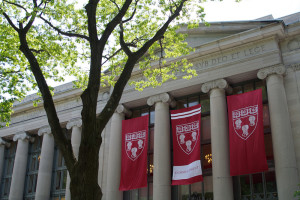
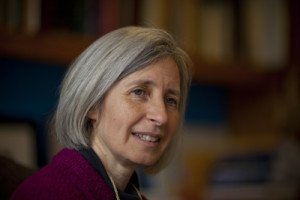
Milbank Changes Course on $1M Harvard Law School Gift after Pro-Palestine Event
Today we explore a controversy that has erupted at Harvard Law School when a prominent law firm, Milbank Tweed, discontinued a $1million grant it had given to the school after it learned that its donation helped pay for a panel on Palestine. We’ll talk to the Harvard Law Student who organized the event, who will explain how students on campuses across the country have been met with fierce efforts to suppress discussion of Palestinian rights.
————————————————————-
CIA Sponsored Terror, Civil Liberties, Criminalizing Dissent, Habeas Corpus, Human Rights, Political Prisoner, Prison Industry, Surveillance, Targeting Muslims, Torture, Truth to Power, War Resister
Podcast: Play in new window | Download
Updates:
Co-hosts Heidi Boghosian And Katherine Franke Discuss Past Decisions By The Late Supreme Court Justice Antonin Scalia.
—-
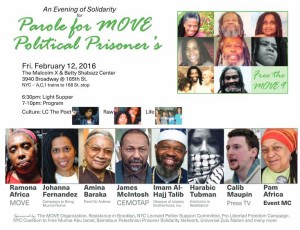
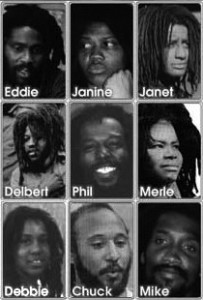
An Evening of Solidarity: PAROLE FOR THE MOVE 9
We hear select presentations from the many speakers and performances at the Parole For The Move 9 event. In the summer of 2015 supporters of The Move Organization initiated a petition for United States Attorney General Loretta Lynch . The goal of the petition is to push the United States Attorney General to investigate the wrongful and ongoing imprisonment of The Move 9 who have been imprisoned since August 8th 1978. Last May marked 30 years since the unconscionable bombing and murder of the MOVE family by the U.S. government. Live Stream of the MOVE9 event.
Speakers:
Johanna Fernandez, Campaign to Bring Mumia Home
Civil Rights Attorney Lynne Stewart
Amina Baraka, Poet/NJ Activist/Movement Leader
James McIntosh, CEMOTAP
Imam Al-Hajj Talib, Mosque of Islamic Brotherhood, Inc.
Harabic Tubman, Existence is Resistance
Calib Maupin, Press TV
Pam Africa, MOVE as Master of Ceremonies
Sponsored by: The MOVE Organization; Resistance in Brooklyn; NYC Leonard Peltier Support Committee; Pro Libertad Freedom Campaign; NYC Coalition to Free Mumia Abu-Jamal; Samidoun Palestinian Prisoner Solidarity Network; Universal Zulu Nation; and many more.
————————————————–
CIA Sponsored Terror, Civil Liberties, Criminalizing Dissent, Human Rights, Political Prisoner, Surveillance, Targeting Muslims, War Resister
Podcast: Play in new window | Download
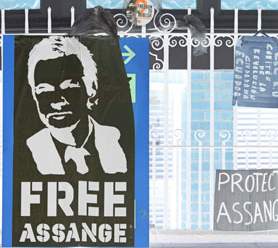
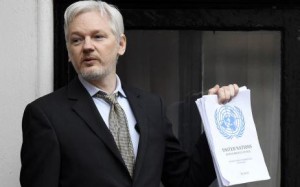
UN Panel: Julian Assange Has Been “Arbitrarily Detained”
Validating what WikiLeaks founder Julian Assange’s legal team has been long asserting, the United Nations working group on arbitrary detention recently found that Assange has indeed been subject to arbitrary detention. The working group called on Britain and Sweden to end his deprivation of liberty.
As listeners will recall, Assange was arrested in 2010, and has been has been staying in the Ecuadorian embassy in London since 2012, when he sought asylum. Assange is wanted for questioning over an allegation of rape in 2010, which he denies.
Great Britain and Sweden rejected the UN panel’s findings. Prime Minister David Cameron has said that Assange should leave the embassy and submit himself to a Swedish arrest warrant over allegations of rape to bring an end to what he called “this whole sorry saga.” Cameron dismissed as “ridiculous” the findings of a UN panel and said that Assange had in fact detained himself.
Guest – Carey Shenkman is a First Amendment and human rights attorney working for Michael Ratner, President Emeritus of the Center for Constitutional Rights (CCR). Formerly at CCR, Carey worked on litigation on behalf of the press in the court-martial of whistle-blower Chelsea Manning. Carey holds two degrees in mathematics, and is an alumnus of NYU Law School, where he was an editor on the NYU Law Review. He can be reached on Twitter @CareyShenkman
—-
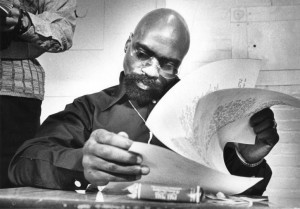
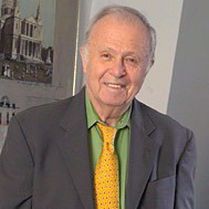
Remembering People’s Lawyer Myron Beldock
Myron Beldock, founding partner of the law firm Beldock Levine and Hoffman, peoples lawyer and longtime National Lawyers Guild member, passed away peacefully on February 1. He was 86 years old. Jim Dwyer of the New York Times wrote that Myron “had an important hand in cases that helped define the landscape of 20th-century law, and in others that merely righted the grievous wrongs done to unknown people.” Members of the National Lawyers Guild knew Myron not only as a brilliant attorney who took on the seemingly intractible cases of the wrongfully convicted, but also as a mentor, advisor and inspiration to a multitude of other people’s lawyerss. His death is a monumental loss to the criminal defense and civil rights bars. In the 1960s, Myron was one of the attorneys for George Whitmore, who dropped out of school in the eighth grade and was picked up by police in Brooklyn in connection with several rapes and three murders. Police interrogated him until he falsely confessed, even though he was in South Jersey at the time of some of the crimes watching Rev. Dr. Martin Luther King, Jr’s “I Have a Dream” speech. The confession was 61 typed pages in length. The US Supreme Court, in the 1966 Miranda decision, called the Whitmore confession the “most recent conspicuous example of police coercion.” And as a result of this coerced confession, New York State abandoned the death penalty in 1965.
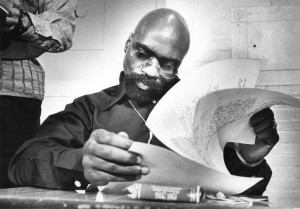
More recently, in 2013, Myron appeared in court on behalf of Everton Wagstaffe, who along with Reginald Connor, was convicting soley on the word of a crack-addicted police informant, of kidnapping a teenage girl found dead in 1992 in East New York. Mr. Wagstaffe spent two decades compiling records to show that the informant’s and detectives account were impossible. He wrote to Myron from prison, seeking his help. Myron worked with attorneys from the Innocence Project, the firm Davis Polk & Wardwell and the Legal Aid Society. In September 2014, the of the convictions of Mr. Wagstaffe and Mr. Connor were vacated. Myron was well known for securing the freedom of former boxer Rubin “Hurricane” Carter after he had served 19 years in prison for three murders in New Jersey. He also represented Yusef Salaam, one of five young black and Latino men who falsely confessed on videotape to the 1989 beating and rape of a woman who became known as the Central Park jogger. After serving terms of 7½ years to 13½ years, the five were exonerated in 2002, when an imprisoned man confessed to the crime and prosecutors confirmed his account with DNA evidence. We at Law and Disorder interviewed Myron in 2014, and remember him fondly as we take a listen to parts of that conversation:
In April of this year, celebrated boxer and prisoner-rights activist Rubin “Hurricane” Carter died at the age of 76. He had become an international symbol of racial injustice after his wrongful murder conviction forced him to spend 19 years in prison. Carter was arrested for a triple murder in his hometown of Patterson, New Jersey. He said he was innocent, was convicted by an all white jury, and sentenced to three consecutive life sentences. In 1976, the New Jersey State Supreme Court overturned his conviction on grounds the authorities withheld material evidence from the defense. But Carter was convicted again in a second trial in 1976. In 1985, that conviction was overturned by a U.S. district court judge, who concluded the state made an unconstitutional appeal to racial prejudice. In 1988, the Passaic, New Jersey, Prosecutor’s Office dropped all charges against Carter.
Attorney Myron Beldock:
- He was a defendant in a criminal case in New Jersey involved the triple shooting and three murders of 3 people in the Lafayette bar in Patterson, New Jersey.
- He and his co-defendant John Artis were represented at the first trial and they lost, (convicted) and Rubin started his campaign to get out of jail and wrote his book the 16th Round.
- He was charismatic and powerful, a great thinker, very very intellectually strong person as well as being spiritually strong.
- Almost a typical case, high profile case, where you get people who are vulnerable and easily manipulated because of their need for their own benefits to falsely testify.
- We set aside the convictions when we learned about the benefits that were given to the witnesses.
- We went again to trial in 1975. At that time the atmosphere had changed. There was a new prosecutor, they came up with a theory that it was actually a racial revenge killing.
- Earlier that night, a white former bar owner had shot and killed the black purchaser of the bar from him.
- That was always known and there was no motives attributed to the killings in the first trial but the second trial really based on speculation and bias, they argued persuasively to the jury that this was a racial revenge killing.
- Mr. Bellow who was the supposed eye witness who testified, there were two of them in the first trial, was being questioned by me on the stand as to why he recanted his recantation. The prosecutor persuaded him to again tell the story he told at the first trial, identifying Rubin and John and I was trying to establish that they had falsely manipulated him when I was pulled into the chambers along with my co-counsel Louis Steele who represented John Artis and told that if I question him further, the jury would learn that he passed the lie detector test, supporting what he said at the first trial. Supporting his identification (of Rubin Carter)
- We did have that test. It seemed like that was the result because that’s the way it was written. In fact that was a fraud.
- The polygraph results were completely opposite of what they were purported to be.
- The prosecutors in that case, two of them became judges, rewarded for what they did.
- Rubin was not a popular person, he had been an outspoken civil rights person. It was a cesspool of rumors without any evidentiary basis.
- The entire community there almost in Passaic New Jersey treated us like we were the devil.
- It was the coldest community reception I ever encountered in any place.
- Rubin would call every year (from Canada) on the anniversary of his release. He got a group of Canadian do-gooders and free thinkers to join him in fighting to set aside convictions for people who were wrongly convicted in Canada.
- He would vet the briefs that we sent. He was a very unusual client.
- Rubin refused to act as a prisoner because he wasn’t anyone who was guilty he said.
- So, he didn’t eat prison food, he didn’t take prisoner assignments, he didn’t wear prison clothes and somehow or other he was able to pull that off.
- People think of it as being another time, I’ve been practicing law long enough and I don’t think anything changes.
- The same kind of bias runs deep throughout the community its just masked somewhat differently.
- You make your luck in these cases, you have to forge ahead.
- His insistence on being an innocent person and will not compromise with the system is the kind of inspiration that pushes us on as lawyers.
Guest – Attorney Myron Beldock, graduated from Erasmus Hall High School in 1946, Hamilton College in 1950 and Harvard Law School in 1958. He served in the U.S. Army from 1951 to 1954 and as an Assistant U.S. Attorney in the Eastern District of New York from 1958 to 1960. After several years as an associate with a small New York City firm and as a single practitioner, he brought together two friends and former Assistant U.S. Attorneys, Elliot Hoffman and Larry Levine, to form Beldock Levine & Hoffman in 1964. He is best described, by his own definition, as an old-time general practitioner. He concentrates on trial and appellate litigation, in state and federal courts, in defense of criminal charges and in pursuing plaintiffs’ civil rights actions based on police and prosecutorial misconduct and employer and governmental discrimination. He regularly consults and defends charges of professional discipline. He represents plaintiffs and defendants in a wide variety of personal and business related matters, working with others in the firm’s various practice areas.
—-
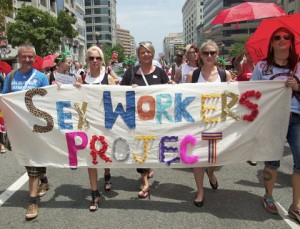
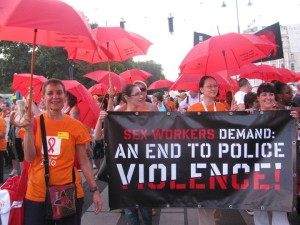
Sex Workers Project And Human Trafficking
Sienna Baskin is the Managing Director of the Sex Workers Project at the Urban Justice Center in New York City, where she has worked since 2007. At the Sex Workers Project she both directs a team that provides legal services to sex workers and is responsible for the Project’s policy and law reform work. Sienna also just returned from a Fullbright Fellowship in New Zealand – a country that completely decriminalized sex work/prostitution in 2003 and she went to learn what effects – positive and negative – decriminalization has had, both for people engaged in sex work and for the larger society.
Guest – Sienna Baskin -Managing Director of the Sex Workers Project. Ms. Baskin directs the legal services and policy advocacy of SWP. Ms. Baskin trains and supervises legal staff in providing direct legal representation, public education and outreach. She promotes reform of laws and policies affecting sex workers and survivors of trafficking, and oversees the production of SWP’s human rights documentation reports. Ms. Baskin also provides direct legal education, advice and representation to sex workers and survivors of trafficking on housing, criminal, employment, and immigration matters. Ms. Baskin joined SWP as an Equal Justice Works fellow in 2007. Sienna is a graduate of Hampshire College and the City University of New York School of Law.
———————————————————-
CIA Sponsored Terror, Civil Liberties, Gaza, Guantanamo, Habeas Corpus, Human Rights, Prison Industry, Surveillance, Targeting Muslims, Torture, War Resister
Podcast: Play in new window | Download

CCR Human Rights Group Returns From Israel
Executive Director of the Center for Constitutional Rights Attorney Vince Warren returned from Palestine Israel last month where he was accompanied by CCR Legal Director Baher Azmy and CCR Deputy Legal Director Maria LaHood. We talk with Vince Warren about what they saw, with whom they met, and the current activities of the CCR in support of the Palestinian people and human rights in Israel Palestine.
Guest – Vince Warren, Executive Director of the Center for Constitutional Rights. He oversees CCR’s groundbreaking litigation and advocacy work, which includes using international and domestic law to hold corporations and government officials accountable for human rights abuses; challenging racial, gender and LGBT injustice; and combating the illegal expansion of U.S. presidential power and policies such as illegal detention at Guantanamo, rendition, and torture. Prior to his tenure at CCR, Vince was a national senior staff attorney with the American Civil Liberties Union, where he litigated civil rights cases, focusing on affirmative action, racial profiling, and criminal justice reform. Vince was also involved in monitoring South Africa’s historic Truth and Reconciliation Commission hearings, and worked as a criminal defense attorney for the Legal Aid Society in Brooklyn. Vince is a graduate of Haverford College and Rutgers School of Law.
—-
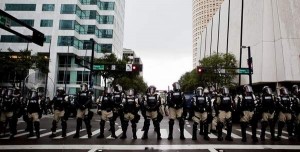
American Exceptionalism And The Proto-Fascist State
American exceptionalism is a term referencing the special character of the United States as a uniquely free nation based on democratic ideals and personal liberty. Our guest Todd Pierce has written about this and American militarism on sites such as MondoWeiss.com, Consortiumnews and Truthout. We’ll also talk with him about the Obama Administration’s expression of “American exceptionalism.” How has military rule degenerated the principles within U.S. Constitution? Todd Pierce points out that there is a continuity between the Obama Administration – today’s neoconservatives and the law under fascist Germany in the 30s and 40s.
Guest – Todd Pierce, retired Major in the U.S. Army Judge Advocate General (JAG) Corps in November 2012. His most recent assignment was defense counsel in the Office of Chief Defense Counsel, Office of Military Commissions. In the course of that assignment, he researched and reviewed the complete records of military commissions held during the Civil War and stored at the National Archives in Washington, D.C.
————————————-
Academic Freedom, Afghanistan War, CIA Sponsored Terror, Civil Liberties, Criminalizing Dissent, Gaza, Habeas Corpus, Human Rights, Iraq War, NSA Spying, Prosecution of the Bush Administration, Surveillance, Targeting Muslims, Torture, War Resister
Podcast: Play in new window | Download
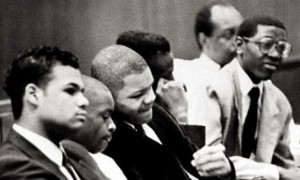
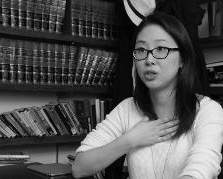
NYC Teacher Fired For Lessons About The Central Park Five
An English teacher at a New York City high school claims that she was fired because of a lesson on the so-called Central Park Five which school administrators warned her would “rile up” black students. Jeena Lee-Walker recently filed a lawsuit in federal court against the Dept. of Education and several administrators from the High School for Arts, Imagination and Inquiry after being fired for insubordination and poor evaluations. She claims they were the result of her pushing back on topics like the Central Park Five. Lee-Walker, who graduated from Barnard and has post-graduate degrees from Harvard and Fordham, began working at the school in 2013 and says she was told to be more “balanced” in covering the Central Park Five case in November of that year.
The lawsuit claims retaliation against her “violated her First Amendment right to discuss the Central Park Five case, and that the firing violated the city’s contract with the teacher’s union because she was not given a required 60 days notice.” As listeners may recall, the Central Park Five, who were wrongfully jailed for the 1989 rape of a Central Park jogger, received a $42 million settlement from NY City. In 2014, they sued the state seeking $52 million in damages for the emotional trauma of being incarcerated for years for a crime they were coerced into confessing to.
Guest – Attorney Ambrose Wotorson, a Brooklyn based attorney who is representing Jeena Lee-Walker in this case. He’s a trial lawyer focusing employment law and business litigation. Twitter account.
—-
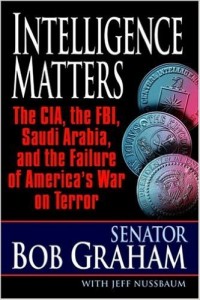
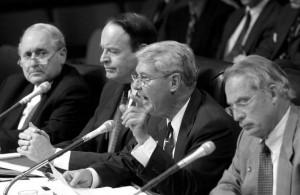
Intelligence Matters: The CIA, the FBI, Saudi Arabia, and the Failure of America’s War on Terror
Retired Florida U. S. Senator Bob Graham was the head of the US Senate intelligence committee and also the chairman of the 9/11 commission of inquiry. He is the leading person trying to get President Obama to release to the public the suppressed 28 pages of the 911 report which have been hidden. Senator Graham contends that the 19 hijackers, 15 of whom who were Saudi Arabians, could not have pulled off the operation alone and that in fact they were part of a support network involving the Saudi Arabian monarchy and government which helped plan, pay for and execute the complicated 911 plot which, says Senator Graham, would have otherwise been impossible to accomplish. Senator Graham has written the book Intelligence Matters: The CIA, the FBI, Saudi Arabia, and the Failure of America’s War on Terror. It provides a candid insight to the workings of the US in Saudi relations and their implications on US foreign-policy making as it pertains to the middle east and bags tension, contemporary geopolitics.
Guest – Senator Bob Graham, is the former two–term governor of Florida and served for 18 years in the United States Senate. This is combined with 12 years in the Florida legislature for a total of 38 years of public service. As Governor and Senator, Bob Graham was a centrist, committed to bringing his colleagues together behind programs that served the broadest public interest. He was recognized by the people of Florida when he received an 83% approval ranking as he concluded eight years as Governor. Bob Graham retired from public service in January 2005, following his Presidential campaign in 2004.
—-

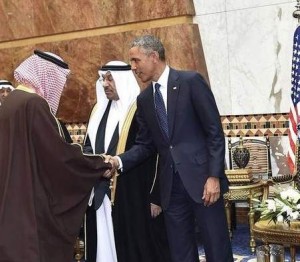
Saudi Arabia, Wahhabism and Middle East Geopolitics
We take a deeper look at Saudi Arabia and its relationship first United States and then to the other countries in the Middle East region.
Guest – Professor Rashid Khalidi, a Palestinian American who grew up in New York City. He teaches at Columbia University where he is the Edward Said Professor of Arab studies and the head of the Middle East Institute. He is the author of a number of books, most recently “The Iron Cage: The Story of the Palestinian Struggle For Statehood. He has written more than 80 scholarly articles on Middle Eastern history and politics as well as op-ed pieces in the New York Times, the Boston Globe, the Los Angeles times, the Chicago Tribune, and The Nation magazine.
—————————————————–