CIA Sponsored Terror, Civil Liberties, Criminalizing Dissent, Crony Capitalism, Gaza, Habeas Corpus, Human Rights, Political Prisoner, War Resister
Podcast: Play in new window | Download
Updates:
- Michael Ratner: Jury Awards $218.5 Million in Terrorism Case Against Palestinian Groups
—-
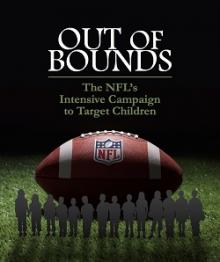

The Campaign For A Commercial Free Childhood
The National Football League, Mattel’s Girl Scout Barbie Doll, and even McDonald’s all have something in common. They’ve engaged in highly sophisticated corporate marketing aimed at enticing young children into becoming life-long consumers and brand loyalists. They’re the subjects of the efforts of The Campaign For A Commercial Free Childhood to cease clever marketing that sends the message that purchasing will make children happy. The campaign has a proven track record of educating families and the public about how industry partnerships with schools, nonprofits and trusted institutions such as the Girl Scouts expose young people to inappropriate content with potentially negative consequences.
Josh Golin:
- Very unfortunately, the Girl Scouts which has been traditionally a wonderful organization providing role models for girls launched a partnership last year with Barbie.
- This partnership includes a website where girls can play a Barbie game about choosing careers but really all they’re doing is looking at different Barbie outfits and seeing other Barbie dolls that they can buy in the store.
- There’s even a Barbie patch that Girl Scouts can earn.
- We thought that this was such a harmful campaign to young girls that the Girls Scouts have traditionally been a refuge from the commercialism that is aimed at kids everywhere and clearly Barbie represents a problematic body type and focus on appearance and fashion and is in some ways the antithesis of what the Girl Scouts have traditionally represented.
- They get 2 million dollars from Mattel from this partnership.
- The message to young girls that you have to look like a fashion doll when you’re going out on a hike is unbelievable.
- On the envelope that the report card came in was ad from McDonald’s saying bring your report card to McDonald’s if you had good grades or had good attendance or even good behavior and you get a free happy meal.
- We do a lot of work on the area of advertising in schools. It’s really an unfortunate trend. There’s been an increase in it since 2008 when we had the economic downturn and schools are understandably looking for revenue any way they can get it.
- There has been this increase in marketing to kids in schools and we think that’s particularly harmful to children. Anything advertised in the school comes with the school’s endorsement.
- One of the things that’s most concerning about what the NFL does is they market Fantasy Football extensively to kids. They even have a curriculum in school to teach kids about Fantasy Football where they could then go online to the kid NFL website and compete for cash prizes.
Guest – Josh Golin, is Associate Director of CCFC and organizes CCFC’s advocacy campaigns and develops its communications strategy. His writings about the commercialization of childhood have appeared in a wide range of publications.
——
Greece Debt Crisis Postponed, Creditors Back Reform Plans
Earlier this year, we reported on the historic election voting in the Greek anti-austerity party of Syriza, led by Alexis Tsipiras. Syriza’s platform is to take back power within the Greek government, to effectuate a program that will call for cancellation of debt, nationalization of the banks, and expropriating closed factories. Greece is a member of the Eurozone, the nations that have joined with a common currency in 1999. Now, after barely a month in office, the Syriza Party led by Prime Minister Alexis Tsipiras has been forced to make compromises on major issues such as labor reforms and agreeing not to undo privatization plans, to name a few. The crisis began when the European Central Bank said it would reject Greek sovereign bonds as collateral which made Greek banks dependent on Emergency Liquidity Assistance. Last week, Syriza entered negotiations with the EU and ECB and secured a four month extension of its financial rescue.
Nantina Vgontzas:
- Let’s start with December 2009 when the Greek government declared in had sovereign debt of 109 percent, which is something they’ve been covering up the past few years.
- Goldman Sachs was also involved with helping them to cover up those figures.
- We should look at the political economy of the Eurozone constructed in the early 2000s. At the same time in Germany you had wage depression, meaning Germans were getting lower wages so that German exports would become more competitive and the European periphery was used as a dumping post. So they were getting more lending from German banks and that’s how you started getting more debts in Greece.
- The European Union, The European Central Bank and the International Monetary Fund which has played its hand since the 70s in imposing discipline on the countries throughout the developing world and Greece was the first so called advanced country that was starting to enter into this regimen of so called structural reforms that were attached to these bailouts that Greece was recieving to deal with the debt issue.
- Attached to these structural reforms was the termination of collective bargaining agreements, the reduction of minimum wage . . . so you have massive social degradation and at the same time the debt continues to rise.
- So the debt went from 109 percent of the GDP to 175 percent of the GDP.
- So Greece is basically getting loans so it can pay interest on interest starting in the early 2020s and Syriza rightfully identified this as an extended pretend strategy.
- They were the opposition government between 2012 and the end of 2014 and in 2015 they got 35 percent of the vote which wasn’t enough to form a government on its own which is why it had to form a coalition government.
- Everybody knows that Greece can’t pay off its debt til the early 2020s.
- I’ve written a piece in the Jacobin saying that I don’t think Eurozone would take any chances on letting Greece leave the Eurozone because of how helpful it has been to German capital. They’re not willing to take the long term risk, they’re not will to take the short term risk of speculative attacks that would occur on the Eurozone.
- A Greek exit could have produced a domino effect, perhaps Portugal would have left, Italy, you start having big economies like Spain leaving. That kind of domino effect would be unsustainable for the Eurozone to exist.
- There are ways of dealing with this (Greece leaving the Eurozone) You would have to impose capital controls, you would have to nationalize the banks, which is something that the Syriza leadership said that they wouldn’t do prior to elections. They’re going to have to revisit that strategy. Then you would have to figure out how you would ration food, fuel, pharmaceuticals in order to deal with immediate problems. Then you would have to talk about long term policies that would promote growth.
- They (Syriza) cannot move to a technocratic approach because then they would lose thier fundamental element as a left party.
- Half of the police corp (in Greece) support the Golden Dawn. This is something that Syriza has to neutralize while they’re in power.
- They need to be neutralized by promoting a strategy that’s actually going to reverse austerity.
- Jacobin Magazine -Nantina Vgontzas /Financial Times – Wolfgang Munchou
Guest – Nantina Vgontzas, a Greek-American PhD student in sociology at NYU focusing on political economy and social movements. She is a member of the UAW Graduate Student Organizing Committee and is involved in the Academic Workers for a Democratic Union reform movement.
——————————————————–
CIA Sponsored Terror, Civil Liberties, Climate Change, Criminalizing Dissent, Habeas Corpus, Human Rights, NSA Spying, Prison Industry, RFID, Surveillance, Targeting Muslims, Torture, War Resister
Podcast: Play in new window | Download
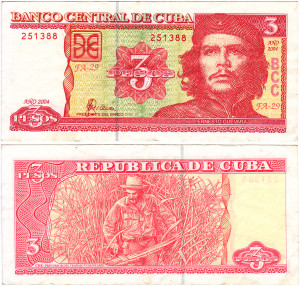
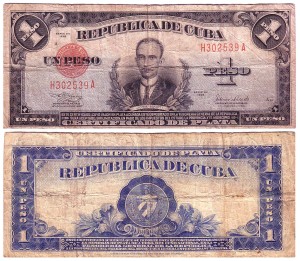
U.S. Cuban Foreign Policy Changes Strategy: Normalizing Relations
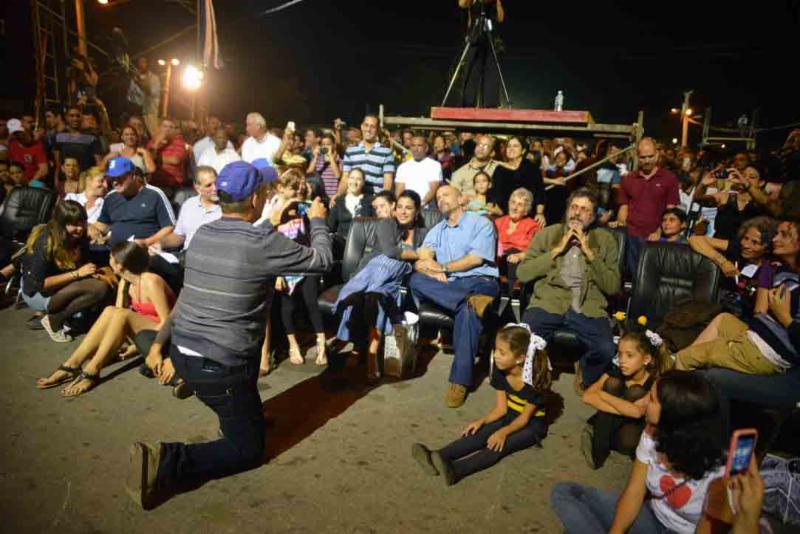
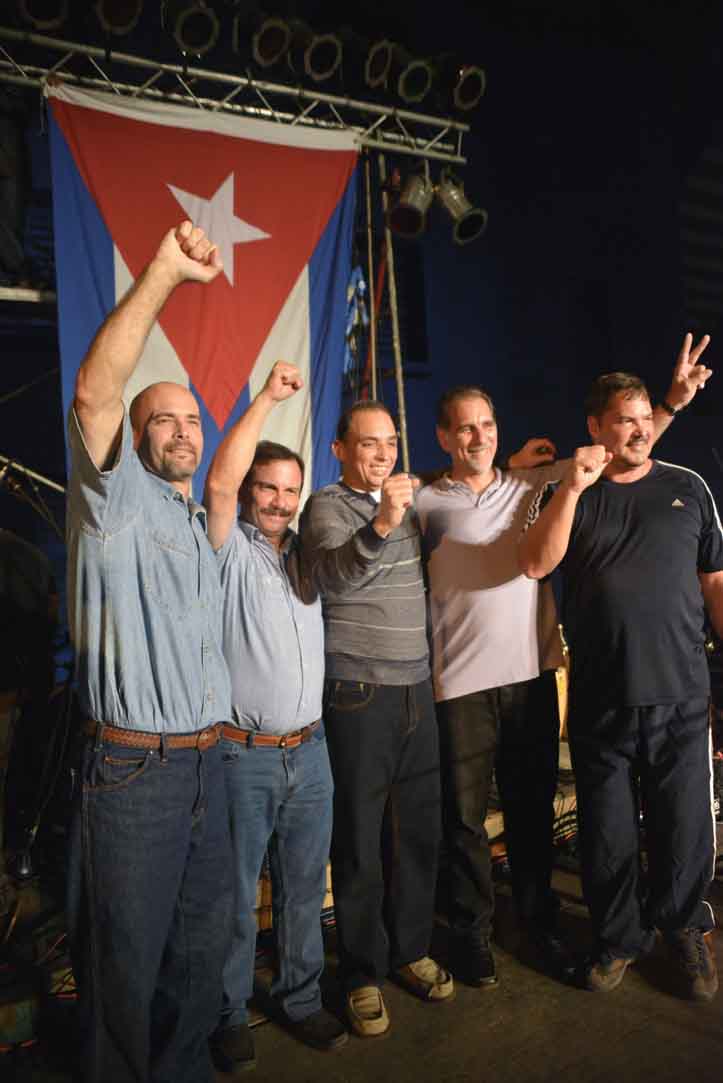
Last year, in a sudden reversal of policy, the United States released the remaining three of the Cuban Five who were imprisoned for arrested in the United States while investigating Cuban exile groups accused of terrorism. The release was part of a prisoner exchange announced on when President Barack Obama ordered the restoration of diplomatic relations with Cuba, that has been isolated by a trade embargo for 54 years.
Sandra Levinson:
- When you’ve lived through 10 or 11 presidents and you’ve seen how bad our policy can be, and also the disappointment that people like me felt, since Obama had been elected, that almost nothing had been done for improving travel for Cuban Americans.
- The point at which I cried was when he said he was going to open an embassy in Havana, because once you got over the fact, the 3 political prisoners were coming home, that was sheer joy to realize along with the Cubans, they were crying too. They said we’ve finally been recognized as a government.
- I think it will be great for the Cuban artists.
- By the second day the people were saying we have to make sure we keep our culture.
- We have to be sure we keep our country.
- Cuba needs help with its infrastructure, it doesn’t need McDonald’s
- We still have the Helms-Burton law. We still have the embargo. I think our next fight is to get rid of the Helms-Burton law because that has done so much to strengthen the embargo.
- I think the Cubans will attempt to slow the flow of people from the United States to what they can manage.
- As we all know the infrastructure for tourism is not sufficient to take care of everyone. I’m surprised they didn’t recognize sooner.
- Clearly its because of US interest that we are doing this. We are not doing this to finally be nice to the Cuban revolution.
- cubaupdate.org / cubanartspace.net
Guest – Sandra Levinson, President and Executive Director of the Center for Cuban Studies. She was one of the Center’s founders in 1972. In 1991 Levinson spearheaded a lawsuit against the U.S. Treasury Department which resulted in legalizing the importation of original Cuban art. She is currently directing works at the Cuban Art Space, which she founded in 1999, to properly house and archive the thousands of posters, photographs and artworks which the Center has collected in the past 42 years
——
Electronic Communications Surveillance
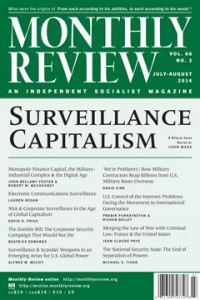
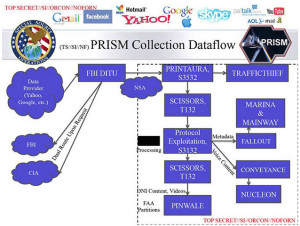
In the recent Monthly Review, there’s an article titled Electronics Communications Surveillance written by attorney Lauren Regan. The article enumerates the various laws, acts and court cases that have led up to collecting information on millions of citizens such as phone, internet, and email habits, credit card and bank records. Nearly all of our on line activity is subject to being surveilled by the state. Lauren breaks it down from Electronic Communications Privacy Act of 1986, an extension of the 1968 Federal Wiretap Act, the FISA Act and on to the USA Patriot Act in 2001. The article is grouped into 3 areas, wiretaps and “electronic eavesdropping,” stored messages, and pen registers and trap-and-trace devices.
Attorney Lauren Regan:
- The corporations that are engaged in gray intelligence use the term threat assessment.
- They look at activist communities even individuals and determine what level of threat they pose to the profit making components of their enterprise.
- I think its important that activists engage in their own threat assessment as well.
- In the documents (FOIA requests) we learned that the corporations themselves want to maintain clean hands. They don’t want to get caught spying on Mom and Pop holding a banner on a street corner.
- They devised this scheme where there is this security firm and public relations firm that kind of open up their own shop next door.
- They’re often former FBI agents for some of these big corporations and industries. They will collect the intelligence and its up to these PR firms to put it into these “terrorist bulletins.”
- For a long time we knew that corporations often hired by the government itself but also hired by big industry has been going through open source intelligence. So they’ve been monitoring our websites and social media and email lists and press releases and any other public documents they can get their hands on in their 8 hour paid day.
- They compile all this information into reports and then they sell it to police or other corporations or the government.
- They call them issue monitoring or trend analysis. In essence it is attempting to both legitimize and make profit of spying on political groups and political activists.
- In my experience its less important to focus on the name of the corporation because they’re so slippery and constantly changing their names.
- The animal rights movement has definitely been a significant target for this type of spying.
- We were working with a number of different organizations who were afraid. Who were thinking of stopping their campaigns, because they were concerned they were going to be put in prison, that they were going to be labeled terrorists.
- One of the campaigns out of Pennsylvania, consisted of teachers, doctors, people who were once a week going out on street corners and holding a banner opposing fracking and they found themselves in a terrorist bulletin.
- Especially when you’re talking about giant coal industries, and tar sands industries. These are gazillion dollar corporations. They’re multinational in scope. They’re working together within their industries which means they have more money and resources to put road blocks in front of regular public interest citizens.
- There are things that you can do to make life more difficult for those that wish to spy upon you.
- Thor and VPN are ways to use the internet with less ability to be tracked or surveyed.
- We represent activists for free and we coordinate legal teams around the country to insure that activists have high quality representation, when they choose to risk their liberty for a cause.
Guest – Lauren Regan, the founder and executive director of the Civil Liberties Defense Center (CLDC), where she serves as our staff attorney as well. Ms. Regan operates a public interest law firm, The Justice Law Group, specializing in constitutional law, civil rights, and criminal defense. She is a founding board member and past president of the Cascadia Wildlands. She also serves as a Lane County Teen Court judge, Oregon State Bar Leadership Fellow, National Lawyers Guild, Eugene co-chair, and volunteers hundreds of hours a year to various progressive causes.
—–
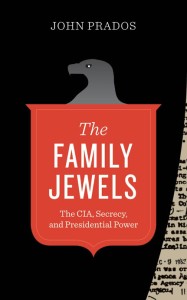
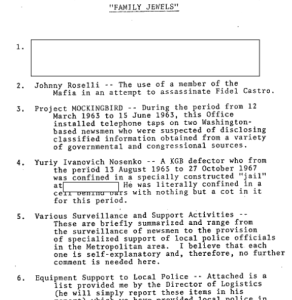
The Family Jewels: The CIA, Secrecy and Presidential Power
The surveillance and torture programs conducted by agents and contractors of the United States Central Intelligence Agency has a long sordid past. One of the first revelations of the CIA’s illegal activities released to the public was released in December 1974 by the New York Times. Details of surveillance, eavesdropping, detention and interrogation shocked readers. It was also became the foundation for deeper research by our next guest John Prados, a senior fellow of the National Security Archive in Washington, DC. He’s the author of the book The Family Jewels: The CIA, Secrecy and Presidential Power, where Prados recounts secret operations and how Vice President Richard Cheney played a leading role in intelligence abuses. He joins us today to talk about the Senate Select Committee on Intelligence Torture Report and the deeper connections based on his research.
John Prados:
- A semi-notorious document that was known as the family jewels – this was a record of CIA abuses of the 1950s, 60s, and 70s, when they were spying on American citizens. In fact the revelation was so explosive at that time it lead to multiple investigations of the CIA by the Church Committee, the Pike Committee.
- I think that the CIA has a preoccupation with image. The episode of the “family jewels” is typical because at the time the intelligence agency’s director was Michael Hayden. Hayden, simultaneous with the release of the document gave a speech taking credit for thinking of releasing the “family jewels” themselves.
- In my book The Family Jewels I have a couple of chapters that documents this kind of activity.
- We have been waiting 2 years for the appearance of this report.
- If you look at the website that’s maintained by former director Hayden, and former director Porter Goss and former director George Tenant, you will see that they posted on their website declassified CIA documents, much more lightly redacted that were released as long ago as last summer.
- These are the first documents I have seen containing direct Whitehouse action and activity on the torture issue.
- The best piece of this relates to early 2004, where there was the United Nations international day of support for victims of torture. Tenant sends a memo to Condi Rice and requests that the Whitehouse reconfirm Bush Administration support for the torture program.
- When that was not immediately forthcoming, they did this again.
- CIASavesLives.com
- These things were released as part of the argument that was made by former intelligence officials that torture was approved and legal.
- Not just damage control but the perpetrators, the agency officials responsible for this program,they know its not legal, they know its morally reprehensible. They’re operating under the fig leaf of this presidential authority and this mumbo jumbo Department of Justice legal memo network.
- If there’s a breath of questioning it all of a sudden, they’re not covered anymore. That’s the reason for the sensitivity and the reason why the CIA suddenly erupted in this effort to reconfirm these authorities.
- If you delete material from the documents in such a way that the public can’t tell that the material the CIA got was useful, or misleading everybody.
- The Senate report is so important because it shows on all of these cases, they took the ones twenty ones, the CIA most claims they got information for them. The report shows that in every one of those cases in fact they were getting information without resorting to the torture.
- I think we have a challenge. I think we need to work to make a wedge for accountability in this country. I do think Americans are shamed and embarrassed by this behavior. This is not what the United States is about.
Guest- John Prados is an author and analyst of national security based in Washington, DC. He is the author of more than twenty books and many articles on topics of current importance, presidential studies, international security; and diplomatic, intelligence, or military history. His current book is The Family Jewels: The CIA, Secrecy, and Presidential Power (University of Texas Press). Newly appearing in paperback are Islands of Destiny: The Solomons Campaign and the Eclipse of the Rising Sun. In addition Prados is author of titles on national security, the American presidency, and other subjects including Vietnam, the Soviet Union, and World War II. He is also a noted designer of boardgames on military strategy, intelligence, and diplomacy.
—————————————————————–

Please help support Law and Disorder by clicking on Fractured Atlas graphic (link is fixed). This radio show is now a sponsored project of Fractured Atlas, a non-profit arts service organization. Contributions for the charitable purposes of Law and Disorder must be made payable to Fractured Atlas only and are tax-deductible to the extent permitted by law. You can donate as little as 5.00 a month.
CIA Sponsored Terror, Civil Liberties, Criminalizing Dissent, Cuba, Guantanamo, Habeas Corpus, Human Rights, Military Tribunal, NSA Spying, Political Prisoner, Prison Industry, Prosecution of the Bush Administration, Surveillance, Torture, Uncategorized, War Resister
Podcast: Play in new window | Download
Updates:
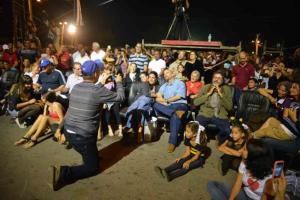
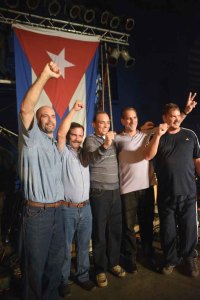
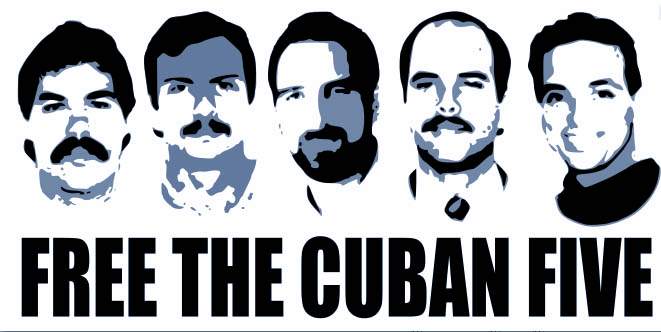
New Cuba-U.S.A. Pact And Remaining Cuban Five Prisoners Released
Attorney Michael Ratner:
- We’ve been covering this case for years on here. They were wrongfully convicted. They had been sent into Miami to stop Miami-Cuban terrorism against Cuba.
- The U.S. in a vindictive prosecution had sentenced them for many years, in fact one of them was sentenced to life in prison for conspiracy to commit espionage I think.
- It’s all part of a larger picture of what’s going on.
- Cuba in what’s not considered an exchange, of course obviously, released Alan Gross.
- Obama within limits sounds like he’s going to open relations within a certain way with Cuba and open an embassy in Cuba and Cuba, one in the United States.
- It’s amazing moment, the revolution took place in 1959, so that’s only 55 years ago approx, the embargo has been in effect since 1961. It’s still in effect of course but this is a really major moment.
- Attorney Len Weinglass would take 1 or 2 cases at a time, work on them like a dog, whether it was Mumia or in this case the Cuban Five and put every piece, every part of his life into it.
——
Attorney Heidi Boghosian:
- In the U.S. we continue to see the news portraying the five as spies when like you said they were really here to uncover unlawful activities on the part of the U.S government.
- They handed over files to the FBI, they were very forthright with the information they gathered.
- We also know from our interviews with attorney Mara Verheyden-Hilliard and Gloria LaRiva that the U.S. has been paying journalists in Miami to report negatively on the case of the Cuban Five and were doing so at the time of their trial.
- One of the lawyers we used to interview on this show and a close friend of ours Lenny Weinglass who passed away a couple of years ago was the main lawyer for the Cuban Five. It then became Martin Garbus who carried on the case in an extraordinary way, and I think that all of their work and all of the work of the Committee to Free the Cuban Five has led to result that I think would have been unforeseeable 20 years ago.
——
Civil Forfeiture Cases Follow Up
Michael Ratner Commends Dean of Columbia Law School Canceling Exams Allowing Option To Protest
International Criminal Court: Possible Prosecutions From U.S. Torture In Afghanistan
Happy Birthday Chelsea Manning
ECCHR Calls For 13 CIA Agents To Be Extradited To Germany
ECCHR Complaint Against Bush Era Architects Of Torture
Attorney Michael Ratner:
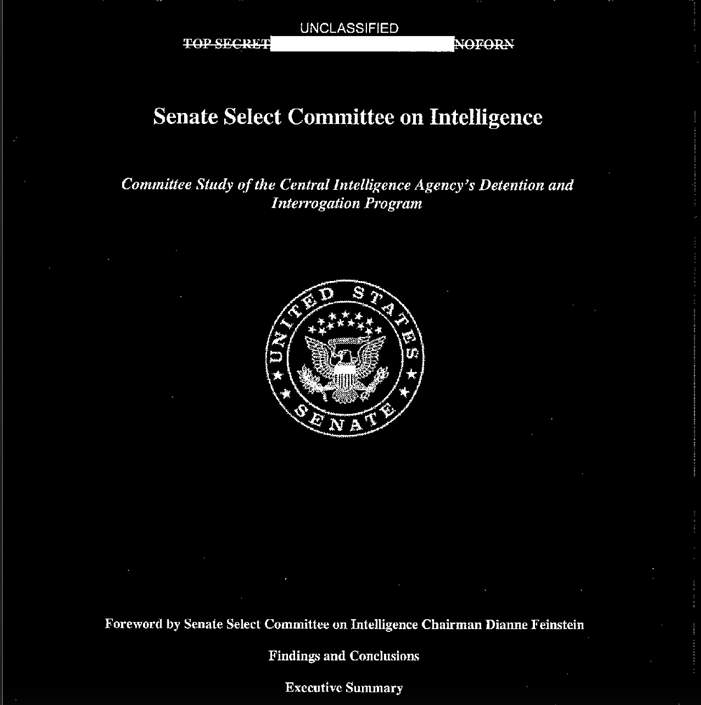
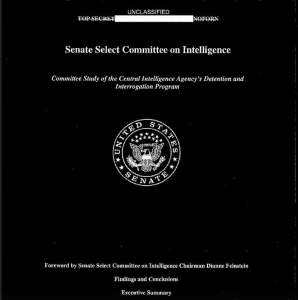
- It’s taking the Senate Report they did on detention and going further and saying now we actually have evidence from one of the branches of government admitting that the CIA engaged in this incredibly awful program of torture.
- Wolfgang Kaleck says there are about 500 CIA agents that should be quaking in their boots about traveling to Europe.
——
Senate Intelligence Committee Torture Report: Attorney Scott Horton
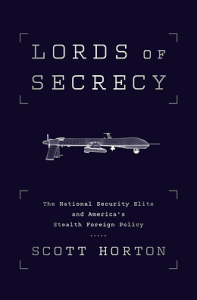
Guantanamo suicides, CIA interrogation techniques, CIA ordered physicians who violate the Hippocratic oath, are topics of some recent articles by returning guest attorney Scott Horton. Last month, he was on Democracy Now to debate former CIA General Counsel John Rizzo on the question of declassifying a Senate Select Committee on Intelligence report about the agency’s secret detention and interrogation programs. His book Lords of Secrecy The National Security Elite and America’s Stealth Foreign Policy will be published January 2015.
Attorney Scott Horton:
- I think the results flow directly from the media coverage (ABC poll on Torture report)
- Now major publications and broadcasters that hedged using the word torture have stopped doing that. There are only a handful of media sources that won’t do it. NPR being one of them.
- The media also presents roughly twice as much time devoted to people justifying the use of torture techniques to those criticizing it.
- Barack Obama who should lead the push back has gone completely silent. It’s beyond silent he talked about “tortured some folks” making it very casual, and then he said the torturers were patriots.
- I thought it was electrifying reading. 90 percent of it I’ve heard about before and still when you read them in this clinical, plain, highly factual style and things were developed with a continuous flow with lots of background in decision making in Washington at the top and how all this effected what happened on the ground.
- As a consumer of Congressional reports this probably the single most impressive Congressional oversight report I’ve ever seen.
- It’s an excellent example of what the oversight committee should be doing all the time.
- They’re doing this with respect to a program which was essentially or very largely wrapped up by October 2006.
- We’re talking about 8 1/2 years ago.
- They’re only able to do this kind of review in any depth when its historical, not when its real time oversight, that’s disappointing.
- One thing that emerges from looking at these reports and the military reports is that there is a huge black hole which has never been fully developed and explored and that’s JSOC, its the military intelligence side.
- That escaped review within the DOD process and it escaped review in CIA process and its clear that there’s a huge amount there.
- I certainly don’t expect prosecutions to emerge for the next couple of years in the United States, but I see a process setting in that may eventually lead to prosecutions.
- On the one hand we’re seeing a dangerous deterioration in relations with Russia, is an aggressor, which has seized territory in the heart of Europe, is waging a thinly veiled war on one of its neighbors. That is very unnerving to the major NATO powers.
- On the other hand there’s never been a period in the history of the alliance when there is so much upset at the United States.
- That’s come largely from the rise of the surveillance state and the role of the NSA.
- I was looking at this report, and we know that in 2006, there was an internal review that led the CIA to conclude that these interrogation techniques were ineffective and the CIA internally decided to seek a large part of the authority for EIT’s and operation of black sites rescinded.
- Another thing that’s very important here from this report, it tells us that Michael Hayden, George Tenant, Porter Goss and other very senior people at the CIA repeatedly intervened to block any form of punishment of people who are involved with torture and running the black sites.
- That’s important because of the legal document Command Responsibility. The law says when command authority makes a decision not to prosecute and immunize people involved with torture and abuse, that results in the culpability of these crimes migrating up the chain of command.
- I interviewed CIA agents who were involved in this program, and they told me they’ve all been brought out by legal counsels office and told – they may not leave the country.
- That means you’ve got roughly 150 CIA agents, including many people near the top of the agency who can’t travel right now.
- Lords of Secrecy The National Security Elite and America’s Stealth Foreign Policy
Guest – Scott Horton, human rights lawyer and contributing editor to Harper’s Magazine. Scott’s column – No Comment. He graduated Texas Law School in Austin with a JD and was a partner in a large New York law firm, Patterson Belknap Webb & Tyler. His new book Lords of Secrecy The National Security Elite and America’s Stealth Foreign Policy.
————————————————————————-
Civil Liberties, Criminalizing Dissent, Gaza, Habeas Corpus, Human Rights, Military Tribunal, NSA Spying, Political Prisoner, Surveillance, Targeting Muslims, Truth to Power, War Resister
Podcast: Play in new window | Download
Updates:
- RE/MAX Cashes In On Israel’s Illegal Settlements – Code Pink Calls For RE/MAX Boycott Campaign
- US Senate Votes Down USA Freedom Act
- Michael Ratner: President Obama Doesn’t Need Legislation To Stop The NSA, He Can Simply Direct the NSA Not To Collect Meta-Data
—–
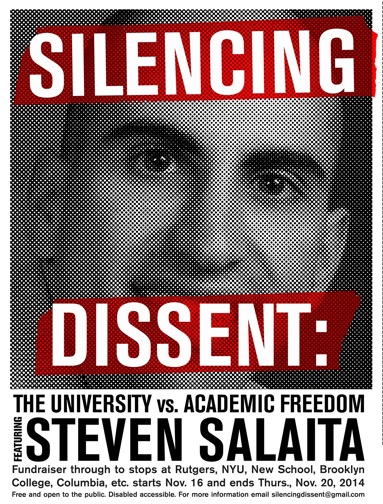
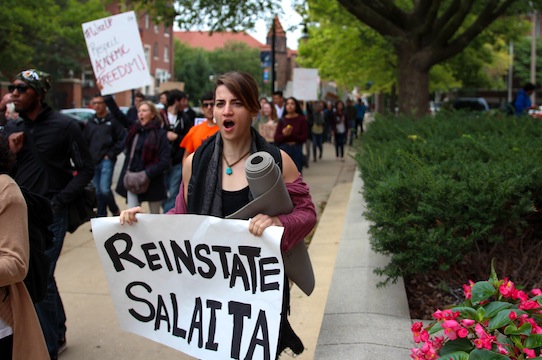
Academic Freedom Case Gains Traction
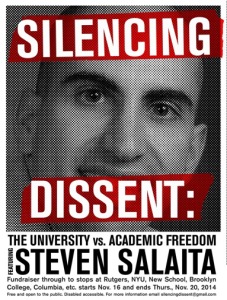
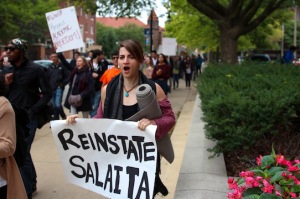
Since the University of Illinois at Urbana-Champaign Board of Trustees rejected Professor Steven Salaita’s candidacy for a tenured faculty appointment to the American Indian studies program, Salaita has been giving presentations about his case and the importance of academic freedom. Initially we reported here on Law and Disorder that Professor Salaita was un-hired from the American Indian Studies program at the University of Illinois at Urbana-Champaign because of his statements on social media criticizing Israel’s conduct of military operations in Gaza. Emails within the University revealed under Freedom of Information Act Requests show that it was outside pressure from donors that influenced the University of Illinois Chancellor’s decision to dehire Salaita.
Professor Salaita:
- My Dad grew up in Jordan, my Mom in Nicaragua. I grew up in West Virginia.
- I got my undergraduate and Master’s degree from a small regional college in south west Virginia called Radford University and I got my PhD in Native American Studies from the University of Oklahoma.
- My interest in Native American studies developed from a Native American novel course I took in college. It generated a profound interest in the histories of settlement and dispossession in North America which struck me as similar in important ways to the forms of dispossession that Palestinians have suffered in the Middle East.
- I submitted my application in October of 2012. I was offered the job in September of 2013. Signed the contract of October of 2013.
- The contract was countersigned by university officials and it was made formal. At that point it was announced that I had accepted the job.
- The process was nearly 2 years long from submission of the application to the signing of the contract.
- Any search process in the humanities or social sciences starts with a search committee of 4-6 people. They’ll look over a candidate’s cover letter. They’ll examine a candidate’s scholarship and they’ll examine that scholarship in detail.
- Once the search committee has made its selection it has to go to other committees throughout the university. A committee composed of representatives from the college. In my case the college of liberal arts and sciences.
- Because I was coming in with tenure I also had to be vetted by external referees, anywhere from 4 to 6. They basically read all of my scholarship. I had to send them all of my books, all of my scholarly articles, my teaching dossier.
- Given the statements that Israeli leaders have made, “mowing the lawn in Gaza”, “putting the people in Gaza on a diet” and their long standing discourse about demographic threats and a surplus of Palestinians . . . its hard not to think about those statements and debates when Israel carpet bombs an area twice the size of Washington DC land area that’s also home to 1.8 million people – you can’t help but think its a sort of violence informed by something worse than mere military strategy.
- A right-wing website run by (nominally) Tucker Carlson, the bow-tied gentleman formerly of Crossfire. He’s like he came out of a Republican lab. He wears a bow-tie his name is Tucker.
- His website the Daily Caller, ended up publishing a standard right wing hit piece. We’ve seen them all. Salaita, his tweets are horrible, blah, blah, blah, and by the way he’s going to start a job at the University of Illinois.
- Then the local rag in Urbana Champaign, the News Gazette picked up on the Daily Caller story and the controversy gained steam. The next thing I know I’m receiving an unceremonious termination letter from the chancellor.
- She said she didn’t expect trustee approval so there was no need to show up.
- They called me uncivil then it morphed into anti-semitic.
- Uncivil – – It’s a term that’s deeply rooted in colonial violence, that always implies something sinister without ever having to explain its intent or its meaning.
- It’s a wonderful term for shutting down debate. The entire southern hemisphere was colonized based on notions that they were uncivilized.
- The support has been phenomenal. Sixteen departments at the University of Illinois have voted no confidence in the chancellor and the board of trustees.
- I’ve also received support from the Center For Constitutional Rights, the Modern Language Association, a number of trade unions have passed resolutions condemning the university’s decision and demanding my reinstatement.
- The impulse seems to shut down the debate or discussion before it even begins.
- First of all we feel that its a matter of great import to the public interest that the university administration has arbitrarily taken an action that has had negative consequences for the reputation of the university and its ability to function normally.
- As you know the university is undergoing a boycott. It’s normal functions are being disrupted.
- Support Steven Salaita
Guest – Professor Steven Salaita, former associate professor of English at Virginia Tech. He is the author of six books and writes frequently about Arab Americans, Palestine, Indigenous Peoples, and decolonization. His current book project is entitled Images of Arabs and Muslims in the Age of Obama.Steven grew up in Bluefield, Virginia, to a mother from Nicaragua (by way of Palestine) and a father from Madaba, Jordan. Books by Salaita
—-

Independent Investigation of APA Ties with Torturers Under Bush Administration
The nation’s largest organization of psychologists is set to conduct an independent review into whether it colluded with or supported the government’s use of torture in the interrogation of prisoners during the Bush administration. In 2011 we reported on health professionals being front and center and complicit in the US policy of torture. The torturers relied heavily on medical opinion. Medical professionals provided sanitizing and rationalization for the infamous torture memos. During water boarding procedures, a doctor would be present. Psychologists were directly involved in the supervision, design and execution of torture at US military and intelligence facilities. This is a violation of state laws and professional ethics. These “health professionals” that were involved with torture still hold their professional licenses to practice.
Dr. Stephen Soldz:
- At this point I think we all know there was a program of torture in the Bush Administration. CIA and the DOD at Guantanamo. Less known was that psychologists were central to it.
- In the CIA, they designed the torture, they were also essential to the legal protection. The Justice Department torture memos basically said that if a health professional, a psychologist or physician is there and says that the interrogation won’t cause severe and long lasting mental harm, than it isn’t torture even if it causes harm.
- In other words, their presence was a get out of jail free card.
- As far as we can see it was central to the Bush Administration’s plans to indemnify themselves while engaging in torture.
- The American Psychological Association apparently worked with the Bush Administration to provide protection for the psychologists who were involved.
- The ethics code had been changed in such a way that it allowed psychologists to disobey the ethics code and follow governmental orders.
- This was actually done before 911 and passed after 911.
- We have been concerned if they (APA) had been complicit in various ways. James Risen from the New York Times just published his new book Pay Any Price and one chapter in there provided direct documentary evidence that APA officials were working with the CIA and the Whitehouse to manipulate the ethics code to apparently allow psychologists to participate.
- Michael Ratner: There was a committee appointed from the APA to look into the APA’s role as I recall . . . Dr Stephen Soldz: . . . to decide on whether psychologists participating in a national security interrogation was ethical – was consistent with the APA’s ethics code.
- They (APA) were not directly involved as far as we know in torture, they were more involved in doing what the CIA and the White House wanted in terms of manipulating ethical understandings.
- We, Amnesty and CCR have called for an independent investigation of the APA for a number of years. We’re glad the APA board has recognized the need.
- They appointed a Chicago attorney who is a specialist in public corruption. We are cautiously optimistic but we have some concerns.
- Its inappropriate for the APA board to appoint its own investigator of whether the APA did something wrong.
- The time frame they gave of 5 months is awfully short for an investigation of this magnitude. We’re hopeful that the investigation will be wide ranging and comprehensive which is what is needed.
- If the accusations in Risen’s book pan out, you have to look at his office (APA CEO) If he knew that means he approved of it. If he didn’t know that means he was incompetent.
- This has been the issue that has divided the APA in the last decade.
- What was most needed by the intelligence community was that it was ethical for the psychologist to participate in the interrogation.
- One of the key people who was in the Bush White House at this time who is implicated is Susan Brandon who is now a top official in Obama’s high value detainee interrogation group.
- If the Republicans win, torture will probably come back.
- Since the Nuremberg trials where Nazi doctors were executed for conducting unethical experiments, informed consent has been the backbone of human subjects research.
- Yet the APA put in this clause – – if laws or institutional regulations (that’s a very broad category institutional regulations) don’t require informed consent and psychologists don’t have to do it.
- If my drug company says I don’t need informed consent . . .there’s no reason why the APA should get rid of informed consent for anything but the most trivial and harmless research.
- They’ve never explained where this comes from and its still in effect.
- Ethicalpsychology.org
Guest – Dr. Stephen Soldz, psychologist, psychoanalyst, and public health researcher in Boston, and was a co-author of PHR’s report Experiments in Torture. He is the Director of the Center for Research, Evaluation, and Program Development at the Boston Graduate School of Psychoanalysis. He was Adjunct Assistant Professor of Psychology (Psychiatry) at Harvard Medical School, and has taught at the University of Massachusetts Boston, Boston College, and Boston University.
———————————————————————————
Please help support Law and Disorder. This radio show is now a sponsored project of Fractured Atlas, a non-profit arts service organization. Contributions for the charitable purposes of Law and Disorder must be made payable to Fractured Atlas only and are tax-deductible to the extent permitted by law. You can donate as little as 5.00 a month.
CIA Sponsored Terror, Civil Liberties, Criminalizing Dissent, Human Rights, Military Tribunal, Political Prisoner, Surveillance, War Resister
Podcast: Play in new window | Download


Civil Liberties Infringement In Wake Of Ebola Panic
The Ebola quarantine protocol in the United States is bringing issues of public health and individual constitutional rights to the front. The Center For Disease Control and Prevention has made clear that the Ebola virus doesn’t become contagious until symptoms appear. Even if symptoms are present, transmission of the disease requires contact with bodily fluids such as blood or vomit. Given this, if you are suspected of having the virus but don’t have any symptoms, can the state to issue a mandatory quarantine?
Attorney Donna Lieberman:
- What we’re seeing is the rush to policies driven instead of by legitimate public health concerns and Ebola is a legitimate serious public health concern, policy driven by fear.
- This is where civil liberties and good medicine go hand in hand.
- Good civil liberty policy is policy that respects individual liberty and does not curtail individual liberty unless there’s a real good reason to do so and there’s no way to protect society without doing so.
- We don’t object to quarantines under all circumstances.
- There are sometimes when the public health requires that society be protected from individuals who are infectious.
- If somebody is not infectious does not pose a danger to society by virtue of their physical condition well then, its unacceptable.
- If they show no signs of infection, that means they’re not contagious, they should not be quarantined, they should simply be monitored.
- Medical people don’t go and risk their lives to treat people who are facing horrific epidemic and then come to infect their friends.
- HIV was an epidemic in the United States, the response to Ebola is based on a tiny handful, a tragic handful to be sure, but a tiny handful of cases and is really way out of proportion and there’s this unspoken fear of related to coming from Africa – here, and it feels as there is a racial component, its just a feeling.
- What’s an appropriate health policy, driven by medicine not by fear?
- Some of the ACLU affiliates are pursuing FOIA requests to find out what policies are in place.
- We are pressing for the state of New York to relax its quarantine policies and make it a public health driven policy rather than a fear based policy.
Guest – Attorney Donna Lieberman, has been executive director of the New York Civil Liberties Union since December 2001. She has also served as the associate director (1988 – 1993) and founder/director of the NYCLU Reproductive Rights Project (1990 – 2000). Under Lieberman’s leadership the NYCLU has expanded the scope and depth of its work, supplementing and strengthening the pursuit of litigation with an aggressive legislative advocacy and a field organizing program that works on behalf of civil liberties and civil rights. As a result, the organization is widely recognized as the state’s leading voice for freedom, justice and equality, advocating for those whose rights and liberties have been denied, especially for those most marginalized by society.
——–
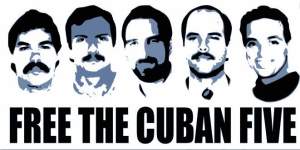
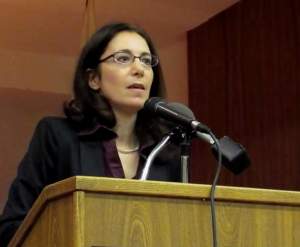
Cuba In The News, The Cuban Five and Exposing Journalists For Hire
Lately, Cuba and its relationship to the United States has been in the news. The New York Times alone had 4 editorials on Cuba. Several urged the reestablishment of diplomatic relations with Cuba which were severed more than 50 years ago. Another urged the prisoner exchange of the Cuban Five now 3, and Alan Gross, the American who has been in a Cuban prison for several years. Last year attorneys with the Partnership for the Civil Justice Fund filed a Freedom of Information Action lawsuit against the U.S. State Department for its refusal to produce responsive materials in its possession about secret payments by the U.S. government to Miami-based journalists who were “reporting” on the Cuban Five case before and during the trial and while the jury deliberated.
Attorney Mara Verheyden-Hilliard:
- The Cuban Five, are five Cuban men who came into the United States to basically learn what the terrorists in Miami were planning. Cuba is a country that has been subject to terrorist attacks for decade after decade.
- There have been bombings, planes shot down. A huge amount of death and destruction but it comes out of the United States from anti-Castro in Miami who are reeking terror on the people of Cuba.
- The U.S government has never taken action to stop these terror attacks that emanate from their shores. In fact the CIA has had been known to have at least some of these people on their payroll or working with them over the years.
- Ultimately, they (Cuban Five) uncovered information which was shared with the FBI, from the Cuban government to the FBI. What happened was the terrorists weren’t arrested, these men were arrested.
- They were charged with espionage offenses, put on trial and found guilty.
- The issue is . . they were tried in Miami, they were tried in this heated environment, tried in conditions that there was no way they could have gotten a fair trial. An issue that has been repeated over and over again in the years of appeals.
- What has been uncovered more recently is that the U.S. government had journalists on their payroll who were presenting themselves as independent journalists in Miami who filled the airwaves and newspapers with extremely hostile and inflammatory coverage of Cuba as well as the trial itself.
- There’s no way this couldn’t have had an impact, on the jury, on the jury pool, on the sitting jury.
- The U.S. government itself is prohibited by the Smith-Mundt Act of 1948 from funding activities to influence and propagandize public opinion.
- We live in a country where we’re free to be wire-tapped, spied on, to have the FBI infiltrating religious institutions and monitoring peaceful protests.
- Prisoner exchange: The fact is the Cuban Five were not attempting to undercut or destabilize the U.S. government. They were simply trying to get information about terrorist attacks emanating from the United States, hurting the people of their country. Alan Gross on the other hand was sent as part of a covert U.S. government operation into Cuba multiple times to material, satellites, phones, communication material, in an attempt to destabilize and over throw the Cuban government.
- We have fought for years with Freedom of Information Act demands and working in partnership with the National Committee to Free the Cuban Five and Gloria LaRiva who has led that organization. She is the key person in the National Committee to Free the Cuban Five that raised this issue, that spent a huge amount of time, going through records, going through the records, audio and visual of the different media, television and radio – and linking these together and doing research into these journalists and establishing what appeared to be this covert operation.
- Much of that material is up on a website called ReportersForHire.org
- Because the State Department was clearly holding material within a certain time period and had not searched their records at all for the material we demanded, we filed a lawsuit in Federal court, and that’s a lawsuit we’re still in the process of litigating.
- The issue of the blockade, which on its face, starving a population to try and force them to change their government is really criminal and a violation of international law.
- Standing on its own without the U.S. blockade, Cuba would thrive.
- Cuba is still there and has withstood and been strong through all of this.
- By lifting the blockade and allowing the U.S. to penetrate into Cuba with American capitalism would be another way of attempting to over throw the government of Cuba.
- A major major funding stream for these groups and these entities in Miami who are working against the people of Cuba and against the government of Cuba.
- US Army Col Lawrence Wilkerson Letter To Obama.
Guest – Mara Verheyden-Hilliard, co-chair of the Guild’s National Mass Defense Committee. co-founder of the Partnership for Civil Justice Fund in Washington, DC, she secured $13.7 million for about 700 of the 2000 IMF/World Bank protesters in Becker, et al. v. District of Columbia, et al., while also winning pledges from the District to improve police training about First Amendment issues. She won $8.25 million for approximately 400 class members in Barham, et al. v. Ramsey, et al. (alleging false arrest at the 2002 IMF/World Bank protests). She served as lead counsel in Mills, et al v. District of Columbia (obtaining a ruling that D.C.’s seizure and interrogation police checkpoint program was unconstitutional); in Bolger, et al. v. District of Columbia (involving targeting of political activists and false arrest by law enforcement based on political affiliation); and in National Council of Arab Americans, et al. v. City of New York, et al. (successfully challenging the city’s efforts to discriminatorily restrict mass assembly in Central Park’s Great Lawn stemming from the 2004 RNC protests.)
——

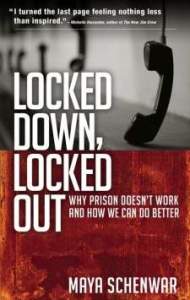
Locked Down, Locked Out: Why Prison Doesn’t Work and How We Can Do Better
In this country there are 2.3 million Americans locked up in prison, and 95 percent of prisoners that are released emerge with very little opportunity to rebuild their lives. Our guest journalist Maya Schenwar has written about the social destruction of the prison industry and the community based initiatives to help former inmates in her book Locked Down, Locked Out: Why Prison Doesn’t Work and How We Can Do Better. Locked Down, Locked Out begins by examining the fundamental crisis of how prison breaks apart families and communities. These experiences relay the enormous damage caused by severing millions of people from family and community ties. In exploring alternatives to incarceration Maya suggests ways to provide resolution to victims while repairing communities of color.
Maya Schenwar:
- It started about ten years ago which was when my sister went to juvenile.
- I had been corresponding with someone on death row, and I had an inclination to write about this issue at the time was really on the margins of journalism.
- When my sister went to juvenile detention and I went to visit her I was immediately struck by the fact that this detention center was a jail.
- Fourteen year olds were being locked up.
- You’re taking people who have already been traumatized and putting them in the most isolating conditions, separating them from society in this way that can’t help create further trauma.
- Prison just doesn’t work. About 2/3 of people who are released from prison are re-arrested in 3 years.
- Instead of talking about the law, we’re going to be talking about the harm that was done to you. A very different thing.
- There needs to be a victim centric approach, something that takes the victim’s healing into consideration.
- Sometimes it gets lost in the conversation about mass incarceration that every single person occupying a prison is a human being and therefore has a constellation of connections with people on the outside when they go in.
- Prison becomes this process of breaking each of those links.
- When you’re communicating with a person in prison, you can’t call them they have to call you. You have no idea when they’ll be able to call you.
- Letters become the only reliable form of communication.
- It comes down to the community level, it comes down to erasing this idea we have that there is a one size fits all solution.
- So many of those problems stem from things we’re depriving people of in our society like housing, food, shelter. We have to think about providing those things as part of creating a society with less harm and less violence.
Guest – Maya Schenwar, is Truthout’s Editor-in-Chief. Her book, Locked Down, Locked Out: Why Prison Doesn’t Work and How We Can Do Better, Berrett-Koehler Publishers. Previously, she was a senior editor and reporter at Truthout, writing on US defense policy, the criminal justice system, campaign politics, and immigration reform. Prior to her work at Truthout, Maya was contributing editor at Punk Planet magazine.
—————————————————————————————

Please help support Law and Disorder, the show is now a sponsored project of Fractured Atlas, a non-profit arts service organization. Contributions for the charitable purposes of Law and Disorder must be made payable to Fractured Atlas only and are tax-deductible to the extent permitted by law.
Afghanistan War, CIA Sponsored Terror, Civil Liberties, Criminalizing Dissent, Habeas Corpus, Human Rights, Iraq War, NSA Spying, Political Prisoner, Prison Industry, Surveillance, Targeting Muslims, Torture, Truth to Power, War Resister
Podcast: Play in new window | Download
Updates
- Michael Ratner Reports On An Important Break In The Julian Assange Case
- Michael Ratner: Longest Case Of Pre-Trial Investigation In Swedish History In Which The Prosecutor Has Simply Sat On Her Hands.
- Michael Ratner: What Sweden Did Here Is Divert Attention From The Underlying Problem
- Michael Smith: United Nations And The Cuban Embargo Vote 2014
- Michael Ratner: Israeli Business Men Are All Over Cuba
——-
Blackwater Guards Found Guilty in 2007 Baghdad Killings
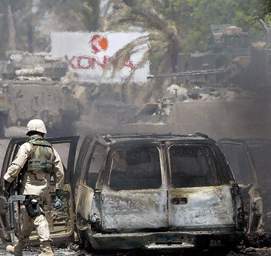
Since 2003, private military contractors have been awarded millions of dollars each year by the U.S. Government in contracts. Many of the military contractor personnel have engaged in atrocious war crimes with zero accountability. Last week a federal jury convicted 4 former Blackwater private security contractors on manslaughter charges and 1 for manslaughter and murder of 17 Iraqis in Baghdad on September 16, 2007. The men were prosecuted under the Military Extraterritorial Jurisdiction Act, a law that allows the U.S. courts to hear cases against contractors to the U.S. Department of Defense for crimes committed overseas. The men were originally hired as private security guards for U.S government employees. Lawyers for Blackwater, now known as Academi LLC argued that the men were simply returning fire to protect themselves.Several civil cases filed by victims injured in the shootings were settled in 2010.
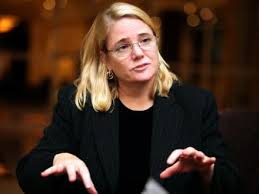
Attorney Susan Burke:
- I think the verdict sends a very loud and large message to the globe that the American judicial system can operate properly.
- That American juries understand when they see war crimes, they understand when they hear about a massacre.
- We began working before the Abu-Ghraib photos were leaked. It began when Bob Woodward wrote a story for the Washington Post that revealed that the Bush Administration had decided to use torture as an instrument in the war.
- We viewed this outsourcing as a potential weak flank in a sense in order to use legal mechanisms, lawsuits in order to prevent this country from departing with its values.
- We were putting the evidence together before the photos leaked and suddenly we had a lot more evidence to sue the 2 government contractors L3 and CACI that were involved in the Abu-Ghraib torture.
- The Blackwater case fits into that rubrick where we brought several different law suits along with the Center for Constitutional Rights. We brought the seven law suits for the victims of the Nisour Square massacre as well as for many other victims.
- If you think about we’re going to the home turf of the wrong doers. The corporations are based in Virginia actually, and so we sued them in their home turf.
- There’s one (civil) case remaining that’s now being handled by Baher Azmy at CCR and they just got a win from the Fourth Circuit – again getting permission for the case to proceed.
- The vast majority of victims have settled with L3 paying 5.25 million.
- Blackwater is a mercenary company that basically earned over a billion dollars from the State Department.
- They were not at Abu Ghraib rather they were providing security for all of the diplomats and other Americans in Iraq.
- At the time they were owned by Erik Prince, operated without any oversight from the State Department and they were involved with a significant number of instances were unnecessary and excessive force was used.
- Erik Prince ended up entering into a settlement and all of those folks obtained compensation.
- Prince then sold the company, retained a revenue stream but the company became Academi.
- As a nation we continue to use these mercenaries and we continue to lack any regulation or oversight. Unfortunately, things didn’t change under the Obama Administration and under Secretary Clinton at the State Department
- What’s happened is there’s this terrible pattern where these companies have a lot of political influence and they continue to get enormous contracts and the State Department continues to outsource security without have a vibrant, or robust oversight function.
- Blackwater vehicles rolled into Nisour Square and they began to open fire with heavy automatic weaponry and they simply began to spray indiscriminatly. They began to shoot all over Nisour Square killing people nearby and injuring people as they fled. No provocation, no real reason they began shooting.
- One of the Blackwater men, a man named Jeremy Ridgeway actually stepped and told the truth early on, pled guilty and explained how this was in fact just indiscriminate shooting for no reason.
- In order to properly handle these matters I ended up creating my own firm.
Guest – Attorney Susan Burke, represented plaintiffs in those civil cases and she joins us today to talk about criminal case, the sentence and the supporting evidence.
——
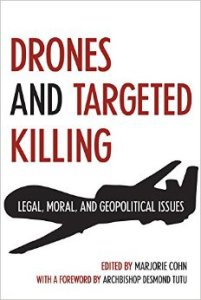
Drones and Targeted Killing: Legal, Moral and Geopolitical Issues
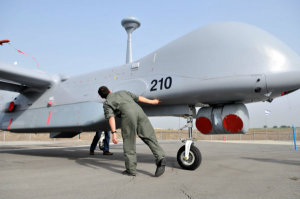
A powerful analysis on the use of drones for targeted assassination by the Obama Administration is explored in Professor Marjorie Cohn’s newly published book titled Drones and Targeted Killing: Legal, Moral, and Geopolitical Issues. It’s a collection of various disciplines including sociologists, legal scholars, and human rights activists that examine aspects of the U.S. policy of targeted killings with drones and other methods. The book documents civilian casualties, and discuses the first U.S. targeted killing lawsuit by the lawyer who brought the case.
Attorney Marjorie Cohn:
- Drones have become the Obama Administration’s preferred weapon of choice.
- We rarely see images of the victims of drone strikes the overwhelming majority of whom are civilians.
- We don’t hear their stories because the media sanitizes their stories.
- We really don’t have a sense of the devastation that is reeked by drones.
- I thought it was important to put together a collection of different aspects of this drone policy. Is it legal? Is it moral? What are the political ramifications? Does it make us safer? Does it make us less safe?
- That Authorization for the Use of Military Force was very limited, it was only limited to groups and countries that supported the 911 attacks and Congress specifically rejected the Bush Administrations request for open ended military authority to deter and preempt any future acts of terrorism against the United States – and yet the Obama Administration has been relying on this as its legal authority.
- Targeted extrajudicial killings off the battle field are illegal.
- Richard Falk, the U.N. Special Rapporteur to the Palestinian Occupied Territories wrote a very and interesting and provocative chapter called Why Drones Are More Dangerous Than Nuclear Weapons.
- Medea Benjamin talked about stories of victims in Pakistan and Yemen and the tolls drones take on communities. The horror, the terror that children are sleeping with drones hovering overhead.
- Pardiss Kebriaei with the Center for Constitutional Rights that handled the first targeted killing case in the United States writes a chapter.
- Tom Hayden writes the conclusion about stopping the drones.
- Phyllis Bennis from the Institute of Policy Studies talks about the assassination as essential to the U.S. war strategy due to the militarization of our foreign policy.
- John Quigley from Ohio State University talks about the blowback from drones and how they actually make us less safe because when people see their families blown up, they resent the United States even more.
- He talks about the history of U.S. foreign policy and the resentment its caused in those countries against the United States.
- He (Barack Obama) has even expanded the use of drones in Iraq and Syria. He’s also using piloted aircraft. He’s also using the AUMF which does not apply at all.
- This ISIS and Khorasan, the current groups doing horrible things over there are not covered by the Authorization for the Use Of Military Force.
- He’s actually acting beyond what Congress has authorized to say nothing of it violating the U.N. charter.
- Only 4 percent of victims in Pakistan were members or even associated with Al-Qaeda which means the overwhelming number of 2400 who have been killed in Pakistan by drone strikes are civilians.
- The FAA Modernization and Reform Act of 2012 requires the FAA to integrate into U.S. airspace by September of 2015 to legalize commercial drones and some government agencies to use small drones. This is very very worrisome because of the privacy considerations primarily.
- There are two different drone strikes the U.S. carries out. One is called personality strikes, where they target suspected bad guys. They call them militants. That could mean anything.
- No due process, just take em out.
- The other type of attack is called signature strikes. That is a strike that is carried out in an area of suspicious activity. If you’re a male between the ages of 16-65 in a area of suspicious activity than you’re fair game, even though the Obama Administration doesn’t know your identity.
- First, there must be a legal basis for using lethal force, whether it is against a senior operational leader of a terrorist organization or the forces that organization is using or intends to use to conduct terrorist attacks.
- Second, the United States will use lethal force only against a target that poses a continuing, imminent threat to U.S. persons. It is simply not the case that all terrorists pose a continuing, imminent threat to U.S. persons; if a terrorist does not pose such a threat, the United States will not use lethal force.
- Third, the following criteria must be met before lethal action may be taken:
- Near certainty that the terrorist target is present;
- Near certainty that non-combatants will not be injured or killed;
- An assessment that capture is not feasible at the time of the operation;
- An assessment that the relevant governmental authorities in the country where action is contemplated cannot or will not effectively address the threat to U.S. persons; andAn assessment that no other reasonable alternatives exist to effectively address the threat to U.S. persons.
- Finally, whenever the United States uses force in foreign territories, international legal principles, including respect for sovereignty and the law of armed conflict, impose important constraints on the ability of the United States to act unilaterally – and on the way in which the United States can use force. The United States respects national sovereignty and international law.
Guest – Attorney Marjorie Cohn former president of the National Lawyers Guild. She lectures throughout the world on international human rights and U.S. foreign policy. A news consultant for CBS News and a legal analyst for Court TV, she also provides legal and political commentary on BBC, CNN, MSNBC, Fox News, NPR, Air America and Pacifica Radio. In addition, Professor Cohn is the author of Cowboy Republic: Six Ways the Bush Gang Has Defied the Law and co-author of Cameras in the Courtroom: Television and the Pursuit of Justice and Rules of Disengagement: The Politics and Honor of Military Dissent. Her latest book, The United States and Torture: Interrogation, Incarceration and Abuse, was published in January 2011 by NYU Press.
—————————————————————–