Civil Liberties, Criminalizing Dissent, Guantanamo, Human Rights, Military Tribunal, RFID, Surveillance, Targeting Muslims, Torture, War Resister
Podcast: Play in new window | Download
Updates:
- Heidi Boghosian: EyeSee Mannequins and Surveillance State: “In-Person Community” Destroyed
- Michael Ratner: Bradley Manning Case Update
- New York Times Fails To Cover Manning Testimony
- Michael Ratner: Julian Assange Ecuador Embassy Update
——


Marijuana Laws: State Votes v. Federal Government
Washington State and Colorado are the first political jurisdictions to legally approved marijuana to be regulated like alcohol. However, federal laws explicitly criminalize marijuana transactions and the federal government can continue to enforce those laws by blocking the progress of state initiatives. For example, it’s likely that the federal authorities will step in when large transactions and large scale production begin in Washington or Colorado. Meanwhile, the Colorado provision allows personal possession of up to an ounce of marijuana and the growing up to six plants at home.
Ethan Nadelmann:
- Colorado and Washington are the first 2 political jurisdictions in the world to do this.
- The United States of America is emerging as the global leader of marijuana law reform.
- As of now it’s legal under state law to possess up to an ounce of marijuana and in Colorado legal to have up to six plants in the privacy of your own home.
- Parts of the initiative that authorize the state to set up a legal regulatory system like with alcohol that doesn’t kick in in Colorado until July, and in Washington state until next December.
- Not in public, let’s be clear.
- My colleagues at Drug Policy Alliance led a broad coalition effort and pushed back the mayor and police chief, rallied the DA’s to say this policy (stop and frisk) made no sense.
- The opportunity here for the federal government to say, let’s get Washington and Colorado a chance to figure this out; a way to effectively regulate this stuff.
- From the public health perspective if you have something that’s being consumed by millions of Americans you want authorities regulating quality and potency.
- The Federal Controlled Substance Act of 1970 is in conflict with this.
- There are now 18 states that have legalized marijuana for medical purposes. Colorado already has a model of regulation on marijuana in respect to medicinal use.
- The fact is you hundreds if not thousands of dispensaries in many states, some are very open ended such as California.
- If the Feds prevent the state governments in Washington and Colorado from responsibly regulating this stuff, you’re essentially going to have a defacto alliance between the federal government on one side and an irresponsible elements of the marijuana community on the other.
- The worst possible thing in Mexico is the legalize drugs in the US. They would lose out just like Al Capone after the alcohol prohibition.
- Latin American leaders: They know that what Washington and Colorado did is the beginning of the ending of the global drug prohibition system which has wreaked havoc in that region for decades.
- People are realizing that among the other ingredients in marijuana, CBD which is the anti-anxiety and anti-inflammatory property of marijuana.
- It’s all about reducing the harms of drugs and the harms of failed prohibitionist policy.
Guest – Ethan Nadelmann, founder and executive director of the Drug Policy Alliance, the leading organization in the United States promoting alternatives to the war on drugs.
—–
Egypt and Syria Update: Glen Ford
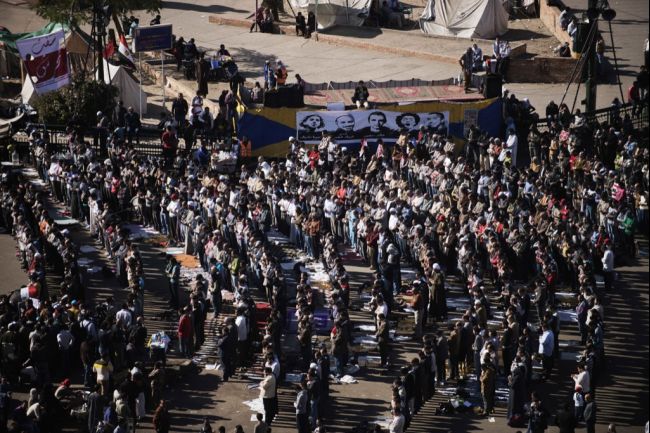
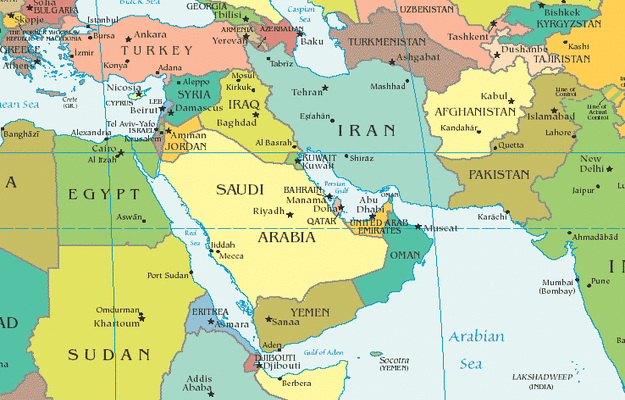
Protests and violence continue in Egypt as Islamist President Mohamed Morsi pushes toward ratifying a draft constitution. Egyptians who oppose the controversial new constitution argue it weakens human rights doesn’t guarantee women’s rights and that it was written by an Islamist dominated assembly. The opposition National Salvation Front says it will not recognize the draft constitution. We talk about that and the disturbing events unfolding within the ongoing conflict in Syria with Glen Ford, founder of the Black Agenda Report. We welcome him back to Law and Disorder. Glen Ford is also a founding member of the Washington chapter of the National Association of Black Journalists.
Glen Ford:
- In the Muslim world, the Left has been decimated not once, not twice, but over and over again in the last 50 years. That’s occurred in Egypt, in Syria, in Iraq.
- It would be expected that in Egypt, the part of secular Egypt that is Left, secularized would represent 15-20 percent of the people.
- The language of politics in that world is spoken in an Islamic dialect.It’s difficult for Left folks here to understand it.
- Leftists here get confused by the corporate media which inflates business secularists in contests all over the world.
- How many people realize that the opposition party, party number two, in Russia is the Communist Party?
- Everybody is at work in Syria, Qatar and Saudi Arabia and the Emirates, and freelance millionaires from all over the region are sponsoring their own brigades and fighting forces.
- Before the CIA and the Pakistanis got together to create a force to fight the Soviets in Afghanistan no such thing existed as a national Jihadi network.
- Syrian situation really heated up after the fall of the “Libyan regime”. 600 to 900 of the Libyan Jihadis were then sent directly to Syria.
- It’s really not in U.S. hands.
Guest – Glen Ford, founder of the Black Agenda Report and many other media forums. Ford was a founding member of the Washington chapter of the National Association of Black Journalists (NABJ); executive board member of the National Alliance of Third World Journalists (NATWJ); media specialist for the National Minority Purchasing Council; and has spoken at scores of colleges and universities.
————————————————————–
Afghanistan War, Civil Liberties, Criminalizing Dissent, Gaza, Guantanamo, Habeas Corpus, Human Rights, Surveillance, Targeting Muslims, War Resister
Podcast: Play in new window | Download
Updates:
—-
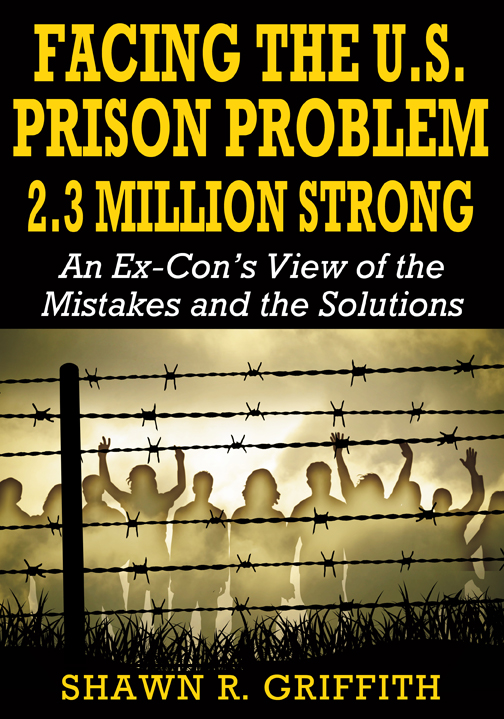
Facing The U.S. Prison Problem 2.3 Million Strong
As many listeners may know the United States has incarcerated more people than any other country in the world, and also within the history of humanity. The newly published book titled Facing The U.S. Prison Problem 2.3 Million Strong by Shawn Griffith gives the reader a rare perspective from an ex convict who served a 20 year sentence in some of the harshest conditions. These include being confined to a small cement cell in the late Florida summer without sheets, laying in pools of sweat on a plastic covered mattress. Vindictive prison guards and case workers in the criminal justice system had made life nearly unbearable for Shawn Griffith. His book hopes to inspire movement building among the families of prisoners to develop a non-profit corporation called the Prisoner Family Union.
Shawn Griffith:
- As a youngster, it was a very difficult childhood.
- My parents were very religious, there was a lot of alcohol abuse.
- Early on I went on a truth seeking thing. I also became very rebellious at a young age.
- At 16, I met these people who were crack cocaine addicts. They were the only place I could find to stay off the street. They introduced me to the drug, which I had no knowledge of, how addictive it was.
- Then they told me I had to help them support their habit. They started training me, taking me to homes showing me how to burglarize them, steal cars, a number of things to support our habits.
- When I committed an armed robbery for 100.00 ended up with a 24 year sentenced in which I did 20 years.
- I knew that I had some emotional problems, I started studying psychology for about 4 years. By the age of 23, I attempted to escape initially.
- In Chapter 1, where I explain in detail, some of the sentencing laws that were passed in Florida, those same laws that were passed show decreases in crime rate before the laws were instituted.
- Inmates and their families are by majority below the poverty line. They don’t have a lot of resources to fight back.
- These large groups that influence the correctional system, they are unionized.
- Speakoutpublishing.com
Guest – Shawn Griffith, founder of Speak Out Publishing and has been an institutional teacher of adult basic education for the past sixteen years. He has received many teaching and writing awards from professors and others with whom he has worked, as recently as 2011. He is author of the recently published book Facing The U.S. Prison Problem 2.3 Million Strong
———-
Professor Francis Boyle: Palestine Observer Status
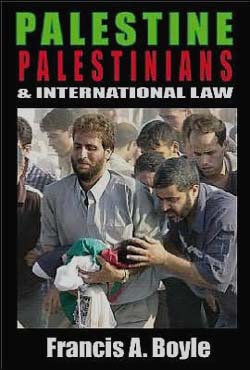
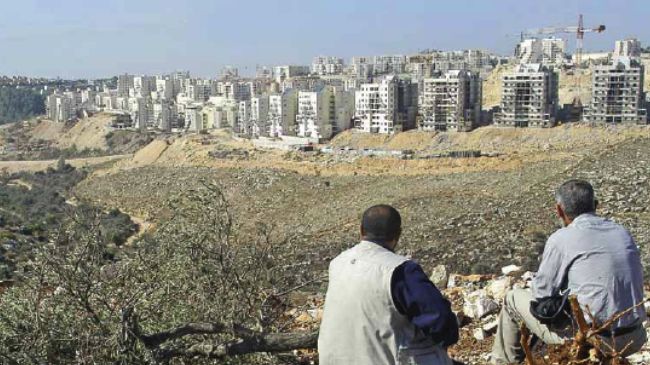
Now that Palestine has been voted in as a new non member state status within the United Nations, Palestinian leaders can join the International Court of Justice and the International Criminal Court and challenge Israel’s violations of international law. We talk with Professor Francis Boyle, the leading expert in international about his role as a Palestine observer. In his book Palestine, Palestinians and International Law, Professor Boyle outlines 6 critical points, among them are:
1. “Palestine can join the Rome Statute for the International Criminal Court and file a Complaint with the ICC against the illegal settlements and settlers, who are committing war crimes;
2. “Palestine can join the Statute for the International Court of Justice, sue Israel at the World Court, and break the illegal siege of Gaza;
3. “Palestine can join the Law of the Sea Convention and get its fair share of the enormous gas fields lying off the coast of Gaza, thus becoming economically self-sufficient;
4. “Palestine can become a High Contracting Party to the Four Geneva Conventions [this deals with the laws of war];
5. “Palestine can join the International Civil Aviation Organization and gain sovereign, legal control over its own airspace;
6. “Palestine can join the International Telecommunications Union and gain sovereign legal control over its own airwaves, phone lines, bandwidths.”
Professor Boyle is the author of many books including Palestine, Palestinians and International Law, The Palestinian Right of Return Under International Law, and United Ireland, Human Rights and International Law.
Professor Francis Boyle:
- The negotiations between Israelis and the Palestinians broke off because Israel continued to build settlements. The Palestinians took the position that well, we’re negotiating over a pizza while you eat it.
- I went back with them with a proposal longstanding with President Arafat, that we apply for membership in the United Nations organization.
- That was approved by the PLO executive committee. The Obama Administration bottled the application up in the UN Security Council.
- The mainstream news media has it wrong, Obama can exercise over their admission if they want to, but under the Uniting For Peace Procedure, they can turn it over to the General Assembly where Palestine can be admitted as a full fledged state by a 2/3 vote.
- They took an intermediate step last Spring, the PLO executive committee that serves as the provisional government for the state of Palestine created by the 1988 Declaration of Independence, voted to apply for UN observer status.
- Look at what Switzerland did from the founding of the United Nations to about 10 years ago as a UN observer state. Palestine can now if it wishes join pretty much every international organization in the world and treaties.
- They can simply use the Swiss model, join the International Criminal Court, join the International Court of Justice, join the Law of the Sea convention, join the International Civic Aviation Convention.
- We already filed a complaint with the ICC after Operation Cast Lead.
- If you follow the Israeli press they’re deathly afraid of prosecution by the ICC.
- The step we saw last week, took two years in the making. The Palestinians had to go all over the world to line up that support.
- It’s been my advice, we go after the settlements now – what they do is up to them (PLO)
- The second legal step is to sue Israel at the International Court of Justice at the Hague. The so called World Court of the United Nations system.
- I’ve offered to do that work for them and try to break that genocidal siege of Gaza.
- You or I aren’t going to decide this.
- We have to stand back and support the Palestinians and let them decide what they’re going to do.
Guest – Professor Francis Boyle, leading American expert in international law. He was responsible for drafting the Biological Weapons Anti-Terrorism Act of 1989, the American implementing legislation for the 1972 Biological Weapons Convention. He served on the Board of Directors of Amnesty International (1988-1992), and represented Bosnia-Herzegovina at the World Court. He served as legal adviser to the Palestinian Delegation to the Middle East peace negotiations from 1991 to 1993.
In 2007, he delivered the Bertrand Russell Peace Lectures. Professor Boyle teaches international law at the University of Illinois, Champaign and is author of, inter alia, The Future of International Law and American Foreign Policy, Foundations of World Order, The Criminality of Nuclear Deterrence, Palestine, Palestinians and International Law, Destroying World Order, Biowarfare and Terrorism, Tackling America’s Toughest Problems, and The Tamil Genocide by Sri Lanka. He holds a Doctor of Law Magna Cum Laude as well as a Ph.D. in Political Science, both from Harvard University.
—————————————————————————-
Civil Liberties, Criminalizing Dissent, Gaza, Human Rights, Political Prisoner, Surveillance, Targeting Muslims, War Resister
Podcast: Play in new window | Download
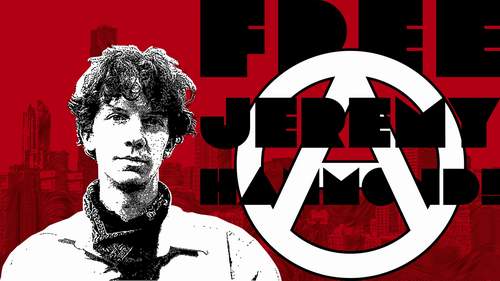
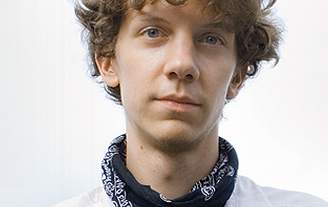
Michael Ratner and Michael Smith discuss Jeremy Hammond Court Case
- Jeremy Hammond is charged with hacking into the computer system of intelligence firm Strategic Forecasting Inc.
- Hammond is one of five charged with conspiracy to commit computer hacking and other charges
- Michael Smith and Michael Ratner visited him in prison.
- November 20, 2012 – Michael Ratner and Michael Smith go to federal court – Jeremy Hammond’s case.
- Defense Council, Liz Fink, Margie Ratner Kunstler, Sarah Kunstler and a couple of other people were at the table.
- Emily Kunstler was there as a paralegal.
- Jeremy came into the room, he looked very good – in a blue jumpsuit.
- Then the hearing happened, an hour and a half on getting bail. It’s up to the government to prove why shouldn’t this person be out on bail. You haven’t been convicted of anything so you should be out on the street.
- The government has to prove you will abscond, not come back to trial. The other thing they have is the burden of proof on is that you’re a danger to the community. Michael Smith offered a spare room for Jeremy Hammond to stay.
- It was a hostile hearing and the judge reads her decision denying bail. It was obvious it was prepared way in advance.
- Jeremy’s lawyer Liz Fink: He’s got to be free (on bail) in order for us to work together to prepare his defense.
- Factor 1: Is he going to flee if he gets out on bail? Factor 2: He flaunts legal authority.
- Liz Fink said to the judge, he doesn’t have a passport and his parents are putting up their home for bail.
- He could get 39.5 years. Freehammond.com
—-
- Israel and Gaza Bombing Update
- Israel The Third Largest Arms Seller Globally
- Weapons Experimenting In Gaza
—-
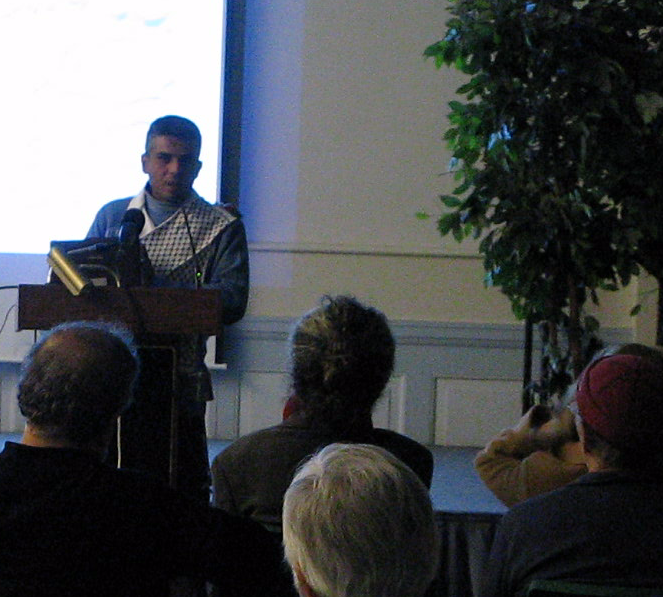
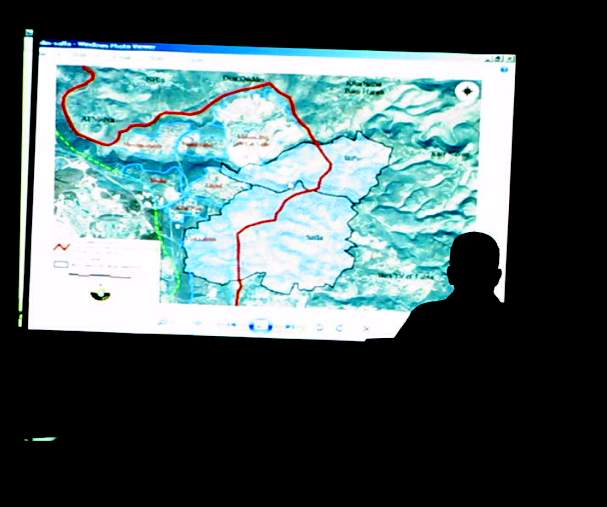
Iyad Burnat, Head of the Popular Committee in Bil’in, Palestine
We hear excerpts of the presentation by Iyad Burnat, head of the Bil’in Popular Committee and a leader in the village’s non-violent popular resistance movement. Since 2005 citizens of Bil’in have held weekly demonstrations against the building of the Israeli separation wall through the community’s agricultural lands, and the steady encroachment of illegal settlements. The demonstrators are joined by Israeli and international peace activists, and have maintained a commitment to non-violent methods of resistance in spite of armed, military opposition that has resulted in many injuries and some deaths.
These demonstrations are the subject of the recent award-winning documentary film 5 Broken Cameras, which was made by Iyad’s brother, Emad Burnat. Iyad was born in Bil’in in September of 1973. He is married and has four children. He became involved in popular resistance as a teenager, and was arrested by the Israeli military for the first time at age 17. He was accused of throwing stones, and imprisoned for two years. Since then he has been arrested and imprisoned by the Israeli military several more times. The event was recorded at Unitarian Church of All Souls in Manhattan.
—-
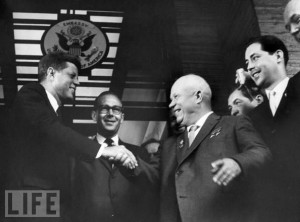
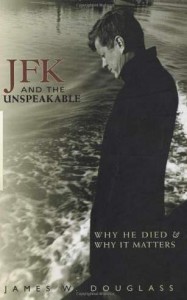
JFK and the Unspeakable: Why He Died and Why It Matters by Jim Douglass
JFK, The Unspeakable, is the first book of 3 on the assassinations of the 1960s. Orbis Books has commissioned author James W. Douglass to write about the murders of JFK, Malcolm X and Martin Luther King, and his the third will be on the assassination of Bobby Kennedy. The heart of JFK the Unthinkable, is not how Kennedy was killed or how Kennedy became a threat to the systemic war machine, but why DID Kennedy die? Author James Douglass says Kennedy knew that he would die and had the guts to stand up to the system and take the hit. This narrative was lost for decades, obscured by disinformation about Kennedy’s character and the conspiracy of his assassination. One review summarizes Douglass’s book in this way : JFK’s belated effort to turn America from an armed culture of victory to a member of an international peaceful world was shot down in Texas for a reason.
Jim Douglass:
- John F. Kennedy’s experience in WWII: He was in the South Pacific, he volunteered. He was on that PT boat.
- What happened on that PT boat, is that it got split into two by a Japanese destroyer. He lost brothers and friends at that time. An extraordinary experience being adrift on the ocean warning other PT boats. The experience create a distrust in military authority.
- He said that he wanted to splinter the CIA into a thousand pieces and scatter to the winds.
- As Kennedy said to his friends, “they figured me all wrong.”
- The Unspeakable: the kind of evil and deceit that seems to go beyond the capacity of words to describe. The midst of war and nuclear arms race, the assassinations of Kennedy, Martin Luther King and Malcom X that the term was used.
- JFK’s vision is articulated in the address June 10, 1963, arising from the turnaround of the missile crisis and Bay of Pigs.
- He wanted to move step by step into a disarmed world. Nikita Khrushchev put that speech all over the Soviet Union. The Cuban Missile Crisis is a deeply misunderstood part of our history, because it’s usually portrayed as Kennedy going to war with Nikita Khrushchev and beating him.
- The truth was that Kennedy and Nikita Khrushchev were in over their heads, the US generals wanted nuclear war, because they had more warheads than the Soviets.
- Nikita Khrushchev: We now have a common enemy from those pushing us toward war.
- At that point the Cold War turned upside down because Kennedy and Khruschev became closer to each other than either was toward their own military power system.
- Vietnam: Kennedy’s military people would not give him an exit policy. He signed the withdrawal order from Vietnam before he was assassinated.
- His friends said that he had an obsession with death. It was not an obsession but a real assessment that he was going to die. If you try to turn around a national security state that is dominating the world,
- and you do so as president of the United States, of course you’re going to die. Kennedy knew that.
- The book is a story on the deliberate destruction of hope, the vision of change, a turning of this country all of which was happening and had to be stopped. US Agencies killed Dr. Martin Luther King – 1999 Verdict
- We’re in the same scene right now with Petraeus and McChrystal setting up Obama. They were dictating terms to Obama, unlike Kennedy, he did not face them down.
- We need to get out ahead of Obama so that he can do something.
Guest -author, James W. Douglass. He’s a longtime peace activist and writer. James and his wife Shelley are co-founders of the Ground Zero Center for Nonviolent Action in Poulsbo, Washington, and Mary’s House, a Catholic Worker house of hospitality in Birmingham, Alabama.
Afghanistan War, CIA Sponsored Terror, Civil Liberties, Criminalizing Dissent, Gaza, Habeas Corpus, Human Rights, Military Tribunal, Political Prisoner, Surveillance, Targeting Muslims, War Resister
Podcast: Play in new window | Download
Updates:
- Jeremy Hammond Case Update: Currently In MCA
- Julian Assange Update: Ecuador Embassy, London
- Bradley Manning Hearing at Fort Meade – November 27-December 22
- National Security State Eats Its Own? General Petraeus Scandal Analysis
- Israel Bombing Gaza: Operation Pillar of Cloud. Timeline
- CCR Files Complaint Against the UN Committee Against Torture: Canada Directly Violates Convention Against Torture
- UN Vote On Cuba Embargo: Israel Is Among Major Investors In Cuba
—
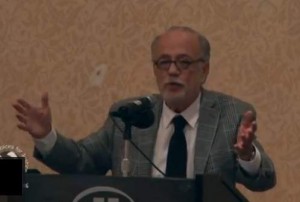
National Lawyers Guild 75 Years
Hundreds of National Lawyers Guild members and allies gathered to celebrate the organization’s 75th anniversary at the Law for the People convention in Pasadena, California. We hear excerpts from speeches from the National Lawyers Guild Convention by Attorney Jim Lafferty The 2012 Law for the People Award was given to Jim Lafferty.
Scholar and activist Angela Davis delivered the keynote address and among the convention honorees will be Margaret Burnham, a professor of civil rights law who, as a young lawyer, helped secure Davis’s 1972 acquittal on high-profile charges.
Founded in 1937, the National Lawyers Guild is the oldest and largest public interest/human rights bar association in the United States. Its headquarters are in New York City and it has members in every state.
Jim Lafferty, Executive director of the National Lawyers Guild in Los Angeles and host of The Lawyers Guild Show on Pacifica’s KPFK 90. 7 FM.
————————————
Civil Liberties, Habeas Corpus, Human Rights, Prosecution of the Bush Administration, Targeting Muslims, Torture, Truth to Power, War Resister
Podcast: Play in new window | Download
Updates:
- Supreme Court Decision on Qualified Immunity: Dick Cheney
- NYPD Turned Young Man Into Informant: Mosque Crawler
—–
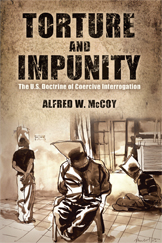
Torture and Impunity: The U.S. Doctrine of Coercive Interrogation
It’s an undisputed fact: both the George W. Bush and Obama administrations actively engaged in various methods of torture, and have done so with impunity. Despite initial public outrage at graphic images from the bowels of Abu Graib and Guantanamo prisons, government-sponsored torture has, on one level, come to be accepted as integral in the several perpetual wars waged by the United States. References to torture are now commonplace, sprinkled throughout the mainstream media and in popular culture references. Even discussion of different forms of torture has, in ways, become abstract.
We’ve reported, for example, that Cornell University Medical Center scientists have deemed so-called “forced standing” the most devastating mode of torture. Standing motionless for hours can shut down the kidneys, cause hallucinations and wreak much more damage.
And we’ve looked at numerous cases in which the perpetrators of US-sponsored terror have gone unpunished. In one case, while Italy’s high court upheld sentences of 23 CIA operatives convicted of kidnapping a Muslim cleric under the US program of “extraordinary rendition, more than 10 years later, the commanders who authorized the torture yet to face charges. This country’s practice of torture have become virtually sanitized, and in the process, does lasting damage to America’s moral authority as a world leader.
Professor Al McCoy:
- In the 1950s, the human mind was like the last continent to be discovered.
- People in Washington, the CIA were concerned that Russia was capable of programming people to do things against their will.
- Initially defensively and very quickly offensively the CIA led the US intelligence community, the British and Canadians on a massive search that lasted 12 years for sophisticated mind control techniques.
- It went through an exotic phase where they explored hypnosis and very famously almost notoriously drugs, that led to dead ends.
- They outsourced the mundane research to top ranking cognitive scientists. This produced two breakthroughs.
- One is sensory deprivation, second is stress positions.
- These two techniques self afflicted pain and sensory disorientation were combined in the CIA’s counter intelligence and interrogation manual in 1963.
- It was disseminated withing the US intelligence community and then through a bunch of CIA blinds then to international police training to US allies worldwide . . .leading to a global proliferation of torture on our side of the Iron Curtain.
- The UN Convention barred with equal weight the physical and psychological torture.
- We illegally took people and seized them, transferred them to allied nations where they would be likely to be subjected to torture.
- One of the favorite blinds of the CIA was the office of Naval Research.
- President Bush authorized the CIA to open up its own prisons, lease its own fleet of executive jets in order to move them around from prison to prison.
- Torture became normalized for the American people. Torture became omnipresent on screens large and small across America.
- The show 24 became enormously popular with 15-20 million views per episode. We’ve had torture normalized within the mass media.
- This process of impunity is really a transnational process.
- Rewriting history so that the fabric of the past is radically reconstructed to justify the use of torture.
Guest – Al McCoy, Professor of History at the University of Wisconsin-Madison and author of “Torture and Impunity: The U.S. Doctrine of Coercive Interrogation.” Al is also the author of “A Question of Torture: CIA Interrogation, From the Cold War to the War on Terror” and “The Politics of Heroin: CIA Complicity in the Global Drug Trade. The first edition of his book, published in 1972 as The Politics of Heroin in Southeast Asia, sparked controversy, but is now regarded as the “classic work” about Asian drug trafficking.
—

ACLU: When Boston Police Spy on Free Speech, Democracy Suffers
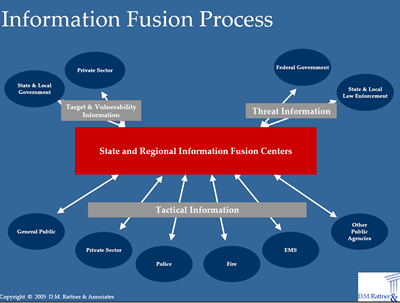
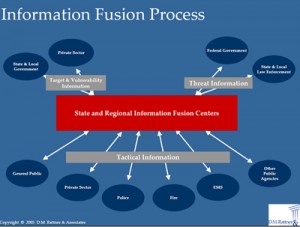
The Massachusetts National Lawyers Guild, along with the ACLU, recently issued a report detailing how the Boston Police Department has worked with its local fusion center to spy on lawful activities. The Center was established in the wake of 9/11 to more effectively share “terrorism-related” information among federal, state and local law enforcement agencies as well as with private entities.
Public police records, including documents and videotapes, obtained with a court order reveal a pattern of police surveillance of peaceful demonstrations, coupled with the practice of interrogating activists and labeling peaceful groups as extremists. Local groups and activists have long suspected that spying was taking place.
Urszula Masny-Latos:
- We know that various law enforcement agencies monitor peaceful activists.
- Even though COINTELL PRO ended in the 70s, we know that law enforcement agencies have continued spying.
- In 2009 when Israel attacked Gaza, there were many protests in Boston, one of those protests happened at the Israeli consulate.
- Four activists were arrested and the NLG represented them and eventually charges were dropped.
- While in jail the activists were interviewed by plain clothes officers.
- One of the activists was threatened because she refused to answer questions.
- Four BRIC officers interviewed those activists. BRIC (Boston Regional Intelligence Center) is one of two fusion centers we have in Massachussetts.
- We know that BRIC is not supposed to gather information or evidence from activists or anyone else.
- The Boston Police Department says BRIC officers only said they were available to talk with.
- Not only in Boston, people have to be very aware of it, fusion centers have been put in all states.
Guest – Urszula Masny-Latos, Executive Director of the Massachusetts National Lawyers Guild since 1996. She grew up in Poland, where she was active in the student movement. After moving to the U.S., she attended University of California at Santa Cruz where she majored in sociology and legal studies; her graduate work in arts management was done at the New School for Social Research in New York City. Prior to her Guild employment, Urszula organized arts festivals, managed a theater company, and worked as an organizer for a union in Boston.
——————————————————————-
Afghanistan War, Civil Liberties, Criminalizing Dissent, Extraordinary Rendition, Gaza, Guantanamo, Habeas Corpus, Human Rights, Military Tribunal, Political Prisoner, Targeting Muslims, Torture, Truth to Power, War Resister
Podcast: Play in new window | Download
Updates:
—
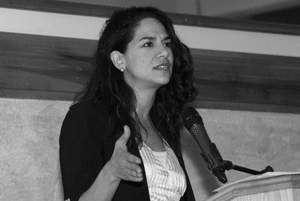
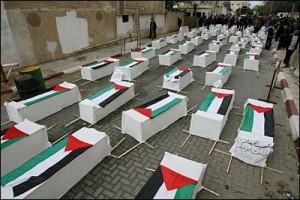
Russell Tribunal on Palestine Findings
We follow up on the findings of the Russell Tribunal on Palestine. As many listeners may know, the tribunal was created in response to the international community’s inaction regarding Israel’s recognized violations of international law. Jury and speakers included Angela Davis, Noam Chomsky, Ilan Pappe, Peter Hansen, Diana Buttu, Phyllis Bennis, Katie Gallagher and Russell Means.
Attorney Noura Erakat:
- Each of the sessions focuses on a different component of the problems that has led to a failure to achieve a solution to what some may describe as the Palestinian-Israeli conflict.
- More specifically to achieve Palestinian self-determination and equality with their Jewish-Israeli counterparts.
- The first tribunal explored the EU complicity. A condition for Israel’s acceptance into the United Nations was its acceptance of returning refugees to their homes per UN Resolution 194.
- Since the 1967 war they’ve been supported by unequivocal US financial, military and diplomatic support.
- Corporate complicity: The corporations that are involved in funding the Israeli military arsenal and its construction arsenal to expand its colonial settlements in the Occupied Territory as well as building a wall deemed illegal by the National Court of Justice.
- This fourth and final session brought everything back to the U.S.
- To New York specifically because the U.S. has proven to be the primary obstacle in resolving this conflict.
- Consider first that Israel has received 115 billion dollars in aid since World War 2. Making it the highest recipient of US foreign aid.
- In addition to that Israel receives approximately 3 billion dollars a year. It receives money without any review in US law, specifically the Arms Export Control Act which conditions that all US aid to foreign countries must be used to further human rights or in self defense.
- The US is shielding Israeli responsibility in the UN Security Council
- The resolution process is stonewalled internationally.
- One of the things that we’d love to do is remove the veto power from the five permanent members of the UN Security Council.
- BDS Movement: 2011 – Dock Workers refused unload Israeli products from a boat.
- EndtheOccupation.org
Guest – Attorney Noura Erakat, human rights attorney and activist. She is currently a Abraham L. Freedman Teaching Fellow at Temple University, Beasley School of Law and the U.S. based Legal Advocacy Consultant for the Badil Resource Center for Palestinian Refugee and Residency Rights. She has taught international human rights law in the Middle East at Georgetown University since Spring 2009. Noura also has helped seed BDS campaigns as a national grassroots organizer with the US Campaign to End the Israeli Occupation.
———-
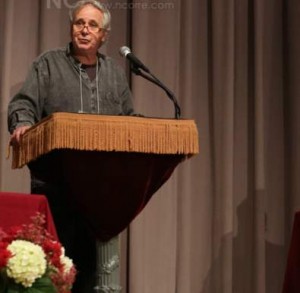
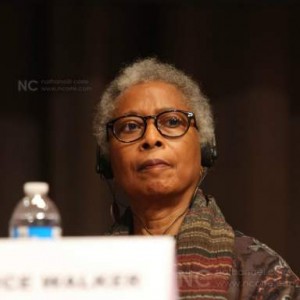
Russell Tribunal on Palestine: Ilan Pappé Speech
The final session of the Tribunal focused on the responsibility of the United States of America and the United Nations regarding the Israeli breaches of international law towards Palestine and Palestinians. There is now a situation in which Israel has achieved a status of immunity and impunity, facilitated by the US, despite its complete disregard for the norms and standards of international law.
Speaker – Ilan Pappé, an Israeli historian and activist. He is currently a professor with the College of Social Sciences and International Studies at the University of Exeter in the UK, director of the university’s European Centre for Palestine Studies, and co-director of the Exeter Centre for Ethno-Political Studies. He is the author of The Ethnic Cleansing of Palestine (2006), The Modern Middle East (2005), A History of Modern Palestine: One Land, Two Peoples (2003), and Britain and the Arab-Israeli Conflict (1988)
——————————————————————————-