Afghanistan War, Civil Liberties, Criminalizing Dissent, Human Rights, Iraq War, Prison Industry, Supreme Court, Surveillance, Targeting Muslims, Torture, Truth to Power, War Resister
Podcast: Play in new window | Download
Updates:
————
39 Ways To Limit Free Speech
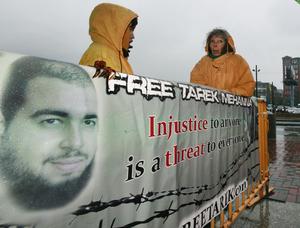
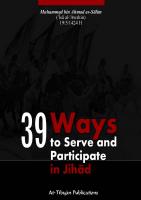
39 Ways To Limit Free Speech is the title Law Professor David Cole’s recent article. Earlier this month, a 29-year old citizen from Sudbury, Massachusetts named Tarek Mehanna was sentenced to seventeen and a half years in prison for translating a document. The text he translated from Arabic is “39 Ways to Serve and Participate in Jihad” and its all over the internet, you can read it says David Cole, but don’t try to translate it. One issue in the government’s prosecution of this case is the use of the decision from the Brandenburg v. Ohio case in which the Supreme Court established that standard in ruling that the First Amendment protected a Ku Klux Klansman who made a speech to a Klan gathering advocating “revengeance” against blacks and “Jews.”
Professor David Cole:
- He was accused of providing material support to al-Qaeda by translating various documents and videos from Arabic into English. There’s no allegations that Mehanna ever met with or even talked to a member of al-Qaeda. There are no allegations that the translations were delivered to or provided to al-Qaeda which was the designated group.
- The government argued that because he translated these documents and put them up on the web and hoped to encourage people to support jihad and support al-Qaeda, that’s enough to constitute material support.
- Here’s an instant in which the government is prosecuting pure speech but no showing that the speech was connected to illegal conduct, no showing that it was intended to produce eminent lawless action, which the Supreme Court said is required to produce under Brandenburg.
- It’s enough that he put it up on the web and wanted to support al-Qaeda.
- If that’s a crime what about the New York Times when it does a report on one of the many messages Osama Bin Laden put after 9-11?
- I represented the Humanitarian Law Project in the case that went to the Supreme Court in 2010, in which the HLP was in engaging in advocacy of human rights and peace, clearly non-violent, non-criminal conduct.
- But because they wanted to do it to and with the Kurds in Turkey and particularly the political representatives of the Kurds in Turkey which is the Kurdistan Workers Party (designated as a terrorist organization) the government argued that it was a crime to teach the KWP to bring human rights claims in Geneva and work with them in peace overtures to the Turkish Government.
- The Supreme Court upheld that, but doesn’t apply to independent advocacy. (until now)
- Now if you wanted your speech to support terrorist organizations, even if you did it independently of that organization, even if you never met or talked to anyone in that organization, we can make it a crime.
- Very much about declaring a “new front” in the war on terror and the front is going after internet propaganda.
- To me it recalls the kind of aiding the enemy prosecutions we saw in World War 1.
- We as citizens need to be active in monitoring and pushing back against this material support statute.
Guest – Professor David Cole teaches constitutional law, national security, and criminal justice at Georgetown University Law Center. He is also a volunteer attorney for the Center for Constitutional Rights, the legal affairs correspondent for The Nation, a regular contributor to the New York Review of Books, and a commentator on National Public Radio’s All Things Considered. He has been published widely in law journals and the popular press, including the Yale Law Journal, California Law Review, Stanford Law Review, New York Times, Washington Post, Wall Street Journal, and Los Angeles Times.
——————-

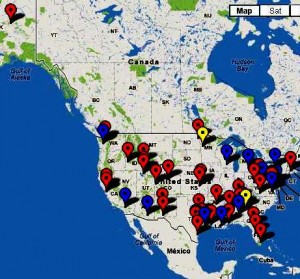
FAA Releases Lists of Drone Certificates—Many Questions Left Unanswered
Earlier this year we discussed the partnership with Cornell University and Technion-Israel Institute of Technology. The two institutions are working together to build a campus in New York City. Technion is involved with developing robotic weapons systems, which include aerial drones, and unmanned combat vehicle technology. There are many more universities involved with drone technology. Through a series of Freedom of Information requests by the Electronic Frontier Foundation, the FAA has been forced to reveal approximately 63 active drone sites. These sites are located in 20 states and their owners include military and universities. Universities include Cornell, (which we just mentioned) the University of Colorado, Georgia Tech, Eastern Gateway Community College and many more.
Attorney Jennifer Lynch:
- We filed a FOIA request with the FAA last April asking for copies of all the certificates of authorization and the special air-worthiness certificates that the FAA issues to anybody to wants to fly a drone in the US.
- We asked for these lists which are called COAs, or Certificates of Authorization. The COAs apply to public entities like state and local law enforcement, universities, the federal government.
- We got two lists from the FAA and the FAA says these cover all of the entities that applied for an authorization to fly a drone in United States.
- They’re very interesting, the COA list includes some unsurprising entities like DARPA, DHS, Customs and Border Protection, the FBI, various branches of the military. We already knew those entities were flying drones.
- What was more surprising was the number of universities and colleges on the list.
- Universities that have an aerospace engineering program they may be seeking authorization so the students can learn about and design drones.
- The Electronic Frontier Foundation is a civil liberties non-profit, we focus on civil liberties and new technology, and we’re concerned about surveillance equipment used by the government.
- Drones are a duel use technology, they can be used for good or for bad.
- They can see inside buildings, survey an area at night with heat sensors, they also have the ability to carry communications intercept tools. You could swap out various payloads on a drone.
- Then of course these drones can carry weapons.
- You can build your own drone, DIYDrones.
- We don’t know too much about what’s going on now. The reason the EFF file the FOIA request in the first place is that we just don’t know how agencies are using these drones.
- What we found is that a lot of the police forces that have drones are required to fly them under 600 feet. If its something that flying under 600 feet you’re going to be able to see that.
- Congress was getting a lot of pressure, and the FAA was getting a lot of pressure from state and local law enforcement, the military and the federal government to authorize more drones to be used in the United States.
- We’ve heard from the Congressional Research Service that 1 in 3 warplanes right now is a drone.
- The wars are going to end and the military is going to want to something with these drones.
Guest – Jennifer Lynch, staff attorney with the Electronic Frontier Foundation and works on open government, transparency and privacy issues as part of EFF’s FOIA Litigation for Accountable Government (FLAG) Project. In addition to government transparency, Jennifer has written and spoken frequently on government surveillance programs, intelligence community misconduct, and biometrics collection. Prior to joining EFF, Jennifer was the Clinical Teaching Fellow with the Samuelson Law, Technology & Public Policy Clinic at UC Berkeley School of Law. At the Samuelson Clinic, Jennifer specialized in privacy and intellectual property issues, including investigations on social media, privacy and the smart electrical grid, digital books, and open source regimes for biotech. Before the Clinic, Jennifer practiced with Bingham McCutchen in San Francisco and clerked for Judge A. Howard Matz in the Central District of California. She earned both her undergraduate and law degrees from UC Berkeley.
—————————–
Afghanistan War, Civil Liberties, Criminalizing Dissent, FBI Intrusion, Habeas Corpus, Human Rights, Iraq Veterans, Iraq War, Surveillance, Torture, War Resister
Podcast: Play in new window | Download
Updates:
————————–
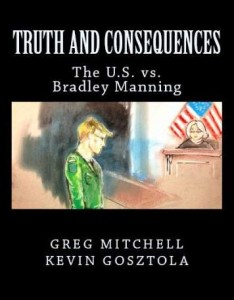
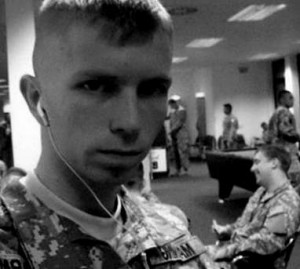
Truth and Consequences: The U.S. vs. Bradley Manning
In the past year, we’ve covered Wikileaks and specifically the Bradley Manning case in our updates. We talk today with Greg Mitchell co-author of the new published book, Truth and Consequences: The U.S. vs. Bradley Manning. In the first part of the book titled Solitary Man, Greg Mitchell gives readers a detailed look into the character of Bradley Manning. The second part of the book details the Bradley Manning trials written by co-author Kevin Gosztola. Hard journalism let the voices of friends and family document the important details in Manning’s life leading up to Wikileaks and then the book dives into the complexities of the trial. In the preface Greg writes “Ultimate truths, in this case, may lead to ultimate consequences for one who would not be silent.
Greg Mitchell:
- The second half of the book is really the only thing out there that covers in depth what has happened to him in the last few months.
- Namely his court martial proceedings after he was imprisoned for a year and a half. His first hearing was last December. He is awaiting what is expected to come out as a formal court martial in August. If it does start in August, it will be well over 2 years since he was arrested.
- A lot of the charges are related to passing along to Wikileaks, this classified secret information. Course the most dynamite charge is that he gave aid to the enemy.
- Who is the enemy? The government was forced to say that it was Al-Qaeda. That charge potentially carries the death sentence.
- They’re interested in punishing Manning, the big fish they’re after is Julian Assange.
- Last year there was global outrage when he was kept in solitary confinement, being forced to sleep naked, and stand at attention naked.
- All the top media outlets had a falling out with Wikileaks, and I think there’s a spill over from that.
- There hasn’t been any media coverage that really probes into what’s going on here.
- Over and over he (Bradley Manning) cited his outrage at what he was seeing in those cables and in Iraq, and things he was asked to participate in.
- The court martial will be extremely embarrassing to the military because they gave him access to these documents.
- He was a kid who grew up in Oklahoma, his parents eventually got divorced. He was a computer nerd, growing up. He realized in his teens, he was gay.
- He wasn’t a longtime peacenik or things like that, he always had some social conscience, and when he got to Iraq, he saw things that upset him.
- It may have never come out, that he would be arrested, except that he had these online chats with Adrien Lamo, who is a convicted hacker. Lamo decided Manning was talking too much about what he did and went to the authorities.
- The Manning case shows this incredible legacy of our wars in Iraq and Afghanistan, which have gone on for a decade, its never ending and yet the American public has never been brought face to face with what the US has done in those countries, civilian casualties.
Guest – Greg Mitchell writes daily for The Nation magazine’s web site. He is the author of more than a dozen books, including The Campaign of the Century (winner of the Goldsmith Book Prize), So Wrong for So Long: How the Press, the Pundits and the President Failed on Iraq, Why Obama Won, Tricky Dick and the Pink Lady, The Age of WikiLeaks, and with Robert Jay Lifton, Hiroshima in America and Who Owns Death? His most recent books are Atomic Cover-up and Journeys With Beethoven. He was the editor of Editor & Publisher from 2002 to 2009. He also served as longtime editor of Nuclear Times magazine, and before that was senior editor at the legendary Crawdaddy. Hundreds of his articles have appeared in leading publications and he has served as chief adviser for two award-winning documentaries.
—-

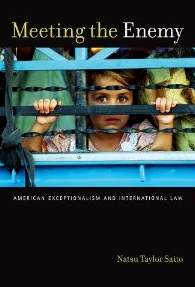
Lawyers You’ll Like – Attorney Natsu Saito
For our Lawyers You’ll Like series, we welcome back attorney and professor Natsu Saito. In our last interview, Professor Saito mentioned how the current system of international law evolved from the a broader agreement between the European colonial powers based on how they were not going to destroy each other in the process of taking over the rest of the world. It is this duality that Natsu writes about in her book Meeting the Enemy: American Exceptionalism and International Law. Professor Saito joined the College of Law faculty in 1994 and teaches international law, human rights, race and the law, immigration, criminal procedure, and professional responsibility. Her scholarship focuses on the legal history of race in the United States, the plenary power doctrine as applied to immigrants, American Indians, and U.S. territorial possessions, and the human rights implications of U.S. governmental policies, particularly with regard to the suppression of political dissent.
Professor Natsu Saito:
- The duality that the US does exempt itself (from international law) very consistently and very frequently and yet promotes international law very strongly and relies upon it.
- It has relied upon certain premises that are fundamental to the whole outlook and paradigm of colonialism – which is that there is a higher good, a more civilized approach the US embodies.
- The law doesn’t apply because we have a higher aim of civilization and that justifies not playing by the rules.
- The United States making others comply with human rights standards while exempting itself
- Moving humanity toward this higher goal is so critical because if you strip that away and you look at the realities on the ground, you see what has been termed Western civilization has been incredibly barbaric.
- In order to get around that analysis, you have to say it was for a higher good.
- I think the “left” tends to accept the general framework, and to make particular criticisms of policies and practices that are obviously problematic. The US government engaging in torture for example, but each instant is accepted as anomalous instead of the larger picture.
- It is too frightening even for the people on the left to deal with the reality that this is a country that sits on occupied land, illegally occupied by its own rules. People on the left want to make it a kinder, gentler colonialism.
- I started out thinking I was writing a book about the failure of the United States failure to comply with international law, as I got into it, the more interesting questions were the push / pull dynamics between reliance on international law
- The current system of international law evolved from the international law which was the agreement between the European colonial powers of how they were not going to destroy each other in the process of taking over the rest of the world.
Guest – Professor Natsu Saito, Department of Ethnic Studies, University of Colorado. Co-Sponsors: UCI Department of Asian American Studies; UCI Department of Planning, Policy, and Design; UCI Department of Criminology, Law and Society; The Center for Unconventional Security Affairs; The Center for Research on Latinos in a Global Society. Legal scholar Dr. Natsu Saito delivered a lecture on homeland security. Her lecture examined the implications of the USA Patriot Act on Civil liberties for immigrant groups and for the rest of the population
——————————————-
Civil Liberties, Criminalizing Dissent, FBI Intrusion, Human Rights, Supreme Court, Surveillance, Truth to Power, War Resister
Podcast: Play in new window | Download
Updates:
—
Vodak Settlement: Setting Precedence For Demonstrations
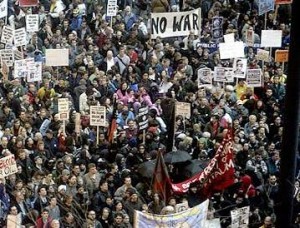
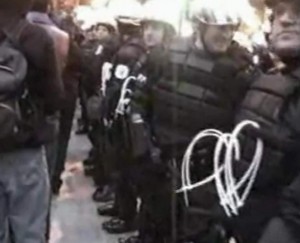
Attorneys with the National Lawyers Guild recently settled a class action lawsuit brought against the Chicago Police Department on behalf of protesters falsely arrested during a 2003 anti-war demonstration. On March 20 2003 nearly 10 thousand anti-Iraq War protesters marched through downtown Chicago before police surrounded a large group, trapping and arresting more than 700 people without ordering them to disperse. A Seventh Circuit ruling on the case (Vodak v. City of Chicago, 639 F.3d, 738 (2011)) held that police can’t arrest peaceful protesters without warning because the demonstration lacks a permit. This decision bears new weight in light of mass arrests within the Occupy movement. The National Lawyers Guild attorneys reached a 6.2 million dollar settlement in this case on the eve of a scheduled trial. The suit was litigated over the course of almost nine years by a team of NLG lawyers and legal workers including People’s Law Office attorneys Janine Hoft, Joey Mogul, Sarah Gelsomino, and John Stainthorp, as well as People’s Law Office paralegal Brad Thomson, and attorneys Melinda Power and Jim Fennerty.
Attorney Joey Mogul:
- We think it sends a significant message to Chicago and the Chicago Police Department that it must honor and respect people’s right to protest.
- It was the day that Bush had dropped bombs on Iraq. There was a massive out pouring of opposition, and people came down to the center of Chicago, to the Federal Plaza which is the heart of downtown. There were 10 thousand people and they marched on Lake Shore drive, and this was all permitted by the Chicago Police Department. This was a spontaneous demonstration, there was no written permit, but the CPD allowed it.
- Toward the end of the march, they decided that they wanted it to be over. They proceeded to surround everyone on Chicago avenue, and they prevented them from leaving, trapped them there for hours.
- They then proceeded to take over 500 people into police custody. 200 hundred were released, the rest were arrested with bogus phony charges of wreck-less conduct.
- They mass arrested everyone in that area including joggers and people shopping. It had an extremely chilling effect for people participating or near a demonstration.
- The message to the Chicago Police is that they cannot mass arrest people without giving orders to disperse.
- The new changes in the Chicago ordinances are very scary, it does allow for this increased surveillance of protesters and individuals seeking to protest.
- We’re very well aware of what the law is and we will seek to vindicate people’s constitutional rights.
—–
Brad Thompson:
- I’ve been working on this case since 2004, when I first started at the People’s Law Office.
- The work that I’ve done is a tremendous amount of discovery work in terms of going through the video work that was shot that night, by protesters, independent journalists, mainstream media and by the police.
- I did a lot in maintaining communication with class members. We had over 800 people that were taken into custody or held in the street for over 90 minutes.
- We did obtain over 250 affidavits by people who had their rights violated that night.
- The majority of protesters were from Chicago or the Greater Chicago area.
- I was one of the people taken into custody that night and released without being charged.
- I was witnessing the police aggressively arrest someone and I started to point and chant “shame” and then I became targeted. The police tackled me, and pulled me to my feet and struck me in the face which broke my nose and had a wound that required five stitches.
- I spent the night in jail bleeding all over myself.
Guest – Attorney Joey Mogul, partner at the People’s Law Office in Chicago and director of the Civil Rights Clinic at DePaul University’s College of Law. She focuses on civil rights cases involving police misconduct, criminal cases brought against individuals engaged in street demonstrations and other forms of First Amendment expression, and capital defense cases.
Guest – Brad Thompson, legal worker with the People’s Law Office in Chicago.
———–
Locking Away Children For Life Without Parole
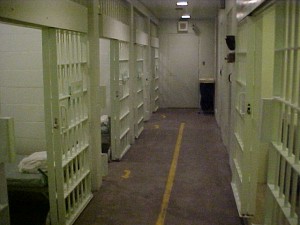
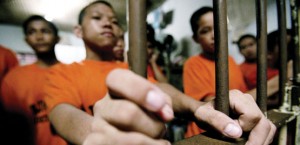
The United States is the only country in the world that sentences children to life, without the possibility of parole. Last month, the US Supreme Court revisited the question of whether juveniles convicted of murder should be given mandatory life sentences without the possibility of parole. The Supreme Court had once ruled against imposing death sentences on juveniles and imposing life sentences on youth who aren’t convicted of murder. Currently, 2500 kids in jail are serving life sentences without parole in the US. 371 of those individuals are in Michigan prisons. Our next guest has been working on a lawsuit on behalf of 9 Michigan individuals who were sentenced to life in prison for crimes committed when they were minors and who are being denied the possibility of parole.
Attorney Deborah LaBelle:
- The concept that we’ve been talking about that these are children both under international law and US law for civil matters, children are different from adults.
- The Supreme Court seemed to readily grasp that, they weren’t speaking about juveniles or teenagers or young adults, they spoke continuously on what to do about children who are involved in homicide crime.
- The court had two cases in front of them, both involving 14 year olds, one in which the 14 did not commit a homicide, but convicted of either felony murder or aiding and abetting.
- That juvenile got mandatory life without possibility of parole, because the child was sentenced as an adult, the other case, the 14 year old actually committed the homicide.
- There is a handful of states, Michigan and I think 8 others who treat 17 year olds always as adults for all purposes in the criminal justice system.
- Under the 38 states, there’s a whole range, some you can only get life without parole, if you’re 16 and up, some allow it for 15, some states allow it for a child of any age, Michigan is one of them.
- One of the justices talked about that. Is there an age in which we would all share a collective cringe. What about a 5 year old, what about a 10 year old.
- The frontal lobe area of the brain that really addresses impulse control and long term consequences, and control issues of risk management, is developing through adolescence.
- People draw the age at different points, some say not til 19, some not til 23 as you say.
- There’s a bright line in civil law that’s been drawn in civil law that youth have a maturity that they can vote, when they can decide to leave school, when they can drink in some places, when they can drive.
- There are these bright lines.
- Every other country who has signed on to the conventions of the rights of the child which prohibits putting children in prison for life without possibility of parole explicitly has recognized that this practice is banned.
- The only other country that hasn’t signed on is Somalia and they don’t quite have a government right now to do that.
- We stand alone in not adhering to that convention on the rights of the child as well as we stand alone on approving this sentence.
- We have over 2500 youth who are serving of life without any possibility of parole. About 70 percent are children of color. A third of them, did not commit homicides.
- No one is arguing that there might not be circumstances, that a state couldn’t decide upon review that child couldn’t be released. What the argument is, you can’t keep them in there without any hope. You have to give them an opportunity to demonstrate upon maturation that they have been rehabilitated and they aren’t a threat to public safety.
- We should think of putting children in places where we can nurture, council and believe in their rehabilitation and give them a second chance.
- I read transcript after transcript of judges saying, – listen I don’t want to do this to this 14 or 16 year old, but I don’t have any choice. What is the value of putting a child away with no hope. It’s certainly not a public safety issue, because that can be addressed by the state by having parole or review hearings.
Guest – Attorney Deborah LaBelle, an attorney with the ACLU of Michigan’s Juvenile Life Without Parole Initiative.
————————————————————
Civil Liberties, Habeas Corpus, Human Rights, Military Tribunal, Political Prisoner, Surveillance, Torture, War Resister
Podcast: Play in new window | Download
Updates:
- Bradley Manning Update: Michael Ratner – We Have A Secret Trial Going On Right Now
- Park Slope Food Co-op Vote
- Len Weinglass Remembrance
—-

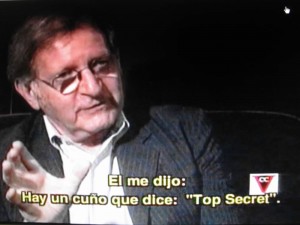
Leonard Weinglass TV Interview: Cuba 2004
We hear excerpts of an interview with attorney Leonard Weinglass and Miguel Alvarez, adviser on international and political affairs to Ricardo Alarcon, president of Cuba’s National Assembly. In this interview Len Weinglass discusses his early career representing the first African-American mayor of Newark, New Jersey, Daniel Ellsberg and the Pentagon Paper, plus crucial turning points that shaped his life story as a people’s lawyer.
———
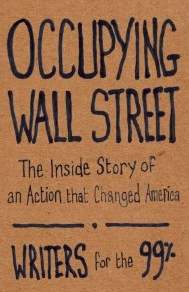
Occupying Wall Street: The Inside Story Of An Action That Changed America – Writers For The 99%
A collective of writers for the 99 percent have created a very interesting new book for OR Books, distributed by Haymarket Books. They’ve employed a unique writing method to chronicle the many details within the movement of Occupying Wall Street. A team of nearly 60 writers with rotating membership, collaborated on the describing the intricate structures and daily life of the movement such as running the general assembly, how the security and medical center operate and then the stories of the activists involved.
Colin Robinson:
- We were supportive of what was going on down in Zuccotti and I thought we should do a book about this too.
- Beginning of October I went down to the trash cans outside my apartment and pulled an old Budweiser carton out of the trash and cut it into the shape of a book cover and wrote on it with a Sharpie, “Occupying Wall Street, By Writers With the 99%.
- I photographed it with my iPhone at home, and sent it out with a press release, and New York Magazine picked it up saying Occupy Wall Street has a book and it then went everywhere.
- The journalists were calling me up saying, who are the writers for the 99 percent?
- So then I had to get some volunteers. We went down to Zuccotti and talked to some of the facilitators down there. They said you should just come to a General Assembly and we’ll put it on the agenda.
- Tell the GA about the book, get some volunteers and you’ll be fine.
- So we went down on a Wednesday night, in early October. I was not feeling comfortable about this.
- I was a little nervous about speaking at the GA to try and get permission to publish the book.
- They suggested to go to and Education and Empowerment Meeting Committee at 60 Wall Street and take it up there and ask for volunteers there.
- The following week we went the meeting and the response at that point was not very encouraging.
- People were suspicious of who we were. Whether this book was going to be seen as the official book of Occupy Wall Street, which we were saying it wasn’t but they thought it would be. And that it was going to develop an analysis that they didn’t agree with.
- No, we were saying its going to be descriptive, it’s not analytical. A lot of the twinkling was out flat, some of it was down. In the end, some guy stood up in the back and said I don’t think we should support this.
- We got blocked, he crossed his arms in front of chest. If this goes through, I’m walking out. We felt really wounded by it.
- But afterward some people from the committee came up and said we feel badly about the way you were treated, we’ll volunteer to help. We started meeting weekly at 60 Wall Street and the meetings got bigger and bigger.
- We came up with a structure, chapter by chapter. There were 2 themes in the book, one was a chronological account of the action. The day the occupation started on September 17.
- The drilling down of the daily detail for what life is like in the square. We’ve got sections in the book of how the kitchen worked, how the library worked, how the general assembly worked.
- I thought at first, what I would do would be to interview the people who are volunteering to write, pick the ones who could write well, and as kindly as possible tell the ones who couldn’t write they couldn’t be part of it.
- I soon realized that was not is the spirit of Occupy Wall Street.
- We were trying to reproduce the book in a way that reflected the values of Occupy Wall Street that meant it was produced in a very democratic, horizontal fashion. Anyone who wanted to participate could.
- We came up with a chapter structure, we sent people out into the square and we did about 200 interviews in the square. We allocated the interviews to each chapter and we tried to find 3 or 4 people to write each chapter.
- The whole book was written by 60 people in 2 weeks. This book absorbed the ethos of Occupy Wall Street.
- If you repress a little bit of it, its going to spring up somewhere else.
Guest – Colin Robinson, former Publisher, Verso Press and The New Press, and Scribner senior editor; John Oakes, former Grove Press Editor and founder of 4 Walls, 8 Windows and ORBooks. He’s written for magazines and newspapers including the New York Times and the London Guardian.
——————————————————
Civil Liberties, Criminalizing Dissent, Habeas Corpus, Human Rights, Political Prisoner, Torture, Truth to Power, War Resister
Podcast: Play in new window | Download
Updates:
——-
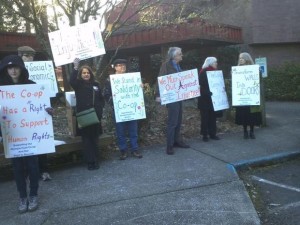

Judge Dismisses Lawsuit Filed Over Boycott of Israeli Goods
Last month, a judge in Olympia, Washington dismissed a lawsuit tailored to force the Olympia Food Co-op to rescind its boycott of Israeli goods. The judge ruled that the lawsuit brought by opponents of the boycott violated a Washington State law designed to prevent abusive lawsuits which are aimed at suppressing lawful public participation. Interestingly, an investigation by ElectronicIntifada had unearthed that the lawsuit against individuals with the Olympia Food Co-op Board was also planned in collusion with a national anti-Palestinian organization called StandWithUs that was working with the Israeli government. Lawyers with the Center for Constitutional Rights argued that the lawsuit qualified as a SLAPP, that stands for – – Strategic Litigation Against Public Participation. SLAPPs are lawsuits that target the constitutional rights of free speech and petition in connection with an issue of public concern.
Attorney Maria LaHood:
- The Olympia Food Co-op is a non-profit in Olympia Washington, that not only makes good food accessible to people, but also encourages economic and social justice in other ways.
- So it has a long history of doing social justice work, including adopting boycotts.
- The board decided to boycott Israeli goods in 2010 by consensus. A few months after that there was a co-op election. Three of the five plaintiffs who ended up bringing the lawsuit, members of the co-op, the co-op has about 22 thousand members. They ran for the election opposing the boycott and they lost.
- They ran for the board on an anti-boycott agenda and not voted in by the members.
- The board decided to boycott Israeli goods and divest from any Israel investment.
- One Israeli product: Gluten free ice cream cones,
- Obviously it had symbolic significance so that the five plaintiffs decided to send a letter to the board promising litigation that would be complicated, burdensome and expensive if the board didn’t end the boycott.
- CCR got involved and CCR cooperating council to represent the board members and decided to file an anti-SLAP motion as well as a motion to dismiss.
- Plaintiffs were also seeking discovery which of course they had promised. They started out serving 200 pages of discovery on all 16 defendants and trying to depose all 16 defendants. After we file the anti-SLAPP motion which actually stays discovery, they sought to depose three of the defendants as well as additional document requests.
- We challenged that discovery request.
- Olympia, Washington, is where Evergreen College and that’s also where Rachel Corrie is from.
- Stand With Us is basically an anti-BDS organization.
- The lawsuit against the co-op board members was actually identified by Stand With Us as one of its projects months before the case was even filed.
- Stand With Us also produced and posted online an anti-BDS video with four of the five plaintiffs in the case.
- They described themselves as an international organization ensuring Israel’s side of the story is told.
- They also have apparently connections as well to the Israeli government.
- The hearing was last Thursday, there was a great turn out, they had to move us to a bigger court room.
- The judge ruled that this lawsuit did challenge public participation so it did fall under the anti-SLAPP statute.
- Boycotts are constitutionally protected under the first amendment.
- This kind of suit is exactly what this statute was meant to address.
- We argued that the board under the bylaws has the authority to adopt any policy essentially it wants, that promotes the co-opts mission.
- He (the judge) did say that it was a nationally recognized movement.
- The victory here sends a message that you cannot sue to chill free speech issues.
Guest – Senior staff attorney Maria LaHood, who specializes in international human rights litigation, seeking to hold government officials and corporations accountable for torture, extrajudicial killings, and war crimes abroad. Her cases have included Arar v. Ashcroft, against U.S. officials for sending Canadian citizen Maher Arar to Syria where he was tortured and detained for a year; Al-Aulaqi v. Obama, to prevent the “targeted killing” of a U.S. citizen in violation of constitutional and international law; Matar v. Dichter, against an Israeli official responsible for a “targeted killing” that killed 15 Palestinians; Belhas v. Ya’alon, against a former Israeli official responsible for the 1996 shelling of a United Nations compound in Qana, Lebanon, that killed over 100 civilians; Corrie v. Caterpillar, on behalf of Palestinians killed and injured in home demolitions, and Rachel Corrie, a U.S. human rights defender who was killed trying to protect a home from being demolished; and Wiwa v. Royal Dutch/Shell, for the torture, detention and execution of Ken Saro-Wiwa and other human rights activists and protestors in Nigeria. After graduating from the University of Michigan Law School in 1995, Maria advocated on behalf of affordable housing and civil rights in the San Francisco Bay Area.
—————————————————————————–
Civil Liberties, Criminalizing Dissent, Human Rights, Truth to Power, War Resister
Podcast: Play in new window | Download
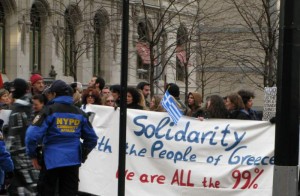

Greece, the EU, the United States and Fight Back
The huge and sustained fight back against massive austerity cuts continues in Greece, in that small southern European country of 11 million people, half of whom live in Athens, there’s been a wave of general strikes going back to August of last year. Not only are the economic powers that be particularly in Germany forcing terrible cut backs on the standard of living of the Greek people, there also hollowing out democracy in that country. The country, after all, the birth place of democracy. Despite their efforts, the Left in Greece has grown enormously and now rivals in size the combination of the right wing parties. What happens in Greece is going to have a ripple effect in other European countries particularly, Portugal, Italy, Spain, Ireland and Hungary.
Professor Rick Wolff:
- In Europe, we see the rich countries working really hard to punish the debtors.
- Not to ask what the conditions were that got them into debt, not to admit that for the years these people were in debt, they paid off handsomely to the creditors in high interest rates.
- Nor is there any examination of the conditions under which this happened so that there’s nothing being done to change those conditions.
- We are instead engaged in a vicious punishment of a small country, 11 million people. It’s attempt to terrorize the rest of Europe into thinking of not resisting.
- Those that are closest to Greece that are in trouble are the following: Portugal, Spain, Ireland, Italy, Hungary.
- How did it come that the Germans are doing so well and the Greeks so badly?
- The Europeans as a people had gone through 2 of the worst wars human beings had ever experienced, fought overwhelmingly on European soil.
- So they embarked on a unity starting in 1945 and came about in the 1990s. Took them a long time.
- In order for a unified Europe to be, a source of peace and prosperity, it’d have to balance out the rich and the poor.
- Who were the poor ones coming into the European Union. Greece and Portugal and Spain, and later eastern Europe.
- None of that was done under the unified Europe the equalizing process. The Germans the French and the Dutch were terrified of unity, they wanted the big market, but they were afraid that businessmen would move production from the high wage parts of Europe, Germany, Scandinavia, etc. to the poorer places where wages were lower.
- The extreme example is Greece. They lost out, they had to pay high European prices, they are stuck with the currency of Europe, they’re buying more German products, as their own industries disintegrate.
- German wealthy people took the profits they earned and lent them to the Greeks and the other southern Europeans. To blame the borrower and exonerate yourself as the lender is to not see the entire disaster.
- This is capitalism delivering a disaster to the majority of people.
- Greece is also a population coming out of shock and its very very angry.
- A socialist party that imposed austerity on the mass of the people has now got the people’s response, 8 percent support you.
- It’s hard to imagine that you’re not moving toward a fundamental civil conflict.
- Workers taking over the enterprises is number one. Number two there ought to be a nationalization of wealth in this society, so that its redistributed in a way that makes society fair and equitable.
- Socialism has its problems too, but we have a capitalism that is becoming intolerable for tens of millions of people.
- We have to recognize that not making a dramatic break is plunging people into an even greater degree of risk.
- The Iowa Farmer’s Militia issued a decree. The next judge that authorizes a foreclosure, we’re going to kill him.
- Roosevelt had to mobilize the Army and the National Guard to protect the judges.
- This is a re-run of an old movie and it never ends well.
Guest – Richard D. Wolff is Professor of Economics Emeritus, University of Massachusetts, Amherst where he taught economics from 1973 to 2008. He is currently a Visiting Professor in the Graduate Program in International Affairs of the New School University, New York City. He also teaches classes regularly at the Brecht Forum in Manhattan.
——-

Why I’m Suing Barack Obama: Chris Hedges
In March of this year, the latest version of the National Defense Authorization Act signed by President Barack Obama on Dec 31, 2011 will take effect. As many listeners know, this act authorizes the military for the first time in more than 200 years to begin domestic policing. That means the military can indefinitely detain without trial any US citizen deemed to be a terrorist or an accessory to terrorism. You could then be shipped to a black site or offshore prison. We’ve discussed in past shows the vague premise of materially aiding terrorism or in this bill the terms “substantially supported,” “directly supported” or “associated forces.” We’re joined today by returning guest Chris Hedges to talk about his recent article Why I’m Suing Barack Obama which examines why the National Defense Authorization Act was passed.
Chris Hedges:
- It turns over almost 200 years of legal precedence so that the military is allowed to engage in domestic policing.
- Diane Feinstein had proposed that US citizens be exempt from this piece of legislation both the Obama Whitehouse and the Democratic Party rejected that.
- Obama issued a signing statement saying this will not be used against American citizens.
- That fact is that it can be legally used against American citizens.
- There was an opportunity to protect American citizens and due process, the chose not to do that.
- It expands this endless war on terror.
- There are all sorts of nebulous terms such as associated forces, substantially supported.
- When you look at the criteria by which Americans can be investigated by our security and surveillance state, its amorphous and frightening.
- People who have lost fingers on a hand, people who hoard more than 7 days of food in their house, water proof ammunition. I come from rural parts of Maine, that’s probably most of my family.
- Its a very short step to adding the obstructionist tactics to the Occupy Movement.
- The very agencies that are being pulled into domestic policing, especially the Pentagon, didn’t push for the bill.
- They approached me and said they needed a credible plaintiff, because I had been the Middle East Bureau Chief for the New York Times.
- I spent considerable time with both individuals and organizations that are considered by the US State Department to be either terrorists or terrorist groups.
- I’m trying to be proactive, I’m trying to fight it while we can still fight it. The reason we filed in the Southern District Court is because they have a fairly good record of at least being open to issues of civil liberties.
Guest – Chris Hedges, American journalist, author, and war correspondent, specializing in American and Middle Eastern politics and societies. His most recent book is ‘Death of the Liberal Class (2010). Hedges is also known as the best-selling author of War is a Force That Gives Us Meaning (2002), which was a finalist for the National Book Critics Circle Award for Nonfiction.
——-
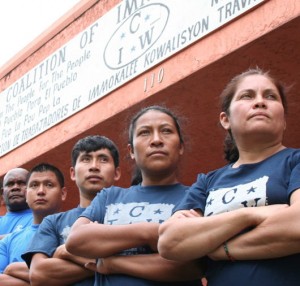
Immokalee Workers: Trader Joe’s Victory, Campaign Turns To Publix Supermarkets
Earlier this month, Trader Joe’s and the Coalition of Immokalee Workers (CIW) announced they have signed an agreement that will formalize the ways in which Trader Joe’s will work with the CIW and Florida tomato growers to support the CIW’s Fair Food Program. The efforts to push the farm worker living standards above slave labor is gathering momentum in Florida. Now efforts turn to Publix supermarkets. The 28 billion dollar supermarket giant has refused to pay a single penny more to help end farm worker poverty. The Fair Food Program campaign has shifted its focus onto Publix and we get an update from Jake Ratner and CIW member Elbin Perez.
Elbin Perez:
- We finally won with Trader Joe’s and its extremely important for us.
- One of the main tactics we use is protest. We were planning an enormous protest the day Trader Joe’s opened their first Florida store about 30 miles from Immokalee in Naples.
- With that pressure, the day before they opened the store, they signed an agreement with us.
- Historically some received some poverty wages there are no rights in the fields and workers have had no voice in the work place. What are rights without enforcement.
- Workers are now seeing an increase in their paychecks in the form of a bonus that they are receiving from companies like Trader Joe’s.
- Currently we’re also asking Publix to do the same thing and to sign on to the Fair Food Agreement.
- What we’re calling for is a fast. A fast to begin outside of the Publix headquarters which is located in Lakeland Florida. There refusal to participate in these agreements will result in more hunger from more workers.
Guest – Elbin Perez, Coalition of Immokalee Workers member.
Translator: Jake Ratner -son of co-host Michael Ratner. Jake graduated from the University of Pennsylvania. He’s traveled and studied in Cuba and Bolivia, South America. He now works with the Coalition of the Immokalee Workers.