Welcome to Law and Disorder Radio
Law and Disorder is a weekly independent civil liberties radio program airing on more than 150 stations and on Apple podcast. Law and Disorder provides timely legal perspectives on issues concerning civil liberties, privacy, right to dissent and practices of torture exercised by the US government and private corporations.
Law and Disorder August 17, 2020
Podcast: Play in new window | Download
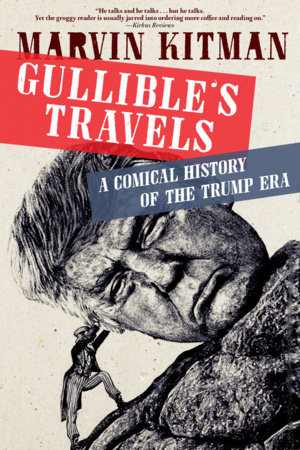
Gullible’s Travels: A Comical History of the Trump Era
Since Trump began his presidential campaign four years ago comedians have been complaining that because he is so preposterous it’s hard to satirize him, that he is self satirical. This has been true until recently with the publication of Marvin Kitman’s Gullible’s Travels: A Comical History of the Trump Era.
At first Kitman assumed that Trump’s candidacy was a publicity stunt. After he realized it was serious, as a satirist he felt very lucky writing that ”I have never had such a good time observing and writing about the follies of our country.“
He began keeping a comical journal modeled after A Journal of the Plague Year where author Daniel Defoe described the great plague that hit London in 1665.
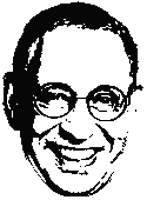
Guest – humorist and author Marvin Kitman is a former columnist at New York Newsday and a finalist for the Pulitzer prize for criticism. He is the author of, among others, The Man Who Would Not Shut Up: The Rise of Bill O’Reilly and The Making of the President 1789.
—-
American Spring: Unfolding Crisis
The Chinese word for crisis consists of two characters. One means danger, the other means opportunity. We currently are in an historically unprecedented situation fraught with both danger and possibilities. Russian revolutionary Vladimir Lenin once remarked that sometimes nothing happens in decades and other times decades happen in a few weeks. This is our situation now. We see an American spring unfolding.
The public lynching of George Floyd has triggered massive outpourings in several thousands of American cities, both large and small. Black Lives Matter is supported by a majority of Americans including a majority of whites. This kind of broad solidarity was absent during the time of Rev. Martin Luther King Jr.
The demonstrations are in large part led by people of color, mostly young people. Elected officials and traditional civil rights leaders are not leading the current uprising. As the L.A. Progressive has written, “The gross underlying inequality, racially and more broadly economically, affects every aspect of life in the US. and is the root cause of the volcanic anger irruption against the veneer of obsolete institutions.“
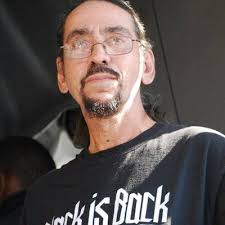
Guest – Glen Ford, editor of the Black Agenda Report. Ford founded the Black Agenda Report and has edited it since 2006. He was a founding member of the Washington chapter of the National Association of Black Journalists and he has delivered presentations at many colleges and universities.
————————————
————————————
Law and Disorder August 10, 2020
Podcast: Play in new window | Download
The Young Lords: A Radical History
Protests in the streets in the wake of police killings of Black Americans have sparked a multi-faceted societal reckoning with racism. Challenges to entrenched systems of inequality and white supremacy are taking many forms, from the tearing down of confederate statues, to calls for police reform and the defunding of certain police functions, to Merriam Webster dictionary expanding its definition of racism to include structural forms of bias.
Historically, the role of street protests is so intrinsic to reform in this nation enshrines protection for mass assemblies in the Bill of Rights. Yet one vibrant and impactful group of revolutionary activists in protest history has received virtually no attention, namely the Young Lords.
The children of poor and working class Puerto Rican migrants who had been massively displaced from the Island of Puerto the US mainland after WW II, the Young Lords grew up in neighborhoods like the South Bronx and East Harlem,. They were radicalized by the civil rights and black power movements and the Vietnam War. This generation of socialist youth make it their top priority to bring about revolution in the US and on the island of Puerto Rico.
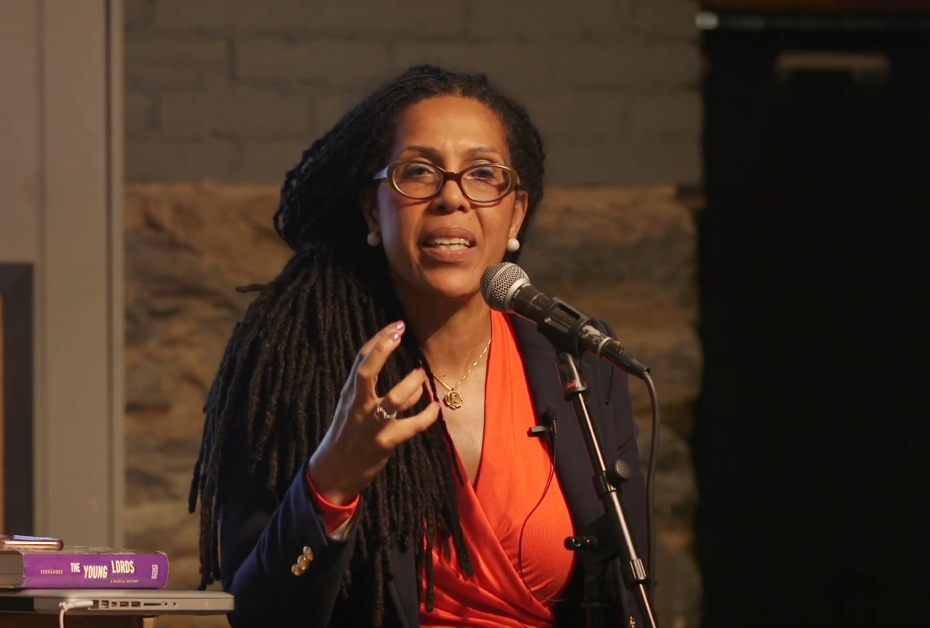
Scholar and activist Johanna Fernandez’s new book, The Young Lords: A Radical History is the definitive history of this militant group of community organizers. In a presentation at Baltimore’s Red Emma worker cooperative bookstore in early 2020 Professor Fernandez discussed the long-lasting impact of their theatrical street initiatives. The Young Lords transformed the relationship between white people and people of color in the US, and made it acceptable to questions how the US government conducts foreign policy.
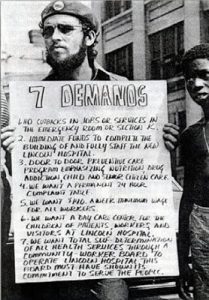
Their activism has been credited for the the passage of anti-lead poisoning legislation in the city and they drafted the first known patient bill of rights–they did no in concert with nurses, doctors, and hospital workers at Lincoln Hospital which they occupied 50 years ago on July 14, 1969, to protest healthcare for profit in America and the poor conditions in the delivery of healthcare to black American and Puerto Rican patients in that Bronx hospital.
As Professor Fernandez writes in her book, “The New York Young Lords formed part of a cohort of young working-class people–and people of color among them, in particular–whose unprecedented access to higher education sharpened their latent critique of society and afford them an infrastructure for dissent…..they challenged what many believed were old, soul-slaying social norms and standards of behavior that constrained personal freedoms in the U.S. Known collectively as the New Left, these diverse movements were built by a generation whose activism radically changed the cultural and political landscape of the United States.”
—-

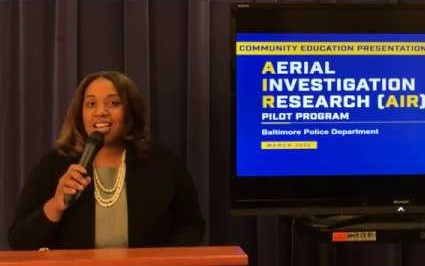
Aerial Investigation Research Pilot Program And Persistent Tracking
As the nation erupts in protests against racially-infused police violence, the Baltimore Police Department has just launched a six-month, day-time aerial surveillance experiment. A Texas billionaire has funded the project that is being operated by an Ohio-based company, Persistent Surveillance Systems. The plane flies overhead and records the movements of everyone in the city.
Michael Harrision, Baltimore Police Commissioner, has justified the nearly $4 million experiment by saying, “There is no expectation of privacy on a public street, a sidewalk.”
The Aerial Investigation Research Pilot Program is, by contract, limited to monitoring such felony crimes as robberies, car jackings, shootings and homicides. Images recorded are, in theory, to be used solely in criminal investigations and will be stored for 45 days. A first prong of the program was conducted covertly in 2016 under a different police commissioner.
The ACLU of Maryland calls this initiative the most comprehensive surveillance of a U.S. city in history. ACLU Senior Staff attorney David Rocah said, “It’s the virtual equivalent of having a police officer follow a resident every time they walk out the door, and if that happened in real life, all of us would understand the huge privacy implications in doing that.”
Guest – ACLU Senior Staff attorney David Rocah has worked on a number of significant cases involving free speech, police misconduct, privacy, election law and more. In 2011 he was an inaugural recipient of the James Baldwin Medal for Civil Rights. David previously worked as a Senior Trial attorney in the Civil Rights Division at the US Dept of Justice, focusing on police misconduct and conditions in prisons, jails and other state institutions.
——————————–
——————————–
Law and Disorder August 3, 2020
Podcast: Play in new window | Download
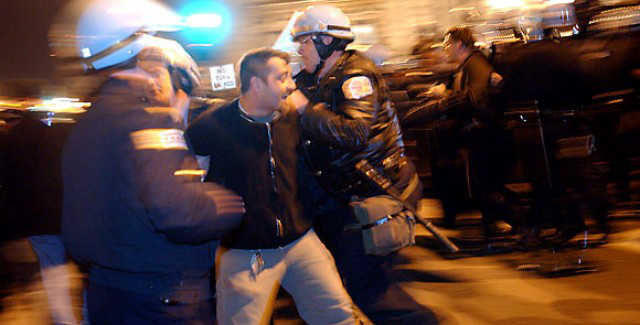
People’s Law Office Files Suit To Stop Paramilitary In Chicago
With less than 100 days to go before the November election Donald Trump is afraid, with good reason, that he is going to lose. He had planned to run on the strength of the American economy. But because of the widespread and spreading COVID-19 virus and the attendant tanking of the economy he can no longer do this. Trump has switched election strategies.
He calls himself a war president and is hoping to stir up peoples’ fear of anarchists socialists, people who he says hate our country and who he falsely claims are tearing it apart in rising crime ridden Democratic party controlled major cities.
Fear is his strategy. He won the last election despite losing the popular vote by raising the specter of fear of Muslim terrorists and Mexican rapists and murderers invading our southern border.
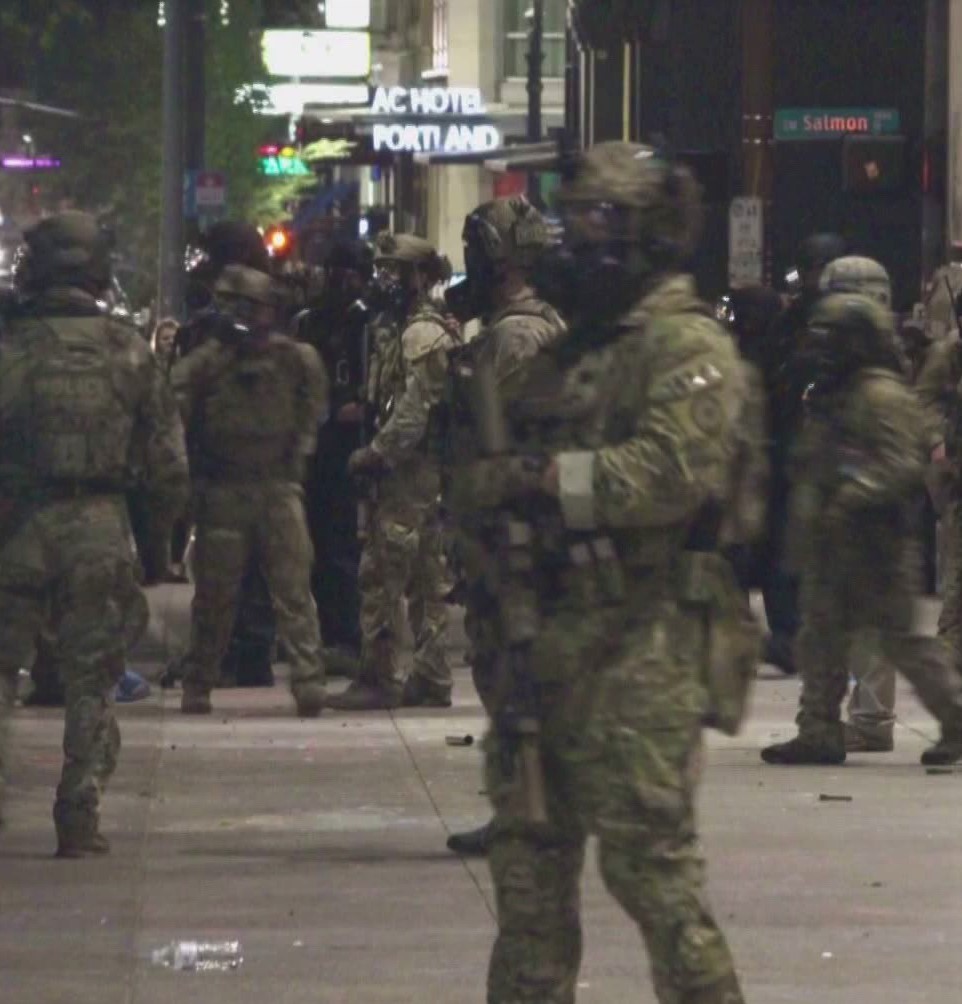
Using the pretext of an executive order issued to protect statutes and monuments Trump has marshaled para-military troops from six different Federal organizations including Homeland Security and the Customs and Border Patrol. Two weeks ago he sent them to Portland, Oregon where are largely peaceful protests have been ongoing.
The military forces were sent out to crush the demonstrations, to dominate the streets. Dressed in camouflage uniforms without identification they plucked protesters off the street, kidnapped and interrogated them, and then released them. They used teargas, pepper spray, and fired rubber bullets. They beat people severely with batons and focused their attacks on paramedics, National Lawyers Guild legal observers and journalists.
Trump has indicated that he plans to send his para- military forces to Chicago. Black Lives Matter in that city and several other activist organizations have banded together and sued Trump to prevent this.
Guest – Attorney Flint Taylor, founding partner of the Peoples Law Office. Taylor has litigated against police abuse in Chicago for over 50 years. He started out successfully representing the family of assassinated Black Panther leader Fred Hampton. He has represented many victims of police torture and has written the award winning book The Torture Machine: Racism and Violence in Chicago.
Guest – Attorney Christian Snow, associate of the Chicago civil rights law firm the Peoples Law Office. She is a leader of the prison abolitionist group Assata’s Daughters and has been active in the Black Lives Matter movement in Chicago protesting the racist murder of George Floyd.
—-
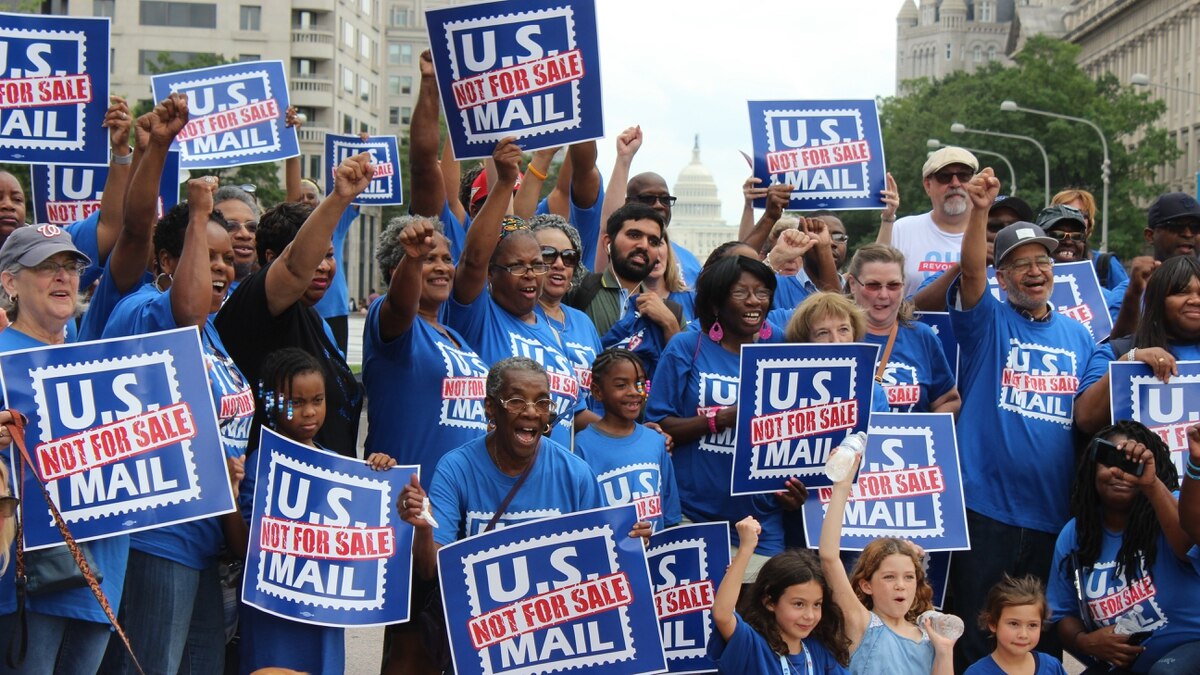
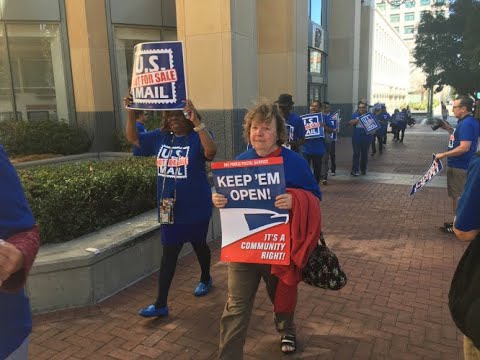
USPS Crisis During Pandemic: Update
In late May we reported that the United States Postal Service was projected to fun out of funds by September 2020. New forecasts give the USPS a few more months. But it can still run out of cash before the end of 2021 without long-term reform from Congress.
Former Postmaster General Megan Brennan in April asked the House Oversight and Reform Committee for a $75 billion relief package based on the earlier forecasts. The request was approved, and during the COVID-19 pandemic, package volume has actually increased. But experts say it’s not a matter of if the USPS will deplete its funds, but when.
Since we recorded this interview, the American Post Workers Union’s president has warned that recently enacted Postal Service procedures — which have led to nationwide delays in mail delivery — could affect mail-in voting for the November election.
Mark Dimondstein told CNN that postal workers and customers are reporting that mail delivery has slowed and “degraded.” The Union leader says it’s been “demoralizing and upsetting” to workers who have worked through the pandemic.
The new procedures, including cutting overtime, come from Postmaster General Louis DeJoy, a longtime Donald Trump supporter and fundraiser. Bins of mail ready for delivery have been left sitting in post offices due to scheduling and route changes, and carriers are sorting more mail themselves, increasing delivery times.
As Trump trails Joe Biden in the polls, he now claims that delays processing mail-in votes would undermine the legitimacy of the November election and has suggested delaying it.
Dimondstein expressed concern that the mail service is being politicized. He also criticized the Treasury Department’s agreement with USPS on the “terms and conditions” for $10 billion in the form of loans. He says the loan pushes the USPS further into debt.
Help save the USPS – USMailIsNotForSale.org / NationalRuralOrganizing
Guest – Chuck Zlatkin. Chuck is the legislative director of the New York Metro Area Postal Union.
——————————————–
——————————————–