Welcome to Law and Disorder Radio
Law and Disorder is a weekly independent civil liberties radio program airing on more than 150 stations and on Apple podcast. Law and Disorder provides timely legal perspectives on issues concerning civil liberties, privacy, right to dissent and practices of torture exercised by the US government and private corporations.
Law and Disorder May 4, 2020
Podcast: Play in new window | Download

Nobody’s Child: A Tragedy, a Trial, and a History of the Insanity Defense
Public opinion surveys of knowledge, attitudes, and support for the insanity defense show that Americans dislike the insanity defense. They want insane law-breakers punished, and believe that insanity defense procedures don’t protect the public. Polls also show that most overestimate the use and success of the insanity plea.
In the book Nobody’s Child: A Tragedy, a Trial, and a History of the Insanity Defense, forensic psychologist and attorney Susan Vinocour tells the story of a three-year-old child found dead in his mentally-ill grandmother’s home. Vinocour agreed to evaluate the defendant. She explains how the legal terms”competency” don’t reflect psychiatric realities, and how, in criminal law, the insanity defense has to often been a luxury of the rich and white.
Nobody’s Child is an engaging portrait of injustice in the United States, and a complex examination of the troubling intersection of mental health and the law.
Guest – Susan Vinocour is a retired clinical and forensic psychologist, a former prosecutor and a former associate professor of psychiatry at the University of Rochester School of Medicine.
—-
President Donald Trump And The White House Response To Pandemic
The place to start in understanding Trump and Trumpism is to accurately define what he represents. A disease cannot be countered unless it is correctly diagnosed.
Mainstream liberal commentators refuse to associate the Trump phenomena with fascism, calling him a right wing populist or a nationalist. But it really matters what Trump is called if we are to fashion a resistance to him with the possibility of triumph. Analysts on the left like Noam Chomsky , Chris Hedges, and Cornell West understand that he and the constellation of forces that make up his movement – principally big business and white non-college educated middle-class people – are fascists.
The poet, playwright, and political thinker Berthold Brecht was asked about German fascism in 1935: “How can anyone tell the truth about fascism, he replied, unless he is willing to speak out against capitalism, which brings it forth.”
It was the failure of a united socialist movement in Germany in the early 30s that allowed Hitler to gain power. We have seen with the Bernie Sanders phenomena the possibilities of building a socialist movement in the United States. This is our hope.
Guest – John Bellamy Foster, professor of sociology at the University of Oregon and the editor of the venerable independent socialist magazine “Monthly Review”. Professor Foster is the author of “Trump in the White House: Tragedy or Farce.“
————————————–
————————————–
Law and Disorder April 27, 2020
Podcast: Play in new window | Download
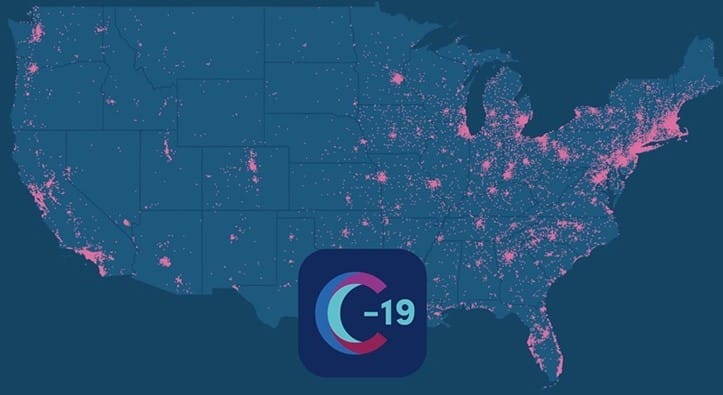

EFF: Google And Apple Virus Contact Tracing And Privacy
From China, to Israel, and now the U.S., governments seek to enact broad surveillance measures to contain the spread of COVID-19. Already a majority of the public has said it favors such tracking, even though leadership has not shown how this tracking might actually stop the spread. According the Electronic Frontier Foundation, the measures must quote “be scientifically rigorous, and based on the expertise of public health professionals.”
Absent such a showing, many believe it’s too early to warrant the privacy intrusion this surveillance would bring, with uses we may not be able to foresee.
In a rare collaboration, tech competitors Google and Facebook have collaborated in creating a tracking app. It allows users to voluntarily share data through Bluetooth Low Energy transmissions and approved apps from health organizations. It would keep extensive data on phones that have been in close proximity with each other. Official apps from public health authorities will get access to this data, and users who download them can report if they’ve been diagnosed with COVID-19. The system will also alert people who download them to whether they were in close contact with an infected person.
Guest- Senior Staff Attorney Adam Schwartz from the Electronic Frontier Foundation. Adam’s legal expertise on surveillance includes such areas as warrantless smartphone searches, location tracking, warrantless smartphone searches at the borders, and biometric surveillance. Adam worked at the ACLU of Illinois for 19 years, and clerked for Judge Betty B. Fletcher of the U.S. Court of Appeals for the Ninth Circuit.
—-
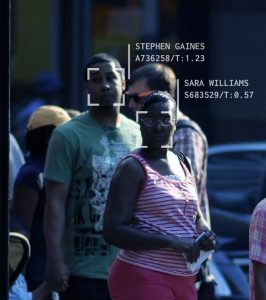
Perpetual Line Up: Unregulated Police Face Recognition In America
The presence of surveillance cameras across the United States has enabled targeted facial recognition surveillance at essentially any place and any time. Each day law enforcement puts in place more and more cameras, including CCTV cameras, police body cameras, and cameras on drones and other aircraft. The FBI’s Next Generation Biometric Identification Database and its facial recognition unit, FACE Services, can search for and identify nearly 64 million Americans, either from its own databases or through access to state DMV databases of driving license photos.
It’s likely that government agencies will soon be able to pinpoint your location and even with whom you’ve been, just by typing your name into a computer.
The release of Apple’s IPhone X has drawn scrutiny to this technology. Despite civil liberties and privacy concerns, there are few limits on facial recognition technology. In March 2017 Congress held a hearing to discuss the risks of facial recognition surveillance. There is concern that facial recognition can be used to get around existing legal protections against location tracking, opening the door to unprecedented government monitoring an logging of personal associations, including protected First Amendment-related activities. Knowledge of individual’s political, religious and associational activities could lead the way to bias, persecution and abuse.
As with many technological advances, there are benefits, too. Facial recognition can assist in locating missing persons or for other public safety purposes.
Guest – Clare Garvie, Clare is a Law Fellow at the Georgetown Law Center on Privacy and Technology. Her research with the Center is on face recognition use by law enforcement and the disparate impact of payday lending on vulnerable communities. She worked on the Center’s 2016 report on facial recognition technology.
—————————————–
—————————————–
Law and Disorder April 20, 2020
Podcast: Play in new window | Download
Speaking In Turkish: Denying the Armenian Genocide
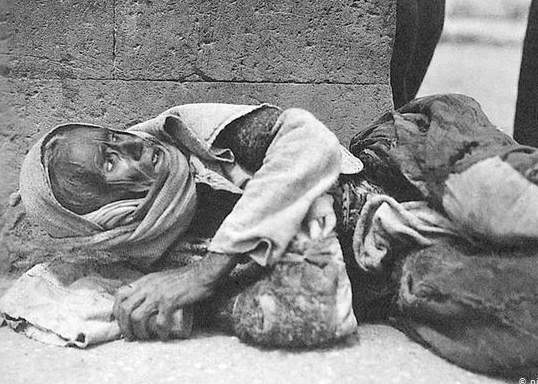
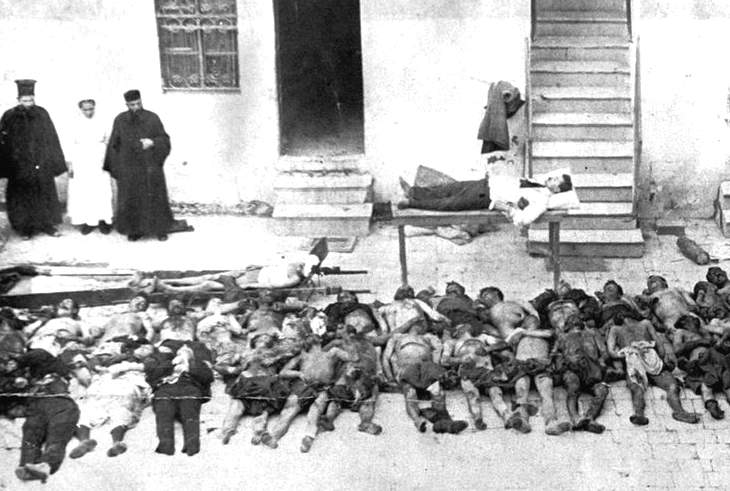
Around the world, April 24 marks the observance of the Armenian Genocide. On that day in 1915 the Interior Minister of the Ottoman Empire ordered the arrest and hangings of Armenian intellectuals and community leaders in Constantinople. It was the beginning of a systematic and well-documented plan to eliminate the Armenians, who were Christian, and who had been under Ottoman rule and treated as second class citizens since the 15th century.
The unspeakable and gruesome nature of the killings—beheadings of groups of babies, dismemberments, mass burnings, mass drownings, use of toxic gas, lethal injections of morphine or injections with the blood of typhoid fever patients—render oral histories particularly difficult for survivors of the victims.
Why did this happen? Despite being deemed inferior to Turkish Muslims, the Armenian community had attained a prestigious position in the Ottoman Empire and the central authorities there grew apprehensive of their power and longing for a homeland. The concerted plan of deportation and extermination was effected, in large part, because World War I demanded the involvement and concern of potential allied countries. As the writer Grigoris Balakian wrote, the war provided the Turkish government “their sole opportunity, one unprecedented” to exploit the chaos of war in order to carry out their extermination plan.
As Armenians escaped to several countries, including the United States, a number came to New Britain, Connecticut in 1892 to work in the factories of what was then known as the hardware capital of the world. By 1940 nearly 3,000 Armenians lived there in a tight-knit community.
Pope Frances calls it a duty not to forget “the senseless slaughter” of an estimated one and a half million Armenians by the Ottoman Turks from 1915 to 1923. “Concealing or denying evil is like allowing a wound to keep bleeding without bandaging it,” the Pope said just two weeks before the 100th anniversary of the systematic implementation of a plan to exterminate the Armenian race.
Special thanks to Jennie Garabedian, Arthur Sheverdian, Ruth Swisher, Harry Mazadoorian, and Roxie Maljanian. Produced and written by Heidi Boghosian and Geoff Brady.