Welcome to Law and Disorder Radio
Law and Disorder is a weekly independent civil liberties radio program airing on more than 150 stations and on Apple podcast. Law and Disorder provides timely legal perspectives on issues concerning civil liberties, privacy, right to dissent and practices of torture exercised by the US government and private corporations.
Law and Disorder July 13, 2020
Podcast: Play in new window | Download
Police Unions Are Racist Power Brokers in Opposition to Movement for Black Lives
When they commit violence against civilians, abusive police in the United States are protected in various ways. The power elite, whose property police protect, have given them almost complete legal immunity from successful lawsuits for damages under the doctrine of qualified immunity. When a cop has illegally hurt someone he or she can count on what’s known as – the blue wall of silence – knowing that a fellow officer will not contradict their defense.
What is the role of police unions regarding the protection of police who have abused and even murdered citizens? Police unions act as power brokers in opposition to the rights of victimized citizens. They provide legal defense funds, public relations, and political pressure in defense of abusive cops. And they are a very powerful force in these respects.
The US Congressman from Chicago Bobby Rush has recently said that the Chicago police union, the Fraternal Order of Police, is “the number one cause that prevents police accountability, that protects police corruption, that protects police lawlessness. They are the organized guardians of continuous police lawlessness, police murder, and police brutality. They are the most rabid, racist body of criminal lawlessness in the land and stand shoulder to shoulder with the KKK then and the KKK now.”
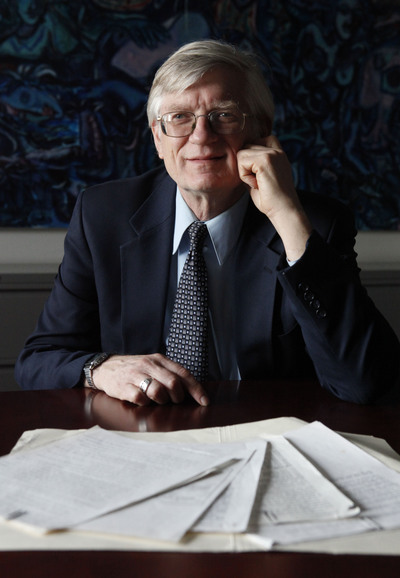
Guest – Attorney G. Flint Taylor is a founding partner of the People Law Office in Chicago starting out over 50 years ago representing the family of Black Panther leader Fred Hampton, Who was assassinated by the Chicago Police Department with the help of the FBI. He has represented numerous police torture survivors during the past 33 years. Taylor was one of the lawyers involved in the struggle for reparations and has chronicled the decade long fight against Chicago police torture in his award-winning book “The Torture Machine : Racism and Violence in Chicago.
—-
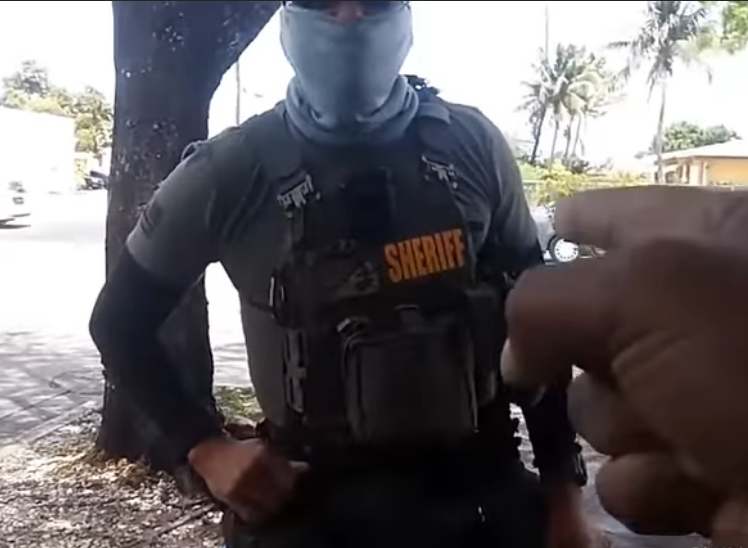
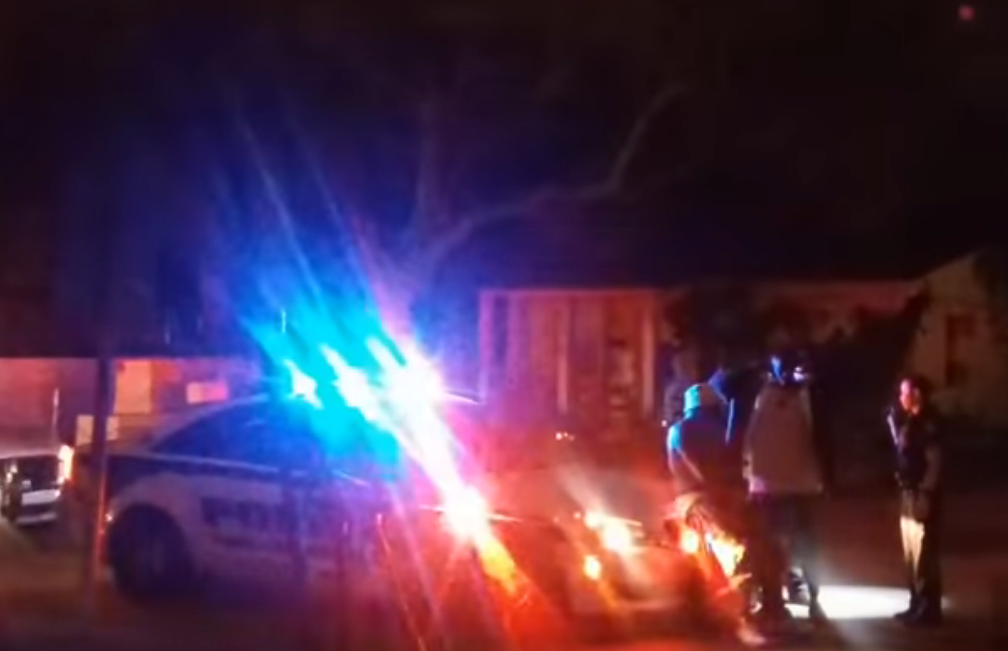
First Amendment Auditor: Big Nick South Florida Accountability
Most of the populace, some police officers and federal employees may not realize that its every photographers right to take photos and video of federal buildings on public property. The easing of restrictions began when the New York Civil Liberties Union had looked into several cases of people who were wrongly harassed, detained and arrested by federal agents while photographing or shooting video of federal buildings from public plazas and sidewalks.
In 2010, the NYCLU brought a suit against the US Department of Homeland Security in federal court to end this practice. In October of 2010, a judge actually signed a settlement where the US government agreed that no federal statures or regulations bar people from photographing the exterior of federal buildings.
The US government agreed to issue a directive to members of the Federal Protective Service on photographer’s rights. A decade later, the rights attained in this decision are recently being put to the test in what’s known as First Amendment audits.
Guest – Nick Freeman – First Amendment Auditor with millions in view counts joins us to talk about his work in Fort Lauderdale being part of a long emerging trend to educate local law enforcement about the right to photography and subsequent issues such as police accountability.
——————————-
——————————-
Law and Disorder July 6, 2020
Podcast: Play in new window | Download
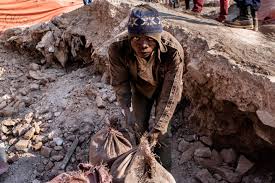
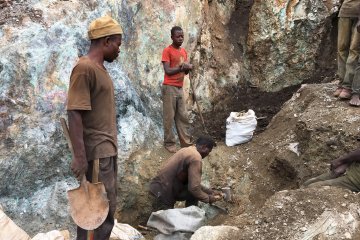
Tech titans Apple, Google, Microsoft, Tesla and Dell aided and abetted in the death and serious injury of child laborers working in African cobalt mines. That’s the claim put forth in a class action lawsuit filed in Washington, D.C. by International Rights Advocates.
Cobalt is used in the lithium-ion batteries that run smartphones, laptop computers, and electric cars. For the past several years, production has increased three-fold. The Democratic Republic of Congo produces over 60% of the world’s cobalt. It’s a nation that has been torn apart by civil war and is one of the poorest countries on the planet. Young children there are forced to work full time in highly dangerous mining jobs for less than $1 a day, often because their parents were killed or incapacitated by cobalt mining. These minors are regularly maimed and killed by tunnel collapses and other known hazards common to cobalt mining.
Guest – Attorney Terry Collingsworth, on behalf of Burmese victims of forced labor, Terry initiated the landmark case under the Alien Tort Statute, seeking to hold Unocal liable for human rights violations occurring during the construction of its gas pipeline in Burma. He filed similar cases against Coca-Cola, for allowing the murder and torture of trade union leaders at its bottling plants in Colombia; Exxon Mobil, for human rights violations of its military security forces in Indonesia; Drummond Company, for collaborating with paramilitary groups in Colombia which murdered of hundreds of innocent civilians living in the areas around Drummond’s operations and executing Drummond’s union leaders; and Del Monte, for using paramilitary thugs to torture leaders of the banana workers union in Guatemala. Terry was also instrumental in establishing the RUGMARK program, a unique system of certifying that hand-knotted carpets are not made with child labor that also sponsors education programs for former child workers.
—-
American Spring: Unfolding Crisis
The Chinese word for crisis consists of two characters. One means danger, the other means opportunity. We currently are in an historically unprecedented situation fraught with both danger and possibilities. Russian revolutionary Vladimir Lenin once remarked that sometimes nothing happens in decades and other times decades happen in a few weeks. This is our situation now. We see an American spring unfolding.
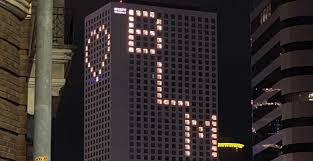
The public lynching of George Floyd has triggered massive outpourings in several thousands of American cities, both large and small. Black Lives Matter is supported by a majority of Americans including a majority of whites. This kind of broad solidarity was absent during the time of Rev. Martin Luther King Jr.
The demonstrations are in large part led by people of color, mostly young people. Elected officials and traditional civil rights leaders are not leading the current uprising. As the L.A. Progressive has written, “The gross underlying inequality, racially and more broadly economically, affects every aspect of life in the US. and is the root cause of the volcanic anger irruption against the veneer of obsolete institutions.“
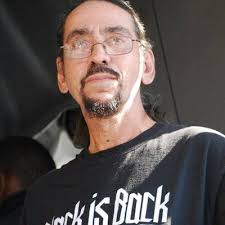
Guest – Glen Ford, editor of the Black Agenda Report. Ford founded the Black Agenda Report and has edited it since 2006. He was a founding member of the Washington chapter of the National Association of Black Journalists and he has delivered presentations at many colleges and universities.
———————————-
———————————-
Law and Disorder June 29, 2020
Podcast: Play in new window | Download
Attorney Marjorie Cohn: Trump, Assange, Democracy And Rule of Law
Without democracy and the rule of law there can be no significant social change. However, much democracy was constricted by race and class before the attacks on September 11, 2001 and before Trump, democracy and the rule of law are now facing lethal attacks on many fronts.
Trump has successfully put 198 young, reactionary, and some ignorant judges on the federal bench. He has illegally called out troops to violently disperse peaceful protesters in the park in front of the White House. Trump has threatened the personnel of the International Criminal Court who are attempting to investigate US war crimes in Iraq and Afghanistan. These include the crime of torture. These crimes, perpetrated under the Bush administration, went unprosecuted by President Obama who infamously said “we must look forward not backward.”
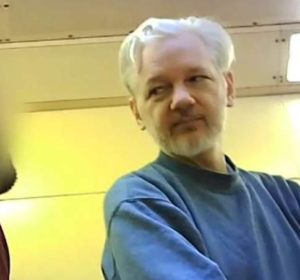
Trump’s Justice Department is pursuing and attempting to extradite truth telling whistle blowing journalist Julian Assange who 10 years ago released the “collateral murder” video showing the commission of American war crimes in Iraq, among other embarrassing information. Assange is confined in London’s Belmarsh prison. He is sick, in solitary, and has been psychologically tortured. He faces 175 years in prison in the United States if convicted under the old Espionage Act for activities protected by the first amendment.
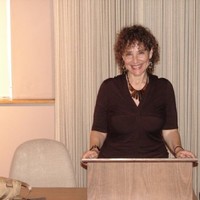
Guest – Attorney Marjorie Cohn, professor emerita at the Thomas Jefferson School of Law where she taught for 25 years. She is a former president of the National Lawyers Guild, a criminal defense attorney, a legal scholar, and a political analyst. She writes books and articles and lectures throughout the world about human rights, US foreign policy, and the contradiction between the two. She has testified before Congress and debated at the prestigious Oxford Union.
——————————-
——————————-