Welcome to Law and Disorder Radio
Law and Disorder is a weekly independent civil liberties radio program airing on more than 150 stations and on Apple podcast. Law and Disorder provides timely legal perspectives on issues concerning civil liberties, privacy, right to dissent and practices of torture exercised by the US government and private corporations.
Law and Disorder June 22, 2020
Podcast: Play in new window | Download


Police Spy On Social Media
In late 2016, a trove of emails revealed that law enforcement had been monitoring the social media accounts of Black Lives Matter protesters. One police sergeant in Memphis, Tennessee even opened a fake Facebook account to impersonate a black activist, infiltrate online black protest spaces, and gather intelligence on hundreds of activists. In Minnesota, an FBI Joint Terrorism Task Force used a confidential information with access to private social media communications about a BLM protest and fed that information to local police.
It turns out that such tracking is routine among local and federal police agencies. They use it in criminal investigations and to keep tabs on lawful First Amendment protected activities of dissent.
And as we’ve seen in other areas of surveillance, police watching persons online usually impacts historically over-police communities. It also has a chilling effect on free speech and online communications.
The Brennan Center in New York has issued a comprehensive report on social media monitoring. It shows how personal information gleaned from social media posts is used to target dissent and subject religious and ethnic minorities to increased vetting and surveillance.
Guest – Harsha Panduranga is counsel in the Brennan Center’s Liberty & National Security Program. His work has been featured in numerous press outlets including the Atlantic, Slate, Daily Beast, and Just Security. Harsha received his BA and JD from the University of Michigan.
—-
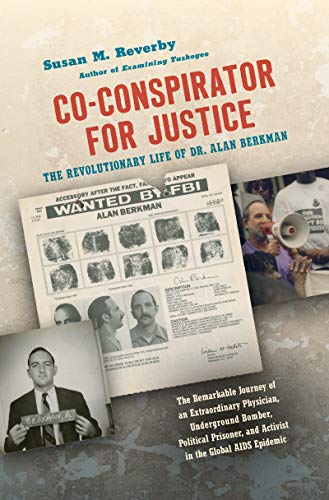
Co-conspirator For Justice: The Revolutionary Life Of Dr. Alan Berkman
After battling recurrent cancer for half his life Dr. Alan Berkman died in a New York City hospital on June 5th, 11 years ago. It was not the worst struggles of his life.
Alan was first struck by cancer when he was in prison, accused and then convicted for his political work in the political underground. He was a leader of the small May 19th movement, an offshoot of Prairie Fire then controlled by those in the Weather Underground. While hidden from public view,Alan and his comrades did non-lethal bombings of political targets, including an FBI office and the U.S. Senate, to protest American imperial and racist atrocities, and did armed robberies, which they called “expropriation‘s“, to support themselves.
Caught in 1985, Alan served eight years in some of the worst prisons in America, nearly half that time in solitary. He had two rounds of cancer, but the authorities stalled again and again on giving him adequate medical care. They hated him for being a socialist, a Jew, a doctor, and a supporter of black, Latin and Native American peoples and those harmed by American imperialism around the globe. The authorities labeled him a terrorist.
Alan came of age in the 1960s, but really did not become political until he went to medical school. He left a prestigious medical residency, on track to become a research scientist, to become a community doctor for 10 years in New York’s poorest neighborhoods throughout the 1970s. He was forced underground for years because he wouldn’t give up the name of the woman he treated for a gunshot wound she got in a failed Brinks armored truck robbery that killed two police officers and a security guard in Rockland county, just outside New York City.
After eight years in prison, amazingly, radical attorney Ron Kuby prevented New York state from not renewing his medical license. Alan, having learned about AIDS in prison, started working as an AIDS doctor in the South Bronx. In a year he became the medical director of the program.
At the height of the AIDS epidemic, Alan increasingly was horrified by the failure to provide treatment for HIV/AIDS patients in the Global South. He helped form Health GAP (Global Access Project) with the help of ACT UP and Housing Works. They fought big Pharma, which controlled manufacturing and distribution of the anti-viral AIDS medicine “cocktail” which cost $10-$15,000 a year, an exorbitant price guaranteed to them by their ownership of medical patents, their intellectual property. People could not afford the drugs, especially outside the United States, and thousands died needlessly.
Dr. Alan Berkman helped change that, not having the requisite respect for private property in a public health crisis. He got sick people drugs that were produced generically and brought the cost of the drug down to $87 a year. Some 4 million people in the global south took the medicine, prolonging or saving their lives
Michael Smith’s review of Susan’s book – The Revolutionary Life Of Dr. Alan Berkman
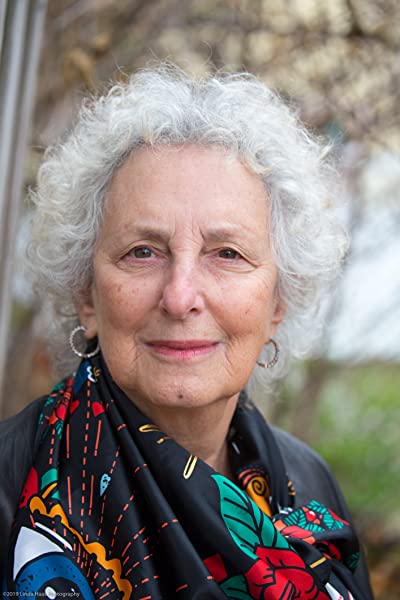
Guest – Susan Reverby, author of the recently published Co-conspirator for Justice: the Revolutionary Life of Dr. Alan Berkman. She is the Marian Butler MacLean Professor Emerita in the History of Ideas and Professor Emerita of Women’s and Gender Studies at Wellesley College. She is the author of Examining Tuskegee: The Infamous Syphilis Study and It’s Legacy, and other books on gender, race, health, nursing, and medicine.
————————————————
————————————————
Law and Disorder June 15, 2020
Podcast: Play in new window | Download

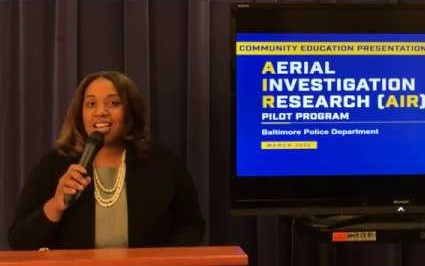
Aerial Investigation Research Pilot Program And Persistent Tracking
As the nation erupts in protests against racially-infused police violence, the Baltimore Police Department has just launched a six-month, day-time aerial surveillance experiment. A Texas billionaire has funded the project that is being operated by an Ohio-based company, Persistent Surveillance Systems. The plane flies overhead and records the movements of everyone in the city.
Michael Harrision, Baltimore Police Commissioner, has justified the nearly $4 million experiment by saying, “There is no expectation of privacy on a public street, a sidewalk.”
The Aerial Investigation Research Pilot Program is, by contract, limited to monitoring such felony crimes as robberies, car jackings, shootings and homicides. Images recorded are, in theory, to be used solely in criminal investigations and will be stored for 45 days. A first prong of the program was conducted covertly in 2016 under a different police commissioner.
The ACLU of Maryland calls this initiative the most comprehensive surveillance of a U.S. city in history. ACLU Senior Staff attorney David Rocah said, “It’s the virtual equivalent of having a police officer follow a resident every time they walk out the door, and if that happened in real life, all of us would understand the huge privacy implications in doing that.”
Guest – ACLU Senior Staff attorney David Rocah has worked on a number of significant cases involving free speech, police misconduct, privacy, election law and more. In 2011 he was an inaugural recipient of the James Baldwin Medal for Civil Rights. David previously worked as a Senior Trial attorney in the Civil Rights Division at the US Dept of Justice, focusing on police misconduct and conditions in prisons, jails and other state institutions.
—-

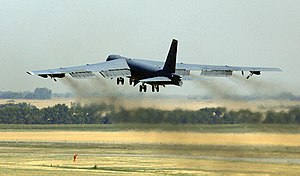
President Trump Withdraws From The Treaty On Open Skies – PART 2
The chance for nuclear war which would destroy human life on Earth has never been higher. Just last week President Donald Trump withdrew America from The Treaty On Open Skies. This treaty is an agreement between 34 nations that allows each country to fly over each other’s territories. The treaty is designed to provide transparency and mutual observation of military developments. He also withdrew from the Intermediary Intermediary Ballistic Missile treaty with Russia. As a consequence the Bulletin of Atomic Scientists has pushed the hands of its doomsday clock on its magazine forward to almost midnight
Shortly after taking office Trump pulled out of the Iran nuclear deal. Trump enjoys the financial and political backing of big business, the banks, the hedge funds, and the military industrial complex. These money interests profit greatly from the nuclear rearmament which is now going on. First under Obama and then Trump $1 trillion is planned to be spent over the next 30 years for a new generation of nuclear weapons, including low yield ones, which are likely to be used.
Whistleblowing truth teller Daniel Ellsberg has recently written the grimly important book The Doomsday Machine. He believes that so far, avoidance of a nuclear war has been miraculous and that the danger is as present today as it was during the Cold War. He thinks seeking profit in spite of the risk of nuclear winter is “institutional madness.“
Guest – Paul Jay is the editor of the blog the theanalysis.news. We will discuss with him the kind of movement that is needed to reverse the nuclear arms race as well as to bring about a democratic organization of the economy.
————————————————
————————————————
Law and Disorder June 8, 2020
Podcast: Play in new window | Download
President Trump Invokes 1807 Insurrection Act
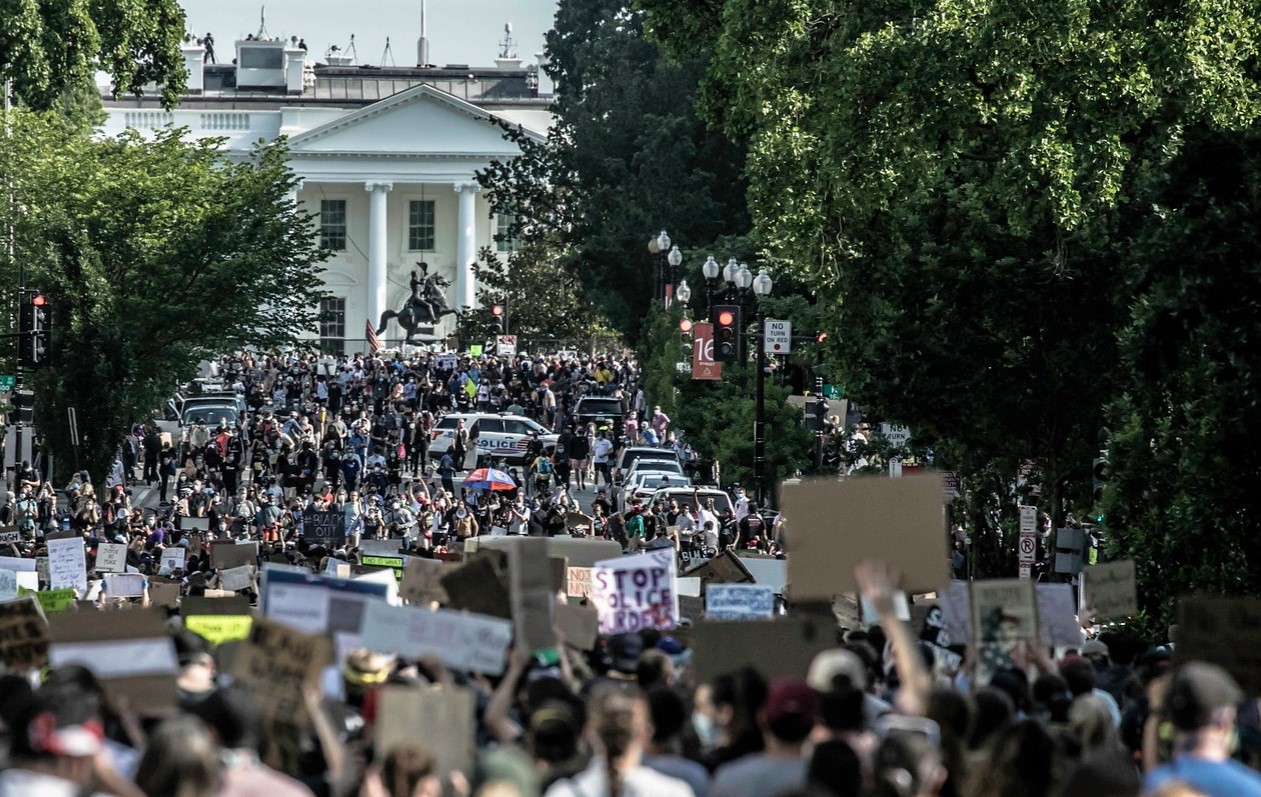
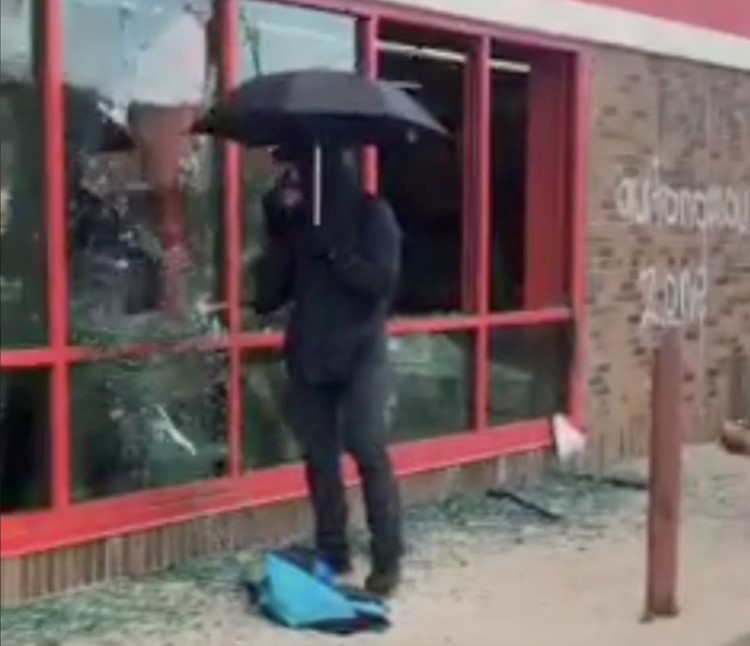
Last week Donald Trump announced his readiness to deploy the military to enforce order inside the United States. From the Rose Garden he vowed that if city and state leaders did not “take the actions that are necessary to defend the life and property of their residents” he would invoke the 1807 Insurrection act. The Act was renamed after Hurricane Katrina, but otherwise remains the same. It allows a president to deploy the military to suppress civil disorder.
In response, defense officials have expressed discomfort at the prospect of calling in active duty troops to police protected First Amendment activity. Many have emphasized the importance of having local law enforcement take charge. Some National Guard troops are also reportedly wary of this move, even as more are mobilized domestically than at any other time in history.
Army Major General Thomas Carden of the Georgia National Guard told reporters: “I believe that we in America should not get used to or accept uniformed service members of any variety having to be put in a position where they are having to secure people inside the United States of America.” He also said, “while we are glad to do it and honored to do it, this is a sign of the times that we need to do better as a country.”
During that Monday call with state governors, Trump intensified rhetoric about using military forces to “dominate” protesters. He wished there was an “occupying force” in cities across America and urged a tougher response to protests. Later that day, law enforcement officers fired tear gas and rubber bullets at a peaceful crowd outside the White House.
Guest – Mara Verheyden-Hilliard with the Partnership for Civil Justice Fund. Mara is one of the nation’s pre-eminent authorities on the policing of First Amendment protected activities including the right to peaceably assemble and associate.
—-
President Trump Withdraws From The Treaty On Open Skies
The chance for nuclear war which would destroy human life on Earth has never been higher. Just last week President Donald Trump withdrew America from The Treaty On Open Skies. This treaty is an agreement between 34 nations that allows each country to fly over each other’s territories. The treaty is designed to provide transparency and mutual observation of military developments. He also withdrew from the Intermediary Intermediary Ballistic Missile treaty with Russia. As a consequence the Bulletin of Atomic Scientists has pushed the hands of its doomsday clock on its magazine forward to almost midnight
Shortly after taking office Trump pulled out of the Iran nuclear deal. Trump enjoys the financial and political backing of big business, the banks, the hedge funds, and the military industrial complex. These money interests profit greatly from the nuclear rearmament which is now going on.
First under Obama and then Trump $1 trillion is planned to be spent over the next 30 years for a new generation of nuclear weapons, including low yield ones, which are likely to be used.
Whistleblowing truth teller Daniel Ellsberg has recently written the grimly important book The Doomsday Machine. He believes that so far, avoidance of a nuclear war has been miraculous and that the danger is as present today as it was during the Cold War. He thinks seeking profit in spite of the risk of nuclear winter is “institutional madness.“
Guest – Paul Jay is the editor of the blog the theanalysis.news. We will discuss with him the kind of movement that is needed to reverse the nuclear arms race as well as to bring about a democratic organization of the economy.
—————————————-
—————————————-