Welcome to Law and Disorder Radio
Law and Disorder is a weekly independent civil liberties radio program airing on more than 150 stations and on Apple podcast. Law and Disorder provides timely legal perspectives on issues concerning civil liberties, privacy, right to dissent and practices of torture exercised by the US government and private corporations.
Law and Disorder November 25, 2019
Podcast: Play in new window | Download
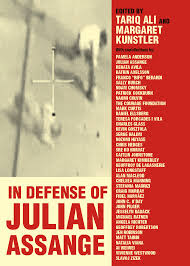
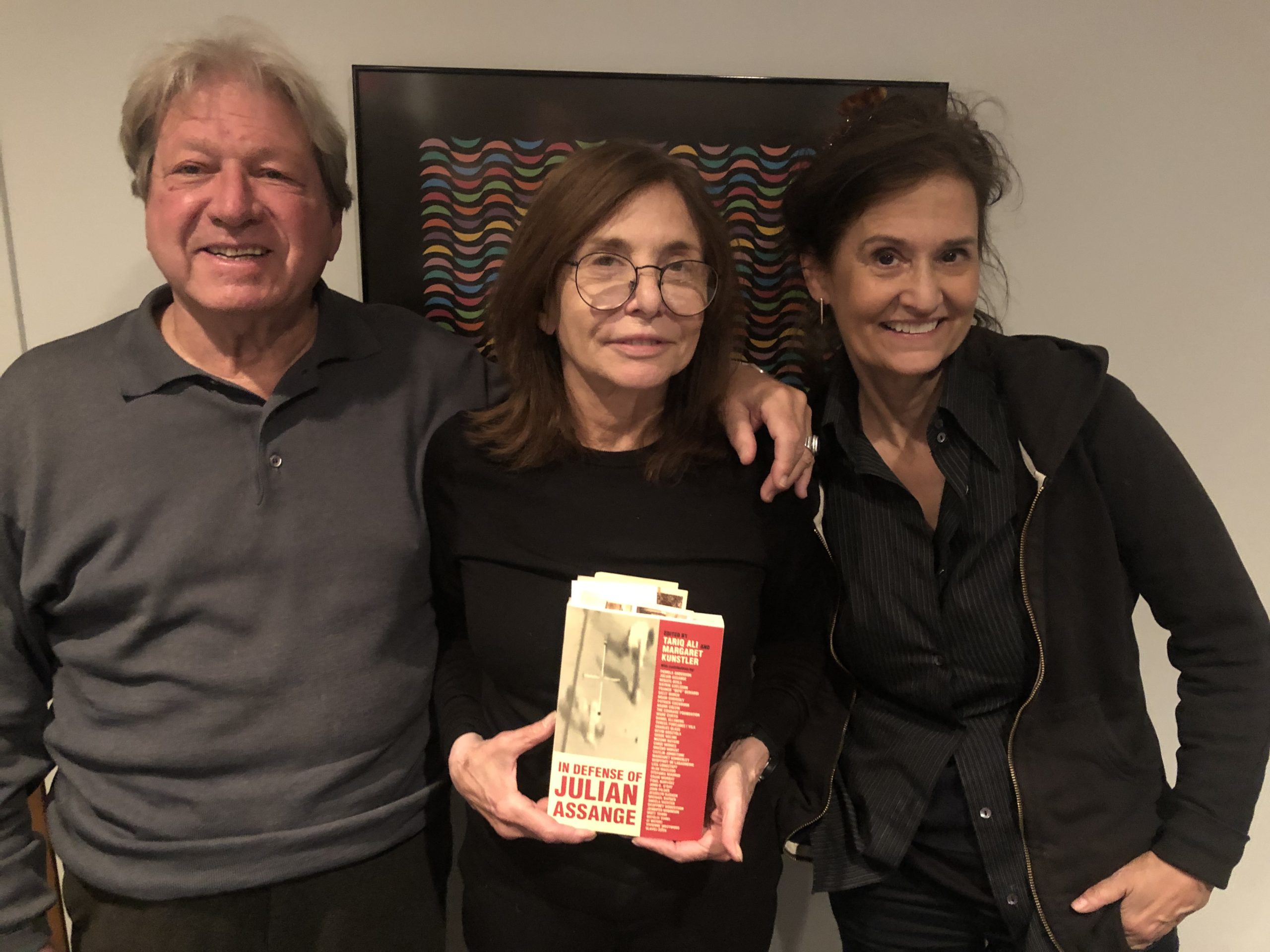
Whistle-blowing truth telling journalist and WikiLeaks founder Julian Assange now sits in solitary confinement in London‘s infamous Belmarsh prison. The Trump administration has asked that he be extradited to Virginia for trial as a spy. Today we interview Margaret Kunstler and Tariq Ali who edited and introduce the just published book titled In Defense of Julian Assange. The book demonstrates convincingly what is at stake in his upcoming trial is the future of free journalism, here and abroad.
Julian faces a 175 year sentence under the century old Espionage Act, passed during World War I to be used against spies. He is charged with conspiring with Chelsea Manning to publish the Iraq war logs, the Afghanistan war logs, and State Department cables.
Former CIA director and current Secretary of State Mike Pompeo has called WikiLeaks a “non-state intelligence service.“ Hillary Clinton wanted him assassinated by drone. The United Nations special rapporteur on torture Nils Melzer recently visited him in prison and concluded that indeed he was being tortured. When he last appeared in court he was incoherent and couldn’t remember his name or date of birth.
WikiLeaks was launched by Julian Assange in 2006, three years after Bush and Cheney commenced the illegal catastrophic war against Iraq in 2003.
Julian is a computer genius. He invented a way for publishers like WikiLeaks to receive truth telling information anonymously. The first bombshell he published in 2006 was “The Iraqi war logs.“ He got them from whistle-blower Chelsea Manning who was then in the military. They showed a video of American soldiers in a helicopter committing a war crime by gunning down and executing a number of Iraqi civilians, two Reuter’s journalists, and several children. Then they chuckled about it. A photo of the murders is shown on the book’s cover. This leak, furnished by Chelsea Manning, was devastating to the United States. Other whistle-blower leaks followed. The government became relentless in trying to close down WikiLeaks.
Guest – Margaret Kunstler – a civil rights attorney who has spent her career providing movement support and protecting the rights of activists. A powerful speaker on human rights issues, Kunstler is a consultant to the emerging voices of Occupy Wall Street protesters and Anonymous supporters. Kunstler’s Hell No: Your Right to Dissent in Twenty-First Century America, co-authored with Michael Ratner of the Center for Constitutional Rights, is the leading handbook for activists today.
Guest – Tariq Ali, writer, journalist and film-maker, born in Lahore and educated at Oxford University. He writes regularly for a range of publications including The Guardian and The London Review of Books. He has written more than a dozen books including non-fiction as well as scripts for both stage and screen.
—-
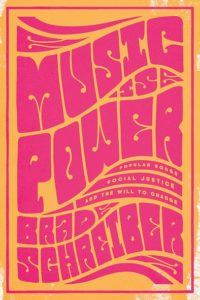
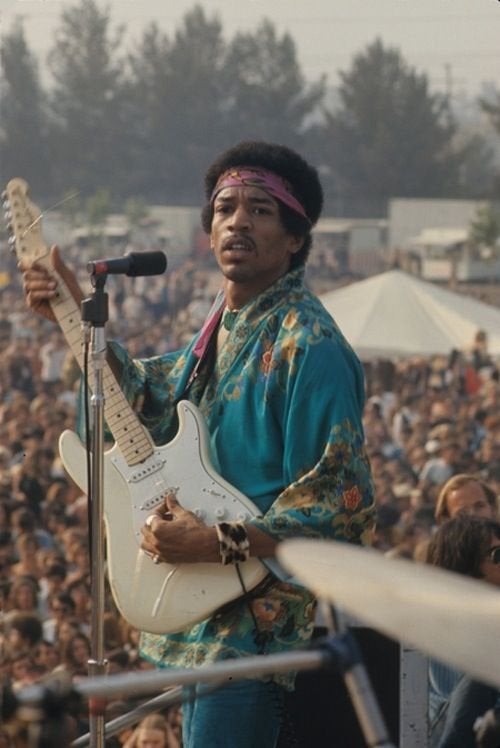
Music is Power: Popular Songs, Social Justice and the Will to Change
Throughout U.S. history social justice music has played many roles, from motivating soldiers on their way to war, to inspiring activists fighting police repression during the civil rights movements. In his new book, “Music Is Power” author Brad Schreiber chronicles a century of politically-conscious music, from Pete Seeger through Joan Baez, Bob Marley, the Sex Pistols and to modern-day rap music.
Perhaps associated largely with folk music, social justice music spans a range of musical genres, from rap, heavy metal, reggae, and psychedelia. Schreiber not only shines a spotlight on musicians’ different approaches, from soulful ballads to expressions of anger, but he also tells engaging stories behind the public figures who have brought music into our lives. There are many surprises in his animation of long-time favorites, many of whom overcame obstacles in bringing their messages of social justice to the recording industry and to the airwaves.
Guest – Brad Schreiber – award-winning author, journalist and screenwriter, his previous books include Death in Paradise, Becoming Jimi Hendrix, and Revolution’s End. He has received fellowships and awards from the National Press Foundation, Edward Albee Foundation, International Book Awards, Independent Publisher Book Awards and Los Angeles Press Club.
—————————–
—————————–
Law and Disorder November 18, 2019
Podcast: Play in new window | Download


Labor Party’s Jeremy Corbyn For British Prime Minister: Analysis
Next month and December 12 Great Britain will hold national elections. Jeremy Corbyn, a social Democrat similar in some respects to Bernie Sanders heads the British Labor Party. He has said “I will be a very different kind of Prime Minister, not the kind of Prime Minister who believes he was born to rule.“
Working people in Great Britain are struggling like they are in the United States. The Labor Party has addressed what to do about their situation. It has grown qualitatively in recent years and has a chance of winning the election. What the Labor Party stand for and what has their leader Jeremy Corbyn done to prepare for taking power is what will be discussed.
Guest – Colin Robinson, longtime member of the Labor Party. Originally from Liverpool, he was educated in London where he was an active socialist. He moved to New York 30 years ago to work as a publisher. He splits his time between New York City and London. Robinson has written for The Guardian newspaper and the London review of books. He is the co-owner of OR Books with offices in New York City, London, and Calcutta.
—-
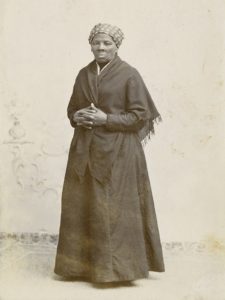

Harriet Tubman And The History Of Women Slavery
In the recently-released film “Harriet,” an active and young gun-toting Harriet Tubman jumps off bridges and faces down slaver owners. Directed by Kasi Lemmons, who calls Tubman a “completely bad ass woman,” the new film shows sides of the legendary Tubman that contrast with how she is remembered. This is the first feature film focusing on the legendary Underground Railroad leader.
The filmmakers made an effort to ensure accuracy given that many myths about Tubman have circulated over the years. The first biography about her, “Scenes in the Life of Harriet Tubman,” by Sarah Hopkins Bradford included many inaccuracies such as the number and nature of her rescues. That set the stage for inaccurate accounts to come.
One myth was that there was a $40,000 bounty on her head, an extremely high figure amount. As well, the number of enslaved persons she rescued through the Underground Railroad was more likely around 70 in contrast to the 300 reported in the Bradford biography.
Guest – Professor Jessica Millward, Associate Professor in the Department of History at UC Irvine. Her research focuses on slavery in early America, African American history as well as women and gender. Her first book, Finding Charity’s Folk: Enslaved and Free Black Women In Maryland was published in 2015 by the University of Georgia Press.
——————————-
——————————-
Law and Disorder November 11, 2019
Podcast: Play in new window | Download

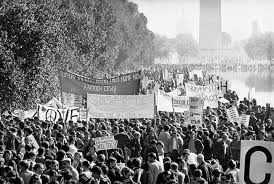
Victory: Trump Administration Rescinds Planned Anti-Protest Rules
In a stunning victory for free speech, the National Park Service was recently forced to do an about face. It withdrew a proposal that would have place burdensome restrictions on protests on the Mall and other federal land in Washington, DC.
Citing feedback it had received from the public — more than 140,000 comments — the Park Service announced it was ending its effort to rewrite the regulations governing speech and demonstrations on public lands under federal jurisdiction in the nation’s capitol. The proposed new regulations made public in August 2018 by then-Interior Secretary Ryan Zinke would have imposed hefty and unprecedented fees on groups organizing protests on federal park lands in Washington.
The Park Service has the responsibility and the legal obligation to protect First Amendment activity, and so it is good that officials dropped this plan.
Guest – Mara Verheyden-Hilliard, co-founder of the Partnership for Civil Justice Fund in Washington, DC. Over the years, Mara and the Partnership have secured millions of dollars in settlements for police infractions of protesters’ rights at mass assemblies, from the 2000 and 2002 IMF/World Bank protests to cases where law enforcement used false arrest tactics based on political affiliation. She also successfully challenged New York City’s efforts to restrict mass assembly in Central Park.
—-
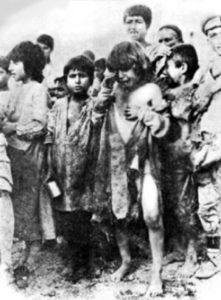
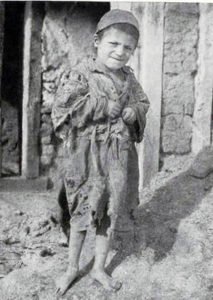
United States Officially Recognizes The Armenian Genocide
In a bipartisan rebuke to Turkey after its offensive into northeastern Syria, the U.S. House of Representatives recently approved two measures pushing back at its longtime NATO ally.
The first measure was a symbolic resolution labeling the deaths of roughly 1.5 to 2 million Armenians from 1915 to 1923 in the Ottoman Empire, now modern-day Turkey, as a “genocide.” It passed 405-11, with 3 members voting present. The second measure was a bipartisan bill that imposed sanctions on Turkish officials and prevents the sale of arms to Turkey for use in Syria. That passed overwhelmingly as well: 403-16.
To this day, the Republic of Turkey enforces a gag-rule against U.S. recognition of the Armenian Genocide, despite overwhelming evidence documenting its crimes against humanity.
Despite formal recognition of the Armenian Genocide by the U.S. government in 1951 and 1981, successive U.S. presidential administrations have supported the Turkish government’s revisionism. Fearful of offending Turkey they have opposed passage of Congressional Armenian Genocide resolutions and objected to the use of the word “genocide” to describe systematic destruction of the Armenian people.
A just resolution of the Armenian Genocide would decrease regional tensions, open the door to improved Armenia-Turkey relations, help reform Turkey into a pluralist and tolerant society.
Guest – Aram Hamparian, executive director of the Armenian National Committee of America or ANCA. ANCA is the largest and most influential Armenian American grassroots political organization. Working in coordination with a network of offices, chapters and supporters throughout the United States and affiliated organizations around the world, the ANCA actively advances the concerns of the Armenian American community on a broad range of issues.
——————————–
——————————–