Welcome to Law and Disorder Radio
Law and Disorder is a weekly independent civil liberties radio program airing on more than 150 stations and on Apple podcast. Law and Disorder provides timely legal perspectives on issues concerning civil liberties, privacy, right to dissent and practices of torture exercised by the US government and private corporations.
Law and Disorder August 5, 2019
Podcast: Play in new window | Download
The Silk Road and Ross Ulbricht
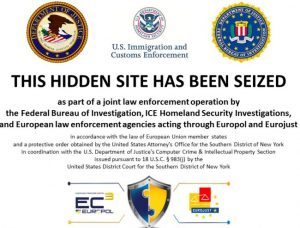
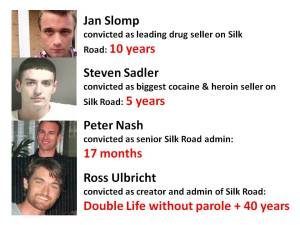
It’s been four years since a jury found that then 29-year-old Ross Ulbricht guilty on charges related to operating a Dark Website called the Silk Road that sold, among other things, illicit drugs.
The case was a high profile one, and Rosshad come to be known by some as the face of the Dark Web. He was convicted on seven charges—including a “kingpin” charge—and now-retired Judge Katherine Forrest imposed two life sentences and 40 years… Ross is a young, non-violent, first-time offender serving two life sentences, plus forty years, without parole. He was not convicted of selling drugs or illegal items himself, but rather of creating an e-commerce website that others chose to use for that purpose. No victim was named at trial, and prosecutors had not even sought such a long sentence.
Corruption, abuse, evidence tampering and multiple violations of Ross’s rights cast serious doubt on the legitimacy of Ross’s conviction and sentence within the legal community and with the public.
In a 2016 appeal, defense attorneys outlined a litany of improprieties and abuses in the investigation and trial. Perhaps most serious was that the court precluded information about two corrupt federal agents investigating Silk Road who are now both serving prison sentences for corruption. Last year the Supreme Court denied to consider the case.
Guest – Ross’s mother, Lyn Ulbricht joins us to talk about a petition for clemency to President Donald Trump. Free Ross Ulbricht.
—-
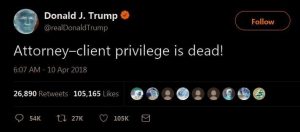
Attorney Client Privilege
What is the attorney-client privilege? And to whom does it apply? Generally speaking, the privilege is owned by the client and unless the client waived her rights her lawyer is barred not only from revealing any information about the client but even revealing who the client is.
An exception in the case of the FBI raid and Donald Trumps attorneys Office, Home, and hotel room was made on the grounds that there is a fraud exception to the attorney-client privilege. Defenders of the attorney-client privilege, even if it has to do with protecting Donald Trump, have argued that it is illegal and unprincipled for the Justice Department to get a search warrant from a federal magistrate and violate the principle.
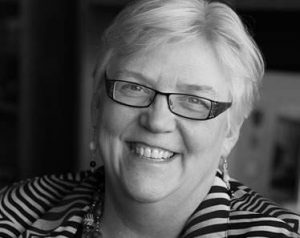
Guest – Minneapolis Attorney Carla Kjellberg, has worked with victims of child sexual assault who have sued priests, litigated sensitive family law matters, and worked with unions and political activists.
——————————–
——————————–
Law and Disorder July 29, 2019
Podcast: Play in new window | Download
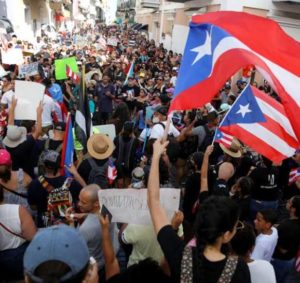
Gov. Ricardo A. Rosselló Announces Resignation After Massive Protest Fills Streets
President Donald Trump’s recent attacks on four congresswomen, people of color, telling them “to go back home” echoes the dehumanizing demagoguery of fascist strong men who use race baiting to scapegoat and divide and conquer. Victimizing Latinos has been a strategy of Trump’s ever since the election when he called Mexicans criminals and rapists.
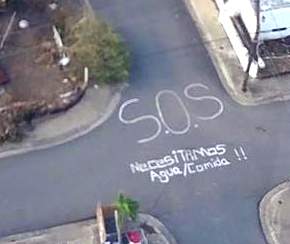
After Hurricane Maria wrecked the American colony of Puerto Rico in 2015 killing nearly 3000 people and severely damaging the electrical grid, Trump went to San Juan and was videoed throwing rolls of paper towels to people.
Guest – Attorney Natasha Bannan, former National Lawyers Guild director. She currently works as associate counsel at the New York City-based Latino Justice. She graduated from CUNY Law School where she was editor in chief of the CUNY Law Review. She wrote an article for this journal titled Puerto Rico’s Odious Debt: The Economic Crisis Of Colonialism. She is also on the Board of Directors of the Center for Constitutional Rights.
—-
Venezuelan Embassy: Embassy Protection Collective Update
In a violation of international law, on May 16, 2019 more than 100 police, many with military gear, invaded the embassy of Venezuela in Washington, DC and arrested four Embassy Protectors who were in the embassy with the permission of the Venezuelan government to protect it from takeover as part of a US coup against the elected Venezuelan government of Nicolas Maduro.
The US had attempted to install Juan Guaido as the president of Venezuela and on May 30th right wing coup supporters attempted to take over the Venezuelan embassy in Washington DC. This coincided with another attempted coup by Juan Guaido in Venezuela. Guaido failed in his coup attempt.
The embassy in Washington, DC is the property of Venezuela and under international law the United States must protect and is not allowed to enter it.
A group of Americans known as the Embassy Protection Collective moved into the embassy to prevent its hostile takeover. Up to 70 people were sleeping in the embassy as embassy protectors.
The State Department, Secret Service, and the Metropolitan police force allowed a pro-coup mob to lay siege on the embassy. People were blocked from entering the embassy. Food was prevented from being brought in. The electricity and water were cut off.
Although the coup against the Maduro government failed, the Embassy Protectors were arrested when the US government raided the Venezuelan embassy. The final four Embassy Protectors, Kevin Zeese, Margaret Flowers., Adrian Pine, and David Paul were arrested and face federal prosecution. If convicted they could be imprisoned up to one year and fined up to $100,000 each.
Guest – Kevin Zeese is a US lawyer and political activist. He helped organize the 2011 Occupy encampment in Washington DC. Kevin Zeese is currently the co-director of The Organization Popular Resistance.
——————————————–
——————————————–
Law and Disorder July 22, 2019
Podcast: Play in new window | Download
Bronx 120 Report 2019 Questions Largest Gang Take Down
Three years ago, on April 27, 2016, SWAT teams and about 700 NYPD officers, with federal law enforcement present, raided the Eastchester Gardens public housing project and nearby homes in the Bronx. One hundred 20 people, almost all young black and Latino men, who were indicted after the pre-dawn raid. Prosecutors called the “largest gang take-down in New York City history.” At the time we covered it on Law and Disorder.
Preet Bharara, then U.S. Attorney for the Southern District of New York, said the 120 were members of two violent, rival street gangs that had “wreaked havoc” in the neighborhood for years and were responsible for at least eight murders. The NYPD police commissioner at the time, William Bratton said: “These gang members do not belong on our streets…Instead they belong exactly where they are going, to federal prison, for many years, where they won’t be surrounded by their buddies, they won’t be close to their families, and they’ll no longer be free to terrorize the neighborhoods in which they grew up.”
Visit – Bronx120.Report
Although the press covered the raids for a few days, over the past 3 years, few journalists have followed up. A new report, published prior to the raid’s third anniversary reveals troubling facts about the prosecution. It also raises questions about due process, the abuse of federal conspiracy charges, and the criminalization of social relationships in communities of color.
Guest – Babe Howell, a co-author of the report and a professor at CUNY School of Law. Professor Howell studies gang policing practices and teaches Criminal Law, Criminal Trial Advocacy and Lawyering Skills. A graduate of Harvard College, Professor Howell received her J.D. from New York University School of Law where she was a Root-Tilden Snow Public Interest Scholar.
Professor Howell’s scholarship focuses on the intersection of the criminal justice system and race. She is particularly interested in the effects of policing of minor offenses and alleged gang affiliations and the impact such policing has on the legitimacy of the criminal justice system and communities of color.
—-

Period Equity Tax
Thousands of health and personal care items in the United States are exempt from sales tax. That includes items like shampoo, chapstick, and Viagra. But notably missing from that list are menstrual products. To-date only nine states include tampons and sanitary pads from their tax exempt list. Seven more have introduced legislation aimed at doing the same. Three of the seven — Nebraska, Virginia and Arizona — introduced their legislation this year.
In her book, Periods Gone Public, Jennifer Weiss-Wolf chronicles what she calls a lack of “period equity.” She writes that managing menstruation “is a critical aspect of the lives and civic participation of more than half the population,” and should be considered when making policy.
Much of her advocacy has focused on fighting against what’s dubbed the “tampon tax.” It’s an example of women paying a premium for various products, known as the “pink tax.”
While there is no specific tax on tampons, in states that don’t tax medical and health supplies, tampons are excluded from those tax-exempt categories.
Guest – Jennifer Weiss-Wolf, a leading voice for equitable menstrual policy in America, her 2017 book Periods Gone Public lays out a pro-active policy agenda. A frequent contributor to the New York Times, Time, Newsweek, the Nation and other publications, she serves on the boards of Support the Girls,The Cup, and Girls Helping Girls. Period., and is an Advisory Board member of ZanaAfrica Foundation, which provides menstrual health education and products to girls in Kenya. An attorney with expertise in nonprofit management and development, she is a vice president of the Brennan Center for Justice at NYU School of Law.
————————-
————————-