
Welcome to Law and Disorder Radio
Law and Disorder is a weekly independent civil liberties radio program airing on more than 150 stations and on Apple podcast. Law and Disorder provides timely legal perspectives on issues concerning civil liberties, privacy, right to dissent and practices of torture exercised by the US government and private corporations.
Law and Disorder July 22, 2019
Podcast: Play in new window | Download

Bronx 120 Report 2019 Questions Largest Gang Take Down
Three years ago, on April 27, 2016, SWAT teams and about 700 NYPD officers, with federal law enforcement present, raided the Eastchester Gardens public housing project and nearby homes in the Bronx. One hundred 20 people, almost all young black and Latino men, who were indicted after the pre-dawn raid. Prosecutors called the “largest gang take-down in New York City history.” At the time we covered it on Law and Disorder.
Preet Bharara, then U.S. Attorney for the Southern District of New York, said the 120 were members of two violent, rival street gangs that had “wreaked havoc” in the neighborhood for years and were responsible for at least eight murders. The NYPD police commissioner at the time, William Bratton said: “These gang members do not belong on our streets…Instead they belong exactly where they are going, to federal prison, for many years, where they won’t be surrounded by their buddies, they won’t be close to their families, and they’ll no longer be free to terrorize the neighborhoods in which they grew up.”
Visit – Bronx120.Report
Although the press covered the raids for a few days, over the past 3 years, few journalists have followed up. A new report, published prior to the raid’s third anniversary reveals troubling facts about the prosecution. It also raises questions about due process, the abuse of federal conspiracy charges, and the criminalization of social relationships in communities of color.
Guest – Babe Howell, a co-author of the report and a professor at CUNY School of Law. Professor Howell studies gang policing practices and teaches Criminal Law, Criminal Trial Advocacy and Lawyering Skills. A graduate of Harvard College, Professor Howell received her J.D. from New York University School of Law where she was a Root-Tilden Snow Public Interest Scholar.
Professor Howell’s scholarship focuses on the intersection of the criminal justice system and race. She is particularly interested in the effects of policing of minor offenses and alleged gang affiliations and the impact such policing has on the legitimacy of the criminal justice system and communities of color.
—-

Period Equity Tax
Thousands of health and personal care items in the United States are exempt from sales tax. That includes items like shampoo, chapstick, and Viagra. But notably missing from that list are menstrual products. To-date only nine states include tampons and sanitary pads from their tax exempt list. Seven more have introduced legislation aimed at doing the same. Three of the seven — Nebraska, Virginia and Arizona — introduced their legislation this year.
In her book, Periods Gone Public, Jennifer Weiss-Wolf chronicles what she calls a lack of “period equity.” She writes that managing menstruation “is a critical aspect of the lives and civic participation of more than half the population,” and should be considered when making policy.
Much of her advocacy has focused on fighting against what’s dubbed the “tampon tax.” It’s an example of women paying a premium for various products, known as the “pink tax.”
While there is no specific tax on tampons, in states that don’t tax medical and health supplies, tampons are excluded from those tax-exempt categories.
Guest – Jennifer Weiss-Wolf, a leading voice for equitable menstrual policy in America, her 2017 book Periods Gone Public lays out a pro-active policy agenda. A frequent contributor to the New York Times, Time, Newsweek, the Nation and other publications, she serves on the boards of Support the Girls,The Cup, and Girls Helping Girls. Period., and is an Advisory Board member of ZanaAfrica Foundation, which provides menstrual health education and products to girls in Kenya. An attorney with expertise in nonprofit management and development, she is a vice president of the Brennan Center for Justice at NYU School of Law.
————————-
————————-
Law and Disorder July 15, 2019
Podcast: Play in new window | Download
The Decline And Fall Of The American Empire
If a modern day Gibbons were to write about the decline and fall of the American empire she would surely feature Trump’s bringing road crushing Abrams tanks and F15 fighter planes into Washington DC. Gibbons wrote about Julius Caesar who brought his imperialistic troops into Rome. To do so they had to cross the Rubicon river. This ended the Roman Republic. Today, July 4, 2019 symbolically marks the American crossing of the Rubicon. You can’t have democracy at home and imperialism abroad. That was the lesson of Gibbons’ three volume history. But that won’t be discussed“ on Fox and Friends” so Trump will remain ignorant. The rest of us should be scared.
If there is a shattering event in our country those tanks and planes will be aimed at us.
Michael Steven Smith – July 4, 2019
—-


Autonomous Weapons Systems And Laws of War
The Pentagon is developing for future deployment a variety of autonomous weapons systems. They are known as “killer robots“.
They will be active in the air, on the land, and on the sea. Killer robot deployment potentially conflicts with the laws of war. The Navy, the Air Force, and the Army will all have them. The robots will use algorithms and artificial intelligence. Once deployed they can operate for months on their own, monitoring, selecting, and destroying targets, including people. CampaignToStopKillerRobots.org / Armscontrol.org
Guest – Professor Michael Klare, Five College professor emeritus of peace and world security studies, and director of the Five College Program in Peace and World Security Studies (PAWSS), holds a B.A. and M.A. from Columbia University and a Ph.D. from the Graduate School of the Union Institute. He has written widely on U.S. military policy, international peace and security affairs, the global arms trade, and global resource politics. His books include American Arms Supermarket (1984), Low-Intensity Warfare (1988), Peace and World Security Studies: A Curriculum Guide (Fifth Edition, 1989; Sixth Edition, 1994), World Security: Challenges for a New Century (First Edition, 1991; Second Edition, 1994; Third Edition, 1998), Rogue States and Nuclear Outlaws (1995), Light Weapons and Civil Conflict (1999), Resource Wars (2001),Blood and Oil (2004), and The Race for What’s Left (2012). His articles have appeared in many journals, including Arms Control Today, Bulletin of the Atomic Scientists, Current History, Foreign Affairs, Harper’s, The Nation, Scientific American, and Technology Review.
—-
Supreme Court On Partisan Gerrymandering And The Census Question
The underlying premise of our radio program Law and Disorder is in the words of our founder attorney Michael Ratner that democracy and the rule of law are increasingly becoming incompatible with capitalism and imperialism. A terrible example of this is the recent Supreme Court decision on partisan gerrymandering. The majority decision, written by chief justice John Roberts, was joined by his fellow four right wing pro-corporate authoritarian judges Thomas, Alito, Gorsuch and Kavanaugh.
In its unprecedented decision in Rucho v. Common Cause and Camon v. Bemusement Roberts wrote that supreme court would not get involved in election rigging matters, although majority rule is a foundation of American democracy.
In addition to gerrymandering, another anti-democratic strategy practiced historically in the US has been voter suppression. Most infamously, the Democrats did this during the Jim Crow era to prevent recently freed slaves from voting.
Currently the Republican Commerce Secretary Wilbur Ross attempted to suppress votes by including a citizenship question on the census, which occurs every 10 years, and which determines money allocations among other things. In this instance the Supreme Court recently ruled that the question cannot be asked.
Guest – Attorney Marjorie Cohn, professor emerita at Thomas Jefferson School of Law where she taught for 25 years. The former president of the National Lawyers Guild and criminal defense attorney is a legal scholar and political analyst who writes books and articles, and lectures throughout the world about human rights, US foreign policy, and the contradiction between the two. She has testified before Congress and debated the legality of the war in Afghanistan at the prestigious Oxford Union. Her columns appear on Truthout, HuffPost, JURIST, Truthdig, Portside, Alternet, CommonDreams and Consortium News, and she has provided commentary for CBS News, BBC, MSNBC, CNN, Fox News, NPR and Pacifica Radio. Her website is http://marjoriecohn.com/
Law and Disorder July 8, 2019
Podcast: Play in new window | Download

Data Collection Experiment: Google’s SideWalk Labs In Toronto
Last year Law and Disorder featured a segment on Sidewalk Labs, a data-oriented smart city in Toronto. Sidewalk Labs is a firm owned by Google parent company Alphabet. We covered critics’ concerned about residents’ privacy and how data would be used.
Last week, Sidewalk labs has released a 1,500-page development proposal for its planned “smart” neighborhood. They claim it will integrate physical, digital, and policy innovations to take on affordability, sustainability, quality of life and generate economic opportunity. Critics assert, this is an experimental model for a surveillance state and covert data collection.
Sidewalk Lab’s plan is a radical departure from the principles that have guided city planning in Canada since citizen participation and accountability came to the fore in the era of renowned Canadian-American urban planner Jane Jacobs.
Guest – Mariana Valverde, Professor at the Centre for Criminology & Sociolegal Studies at the University of Toronto. She’s an urban studies scholar whose research interests include public-private partnerships, governance and infrastructure.
—-

Impeachment Analysis Of President Donald Trump
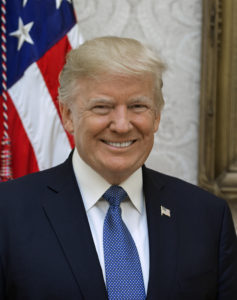
Special counsel Robert S. Mueller III’s May statement on his investigation and report revived calls to impeach President Donald Trump. Such calls rest on solid legal ground. There is already more than adequate evidence supporting at least seven articles of impeachment – four more than President Richard M. Nixon would have faced had he not resigned in 1974.
Trump obstructed the administration of justice by attempting to fire Mueller, to curtail his investigation; he ordered White House counsel Donald McGahn to falsify the record to conceal these attempts. He fired FBI Director James B. Comey because of “Comey’s unwillingness to publicly state that Trump was not personally under investigation. He also sought to protect himself from an investigation into his campaign,” because he knew it would uncover facts about the campaign and the President personally that Trump could have understood to be crimes or that would give rise to personal and political concerns.”
He tried to dissuade Michael Flynn, Paul Manafort, Michael Cohen, Roger Stone, and other witnesses from cooperating with the government. The non-cooperation of Manafort and Stone made it impossible to establish the exact nature of the relationship between the Trump campaign and the Russian government.
All of those are violations of Article I of the Constitution, and Trump has violated Articles II through VII, as well.
So the internal debates are not about the legal grounds. They pertain to strategy. And these debates are fracturing alliances among liberals and the left.
Guest – Attorney Abi Hassen is a criminal defense attorney, technologist and co-founder of the Black Movement-Law Project. He was formerly the Mass Defense Coordinator at the National Lawyers Guild and a union and community organizer. His podcast is Against the Law. Against The Law Podcast Link
———————————
———————————