Welcome to Law and Disorder Radio
Law and Disorder is a weekly independent civil liberties radio program airing on more than 150 stations and on Apple podcast. Law and Disorder provides timely legal perspectives on issues concerning civil liberties, privacy, right to dissent and practices of torture exercised by the US government and private corporations.
Law and Disorder April 8, 2019
Podcast: Play in new window | Download
Updates:
- Hosts Read Poem by Lawrence Ferlinghetti Who Turned 100.
- Michael Smith Talks About New Book Lawyers For The Left: In the Courts, In the Streets And On the Air.
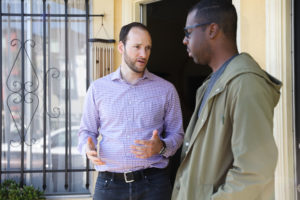

Attorney Chesa Boudin: Prison and Cash Bail Reform
Recently we have seen people who are progressives run for the office of prosecutor in cities across the country. This is an office which many people associate with police departments with whom they closely work. The new crop of reform minded prosecutors are saying that the criminal justice system is broken, that it is costly, classist, and racist. They say it is ineffective in keeping people safe and that 2/3 of the people convicted wind up back in prison in a few years.
Guest – Attorney Chesa Boudin who is currently an Assistant Public Defender in San Francisco. He is running for the office of district attorney in that city. The ideas for reform in the criminal justice system that he has put forward in his campaign are receiving wide attention and considerable support. Boudin was instrumental in getting the discriminatory practice of cash bail eliminated in San Francisco.
—-
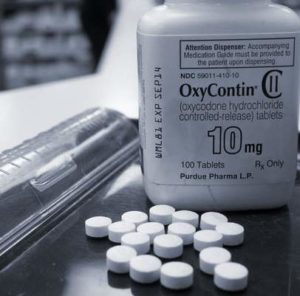
OxyContin Epidemic And the Sackler Family
In March, the maker of OxyContin and the family that owns the company, reached a $270 million settlement with the state of Oklahoma over the painkiller’s role in the nation’s opioid crisis. Purdue Pharma is based in Stamford, CT and is controlled by the Sackler Family.
The money will go toward creating a National Center for Addiction Studies and Treatment at Oklahoma State University in Tulsa. The deal comes two months before Oklahoma’s lawsuit against Purdue and other pharmaceuticals blamed for the crisis was set to go to trial.
Purdue Pharma introduced OxyContin more than two decades ago, marketing the highly addictive drug aggressively to physicians. It has made billions of dollars from the drug but faces approximately 2,000 lawsuits from state and local governments trying to hold the company responsible for deadly epidemic.
The Centers for Disease Control reports the prescription opioids like OxyContin were a factor in a record 48,000 deaths across the U.S. in 2017.
Purdue Pharma has settled other lawsuits over the years, and three executives pleaded guilty to criminal charges in 2007. But this is the first settlement to come out of the current coast-to-coast wave of litigation that focuses on the company’s more recent conduct and threatens to drive it to bankruptcy.
Guest – Liz Whyte, an award-winning reporter for the investigation news organization the Center for Public Integrity. Politics of Pain Report. She is a reporter for the Consider the Source state politics team, where her investigative work has won awards from the National Press Club, Editor & Publisher, the Association of Health Care Journalists, the New York Press Club and local chapters of the Society of Professional Journalists.
—————————-
—————————-
Law and Disorder April 1, 2019
Podcast: Play in new window | Download
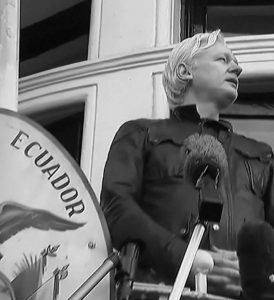

Misuse of Grand Juries And The Prosecution Of Chelsea Manning
The Trump administration wants to prosecute the news organization Wikileaks and its founder Julian Assange. In order to do so they have recently jailed whistleblower Chelsea Manning, who has been in solitary confinement since March 8th, 2019 in hopes to squeeze her to get testimony that could be used against Assange. Prolonged solitary confinement is a form of torture.
Chelsea Manning has refused to answer questions of the Government Prosecutor in front of a grand jury. In 2010 Chelsea Manning, then in the Army, released documents to WikiLeaks known as the Iraq War Logs. One of them was a video showing a U.S. Apache attack helicopter killing 12 people, including two Reuters journalists, two children and a passerby who stopped his van to rescue the wounded. She maintains that there’s nothing new to be learned and that she’s already given full testimony.
Chelsea Manning was convicted and served 7 years of a 35 year sentence before her sentence was commuted by Barack Obama. The prosecution of WikiLeaks for accepting leaked secret documents is a threat to press freedom and would criminalize journalism. The government is trying to frame Assange charging him with actively colluding with Manning, not just being a passive recipient of the leak. Historically grand juries have been misused in order to suppress political dissent.
Write to Chelsea Manning in solitary confinement:
Chelsea Manning
Ao181426
William G. Truesdale Adult Detention Center
2001 Mill Rd.
Alexandria, VA 22314
Guest – Attorney Michael Deutsch, an expert on the misuse of grand juries. He is a partner in the Chicago law firm The People’s Law Office and a former director of litigation at the Center for Constitutional Rights. He has represented political activists and victims of government repression. Among his clients have been the Attica prisoners in the 1971 uprising, Puerto Rican independence fighters, members of the black liberation movement, grand jury resistors, and Palestinians falsely accused of terrorism.
—-


The Brooklyn Folk Festival April 2019
In the political radicalizations and social upheaval’s within the United States of America in the 30s and again in the 60s, we saw an increased interest in folk music. This phenomenon is repeating itself today. We speak today with Eli Smith, the producer of the Brooklyn Folk Festival. He is a banjo player, a folklorist, and a member of the string band The Downhill Strugglers. The Brooklyn Folk Festival is the largest of its type in the country and is now in its 11th year. It takes place in Brooklyn Heights at the historic Saint Ann’s Church this April.
Guest – Eli Smith, a musician, producer and activist from Brooklyn, who has helped organize the event. Eli Smith is also a folklorist and music producer who organizes the annual “Brooklyn Folk Festival.”
—-

U.S. Appeals Court Opens Abu Ghraib Prison Abuse Case
In 2016, the United States appeals court re-instituted the Abu Ghraib prison abuse case against a private military contractor CACI. Since that time, the plaintiffs have had multiple victories.
The Center for Constitutional Rights is representing the abused prisoners. CCR‘s legal director Baher Azmy said “There is no question that torture is unlawful under domestic, military, and international law. The only issue in this case is whether CACI Will be held accountable – or treated with impunity – for its role in torture at Abu Ghraib. Now, the case is set for trial in Alexandria, Virginia on April 23.
Guest – Attorney Katherine Gallagher filed the case nearly 11 years ago and she is a Senior Staff Attorney at the Center for Constitutional Rights. Katherine works on universal jurisdiction and international criminal law cases involving U.S. and foreign officials and torture and other war crimes, and cases involving private military corporations and torture at Abu Ghraib. Her major cases include Al Shimari v. CACI, the international U.S. torture accountability cases, and Survivors Network of those Abused by Priests (SNAP) v. Vatican, seeking accountability for the crimes against humanity of sexual violence by clergy and cover-up.
———————
———————
Law and Disorder March 25, 2019
Podcast: Play in new window | Download
U.S. Peace Council Returns From Venezuela
The Trump administration is attempting to illegally overthrow the democratically elected government of Venezuela and its president Nicolas Maduro.
The effort is being led by Trump’s recently appointed envoy Elliot Abrams, the notorious convicted perjurer who was complicit during the Reagan Administration in the massacre and cover up of the mass slaughter of indigenous people in central America.
John Bolton is working alongside Abrams. He recently showed the American government’s intent by flashing a hand written sign on a yellow pad stating “5000 troops to Venezuela.“ Showing his contempt for international law, he famously said that if the top part of the United Nations building was lopped off it would not make any difference.
So far the United States has been unable to topple all the Venezuelan government. Unable to win over the Venezuelan military the United States is now embargoing Venezuela, which is a form of a medieval siege, aimed at depriving Venezuelans of food and medicine. The U.S. government and its ally Great Britain have frozen Venezuelan assets held abroad and prevented trade with the country, whose economy has shrunk dramatically.
The United States has secured support for it’s coup attempt from the right wing governments in Argentina, Brazil, and Chile as well as the countries of the European Union.
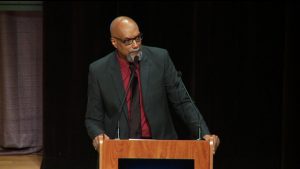
Guest – Ajamu Baraka has recently returned from Venezuela. He is on the steering committee of the US Peace Council, which organized the trip. Baraka is the national organizer of the Black Alliance for Peace, writes for the Black Agenda Report, and was the 2016 Green party candidate for vice president.
—-


Reprieve: UK Human Rights Group
A year after the death penalty was abolished in the United Kingdom, in 1999, human rights attorney Clive Stafford Smith founded the nonprofit organization Reprieve. Smith has represented over 300 prisoners facing the death penalty in the southern United States and has helped secure the release of 65 Guantanamo Bay prisoners, and others internationally who claim that the United States government has tortured them.
Reprieve currently works to represent 15 prisoners in Guantánamo Bay, as well as an evolving caseload of death row clients around the world. It investigates international complicity in extraordinary renditions, and has recently started working in Pakistan with the Foundation for Fundamental Rights to begin discussions on the use of drones there.
Guest – Katie Taylor, a Deputy Director at Reprieve who coordinates the Life After Guantanamo Project. Katie has worked at WarChild UK and in Palestine on human and childrens’ rights issues for several local and international agencies.
—————–
—————–