Welcome to Law and Disorder Radio
Law and Disorder is a weekly independent civil liberties radio program airing on more than 150 stations and on Apple podcast. Law and Disorder provides timely legal perspectives on issues concerning civil liberties, privacy, right to dissent and practices of torture exercised by the US government and private corporations.
Law and Disorder September 3, 2018
Podcast: Play in new window | Download
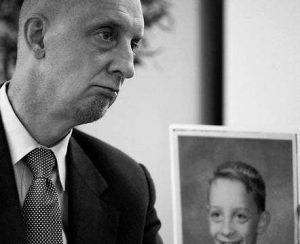
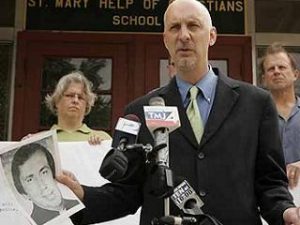
Beyond Apology: Child Torture and Cover Ups In the Catholic Church
“How does the Catholic Church evaluate cases of pedophilia committed by priests?” This is the first question posed in the pamphlet titled “Pedophilia and the Priesthood,” written by Monsignor Raffaello Martinelli. The answer reads in part: These crimes of pedophilia have been labeled as “a crime against the most weak,” “a horrendous sin in the eyes of God,” a crime “that damages the Church’s credibility.”
The most severe condemnation, a source of clear and unequivocal blame, is found in the words of Jesus when, identifying himself with the little ones, affirms in the synoptic Gospels: And whoever receives one child such as this in my name receives me. Whoever causes one of these little ones who believe in me to sin, it would be better for him to have a great millstone hung around his neck and to be drowned in the depths of the sea (Matthew 18:5-6, Mark 9:42, Luke 17:1-2).
In August 2018 it came to light that for over 70 years, Roman Catholic Bishops and other Church officials in Pennsylvania covered up child sexual abuse by more than 300 priests. They dissuaded victims from reporting the abuse and they convinced police not to investigate it. This is all according to a grand jury report issued last month.
The report, initiate by Attorney General Josh Shapiro, is the widest inquiry by a US government agency into Catholic Church sexual abuse of children. It covers six of the state’s eight Catholic dioceses. It found more than 1,000 identifiable victims but says there are likely thousands more whose records have been lost or who were too afraid to come forward. Shapiro said in a press conference that the cover up by senior officials in the church reached at times up to the Vatican.
At the same time, allegations have been raised that Pope Frances knew Cardinal Theorore McCarrick had abused seminarians, but that he lifted penalties imposed on him by Pope Benedict the 16th.
With these news reports, the Catholic Church has been thrown into turmoil. On the one side are traditional members who argue that sexual abuse can be stopped with stricter adherence to church doctrine. On the other side are reformists urging that the church stop condemning homosexuality and permit gay priests to be open about their sexual preferences.
Today on Law and Disorder we bring you a special examination of the continuing revelations into the extent of sexual abuse of children by Catholic priests, and cover-ups of abuse by Church officials.
Guest – Attorney Pam Spees from the Center for Constitutional Rights. She has worked closely with SNAP, the Survivors Network of those Abused by Priests, since 2011 with the filing of a complaint at the International Criminal Court. The complaint called for an investigation and prosecution of high-level Vatican officials, including then-Pope Benedict, for the widespread and systematic rape and sexual violence within the Catholic Church.
Guest – Peter Isely founding member of End Clergy Abuse, a new global organization, launched in Geneva in June, of survivor leaders and human rights activists from five continents and 28 countries. Peter wrote a 2003 SNAP white paper to the Department of Justice calling for federal intervention into the matter of clergy sexual abuse. He is a survivor of childhood sexual assault by a Wisconsin priest, one of the founding members of SNAP and previous Midwest Director. A graduate of Harvard Divinity School and a psychotherapist in private practice, Peter established and directed the nation’s only inpatient program for victims of clergy sexual trauma at Rogers Memorial Hospital located outside Milwaukee.
New York Attorney General Underwood Announces Clergy Abuse Hotline: 1-800-771-7755 or File Complaint Online
—————–

—————–
Law and Disorder August 22, 2018
Podcast: Play in new window | Download
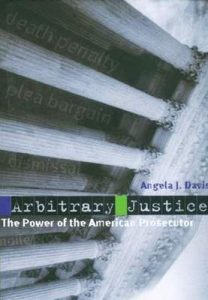

Attorney Angela Davis: Arbitrary Justice
“In the halls of justice”, it has been quipped, “the only justice you find is in the halls.” H. Rap Brown, a leader of SNCC, the Student Non-violent Coordinating Committee, said that justice in America means “just us”. There are 2.3 million people in American prisons today. A great proportion of them are African-Americans. If you assume Europe has the same social situation that we do in America, it is a telling fact that we have seven times as many prisoners. Part of the explanation for this phenomenon, In addition to the racist nature of the United States of America, is the power that the American prosecutor has. It is the power to choose whom to prosecute and for what crime. It is the power to obtain convictions, not to seek justice. It is a power that is discretionary and open to abuse. This abuse is rarely reviewable or punished.
Guest – Attorney and Professor Angela J. Davis, author of Arbitrary Justice: The Power of the American Prosecutor. Her most recent book “Policing the Black Man” covers the key issues of the Black Lives Matter movement. Angela J. Davis, professor of law at American University Washington College of Law, is an expert in criminal law and procedure with a specific focus on prosecutorial power and racism in the criminal justice system. Davis previously served as director of the D.C. Public Defender Service, where she began as a staff attorney representing indigent juveniles and adults. She also served as executive director of the National Rainbow Coalition and is a former law clerk of the Honorable Theodore R. Newman, the former Chief Judge of the D.C. Court of Appeals. Davis is the author of Arbitrary Justice: The Power of the American Prosecutor
———
———
Law and Disorder August 20, 2018
Podcast: Play in new window | Download


Holding Smart City Projects Accountable – Sidewalk Labs Toronto
Around the world, countries are talking about the idea of, and developing plans to implement, so-called “smart cities.” Smart Cities are urban areas that use electronic data to collect information, which is then used to manage financial assets and other municipal resources. Data is collected from citizens and electronic devices, and is then processed and used to monitor and inform the management of traffic, transportation systems, hospitals, schools, law enforcement, water supplies, and other community services, such as libraries.
The Smart City concept uses information and communication technology to interact with the cities infrastructure and to monitor its development and evolution. Proponents claim it will increase efficiency. Information and Communication Technology is used to increase the contact between local citizens and government to reduce costs and enhance the quality and interactivity of urban spaces within cities. Critics say it vests too much power in profit-minded corporations, and that total connectivity may makes smart cities a hacker’s dream.
In 2018, the Canadian government launched a Smart Cities Challenge offering prizes up to $50 million dollars for towns and cities that will work to improve residents’ lives through innovation, data, and connected technology. A few months earlier, in October 2017, the Google-affiliated company Sidewalk Labs announced plans to build a neighborhood “from the Internet up” along Toronto’s waterfront in a spot known as Quayside. The goal is to create an “advanced microgrid” to power electric cars, bring down housing costs, improve recycling and use data to improve public services. The project has had support from Prime Minister Justin Trudeau who declared it a “testbed for new technologies.”
Guest – Bianca Wylie, an open government advocate with a background in technology and public engagement, Bianca leads work on public sector technology policy for Canada at Dgen Network and is a co-founder of Tech Reset Canada.
—-
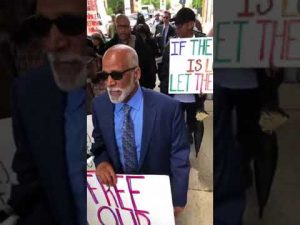
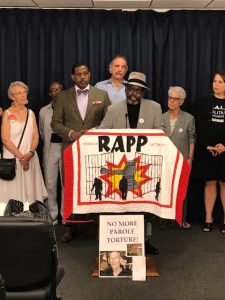
The New York State Parole Board: Failures in Staffing and Performance
“All people have in them a dream of being free again,” writes D.B., a 40-year-old who has spent 21 years in prison. During this time, D.B has had a total of 12 hearings at the Department of Corrections: four postponements, two de novo hearings, and eight board hearings.
Like D.B., many inmates have the same dream of being free, but for those being reviewed by parole commissioners W. William Smith and Marc Coppola, their chances are slim. In an extensive report co-authored by the RAPP (Release Aging People in Prison) and the Parole Preparation Project, “The New York State Parole Board: Failures in Staffing and Performance” outlines the serious problems within the New York State Parole Board, focusing on the board’s inability to perform while significantly under-staffed and allowing the continued malpractice of board commissioners Marc Coppola and W. William Smith.
W. William Smith has been on the board since 1996 when he was appointed by Governor George Pataki. He was re-appointed by Governor Cuomo in 2017. Although the rules and regulations around the Parole Board have been updated and modernized, Smith continues to deny parole to people convicted of violent crimes despite demonstrated rehabilitation.
Marc Coppola, like Smith, frequently denies parole because of a person’s crimes rather than their demonstrated low level of risk to public safety. His political ties and financial gifts to the elected officials in charge of confirming parole board members suggests that he is not a fair or ethical candidate for the position of Parole Commissioner. Both Smith and Coppola have been known to be condescending and unprofessional in their interviews for the parole board.
Guest – Dave George, Associate Director of RAPP or Release Aging Persons in Prison.
Guest – Jose Saldana, Jose was recently released from prison after serving 38 years. He works with parole reform organizations and RAPP.
—————-
—————-