Welcome to Law and Disorder Radio
Law and Disorder is a weekly independent civil liberties radio program airing on more than 150 stations and on Apple podcast. Law and Disorder provides timely legal perspectives on issues concerning civil liberties, privacy, right to dissent and practices of torture exercised by the US government and private corporations.
Law and Disorder June 18, 2018
Podcast: Play in new window | Download
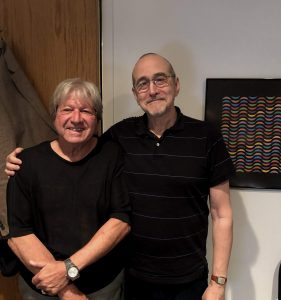
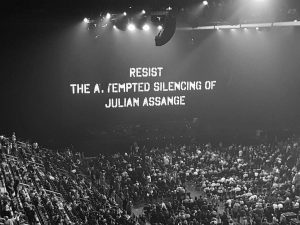
Mark Crispin Miller – Julian Assange, Voter Fraud and Fake News
WikiLeaks founder the truth telling publisher Julian Assange is in escalating danger of being sent from England to America where he would likely be tried for espionage, a crime that carries the death penalty.
Assange and WikiLeaks have revealed American war crimes in the middle east, CIA global machinations , and the work of Clinton Democrats in preventing the popular Bernie Sanders from heading up the party ticket.
Assange is presently holed up in the Ecuadorian embassy in London where he was granted political asylum six years ago by past leftist president Rafael Correa. But now, with the change of presidents in Ecuador, Assange has been cut off from the outside world. He has no phone, no computer, and no visitors.
The fresh offensive against him occurred the day after American General Joseph DiSalvo, the head of the US Southern Command, the Pentagon’s arm in Latin America, visited the new right wing Ecuadorian President Lenin Moreno. Moreno has said that Assange is “an inherited problem” and is seeking s better relationship with the United States government, to whom he has already granted a military base.
Guest – Mark Crispin Miller who is a professor of media studies at New York University. Professor Miller has frequently spoken about media propaganda, the engineering of consent for empire, fake news, and the destruction of the independent press. He has been awarded a Guggenheim Fellowship for the humanities and is a vigorous defender of Julian Assange and WikiLeaks.
—-
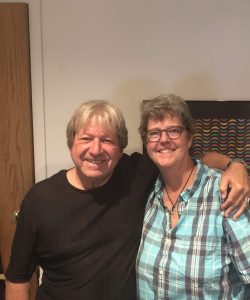
CCR Delegation To Israel
Like the USA, Israel is a colonial-settler state which, beginning in 1948, 70 years ago, expelled 750,000 native Palestinians, took their land, homes and businesses, and reduced those who remained to abused second class citizens, not unlike what was done to native Americans by white settlers in the USA. Their land was stolen, their tribes uprooted, and their culture practically destroyed.
In 1967 Israel expanded further, militarily occupying Palestinian territories to their north, east, and south, including East Jerusalem.
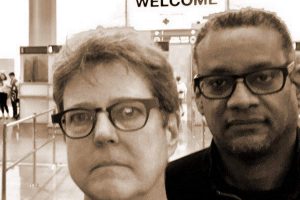
Last month Attorney and Columbia law professor Katherine Franke, the Chair of the Board of Trustees of the CCR, along with Attorney Vince Warren, the CCR’s Executive Director, headed up a 20 person delegation of American activists who traveled to Israel to report on the human rights situation there. Franke and Warren never made it past the airport in Tel Aviv. They were stopped, questioned , detained for 14 hours, and then deported back to the USA. Franke was told she could never return.
Guest – Attorney Katherine Franke, is the Sulzbacher Professor of Law, Gender, and Sexuality Studies at Columbia University, where she also directs the Center for Gender and Sexuality Law and is the faculty director of the Public Rights/Private Conscience Project. She is a member of the Executive Committee for the Institute for Research on Women, Gender and Sexuality, and the Center for Palestine Studies. She is among the nation’s leading scholars writing on law, religion and rights, drawing from feminist, queer, and critical race theory. She is the author of Wedlocked: The Perils of Marriage Equality. Her next book will be coming out from Haymarket Press in the spring: Repair: Slavery’s Unfinished Business makes the case for racial reparations in the U.S.
Law and Disorder June 11, 2018
Podcast: Play in new window | Download

U.S. Information Technology And Cyber Security Awareness
America’s information technology infrastructure is especially inviting to adversarial attacks, as news headlines tell us again and again. Some say that our national cyber defense is inadequate to protect against cyber incidents, defined by the Department of Homeland Security as those “likely to result in demonstrable harm to the national security interests, foreign relations, or economy of the United States or to the public confidence, civil liberties, or public health and safety of the American people.”
We read how hackers gain access to our personal information stored by huge retailers such as Target and Home Depot, gaining access to millions of credit and debit card numbers. In 2014 JP Morgan Chase announced a breach affecting 76 million households and 7 million small businesses. The Government Accountability Organization reports a nearly 800 percent increase of threats to federal agencies from 2006 to 2012 at a cost likely to exceed $400 billion.
Despite this and evidence of Russian tampering with the 2016 elections, President Trump recently announced that he was getting rid of its top cyber policy adviser role, a position designed to help streamline the government’s overall approach to cybersecurity policy across federal agencies. Compounding problems of coordination is a lack of shortage of trained cybersecurity professionals to fill the growing number of jobs.
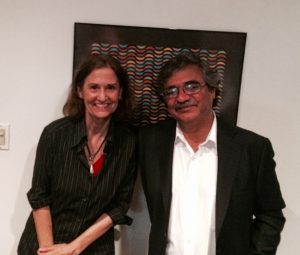
Guest – Professor Nasir Memon, founder and chair of New York University Tandon’s School of Engineering’s cybersecurity program. The Engineering School was one of the first to implement a cybersecurity program at the undergraduate level. In 2002, Nasir founded Cyber Security Awareness Week, an annual conference where tens of thousands of students compete in events and learn skills in cyber security. He is also co-founder of Digital Assembly, a software company that develops digital forensics and data recovery and Vivic, a company that produces malware detection software. Nasir’s research and commentary is widely published in scholarly and mainstream press, and he is a frequent radio and television guest.
—-
Attorney Client Privilege
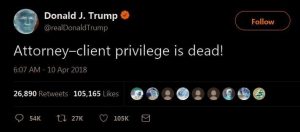
The attorney-client privilege has been in the news with the unfolding Trump scandals in bringing about the FBI raid on Trump’s attorney Michael Cohen’s home, office, and hotel room where a number of documents and computer files were seized.
What is the attorney-client privilege? And to whom does it apply? Generally speaking, the privilege is owned by the client and unless the client waived her rights her lawyer is barred not only from revealing any information about the client but even revealing who the client is.
An exception in the case of the FBI raid and Donald Trump‘s attorney’s Office, Home, and hotel room was made on the grounds that there is a “fraud exception“ to the attorney-client privilege. Defenders of the attorney-client privilege, even if it has to do with protecting Donald Trump, have argued that it is illegal and unprincipled for the Justice Department to get a search warrant from a federal magistrate and violate the principle. These people argue that it is wrong to argue that “any stick will do to beat a dog” and that making an exception in the case of Trump could backfire.
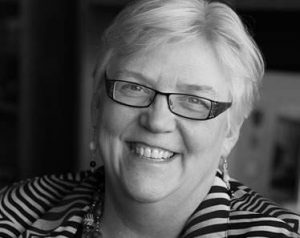
Guest – Minneapolis Attorney Carla Kjellberg, has worked with victims of child sexual assault who have sued priests, litigated sensitive family law matters, and worked with unions and political activists.
————
————
Law and Disorder June 4, 2018
Podcast: Play in new window | Download
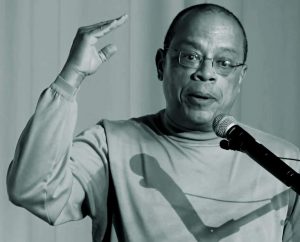
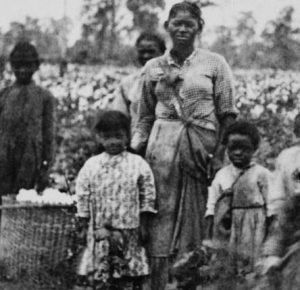
Who We Are: A Chronicle of Racism In America
In recent years, our guest, Attorney Jeffery Robinson has traveled the country speaking about the hidden history of race in America. It is a history he maintains that has been stolen from all of us. He will be speaking on this stolen history on June 19 at Townhall in New York City. His talk will be the basis for a feature documentary on the history of racism in America.
Guest – Attorney Jeffery Robinson, since graduating from Harvard Law School, Jeff has three decades of experience working on criminal and racial justice and reform issues. First, as a public defender representing indigent clients in state and then federal court in Seattle. Then, in private practice in Seattle at Schroeter, Goldmark & Bender where he represented a broad range of clients on charges ranging from shoplifting to securities fraud and first degree murder. He has tried over 200 criminal cases to verdict and more than a dozen civil cases representing plaintiffs suing corporate and government entities. Jeff was one of the original members of the John Adams Project, enabling him to work on behalf of one of five men held at Guantanamo Bay charged with the 9-11 attacks. Jeff is also a respected teacher of trial advocacy. He has lectured on trial skills all over the United States. Since 2012, Jeff has done work to educate himself and others about little known facts of the history of America’s practice of white supremacy related to African Americans. He speaks to diverse audiences across the country on the role of race in the criminal justice system and beyond. In 2015, Jeff joined the ACLU National office in New York where he continues this important work.
—-
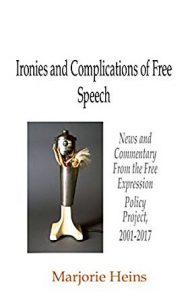
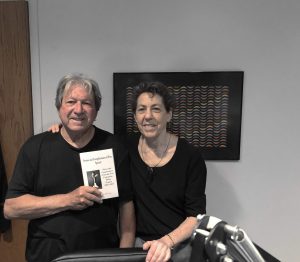
The Free Expression Policy Project was a little think tank that delved into the problem of censorship in our society. Until 2017 it was headed up by civil liberties lawyer and author Marjorie Heins. The First Amendment ostensibly protects free speech and free expression. But there are exceptions. It also separates church from state, but here too there are exceptions. We speak with attorney Marjorie Heins about this. Her book Ironies and Complications of Free Speech: News and Commentary From the Free Expression Policy Project, 2001-2017 has just been published.
Guest – Attorney Marjorie Heins, is a civil liberties lawyer, writer, and teacher, and the founding director of the Free Expression Policy Project. Her previous book, Not in Front of the Children, won the American Library Association’s 2002 Eli Oboler Award for best published work in the field of intellectual freedom. Other books include Sex, Sin, and Blasphemy: A Guide to America’s Censorship Wars; Cutting the Mustard: Affirmative Action and the Nature of Excellence; and Strictly Ghetto Property: The Story of Los Siete de la Raza. She is a graduate of Harvard Law School.
——————
——————