Welcome to Law and Disorder Radio
Law and Disorder is a weekly independent civil liberties radio program airing on more than 150 stations and on Apple podcast. Law and Disorder provides timely legal perspectives on issues concerning civil liberties, privacy, right to dissent and practices of torture exercised by the US government and private corporations.
Law and Disorder January 5, 2026
Podcast: Play in new window | Download
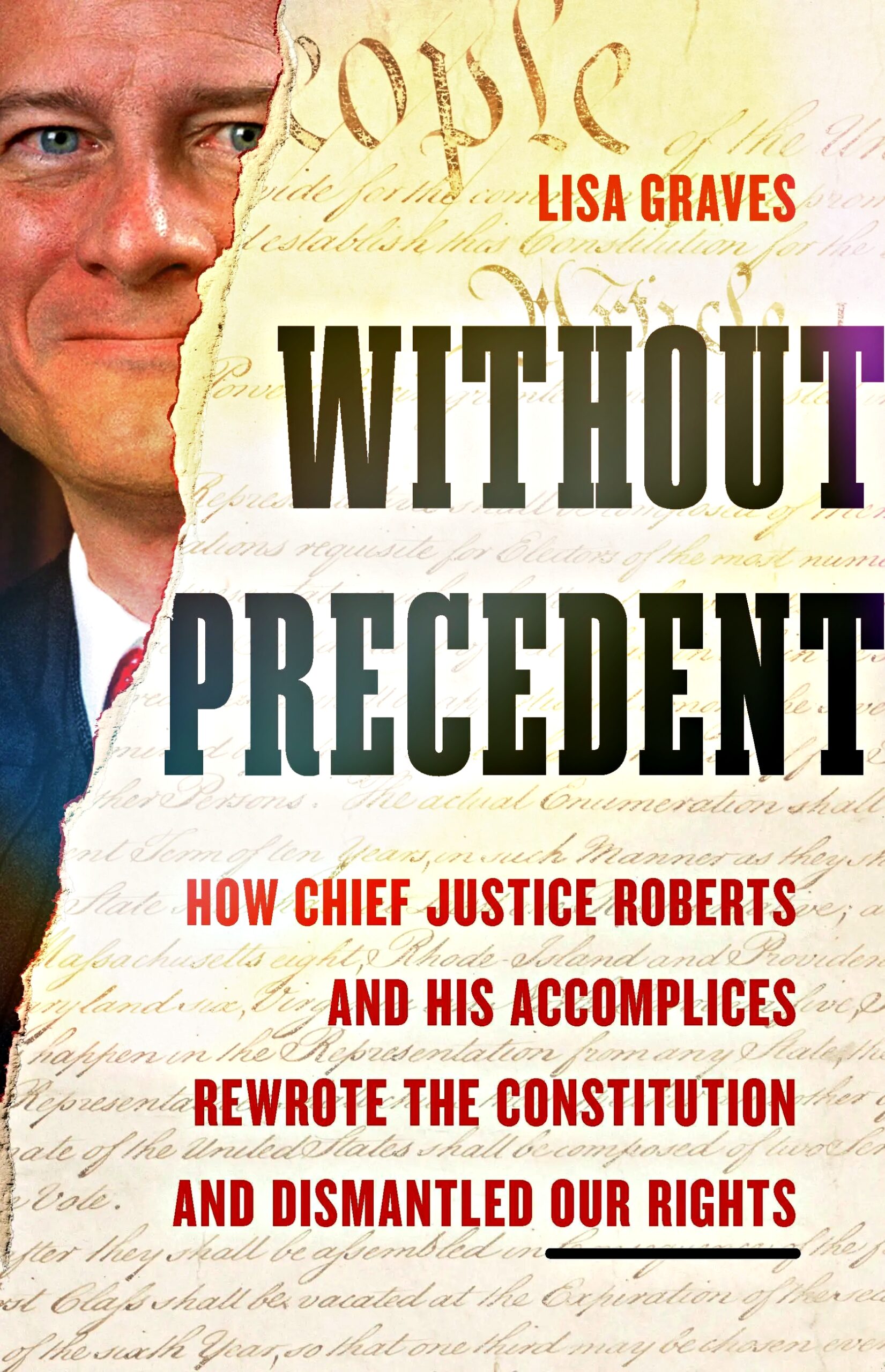
Early in his second term, after addressing a joint session of Congress, as he shook hands walking down the aisle, President Donald Trump turned to Chief Justice John Roberts, patted him on the back, and said, “Thank you again. Thank you again. I won’t forget.” What had Roberts done to deserve such gratitude? A lot.
In her withering and revealing new book, Without Precedent: How Chief Justice Roberts and His Accomplices Rewrote The Constitution and Dismantled Our Rights, Lisa Graves describes in detail how Roberts “has established himself not as a fair referee but as a diabolically effective player rewriting the Constitution and remaking America in accord with his reactionary political agenda, as he strategizes how to move the ball forward and disarm the opposition.” Sound too hyperbolic? Read the book.
Guest – Lisa Graves – before her work as Deputy Assistant Attorney General under Attorneys General Janet Reno, a Democrat, and John Ashcroft, a Republican, she was Chief Counsel for Nominations for Senator Patrick Leahy on the U.S. Senate Judiciary Committee, where she investigated the careers and ideologies of judicial nominees, including John Roberts. She also learned how to examine the finances of sitting judges as Deputy Chief of the Article III Judges Division of the Administrative Office of the U.S. Courts with oversight of the Financial Disclosure Office. She was an adjunct law professor at George Washington University Law School and worked as the Senior Legislative Strategist for the ACLU on national security and civil liberties. From 2009-2017, she led the Center for Media and Democracy. Most recently, she co-founded Court Accountability and is also the Executive Director of True North Research, a national investigative watchdog group that describes its mission as exposing “the dark money fueling regressive agendas targeting vital institutions in our republic, such as our courts and public schools.”

————————————-
Law and Disorder December 29, 2025
Podcast: Play in new window | Download

Remembering Michael Ratner
Hosts Heidi Boghosian and Michael Smith interviewed some of Michael Ratner’s closest friends and colleagues as part of a special broadcast highlighting Michael Ratner’s legal work and mentorship. The special also marked the upcoming release of Michael Ratner’s autobiography Moving The Bar: My Life As A Radical Lawyer published by OR Books. We hear from attorneys including Eleanor Stein, Richard Levy, Ray Brescia and David Cole.
Michael Ratner’s pathbreaking legal and political work is unmatched. He provided crucial support for the Cuban Revolution and won the seminal case in the Supreme Court guaranteeing the right of habeas corpus to Guantanamo detainees. Michael also challenged U.S. policy in Iraq, Haiti, Nicaragua, Guatemala, Puerto Rico and Israel-Palestine. This book is a testament to his unflagging efforts on behalf of the poor and oppressed around the world.
– Marjorie Cohn, Professor Emerita, Thomas Jefferson School of Law
Michael Ratner personified lawyering that brought both radical and human values into challenges to the use of governmental power to violate the essence of the Bill of Rights. From the torture of prisoners after 911 to the massive racial profiling by the New York Police Department, Michael’s voice and vision continue to resonate. This book provides a powerful testament to the spirit of this extraordinary man.
– Attorney Bill Goodman
—-
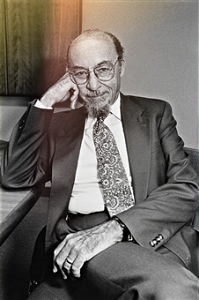
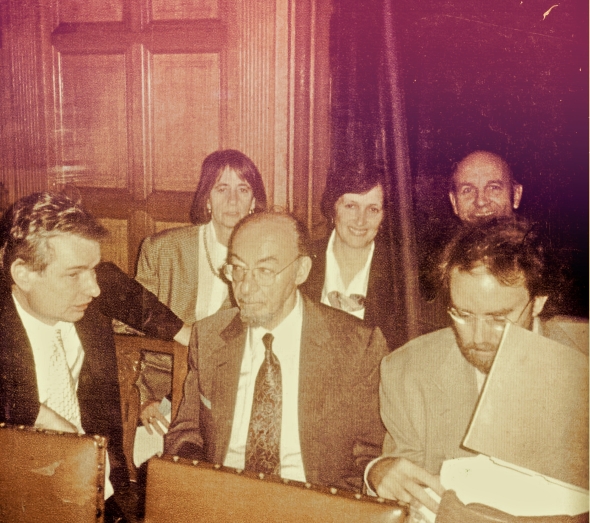

In Memory of Attorney Peter Weiss
Attorney Peter Weiss was a frequent guest here on Law and Disorder. He was a guest several times to discuss pressing issues of nuclear policy, International Human Rights Law and the Royal Dutch Shell Settlement and in 2007, Peter was a Lawyers You’ll Like guest.
We go now to hear that 2007 interview co-hosted by Michael Ratner and Michael Smith. Peter Weiss died one month short of his 100th birthday on November 3, 2025. Peter was the founder and head of the Lawyers Committee on Nuclear Policy. His field was international law. He won the historic case for universal jurisdiction which allowed foreign war criminals to be tried in the United States under certain circumstances.
Mr. Weiss is a graduate of Yale Law School and was the principle author of the draft brief on the illegality of threat or use of nuclear weapons used by many countries in making written submissions to the International Court of Justice in the 1996 nuclear weapons advisory opinion. Mr Weiss served as counsel to Malaysia at those hearings. He has published several articles on the ICJ opinion, including in the fall 1997 issue of Transnational Law and Contemporary Problems. Mr. Weiss litigated the seminal case establishing the right of victims of torture to sue their torturers in US courts (Filartiga v. Pena-Irala).
Since his retirement in 1996 from Weiss Dawid Fross Zelnick & Lehrman, a leading trademark firm, he has been Senior Intellectual Property Counsel to The Chanel Company Limited. He is also a founder and former President of the American Committee on Africa and former Chairman of the Board of the Institute for Policy Studies in Washington. He has also long been an activist for peace in the Middle East and is currently a member of the Arab-Jewish Peace Group in New York and of the Executive Committee of Americans for Peace Now, which supports the Peace Now movement in Israel.
———————
Law and Disorder December 22, 2025
Podcast: Play in new window | Download
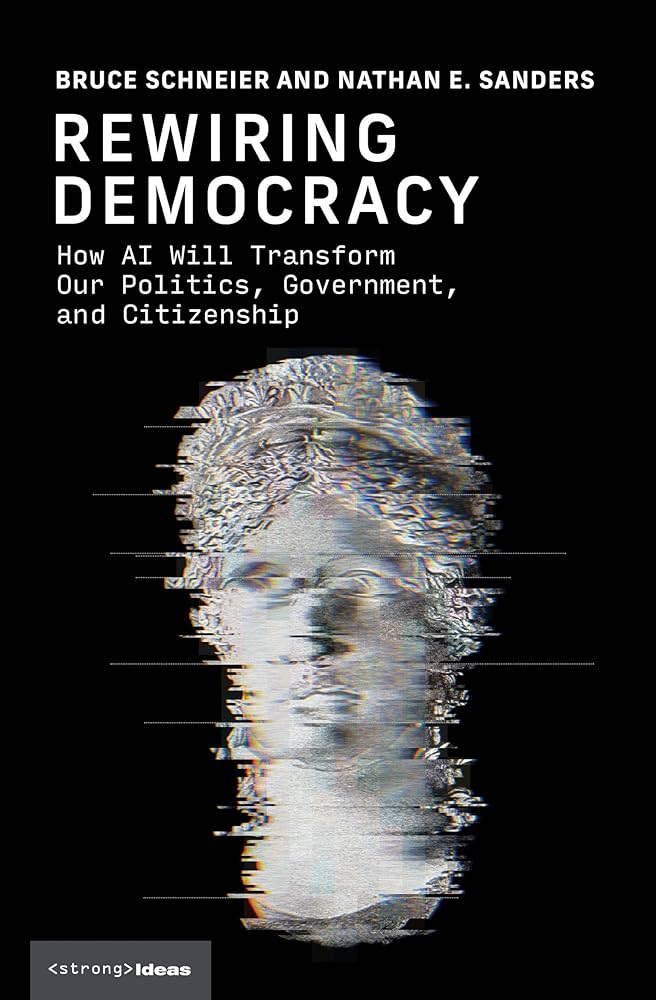
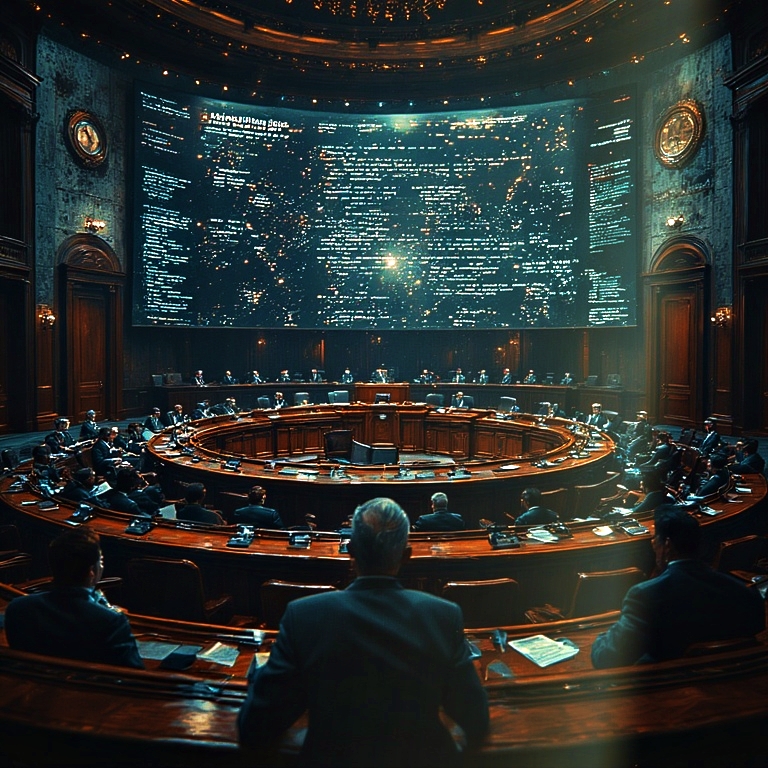
Rewiring Democracy: How AI Will Transform Our Politics, Government, and Citizenship
Artificial intelligence and democracy are two of the most charged words in the news right now. To hear the headlines tell it, AI is either about to save us—or quietly break everything that makes self-government possible. A new book refuses that false choice. It asks a more uncomfortable—and more political—question: who is using AI, how, and for whose benefit?
The book is Rewiring Democracy: How AI Will Transform Our Politics, Government, and Citizenship, published by MIT Press. It starts from a deceptively simple idea: democracy is an information-processing system—one that gathers people’s preferences and turns them into law, policy, and power. From that perspective, AI isn’t inherently democratic or dangerous. It’s a power-amplifying tool. In democratic hands, it can broaden participation, increase transparency, and make government more responsive. But in the hands of monopolistic tech companies or authoritarian states, it can just as easily intensify surveillance, manipulation, and control.
Instead of treating AI as a distant sci-fi threat, Rewiring Democracy looks at what’s already happening—AI in lawmaking, courts, elections, public services, and everyday citizenship—and asks the question too often left out of the debate: not what the technology can do, but who controls it—and who is left out.
Guest – Nathan E. Sanders, a data scientist affiliated with Harvard’s Berkman Klein Center for Internet & Society. His work focuses on using technology to strengthen democratic participation, especially for communities historically excluded from decision-making. He’s the co-author of Rewiring Democracy, along with cybersecurity expert Bruce Schneier.
—-
The Unitary Presidency: Trump’s Second Term, the Supreme Court, and the Consolidation of Power
The American system of democracy was built on a simple, stubborn idea: power must be divided if liberty is going to survive. James Madison warned that concentrating legislative, executive, and judicial authority in the same hands is “the very definition of tyranny,” and George Washington cautioned that power’s abuse is as predictable as gravity. Those weren’t poetic lines—they were the operating instructions for a constitutional democracy.
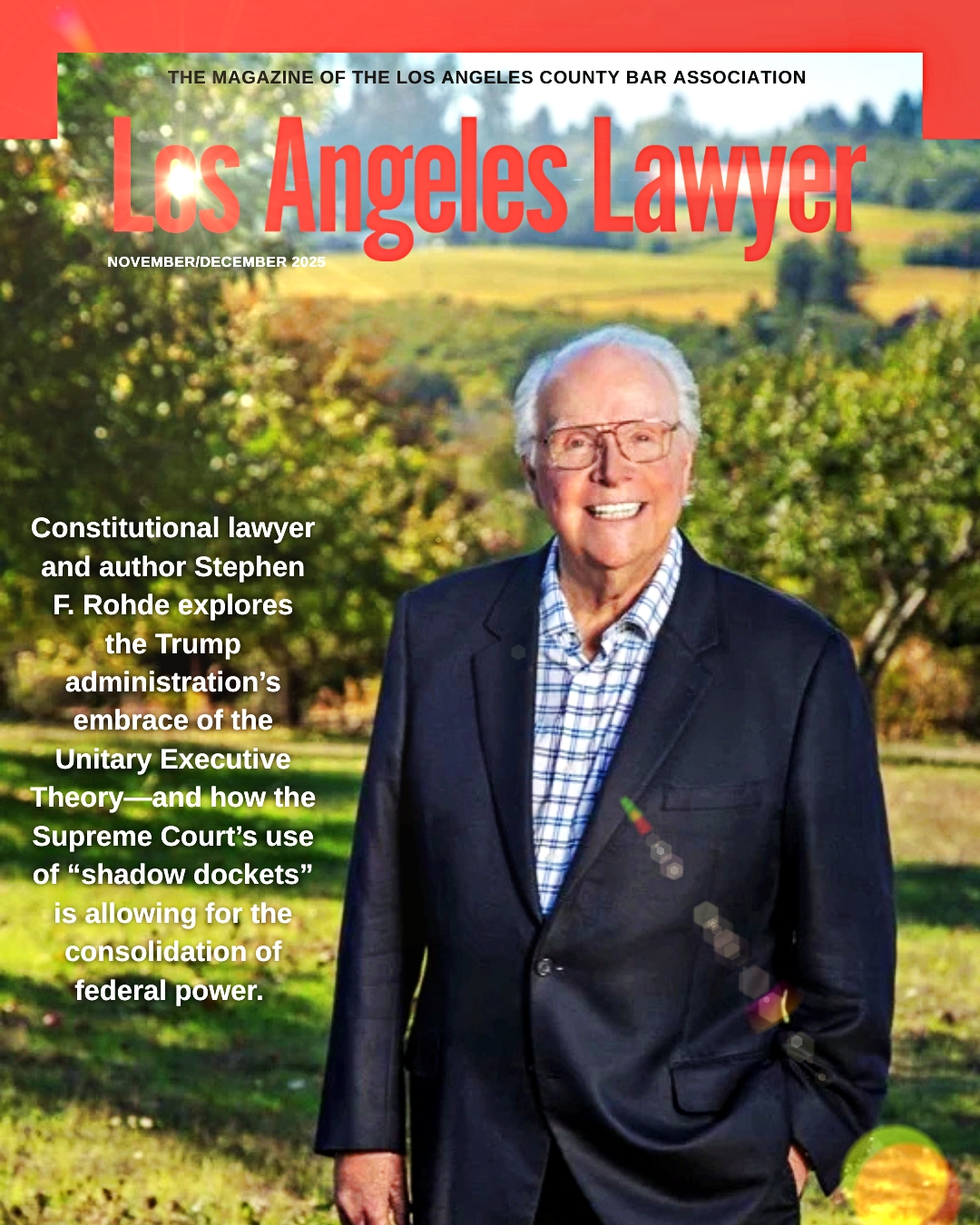
Our own cohost Stephen Rohde argues that those instructions are being ignored in plain sight. In The Unitary Presidency: Trump’s Second Term, the Supreme Court, and the Consolidation of Power, just published in Los Angeles Lawyer magazine, he says we’re not dealing with isolated controversies. We’re watching a sustained push to consolidate authority in the presidency—backed by legal theory, executive machinery, and a political ecosystem willing to treat norms and limits as optional.
Steve traces how an extreme version of the Unitary Executive Theory has become the rationale for purges of independent agencies, mass removals of officials, and executive actions that pressure universities, law firms, immigrants, protesters, and the press. In his account, the point isn’t just what’s being done—it’s the precedent being set: that the president can control, punish, and dismantle without meaningful restraint.
And the most alarming part, Steve argues, is the Supreme Court’s role—especially through its emergency “shadow docket,” where consequential decisions can be issued at lightening speed, often without full briefing or transparent reasoning. He asks readers: are we witnessing a temporary political lurch, or a lasting constitutional redesign—one that leaves checks and balances as a ceremonial relic?
Guest – Stephen Rohde is a retired constitutional attorney, lecturer, writer and political activist. He is the Chair Emeritus of several organizations including Bend the Arc, the ACLU Foundation of Southern California, and Death Penalty Focus. He is also a founder and current Chair of Interfaith Communities United for Justice and Peace. He is the author of American Words of Freedom and Freedom of Assembly.
——————————–