
Welcome to Law and Disorder Radio
Law and Disorder is a weekly independent civil liberties radio program airing on more than 150 stations and on Apple podcast. Law and Disorder provides timely legal perspectives on issues concerning civil liberties, privacy, right to dissent and practices of torture exercised by the US government and private corporations.
Law and Disorder January 1, 2018
Podcast: Play in new window | Download


Will the 911 Case Finally Go To Trial?
Sixteen years have passed since the 911 attacks. The truth of who was behind the attacks has come out in a class action lawsuit brought by more than 6500 victims and survivors. The lawsuit alleges that it was elements of the Saudi Arabian government that attacked us on 9/11. The Defendant in the lawsuit is Saudi Arabia.
The Saudi Arabian government hired 15 public relations firms to help them deny responsibility. They hired several Washington white shoe high powered connected law firms. They hid behind the law of sovereign immunity, which had to be overturned by an act of Congress in order for the lawsuit to proceed. They were helped by the US government in the cover-up by the Bush and Obama administrations. But after 16 years the case is now proceeding rapidly through the Federal courts and will either be settled or tried. The object of the lawsuit is to obtain money explained Sharon Pemboli, one of the plaintiffs and leaders of a group of women from New Jersey known as “the Jersey girls” who lobbied to win passage of the law which made the lawsuit possible. She believes that if the Saudi Arabian government is deprived of funds it will not be able to fund Al Qaeda and the extremist Wahhabi clergy responsible for supporting the terrorism of Al Qaeda.
The American public has been led to believe mistakenly that Saddam Hussein and Iraq were behind 911. The attack on Iraq was a war of aggression. At the end of World War II the United States set up the Nuremberg trials to try Nazi war criminals. They wanted to set forth principles that were not merely victor’s justice. At the Nuremberg trials the Germans were found guilty of starting a war of aggression, which was called the greatest of all crimes because it has contained within it all other crimes.
Guest – Andrew Cockburn, the Washington editor of Harper’s magazine. He has written an extremely important article in the October issue titled Crime and Punishment: Will the 9/11 Case Finally Go To Trial? about the class-action law suit brought by the victims of 9/11 against the government of Saudi Arabia.
—-


U.S. Magdalene Laundries and the Indiana Women’s Prison Researchers
From the 18th to early 20th centuries Catholic institutions known as the Magdalene Laundries in Ireland effectively enslaved unmarried mothers, where infants and mothers were subjected to brutal conditions and died in the hundreds. In 1993, a mass grave containing 155 corpses was uncovered in the convent grounds of one of the laundries. This led to media revelations about the operations of the secretive institutions Investigations into these homes have brought apologies and official compensation by the state of Ireland.
Few realize, however, that these homes also existed in the United States. Reports of the inhumane conditions in these homes has encouraged survivors of U.S. Magdalene Laundries to share their own their experiences. Surprisingly, few religious leaders, journalists and historians have yet to address and speak out about this chapter in our history.
That is, until scholars at the Indiana Women’s Prison began to research Magdalene Laundries, and their impact on girls and young women of all faiths across the United States for over 100 years. They believe that these homes were in effect the first prisons for women in the nation. And their work is being published and helping to spark a national discussion.
In a law review article that they published in the Journal of the Indiana Academy of the Social Sciences, the researchers note that their discovery of the laundries and their role in confining women is ‘stark evidence of historical amnesia.They say that the laundries played an important role in shaping attitudes toward female sexuality, identity, and societal reintegration.
Guest – Kelsey Kauffman, in 2012 she and two friends started a small college program at the Indiana Women’s Prison that has grown to 14 teachers and 80 students. She has worked as a prison officer and has taught in three prisons. Her research, which has taken her to more than 80 prisons on four continents, focuses primarily on the impact prison employment has on officers.
——————————————
Law and Disorder December 25, 2017
Podcast: Play in new window | Download

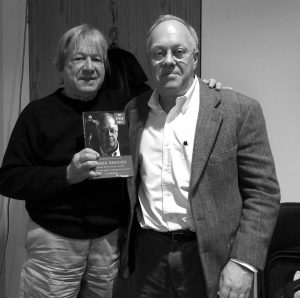
Chris Hedges – Unspeakable
The year 2017 has seen a qualitative acceleration and consolidation of power by the forces on the right which have been accurately described as a form of fascism. Three significant books were published this year addressing this phenomena, where it came from, and how to fight it. We have interviewed Nancy MacLean on her book Democracy in Chains about the origins and organization of the billionaire forces like the Koch brothers who have orchestrated the takeover of 25 state legislatures and who are attacking every institution of what is left of American democracy. We interviewed John Bellamy Foster on his book Trump in the White House about who supports the Trump agenda and why.
Guest – Chris Hedges, Pulitzer-Prize winning author and journalist. He was also a war correspondent, specializing in American and Middle Eastern politics and societies. His most recent book is ‘Death of the Liberal Class (2010). Hedges is also known as the best-selling author of War is a Force That Gives Us Meaning (2002), which was a finalist for the National Book Critics Circle Award for Nonfiction. The recent book Unspeakable consists of talks with David Talbot about the most forbidden topics in America. Chris Hedges teachers at two prisons in New Jersey. He was active in the Occupy movement, writes a weekly column for Truthdig and is also the author of American Facism: The Christian Right and the War on America.
—-
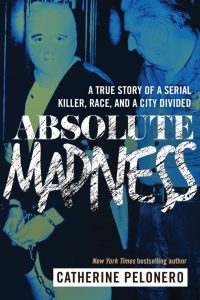
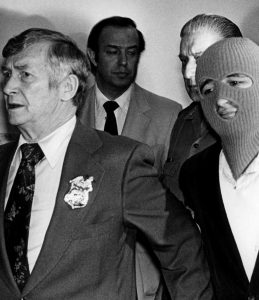
Absolute Madness by Catherine Pelonero
The new book Absolute Madness details the true story of a serial killer in New York whose targets were African American males. A young, white Joseph Christopher struck fear into the residents of Buffalo and New York City in the 1980s. This former Army private, who was dubbed both the .22-Caliber Killer and the Midtown Slasher, murdered at least 17 men in a four-month spree across the state.
Christopher, suffered from paranoid schizophrenia, had tried to admit himself to the Buffalo Psychiatric Center in September 1980, but was told he was not a danger to himself or others so could not be admitted. Two weeks later, the killings began.
Noted FBI profiler John Douglas assisted in the investigation that drew national attention and criticism from Jesse Jackson and other civil rights leaders. When the killer was finally found, he seemed on the surface to be an unlikely person to have held New York in such a grip of terror.
But Douglas’s capture would not be the end of the story. Racial discontent heightened during a series of prosecutions and judicial rulings that prompted cries of a double standard within the criminal justice system. Absolute Madness also chronicles one vulnerable man’s descent into madness and how the United States mental health system ignored his many pleas for help.
Guest – Catherine Pelonero, true crime author and commentator. Her book Kitty Genovese: A True Account of a Public Murder and Its Private Consequences was a New York Times bestseller. She is a contributing writer for Investigation Discovery’s CrimeFeed and has appeared on episodes of A Crime to Remember and Fox Files, among others. She lives in Los Angeles, California.
———————————–
Law and Disorder December 18, 2017
Podcast: Play in new window | Download

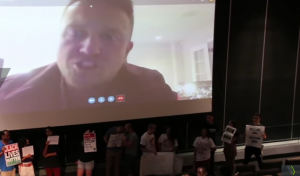
Columbia University Protesters Charged For Disrupting Controversial Speaker
On October 10, 2017 the notorious British anti-Semite and Islamophobe Tony Robinson appeared by Skype on the Columbia university campus. He was invited by the College Republican Club.
Many Columbia University students registered for the event and protested the things he said. The protesters did not disrupt the event but rather engaged the speaker’s comments.
17 students were investigated and interrogated and charged with Columbia University rules violations for “briefly interrupting a university function“ or “ disrupting a university function or rendering it’s continuation impossible.“
Guest – Columbia Law Professor Attorney Katherine Franke about the commission’s findings and recommendations and the objections to the reports conclusions. Katherine Franke is a former executive director of the National Lawyers Guildthe and chair of the board of the Center for Constitutional Rights. She is the Sulzbacher Professor of Law at Columbia Law School, and also the Faculty Director of the Public Rights/Private Conscience Project, a think tank that brings legal academic expertise to bear on the multiple contexts in which religious liberty rights are in tension with other fundamental rights to equality and liberty. Her book is titled “Wedlocked: The Perils of Marriage Equality”.
Guest – Kayum Ahmed is a Doctoral Fellow in International and Comparative Education at Teachers College, Columbia University, and an Adjunct Faculty member at Columbia Law School. Before joining Columbia, Kayum served as Chief Executive Officer of the South African Human Rights Commission from 2010 to 2015. During this period, he led a team of 178 colleagues to monitor, protect and promote human rights in South Africa, and oversaw the management of nearly 45,000 human rights cases.
—-


Immigration Defense Project: ICE Arrests Increase
Although they have yet to hunt down undocumented people in churches, hospitals, and schools, ICE is now arresting people inside of our state courthouses. Making people afraid to enter court houses is another indication of the further disintegration of democracy which has rapidly accelerated under the Trump administration.
There have been 900 incidences of ICE arresting people inside of a courthouse in America this year, 70 in New York City. Just two weeks ago in Brooklyn a rebellion of legal aid attorney’s occurred when ICE tried to arrest a client of Brooklyn Attorney Rebecca Kavanaugh‘s who was there appearing on an order of protection matter.
The persons arrested in court houses are people that are free to leave, not in jail, not held on any charges – in all kinds of court houses including where people are coming to seek protective orders in domestic violence situations, special human trafficking courts, and family courts. There has been a 900% increase in court house arrests in New York City alone this year. In response to this, there has been much organizing going on to get ICE out of the courthouses.
Guest – Andrew Wachtenheim – Supervising Attorney at IDP. He works with IDP’s non-profit and pro bono partners on litigation before the federal courts and Board of Immigration Appeals, and provides technical assistance, litigation support, and training to immigration and criminal law practitioners on the immigration-criminal law intersection. Andrew came to IDP from the immigration practice at The Bronx Defenders, where he represented noncitizens in immigration-related proceedings primarily at the agency level, and consulted with noncitizen defendants and criminal and family defense attorneys about the potential immigration consequences of contacts with the criminal justice and child welfare systems. Andrew is a graduate of Wesleyan University and Fordham Law School.
———————————————–