Welcome to Law and Disorder Radio
Law and Disorder is a weekly independent civil liberties radio program airing on more than 150 stations and on Apple podcast. Law and Disorder provides timely legal perspectives on issues concerning civil liberties, privacy, right to dissent and practices of torture exercised by the US government and private corporations.
Law and Disorder October 9, 2017
Podcast: Play in new window | Download
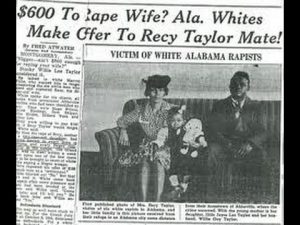
The Rape Of Recy Taylor: A Film By Nancy Buirski
The number of women raped in the Jim Crow south we’re staggering. Because of the danger to their lives and the futility of getting justice most women didn’t report the crimes and their stories when unknown.
Recy Taylor’s story was not part of this hidden history. As a 24 year old she was gang raped by six white man in 1944 in a small rural Alabama town. Mrs. Taylor spoke up and bravely identified her rapists.
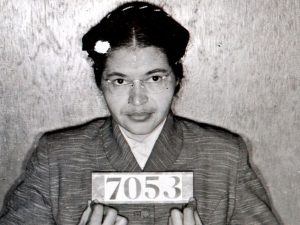
The National Association for the Advancement of Colored People, the NAACP, sent Rosa Parks, later of the 1955 Montgomery Alabama bus boycott fame, down to investigate and build a movement to shine a public spotlight on the crime.
She rallied support and triggered an unprecedented outcry for justice. It ultimately was a failed effort. Despite widespread publicity in the black press including newspapers in New York City, Detroit, and Philadelphia plus a massive letter writing campaign which put pressure on the Alabama Governor, two grand juries failed to indict the rapists and an Alabama assistant attorney general issued a report exonerating the criminals.
This is the focal point of a new film titled The Rape of Recy Taylor, written, directed and produced by Nancy Buirski. It recently had its North American premiere at the New York Film Festival.
Guest – Nancy Buirski joins us in the studio. The film won an award at the 74th Venice International Film Festival. Nancy has directed, written, and produced a number of award-winning films and is a member of the American Academy of Motion Picture Arts and Sciences. First look at Nancy Buirski’s documentary. Nancy’s Facebook page. Here is the Facebook documentary link
—-
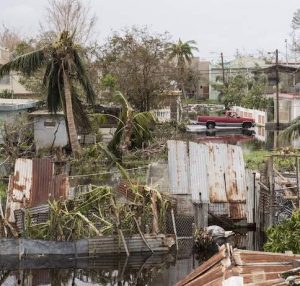
Puerto Rico Hurricane Aftermath – Natasha Lycia Ora Bannan
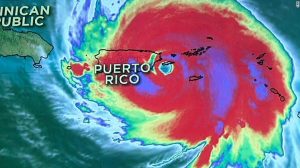
Puerto Rico is the only remaining U S. colony in the western hemisphere. 3.5 million people live on the island. They lack representatives in Congress and the population is barred from voting in the US presidential elections. Although it is $73 billion in debt to American banks,by law it is unable to declare bankruptcy and restructure its debt. President Donald Trump said that the impact of Maria was partly the fault of Puerto Rico falling into a giant amount of debt that it has not repaid. With an already stressed out infrastructure the island in the past three weeks was hit by two extremely powerful hurricanes. Electricity and cell service are down, people are drinking water out of creeks, they have little fuel, little food, and the mayor of San Juan Carmen Yulin Cruz is sleeping on a cot. The mounting death toll is presently at 34.
President Trump accused the San Juan mayor of “poor leadership“ after she criticize the American government for not helping Puerto Rico enough after Hurricane Maria. He said she was “a politically motivated ingrate.” Then he barred her from participating in a group phone call to talk about relief, telling her she could listen but not speak. He accused the Puerto Rican people of being lazy, saying that “they want everything done for them.”
Guest – Attorney Natasha Lycia Ora Bannan, Puerto Rican President of the National Lawyers Guild. She has recently returned from Cuba, which also suffered severely from hurricane Maria, but responded in a much more effective way. Support Puerto Rico to drive donations to the Hurricane Maria Relief and Recovery Fund at www.mariafund.org, set up by Puerto Rican attorney, Xiomara Caro.
——————————
Law and Disorder October 2, 2017
Podcast: Play in new window | Download
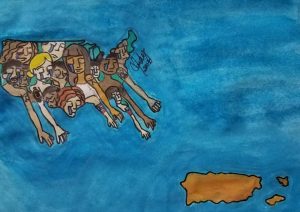
Puerto Rico Disaster Recovery, The Jones Act And Federal Aid
The devastation to Puerto Rico from Hurricane Maria has been likened to the impact of an atomic bomb, destroying the U.S. territory, and leaving nearly 3.5 million U.S citizens without power, limited access to food and water, and a collapsed infrastructure. Donald Trump was quick to blame the island nation for its problems, even highlighting its financial debt to Wall Street.
Puerto Rico has a history of struggling for federal aid for natural disasters contrasted with those on the mainland. The White House response to much-needed funding post-Maria is to wait for a “full assessment” and “fact-finding” process. Early reinforcements from the Federal Emergency Management Agency (FEMA) are appalling, if nonexistent: Diesel fuel for generators is scarce. Towns outside metro areas are unreachable. Hospitals can’t treat patients. Streets are flooded, looting is rampant, highways destroyed. The National Guard, FEMA, Red Cross or federal vehicle have yet to be spotted on the island. None of this is new.
In 1989, when Hurricane Hugo hit South Carolina, Puerto Rico and the USVI, the elder President Bush was criticized for not responding quickly enough. More relief for the Caribbean was added to a bill initially designed to address earthquake damage in California. And when Hurricane Georges pounded Puerto Rico in 1998, it took half a year for the federal government to act on a long-term plan for the island.
A central reason for this is the Jones Act, a century-old shipping law often accused of stifling the Puerto Rican economy. Among other things, the Act requires that domestic shipping be conducted by U.S.-owned, U.S.-made ships staffed by American crews. That means, for example, that all food from the mainland—and Puerto Rico imports 85 percent of what it consumes—must be brought in U.S. ships.
Nydia Velázquez, the Puerto Rico–born congresswoman who represents parts of New York City, says she will ask Congress for a one-year waiver to Jones Act requirements for the territory. That might test Washington’s willingness to change its approach to Puerto Rico and to see if Puerto Ricans’ status as citizens without full rights is really working.
Guest – Carlito Rivera, co-editor of the Old and New website, active with the Campaign to Bring Mumia Home, and a Former member of the Young Lords. CONTACT: El Maestro – Community Center and Boxing Gym in the Bronx, Puerto Rican Nationalist Party Headquarters 646-299-6507.
Since the recording of this interview, President Trump agreed to waive the Jones Act, which will temporarily lift shipping restrictions and allow the people of Puerto Rico to receive necessary aid.
—-
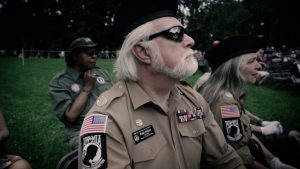
Burns and Novick: Masters of False Balancing
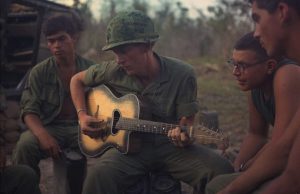
Ken Burns and Lisa Novick have made an influential documentary called “The Vietnam War” whose 10 episodes have been running on PBS. Burns said that his film “will inspire our country to begin to talk and think about the Vietnam war in an entirely different way.” Novak said that “we are all searching for some meaning in this terrible tragedy.”
The United States took over the war in 1954 from the defeated French who failed despite massive American support to recolonize Vietnam after World War II. The United States left Vietnam 1975 when they were forced to withdraw troops in the teeth of massive Vietnamese resistance, a huge antiwar movement at home, and the refusal of GIs in Vietnam to continue to fight.
At least 3 million Vietnamese were murdered. 58,200 American soldiers were killed. 19 million gallons of toxic defoliants, 7.5 million tons of bombs, including 400,000 tons of napalm were dropped on the Vietnamese. Without a Navy or Air Force, the Vietnamese resistance lived in tunnels or hid in the jungle.
The CIA’s infamous operative in Vietnam, Colonel Edward Lansdale, who helped install the US supported dictator Diem, quoted Robert Tabors The War of the Flea saying “there is only one means of defeating an insurgent people who will not surrender, and that is extermination. There is only one way to control a territory that harbors resistance, and that is to turn it into a desert.”
The Burns-Novik film’s opening sentence says that the war was started “in good faith by decent people out of fateful misunderstandings, American overconfidence and cold war misunderstandings.” Noam Chomsky, who came to prominence in 1967 as a critic of the war, and who was not interviewed in the film, wrote that the US “went to war in Vietnam for a very good reason. They were afraid Vietnam would be a successful model of independent development and that it would have a virus effect – if that others who may try to follow the same course.”
Guest – Jerry Lembcke, Professor Emeritus of Sociology at Holy Cross College.
Professor Lempke is recognized for work on post-Vietnam War American culture, studies of how we continue to process the war through film, literature, folklore, and of course television documentaries. He is the author and editor of many books, most notably his 1998 book “The Spitting Image: Myth, Memory and the Legacy of Vietnam”. He served as a chaplain’s assistant in Vietnam and is a member of Vietnam Veterans Against the War.
—————————————————
Law and Disorder September 25, 2017
Podcast: Play in new window | Download
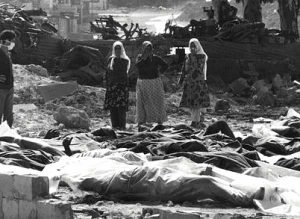
35th Anniversary of Palestinian Mass Slaughter in Lebanon Refugee Camps
This month marks the 35th anniversary of the mass slaughter of civilian Palestinians by Lebanese fascists in their Lebanon refugee camps of Sabra and Shatila. The Palestinians who lived in the camps had been driven out of their villages in the Galilee by Israel. They had lived there for hundreds of years until the Zionist colonialists expelled them in 1948. The Israeli Army aided in the 1982 slaughter. The 1982 Israeli invasion of Lebanon, which preceded the massacre, was given the greenlight by the United States. Up to 1982, the Palestine Liberation Organization, known as the PLO, had its headquarters in Beruit, Lebanon. This Israeli Army invaded Lebanon and succeeded in driving the PLO out. The United States gave written commitments to the PLO about protecting the civilian population in order to secure the PLO’s evacuation from Beruit the month before the slaughter at Sabra and Shatila camps.
Israeli Defense Minister Ariel Sharon falsely asserted that there were 2000 terrorists in the camps. US Envoy to Lebanon Morris Draper did not dispute this falsehood. Sharon told Draper that ” We will kill them. They will not be left there. You are not going to save them.” Sharon sent Lebonese fascists into the refugee camps. They silently killed hundreds of Palestinians and Lebanese, mostly women and children and old men, using knives and bayonets. The Israeli Army lit up the killing fields with flares. There was such a worldwide outcry that Israel was forced to set up a commission of inquiry. That commission found that Sharon bore “personal responsibility” for the massacre and recommended that he be dismissed from his post as Defense Minister.
The blowback from these events in Lebanon 35 years ago still echo today in the wars America is conducting in Syria and Iraq.
Guest – Rashid Khalidi, Edward Said Professor of Arab Studies at Columbia University. He is the author of “Under Siege: PLO Decision Making During the 1982 War”. and most recently “Brokers of Deceit: How the US Has Undermined Peace in the Middle East.” Professor Khalidi recently had an article on the Sabra and Shatila massacre in The Nation magazine.
—-
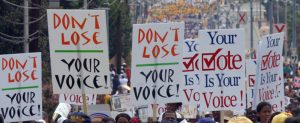
The Queensbridge House public housing project in Long Island City Queens is the largest such complex in the country. With more than 7,000 residents, it’s a community with little faith in civic engagement. Like other public housing communities, and low-income neighborhoods in general, poor people vote at considerably lower rates than wealthier ones. Many feel apathetic, that the system is rigged, and that their votes don’t matter.
One nonprofit in NYC is using innovative partnerships with community-based social service organizations to conduct nonpartisan voter mobilization so more underrepresented citizens participate in our democracy.
Community Votes is trying to change the culture and mindset of large nonprofit social service agencies so they integrate into their day-to-day operations civic engagement activities. These activities include promoting awareness of elections and issues and encouraging voting and other participation in federal, state, and city policy making. A few years ago Community Votes partnered with the Jacob Riis Neighborhood Settlement, a longtime provider of social services in the Queensbridge Houses, to engage in personalized messaging to mobilize voters. The results were a considerably higher rate of voter turnout in the 2014 midterm elections.
Guest – Louisa Hackett is the director of Community Votes. Louisa founded Community Votes in 2013. Through her work at Community Resource Exchange providing consulting services to New York City nonprofit organizations, she recognized the assets direct service organizations have to turn more citizens into voters.
—————————————————–