
Welcome to Law and Disorder Radio
Law and Disorder is a weekly independent civil liberties radio program airing on more than 150 stations and on Apple podcast. Law and Disorder provides timely legal perspectives on issues concerning civil liberties, privacy, right to dissent and practices of torture exercised by the US government and private corporations.
Law and Disorder May 8, 2017
Podcast: Play in new window | Download


Aging Prisoners and the Law Of Parole
The United States of America imprisons a higher proportion of its population than any other country in the world. Today America holds 2.3 million people behind bars. This has been called “mass incarceration.” Part of the reason for mass incarceration is the system of parole, which many consider to be broken, especially in New York State. The purpose of incarceration is punishment. It is also rehabilitation. And third, it is an opportunity for a person to come to terms with what she did, and gain skills. This is why prisons are called “correctional facilities.” When a person has repaid society for her crime, has been rehabilitated, and does not pose a threat to the community they are supposed to be paroled. But it actuality, this is not the way it works. In many cases, especially when the applicant for parole had committed a violent crime the sole criteria that the parole board examines is the nature of the crime that was committed. Something that convict cannot change. The latest example is the denial last month of parole to 67 year-old New York Prisoner Judy Clark who has been behind bars for 35 years for her role and driving the getaway car in the bungled 1961 Brinks armored car robbery which left to Nyack New York police officers and then I’m a truck driver dead. New York Governor Andrew Cuomo, in granting Judy Clark clemency so she would be eligible for parole, said “It was a hard political decision.”
I could hear Jimmy Breslin’s voice saying “she made a mistake – we all do. She learned, she paid the price, she spent her life in a cage, and she is now different. Jesus would pardon her. Who the hell made you better than Jesus? ” A prominent local police chief Joseph Sinagara commented that “I don’t care what kind of model prisoner she was.” Ms. Clark’s daughter, Harriet, said she understood the seriousness of the crime but believed the decision by the board was an injustice. “My mother did not kill anyone, and it’s hard for me to understand who is served by making her die in prison, which is what decisions like this eventually amount to.”
Guest – Professor Steven Zeidman is the Director of the Criminal Defense Clinic at CUNY School of Law. A graduate of Duke University School of Law, he is a former staff attorney and supervisor at the Legal Aid Society. Professor Zeidman is a member of American Bar Association’s Criminal Justice Section Council, and serves on the Board of Directors of Prisoners’ Legal Services and an Advisory Council created to help implement the remedial order in the Floyd v. City of New York stop-and-frisk litigation. He has served on several statewide commissions, including the Commission on the Future of Indigent Defense Services.
Guest – Laura Whitehorn , a former political prisoner who served 14 years for the distruction of government property in connection with a 1983 bombing at the US Capitol where no one was injured. She was released in 1999. Laura Whitehorn is a leader in the Release Aging People in Prison Organization and has been active in challenging the New York state parole board’s intransigence.
—-
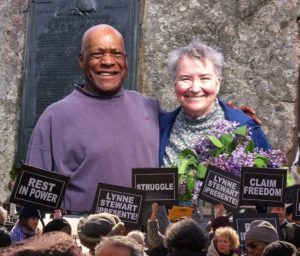
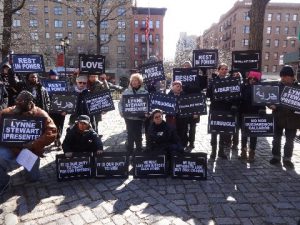
Lynne Stewart’s Memorial
Many attended Lynne Stewart’s memorial including Glen Ford, Hon. Charles Barron, Jeff Mackler, Pam Africa, Father Lawrence Lucas, Ralph Schoenman, Jess Sundin, Rev. Allison, Lamis Deek, Sara Flounders, Bob Lederer, Janine Otis Ensemble, Nat Turner – Poet, Atiba Wilson – Drummer, Dr. Patrice Turner and many more. We hear an impassioned speech by Chris Hedges.
Lynne Stewart: A Revolutionary Life Well-Lived – A Biographical Glimpse
————————————————————————————-
Law and Disorder May 1, 2017
Podcast: Play in new window | Download


The state of Arkansas had plans to execute 8 men in 11 days this April, rushing to do so before the expiration date of one of the drugs used for the lethal injections. The executions have been temporarily stayed by several court orders. Arkansas’s unseemly rush has raise anew questions about the efficacy, humanity, cost, and morality of the death penalty. Statistically, it has an discriminatory impact on non-white, intellectually deficient, and poor people. The United States along with Saudi Arabia and China is one of the few countries in the world still using the death penalty.
Guest – Mike Farrell, actor and activist and the president and founder in 1988 of the San Francisco based organization Death Penalty Focus. DPF views the death penalty as an ineffective, cruel, and inappropriate response to the serious problem of violent crime. The organization provides information to the public, conducts media campaigns and is a resource to lawyers and educators across the country.
—-

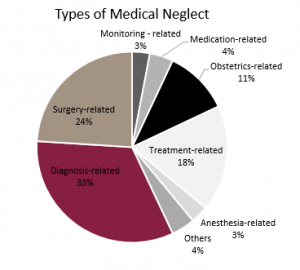
Republicans Propose Medical Malpractice House Bill Limiting Damages Award
The Republicans in the House of Representatives recently introduced a bill to limit medical malpractice lawsuits brought by low income people on Medicaid and elderly people on Medicare. It would do so by limiting the amount they could recover for their pain and suffering caused by, for example, getting infected bedsores in a nursing home, a medication mixup, malnutrition, dehydration, or being the victim of a egregious medical errors such as when a foreign body is left inside a patient. More examples include when a baby’s brain is damaged, or when surgery is performed on the wrong body part. The bill has the support of the American Medical Association, the American Hospital Association, and the American Healthcare Association, a trade group for nursing homes.
The bill has several provisions that closely resemble legislation introduced by Tom Price, President Trump’s Secretary of Health and Human Services. When he was a House member from Georgia, Price, an orthopedic surgeon, championed legislation that would set limits on damages and make it easier for doctors to defend themselves and medical malpractice lawsuits. For decades, Republicans have charged that there is a medical malpractice lawsuit crisis brought about by frivolous lawsuits.
Guest – Attorney Steven Pegalis, a trial attorney who represents patients and medical malpractice claims. Attorney Pegalis is the author of the three volume textbook The American Law of Medical Malpractice. He teaches the subject at New York Law School and is codirector of the New York Law School Health Law and Patient Safety Project. Attorney Pegalis is the founding partner of Pegalis and Erickson and one of the nations foremost medical malpractice trial attorneys. He has practiced law for over 50 years.
Law and Disorder April 24, 2017
Podcast: Play in new window | Download
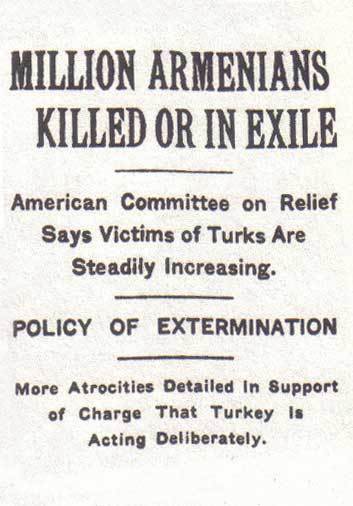
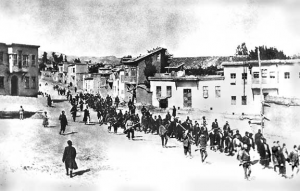
Speaking In Turkish: Denying the Armenian Genocide
To commemorate this, the first genocide of the 20th century, Law and Disorder co-host Heidi Boghosian presents a 60-minute documentary special titled “Speaking In Turkish: Denying the Armenian Genocide.”
Around the world, April 24 marks the observance of the Armenian Genocide. On that day in 1915 the Interior Minister of the Ottoman Empire ordered the arrest and hangings of Armenian intellectuals and community leaders in Constantinople. It was the beginning of a systematic and well-documented plan to eliminate the Armenians, who were Christian, and who had been under Ottoman rule and treated as second class citizens since the 15th century.
The unspeakable and gruesome nature of the killings—beheadings of groups of babies, dismemberments, mass burnings, mass drownings, use of toxic gas, lethal injections of morphine or injections with the blood of typhoid fever patients—render oral histories particularly difficult for survivors of the victims.
Why did this happen? Despite being deemed inferior to Turkish Muslims, the Armenian community had attained a prestigious position in the Ottoman Empire and the central authorities there grew apprehensive of their power and longing for a homeland. The concerted plan of deportation and extermination was effected, in large part, because World War I demanded the involvement and concern of potential allied countries. As the writer Grigoris Balakian wrote, the war provided the Turkish government “their sole opportunity, one unprecedented” to exploit the chaos of war in order to carry out their extermination plan.
As Armenians escaped to several countries, including the United States, a number came to New Britain, Connecticut in 1892 to work in the factories of what was then known as the hardware capital of the world. By 1940 nearly 3,000 Armenians lived there in a tight-knit community.
Pope Frances calls it a duty not to forget “the senseless slaughter” of an estimated one and a half million Armenians by the Ottoman Turks from 1915 to 1923. “Concealing or denying evil is like allowing a wound to keep bleeding without bandaging it,” the Pope said just two weeks before the 100th anniversary of the systematic implementation of a plan to exterminate the Armenian race.
Special thanks to Jennie Garabedian, Arthur Sheverdian, Ruth Swisher, Harry Mazadoorian, and Roxie Maljanian. Produced and written by Heidi Boghosian and Geoff Brady.