Welcome to Law and Disorder Radio
Law and Disorder is a weekly independent civil liberties radio program airing on more than 150 stations and on Apple podcast. Law and Disorder provides timely legal perspectives on issues concerning civil liberties, privacy, right to dissent and practices of torture exercised by the US government and private corporations.
Law and Disorder July 17, 2017
Podcast: Play in new window | Download
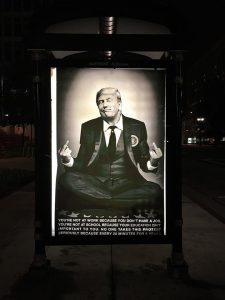

This is Not Populism : John Bellamy Foster
Is Trump a neofascist? Thoughtful analysts on the left like Cornell West, Noam Chomsky, and Judith Butler think he is. But mainstream liberal commentators refuse to associate the Trump phenomena with fascism. They call him a right wing populist. What is neofascism? Right wing Populism? Does it really matter what Trump is called? The great German playwright and political thinker who lived in Germany during Hitler’s reign, Berthold Brecht, asked in 1935: “How can anyone tell the truth about fascism, unless he’s willing to speak out against capitalism, which brings it fourth?” We speak today with John Bellamy Foster, the editor of the venerable magazine “Monthly Review”. He wrote the lead article in the current June 2017 issue titled “This Is Not Populism.”
Guest – John Bellamy Foster is editor of Monthly Review and professor of sociology at the University of Oregon. He has written widely on political economy and has established a reputation as a major environmental sociologist. He is the author of Marx’s Ecology: Materialism and Nature (2000), The Great Financial Crisis: Causes and Consequences (with Fred Magdoff, 2009), The Ecological Rift: Capitalism’s War on the Earth (with Brett Clark and Richard York, 2010), and The Theory of Monopoly Capitalism: An Elaboration of Marxian Political Economy (New Edition, 2014), among many others.
—-
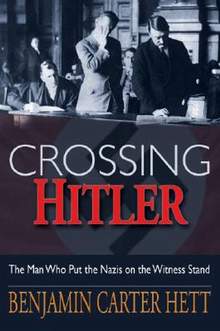


Crossing Hitler: The Man Who Put the Nazis on the Witness Stand
Author Benjamin Hett outlines the fascinating and tragic story of a young lawyer Hans Litten in his recent book Crossing Hitler: The Man Who Put the Nazis on the Witness Stand. Before the Nazis rose to power in the early 1930s, they incited calculated violence among the working class in German taverns. Four Nazi stormtroopers were charged with firing randomly into a dance hall where a communist hiking club were holding a party. Three young men were wounded. Hans Litton was the advocate for the 3 men.
Hans Litten called Hitler to the witness stand to show that the Nazi party was a violent party, and by cross examining Hitler he tried to prove that. Litten forced Hitler to contradict himself, reducing him to humiliating rage that revealed his true intention. At that time, Hitler wanted to be a legal party in Germany and of course you couldn’t be a party that was extra-constitutional and legal but at the same time he didn’t want to disappoint the base of his party which was this violent working class aspect. Two years later, the Nazi Party rose to power.
What came after the Reichstag Fire was the arrest of about 5 thousand people across Germany who the Nazis have identified as opponents or potential opponents. Hans Litten was among them and sent to a concentration camp. Author Benjamin Hett describes a powerful narrative of Hans facing torture yet still telling stories and teaching art to other prisoners.
Hans Litten was born in 1903 in Halle in Central Germany, his father was a law professor and Jewish but converted to German evangelical (Lutheran).
Guest – Benjamin Hett, author of Crossing Hitler: The Man Who Put the Nazis on the Witness Stand. Hett is a former trial lawyer, and now Associate Professor of History at Hunter College.
————————————————–
Law and Disorder July 10, 2017
Podcast: Play in new window | Download
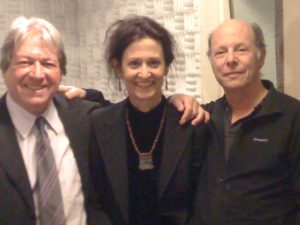
Law and Disorder Outtakes: Disorderly Bloopers
We first began recording Law and Disorder in 2004, the same year the Republican National Convention—and large protests—were held in New York City. When we started, we had four hosts—Dalia Hashad and Michael Ratner along with Michael Smith and Heidi Boghosian.
After a few years, Dalia moved to California, leaving us with three hosts. In late spring 2016 we lost Michael Ratner to cancer. Now there are just two of us.
It is our special pleasure to share with listeners our first segment of The Disorderly Bloopers, behind-the-scenes audio outtakes from the first years we were on the air.
Law and Disorder was created during the George W. Bush administration to cover what we thought would be some of the darkest days in the nation’s history. As part of our special summer episode we thought these studio snippets might provide a few minutes of much-needed levity.
It’s important to take a few minutes to laugh at ourselves, and to look back at the hundreds of fun days that we here at Law and Disorder have had over the years.This has also been a trip down memory lane for Heidi and Michael as we hear hilarious interchanges with Dalia and Michael Ratner.
As we covered some of the most serious topics in the news, and amidst the enormous respect we had for all of our guests, the four of us wholeheartedly enjoyed a special relationship, along with our longstanding producer Geoff Brady. It’s a relationship that comes from working closely together and respecting each other as colleagues and friends.
—-
Hosts Read Some of the Best Courtroom Transcripts
Q: Doctor, before you performed the autopsy, did you check for a pulse?
A: No.
Q: Did you check for blood pressure?
A: No.
Q: Did you check for breathing?
A: No.
Q: So, then it is possible that the patient was alive when you began the autopsy?
A: No.
Q: How can you be so sure, Doctor?
A: Because his brain was sitting on my desk in a jar.
Q: But could the patient have still been alive nevertheless?
A: It is possible that he could have been alive and practicing law somewhere.
—-
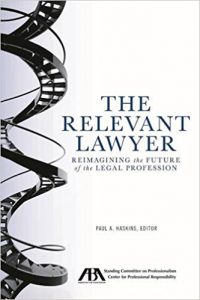
The Relevant Lawyer: Reimagining the Future of the Legal Profession
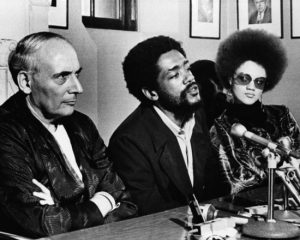
Hosts alternate in reading part of a chapter on Attorney Charles Garry in the book The Relevant Lawyer: Reimagining the Future of the Legal Profession by Paul A. Haskins. Haskins is senior counsel in the American Bar Association Center for Professional Responsibility and lead counsel for the Standing Committee on Professionalism.
——————————————————-
Law and Disorder July 3, 2017
Podcast: Play in new window | Download
Jeremy Corbyn Labour Party Victory
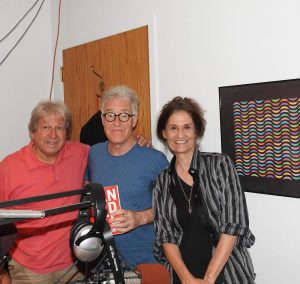
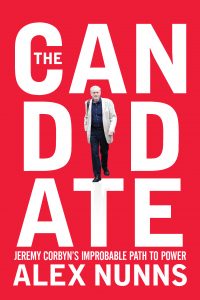
One of the bright and hopeful developments in world politics was the wide support that Jeremy Corbyn, the leader of the British Labor Party got in that country’s recent elections. Corbyn ran on an unabashedly left platform. His party recruited tens of thousands of young people before and after the election. Although the conservative Government of Prime Minister Teresa May is still in power this is not likely to last long. To speak with us today about these developments in Great Britain and their relevance to the United States where we saw a similar phenomenon with the rise of Bernie Sanders, is Colin Robinson.
Guest – Colin Robinson is from Liverpool England and he lives in New York City. He’s the publisher of OR Books. Colin Robinson worked as a senior editor at Scribner and was previously managing director of Verso Books and publisher of The New Press. Among the authors he has published are Tariq Ali, Noam Chomsky, Alexander Cockburn, Mike Davis, Norman Finkelstein, Eduardo Galeano, Eric Hobsbawm, Lewis Lapham, Mike Marqusee, Rigoberta Menchú, Matt Taibbi and Jann Wenner.
—-
Poem: Low Regard
—-
SCOTUS on CCR CASE
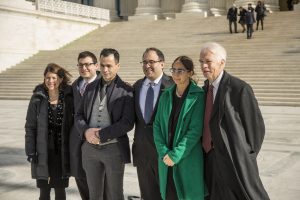
Just a few weeks ago the Supreme Court reversed a federal appeals court ruling that former high-level Bush administration officials may be sued for their roles in the post-9/11 profiling and abuse of Muslim, Arab, and South Asian men.
After the 9/11 attacks, hundreds of non-citizens were rounded up solely on the basis of their race, religion, ethnicity, and immigration status. They were held in extremely restrictive confinement and physically and psychologically abused. The Court held that high-level government officials who implement and create clearly unconstitutional policies alleged to be based on national security are nonetheless shielded from liability.
However, the Court did allow plaintiffs the chance to prove their case against Warden Dennis Hasty, finding that complaint’s allegations, “plausibly show the warden’s deliberate indifference” to the abuse plaintiffs suffered while they were held at the MDC. The claims against the Warden will be sent back to the lower courts for an opportunity to show that prison administrators are not entitled to the same immunity given to high-level officials in this case.
Guest – Senior Managing Attorney Shane Kadilal from the Center for Constitutional Rights. His cases there include challenges to the indefinite detention of men at Guantánamo and domestic immigration sweeps. He has been counsel in major CCR cases challenging the material support statute, the low rate of African-American firefighter hiring in New York City, and the NSA’s warrantless surveillance program.
———————————————