Welcome to Law and Disorder Radio
Law and Disorder is a weekly independent civil liberties radio program airing on more than 150 stations and on Apple podcast. Law and Disorder provides timely legal perspectives on issues concerning civil liberties, privacy, right to dissent and practices of torture exercised by the US government and private corporations.
Law and Disorder October 10, 2016
Podcast: Play in new window | Download

Seeking Justice: The Leo Frank Case Revisited
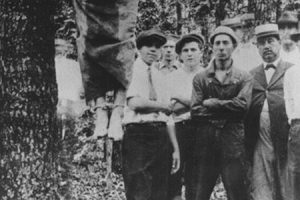
In 1913, a 29 year old New York Jew who managed a pencil factory outside of Atlanta was hauled out of his jail cell in Marietta, Georgia by a group of prominent citizens including the judge who found him guilty. He was placed standing table. A rope was tied to a tall tree and put around his neck. The judge kicked the table out from under him. Leo Frank was lynched. The case had became a national scandal with Frank being accused and found guilty of raping and murdering a 13-year-old girl, Mary Phagan, who worked at the pencil factory. Frank was sentence to death, although he was innocent, but lost his appeals all the way up to the Supreme Court. The governor of Georgia, feeling uneasy about the impending execution, commuted his sentenced to life in prison. The commutation incited the local citizens to carry out the execution themselves by breaking into Frank’s cell and taking him out for the lynching. The Museum of Jewish Heritage in Battery Park City at the southern tip of Manhattan is featuring a show on the Frank case.
Guest – Steve Oney, was educated at the University of Georgia and at Harvard, where he was a Nieman Fellow. He worked for many years as a staff writer for the Atlanta Journal-Constitution Magazine. He has also contributed articles to many national publications, including Esquire, Playboy, Premiere, GQ and the New York Times Magazine. Oney lives in Los Angeles with his wife, Madeline Stuart. Steve is the author of The Dead Shall Rise : an acclaimed account that re-creates the entire story for the first time, from the police investigations to the gripping trial to the brutal lynching and its aftermath. Oney vividly renders Atlanta, a city enjoying newfound prosperity a half-century after the Civil War, but still rife with barely hidden prejudices and resentments. He introduces a Dickensian pageant of characters, including zealous policemen, intrepid reporters, Frank’s martyred wife, and a fiery populist who manipulated local anger at Northern newspapers that pushed for Frank’s exoneration. Combining investigative journalism and sweeping social history, this is the definitive account of one of American history’s most repellent and most fascinating moments.
—-


Dakota Access Pipeline: Dispatch #4
The Dakota Access Pipeline which is planned to bring dirty shale oil through North Dakota and underneath the Missouri River into the Midwest has been stalled by a powerful occupation of representatives of some 180 native American tribes and several thousand supporters who are camped out in North Dakota. The pipeline is being constructed by a Texas company. It is a $3.8 billion project financed by loans from Goldman Sachs, the Chase Manhattan Bank, UBS bank and other banks. The amount of air pollution emitted by not keeping this oil in the hole is substantial and will contribute substantially to global warming. Moreover, if the pipe breaks under the river, as these pipelines frequently do, such an incident could pollute the drinking water of up to 20 million people who depend on it.
Guest – National Lawyers Guild Attorney Jeff Haas, recently returned from living at the North Dakota encampment with thousands of Native Americans and climate change activists who gathered in solidarity with the Standing Rock Indian tribe in North Dakota to protest the pipeline construction. Jeff Haas was a founding partner of the Peoples Law Office in Chicago. He victoriously represented the family of Fred Hampton, the chairman of the Chicago Black Panther Party and proved that Hampton was assassinated by the FBI and Chicago Police Department. He’s also author of the book The Assassination of Fred Hampton.
Sacred Stone Camp Legal Defense – Lawyers wanting to support the Sacred Stone Camp, contact Attorney Robin Martinez – robin.martinez@martinezlaw.net
Law and Disorder October 3, 2016
Podcast: Play in new window | Download
Demand the Impossible! A Radical Manifesto
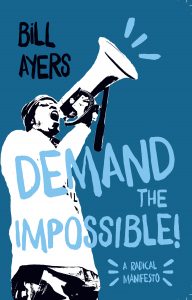
The presidential debate held last week between Donald Trump and Hillary Clinton allowed us to take a sober measure of the calamitous situation we find ourselves in 15 years after September 11, 2001. Our guest Bill Ayers just published Manifesto! Demand the Impossible. It presents a different vision from those sketched out by the candidates and the economic, political and cultural system which produced them. As Robin D. G. Kelly has written, “Bill Ayers vision for a humane future is incendiary – it incinerates old logics and illuminates new paths. If we do not end the violence of militarism, materialism, caging, dispossession, debts, want, ignorance, and global warming our very survival is impossible.”
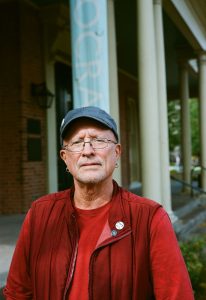
Guest – Bill Ayers, Distinguished Professor of Education and Senior Bill AyersUniversity Scholar at the University of Illinois at Chicago (retired), member of the executive committee of the Faculty Senate and founder of both the Small Schools Workshop and the Center for Youth and Society, taught courses in interpretive and qualitative research, oral history, creative non-fiction, urban school change, and teaching and the modern predicament. A graduate of the University of Michigan, the Bank Street College of Education, Bennington College, and Teachers College, Columbia University, Ayers has written extensively about social justice, democracy and education, the cultural contexts of schooling, and teaching as an essentially intellectual, ethical, and political enterprise. He is a past vice-president of the curriculum studies division of the American Educational Research Association.
—-
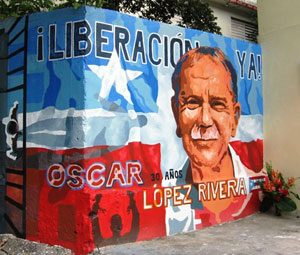
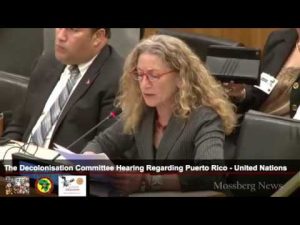
Free Puerto Rican Nationalist Oscar López Rivera 2016
A growing movement is calling for the release of 72-year-old Puerto Rican Nationalist Oscar López Rivera, who has served 34 years in prison, 12 of which have been in solitary confinement. In 1980, 11 members of FALN were arrested for a series of bomb attacks on banks, government facilities and military sites across the U.S, in protest against the US colonization of Puerto Rico. Although named a co-defendant in the case, López Rivera was not arrested until a year later, picked up during a traffic stop, and charged with seditious conspiracy, weapons possession and transporting stolen vehicles across state lines. No evidence was ever found tying López Rivera to any of the bombings, and although he was not convicted of any violent crimes, he was sentenced to 55 years in federal prison. Fifteen more years were later added to his sentence for an alleged escape attempt.
Most Puerto Ricans and human rights advocates view López Rivera with enormous respect for his work as a civil rights activist and community organizer. He is a decorated war veteran, having been awarded the Bronze Star medal during his service in the US Army. In 1999, Bill Clinton offered all FALN members, including López Rivera, conditional clemency. López Rivera declined the offer because the deal included a condition that he serve an additional 10 years in prison, and because two of his co-defendants would be left behind. Supporters are now collecting signatures on a petition that asks Barack Obama to issue a presidential pardon that grants his immediate release.
Guests – Attorney Jan Susler from the People’s Law Office in Chicago. A longtime member of the National Lawyers Guild she has has represented Puerto Rican political prisoners for over three decades. Jan Susler joined People’s Law Office in 1982 after working for six years as a Clinical Law Professor at the legal clinic at Southern Illinois University’s School of Law, Prison Legal Aid. At the People’s Law Office she continued her litigation and advocacy work on prisoners’ rights issues and also took on representing people wrongfully imprisoned, falsely arrested, strip searched, or subjected to excessive force by police officers.
We are also joined by Alejandro Molina from the campaign to free Oscar López.
—-
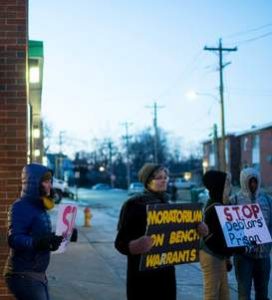
Debtors Prison In The South
It has been nearly 200 years since this country abolished the practice of imprisoning those who fail to pay their debts. Recently, however, many impoverished persons face the modern equivalent of debtors’ prisons in the form of unfair legal practices. More and more courts are charging fees to those convicted of crimes, including fees for public defenders, prosecutors, court administration, jail operation, and probation supervision. Aggressive, and often illegal, tactics are employed to collect unpaid fines and fees, including for traffic offenses and other low-level offenses. These courts have ordered the arrest and jailing of people who lag behind in payments, without offering hearings to determine an individual’s ability to pay or to provide alternatives to payment such as community service.
The human toll of these practices is enormous. Coercive debt collection means that poor individuals may forgo the basic necessities of life in order to avoid arrest. Debtors’ prisons increase government costs and waste taxpayer money by jailing people who may never be able to pay their debts. Finally, debtors’ prisons result in racial injustice and a two-tiered system of justice in which the poor receive harsher, longer punishments for committing the same crimes as the wealthy.
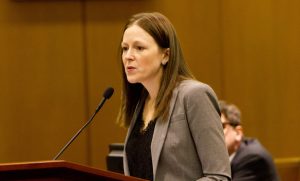
Guest – Attorney Sarah Geraghty, managing attorney of the Impact Litigation Unit at the Southern Center for Human Rights. Sarah practices in the areas of civil rights, habeas corpus, and class action litigation aimed at improving fairness and conditions in the criminal justice system. She has litigated cases challenging inhumane prison conditions, unfair police treatment, open records law violations, denial of the right to counsel, and the incarceration of indigent persons for debt. In 2011, Sarah received the Indigent Defense Award from the Georgia Association of Criminal Defense Lawyers. She was listed by the Fulton County Daily Report as an “On the Rise Georgia lawyer under 40”. She received her J.D. from the University of Michigan Law School, her M.S.W. from the University of Michigan School of Social Work, and her B.A. from Northwestern University. She is a member of the Alabama, Georgia, Illinois and New York bars.
————————————————————-
Law and Disorder September 26, 2016
Podcast: Play in new window | Download
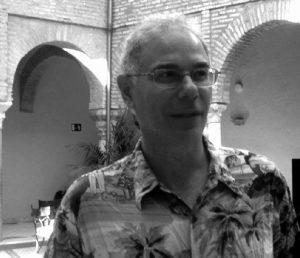

Zachary Sklar: Snowden
National Security Director James Clapper was questioned by Congress. The media was there. He looked at the camera, right in our eyes. The question was: Does the NSA spy on Americans? He Answered “not wittingly”. This was a lie. The NSA was spying on every computer keystroke and telephone conversation made by every American. Edward Snowden blew the whistle on this totalitarian practice that turned democracy upside down. Instead of the government serving the people the government was spying on the people it should serve. He has been indicted under the 1917 Espionage Act and is presently living in Russia, stripped of his passport, unable to come home where he faces decades in prison or worse. Oscar-winning film director Oliver Stone’s just released movie tells Edward Snowden’s story.
Guest – Zachary Sklar is a screenwriter, journalist, author, and editor. He is best known as co-writer (with Oliver Stone) of the Academy Award-nominated screenplay for the film JFK. Sklar has edited numerous non-fiction books about U.S. intelligence, including the number-one-bestselling On the Trail of the Assassins by Jim Garrison, from which the film JFK was adapted; Profits of War: Inside the Secret U.S.-Israeli Arms Network by former Israeli intelligence operative Ari Ben-Menashe; and Deadly Deceits: My 25 Years in the CIA by former CIA case officer Ralph McGehee.
—-
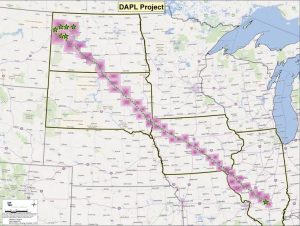
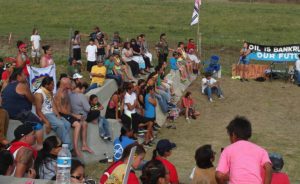
Dakota Pipeline Protests: Legal Update
With winter settling in in North Dakota the construction of the Dakota Access pipeline has been temporarily halted pending governmental reconsiderederation. Representatives of over 100 Native American tribes and several thousand supporters Are camped near the Missouri River, which the pipeline, if it breaks after it is constructed under the river, would pollute ruining the drinking water up to 20 million people who depend on it. The DAPL Company and its parent Texas company have secured some 3 1/2 billion dollars in financing from Goldman Sachs, UPS, the Chase Manhattan Bank, and other banks. The financing may not be forthcoming if the project is stalled too long. In the meantime camp protesters, who call themselves “water protectors ” are preparing to stay through the upcoming predictably severe North Dakota winter.
Guest – National Lawyers Guild Attorney Jeff Haas, has just returned from living at the North Dakota encampment with thousands of Native Americans and climate change activists who gathered in solidarity with the Standing Rock Indian tribe in North Dakota to protest the pipeline construction. Jeff Haas was a founding partner of the Peoples Law Office in Chicago. He victoriously represented the family of Fred Hampton, the chairman of the Chicago Black Panther Party and proved that Hampton was assassinated by the FBI and Chicago Police Department. He’s also author of the book The Assassination of Fred Hampton.
—-
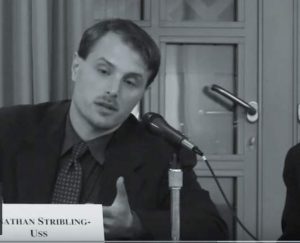

Encrypted Client Communications
As the general public becomes increasingly aware of the value of using open source encrypted communications, several groups of professionals may be among the first to regularly use it in their work. Members of the press already provide open source whistleblower submission systems, such as Secure Drop, to protect the anonymity of anonymous sources. But how do attorneys protect their privileged client communications? Jonathan Stribling-Uss founded Constitutional Communications to teach attorneys, activists and others to use open source encryption for all their communications. The group is aptly named given that “Our current system of Internet communication is not constitutional, especially with respect to attorney/client communications,” according to Stribling-Uss who is also a member of the National Lawyers Guild. The group has already provided intensive training sessions on digital security domestically and internationally for nearly 300 civil society leaders from dozens of countries.
Guest – Attorney Jonathan Stribling-Uss, director of Constitutional Communications, a nonprofit organization that specializes in information security for professionals and civil society organizations. He has led trainings and accredited CLEs (Continuing Legal Education) for hundreds of attorneys and law students on cybersecurity, professional ethics, international law, and attorney-client communications with the NYCLA (New York County) Bar Association, Law For Black Lives, and the Continuing Legal Resource Network at CUNY (City University Of New York). He has also trained journalists, foundations, activists, and technologists from more then 40 countries at the Center for Constitutional Rights, Thoughtworks global corporation, the International Development Exchange, the Legal Clinics of the CUNY School of Law, and The Florestan Fernandes National School in Brazil.