Welcome to Law and Disorder Radio
Law and Disorder is a weekly independent civil liberties radio program airing on more than 150 stations and on Apple podcast. Law and Disorder provides timely legal perspectives on issues concerning civil liberties, privacy, right to dissent and practices of torture exercised by the US government and private corporations.
Law and Disorder September 5, 2016
Podcast: Play in new window | Download
Updates:
—-
Federal Judges Often Let Bad Cops Slide
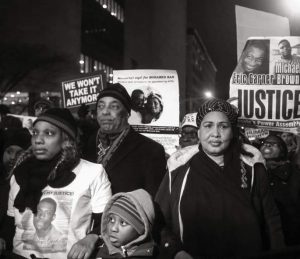
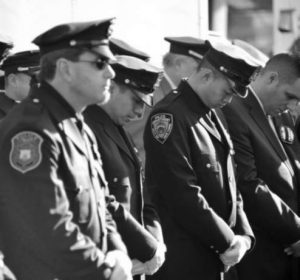
In examining the root causes of police violence across the nation, few people consider the role that federal judges play in contributing to this epidemic. According to one of the authors of Police Misconduct: Law and Litigation, a principal cause of police brutality is a widespread unwillingness of federal judges to hold officers accountable for instances of misconduct.
The problem even extends to the US Supreme Court, where Justice Kagan has shown deference to two reckless officers who shot and nearly killed a mentally ill woman in her own apartment rather than waiting for backup.
Guest – Professor Michael Avery, former president of the National Lawyers Guild, and co-author of the police misconduct treatise for attorneys on civil rights cases, Michael has reviewed thousands of such cases over several decades. His op-ed in the Baltimore Sun, “Federal Judges Often Let Bad Cops Slide,” asserts that judges’ failure to hold officers accountable for abuse of authority is a central cause of police brutality in this country.
—-

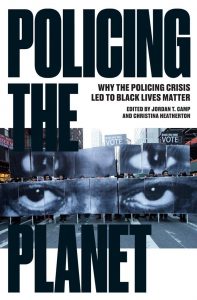
Policing the Planet: Why the Policing Crisis Led to Black Lives Matter
The policing strategy called “broken windows” was first established in New York City under Police Commissioner William Bratton. It is a doctrine that has vastly broadened police power the world over and to deadly effect. The underlying concept of broken windows policing is deceptively simple: to stop major crimes from occurring, police must first prevent small signs of “disorder” from proliferating, such as graffiti, litter, panhandling, the sale of untaxed cigarettes and so forth. Disorder in the form of minor violations is presumed to breed larger disorder. Broken windows policing has functioned as an urban strategy enabling the gentrification of cities – a class project that has displaced the urban multi-racial working class worldwide. It has led to widespread invasive police practices, racial profiling, police brutality, and many deaths. We now have in America a crisis of authority and legitimacy for US policing.
Guest – Professor Christina Heatherton, coeditor with Jordan T. Camp of the recently published book Policing the Planet: Why the Policing Crisis Led to Black Lives Matter. Heatherton is an American studies scholar and an historian of antiracist social movements. She teaches at Trinity College in Connecticut.
—-
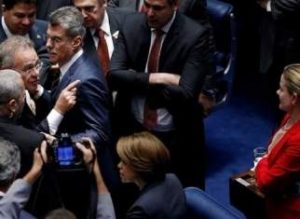

Brazil Government Coup Illegitmate Says International Tribunal
An international tribunal has declared the impeachment of Brazil’s President and head of the workers party Dilma Rousseff an illegitimate coup. The Tribunal for Democracy in Brazil convened in Rio de Janeiro two months ago. It was organized by social movements in Brazil to analyze and render a judgment on what they described as a break in the democratic process and a new type of coup.
Guest – Attorney Azadeh Shahshahani former member of the tribunal. She recently wrote an article on its findings for the nation magazine. Attorney Shahshahani is the Legal and Advocacy Director with Project South and a past president of the National Lawyers Guild.
——————————————————————————
Law and Disorder August 29, 2016
Podcast: Play in new window | Download
Updates:
- Swedish Police To Question Julian Assange At Ecuadorian Embassy
—-
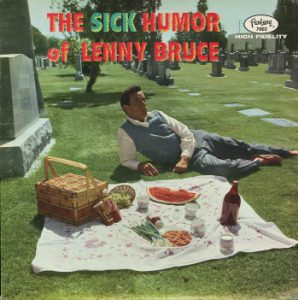
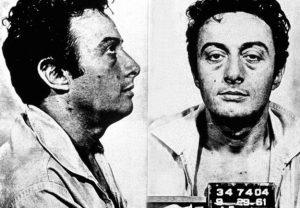
Comedian Lenny Bruce Life And First Amendment Trial Remembered
The great 1950s comedian and rebellious social satirist Lenny Bruce died 50 years ago this month accidently from a morphine overdose. He was certainly driven to death by the various trials prosecutors put him through said Martin Garbis, the young attorney who in 1964 unsuccessfully represented him in a crucial obscenity trial in New York City. Bruce was a groundbreaker, transcending the conventional subjects for humor at every opportunity. He was concerned with vanguard ideas in the mid 50s black power, prison reform, the rights of convicts, the plight of Native Americans, religious and political frauds like Billy Graham and his friend President Richard Nixon, and the right to abortion. He was not taken in by US Cold War ideology. He thought Cuba, that the United States Navy,at the better claim to Guantánamo Bay. He refused to support radio free Europe, thinking it hypocritical given the racism and corruption in America. And he said – the ultimate heresy – that of communism cooked for you “solid”. Richard Kuh, who as an assistant District Attorney in Manhattan prosecuted Bruce for obscenity in 1964 thought that Bruce crystallized rebellion. He provided not only bone searing talk, but fanfare and a rallying point.
Lenny Bruce was indeed the spiritual father of the cultural radicalization of the 60s. New York Governor George Pataki pardoned Lenny Bruce in 2003 stating that his decision, nearly 4 decades after the conviction, was “a declaration of New York’s commitment to upholding the First Amendment.
Guest – Attorney Martin Garbus represented Lenny Bruce. Martin is one of the country’s top trial lawyers, as well as an author and sought-after speaker. Time magazine called him “legendary” and “one of the greatest trial lawyers in the country”. The Guardian, declared him “one of the worlds finest trial lawyers”. An expert at every level of civil and criminal trial, and litigation, he has appeared before the United States Supreme Court in leading First Amendment cases, and his cases have established precedents there and in other courts throughout the country. A case he filed, Goldberg v. Kelly, that resulted in a favorable 5-4 Supreme Court opinion was described by Supreme Court Justice William J. Brennan as “arguably the most important due process case of the 20th Century”. Martin Garbus has written seven books, hundreds of articles, and has taught that the law schools at Columbia and Yale Universities.
—-
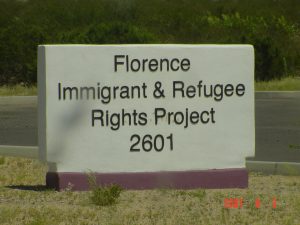
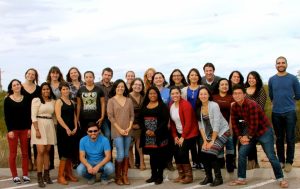
Immigrant Children Forced To Act As Their Own Lawyers
Each year, thousands of children are forced to act as their own lawyers in United States immigration courts with no one to explain the chargest against them.. They are thrust against trained federal prosecutors in seeking asylum or other types of relief in proceedings that most adults find often impossible to understand much less navigate effectively.
In contrast to individuals charged with criminal offenses, such as homicide or kidnapping, the government has no obligation to provide court-appointed legal defense for those who cannot afford an attorney in civil cases. Many children in immigration court hail from Central America where they escaped poverty and especially perilous conditions.
Having an attorney can mean the difference between being deported—often putting their lives at risk—and remaining in this country. One survey found that more than half the children representing themselves were deported, contrasted with only one in 10 who were provided legal representation.
A class action lawsuit filed by the ACLU and other civil rights groups is challenging this gross systemic failure.
Guest – Attorney Lauren Dasse, Executive Director of The Florence Immigrant and Refugee Rights Project. Lauren has been representing young people facing deportation for years, and last year gave 7,500 know-your-rights presentations to children in Arizona shelters. Lauren Dasse grew up in Phoenix, Arizona and earned her B.A. in Latin American Studies and Sociology from the University of Arizona. She received her J.D. from the City University of New York School of Law, where she was Editor-in-Chief of the CUNY Law Review. She has interned with the Center for Constitutional Rights and Make the Road New York, and participated in the International Women’s Human Rights Clinic at CUNY Law.
—————————————————–
Law and Disorder August 22, 2016
Podcast: Play in new window | Download
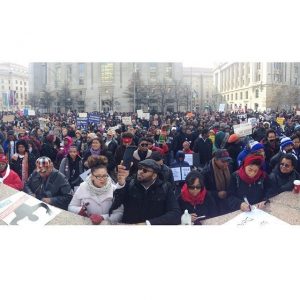
The Movement For Black Lives
In response to the ongoing violence by police against Black communities across the United States, more than 50 organizations have come together to express a common vision and agenda for change. The Movement for Black Lives has issued a call to end the war against Black people that includes ending the criminalization, imprisonment and killing, not only of Black individuals, but all oppressed people. Broad areas for reform include economic justice, ending the war on Black people, reparations, invest-divest, community control and political power.
Guest – Donna Murch, Professor of History at Rutgers University and author of Living In The City: Migration, Eduation and the Rise of the Black Panther Party. She also contributed an article to the forthcoming verso press book “False Choice: The Faux Feminism of Hillary Clinton.
—-


U.S. – Saudi Arabia Arms Deal
Last month Congress narrowly approved the sale of cluster bombs to Saudi Arabia. They are being used in the Saudi war against Yemen and are dropped on civilians. The bombs are manufactured by the General Dynamics Corporation, part of the American military Industrial complex. Now a second arms sale, this one involving tanks and armored personnel carriers, is up for Congressional approval. A number of peace groups including human rights watch have come out against it. Last week a New York Times editorial stated that “Congress should put the arms sales on hold and President Obama should quietly inform Riyadh that the United States will withdraw crucial assistance if the Saudis do not stop targeting civilians and agree to negotiate peace. ” The Saudi Arabian Monarchy has been a long time ally of the United States and provides a significant amount of oil to United States as well as being a major purchaser of American corporate made weapons. They are used in Yemen and illegal under American law.
Guest – Phyllis Bennis directs the New Internationalism Project at IPS, working as a writer, activist and analyst on Middle East and UN issues. She is also a fellow of the Transnational Institute in Amsterdam. In 2001 she helped found and remains active with the U.S. Campaign to End the Israeli Occupation. She works with many anti-war organizations, and writes and speaks widely across the U.S. and around the world as part of the global peace movement. She has served as an informal adviser to several top UN officials on Middle East and UN democratization issues.
—-

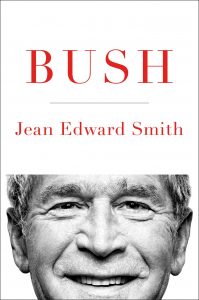
George W. Bush is now 70 years old and retired on his ranch outside of Crawford Texas. Many Americans remember him as a clueless figure on the morning of September 11, 2001 reading My Pet Goat to a classroom of children. They think of Bush as a hands-off leader who turned over the reins of power to his Vice President Dick Cheney, Secretary of Defense Donald Rumsfeld, and the head of the CIA George Tenet. But the major decisions after the attacks on September 11, 2001, including the bombing of Afghanistan, the opening of the Guantánamo offshore prison camp, torture, and the introduction of the Patriot Act, and the war on Iraq were made by George W. Bush, who denominated himself as “the decider.” He had “and unnerving level of certitude” – as Jean Edward Smith, author of the recent expansive biography called “Bush” has written. Smith writes that Bush “firmly believed that he was the instrument of God’s will.”
Guest – Professor Jean Edward Smith, is ean Edward Smith is the author of twelve books, including highly acclaimed biographies of Chief Justice John Marshall, General Lucius D. Clay, and Ulysses S. Grant (a 2002 Pulitzer Prize finalist). A graduate of Princeton and Columbia Universities, Smith taught at the University of Toronto for thirty-five years before joining the faculty at Marshall University where he was the John Marshall Professor of Political Science.