Welcome to Law and Disorder Radio
Law and Disorder is a weekly independent civil liberties radio program airing on more than 150 stations and on Apple podcast. Law and Disorder provides timely legal perspectives on issues concerning civil liberties, privacy, right to dissent and practices of torture exercised by the US government and private corporations.
Law and Disorder June 27, 2016
Podcast: Play in new window | Download

NYPD Seizes Millions In Civil Forfeiture
Antiquated civil forfeiture procedures in NYC are causing many, including the city’s poorest, to have assets seized by the NYPD to fill the City’s coffers.
Elected officials are finally calling for the city to reexamine the mechanism that fills the city’s coffers with millions of dollars annually. In what many call a gross violation of civil liberties,the Office of Management and Budget report revealed that the NYPD seized over $5 million dollars through an opaque but common process of civil forfeiture in 2013. That doesn’t even count more than $8 million in cash and property that’s considered “unclaimed.”
Since the administrative code governing forfeiture was written in 1881, several court rulings have modified the procedure. In 1972, the civil rights case of McClendon v. Rosetti established that the city had not been providing due process to predominantly poor and minority New Yorkers when pursuing civil forfeiture. The ruling called the 1881 admin code “unconstitutional” and asked for a lower court to lay out new procedures for the NYPD property clerk. In 1974, the lower court laid out those procedures, making clear that the property clerk must prove that the property was somehow connected to the alleged criminal activity.
Yet forty years later, property clerks still enforce the law arbitrarily. The federal monitor designated by the court’s decision in 1974 has expired, leaving no independent body with oversight over how the NYPD pursues civil forfeiture.
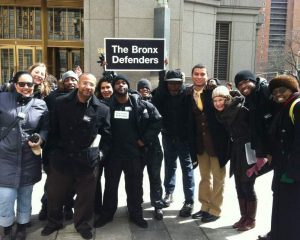
Guest – Attorney Molly Kovel, Legal Director of the Civil Action Practice at The Bronx Defenders. Her practice includes a wide variety of direct legal services and affirmative impact litigation—including representing plaintiffs in Ligon v. City of New York, one of three federal class actions against the NYPD challenging unconstitutional stop and frisk practices. She has represented clients in a wide variety of civil venues in matters related to the collateral consequences of arrests and prosecutions. She has also advised hundreds of clients about the employment and licensing consequences of their criminal records, as well as assisting them in applying for Certificates of Rehabilitation and correcting criminal record errors. She trains criminal defense attorneys, social service providers and community members in these matters.
—-
Anti-BDS Legislation In New York State
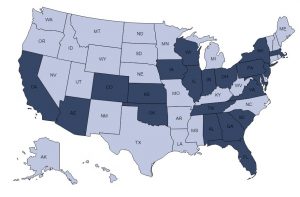
We recently discussed how Israel advocacy groups and state law makers who support them have introduced anti-BDS legislation in up to 21 across the United States of America, including the US Congress. Today we look closely at New York State.
The New York legislature has tried in the past year, without success, to pass laws protecting Israel against the boycotts, divestment and sanctions movement–or BDS–for its illegal occupation of Palestinian lands.
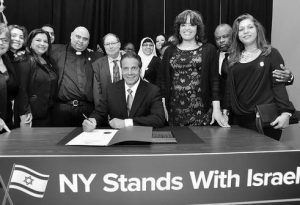
In an unconstitutional move, given that the government may not penalize individuals or entities on the basis of free expression, Governor Andrew Cuomo recently issued an executive order directing all agencies under his jurisdiction to cease in dealing with companies and organizations that support BDS. The order calls for Cuomo’s commissioner to compile a list of institutions and companies that support a boycott of Israel. The list will be publicly posted.
Several organizations, including the National Lawyers Guild, Palestine Legal and CCR wrote in a legal memorandum critical of the anti-BDS bills pending in the New York legislature. More than 100 churches, human rights groups and legal organizations signed a letter to the New York legislature opposing the legislation, saying “it would chill and deter constitutionally protected speech by intimidating people from engaging in political actions for fear of being blacklisted.”
Guest – Dima Khalidi, founder and Director of Palestine Legal and Cooperating Counsel with the Center for Constitutional Rights (CCR). Her work includes providing legal advice to activists, engaging in advocacy to protect their rights to speak out for Palestinian rights, and educating activists and the public about the repression of Palestine advocates.
—-
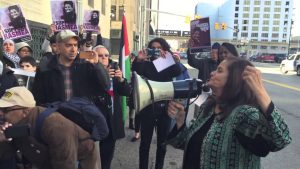

Rasmea Odeh Case Update
Over 100 people gathered in Detroit to support Rasmea Odeh as she, her attorneys, and the prosecution appeared before Judge Gershwin Drain for a status conference last week.
Lead attorney Michael Deutsch announced that a tentative date for a new trial has been set for January 10, 2017.
Rasmea was convicted in 2014 of a politically-motivated immigration charge, and sentenced to 18 months in prison and deportation last year. In February of this year, the Sixth Circuit Court of Appeals sent the case back to Judge Drain, saying he had wrongfully barred the testimony of a torture expert that was critical to Rasmea’s defense. At the trial, Rasmea was not allowed to tell the entire story of Israel forcing her to falsely confess to alleged bombings in 1969, when she endured over three weeks of sexual, physical and psychological torture by the Israeli military.
Last week, the government called for a “Daubert Hearing,” to challenge the validity and admissibility of expert testimony (in this case, Fabri’s), and also requested to examine Rasmea with its own expert. If the hearing is granted by Judge Drain, it will happen on November 29 of this year, the International Day of Solidarity with the Palestinian People.
Two other positive developments occurred. Deutsch asked to have Rasmea’s “burdensome reporting requirements” to probation authorities reduced from once a week to once a month. Judge Drain did not object, commenting that his earlier concerns about her being a flight risk “have been alleviated.” He also suggested he would be willing to ease travel restrictions and allow Rasmea to occasionally travel within the U.S. The government wants to speak to the probationary authorities before agreeing to the end of the travel ban.
Guest – Attorney Michael Deutsch, After clerking for United States Court of Appeals Judge Otto Kerner, Mr. Deutsch went into private practice, joining People’s Law Office in 1970 where he has represented political activists and victims of police and government civil rights violations. His advocacy has taken him all around the world, including to hearings in the United Nations. He has tried many civil and criminal cases in federal and state courts, and has written and argued numerous appeals, including several in the United States Supreme Court.
—-

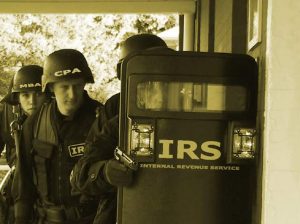
Why Does The IRS Need Guns?
There is a growing arsenal at paper pushing federal agencies with firearm and arrest authority that have expanded their arsenal since 2006, including the Small Business Administration, Social Security Administration, NOAA, the Education Department, the Department of Energy, the Bureau of Engraving and Printing, the National Institute of Standards and Technology and the Smithsonian Institute.
Special agents at the IRS, for example, have AR-15 military style rifles and nearly 4,000 Dept. of Veterans Affairs personnel are armed.
Recently, the group American Transparency released an oversight report on the federal government’s purchase of guns, ammunition, and military-type equipment. More than $335 million was spent by agencies we traditionally think of as administrative or regulatory, such as the U.S. Mint or the Smithsonian Institution.
Guest – Adam Andrzejewski, in 2007, he founded For The Good of Illinois to educate, engage and empower citizens to demand transparency and accountability. He also founded the transparency website, www.openthebooks.com, and launched it by posting the salaries and pensions of all 1 million Illinois public employees (2011). Today, OpenTheBooks.com is the world’s largest private repository of public spending with 2.6 billion individually captured transactions from the federal government, 48/50 states and 36,000 local units of government across America. Read – Why Does The IRS Need Guns?
—————————————————————————
Law and Disorder June 20, 2016
Podcast: Play in new window | Download
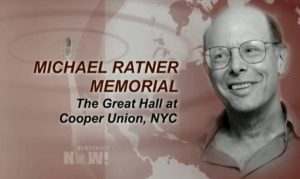
¡Michael Ratner Presente!
We hear excerpts from Michael Ratner’s public memorial held in the Great Hall at Cooper Union in Manhattan, New York. It would have been Michael’s 73rd birthday on June 13, 2016.

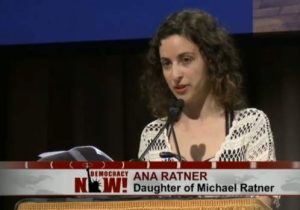
¡Michael Ratner Presente! was co-sponsored by Cooper Union, the Center for Constitutional Rights, Democracy Now!, National Lawyers Guild, The Nation Institute, Nation Magazine, Haymarket Books, and Voices of a People’s History of the United States.
Michael Ratner’s Politics – By Michael Smith
—————————————————————————–
Law and Disorder June 13, 2016
Podcast: Play in new window | Download
Update:
- Norman Seabrook, NYC Corrections Officer’s Union Head Arrested On Federal Corruption Charges.
—-
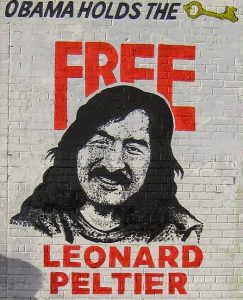
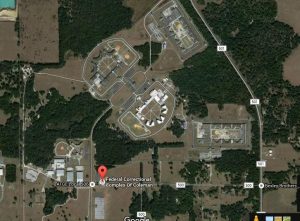
Native American Activist Leonard Peltier Clemency
As most listeners know, Leonard Peltier is a Native American activist convicted of killing two FBI special agents –Jack Coler and Ronald Williams—during a shootout on the Pine Ridge Indian Reservation in South Dakota in 1975. He has spent over four decades in prison, despite the fact that prosecutors and federal agents manufactured evidence against him, suppressed evidence that would establish his innocence, presented false testimony obtained through harsh interrogation, defied court orders and perjured themselves to the jury. Numerous constitutional violations plagued Pelteri’s case, and many dignitaries, governments and international human rights organizations continue to call for his release. The Bush administration denied clemency to Peltier, and efforts are under way to urge President Obama to grant executive clemency before he leaves office.
Guest – Cynthia K. Dunne, is a former federal prosecutor who now directs a nonprofit that works with youth on the Pine Ridge Reservation. Cindy calls on United States President Barack Obama to grant clemency to AIM activist Leonard Peltier.
—-

Exoneree Diaries: The Fight for Innocence, Independence, and Identity
More and more it seems we hear of stories of wrongfully convicted persons being released after years, even decades, behind bars in the United States. Helping to secure their freedom are Innocence Projects across the nation, dedicated lawyers and years of painstaking work to uncover prosecutorial misconduct, false eyewitness identifications, or forensic mishaps. What we don’t hear, however, is how exonerated individuals piece their lives together after lengthy periods of incarceration. Award-winning journalist Alison Flowers has humanized four such persons in her book “Exoneree Diaries: The Fight for Innocence, Independence, and Identity.” Alison is a Social Justice News Nexus fellow and works at the invisible Institute in Chicago.
Guest – Alison Flowers is an award-winning investigative journalist who focuses on social justice and criminal justice. She is the author of “Exoneree Diaries: The Fight for Innocence, Independence and Identity” (Haymarket Books, 2016), and she contributed to the anthology “Who Do You Serve? Who Do You Protect?: Police Violence and Resistance in the United States.” In 2013, she produced a multimedia series about exonerees for Chicago Public Media and NPR affiliate WBEZ. The yearlong project was a finalist for a national Online Journalism Award.
——————————————————————————