Welcome to Law and Disorder Radio
Law and Disorder is a weekly independent civil liberties radio program airing on more than 150 stations and on Apple podcast. Law and Disorder provides timely legal perspectives on issues concerning civil liberties, privacy, right to dissent and practices of torture exercised by the US government and private corporations.
Law and Disorder April 4, 2016
Podcast: Play in new window | Download
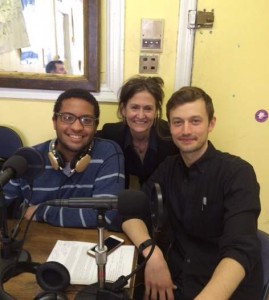
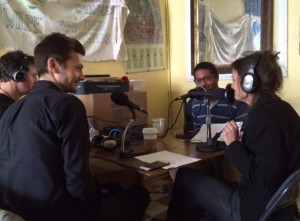
Urban Word: NYC
Spoken word—it’s the oral art of word play, intonation and inflection. From hip-hop, to poetry slams, to prose monologues, it came into popularity in the 1970s around the time Gil Scott-Heron recorded “The Revolution Will Not Be Televised.” Speeches by Dr. Martin Luther King, Junior, Booker T. Washington and others in the civil rights movement incorporated elements of oration. In the 1980s, spoken word poetry competitions emerged. In New York, the Nuyorican Poets Cafe on East Third Street was founded in 1973, and is one of the country’s oldest venues for spoken word poetry.
Spoken word is also engaging thousands of young people across the country in expressing themselves and developing leadership skills. One of the nation’s top rated literary arts programs is the nonprofit organization Urban Word NYC, which has ranked among the top 5 slam poetry teams in the nation for each of the past 11 years. They showcase the voices of New York City youth by providing platforms for leadership and teaching critical literacy skills through uncensored writing, college prep and performance opportunities. They’re getting ready for the 18th Annual NYC Teen Poetry Grand Slam on April 16 at the Apollo Theater.
Guests – Urban Word’s chief operating officer Adam Falkner, and Willy Luperon, a young poet and program alum who is currently serving as the organization’s media coordinator.
—-
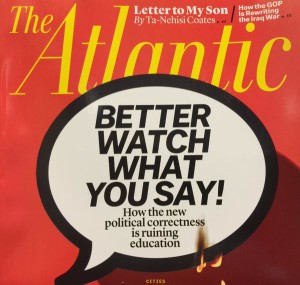
Coddling Of The American Mind: Attorney Greg Lukianoff
Coddling of the American Mind is the title of an article in the recent Atlantic Magazine by attorney Greg Lukianoff and Jonathan Haidt. It examines a particular movement arising that’s been described as “undirected” and driven largely by students that essentially scrubs campuses clean of words, ideas, and subjects that might cause discomfort or give offense. Law and Disorder hosts also take a look at the legal cases being brought by students.
Guest – Greg Lukianoff, President and CEO of FIRE, The Foundation for Individual Rights in Education. He’s the author of Unlearning Liberty: Campus Censorship and the End of American Debate and Freedom From Speech and has published articles in The Wall Street Journal, The Washington Post, The New York Times, The Los Angeles Times, TIME, The Boston Globe, Forbes, the New York Post, U.S. News & World Report, The Stanford Technology Law Review, The Chronicle of Higher Education, Reason, CNET, The Daily Caller, Congressional Quarterly, The Charleston Law Review, and numerous other publications. He is a blogger for The Huffington Post and Ricochet.com.
Law and Disorder March 28, 2016
Podcast: Play in new window | Download
Seeds Of Fascism In The United States
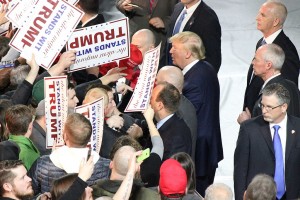
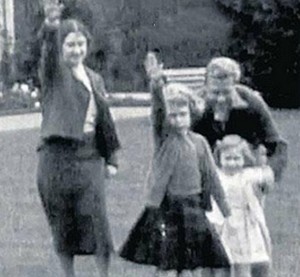
There has been much discussion in liberal and left circles about whether Donald Trump is a fascist and whether the country is in danger of becoming fascist. It is pointed out the Trump is a demagogue, lies, is for violence, is a racist against Muslims and Mexicans, and is misogynist with respect to women. He is for bringing back torture and and increasing American aggression in Syria.
Guest – Professor Paul LeBlanc, a professor of history at the La Roche College in Pittsburgh and has written and participated in the US labor, radical, and civil rights movement. Professor LeBlanc is the author of books on the European revolutionaries Lenin, Trotsky, and Rosa Luxembourg. With respect to America, he wrote “a short history of the US working class.” And co-authored with economist Michael Yates the highly acclaimed “freedom budget for all Americans: recapturing the promise of the civil rights movement in the struggle for economic justice today.”
—-

United States, Cuba Relations 2016
The Cuban revolution of 1959 was not just a political revolution. It was a social revolution. The 99% took over the resources of their own country and the 1% fled to Miami. In response United States began a blockade of Cuba in 1960. A memo written by a senior State Department official laid out American policy. It advocated “a line of action that makes the greatest inroads into denying money and supplies to Cuba, to decrease monetary and real wages, to bring about hunger, desperation and the overthrow of the Castro government. ”
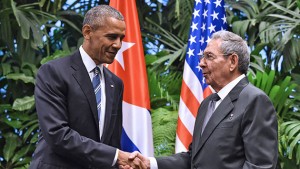
Last year United States reestablished diplomatic relations with Cuba and last week Obama said in Havana that “I affirm that Cuba’s destiny will not be decided by the United States or any other nation. We talk about the US relations with Cuba and President Obama’s recent visit with Walter Lippman.
Guest – Walter Lippmann, editor of the Cuba News Yahoo News Group.
—-

8th Annual Brookyn Folk Festival
Co-hosts Michael Smith and Heidi Boghosian are joined by Eli Smith to talk about the upcoming Brooklyn Folk Festival. Eli is a banjo player, writer, researcher and promoter of folk music. He’s a Smithsonian Folkways recording artist and produces two folk festivals annually, the Brooklyn Folk Festival in the Spring and Washington Square Park Folk Festival in the Fall.
—————————————————————
Law and Disorder March 21, 2016
Podcast: Play in new window | Download
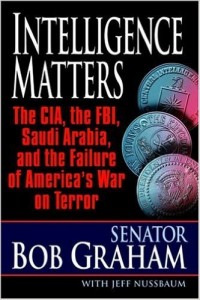
Intelligence Matters: The CIA, the FBI, Saudi Arabia, and the Failure of America’s War on Terror
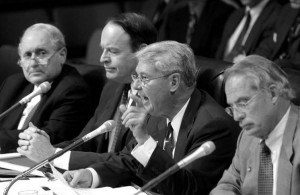
Retired Florida U. S. Senator Bob Graham was the head of the US Senate intelligence committee and also the chairman of the 9/11 commission of inquiry. He is the leading person trying to get President Obama to release to the public the suppressed 28 pages of the 911 report which have been hidden. Senator Graham contends that the 19 hijackers, 15 of whom who were Saudi Arabians, could not have pulled off the operation alone and that in fact they were part of a support network involving the Saudi Arabian monarchy and government which helped plan, pay for and execute the complicated 911 plot which, says Senator Graham, would have otherwise been impossible to accomplish. Senator Graham has written the book Intelligence Matters: The CIA, the FBI, Saudi Arabia, and the Failure of America’s War on Terror. It provides a candid insight to the workings of the US in Saudi relations and their implications on US foreign-policy making as it pertains to the middle east and bags tension, contemporary geopolitics.
Guest – Senator Bob Graham, is the former two–term governor of Florida and served for 18 years in the United States Senate. This is combined with 12 years in the Florida legislature for a total of 38 years of public service. As Governor and Senator, Bob Graham was a centrist, committed to bringing his colleagues together behind programs that served the broadest public interest. He was recognized by the people of Florida when he received an 83% approval ranking as he concluded eight years as Governor. Bob Graham retired from public service in January 2005, following his Presidential campaign in 2004.
—–
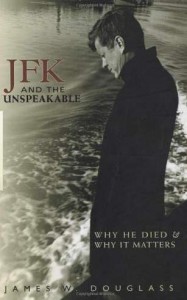
JFK and the Unspeakable: Why He Died and Why It Matters by Jim Douglass
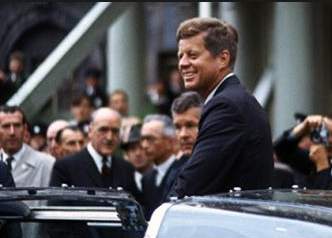
JFK and the Unspeakable is the first book of 3 on the assassinations of the 1960s. Orbis Books has commissioned author James W. Douglass to write about the murders of JFK, Malcolm X and Martin Luther King, and his the third will be on the assassination of Bobby Kennedy. The heart of JFK the Unthinkable, is not how Kennedy was killed or how Kennedy became a threat to the systemic war machine, but why DID Kennedy die? Author James Douglass says Kennedy knew that he would die and had the guts to stand up to the system and take the hit. This narrative was lost for decades, obscured by disinformation about Kennedy’s character and the conspiracy of his assassination. One review summarizes Douglass’s book in this way : JFK’s belated effort to turn America from an armed culture of victory to a member of an international peaceful world was shot down in Texas for a reason.
Jim Douglass:
- John F. Kennedy’s experience in WWII: He was in the South Pacific, he volunteered. He was on that PT boat.
- What happened on that PT boat, is that it got split into two by a Japanese destroyer. He lost brothers and friends at that time. An extraordinary experience being adrift on the ocean warning other PT boats. The experience create a distrust in military authority.
- He said that he wanted to splinter the CIA into a thousand pieces and scatter to the winds.
- As Kennedy said to his friends, “they figured me all wrong.”
- The Unspeakable: the kind of evil and deceit that seems to go beyond the capacity of words to describe. The midst of war and nuclear arms race, the assassinations of Kennedy, Martin Luther King and Malcom X that the term was used.
- JFK’s vision is articulated in the address June 10, 1963, arising from the turnaround of the missile crisis and Bay of Pigs. He wanted to move step by step into a disarmed world.
- Nikita Khrushchev put that speech all over the Soviet Union. The Cuban Missile Crisis is a deeply misunderstood part of our history, because it’s usually portrayed as Kennedy going to war with Nikita Khrushchev and beating him.
- The truth was that Kennedy and Nikita Khrushchev were in over their heads, the US generals wanted nuclear war, because they had more warheads than the Soviets.
- Nikita Khrushchev: We now have a common enemy from those pushing us toward war.
- At that point the Cold War turned upside down because Kennedy and Khrushchev became closer to each other than either was toward their own military power system.
- Vietnam: Kennedy’s military people would not give him an exit policy. He signed the withdrawal order from Vietnam before he was assassinated.
- His friends said that he had an obsession with death. It was not an obsession but a real assessment that he was going to die. If you try to turn around a national security state that is dominating the world,
- and you do so as president of the United States, of course you’re going to die. Kennedy knew that.
- The book is a story on the deliberate destruction of hope, the vision of change, a turning of this country all of which was happening and had to be stopped. US Agencies killed Dr. Martin Luther King – 1999 Verdict
- We’re in the same scene right now with Petraeus and McChrystal setting up Obama. They were dictating terms to Obama, unlike Kennedy, he did not face them down.
- We need to get out ahead of Obama so that he can do something.
Guest – James W. Douglass, author and a longtime peace activist and writer. James and his wife Shelley are co-founders of the Ground Zero Center for Nonviolent Action in Poulsbo, Washington, and Mary’s House, a Catholic Worker house of hospitality in Birmingham, Alabama.
———————————————————————————-