Welcome to Law and Disorder Radio
Law and Disorder is a weekly independent civil liberties radio program airing on more than 150 stations and on Apple podcast. Law and Disorder provides timely legal perspectives on issues concerning civil liberties, privacy, right to dissent and practices of torture exercised by the US government and private corporations.
Law and Disorder April 11, 2016
Podcast: Play in new window | Download
From #BlackLivesMatter to Black Liberation
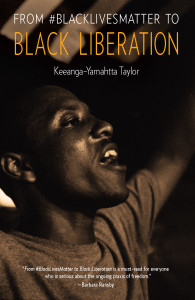
Cornel West calls it the best analysis we have of the Black Lives Matter moment of the long struggle for freedom in America. Keeanga-Yamahtta Taylor’s new book, “From #BlackLivesMatter to Black Liberation,” explores how a new generation of Black radicals–in challenging abusive policing practices, over-imprisonment of Black persons, deeply ingrained stereotypes of African Americans as especially dangerous and devoid of humanity, along with other forms of racist state oppression–is carrying on the fight for Black liberation through renewed activist uprisings. Combining historical accounts with insightful analysis, she demonstrates the interconnection between institutional racism and class oppression, reminding us how inequality and racialized state violence are byproducts of capitalism.
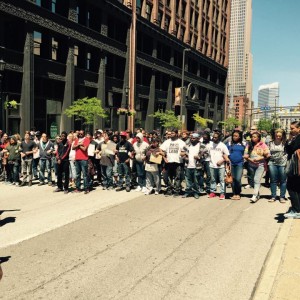

Several attorneys and legal activists involved in Ferguson, Baltimore and Cleveland protests have formed the Black Movement-Law Project. The Project provides legal support to local communities across the nation as they take to the streets to protest police misconduct, and systemic racism.
Their approach to community activism is itself community based: they offer legal and technical assistance based on the premise that local mass movements frequently lack legal expertise. They help arrange rapid responses to support activists on the ground by providing legal observers, know your rights trainings, and jail support. Their national network of human and civil rights attorneys offer assistance to local communities in the form of legal representation and long-term impact litigation.
Guests -Black Movement-Law Project co-founder Abi Hassen. Abi Hassen is an attorney, consultant and cofounder of the Black Movement-Law Project. He was formerly the mass defense coordinator at the National Lawyers Guild. He has a J.D. from New York University School of Law, and an undergraduate degree in computer science from The Evergreen State College. With his extensive background in labor, political and community organizing, Abi has been active at the intersection of law, technology and organizing for social justice for over a decade.
Guest – Black Movement-Law Project co-founder Nathan (Nash) Sheard, is a legal activist and organizer with the BMLP.
————————————————————
Law and Disorder April 4, 2016
Podcast: Play in new window | Download
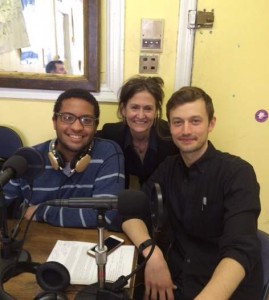
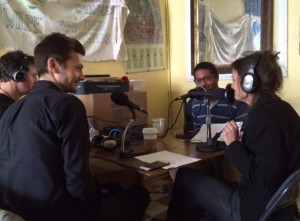
Urban Word: NYC
Spoken word—it’s the oral art of word play, intonation and inflection. From hip-hop, to poetry slams, to prose monologues, it came into popularity in the 1970s around the time Gil Scott-Heron recorded “The Revolution Will Not Be Televised.” Speeches by Dr. Martin Luther King, Junior, Booker T. Washington and others in the civil rights movement incorporated elements of oration. In the 1980s, spoken word poetry competitions emerged. In New York, the Nuyorican Poets Cafe on East Third Street was founded in 1973, and is one of the country’s oldest venues for spoken word poetry.
Spoken word is also engaging thousands of young people across the country in expressing themselves and developing leadership skills. One of the nation’s top rated literary arts programs is the nonprofit organization Urban Word NYC, which has ranked among the top 5 slam poetry teams in the nation for each of the past 11 years. They showcase the voices of New York City youth by providing platforms for leadership and teaching critical literacy skills through uncensored writing, college prep and performance opportunities. They’re getting ready for the 18th Annual NYC Teen Poetry Grand Slam on April 16 at the Apollo Theater.
Guests – Urban Word’s chief operating officer Adam Falkner, and Willy Luperon, a young poet and program alum who is currently serving as the organization’s media coordinator.
—-
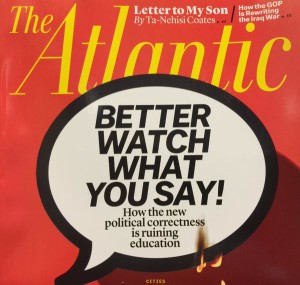
Coddling Of The American Mind: Attorney Greg Lukianoff
Coddling of the American Mind is the title of an article in the recent Atlantic Magazine by attorney Greg Lukianoff and Jonathan Haidt. It examines a particular movement arising that’s been described as “undirected” and driven largely by students that essentially scrubs campuses clean of words, ideas, and subjects that might cause discomfort or give offense. Law and Disorder hosts also take a look at the legal cases being brought by students.
Guest – Greg Lukianoff, President and CEO of FIRE, The Foundation for Individual Rights in Education. He’s the author of Unlearning Liberty: Campus Censorship and the End of American Debate and Freedom From Speech and has published articles in The Wall Street Journal, The Washington Post, The New York Times, The Los Angeles Times, TIME, The Boston Globe, Forbes, the New York Post, U.S. News & World Report, The Stanford Technology Law Review, The Chronicle of Higher Education, Reason, CNET, The Daily Caller, Congressional Quarterly, The Charleston Law Review, and numerous other publications. He is a blogger for The Huffington Post and Ricochet.com.
Law and Disorder March 28, 2016
Podcast: Play in new window | Download
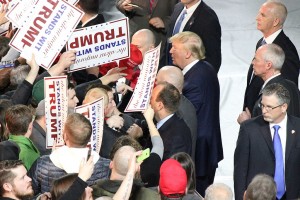
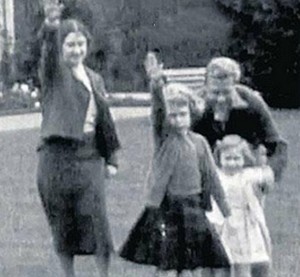
Seeds Of Fascism In The United States
There has been much discussion in liberal and left circles about whether Donald Trump is a fascist and whether the country is in danger of becoming fascist. It is pointed out the Trump is a demagogue, lies, is for violence, is a racist against Muslims and Mexicans, and is misogynist with respect to women. He is for bringing back torture and and increasing American aggression in Syria.
Guest – Professor Paul LeBlanc, a professor of history at the La Roche College in Pittsburgh and has written and participated in the US labor, radical, and civil rights movement. Professor LeBlanc is the author of books on the European revolutionaries Lenin, Trotsky, and Rosa Luxembourg. With respect to America, he wrote “a short history of the US working class.” And co-authored with economist Michael Yates the highly acclaimed “freedom budget for all Americans: recapturing the promise of the civil rights movement in the struggle for economic justice today.”
—-


United States, Cuba Relations 2016
The Cuban revolution of 1959 was not just a political revolution. It was a social revolution. The 99% took over the resources of their own country and the 1% fled to Miami. In response United States began a blockade of Cuba in 1960. A memo written by a senior State Department official laid out American policy. It advocated “a line of action that makes the greatest inroads into denying money and supplies to Cuba, to decrease monetary and real wages, to bring about hunger, desperation and the overthrow of the Castro government. ”
Last year United States reestablished diplomatic relations with Cuba and last week Obama said in Havana that “I affirm that Cuba’s destiny will not be decided by the United States or any other nation. We talk about the US relations with Cuba and President Obama’s recent visit with Walter Lippman.
Guest – Walter Lippmann, editor of the Cuba News Yahoo News Group.
—-

8th Annual Brookyn Folk Festival
Co-hosts Michael Smith and Heidi Boghosian are joined by Eli Smith to talk about the upcoming Brooklyn Folk Festival. Eli is a banjo player, writer, researcher and promoter of folk music. He’s a Smithsonian Folkways recording artist and produces two folk festivals annually, the Brooklyn Folk Festival in the Spring and Washington Square Park Folk Festival in the Fall.
—————————————————————