Welcome to Law and Disorder Radio
Law and Disorder is a weekly independent civil liberties radio program airing on more than 150 stations and on Apple podcast. Law and Disorder provides timely legal perspectives on issues concerning civil liberties, privacy, right to dissent and practices of torture exercised by the US government and private corporations.
Law and Disorder March 21, 2016
Podcast: Play in new window | Download
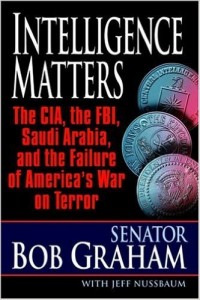
Intelligence Matters: The CIA, the FBI, Saudi Arabia, and the Failure of America’s War on Terror
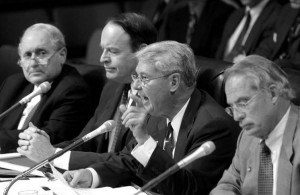
Retired Florida U. S. Senator Bob Graham was the head of the US Senate intelligence committee and also the chairman of the 9/11 commission of inquiry. He is the leading person trying to get President Obama to release to the public the suppressed 28 pages of the 911 report which have been hidden. Senator Graham contends that the 19 hijackers, 15 of whom who were Saudi Arabians, could not have pulled off the operation alone and that in fact they were part of a support network involving the Saudi Arabian monarchy and government which helped plan, pay for and execute the complicated 911 plot which, says Senator Graham, would have otherwise been impossible to accomplish. Senator Graham has written the book Intelligence Matters: The CIA, the FBI, Saudi Arabia, and the Failure of America’s War on Terror. It provides a candid insight to the workings of the US in Saudi relations and their implications on US foreign-policy making as it pertains to the middle east and bags tension, contemporary geopolitics.
Guest – Senator Bob Graham, is the former two–term governor of Florida and served for 18 years in the United States Senate. This is combined with 12 years in the Florida legislature for a total of 38 years of public service. As Governor and Senator, Bob Graham was a centrist, committed to bringing his colleagues together behind programs that served the broadest public interest. He was recognized by the people of Florida when he received an 83% approval ranking as he concluded eight years as Governor. Bob Graham retired from public service in January 2005, following his Presidential campaign in 2004.
—–
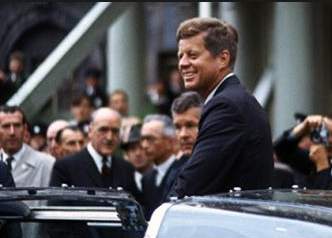
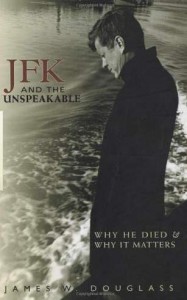
JFK and the Unspeakable: Why He Died and Why It Matters by Jim Douglass
JFK and the Unspeakable is the first book of 3 on the assassinations of the 1960s. Orbis Books has commissioned author James W. Douglass to write about the murders of JFK, Malcolm X and Martin Luther King, and his the third will be on the assassination of Bobby Kennedy. The heart of JFK the Unthinkable, is not how Kennedy was killed or how Kennedy became a threat to the systemic war machine, but why DID Kennedy die? Author James Douglass says Kennedy knew that he would die and had the guts to stand up to the system and take the hit. This narrative was lost for decades, obscured by disinformation about Kennedy’s character and the conspiracy of his assassination. One review summarizes Douglass’s book in this way : JFK’s belated effort to turn America from an armed culture of victory to a member of an international peaceful world was shot down in Texas for a reason.
Jim Douglass:
- John F. Kennedy’s experience in WWII: He was in the South Pacific, he volunteered. He was on that PT boat.
- What happened on that PT boat, is that it got split into two by a Japanese destroyer. He lost brothers and friends at that time. An extraordinary experience being adrift on the ocean warning other PT boats. The experience create a distrust in military authority.
- He said that he wanted to splinter the CIA into a thousand pieces and scatter to the winds.
- As Kennedy said to his friends, “they figured me all wrong.”
- The Unspeakable: the kind of evil and deceit that seems to go beyond the capacity of words to describe. The midst of war and nuclear arms race, the assassinations of Kennedy, Martin Luther King and Malcom X that the term was used.
- JFK’s vision is articulated in the address June 10, 1963, arising from the turnaround of the missile crisis and Bay of Pigs. He wanted to move step by step into a disarmed world.
- Nikita Khrushchev put that speech all over the Soviet Union. The Cuban Missile Crisis is a deeply misunderstood part of our history, because it’s usually portrayed as Kennedy going to war with Nikita Khrushchev and beating him.
- The truth was that Kennedy and Nikita Khrushchev were in over their heads, the US generals wanted nuclear war, because they had more warheads than the Soviets.
- Nikita Khrushchev: We now have a common enemy from those pushing us toward war.
- At that point the Cold War turned upside down because Kennedy and Khrushchev became closer to each other than either was toward their own military power system.
- Vietnam: Kennedy’s military people would not give him an exit policy. He signed the withdrawal order from Vietnam before he was assassinated.
- His friends said that he had an obsession with death. It was not an obsession but a real assessment that he was going to die. If you try to turn around a national security state that is dominating the world,
- and you do so as president of the United States, of course you’re going to die. Kennedy knew that.
- The book is a story on the deliberate destruction of hope, the vision of change, a turning of this country all of which was happening and had to be stopped. US Agencies killed Dr. Martin Luther King – 1999 Verdict
- We’re in the same scene right now with Petraeus and McChrystal setting up Obama. They were dictating terms to Obama, unlike Kennedy, he did not face them down.
- We need to get out ahead of Obama so that he can do something.
Guest – James W. Douglass, author and a longtime peace activist and writer. James and his wife Shelley are co-founders of the Ground Zero Center for Nonviolent Action in Poulsbo, Washington, and Mary’s House, a Catholic Worker house of hospitality in Birmingham, Alabama.
———————————————————————————-
Law and Disorder March 14, 2016
Podcast: Play in new window | Download
Update: Co-host Michael Smith’s Parrot Charlie Turns 25
—-
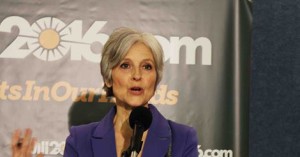
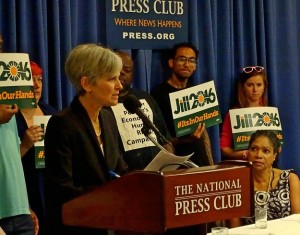
Green Party 2016 US Presidential Candidate Dr. Jill Stein
Jill Stein is a physician and activist who is seeking the Green Party’s 2016 presidential nomination. She ran for the White House as the Green Party’s candidate in 2012, winning nearly half a million votes. Stein is a graduate of Harvard College and Harvard Medical School.
Her campaign website urges: It’s time to build a people’s movement to end unemployment and poverty; avert climate catastrophe; build a sustainable, just economy; and recognize the dignity and human rights of every person. The power to create this new world is not in our hopes; it’s not in our dreams — it’s in our hands.
Guest – Dr. Jill Stein, was the Green Party’s 2012 candidate for president of the United States. She is an organizer, physician, and pioneering environmental-health advocate. She has led initiatives promoting healthy communities, local green economies and the revitalization of democracy – addressing issues such as campaign finance reform, green jobs, racially-just redistricting, and the cleanup of incinerators, coal plants, and toxics. She was a principal organizer for the Global Climate Convergence for People, Planet and Peace over Profit. Dr. Jill Stein is a mother, physician, longtime teacher of internal medicine, and pioneering environmental-health advocate. She is the co-author of two widely-praised reports, In Harm’s Way: Toxic Threats to Child Development, published in 2000, and Environmental Threats to Healthy Aging, published in 2009. The first of these has been translated into four languages and is used worldwide. The reports promote green local economies, sustainable agriculture, clean power, and freedom from toxic threats.
—-
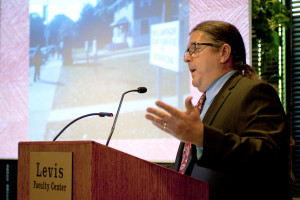
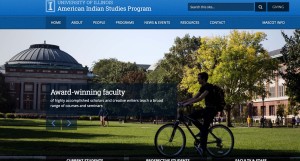
Department of American Indian Studies at the University of Illinois Reduced From Nine To Zero
Professor Robert Warrior is the departing chairman of the Department of American Indian Studies at the University of Illinois. Warrior is a member of the Osage Indian tribe of Oklahoma. He was the chairman of the department that help recruit Professor Steven Salaita to the University of Illinois in 2014. Salaita gave up his tenure in Virginia and was moving to University of Illinois when he was openly critical of the Israeli bombing of Palestinians in Gaza. For this, his tenured position at the University of Illinois was revoked. In the wake of Salaita’s firing, the Department of American Indian Studies at the University of Illinois had dwindled down to zero people from the nine it had just two years ago.
Guest – Professor Robert Warrior is Director of American Indian Studies at the University of Illinois at Urbana-Champaign, where he is Professor of American Indian Studies, English, and History. An enrolled member of the Osage Nation, he is the author of The People and the Word: Reading Native Nonfiction, American Indian Literary Nationalism (with Craig Womack and Jace Weaver), Like a Hurricane: The Indian Movement from Alcatraz to Wounded Knee (with Paul Chaat Smith) and Tribal Secrets: Recovering American Indian Intellectual Traditions. He is also a member of the Native Critics Collective, which published Reasoning Together, a collection of essays focused on Native literary criticism.
Members of the Native American and Indigenous Studies Association selected both The People and the Word and Reasoning Together for its list of the ten most influential books in Native and Indigenous studies in the first decade of the twenty-first century. He and the coauthors of American Indian Literary Nationalism were the inaugural recipients of the Beatrice Medicine Award for Scholarly Writing from the Native American Literature Symposium, and Warriorhas also received awards from the Gustavus Myers Foundation, the NativeAmerican Journalists Association, the Church Press Association, and others.
————————————————————————–
Law and Disorder March 7, 2016
Podcast: Play in new window | Download
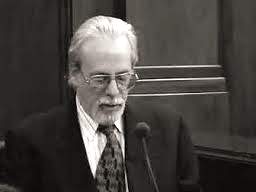
Law and Disorder hosts Heidi Boghosian and Michael Smith remember New York City Attorney and publisher Bill Schaap.
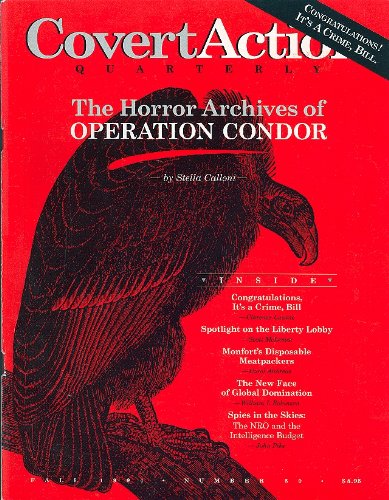
Bill Schaap died in his home on February 25th after a long illness. He was 75. After graduating from the University of Chicago Law school in 1964 Schaap worked for the Center for Constitutional Rights on its project in Japan representing antiwar GIs during the Vietnam war. For 20 years he and his companion the late Ellen Ray lived in Washington DC and published and wrote for the magazine “Covert Action Quarterly” which exposed the crimes of the CIA. In its early years they named CIA agents, until a naming names act was passed by Congress making the exposure of agents a crime. In the early 80s they moved to New York City and founded Sheridan Square Press. They published books about the CIA by former CIA agents. Most prominently they published New Orleans district attorney Jim Garrison’s book “On the Trail of the Assassins” showing CIA involvement in the Kennedy assassination. The book became a New York Times bestseller and was the basis for the Oliver Stone movie “JFK”. In the early 90s they founded the Institute For Media Analysis and began publishing the magazine “Lies of Our Times”, a magazine of media criticism. Bill Schaap was a recognized expert in government propaganda and wrote and spoke widely and frequently on the topic.
—-
Lawyers You’ll Like: Attorney Bill Schaap
Attorney William Schaap graduated from the University of Chicago Law School in 1964 and has been a practicing lawyer since. Bill specialized in military law and practiced in Asia and Europe. He later became the editor in chief of the Military Law Reporter in Washington for a number of years. In the 70’s and 80’s he was a staff counsel of the Center for Constitutional Rights in New York City. In the late 80s, he was an adjunct professor at John J. College of Criminal Justice of the City University of New York where he taught courses on propaganda and disinformation.
Attorney William Schaap:
- One of first cases at this big Wall Street firm, they had some outside counsel working on it, one of whom was David Lubel, and Dave Lubel who had I think been a recruiter for the Communist Party in his youth, was always good at spotting somebody who was always worth recruiting and he started to tell me there was this convention of this lawyers group.
- It was this 1967 Lawyers Guild Convention in New York. He dragged me to one event, I met Bill Kunstler, I met Arthur Kinoy, I met Victor Rabbinowitz. I’d been on Wall Street for a year or two, I said I didn’t know there were lawyers like this.
- I joined the same day and met Bernadine Dorhn and a few weeks she called me and said we need your help.
- She said you gotta defend a bunch of Columbia students. The next thing I knew the riot started at Columbia and she said you have to go down there and defend them.
- I signed up to be staff counsel on the National Lawyers Guild Military Law Project in Okinawa, Japan.
- When you work overseas in that kind of a climate with the military you learn a lot fast about American imperialism.
- Once you learn that, you learn about the CIA.
- That led us to originally working on Counter Spy magazine and then on Covert Action Magazine.
- The original purpose was to expose the CIA. We worked with Lou Wolf who is an expert in uncovering CIA agents in US embassies, not through any classified documents but because if you knew how to read the paperwork and State Department things, you could tell who are the “ringers.”
- We were so successful that Congress passed a law against us.
- Our goal was to make these people ineffective because the only way most CIA could work, particularly the ones that were assigned to an embassy was to have to pretend to be something else.
- They were all third assistant political secretaries and those were all phony things. Their job was to finagle their way into various community organizations in whatever foreign capital they were posted to recruit people to turn against their own countries and become traitors to their own countries, to become spies for the U.S.
- We thought if we identified these people, it might make their job a little bit harder, which it did.
- Of course, the problem with that is the government said we were trying to get them killed which we weren’t trying to do and nobody we did expose ever did get killed.
- He (Philip Agee) had been an adviser to Counter Spy. Counter Spy folded when Welch got killed, cause the pressure was too much and started Covert Action Quarterly.
- He was not the person discovering who the under cover people were, Lou Wolf was doing that.
- Phil wrote articles for us in every issue and we worked very closely with him.
- Once you start exposing these things, they really don’t have any defense.
- They tried to catch us in something phony. We would get tips that would turn out to be CIA trying to get us to print some story that wasn’t true so they could then discredit us.
- We had more interference from the government when we were doing military law work, before Covert Action Quarterly.
- They would plant bugs in our attic in Okinawa, things like that.
- The Intelligence Identity Protection Act has 2 parts. One makes it a crime for someone in the government who has classified information to reveal someone’s identity. The second part makes it a crime to reveal the identity of someone you did not learn from classified information or you position. (But if you were in the business of exposing these people . . .)
- Regarding his newsletter The Lies of Our Times – It was in the 90s, from 1990 to 1995 I think. To a certain extent, the abuses we were crying about got a little bit less over time because that’s sometimes the helpful result of that kind of exposure.
- We were just tired of people thinking that if it was in the New York Times it must be true.
- The fact is that those people lie all the time.
- I think we’ve gotten to a point where people recognize that the government lies to them and that there’s an awful lot that goes on that they don’t know.
Guest – Attorney William Schaap graduated from the University of Chicago Law School in 1964 and has been a practicing lawyer since. Bill specialized in military law and practiced in Asia and Europe. He later became the editor in chief of the Military Law Reporter in Washington for a number of years. In the 70’s and 80’s he was a staff counsel of the Center for Constitutional Rights in New York City. In the late 80s, he was an adjunct professor at John J. College of Criminal Justice of the City University of New York where he taught courses on propaganda and disinformation.
In addition to being a practicing lawyer, Bill was a journalist, publisher and a writer specializing in intelligence as it relates to media. He was the co-publisher of a magazine called the Covert Action Quarterly for more than 20 years. He also published a magazine on propaganda and disinformation titled Lies Of Our Times. Attorney Bill Schapp has written numerous articles and edited many books on the topic of media and intelligence.
—-
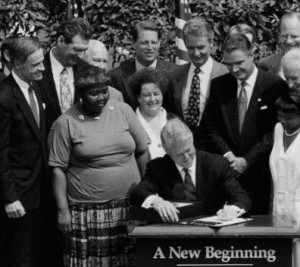
Clinton Administration Sets Back African-Americans
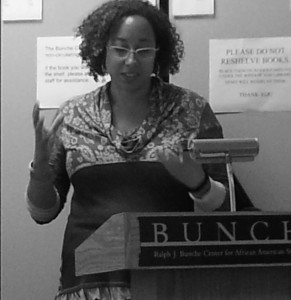
A recent article by our next guest documents the Clintons shared responsibility for the disastrous policies of mass incarceration and the subsequent war on drugs. A topic Hillary Clinton has been confonted with by Black Lives Matter activists while on the campaign trail. The recently published article in Republic Magazine is titled “The Clinton’s War On Drugs: When Black Lives Didn’t Matter” by Professor Donna Murch.
Guest – Donna Murch, Professor of History at Rutgers University and author of Living In The City: Migration, Eduation and the Rise of the Black Panther Party. She also contributed an article to the forthcoming verso press book “False Choice: The Faux Feminism of Hillary Clinton.
——————————————————-