Welcome to Law and Disorder Radio
Law and Disorder is a weekly independent civil liberties radio program airing on more than 150 stations and on Apple podcast. Law and Disorder provides timely legal perspectives on issues concerning civil liberties, privacy, right to dissent and practices of torture exercised by the US government and private corporations.
Law and Disorder November 9, 2015
Podcast: Play in new window | Download
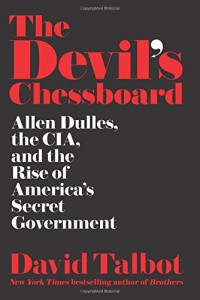
The Devil’s Chessboard: Allen Dulles, the CIA, and the Rise of America’s Secret Government
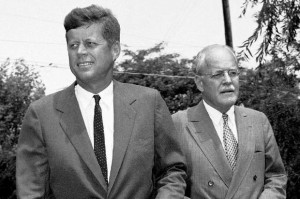
As director of the CIA, from 1952 until Kennedy fired him, Allen Dulles has been said to exemplify unbridled authority at the height of the Cold War. Under his leadership the CIA became a lawless force domestically and internationally that engaged, with impunity, in covert acts such as the assassination of foreign leaders including Patrice Lumubo in the Congo and Jacobo Arbenz in Guatemala and the over throw of a number of foreign governments.
As an attorney for the law firm Sullivan and Cromwell in the 1930s, Dulles protected and promoted Nazi-controlled cartels. He wielded his influence in the Office of Strategic Services during World War II and then in the CIA to shield former Nazis from prosecution for war crimes in the ’40s and ’50s. David Talbot writes in book The Devil’s Chessboard, ” over the final months of the JFK presidency, a clear consensus took shape within the American “deep state” Kennedy was a national security threat. For the good of the country he must be removed and Dulles was the only man with the stature, connections and decisive will to make something of this enormity happen. so he could enlist them to fight communists. In addition to assisting with the assassination of Congo leader Patrice Lumumba, he organized the Bay of Pigs invasion and tried repeatedly to murder Fidel Castro.
Guest – David Talbot, the author of the New York Times bestseller Brothers: The Hidden History of the Kennedy Years and the acclaimed national bestseller Season of the Witch: Enchantment, Terror, and Deliverance in the City of Love. He is the founder and former editor in chief of Salon, and was a senior editor at Mother Jones and the features editor at the San Francisco Examiner. He has written for The New Yorker, Rolling Stone, Time, The Guardian, and other major publications. Talbot lives in San Francisco, California.
—-
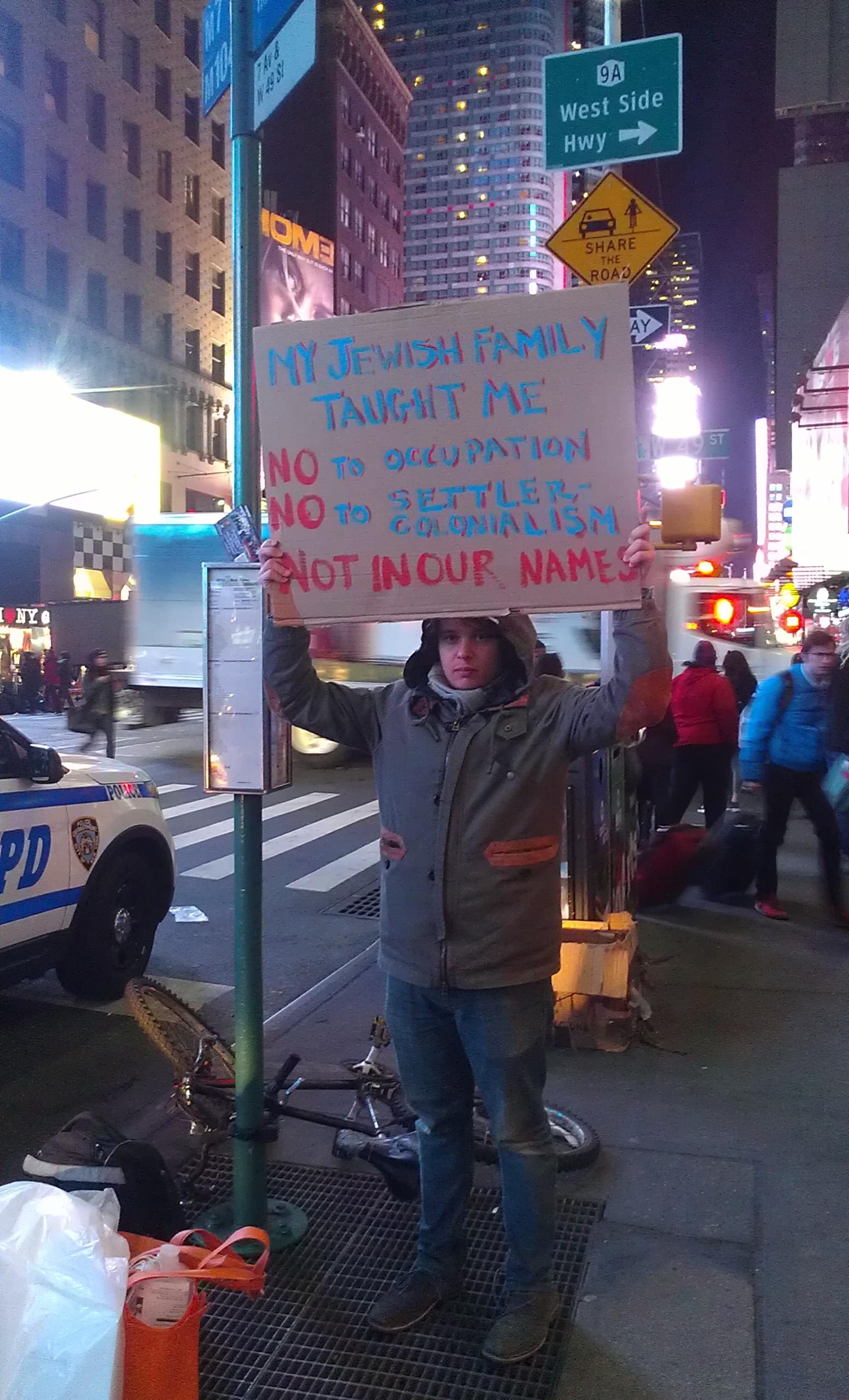

Palestinian Uprising And The Growing BDS Movement
This past October more than 49 Palestinians were shot dead by Israeli occupation forces while 500 others were injured by live ammunition and thousands more injured. As a mass popular rebellion, often attracting tens of thousands of Palestinians, asserts its right to self-determination and freedom, Israel has escalated a brutal response, especially in occupied East Jerusalem.
The Palestinian BDS National Committee, a diverse coalition of Palestinian unions and organizations which leads the global BDS movement, recently called for a wave of BDS solidarity with Palestinian popular resistance and to pressure governments, institutions and businesses to end support for Israel’s violations of international law. Tens of thousands of people across 100 cities took to the streets to show Israel that it will be held to account for its crimes against the Palestinians. Despite this, mainstream media coverage remains for the most part biased, echoing Israel’s propaganda.
Guest – Rebecca Vilkomerson, the Executive Director of Jewish Voice for Peace. JVP is a national grassroots organization rooted in Jewish tradition, human rights, and international law that works for a just peace, self-determination and full equality for all people of Palestine and Israel.
—————————————-
Law and Disorder November 2, 2015
Podcast: Play in new window | Download


Tapping In To The Flow: NSA Global Surveillance
We spoke with the director of the Library Freedom Project about a New Hampshire library standing its ground by using the TOR browser to protect the anonymity of its patrons from DHS surveillance. A victory yes, but also another stark reminder of what society now confronts while under a total surveillance state. Government spying technology has quietly built up its networks and invisible webs of surveillance. It’s mostly unseen, data passing through the air, cables behind walls, in the ground and underwater. Trevor Paglen brings these images and concepts into the public consciousness in his recent exhibit at a New York City Chelsea gallery.
Guest – Trevor Paglen has photographed and written about drones, military black sites and satellites. He’s an artist, image maker, journalist and engineer. He holds a PhD in experimental geography and contributed research and cinematography to the Academy Award-winning film Citizen Four.
—-


National Lawyers Guild Convention 2015
Natasha Bannan is the president of the National Lawyers Guild, as well as a human rights lawyer and Associate Counsel at LatinoJustice PRLDEF. At that national civil rights organization she works with low-wage Latina immigrant workers, and on the domestic implementation of human rights norms. Previously, she worked in the International Women’s Human Rights Clinic at CUNY School of Law and at the Center for Reproductive Rights. While attending CUNY School of Law, she was Editor-in-Chief of the CUNY Law Review and a Fellow at the Center for Latino and Latina Rights and Equality.
Guest – Natasha Lycia Ora Bannan, president of the National Lawyers Guild has advocated before international and regional human rights bodies on issues including colonialism, sexual violence in armed conflict, reproductive rights violations and hate crimes. She has written several articles and reports, specifically on gender and human rights. Natasha also co-chairs the National Lawyers Guild’s Subcommittee on Puerto Rico.
————————————————
Law and Disorder October 26, 2015
Podcast: Play in new window | Download
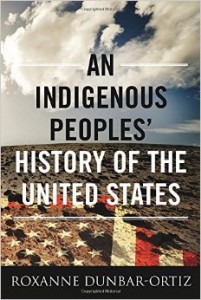
An Indigenous Peoples’ History of the United States
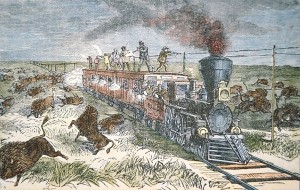
In the United States today, there are more than 500 federally recognized indigenous communities and nations comprising nearly three million people. These are the descendants of the 15 million people who once inhabited this land and are the subject of the latest book by Roxanne Dunbar-Ortiz. In An Indigenous Peoples’ History of the United States, Dunbar-Ortiz challenges the founding myth of the United States and shows how policy against the indigenous peoples was genocidal and imperialist—designed to crush the original inhabitants. Spanning more than 300 years, this classic bottom-up history significantly reframes how we view our past. Told from the viewpoint of the indigenous, it reveals how Native Americans, for centuries, actively resisted expansion of the U.S. empire.
- It’s absolutely necessary to know this history of settler colonialism and how it effects consciousness today of U.S. people and in the world because everyone is convinced of this myth of the United States and somehow its always going off the path of this destiny that has never been true in the first place.
- It’s like a fairy tale except its extremely deadly and dangerous.
- Other countries have romantic myths as their form of nationalism but they don’t control the world with this ideology.
- The myth is that it was a birth of settler democracy but we know from apartheid South Africa, we know from colonialism, particularly settler colonialism such as Israel.
- There are so many parallels with Israel because the Puritans and this became embedded in all settlers, had this idea of the new Jerusalem of Zion. They used that terminology.
- That God had given them this land to settle, it wasn’t just a right it was a responsibility to destiny, to the world.
- This made the native farmer and fisherman, ordinary people like other people in the world into savages and monsters, sort of like the Israelis to do the Palestinians today.
- Throughout the book I have a theme of the militarism and the counterinsurgency that attacks civilians and a food fight they call it, burns the food, supplies, the crops, burns the houses of the people in their towns, creates refugees. This then becomes the pattern.
- Every generation there is this Indian war. Vietnam looked like an Indian war, even the language they use – Indian country for enemy territory, all of the weapons they name after native people.
- This is not how we think of the United States, supposedly a civilian country, the military is always under control of civilians but that civilian president is commander and chief of the armed forces.
- There’s also a theory, the Bering Strait the one entrance to the whole continent, which is absurd because all of the people on the coast were great seafaring people.
- A part of European imperialism say as the beginning of everything that it connected people up. Actually what it did was separate people each other and their tradition.
- My specialization is the southwest and central Mexico, Central America. I knew there were complex trade routes and roads all over the place, irrigation canals, how they developed agriculture.
- The first chapter, Follow the Corn, I did just that. I followed out of Mexico, the dispersion of corn agriculture all the way to Tierra Del Fuego to the sub Arctic and coast to coast.
- What you find in the Americas is when they get to the point of abusing the environment and become dictatorial, there tends to be revolts to overthrow, that was happening when Cortez came to Mexico.
- The Quetzalcoatl cult that took over the Aztec government became abusive and was doing slave raiding. Had done a wonderful job of dispersing trade routes. Cortez simply allied with the rebels and overthrew the central government.
- Course they couldn’t know his intentions of simply wiping out their civilization.
- When British colonialism came to North America with these peculiar characteristics of the puritan ideology settling in. With 2 centuries of settler colonialism they developed this idea of ownership.
- It went from owning human beings to the idea of owning the land.
- George Washington was a surveyor and you have to ask why was such a super wealthy – a lowly surveyor?
- Surveyors got to choose the best land, and got to mark it up. They had already developed this idea of a Platte, creating territories that would then become states once they had a majority settler population.
- That’s why it took so long for Oklahoma, Oklahoma was the 47th state, New Mexico, Arizona, these places that had a majority native population.
- It was rough being native in the United States, it still is. I grew up in Canadian county Oklahoma, my dad sharecropped, and was a tenant farmer throughout that area until the depression wiped it out.
- The people went to California as refugees.
- I’m cautious about the identity because native nationalism Cherokee or Onondaga or Shawnee or Creek Muskogee
- There was an instance in 1917, I think its one of the most important moments in US history and hardly anyone knows about it. Jack Womack and I had written about it Monthly Review, it was called the Green Corn Rebellion.
- That is the main demand, land base, nationhood, the ability to prosper and exist as people, not just as individuals being assimilated out, that’s another form of genocide.
Guest – Roxanne Dunbar-Ortiz, grew up in rural Oklahoma, the daughter of a farmer and half-Indian mother. She has been active in the American Indian Movement for more than four decades and is known for her lifelong commitment to national and international social justice issues. After receiving her PhD in history at the University of California at Los Angeles, she taught in the newly established Native American Studies Program at California State University and helped found the departments of Ethnic Studies and Women’s Studies. Her 1977 book The Great Sioux Nation was the fundamental document at the first international conference on Indians in the Americas, held at the United Nations’ headquarters in Geneva. She is the author or editor of seven books.
—-

NYPD Muslim Surveillance Case Reinstated
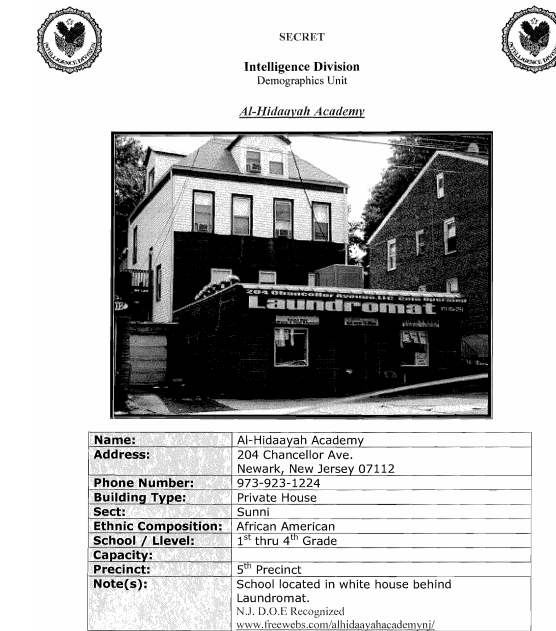
After the 9/11 attacks, the New York City Police Department created a vast and covert suspicion-less surveillance program targeting Muslim American communities in New York, New Jersey, and beyond. The federal lawsuit Hassan v. City of New York challenges the constitutionality of this program. The original complaint was filed by Muslim Advocates in the District Court of New Jersey and later joined by the Center for Constitutional Rights. The lawsuit seeks an end to the program and destruction of any records gathered. Our client Zaimah Abdur-Rahim was spied on by the NYPD because she operates a grade-school for Muslim girls. NYPD officers recorded details about the school, such as the fact that it was run from Abdur-Rahim’s home and that its students were predominantly African-American. As the Associated Press reported in an award-winning series, the NYPD monitored and/or infiltrated almost every aspect of Muslim life, from mosques and student associations, to halal butcher shops, restaurants, and private citizens. Internal NYPD documents confirm that the program produced zero leads to terrorist activity after more than a decade in operation.
Guest – Ghita Schwarz, a senior staff attorney at the Center for Constitutional Rights. She works on racial justice, immigrants’ rights and government misconduct cases. Her current cases include the Freedom of Information Act cases Detention Watch Network v. ICE and Immigrant Defense Project v. ICE, seeking government transparency about controversial immigration detention and enforcement practices; Hassan v. City of New York, challenging the NYPD’s discriminatory program of surveilling Muslims; and United States and Vulcan Society v. City of New York, challenging long-term employment discrimination by the New York City Fire Department. Ghita’s past work includes Aguilar v. ICE, fighting ICE’s practice of warrantless home raids, and NDLON v. ICE, challenging government secrecy regarding DHS’ Secure Communities program. Prior to coming to the Center for Constitutional Rights, she worked at LatinoJustice PRLDEF, the Door Legal Services Center, and Legal Services for New York City. Ghita graduated from Harvard College and Columbia Law School. Ghita’s recent writing includes “Why New York is Still the Capital of Immigrant America,” published in The Nation.
—-