Welcome to Law and Disorder Radio
Law and Disorder is a weekly independent civil liberties radio program airing on more than 150 stations and on Apple podcast. Law and Disorder provides timely legal perspectives on issues concerning civil liberties, privacy, right to dissent and practices of torture exercised by the US government and private corporations.
Law and Disorder October 19, 2015
Podcast: Play in new window | Download

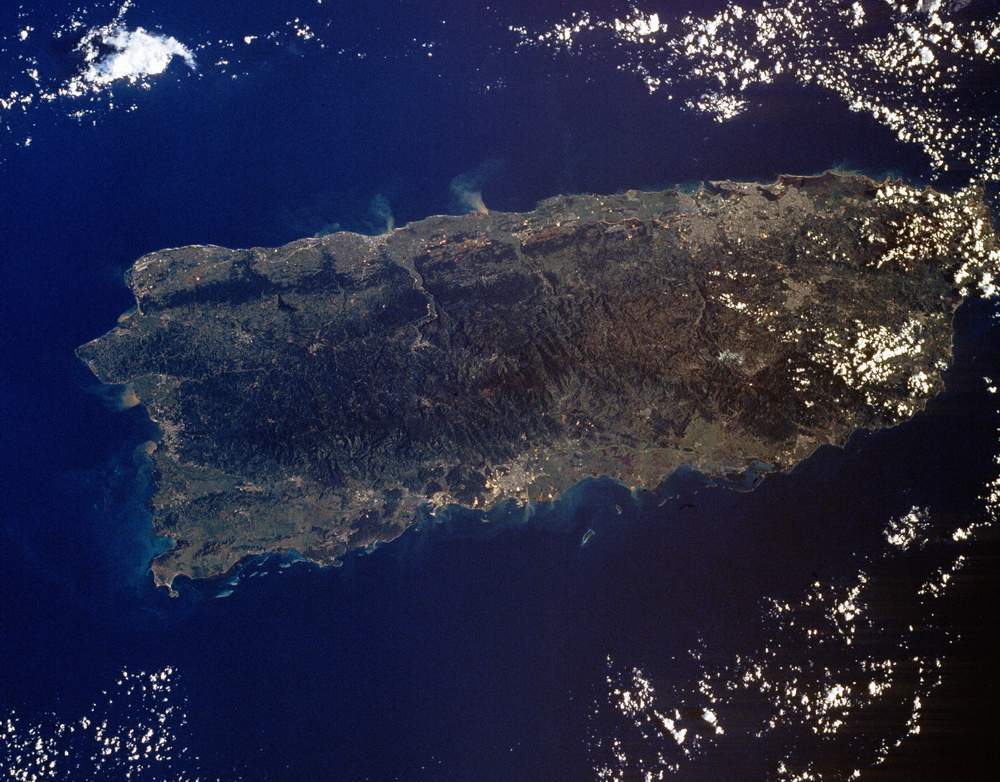
Puerto Rico: The Crisis Is About Colonialism, Not Debt
The commonwealth of Puerto Rico is in a social and financial crisis owing some 73 billion dollars to U.S. banks, hedge funds and vulture funds. The people of Puerto Rico are extraordinarily impoverished particularly the children. Last August the government of Puerto Rico failed to make a 58 million dollar debt payment on what they call a moral obligation bond held by U.S. banks and corporations. The crisis reflects centuries long colonialism and in particular the last centuries of American policies toward Puerto Rico which favored American investments which were then taken out of the island.
Guest – Attorney Linda Backiel, a criminal defense attorney and poet living and practicing law in San Juan, Puerto Rico. Here is Linda Backiel’s transcript from the talk she gave at the celebration of the 50th anniversary of the Criminal Justice Act.
—-
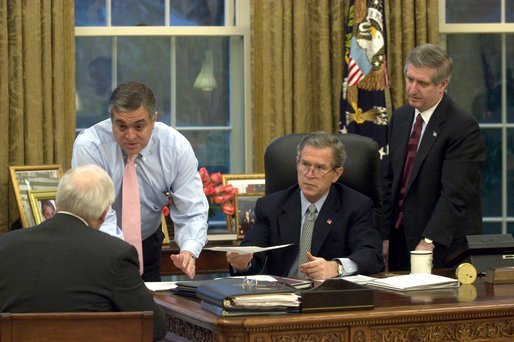
US Intel Vets Decry CIA’s Use of Torture
Former CIA leaders responsible for allowing torture to become part of the 21st Century landscape are seeking to rehabilitate their sullied reputations with the release of the book, Rebuttal: The CIA Responds to the Senate Intelligence Committee’s Study of Its Detention and Interrogation Program. They claim that the primary allegations against them stem from a partisan report issued by Democrats from the Senate Intelligence Committee. In fact, the Senate Intelligence report on torture enjoyed bipartisan support. But if the public doesn’t carefully read the extensively footnoted Senate Intelligence Committee report it may be easy for many to believe that the CIA officers are victims of a political witch hunt. As well, these officers seem to rely on the erroneous fact that a segment of the population continue to believe that the practice of torture is effective is gleaning information important to national security.
Guest – Raymond L. McGovern, retired CIA officer turned political activist. McGovern was a Federal employee under seven U.S. presidents in the past 27 years. Ray’s opinion pieces have appeared in many leading newspapers here and abroad. His website writings are posted first on consortiumnews.com, and are usually carried on other websites as well. He has debated at the Oxford Forum and appeared on Charlie Rose, The Newshour, CNN, and numerous other TV & radio programs and documentaries. Ray has lectured to a wide variety of audiences here and abroad. Ray studied theology and philosophy (as well as his major, Russian) at Fordham University, from which he holds two degrees. He also holds a Certificate in Theological Studies from Georgetown University.
————————————————
Law and Disorder October 12, 2015
Podcast: Play in new window | Download
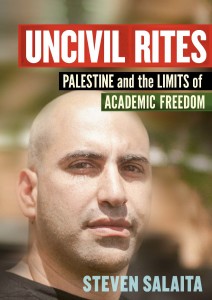
Uncivil Rites: Palestine and the Limits of Academic Freedom
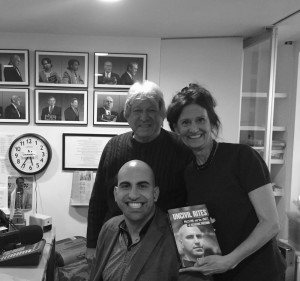
Just before the start of the 2014 academic year, the board of trustees at the University of Illinois at Urbana-Champaign revoked a tenured professorship of renowned American Indian studies professor Steven Salaita. The abrupt termination of employment was in response to Salaita’s public tweets criticizing the Israeli government’s summer assault on Gaza. Enormous public outcry followed the scholar’s firing, with thousands petitioning for his reinstatement, and more than five thousand scholars pledging to boycott UIUC. The case raises significant questions about academic freedom, free speech on campus, and the growing movement for justice in Palestine. In his new book Uncivil Rites, Salaita brings personal reflection and political critique to bear on his high-profile and controversial termination. He deftly positions his case at the intersection of important issues affecting higher education and social justice activism.
Guest – Steven Salaita holds the Edward W. Said Chair of American Studies at the American University of Beirut. The author of six other books, he is a columnist for Electronic Intifada and a member of the Organizing Committee of the US Campaign for the Academic and Cultural Boycott of Israel (USACBI).
—-
The Palestine Exception to Free Speech: A Movement Under Attack in the US
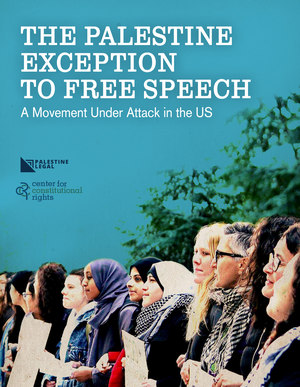
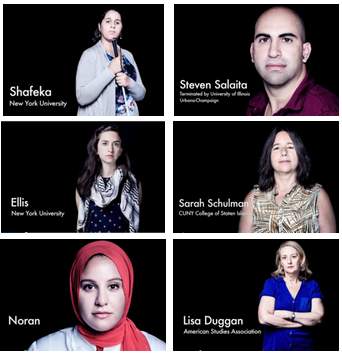
A new report, “The Palestine Exception to Free Speech: A Movement Under Attack in the US,” released by Palestine Legal and the Center for Constitutional Rights, documents for the first time the widespread and growing suppression of Palestinian human rights advocacy in the US. A companion video features students and scholars discussing the backlash they have experienced for engaging in Palestine advocacy.
Palestine Legal, a nonprofit organization dedicated to protecting the civil rights of people in the U.S., responded to nearly 300 incidents over an 18-month period. Eighty-five percent of the incidents—which included baseless legal complaints, administrative disciplinary actions, firings, harassment, and false accusations of terrorism and antisemitism—targeted students and scholars. Driven by a network of Israel advocacy organizations, these efforts target the movement for Palestinian rights in the U.S., which has grown significantly over the last decade.
The report includes case studies and testimony from advocates targeted for their speech. It outlines a notable increase in federal and state legislative efforts to condemn or restrict advocacy for Palestinian human rights, including legislation that conflates criticism of Israeli policy with antisemitism.
Guest – Dima Khalidi is the founder and Director of Palestine Legal and Cooperating Counsel with the Center for Constitutional Rights (CCR). Her work includes providing legal advice to activists, engaging in advocacy to protect their rights to speak out for Palestinian rights, and educating activists and the public about the repression of Palestine advocates. Dima has a JD from DePaul University College of Law with a concentration in International Law, an MA in Comparative Legal Studies from the University of London – School of Oriental and African Studies, and a BA in History and Near Eastern Studies from the University of Michigan.
———————————————
Law and Disorder October 5, 2015
Podcast: Play in new window | Download
New York City Councilors Issue Proclamation Honoring Ethel Rosenberg on her 100th Birthday
The Rosenberg atomic spy case of 1951 was one of the most famous political trials in American history. Both Julius and Ethel Rosenberg were from New York and had been active in the American Communist Party. When they were arrested in 1950 it was at the height of the hysteria during the infamous red hunting McCarthy decade. In 1950 the Russians first tested their atomic bomb and United States initiated the Korean War to roll back the revolution there. The effects the cold war and the execution of the Rosenbergs was devastating to the Left. Ethel and Julius were electrocuted to death at Sing Sing prison two years later. At the sentencing, federal judge Irving Kaufman said that the Rosenbergs were guilty of facilitating the death of some 50,000 American soldiers in the Korean War and President Eisenhower. Declining to grant clemency, he said they might be responsible for the death of tens of millions of people in an atomic war. The government tried to get Julius Rosenberg to confess and give names. A representative from the Attorney General’s office visited him at Sing Sing prison. Rosenberg said no. He said “We are the victims of a most monstrous frame up.”
Subsequent scholarship has shown that Ethel Rosenberg was totally innocent and that Julius Rosenberg was not an atomic bomb spy and that there was no secret to the atomic bomb, it was a question of industrial technique.
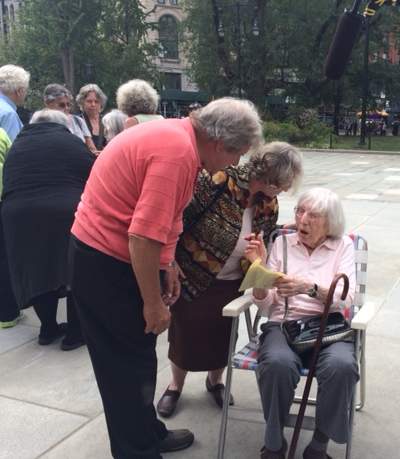
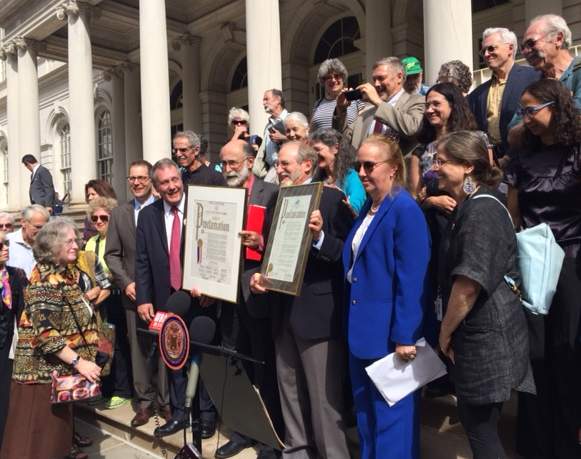
Now, 62 years, later Ethel Rosenberg was honored by the New York city Council on the steps of City Hall September 28 with a proclamation of her innocence. It would have been her one hundredth birthday. We hear audio excerpts from the press conference and from Michael Smith and Heidi Boghosian speaking with Robbie Meeropol, Meriam Moscowitz and Attorney Danny Myers.
—-
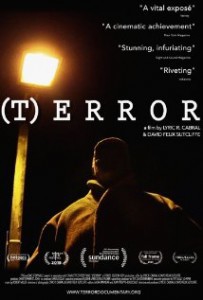
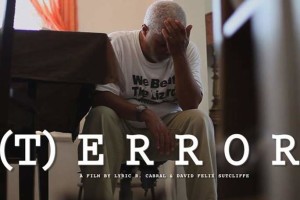
In a twist on the confidential informant genre, the new film (T)ERROR chronicles a Bureau investigation without the FBI knowing it’s being watched. Filmmakers David Felix Sutcliffe and Lyric Cabral follow ex-con Saeed “Shariff” Torres, who claims to have made hundreds of thousands of dollars a year befriending Muslim targets accused of pro-terrorism inclinations. Shariff alienated a Brooklyn community of Muslim friends by helping convict jazz bassist Tarik Shah just for talking about training members of Al Qaeda. In 2005 Shariff revealed to filmmaker Cabral that he was an FBI informant. He later agreed to let her and Sutcliffe film details of his work without the FBI’s knowledge. The movie shows how Shariff was directed to befriend Khalifah Al-Akili, a white Muslim convert who has publicly made pro-terrorist statements. After Shariff and the FBI trying to get Khalifah to shift from words to deeds, he goes public with suspicions that the FBI has targeted him.
Guest – David Felix Sutcliffe, is a Sundance award winning documentary filmmaker. In 2013, he was included in Filmmaker Magazine’s annual list of “25 New Faces of Independent Film.” His first film, ADAMA (PBS, 2011), is an hour-long documentary that explores the story of a 16-year-old Muslim girl growing up in Harlem who was arrested by the FBI on suspicion of being a “potential suicide bomber.” (T)ERROR, co-directed with acclaimed photojournalist Lyric R. Cabral, is his feature-length documentary debut, and marks the first time that filmmakers have had access to an active FBI informant in a domestic counterterrorism investigation. (T)ERROR premiered at the 2015 Sundance Film Festival where it won a Special Jury Prize for Break Out First Feature.
———————————