Welcome to Law and Disorder Radio
Law and Disorder is a weekly independent civil liberties radio program airing on more than 150 stations and on Apple podcast. Law and Disorder provides timely legal perspectives on issues concerning civil liberties, privacy, right to dissent and practices of torture exercised by the US government and private corporations.
Law and Disorder January 18, 2016
Podcast: Play in new window | Download
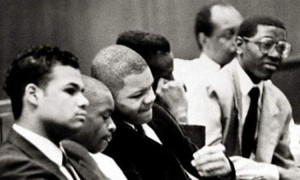

NYC Teacher Fired For Lessons About The Central Park Five
An English teacher at a New York City high school claims that she was fired because of a lesson on the so-called Central Park Five which school administrators warned her would “rile up” black students. Jeena Lee-Walker recently filed a lawsuit in federal court against the Dept. of Education and several administrators from the High School for Arts, Imagination and Inquiry after being fired for insubordination and poor evaluations. She claims they were the result of her pushing back on topics like the Central Park Five. Lee-Walker, who graduated from Barnard and has post-graduate degrees from Harvard and Fordham, began working at the school in 2013 and says she was told to be more “balanced” in covering the Central Park Five case in November of that year.
The lawsuit claims retaliation against her “violated her First Amendment right to discuss the Central Park Five case, and that the firing violated the city’s contract with the teacher’s union because she was not given a required 60 days notice.” As listeners may recall, the Central Park Five, who were wrongfully jailed for the 1989 rape of a Central Park jogger, received a $42 million settlement from NY City. In 2014, they sued the state seeking $52 million in damages for the emotional trauma of being incarcerated for years for a crime they were coerced into confessing to.
Guest – Attorney Ambrose Wotorson, a Brooklyn based attorney who is representing Jeena Lee-Walker in this case. He’s a trial lawyer focusing employment law and business litigation. Twitter account.
—-
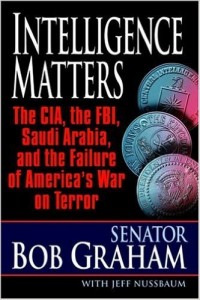
Intelligence Matters: The CIA, the FBI, Saudi Arabia, and the Failure of America’s War on Terror
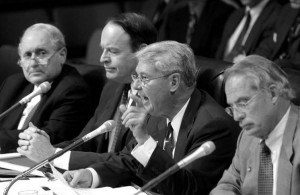
Retired Florida U. S. Senator Bob Graham was the head of the US Senate intelligence committee and also the chairman of the 9/11 commission of inquiry. He is the leading person trying to get President Obama to release to the public the suppressed 28 pages of the 911 report which have been hidden. Senator Graham contends that the 19 hijackers, 15 of whom who were Saudi Arabians, could not have pulled off the operation alone and that in fact they were part of a support network involving the Saudi Arabian monarchy and government which helped plan, pay for and execute the complicated 911 plot which, says Senator Graham, would have otherwise been impossible to accomplish. Senator Graham has written the book Intelligence Matters: The CIA, the FBI, Saudi Arabia, and the Failure of America’s War on Terror. It provides a candid insight to the workings of the US in Saudi relations and their implications on US foreign-policy making as it pertains to the middle east and bags tension, contemporary geopolitics.
Guest – Senator Bob Graham, is the former two–term governor of Florida and served for 18 years in the United States Senate. This is combined with 12 years in the Florida legislature for a total of 38 years of public service. As Governor and Senator, Bob Graham was a centrist, committed to bringing his colleagues together behind programs that served the broadest public interest. He was recognized by the people of Florida when he received an 83% approval ranking as he concluded eight years as Governor. Bob Graham retired from public service in January 2005, following his Presidential campaign in 2004.
—-
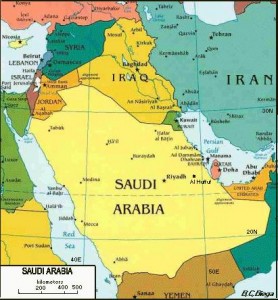
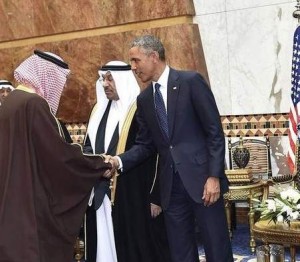
Saudi Arabia, Wahhabism and Middle East Geopolitics
We take a deeper look at Saudi Arabia and its relationship first United States and then to the other countries in the Middle East region.
Guest – Professor Rashid Khalidi, a Palestinian American who grew up in New York City. He teaches at Columbia University where he is the Edward Said Professor of Arab studies and the head of the Middle East Institute. He is the author of a number of books, most recently “The Iron Cage: The Story of the Palestinian Struggle For Statehood. He has written more than 80 scholarly articles on Middle Eastern history and politics as well as op-ed pieces in the New York Times, the Boston Globe, the Los Angeles times, the Chicago Tribune, and The Nation magazine.
—————————————————–
Law and Disorder January 11, 2016
Podcast: Play in new window | Download
Updates:
- Volkswagen Could Face Up to $80 Billion in Penalties From U.S. Emissions Lawsuit
- Co-host Heidi Boghosian Reads A Poem By Bill Ayers
—-
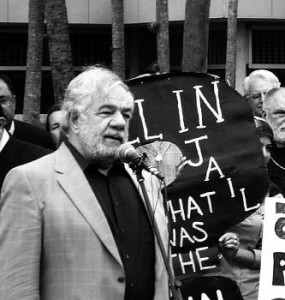
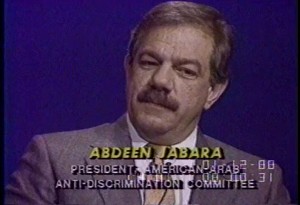
Lawyers You’ll Like: Attorney Abdeen Jabara
Abdeen Jabara is a New York based civil rights attorney and co-founder of the American-Arab Anti-Discrimination Committee. He was involved in a groundbreaking court case in the 1970s that forced the NSA to acknowledge it had been spying on him since 1967. At the time of the spying, Abdeen was a lawyer in Detroit representing Arab-American clients and people being targeted by the FBI. The disclosure was the first time the NSA admitted it had spied on an American.
He also took on the cases of people harassed by the FBI which had stepped up efforts to surveil Arab activists in the aftermath of the 1967 war, when the U.S. alliance with Israel was solidified. Abdeen was caught up in what was called “Operation Boulder,” a Nixon administration-era program that placed Arabs under surveillance.
Guest – Abdeen Jabara is a member of the legal advisory board for the American Muslim Council, a past president of the Arab-American Anti-Discrimination Committee, a former board member of the Center for Constitutional Rights and former co-counsel with Lynne Stewart for Sheik Omar Abdel-Rahman. He is an active member of the National Lawyers Guild.
——————————————————————–
Law and Disorder January 4, 2016
Podcast: Play in new window | Download
U.S. Pressed on Israeli Settlement Tax Breaks
The U.S. Treasury has long turned a blind eye to as many as 150 nonprofits that funnel up to $1 billion a year to Israeli settlements, according to a federal complaint filed in December. It now finds itself as a defendant in a just filed a lawsuit by Washington DC attorney Mark McMahon. Rather than engaging in “charitable activities,” these nonprofits—supported by US donations—are allegedly fueling land theft, forcible expulsion of hundreds of thousands of Palestinians from their land, demolition of homes and paramilitary activities carried out by armed Israeli settlers against Palestinian civilians. Some of the tax-exempt entities include the Hebron Fund, the Gush Etzion Foundation, American Friends of Ariel and Friends of the Israeli Defense Forces.
Pro bono attorney for the plaintiffs in the case, Martin McMahon, claims that huge tax deductions are being taken that support ethnic cleansing of Palestinians. Proving the allegations could lead the U.S. to designate these entities as “special designated global terrorists,” stripping them of their tax-exempt status and freezing their assets, he says. In addition to entrenching Israel’s occupation of Palestine, the complaint alleges that these organizations have undermined U.S. foreign policy in support of a Palestinian state and helped breed the conditions from which Palestinian violent resistance emerges. It alleges that the Treasury’s “double standard” in enforcing its own regulations has led to the proliferation of the Israeli settlement enterprise, resulting in up to $1 trillion in lost U.S. tax revenue.
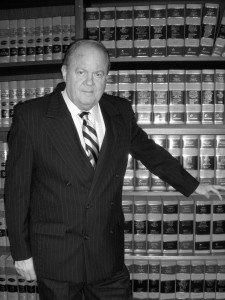
Guest – Attorney Martin McMahon, the founding member and managing partner of Martin F. McMahon & Associates. He has extensive experience in the securities industry, civil rights litigation, and has argued in over 10 appellate cases before the D.C. Court of Appeals and Maryland Court of Appeals.
——
Islamophobia 2016
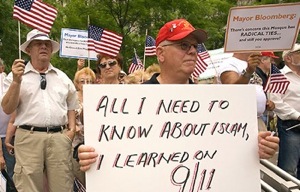
After 9/11, and now in response to recent events around the globe, thousands of innocent Muslims continue to be monitored, entrapped, and arrested in the name of subverting radicalized terrorism. Hateful rhetoric from presidential candidate Donald Trump and others have inflamed anti-Muslim stereotypes and led to numerous instances of hate crimes.
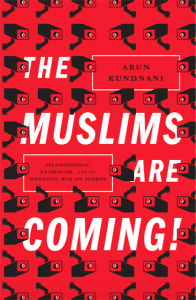
Joining us to discuss law enforcement ideologies and strategies, as well as the general public’s perceptions of Muslims, is Arun Kundnani, author of the 2014 book The Muslims Are Coming! Islamophobia, extremism, and the Domestic War on Terror.
Guest – Arun Kundani – Born and bred in London, Arun moved to New York in 2010 on a fellowship with the Open Society Foundations. He lives in Harlem. He is also the author of The End of Tolerance: Racism in 21st Century Britain, selected as a New Statesman book of the year in 2007. A former editor of the journal Race & Class, he attended Cambridge University, holds a PhD from London Metropolitan University, and teaches at New York University.
————————————————–