Welcome to Law and Disorder Radio
Law and Disorder is a weekly independent civil liberties radio program airing on more than 150 stations and on Apple podcast. Law and Disorder provides timely legal perspectives on issues concerning civil liberties, privacy, right to dissent and practices of torture exercised by the US government and private corporations.
Law and Disorder October 5, 2015
Podcast: Play in new window | Download

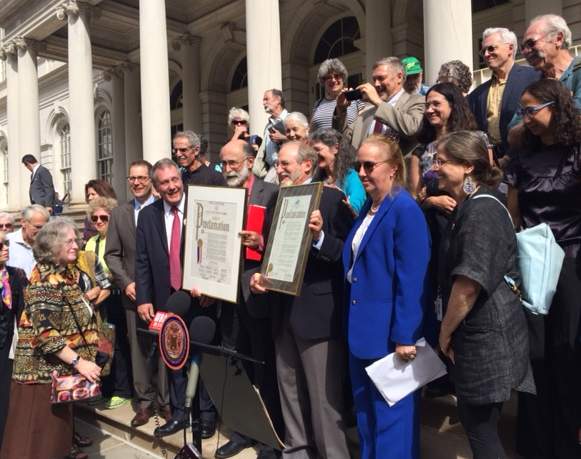
New York City Councilors Issue Proclamation Honoring Ethel Rosenberg on her 100th Birthday
The Rosenberg atomic spy case of 1951 was one of the most famous political trials in American history. Both Julius and Ethel Rosenberg were from New York and had been active in the American Communist Party. When they were arrested in 1950 it was at the height of the hysteria during the infamous red hunting McCarthy decade. In 1950 the Russians first tested their atomic bomb and United States initiated the Korean War to roll back the revolution there. The effects the cold war and the execution of the Rosenbergs was devastating to the Left. Ethel and Julius were electrocuted to death at Sing Sing prison two years later. At the sentencing, federal judge Irving Kaufman said that the Rosenbergs were guilty of facilitating the death of some 50,000 American soldiers in the Korean War and President Eisenhower. Declining to grant clemency, he said they might be responsible for the death of tens of millions of people in an atomic war. The government tried to get Julius Rosenberg to confess and give names. A representative from the Attorney General’s office visited him at Sing Sing prison. Rosenberg said no. He said “We are the victims of a most monstrous frame up.”
Subsequent scholarship has shown that Ethel Rosenberg was totally innocent and that Julius Rosenberg was not an atomic bomb spy and that there was no secret to the atomic bomb, it was a question of industrial technique.
Now, 62 years, later Ethel Rosenberg was honored by the New York city Council on the steps of City Hall September 28 with a proclamation of her innocence. It would have been her one hundredth birthday. We hear audio excerpts from the press conference and from Michael Smith and Heidi Boghosian speaking with Robbie Meeropol, Meriam Moscowitz and Attorney Danny Myers.
—-
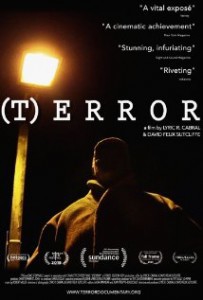
In a twist on the confidential informant genre, the new film (T)ERROR chronicles a Bureau investigation without the FBI knowing it’s being watched. Filmmakers David Felix Sutcliffe and Lyric Cabral follow ex-con Saeed “Shariff” Torres, who claims to have made hundreds of thousands of dollars a year befriending Muslim targets accused of pro-terrorism inclinations. Shariff alienated a Brooklyn community of Muslim friends by helping convict jazz bassist Tarik Shah just for talking about training members of Al Qaeda. In 2005 Shariff revealed to filmmaker Cabral that he was an FBI informant. He later agreed to let her and Sutcliffe film details of his work without the FBI’s knowledge. The movie shows how Shariff was directed to befriend Khalifah Al-Akili, a white Muslim convert who has publicly made pro-terrorist statements. After Shariff and the FBI trying to get Khalifah to shift from words to deeds, he goes public with suspicions that the FBI has targeted him.
Guest – David Felix Sutcliffe, is a Sundance award winning documentary filmmaker. In 2013, he was included in Filmmaker Magazine’s annual list of “25 New Faces of Independent Film.” His first film, ADAMA (PBS, 2011), is an hour-long documentary that explores the story of a 16-year-old Muslim girl growing up in Harlem who was arrested by the FBI on suspicion of being a “potential suicide bomber.” (T)ERROR, co-directed with acclaimed photojournalist Lyric R. Cabral, is his feature-length documentary debut, and marks the first time that filmmakers have had access to an active FBI informant in a domestic counterterrorism investigation. (T)ERROR premiered at the 2015 Sundance Film Festival where it won a Special Jury Prize for Break Out First Feature.
———————————
Law and Disorder September 29, 2015
Podcast: Play in new window | Download
Updates:
- Hosts Remember People’s Lawyer Liz Fink
—-
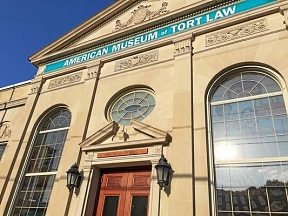
The American Museum of Tort Law
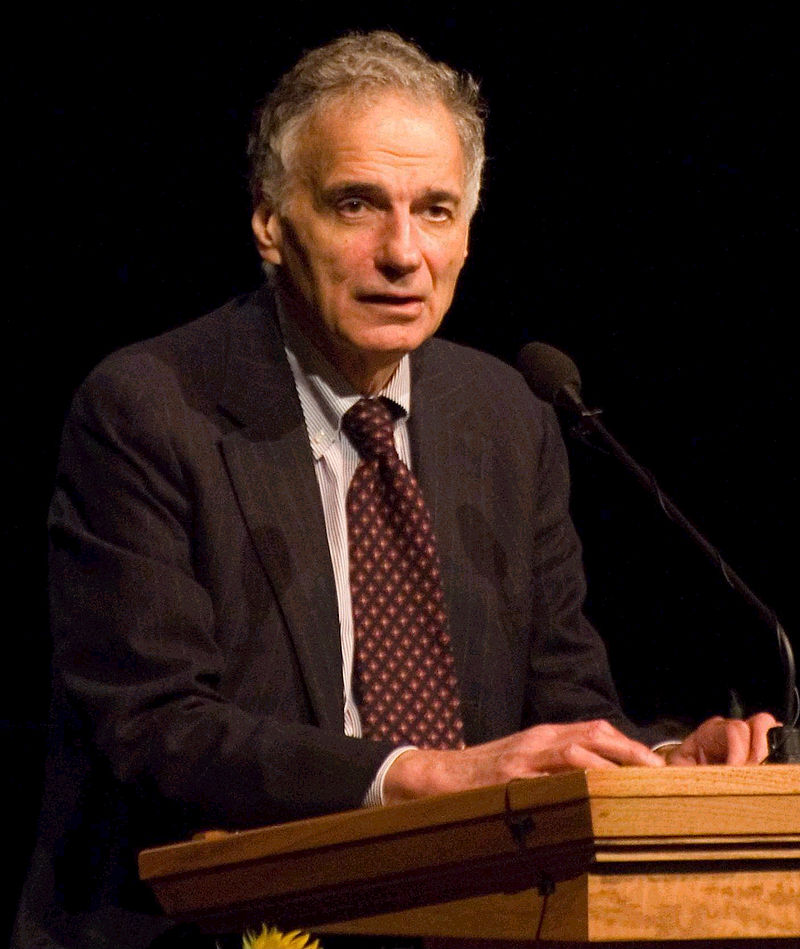
After trial lawyers told him they had no place to display exhibits they had used in court, Ralph Nadar realized that there isn’t a single museum devoted to the law in the United States. That’s about to change. The consumer advocate is opening the American Museum of Tort Law in his hometown of Winsted, Connecticut to celebrate victories of the law over corporate power. The museum will span the history of tort law – civil law that seeks relief for people injured by wrongful acts of others – and host exhibits on significant cases such as the 1998 national settlement with tobacco companies. Nader said it may also host artifacts including a Chevrolet Corvair – the car featured in his 1965 book “Unsafe at Any Speed,” which made him a household name.
Guest – Ralph Nader, attorney, political activist, consumer advocate, presidential candidate and author who among many accomplishments is responsible for 8 major federal consumer protection laws and helped established the PIRGS – Public Interest Research Groups.
—-
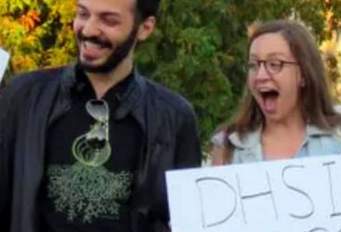
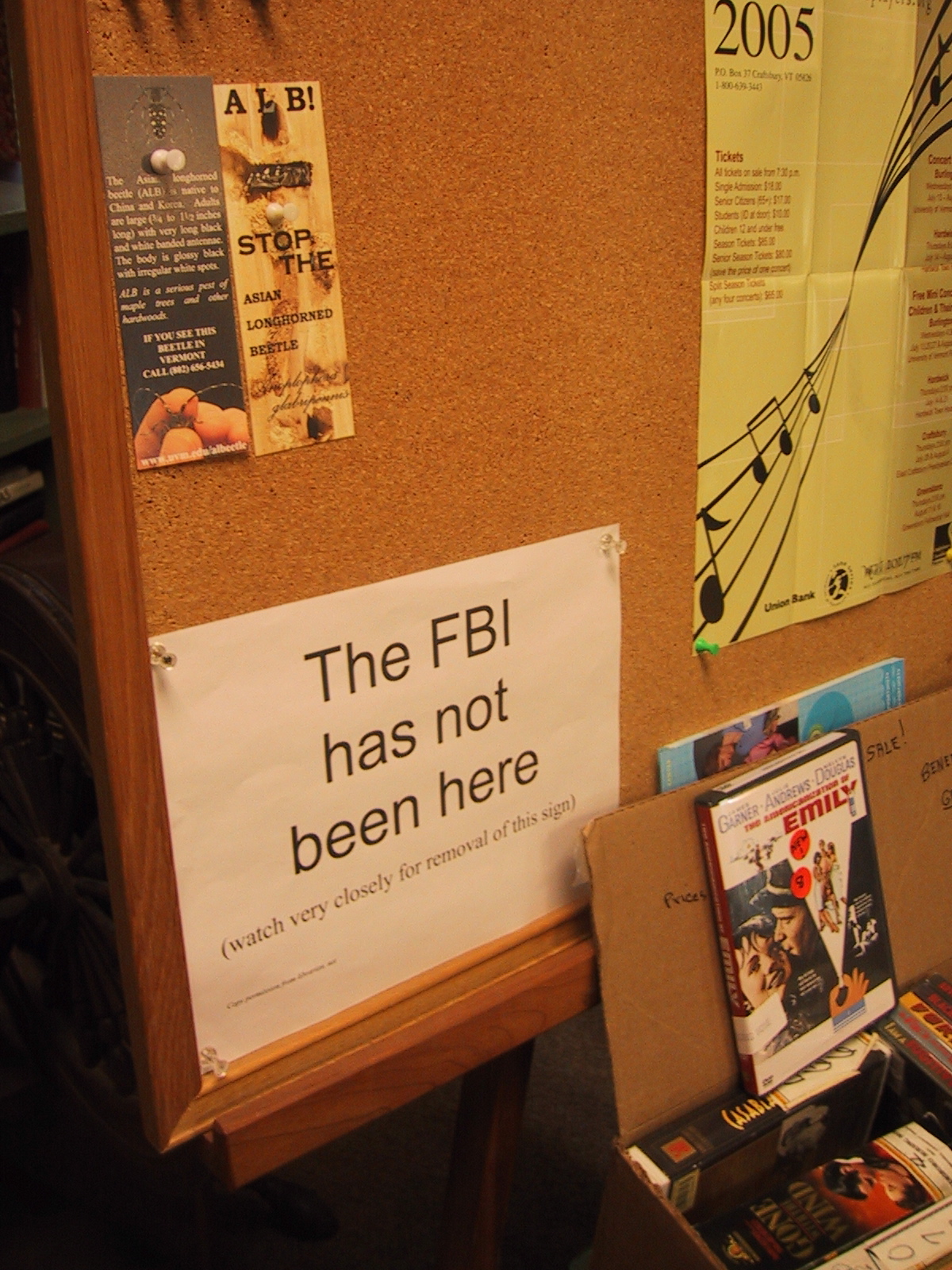
The Library Freedom Project Protects Library From DHS Surveillance
With a population just above13,000 people, the quaint town of Lebanon, New Hampshire is nestled not far from the Connecticut river in the northwest corner of the state – a few miles from Dartmouth College. In July, the local library set up a system to protect the privacy of patrons using its computers by installing Tor, the platform that routes users’ Internet traffic through various relay points, making warrantless surveillance of browsing habits and traffic more difficult. The Kilton Library’s Tor relay node attracted the attention of the Department of Homeland Security, which contacted local officials and law enforcement, warning that Tor could aid criminal behavior. In response, the library intially took down the relay, but later changed its mind and reinstalled it.
Guest – Alison Macrina is a librarian, privacy rights activist, and the founder and director of the Library Freedom Project, an initiative which aims to make real the promise of intellectual freedom in libraries by teaching librarians and their local communities about surveillance threats, privacy rights and law, and privacy-protecting technology tools to help safeguard digital freedoms.
——————————————-
Law and Disorder September 21, 2015
Podcast: Play in new window | Download
Updates:
- Heidi Boghosian Reports Back On A Visit With Mumia Abu-Jamal
- ACTION: Please call Secretary of Pennsylvania Corrections John E. Wetzel 717-728-2573
- Also call John Kerestes Superintendent At SCI Mahanoy 570-773-2158
—-


Recent Victory In Washington State Outlawing Charter Schools
After nearly a year of deliberation, the Washington State Supreme Court recently ruled 6-3 that charter schools are unconstitutional. The ruling is believed to be one of the first of its kind in the country and overturns the law voters narrowly approved in 2012 allowing publicly funded, but privately operated, schools. The parties have 20 days to ask the court for reconsideration before the ruling becomes final. In the ruling, Chief Justice Barbara Madsen wrote that charter schools aren’t so-called “common schools” because they’re governed by appointed, rather than elected, boards. Therefore, she wrote: “money that is dedicated to common schools is unconstitutionally diverted to charter schools.” The ruling represents a victory for the coalition that filed the suit in July 2013, asking a judge to declare the law unconstitutional for what they described as improperly diverting public-school funds to private organizations that are not subject to local voter control. Lawyers from the Attorney General’s Office are reviewing the decision, as is the governor’s office.
Guest – Michelle Fein, author of “Charter Schools and the Corporate Makeover of Public Education: What’s at Stake?” Michelle Fein has a Master’s degree in Education with a specialty in interdisciplinary curriculum, social studies and science. She has taught for more than 15 years in private, charter and public schools and was the director of a local charter school for four years.
—-
Ending Long Term Solitary Confinement in California Prisons
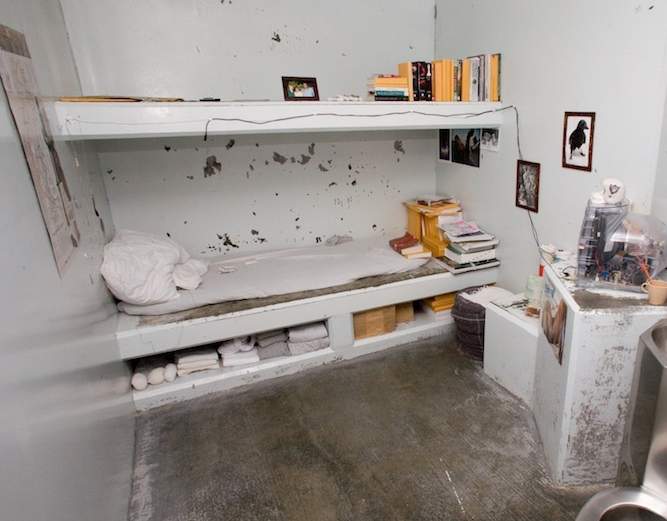
After years of litigation by the Center for Constitutional Rights, hunger strikes and protracted debate, the state of California has finally agreed to move thousands of prison inmates out of solitary confinement. Last week a legal settlement between the state and a group of inmates held in isolation for a decade or more at Pelican Bay State Prison will end the use of solitary confinement to control prison gangs. Jules Lobel, the lead attorney and president of CCR, calls this a dramatic step forward. Legal challenges to the states’ reliance on solitary confinement have been mounted since a panel of experts told the state corrections department that the high numbers of inmates in lengthy isolation did little to improve prison security. The state has agreed to create small, high-security units that house inmates deemed most dangerous in a group setting where they are entitled to many of the same privileges as other prisoners: contact visits, phone calls and educational and rehabilitation programs. Inmates found guilty of specified offenses — including murder, attempted murder, drug trafficking, arson, and extortion — are confined in security housing at Corcoran State Prison.
Large isolation units such as the one at Pelican Bay were built in the 1980s in response to high rates of inmates and officers being killed. California has moved over 1,000 prisoners from solitary into general population in the last two years, with little problem.The majority of the several thousand gang-associated prisoners who have been either kept in isolation a decade or more, or have gone at least two years without a major rule violation, will move back to general population. The state prison guard union, which tried unsuccessfully to intervene in the case, says the state may return to the 70s and 80s environment where inmates and staff were killed at high rates. California once led the nation in the use of solitary confinement but Texas is no #1. California has some 6,400 inmates in isolation units, a number that shrank for two years as the state changed its criteria for behavior considered gang activity and began removing prisoners. California has segregation units at several prisons, but the largest and most notorious is at Pelican Bay, near the Oregon border. Inmates spend nearly 23 hours a day in windowless cells that face a concrete wall. Forensic psychiatrists testified on behalf of the inmates that such conditions cause psychological damage. The UN has called it torture. Joining us to discuss this hard-won victory is Jules Lobel.
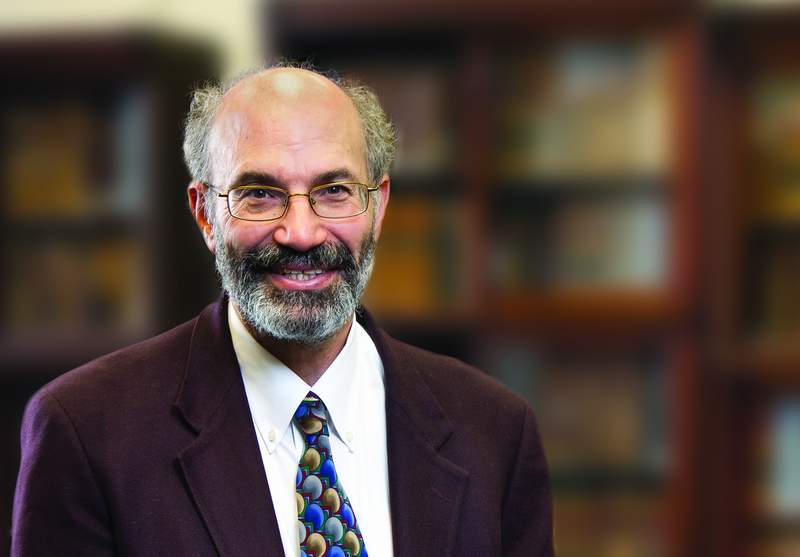
Guest – Attorney Jules Lobel, has litigated important issues regarding the application of international law in the U.S. courts. In the late 1980’s, he advised the Nicaraguan government on the development of its first democratic constitution, and has also advised the Burundi government on constitutional law issues. Professor Lobel is editor of a text on civil rights litigation and of a collection of essays on the U.S. Constitution, A Less Than Perfect Union (Monthly Review Press, 1988). He is author of numerous articles on international law, foreign affairs, and the U.S. Constitution in publications including Yale Law Journal, Harvard International Law Journal, Cornell Law Review, and Virginia Law Review. He is a member of the American Society of International Law.
——————————————————–