
Welcome to Law and Disorder Radio
Law and Disorder is a weekly independent civil liberties radio program airing on more than 150 stations and on Apple podcast. Law and Disorder provides timely legal perspectives on issues concerning civil liberties, privacy, right to dissent and practices of torture exercised by the US government and private corporations.
Law and Disorder August 24, 2015
Podcast: Play in new window | Download
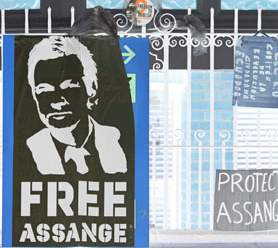
Julian Assange And Chelsea Manning Update
Attorney Carey Shenkman joins co-host Heidi Boghosian to discuss the latest developments in Julian Assange’s case. Carey also provides updates on Wikileaks whistleblower Chelsea Manning. Chelsea was accused of having contraband in her cell, that included a copy of the US Senate Torture Report, a Vanity Fair magazine and toothpaste. Manning received 21 days of recreational restrictions limiting access to the gym, library and outdoors. The maximum punishment she could have faced was indefinite solitary confinement.
Guest – Carey Shenkman is a First Amendment and human rights attorney working for Michael Ratner, President Emeritus of the Center for Constitutional Rights (CCR). Formerly at CCR, Carey worked on litigation on behalf of the press in the court-martial of whistle-blower Chelsea Manning. Carey holds two degrees in mathematics, and is an alumnus of NYU Law School, where he was an editor on the NYU Law Review. He can be reached on Twitter @CareyShenkman
—-
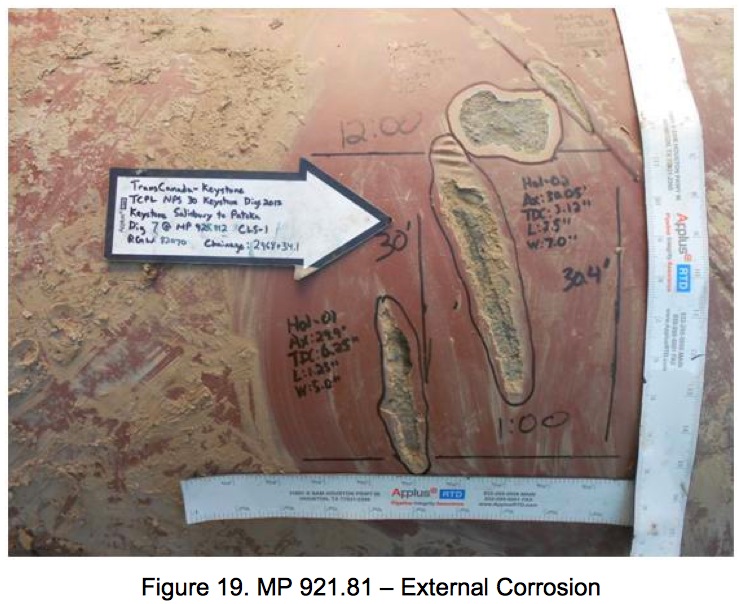
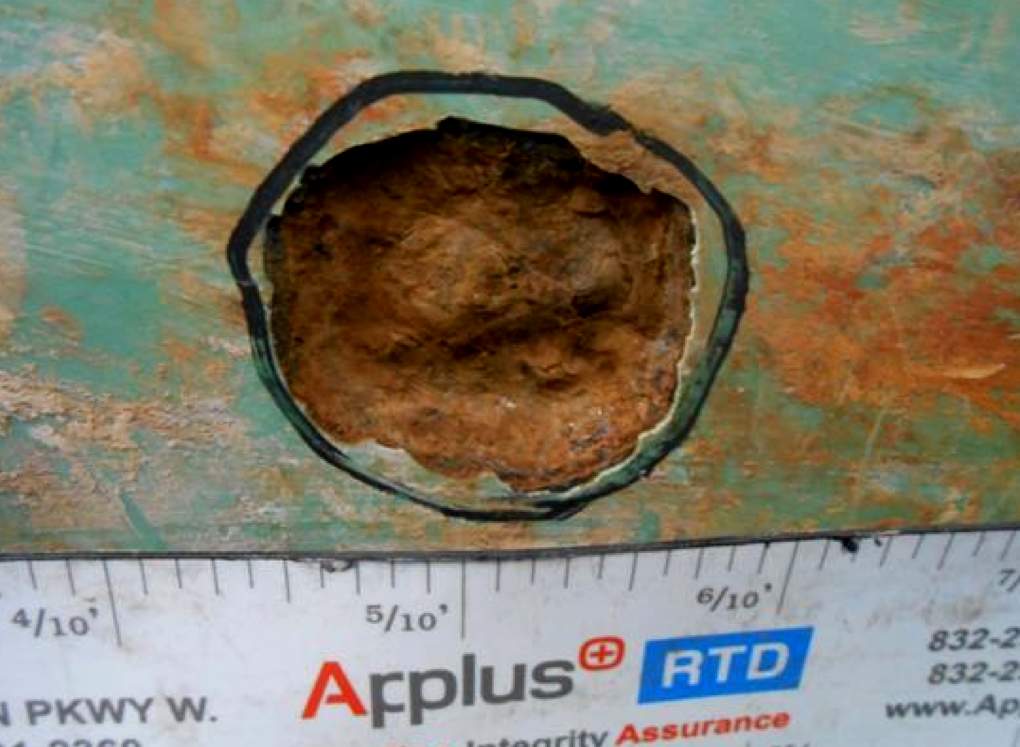
Structural Integrity At Question During TransCanada’s Keystone XL Permit Renewal Hearing
The structural integrity of the TransCanada Keystone XL pipeline has been called into question. Newly released evidence and testimony points to potentially serious environmental risks. During a recent permit renewal hearing in that state, evidence submitted by the grassroots citizens group Dakota Rural Action reveals faulty construction that has the potential to cause pitting and ultimately lead to environmental disasters. The newly documented evidence suggests that the risk to water sources and agricultural lands near the proposed oil export pipeline is too high. The current export pipeline stretches across the US-Canada border and runs parallel with the Mississippi River.
Guest – Attorney Robin Martinez of the Dakota Rural Action group is working to stop the permit. Documents he submitted during the legal discovery process reveal that the corrosion occurred on the existing pipeline dangerously close to the Mississippi River near St. Louis.
—-
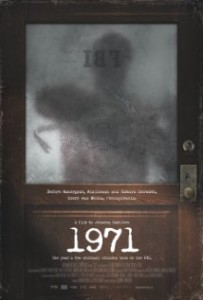

On March 8th 1971, a group of anonymous individuals calling themselves the Citizen’s Commission to Investigate the FBI, broke into an FBI field office in Media, Pennsylvania. They stole thousands of government documents. Among the documents was proof that the FBI under J. Edgar Hoover, was spying on law abiding citizens. The program is known as COINTELPRO and it was used to monitor, manipulate and disrupt social and political movements in the United States. The Citizens’ Commission to Investigate the FBI has been documented recently in a highly acclaimed film titled 1971, directed by Johanna Hamilton.
Johanna Hamilton:
- I consider myself to have the good fortune to have known Betty Medsger, the author of the Burglary, for many years.
- She and I had a personal relationship that long predated our professional collaboration.
- Over time she came to share the outlines of the story with me and it sounded completely remarkable.
- She introduced me to a few members of the Citizens Commission to Investigate the FBI. The 40th anniversary was approaching.
- They wanted the story, which was so little known, to have a larger life.
- To be clear, Betty worked many years on the book. She’s done remarkable and profound research and I joined much later and was the net beneficiary of so much of her research.
- There were four years where we worked in tandem.
- When I showed the film to the Citizens Commission, while the credits rolled, Keith (Keith Forsyth – the lock picker) especially, he got up and said, good job.
- It’s a period of history I’ve been fascinated with since I was a teenager. It was the story of these extraordinary ordinary individuals who had put everything on the line and taken such great personal risk to benefit democracy.
- They trained themselves for one night of crime. They steal all the documents in the office, leak them to the press. They send them to major newspapers, and to a couple politicians. In the end, the Washington Post is the only newspaper that decides to publish the first stories.
- Those first stories reveal with out question illegal government spying on citizens who are going about their daily lives and exercising their First Amendment rights.
- Betty wrote the first stories in the Washington Post and the story fades a little from the headlines. The Pentagon Papers explode 3 or 4 months later. Daniel Ellsberg is on the scene.
- Then our story picks up again.
- It seems inconceivable now but Hoover had been director for over 50 years, and that’s no longer possible.
- Some people who seen the film before say they were really moved by the Church Committee hearings.
- Attorney David Kairys is a huge figure in Philadelphia and yes back in the day he was contacted by two members of the Citizens Commission. He didn’t know what they had done, but if they got caught, they could call him day or night.
- We were reaching the tail end, or we thought we were reaching the tail end of the film when the Snowden revelations happened.
- The Snowden revelations were one thing, absolute bombshell, but prior to that we had a couple of other instances. Back in 2011, September, there were raids all across the country, animal rights activists, environmental groups. One night Brian Williams introduced the news and described these raids and said you know its reminiscent of Hoover back in the 1970s.
- We had whole scenes cut together with that footage and debated and deliberated on that. In the end erred on the side of excluding it.
- It’s opening here in New York City and will start rolling out across the country. If you check our website we update the cities that it will show at. It will be on PBS, Independent Lens at the end of May. 1971Film.com
Guest – Johanna Hamilton, director of the film 1971. She also co-produced Pray the Devil Back to Hell, which won Best Documentary at the Tribeca Film Festival in 2008 and was shortlisted for an Academy Award. Johanna has produced nonfiction programs for PBS, The History Channel, National Geographic, A&E, Discovery Channel, and The Washington Post/Newsweek Productions, including September’s Children, a documentary for PBS exploring how children around the world are affected by terrorism and war.
—————————————–
Law and Disorder August 17, 2015
Podcast: Play in new window | Download
Professor Steven Salaita Case Moves Forward In Federal Court: First Amendment and Due Process Violations Upheld
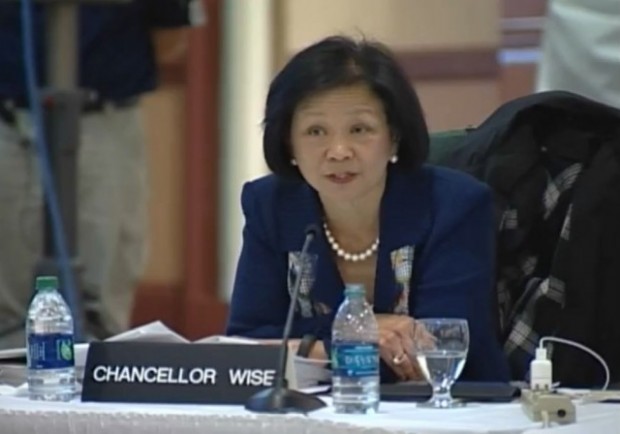
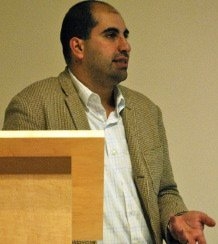
There was a major federal court victory in Illinois on the Professor Steven Salaita case last week. Federal judge Harry Daniel Leinenweber ruled that the university had failed in its attempt to get Salaita thrown out of court. He upheld Salaita’s allegations that his First Amendment rights were violated. He upheld Salaita’s allegations that his due process rights were violated. He upheld his allegations that he had a contract and he said this case has to proceed to discovery and I’m not going to throw it out at this point. The judge took a very strong position with respect to both the contract and freedom of speech. It looks like the University of Illinois is on a losing path. The day after the decision came down, Chancellor Wise who was one of people responsible for firing Professor Steven Salaita, resigned from her job.
Guest – Maria LaHood, Deputy Legal Director at the Center for Constitutional Rights with expertise in constitutional rights and international human rights. She works to defend the constitutional rights of Palestinian human rights advocates in the United States in cases such as Davis v. Cox, defending Olympia Food Co-op board members for boycotting Israeli goods; Salaita v. Kennedy,representing Steven Salaita, who was terminated from a tenured position for tweets critical of Israel; and CCR v. DOD, seeking U.S. government records under the Freedom of Information Act (FOIA) regarding Israel’s 2010 attack on the flotilla to Gaza. She works closely with Palestine Legal to support students and others whose speech is being suppressed for their Palestine advocacy around the country.
—–
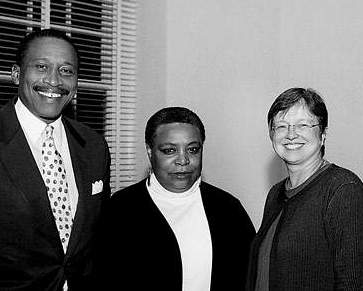
Lawyers You’ll Like: Professor Holly Maguigan
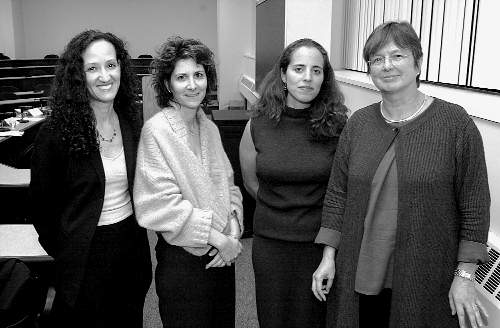
In our Lawyers You’ll Like series we’re joined by Professor Holly Maguigan, Professor of Clinical Law at the New York University School of Law, where she teaches Comparative Criminal Justice Clinic: Focus on Domestic Violence and Evidence. Professor Maguigan is an expert on the criminal trials of battered women. Her research and teaching is interdisciplinary. Professor Maguigan is a member of the Family Violence Prevention Fund’s National Advisory Committee on Cultural Considerations in Domestic Violence cases. She serves on the boards of directors of the National Clearinghouse for the Defense of Battered Women and the William Moses Kunstler Fund for Racial Justice. She is a past co-president of the Society of American Law Teachers, the largest membership organization of law professors in the U.S.
- I was doing medieval history and I was at Berkeley. It was 1967 and Oakland stopped the draft.
- I got very interested in the anti-war politics.
- I hated lawyers. I really hated lawyers. They were boring. They talked about themselves all the time. They only had stories about their cases and how great they were and they would never post bail when people got arrested.
- The University of Pennsylvania in Philadelphia is where I stayed for 17 years.
- First I started out as a public defender. I loved being a public defender, it was the beginning and end of everything I hoped it would be.
- That’s where I met David Rudovsky and David Kairys. They were then defenders while I was a student.
- After they went out on their own, they kept inviting me to join them. I kept putting it off because I loved being a defender so much.
- In Philadelphia there was much more actual litigation, not just motion litigation there’s a lot of that here in New York City but actual trials.
- You had a sense, there was an analysis that people were doing life on the installment plan and you needed to do what you could to kick them loose any particular time.
- It was a community in its own odd way and I found it difficult to leave it.
- I was doing major felonies within a couple of years.
- David Kairys was very focused on constitutional litigation and government misconduct. He did the Camden 28 which was a big draft resistance case.
- My interest was more into criminal defense.
- Grand juries (all over the country) convened to investigate the alleged transportation of Patty Hearst by the SLA from California where she had been captured.
- He was a killer. (Frank Rizzo) There was no question. More people died in police actions before or since.
- I don’t mean to suggest that all the police started out as homocidal. This was a situation which from the top down came the message if you’re a good cop then you’re going to take people out however you think you need to.
- I knew about race and class bias in the court room as much as a white woman who was middle class could know.
- I was just blown away by what happens when you add hatred of women to hatred of black people and hatred of poor people.
- Judges would go by me in the hall and say Maguigan, ahem, you didn’t give me anything this Christmas, not even one lousy bottle, you’re not getting any assignments.
- Judges would do things, like open the drawer in their chambers, and there would be wads of bills, and they’d let you know.
- I developed a specialty on women who kill men.
- In the early eighties a group in Philadelphia called Women Against Abuse began working and they did advocacy for battered women accused of crime and meant a huge difference.
- The battered women cases I was working on were quite consuming because people then didn’t know very much in how to try these cases.
- The judges expected you to plead insanity or guilty. Reasonable doubt was a consideration at sentencing not at trial.
- There were cases that did require teams. There was no question.
- I wanted to be in court. I wanted to be in the presence of that conflict between the authorities and regular people.
- I went to NYU where I taught in the criminal defense clinic for many years.
- To see students react to the great stories their clients have is just amazing.
- SALT (Society of American Law Teachers) is about who gets into law school, what they learn and who teaches them. It’s about access to justice. It’s about relating to law school as a place where you train people to do social justice. SALT’s focus is on students and teaching.
- Holly Maguigan to be honored by Society of American Law Teachers.
Guest – Professor Holly Maguigan teaches a criminal defense clinic and one in comparative criminal justice as well as a seminar in global public service lawyering and a course in evidence. She is an expert on the criminal trials of battered women. Her research and teaching are interdisciplinary. Of particular importance in her litigation and scholarship are the obstacles to fair trials experienced by people accused of crimes who are not part of the dominant culture. Professor Maguigan is a member of the Family Violence Prevention Fund’s National Advisory Committee on Cultural Considerations in Domestic Violence cases. She serves on the boards of directors of the National Clearinghouse for the Defense of Battered Women and the William Moses Kunstler Fund for Racial Justice. She is a past co-president of the Society of American Law Teachers, the largest membership organization of law professors in the U.S.
————————————-
Law and Disorder August 10, 2015
Podcast: Play in new window | Download
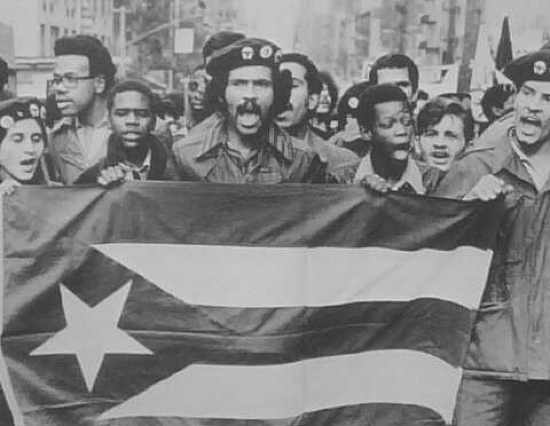

Lawyers You’ll Like : Attorney Linda Backiel
As part of our Lawyers You’ll Like series today we speak with attorney Linda Backiel. She’s a lawyer and poet living in San Juan, Puerto Rico. She’s played an instrumental role in defending independentistas in the fight against colonialism in Puerto Rico. As part of that struggle she defended those who were ultimately successful in kicking the military out of Vieques. A small island near Puerto Rico. For 40 years of law practice, she devoted much of her energy to the defense of political prisoners often with her friend and mentor, Lenny Weinglass. A Poem For Lenny Weinglass.
Guest – Attorney Linda Backiel, a criminal defense attorney and poet living and practicing law in San Juan, Puerto Rico. Here is Linda Backiel’s transcript from the talk she gave at the celebration of the 50th anniversary of the Criminal Justice Act.
—-
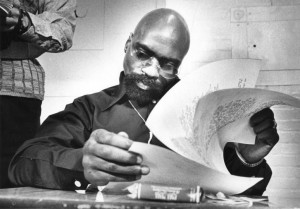
Rubin “Hurricane” Carter 1937-2014
In April of this year, celebrated boxer and prisoner-rights activist Rubin “Hurricane” Carter died at the age of 76. He had become an international symbol of racial injustice after his wrongful murder conviction forced him to spend 19 years in prison. Carter was arrested for a triple murder in his hometown of Patterson, New Jersey. He said he was innocent, was convicted by an all white jury, and sentenced to three consecutive life sentences. In 1976, the New Jersey State Supreme Court overturned his conviction on grounds the authorities withheld material evidence from the defense. But Carter was convicted again in a second trial in 1976. In 1985, that conviction was overturned by a U.S. district court judge, who concluded the state made an unconstitutional appeal to racial prejudice. In 1988, the Passaic, New Jersey, Prosecutor’s Office dropped all charges against Carter.
- He was a defendant in a criminal case in New Jersey involved the triple shooting and three murders of 3 people in the Lafayette bar in Patterson, New Jersey.
- He and his co-defendant John Artis were represented at the first trial and they lost, (convicted) and Rubin started his campaign to get out of jail and wrote his book the 16th Round.
- He was charismatic and powerful, a great thinker, very very intellectually strong person as well as being spiritually strong.
- Almost a typical case, high profile case, where you get people who are vulnerable and easily manipulated because of their need for their own benefits to falsely testify.
- We set aside the convictions when we learned about the benefits that were given to the witnesses.
- We went again to trial in 1975. At that time the atmosphere had changed. There was a new prosecutor, they came up with a theory that it was actually a racial revenge killing.
- Earlier that night, a white former bar owner had shot and killed the black purchaser of the bar from him.
- That was always known and there was no motives attributed to the killings in the first trial but the second trial really based on speculation and bias, they argued persuasively to the jury that this was a racial revenge killing.
- Mr. Bellow who was the supposed eye witness who testified, there were two of them in the first trial, was being questioned by me on the stand as to why he recanted his recantation. The prosecutor persuaded him to again tell the story he told at the first trial, identifying Rubin and John and I was trying to establish that they had falsely manipulated him when I was pulled into the chambers along with my co-counsel Louis Steele who represented John Artis and told that if I question him further, the jury would learn that he passed the lie detector test, supporting what he said at the first trial. Supporting his identification (of Rubin Carter)
- We did have that test. It seemed like that was the result because that’s the way it was written. In fact that was a fraud.
- The polygraph results were completely opposite of what they were purported to be.
- The prosecutors in that case, two of them became judges, rewarded for what they did.
- Rubin was not a popular person, he had been an outspoken civil rights person. It was a cesspool of rumors without any evidentiary basis.
- The entire community there almost in Passaic New Jersey treated us like we were the devil.
- It was the coldest community reception I ever encountered in any place.
- Rubin would call every year (from Canada) on the anniversary of his release. He got a group of Canadian do-gooders and free thinkers to join him in fighting to set aside convictions for people who were wrongly convicted in Canada.
- He would vet the briefs that we sent. He was a very unusual client.
- Rubin refused to act as a prisoner because he wasn’t anyone who was guilty he said.
- So, he didn’t eat prison food, he didn’t take prisoner assignments, he didn’t wear prison clothes and somehow or other he was able to pull that off.
- People think of it as being another time, I’ve been practicing law long enough and I don’t think anything changes.
- The same kind of bias runs deep throughout the community its just masked somewhat differently.
- You make your luck in these cases, you have to forge ahead.
- His insistence on being an innocent person and will not compromise with the system is the kind of inspiration that pushes us on as lawyers.
Guest – Attorney Myron Beldock, graduated from Erasmus Hall High School in 1946, Hamilton College in 1950 and Harvard Law School in 1958. He served in the U.S. Army from 1951 to 1954 and as an Assistant U.S. Attorney in the Eastern District of New York from 1958 to 1960. After several years as an associate with a small New York City firm and as a single practitioner, he brought together two friends and former Assistant U.S. Attorneys, Elliot Hoffman and Larry Levine, to form Beldock Levine & Hoffman in 1964. He is best described, by his own definition, as an old-time general practitioner. He concentrates on trial and appellate litigation, in state and federal courts, in defense of criminal charges and in pursuing plaintiffs’ civil rights actions based on police and prosecutorial misconduct and employer and governmental discrimination. He regularly consults and defends charges of professional discipline. He represents plaintiffs and defendants in a wide variety of personal and business related matters, working with others in the firm’s various practice areas.
———————————————-