Welcome to Law and Disorder Radio
Law and Disorder is a weekly independent civil liberties radio program airing on more than 150 stations and on Apple podcast. Law and Disorder provides timely legal perspectives on issues concerning civil liberties, privacy, right to dissent and practices of torture exercised by the US government and private corporations.
Law and Disorder May 4, 2015
Podcast: Play in new window | Download
Updates:
- Heidi Boghosian:The Committee To Save Mumia Abu-Jamal Places Ad In New York Times – “Mumia Abu-Jamal Is Dying In Prison From Medical Neglect”
—–
Listen Yankee: Why Cuba Matters
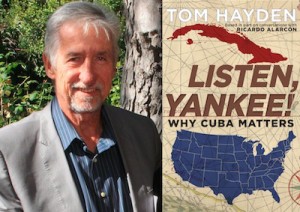
As relations between the United States and Cuba are radically changing, Tom Hayden’s new book Listen Yankee! Why Cuba Matters is especially timely. It offers thoughtful analysis and insights into the efforts of intellectuals, social justice activists and politicians that helped bring about normalization efforts.
Listen Yankee is both a historical account and personal memoir of Hayden as a revolutionary student leader and SDS founder whose own early work to spur poetical change mirrored the transformation going on in Cuba. His book is based in part on conversations with Ricardo Alarcon, one of the leaders of the revolution,. UN representative and a former guest of Law and Disorder.
Guest – Tom Hayden was a leader in the student, antiwar, and civil rights protests in the 1960s. He took up the environmental cause in the 1970s, leading campaigns to shut down nuclear power plants and serving as California’s first solar energy official. He was elected to the California legislature in 1982, serving for eighteen years. He continues to write as an editor for The Nation, and has taught at many campuses from Harvard’s Institute of Politics to UCLA’s labor studies
——
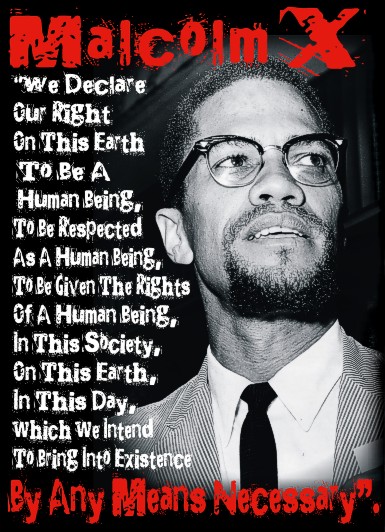
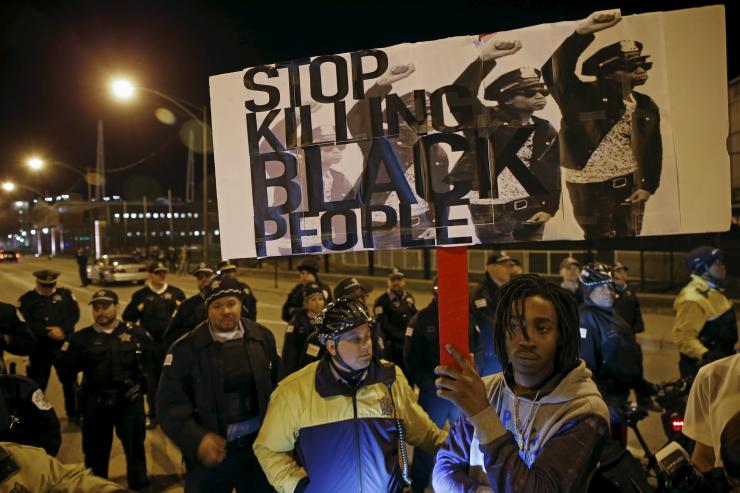
Baltimore and the Human Right to Resistance: Rejecting the framework of the Oppressor
Events continue to unfold within Baltimore, Maryland in response to the police murder of Freddie Gray. Today we examine how stereotypes are perpetuated of the rebels in the streets. The mainstream press, pundits and elected officials black and white call them thugs.
Guest – Ajamu Baraka is a human rights activist, organizer, geo-political analyst and editor and contributing columnist for the Black Agenda Report. Baraka serves as the Public Intervenor for Human Rights as a member of the Green Shadow Cabinet and coordinates the International Affairs Committee of the Black Left Unity Network. An Associate Fellow at the Institute for Policy Studies (IPS) in Washington, D.C., Baraka’s is also a contributor to “Killing Trayvons: An Anthology of American Violence” and Imagine: Living in a Socialist USA.
——————————————————–
Law and Disorder April 27, 2015
Podcast: Play in new window | Download
Updates:
- U.S. Continues To Not Officially Recognize Armenian Genocide On 100th Anniversary
- Michael Ratner: Constitution and Freedom of Speech Threatened In Wake Of Anti-Boycott (BDS) Legislation In US and Israel
- University of Southampton Cancels Conference After Government, Israel Lobby Pressure
- Michael Ratner Exposes NY Times Article – Student Coalition at Stanford Confronts Allegations of Antisemitism
- Michael Ratner – “Antisemitism has nothing to do with whether I’m against the practices of the Israeli state.”
—–
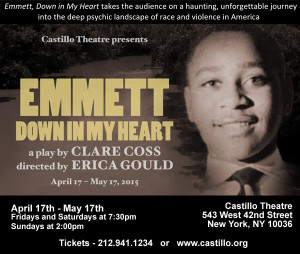
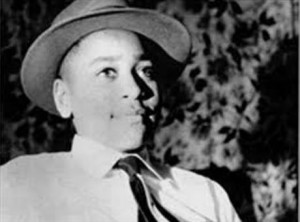
The prize-winning play Emmett, Down in My Heart is the true story of two female characters, Emmett Till’s mother, Mamie Till-Mobley and a white teacher, Roanne Taylor, who frame the 1955 kidnap, torture, murder of 14-year old Emmett Till in the Mississippi Delta. Roanne is haunted by her silence and confronts her need to take responsibility and speak. Mamie Till-Mobley, through outrage and grief, is transformed from a private citizen to a social-justice activist. Many consider her insistence on an open casket to be the start of the modern Civil Rights Movement. And tree months later in Montgomery, Alabama, Rosa Parks said Emmett Till was the catalyst that motivated her when she refused to move to the back of the bus.
Guest – Clare Coss, activist, writer and psychotherapist. Her publications include Lillian D.Wald: Progressive Activist which features the play and a selection of Wald’s correspondence and speeches. Her anthology of lesbian love poems, The Arc of Love (Scribner), was a Lambda Literary Award Finalist. Coss was for many years the Poetry Editor for Affilia, a journal of women and social work. She has taught at Hunter College, SUNY at Stony Brook, and is collaborating on her libretto Emmett Till, the Opera with composer Mary Watkins.
—-
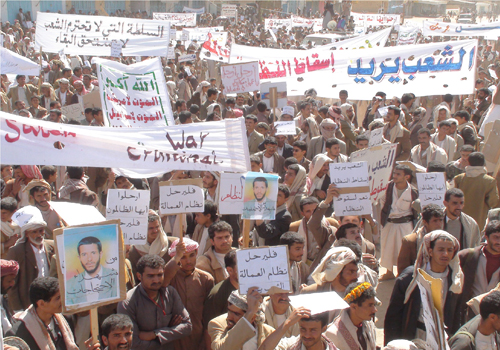
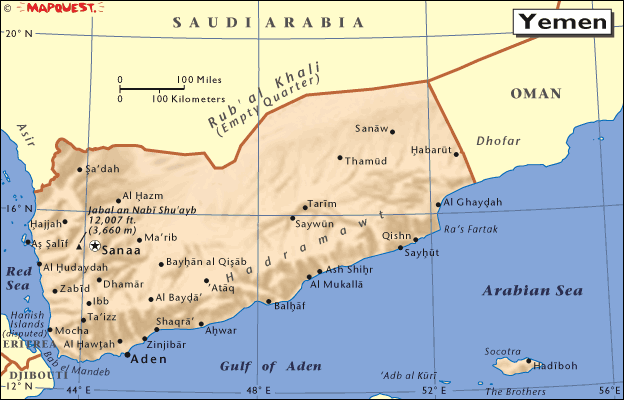
The United States, Saudi Arabia And The War In Yemen 2015
Today we’re going to untangle the war in Yemen. You read a lot about it. There’s Iran helping the Houthis. Why is Saudi Arabia stopping the bombing? What’s the role of the United States? How did this war come about? What happened to civil society? There are no easy answers, at least if you read American newspapers. But there actually are answers.
Guest – Dr. Stephen Zunes, Professor of Politics and International Studies at the University of San Francisco, where he serves as coordinator of the program in Middle Eastern Studies. Recognized as one the country’s leading scholars of U.S. Middle East policy and of strategic nonviolent action, Professor Zunes serves as a senior policy analyst for the Foreign Policy in Focus project of the Institute for Policy Studies, an associate editor of Peace Review, a contributing editor of Tikkun, and co-chair of the academic advisory committee for the International Center on Nonviolent Conflict.
——————————————————
Law and Disorder April 20, 2015
Podcast: Play in new window | Download
Speaking In Turkish: Denying the Armenian Genocide
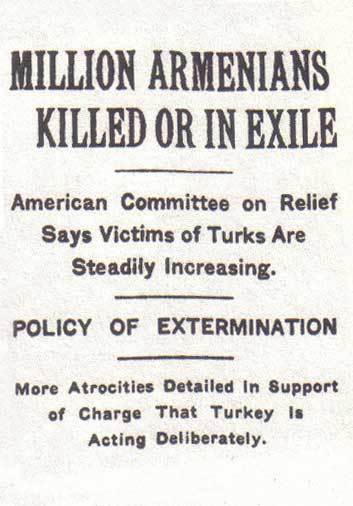
To commemorate this, the first genocide of the 20th century, Law and Disorder co-host Heidi Boghosian presents a 60-minute documentary special titled “Speaking In Turkish: Denying the Armenian Genocide.”
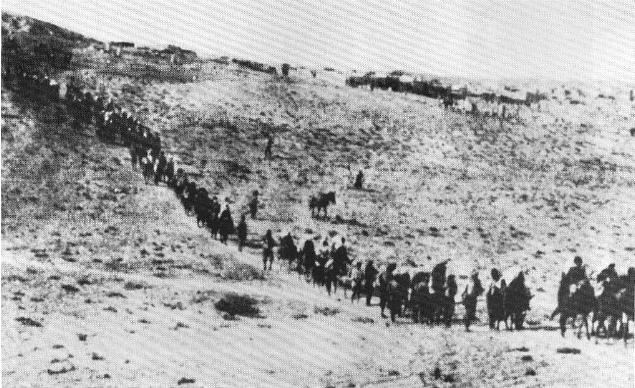
Around the world, April 24 marks the observance of the Armenian Genocide. On that day in 1915 the Interior Minister of the Ottoman Empire ordered the arrest and hangings of Armenian intellectuals and community leaders in Constantinople. It was the beginning of a systematic and well-documented plan to eliminate the Armenians, who were Christian, and who had been under Ottoman rule and treated as second class citizens since the 15th century.
The unspeakable and gruesome nature of the killings—beheadings of groups of babies, dismemberments, mass burnings, mass drownings, use of toxic gas, lethal injections of morphine or injections with the blood of typhoid fever patients—render oral histories particularly difficult for survivors of the victims.
Why did this happen? Despite being deemed inferior to Turkish Muslims, the Armenian community had attained a prestigious position in the Ottoman Empire and the central authorities there grew apprehensive of their power and longing for a homeland. The concerted plan of deportation and extermination was effected, in large part, because World War I demanded the involvement and concern of potential allied countries. As the writer Grigoris Balakian wrote, the war provided the Turkish government “their sole opportunity, one unprecedented” to exploit the chaos of war in order to carry out their extermination plan.
As Armenians escaped to several countries, including the United States, a number came to New Britain, Connecticut in 1892 to work in the factories of what was then known as the hardware capital of the world. By 1940 nearly 3,000 Armenians lived there in a tight-knit community.
Pope Frances calls it a duty not to forget “the senseless slaughter” of an estimated one and a half million Armenians by the Ottoman Turks from 1915 to 1923. “Concealing or denying evil is like allowing a wound to keep bleeding without bandaging it,” the Pope said just two weeks before the 100th anniversary of the systematic implementation of a plan to exterminate the Armenian race.
Special thanks to Jennie Garabedian, Arthur Sheverdian, Ruth Swisher, Harry Mazadoorian, and Roxie Maljanian. Produced and written by Heidi Boghosian and Geoff Brady.
——————————————————