Welcome to Law and Disorder Radio

Law and Disorder is a weekly independent civil liberties radio program airing on more than 150 stations and on Apple podcast. Law and Disorder provides timely legal perspectives on issues concerning civil liberties, privacy, right to dissent and practices of torture exercised by the US government and private corporations.

Law and Disorder February 23, 2015

Updates:

  • Michael Ratner: Palestine Not Recognized As State By U.S. Thus Allowed To Be Sued In Federal Court For Attacks on Israel
  • Michael Ratner: Why Is Obama Trying To Get An AUMF When The U.S. Is Already At War With ISIS? If Passed, The U.S. Under This Act Can Make War Everywhere
  • ICC En Vogue? – Hosts Talk About NBC Drama “Crossing Lines.”

—–

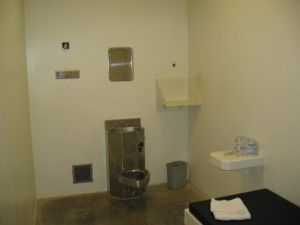
397 Corcoran-SHU-cell-100113-by-Grant-Slater-KPCC

Pelican Bay Solitary Confinement Case Update

We bring you an update on the Pelican Bay Prison Solitary Confinement Case. As you may recall Pelican Bay Prison had more than 1000 prisoners in long term solitary confinement at 10-20 years or more. The Center for Constitutional Rights and its lead attorney Jules Lobel have been challenging this practice for a number of years since 2012. Recently, the state of California in an effort to blunt the lawsuit has transferred some of the named plaintiffs to other prisons. Their theory, once we’re rid of the plaintiffs maybe we’re rid of the lawsuit.  CCR and Jules Lobel went out to California to argue that this is not a Constitutional practice. That transferring a person from Pelican Bay to another prison in California should not blunt the lawsuit and in fact CCR we should be able to challenge solitary confinement in those prisons as well. The judge agreed and now the CCR case will not just challenge Pelican Bay Prison solitary confinement practices but those in other prisons throughout California.

Attorney Jules Lobel:

  • Because of 3 hunger strikes and our litigation the California prison officials are now instituting reforms. They realize they have to do something.
  • There are over 1000 people in solitary. When we started the case 500 people were there for over 10 years.
  • Because of the reforms they’ve made under pressure from our litigation there are now only 230. Still 230 people for over 10 years is a huge amount.
  • They’re also moving people out not only to general population prisons, but to other solitary units in other prisons. Other SHOES, its called Special Housing Unit.
  • Four of our ten plaintiffs are moving to another SHOE to a place called Tahachapi and the defendants say, they’re no longer part of your case.
  • That’s what the argument was about. The argument was about whether or not you can expand the case beyond Pelican Bay.
  • If you were at Pelican Bay and transferred to another prison, still in solitary, you’re still part of our class.
  • The judge accepted that we can expand the case, rejecting the state’s argument.
  • We bifurcated the trial so we could have a relatively quick trial on Pelican Bay. The fundamental question for Pelican Bay trial is whether keeping people for a prolonged period of time in solitary confinement at Pelican Bay is cruel and unusual punishment.
  • We also have a claim in that way that they are placed there. It violates due process.
  • These guys only get reviews every six years. So, you stay in your cell for six years and then after six years somebody comes and reviews whether you should be kept in solitary.
  • No state in the country has six years. Usually its 30 days, 90 days, six months, maybe at most a year.
  • California unlike most states puts people into solitary simply because they’re a member of a gang or associated with a gang.

Guest – Attorney Jules Lobel, has litigated important issues regarding the application of international law in the U.S. courts. In the late 1980’s, he advised the Nicaraguan government on the development of its first democratic constitution, and has also advised the Burundi government on constitutional law issues.  Professor Lobel is editor of a text on civil rights litigation and of a collection of essays on the U.S. Constitution, A Less Than Perfect Union (Monthly Review Press, 1988). He is author of numerous articles on international law, foreign affairs, and the U.S. Constitution in publications including Yale Law Journal, Harvard International Law Journal, Cornell Law Review, and Virginia Law Review. He is a member of the American Society of International Law.

——

prisonpics ADPSR3

Architect’s Human Rights Code of Ethics Petition

In our coverage of psychologists involved with torture continuing to hold their professional licenses to practice we look at a similar concern with licensed architects who design prisons, solitary confinement cells and death chambers. Research has show that the design of a prison can influence many aspects of prisoners lives including recidivism rates. Recently, the American Institute of Architects rejected a petition to censure members who design solitary confinement cells and death chambers.

Raphael Sperry:

  • In 2013 when the UN Special Rapporteur on Torture announced that spending more than 15 days in solitary confinement was a human rights violation and we’re aware that people in the United States are routinely held in solitary for years if not decades, and that there had been dozens of supermax prisons that housed thousands of people in those conditions, specially designed for that purpose, that really tipped the scales.
  • That was really shocking to realize the same tools that architects use everyday trying to make the world a better place for people can be used to torture and kill people.
  • The question of what constitutes a torture chamber is complicated. There are many buildings that have been used to house prisoners in solitary confinement that were never designed for that purpose.
  • There are a subset of prisons that are designed for solitary confinement. They’re usually called administrated segregation units.
  • Supermax prisons are the most egregious. There’s no space for people to eat together. There are no tables with seats clustered around them even.
  • The recreation spaces that prisoners have a right to go into for an hour a day, are shrunk down to size that they’re for just one person.
  • You guys are probably familiar with ADX Prison in Florence, the Federal Supermax which is supposed to be the most secure supermax in the United States.
  • In that facility they actually have showers in every cell. The prisoners then actually don’t have to get into the hallway. They might walk by somebody elses’ cell or walk by somebody elses’ cell to get to a shower.
  • The AIA has a code of ethics for members and it already had a statement saying members should uphold human rights in all their professional responsibilities.
  • It’s not directly enforceable. If members set out to design a space intended to kill somebody or to torture them or degrade them which is a human rights violation. AIA is not prepared to take any disciplinary action to someone who does that.
  • We were asking them to simply add a rule that clarified if a member designed a space that is intended for human rights violations specifically execution and prolonged solitary confinement that it would be clear they’re in violation of the code of ethics and then AIA could take disciplinary action that include censure and expelling them from the institute.
  • The National Board of Directors gets to set the ethics code for the whole organization including all the chapters. They took in our petition. They took in all the letters of support we sent in.
  • Then they didn’t communicate with us . . they referred it to an internal group. They never let us know who was on that panel. They sent a brief letter back to me head of the ADPSR saying that they weren’t going to make the change and they were concerned about potential anti-trust violations and how hard it would to enforce.
  • Lastly, they don’t want to restrict their members from designing any particular building type. I just found that to be the worst.
  • To me if you’re going to be a professional and take on the responsibility of protecting public health, safety and welfare every time you put your pencil down then there should be limits to what you do with that specialized knowledge.
  • To us its not a political issue, its a human rights issue and they said they’re an organization that’s for human rights. It didn’t seem right to us that they should pick and choose which human rights they’re ok with and which ones they would restrict.

Guest – Raphael Sperry, president of Architects / Designers / Planners for Social Responsibility (ADPSR), a 32-year old independent non-profit organization. He researches the intersection of architecture and planning with human rights with a special focus on prisons and jails, and advocates for design professionals to play a larger role in supporting human rights in the built environment. He directs ADPSR’s human rights advocacy, including ADPSR’s petition urging the AIA to amend their Code of Ethics and Professional Conduct to address buildings that violate human rights. He was the first architect to receive a Soros Justice Fellowship from the Open Society Foundations, hosted jointly by the University of California at Berkeley College of Environmental Design and Berkeley Law School, in 2012. He is an active member of the AIA Academy of Architecture for Justice and a leader of its subcommittee on sustainability.He holds an M.Arch. from the Yale School of Architecture and a BA summa cum Laude from Harvard University.

—————————————

Donate now!

Please help support Law and Disorder by clicking on Fractured Atlas graphic. This radio show is now a sponsored project of Fractured Atlas, a non-profit arts service organization. Contributions for the charitable purposes of Law and Disorder must be made payable to Fractured Atlas only and are tax-deductible to the extent permitted by law. You can donate as little as 5.00 a month.

Law and Disorder February 16, 2015

photo4a Teresa_Sheehan_photo-cropped

City and County of San Francisco v. Sheehan

In early December of 2014, the Supreme court agreed to hear the case City and County of San Francisco v. Sheehan. The case involves San Francisco police officers who reported to a group home to transport Teresa Sheehan, who was known to be mentally ill, to mental health facility. The situation ended with police firing six shots on Sheehan. She survived and filed a lawsuit arguing that officers had a responsibility under federal law to consider her mental disability. The case is not about police criminal liability, this one is about whether police are obligated to take special precautions in using deadly force, and also in entering an individual’s home without a warrant or permission. Read Michael Avery’s observation about details of case.

Attorney Michael Avery:

  • Teresa Sheehan is a woman in her mid-fifties who was living in a group home in San Francisco, a home for people with mental disabilities.
  • Officers came to the house and ended up shooting her five times at point blank range.
  • The case raises some issues for the federal courts in which the lower courts are in disagreement, and the court (Supreme Court) took the case hoping to resolve those disagreements.
  • The police came because the social worker had become concerned with Ms Sheehan, and wanted to send her to a hospital for 72 hours of evaluation and requested the assistance of the police in transporting her to the hospital.
  • Ms. Sheehan on the other hand didn’t want to be taken to the hospital, didn’t want the social worker in her room, did not want the police in her room, she just wanted to be left alone.
  • In the course of asserting her right to be left alone, she threatened the police and the social worker with a knife.
  • The police then ended up breaking through her door. Forcing open her door and when she was standing there with the knife, they tried to pepper spray her. That didn’t seem to have much effect on her and so they shot her five times.
  • Miraculously she survived but now she’s permanently disabled and disfigured. One of the bullets entered the left side of her temple, shattered her eye socket and then exited through her mouth causing serious injuries to her jaw.
  • Officers encounter people with mental disabilities extremely frequently. In large cities and towns in the United States its estimated 1 out every 15 people that the police interact with has some form of mental illness.
  • Officers are trained to try to diffuse the incident, not to threaten the person, to ask open ended questions, to listen to what the person has to say, try to establish some rapport with the person, respect the person’s space and not crowd the person, and at the same allow the incident to go on as long as it has to in order to have a peaceful resolution.
  • Several years ago I wrote an article called Unreasonable Seizures of Unreasonable People making the point that officers ought to be held to standard that requires them to follow their own training.
  • When I saw this case was in the courts, I volunteered to provide some assistance to the lawyers in connection with the brief they were writing.
  • There are two claims in the case. One is a claim under the Fourth Amendment of the Bill of Rights, which is the part that says government cannot make unreasonable searches of our home or seizures of our person and the other is a claim under the Americans With Disabilities Act.
  • In effect they discriminated against her on the basis of her disability by not following their training and not making the accommodations that they were trained to make for a mentally ill person.
  • Secondly, the argument is, when they forced open the door to her apartment and entered and used deadly force against her, they were not behaving reasonably and that again is based on the same idea it would have been reasonable to follow their training. Frankly, they just threw their training out the window.
  • Oral argument is scheduled for March 23, 2015.

Guest – Civil rights lawyer Michael Avery,  professor at Suffolk University Law School and former president of the National Lawyers Guild from 2003 to 2006. He’s also worked with the National Police Accountability Project.

—-

philadelphiafreedom1 davidkairys11

Lawyers You’ll Like: David Kairys

David Kairy began his career at the Philadelphia public defender’s office in the late 1960s. Since then, he’s been a leader in effort to fight discrimination and protect individual rights, now he’s regarded as one of the nation’s preeminent civil rights attorneys. David is a professor at the University of Temple Law School, where he teaches civil rights and constitutional law. He has written several books, including Philadelphia Freedom: Memoir of a Civil Rights Lawyer, which was published last year.

David Kairys:

  • We were of a number of young firms dedicated to civil rights and representation of progressive groups.
  • The Camden 28, caught in the act of breaking into a Camden, New Jersey draft board and destroying all of the files. This was a Catholic Left action.
  • FBI had informant in the group, who the FBI was paying on an hourly rate. The informant supplied the means to make the action happen.
  • One hundred FBI agents sat around and waited til they destroyed all the files in the office.  Many of the 28 were priests. There were more than 300 draft board raids during Vietnam.
  • Father Michael Doyle said when your government is napalming children, the place you should be is in jail.
  • Father Doyle and I strategized a way to start talking to the FBI informant Bob Hardy and eventually got an affidavit saying that the FBI manufactured this crime.
  • I filed the affidavit and it was on the front page of the New York Times.

Guest – David Kairys, Professor of Law, the first James E. Beasley Chair (2001-07), and one of the nation’s leading civil rights lawyers. He authored Philadelphia Freedom, Memoir of a Civil Rights Lawyer and With Liberty and Justice for Some and co-authored the bestselling progressive critique of the law, The Politics of Law, and authored With Liberty and Justice for Some and over 35 articles and book chapters. His columns have appeared in major periodicals, and he has been profiled in the Chronicle of Higher Education, Wall Street Journal, and Philadelphia Inquirer Sunday Magazine. Kairys’s Public Nuisance Theory.

——————————————————-

Donate now!

Please help support Law and Disorder by clicking on Fractured Atlas graphic. This radio show is now a sponsored project of Fractured Atlas, a non-profit arts service organization. Contributions for the charitable purposes of Law and Disorder must be made payable to Fractured Atlas only and are tax-deductible to the extent permitted by law. You can donate as little as 5.00 a month.

Law and Disorder February 9, 2015

Coming Up Next Week Police Shooting Reaches Supreme Court Exclusive Michael Avery Interview

MV5BMjMzNTU4NDAzM15BMl5BanBnXkFtZTgwNTI4NzgzMTE@._V1_SX214_AL_ johnbonnieraines

1971

On March 8th 1971, a group of anonymous individuals calling themselves the Citizen’s Commission to Investigate the FBI, broke into an FBI field office in Media, Pennsylvania. They stole thousands of government documents. Among the documents was proof that the FBI under J. Edgar Hoover, was spying on law abiding citizens. The program is known as COINTELPRO and it was used to monitor, manipulate and disrupt social and political movements in the United States. The Citizens’ Commission to Investigate the FBI has been documented recently in a highly acclaimed film titled 1971, directed by Johanna Hamilton.

Johanna Hamilton:

  • I consider myself to have the good fortune to have known Betty Medsger, the author of the Burglary, for many years.
  • She and I had a personal relationship that long predated our professional collaboration.
  • Over time she came to share the outlines of the story with me and it sounded completely remarkable.
  • She introduced me to a few members of the Citizens Commission to Investigate the FBI. The 40th anniversary was approaching.
  • They wanted the story, which was so little known, to have a larger life.
  • To be clear, Betty worked many years on the book. She’s done remarkable and profound research and I joined much later and was the net beneficiary of so much of her research.
  • There were four years where we worked in tandem.
  • When I showed the film to the Citizens Commission, while the credits rolled, Keith (Keith Forsyth – the lock picker) especially, he got up and said, good job.
  • It’s a period of history I’ve been fascinated with since I was a teenager. It was the story of these extraordinary ordinary individuals who had put everything on the line and taken such great personal risk to benefit democracy.
  • They trained themselves for one night of crime. They steal all the documents in the office, leak them to the press. They send them to major newspapers, and to a couple politicians. In the end, the Washington Post is the only newspaper that decides to publish the first stories.
  • Those first stories reveal with out question illegal government spying on citizens who are going about their daily lives and exercising their First Amendment rights.
  • Betty wrote the first stories in the Washington Post and the story fades a little from the headlines. The Pentagon Papers explode 3 or 4 months later. Daniel Ellsberg is on the scene.
  • Then our story picks up again.
  • It seems inconceivable now but Hoover had been director for over 50 years, and that’s no longer possible.
  • Some people who seen the film before say they were really moved by the Church Committee hearings.
  • Attorney David Kairys is a huge figure in Philadelphia and yes back in the day he was contacted by two members of the Citizens Commission. He didn’t know what they had done, but if they got caught, they could call him day or night.
  • We were reaching the tail end, or we thought we were reaching the tail end of the film when the Snowden revelations happened.
  • The Snowden revelations were one thing, absolute bombshell, but prior to that we had a couple of other instances. Back in 2011, September, there were raids all across the country, animal rights activists, environmental groups. One night Brian Williams introduced the news and described these raids and said you know its reminiscent of Hoover back in the 1970s.
  • We had whole scenes cut together with that footage and debated and deliberated on that. In the end erred on the side of excluding it.
  • It’s opening here in New York City and will start rolling out across the country. If you check our website we update the cities that it will show at. It will be on PBS, Independent Lens at the end of May. 1971Film.com

Guest – Johanna Hamilton, director of the film 1971. She also co-produced Pray the Devil Back to Hell, which won Best Documentary at the Tribeca Film Festival in 2008 and was shortlisted for an Academy Award. Johanna has produced nonfiction programs for PBS, The History Channel, National Geographic, A&E, Discovery Channel, and The Washington Post/Newsweek Productions, including September’s Children, a documentary for PBS exploring how children around the world are affected by terrorism and war.

—–

Nyle Every-28-hours

Inspiring, and Awakening Political Activism in Youth

Young people across the nation have played a critical role in taking to the streets to protest social inequities, from Ferguson, Missouri to New York City. In a recent article in the journal Socialism and Democracy, “The Roots of Mass Incarceration: Locking Up Black Dissidents and Punishing the Poor,” writer, activist and youth pastor Nyle Fort describes how he became politically active and who inspired him. We talk with Nyle about the status of protest in this country, the forces of oppression, how young people are involved and how he helps inspire them.

Nyle Fort:

  • I graduated from Morehouse College and ended up going to seminary. I was already a licensed and ordained preacher but I wasn’t politicized yet.
  • I had already been involved in the community via the church doing speaking engagements with youth and things like that.
  • It wasn’t until I got into Princeton Theological Seminary that I began to get politicized.
  • The way that it happened was I was taking an introductory seminary class called Systematic Theology with a professor Mark Taylor. In that class he actually had Mumia Abu-Jamal call in live from death row.
  • When I heard him speak, I stopped in my seat. This man who I knew nothing of was speaking to me that was moving, not only me but I could tell the entire classroom and doing so by a 6 foot, by 10 foot cell. A cell that he had been in for 30 years, longer than I had been alive.
  • Two weeks later I found myself through Mark Taylor at my first rally December 9, 2011. Two days after Mumia had been released from death row.
  • I read the New Jim Crow very quickly, then Angela Davis’ works. That was really the beginning for me.
  • I entered activism through a prison abolitionist lens, through Mumia.
  • The rally for me was an embodiment of the things Mumia was talking about.
  • I preach. I was at First Baptist Church in Lincoln Gardens. It’s one of the largest black churches in New Jersey. My style of ministry was evolving as I was being radicalized and politicized.
  • I tried to do a lot of social justice work. We were writing letters to our incarcerated brothers and sisters as forms of religious activism.
  • I discovered a prophetic religious tradition that comes from a black liberation theological perspective.
  • When I was on the bus ride back from Ferguson I was really mad. Mad as hell because I felt there was a relative silence from the church, particularly the black church.
  • I believe in love not as a word but as a work.
  • When I engage with youth, I try to practice a love that is material. I tell young people, I love you more than they hate you.
  • We have to deal the trauma and the pain that we inherit as black people living in the western world and all around the world.
  • Love for me is a critical, not a politic that we can talk about, but a practice we can embody and engage in everyday. That has material life.
  • We’re going to take Cornell West’s worlds seriously that justice is what love looks like in public, then we have to have a love that’s expansive enough to be material and to be felt.
  • Black Lives Matter particularly as a network has articulated a feminist politic, a black feminist politic, a queer politic that is forcing us to live out our intersectionality.
  • What we’re not talking about enough is that’s messy, and its not romantic.
  • I think of oppression as institutionalized lovelessness. Let’s love each other in ways that causes each other to act.
  • Twitter – @nylefort

Guest – Nyle Fort – Nyle is a Master’s of Divinity candidate at Princeton Theological Seminary, a youth pastor, freelance writer, and grassroots community organizer based in Newark, New Jersey. He was very active during the protests in Ferguson, Missouri and New York City.

—————————————————————-

Donate now!

Please help support Law and Disorder by clicking on Fractured Atlas graphic. This radio show is now a sponsored project of Fractured Atlas, a non-profit arts service organization. Contributions for the charitable purposes of Law and Disorder must be made payable to Fractured Atlas only and are tax-deductible to the extent permitted by law. You can donate as little as 5.00 a month.

Show Archives

Articles