Welcome to Law and Disorder Radio
Law and Disorder is a weekly independent civil liberties radio program airing on more than 150 stations and on Apple podcast. Law and Disorder provides timely legal perspectives on issues concerning civil liberties, privacy, right to dissent and practices of torture exercised by the US government and private corporations.
Law and Disorder April 13, 2015
Podcast: Play in new window | Download
Updates:
- Michael Ratner: Edward Snowden Bust On Brooklyn War Memorial Replaced By Hologram
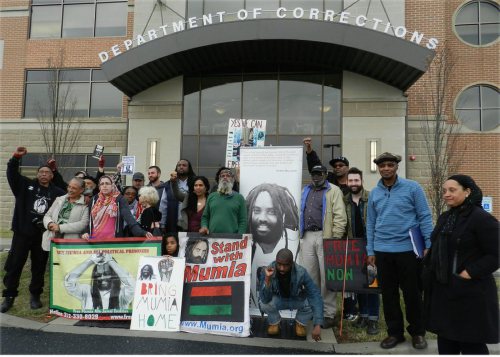
Mumia Abu-Jamal Health Crisis Update
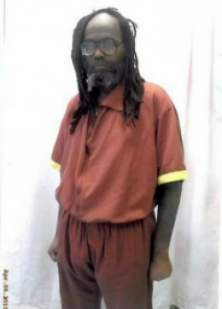
Journalist and political prisoner Mumia Abu-Jamal continues to be in serious medical condition at SCI Mahanoy in Frackville, Pennsylvania. He has lost over 50 pounds and his body is covered with a hard, painful layer of jet-black skin that is both bloody and itchy. Last week his blood sugar registered in the mid 200s and continues to fluctuate, with doctors injecting a double shot of insulin right before he was brought out in a wheelchair to see visitors. As of that visit he had not been seen by a diabetes specialist, and there is concern that the insulin injections may result in an overdose or cause organ damage.
Mumia is so weak that when he tried to go to the infirmary’s bathroom, he could not sustain himself on his feet. He slid down to the floor and waited there, helplessly and unable to call for assistance, for 45 minutes until he was found by a doctor and another prisoner.
Support and demands for medical attention and an improved diet continue to pour in from around the globe. Two teachers delivered letters that their students had written to Mumia; one batch from a third grade class taught by Ms. Marylin Zuniga in Orange, New Jersey; the other from a group of high school students in the Philadelphia Student Union, which fights for school reform and is led by Mr. Hiram Rivera.
ACTION: Please call Secretary of Pennsylvania Corrections John E. Wetzel – 717-728-4109. Demand is that Mumia be allowed to see a team of specialist chosen by his family and supporters to assess and evaluate his condition.
Guest – Johanna Fernandez, assistant professor of history at Baruch College and an active member of the Campaign to Bring Mumia Home. She received a PhD in History from Columbia University and a BA in Literature and American Civilization from Brown University. Professor Fernández teaches 20th Century U.S. History, the history of social movements, the political economy of American cities, and African-American history.
—–
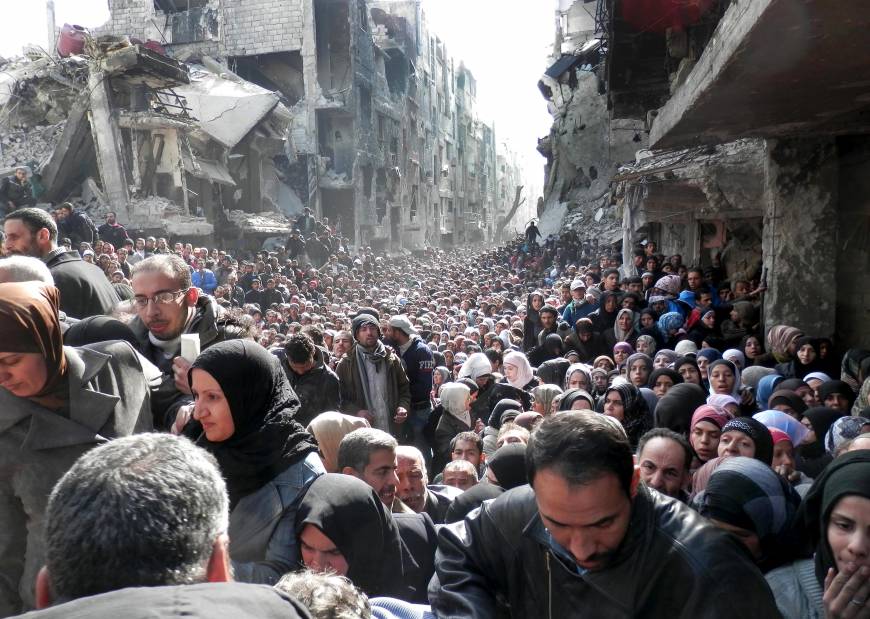
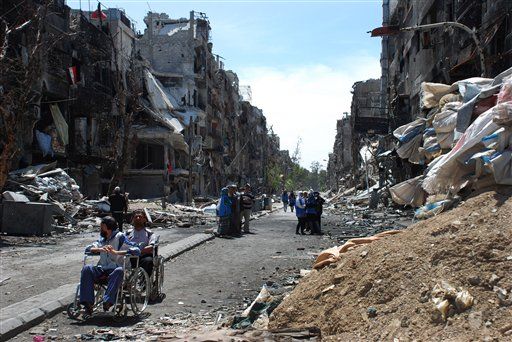
Palestinian Refugees in Syria
In a situation the United Nations has described as “beyond inhumane,” last week an estimated 300 ISIS extremists converged on Yarmouk Palestinian refugee camp in Damascus after three days of fighting. Humanitarian aid has failed to reach starving residents there, even as ISIS members, many of whom appear to be Syrian, portrayed the attack as a liberation of the camp’s residents. In fact the residents –3,500 of whom are children—have been under siege and starvation tactics for two years.
Syrian forces control all entrances to the north and east of Yarmouk and have largely resisted pleas by UNRWA for parcels of food and water to be allowed in. Jaysh al-Islam, one of the main Islamist opposition groups fighting against Isis in the camp, reported to the Guardian that 80 ISIS militants had been killed in a period of two days and some of its positions had been seized. Yarmouk, the largest Palestinian camp in Syria, has been a frequent battle zone, pitting regime forces against mainstream and Islamist rebels. Approximately 16,000 residents remain in the settlement, a decrease from 200,000 prior to the war.
Most inhabitants fled to Lebanon where they now live in overcrowded refugee camps. Many are refugees for the second time, having fled what is now Israel in 1967 or 1948. Some have attempted to flee on migrant boats to Europe and Egypt.
Guest – Salim Salamah, the head of the Palestinian League for Human Rights-Syria, and a former Yarmouk resident who fled in October 2012. He’s exiled in Sweden since February 2013 – spokesperson of the Palestinian League for Human Rights/Syria, a grassroots refugee and youth-led human rights collective.
————————————————————
Law and Disorder April 6, 2015
Podcast: Play in new window | Download
Updates:
- Attorney Heidi Boghosian Tells Of How She And Johanna Fernandez Found Out Mumia Abu-Jamal Was Rushed To Local Health Facility
- Campaign To Bring Mumia Home
- Attorney Michael Ratner: Hobby Lobby State Religious Freedom Acts
- Attorney Michael Ratner: Palestine Joins The ICC
- Attorney Michael Ratner: Obama Issues Executive Order On Hackers
—–


Why The Rise Of Fascism Is Again The Issue
Fascism has taken on many forms through the rise and fall of empires. One aspect of modern day fascism can seen as propaganda, lies and deceit used as political leverage to eventually absorb sovereign states. Our guest John Pilger lays out the swath carved by fascism in the last 70 years in his recent article Why The Rise Of Fascism Is Again The Issue. Using the word carefully, Pilger describes a new kind of fascism, centered in America but based on the big lie of war and aggression. Pilger documents key events from the Holocaust to Libya to Serbia, to Yugoslavia, to Afghanistan in the 1970s, to Vietnam and up to the current revival of fascism in the heart of Europe. We get a historic perspective from John Pilger, going all the way back to the second world war. If you think the wars in Iraq, Afghanistan, Yugoslavia, Libya and now the Ukraine occur by happenstance, you are mistaken says Pilger, an Australian-British journalist based in London. These are part of the American effort to become the global power.
Guest – John Pilger, an Australian-British journalist based in London. John has worked in many facets of journalism, including a correspondent in the Vietnam War, the Middle East Desk for Reuters in London, a documentary film maker, and a producer for the Independent Television Network in London. Pilger is known for his conscience, bravery and acute historical insight. His articles appear worldwide in newspapers such as the Guardian, the Independent, the New York Times, the Los Angeles Times.
————————————————————–

Is Law and Disorder important to you? Consider a tax deductible donation to the show. By making a donation, you’ll be helping Law and Disorder continue to provide the consistent high quality content on some of the most pressing legal, human rights and international issues. This radio show is now a sponsored project of Fractured Atlas, a non-profit arts service organization. Contributions for the charitable purposes of Law and Disorder must be made payable to Fractured Atlas only and are tax-deductible to the extent permitted by law.
Law and Disorder March 30, 2015
Podcast: Play in new window | Download
Updates:
- FBI: If You Give Us Assata Shakur, We’ll Free The Cuban Five
- Michael Ratner: Massive CIW March St. Petersburg, Florida 2015
- Alliance For Fair Food
—-
As April 15 draws near, some Americans engage in the practice of war tax resistance, refusing to pay some or all of their federal income tax. It’s an act of civil disobedience with a proud history in this country. Notable war tax resisters included Henry David Thoreau who refused to pay his poll tax during the Mexican-American war. In the 1960s and 70s, many Vietnam war protesters engaged in the practice, including Norman Mailer, Howard Zinn, James Baldwin and Joan Baez. While individuals refusing to pay war taxes cite the refusal as a moral imperative-even citing international law to bolster this assertion—it’s not surprising that the Internal Revenue Service considers the refusal to pay such taxes as illegal.
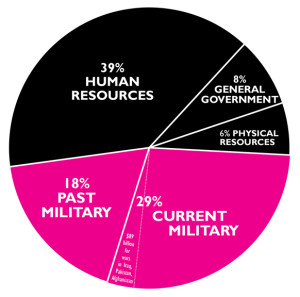
- In war tax resistance we tend to use the War Resisters League chart where your income tax money really goes and the calculations from the War Resisters League over the years have been around 50 percent.
- About 27 percent is current military so that’s paying for the wars and its buying the weapons for the next wars and all of those things that the Pentagon does.
- The “past military” is mainly for the debt and then the money that’s set aside for veterans.
- The nuclear weapons program which they are increasing over the coming 10 years, modernizing weapons and modernizing delivery systems. Obama is increasing that money for the nuclear weapons. That’s in the Department of Energy.
- We have the Department of Homeland Security. That is a lot of armed people also. The TSA, the militarization of the border. Homeland Security is giving those grants to local communities in the U.S. that are getting these military weapons.
- We have 500 billion this year for veterans and past military. That’s only going to add up.
- Basically, (war tax resistance) is similar to conscientious objection in terms of people who refuse to go into the military or refused the draft. So this is a refusal to have my tax dollars drafted. A refusal to pay income taxes that go into this pie of the military budget.
- There was a particular tax put on people in WW2. A stamp that people had to buy that was on their cars that supported war.
- (Famous tax resisters) We tend to go back to Henry David Thoreau of course with his one dollar that resulted in on the duty of civil disobedience.
- I always say going throughout history taxes first tend to be put on people because somebody wants to fight somebody. A government wants to go to war, that’s centuries back.
- The Vietnam War of course was the biggest time for tax resistance when it really was a strong part of the peace movement.
- The campaign during Vietnam to resist the telephone tax. A tax that was put on and raised during Vietnam. It was put on to 10 percent just to pay for the wars.
- People would owe 7.00 dollars in phone tax and some of them had their houses seized, some had their bicycles and cars seized.
- Within the network of war tax resisters and I hesitate to call it a movement these days, there are people who do a whole range of things. There are people who live on a very low income which is a legal way to do it. The cut off for filing and owing taxes is around 10 thousand dollars for a single person.
- There are people who are more adept at using credits and deductions to lower their taxable income.
- I think in ’87 I started very consistently filing and refusing to pay. You get a lot of letters. I have files and files of collection letters, of course they add up interest and penalties.
- Now I’m self-employed, the IRS can do things like garnish salaries. Over the years I figured out how to live in a way that makes it harder for them to collect. Not that they couldn’t make my life difficult.
- Mostly the IRS would like to get the money than prosecute people.
- I got active in the peace movement with the American Friends Service Committee. I’m not a Quaker myself but war tax resistance tends to known pretty well in the Quaker community.
- Usually you’ve been active (in peace movement) for a while and then you go . . oh, I’m paying for this. I’m paying for what I’m fighting against.
- nwtrcc.org
- War Tax Resisters Guide – The Book.
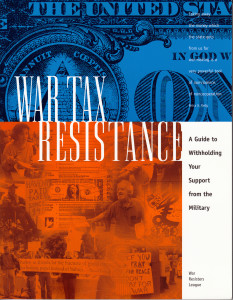
Guest – Ruth Benn, Coordinator of the National War Tax Resistance Coordinating Committee. Along with Ed Hedemann, she co-edited the fourth and fifth editions of the book “War Tax Resistance: A Guide to Withholding Your Support from the Military, published by the War Resisters League.”
—–


Life After Guantanamo: A Father And Son’s Story
In the weeks after September 11, 2001, the United States gave bundles of cash to Afghan war lords and the Pakistan government to assist in capturing suspected Taliban and Al-Qaeda fighters. Hundreds of men were turned over to U.S. custody often without evidence. This was an unfortunate starting point of how human lives were destroyed to as some suggest, justify an illegal war launched by the Bush Administration. Center for Constitutional Rights, senior staff attorney Pardiss Kebriaei’s Harper’s Magazine article titled Life After Guantanamo: A Father and Son’s Story traces the human toll of how her clients were wrongly imprisoned. After being picked up in Pakistan, sent back to Afghanistan, detained in Kandahar, Abdul Nasser Khantumani and his son Muhammed were interrogated by the United States and sent to Guantanamo Bay Prison in Cuba.
- I started in 2007 and it took me year to be able to go down to the base. I went to down in mid 2008, that was the first time I met Muhammad.
- Muhammed was the son, he was a teenager and he was taken into U.S. custody. By the time I met him, he had been at Guantanamo for 6 years. 6 years without charge.
- What I say in the piece is he started breaking down, really kind of cracking in 2005.
- He was saying things like – I don’t care if I’m here another 5 years, another 10 years, I’m never getting out.
- He’d been held in solitary confinement for 2 years at that point, and there was this additional aspect of the way his relationship with his father was used to traumatize him.
- They were captured together, transferred to Guantanamo together but then, pretty much held apart in prison.
- In November of 2008 we met then in December he cut his wrists.
- He doesn’t call it suicide because he didn’t want to die. He just didn’t know what to do.
- We filed an emergency motion with the court, asking the court to move him out of solitary to get him close to his father, to do something.
- The latest hunger strike in 2013, they denied it was happening.
- Muhammed was young and he was really vocal and loud about his torture. I remember hearing him yell and scream.
- Abdul Nasser, his pain was quieter. There was a different kind of pain that left a wife behind or children behind. Abdul Nassar thought a lot about the rest of his family.
- We know that the CIA was paying millions of the dollars to the Pakistani government and Afghani war lords to profile and turn people over, basically sell them into U.S. custody.
- They came into U.S. hands because they profiled and unilaterally deemed by President Bush and Rumsfeld to be enemy combatants without any real evidence of wrongdoing.
- We know that happened and its not just groups like CCR saying that.
- The way that decisions are made and people are transferred (from Guantanamo Bay Prison) is such a lottery.
- I think Abdul Nassar appeared to be more of a burden frankly to them, because he was older and in ill health. They didn’t take him. They wanted a younger guy who they thought would be easier to resettle.
- Part of the point of the story was to shed light on just what life is like after Guantanamo.
- Abdul Nassar has not seen his wife since 2001. He hasn’t seen his other children since 2001. He hasn’t seen Muhammed since that day in 2009.
- http://ccrjustice.org/reunificationafterguantanamo
Guest – Pardiss Kebriaei, Senior staff attorney with the Center for Constitutional Rights, which she joined in 2007. Her work focuses on challenging government abuses post-9/11, including in the areas of “targeted killing“ and unjust detentions at Guantanamo and in the federal system. She is lead counsel for CCR in Al-Aulaqi v. Panetta, which seeks accountability for the killing of three American citizens in U.S. drone strikes in Yemen, and was counsel in Al-Aulaqi v. Obama, which challenged the authorization for the targeting of an American citizen placed on government “kill lists.” She represents men currently and formerly detained at Guantanamo in their efforts for release and reintegration, and represented the families of two men who died at the base in their lawsuit for accountability, Al-Zahrani v. Rumsfeld. She also represents Fahad Hashmi, who pled to material support for terrorism after years in pre-trial solitary confinement and Special Administrative Measures, in his efforts to challenge his continuing solitary confinement in a federal “supermax” prison.
——————————————————
Is Law and Disorder important to you? Consider a tax deductible donation to the show. By making a donation, you’ll be helping Law and Disorder continue to provide the consistent high quality content on some of the most pressing legal, human rights and international issues. This radio show is now a sponsored project of Fractured Atlas, a non-profit arts service organization. Contributions for the charitable purposes of Law and Disorder must be made payable to Fractured Atlas only and are tax-deductible to the extent permitted by law.