
Welcome to Law and Disorder Radio
Law and Disorder is a weekly independent civil liberties radio program airing on more than 150 stations and on Apple podcast. Law and Disorder provides timely legal perspectives on issues concerning civil liberties, privacy, right to dissent and practices of torture exercised by the US government and private corporations.
Law and Disorder March 9, 2015
Podcast: Play in new window | Download
Updates:
- Michael Smith: Cuba Book Tour-Who Killed Che? How The CIA Got Away With Murder
- Nothing To Lose But Our Chains: Black Resistance And The Roots Of Incarceration
- Michael Smith Speaking At US-Cuba Relations: New Possibilities March 12, 2015
—–
ISIS and The Anti-War Movement
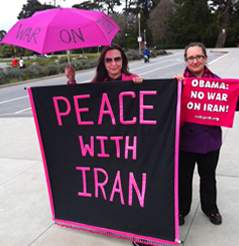
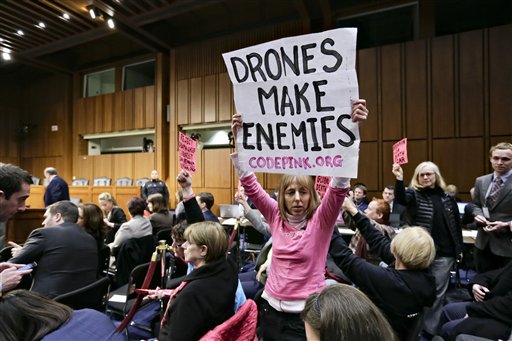
Last June, the United States sent more military soldiers to Iraq and carried out airstrikes to stop the advance of the Islamic State of Iraq and the Levant known as ISIS. The US, Western Europe, Saudi Arabia and Arab Gulf policy is to overthrow Syrian President Bashar al-Assad which is also the goal of ISIS and other jihadis in Syria. ISIS’s membership may be close to 15 thousand members, half of what the CIA estimates. ISIS is led by a core of people who fought the U.S. in Iraq, fought the Iraq Army back in 2003 and then in 2011 fought in Syria. Last week our own Michael Ratner reported how the U.S. could be given leave to make war everywhere if President Obama’s request for AUMF is granted by a US Congress. What are the demands of the US peace movement?
Attorney Jim Lafferty:
- It was U.S. military strategy in the Middle East to begin with and past U.S. military action in that part of the world, especially in Iraq that provided the primary catalyst for the growth of ISIS.
- We destroyed the secular governments in Iraq and Libya that created the political space for ISIS and other right wing forces to grow.
- ISIS filled the governing vacuum took advantage of these ethnic divisions angered at the U.S. and steadily gained strength thereafter.
- If you think about it, we spent the last 40 or 50 years destroying leftist and secular, anti-imperialist movements all over that region of the world.
- Two weeks ago the Pentagon announced their sending 4000 troops with very heavy weaponry to Kuwait.
- The U.S. Army has already set up a division headquarters in Iraq. A division consists of 20 thousand troops.
- The people that are having the most success in fighting a Syrian government right now is ISIS.
- The question is not should they be stopped. The question is what will be effective in stopping them.
- There is great unity in the anti-war movement. They’ve got unified actions planned for later this month in Washington DC.
- The anti-war movement is going to be tough for the anti-war movement because the propaganda machine, the mainstream media in this country has done its job in pandering by showing despicable pictures.
- What we don’t see is Saudi Arabia our staunchest ally, executes 20-25 people by beheading every month.
- Cindy Sheehan, is setting up a Camp Casey at the Capitol. All the anti-war groups are holding a mass teach in on this very issue we’re talking about now.
- First of all a nuclear power like Israel getting all exorcised about the fact that somewhere down the road a neighboring country might have the same weapons it has.
- Pardon me if I can’t get terribly excited about that. We shouldn’t have any country in the world with nuclear weapons.
- In addition to everything else (Netanyahu) is lying about the threat if it were a threat. To come to the U.S. Congress to give that bloviating speech where he offers nothing new.
- He offers no alternative to what the administration is trying to do and is apparently making some progress in doing and is hailed as a hero by one side of the aisle is really quite appalling.
- Answer.org
Guest- Attorney Jim Lafferty, Executive director of the National Lawyers Guild in Los Angeles and host of The Lawyers Guild Show on Pacifica’s KPFK 90. 7 FM.
—-


Thomas Sankara: An African Revolutionary
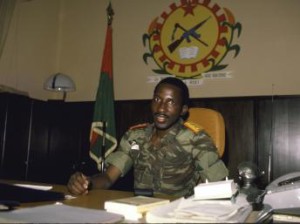
As president of the Burkino Faso, one of Africa’s poorest countries, Thomas Sankara was often called the African Che Guevara. In 1987, he was assassinated during a military coup that took down his government. However, Sankara’s economic and social policies left an important mark not only on his country but across Africa. Sankara was a Marxist and openly sought independence from France and at the same time he was building a pan-African unity.
- He was the president of Burkino Faso from 1983 to 1987, a very short period of time.
- He was a revolutionary. Everybody acknowledged that at the time especially the French who greatly disliked him.
- The U.S. wasn’t too happy with him. He wanted to stop in Atlanta to meet with Andrew Young during his visit to the UN General Assembly. They didn’t allow him to make that stop. So he spoke in Harlem instead.
- It’s a small west African country, not even that many experts on Africa know that much about it. He was in power for about 4 years and he was overthrown by a military coup.
- I think for people that are interested in progressive change its always useful in seeing how others elsewhere in the world are fighting against oppression, are fighting for their rights and occasionally actually able to make some change.
- It’s also useful to learn about what kind of leadership can help people do that.
- He wasn’t a grassroots activist. He came out of the military. He was a captain. He got radicalized in the military and because of the context of his country which was extremely poor and under-developed, backward and subservient to the French who been their formal colonial power, very corrupt both military and civilian politicians over the decades.
- He’s representing a newer generation where that initial idealism about independence will bring all sorts of changes. He’s speaking to the ills of formally independent countries that are still subservient to their colonial masters and still haven’t found a way to break out of the trap of underdevelopment and external economic domination.
- He’s speaking to a new generation that still resonates today which is young people who are fed up with the way things are.
- They’re fed up with the corruption of their leaders whether they’re elected or not elected.
- You travel through west Africa you see Sankara t-shirts.
- The first time I met him was in New York. The guy was direct. He listened to what you had to say. He thought about it. I’ve never met anybody who was so quick. I mean he was witty.
- The other times I met him in Burkina. The first time was a long interview. The other times he didn’t want to be interviewed, he just wanted to talk about politics.
- Up to that time, nobody hand promoted or named so many women to cabinet position. One of them now is the current minister of justice.
- They tried to tackle some restrictions on women at the local level. It’s hard they made a small dent in it. They fought against female genital mutilation, the right to divorce by mutual consent.
- It (the country) was called Upper Volta which was a colonial name. They wanted something African and Burkina Faso, the words are from two local African languages basically means the land of the upright, or the uncorruptible people. The people are known as Burkinabe and Burkinabe comes from a third African language.
- Before he became president he was briefly a prime minister in a coalition government. His first trip was to Libya.
- Then he went to the non-alliance summit in New Delhi and gave this very fiery speech basically solidarizing with the Cuban revolution, with the Nicaraguans, with the Western Saharans, with the new Calidonians. He clearly aligned himself with the anti-imperialist, pro-third world, pro-development wing, within the non-alliance movement.
- The French didn’t like that. So, they told some their people locally, look let’s get rid of this guy.
- They had an internal coup. He was arrested. He was in prison for a while but they couldn’t sustain that. He was too popular. He became president.
- He was only 33 when he became president, so this was a youthful leadership.
Guest – Professor Ernest Harsch has taught courses on African development and political instability in the Sahel and is a research scholar affiliated with the University’s Institute of African Studies. He earned his PhD in Sociology from the New School for Social Research in New York. Throughout a professional career as a journalist, he wrote mainly on international events, with reporting on Asia, the Caribbean, and Eastern Europe, but most extensively on Africa.
—————————————————–

Please help support Law and Disorder by clicking on Fractured Atlas graphic. This radio show is now a sponsored project of Fractured Atlas, a non-profit arts service organization. Contributions for the charitable purposes of Law and Disorder must be made payable to Fractured Atlas only and are tax-deductible to the extent permitted by law. You can donate as little as 5.00 a month.
Law and Disorder March 2, 2015
Podcast: Play in new window | Download
Updates:
- Michael Ratner: Jury Awards $218.5 Million in Terrorism Case Against Palestinian Groups
—-


The Campaign For A Commercial Free Childhood
The National Football League, Mattel’s Girl Scout Barbie Doll, and even McDonald’s all have something in common. They’ve engaged in highly sophisticated corporate marketing aimed at enticing young children into becoming life-long consumers and brand loyalists. They’re the subjects of the efforts of The Campaign For A Commercial Free Childhood to cease clever marketing that sends the message that purchasing will make children happy. The campaign has a proven track record of educating families and the public about how industry partnerships with schools, nonprofits and trusted institutions such as the Girl Scouts expose young people to inappropriate content with potentially negative consequences.
- Very unfortunately, the Girl Scouts which has been traditionally a wonderful organization providing role models for girls launched a partnership last year with Barbie.
- This partnership includes a website where girls can play a Barbie game about choosing careers but really all they’re doing is looking at different Barbie outfits and seeing other Barbie dolls that they can buy in the store.
- There’s even a Barbie patch that Girl Scouts can earn.
- We thought that this was such a harmful campaign to young girls that the Girls Scouts have traditionally been a refuge from the commercialism that is aimed at kids everywhere and clearly Barbie represents a problematic body type and focus on appearance and fashion and is in some ways the antithesis of what the Girl Scouts have traditionally represented.
- They get 2 million dollars from Mattel from this partnership.
- The message to young girls that you have to look like a fashion doll when you’re going out on a hike is unbelievable.
- On the envelope that the report card came in was ad from McDonald’s saying bring your report card to McDonald’s if you had good grades or had good attendance or even good behavior and you get a free happy meal.
- We do a lot of work on the area of advertising in schools. It’s really an unfortunate trend. There’s been an increase in it since 2008 when we had the economic downturn and schools are understandably looking for revenue any way they can get it.
- There has been this increase in marketing to kids in schools and we think that’s particularly harmful to children. Anything advertised in the school comes with the school’s endorsement.
- One of the things that’s most concerning about what the NFL does is they market Fantasy Football extensively to kids. They even have a curriculum in school to teach kids about Fantasy Football where they could then go online to the kid NFL website and compete for cash prizes.
Guest – Josh Golin, is Associate Director of CCFC and organizes CCFC’s advocacy campaigns and develops its communications strategy. His writings about the commercialization of childhood have appeared in a wide range of publications.
——

Greece Debt Crisis Postponed, Creditors Back Reform Plans
Earlier this year, we reported on the historic election voting in the Greek anti-austerity party of Syriza, led by Alexis Tsipiras. Syriza’s platform is to take back power within the Greek government, to effectuate a program that will call for cancellation of debt, nationalization of the banks, and expropriating closed factories. Greece is a member of the Eurozone, the nations that have joined with a common currency in 1999. Now, after barely a month in office, the Syriza Party led by Prime Minister Alexis Tsipiras has been forced to make compromises on major issues such as labor reforms and agreeing not to undo privatization plans, to name a few. The crisis began when the European Central Bank said it would reject Greek sovereign bonds as collateral which made Greek banks dependent on Emergency Liquidity Assistance. Last week, Syriza entered negotiations with the EU and ECB and secured a four month extension of its financial rescue.
- Let’s start with December 2009 when the Greek government declared in had sovereign debt of 109 percent, which is something they’ve been covering up the past few years.
- Goldman Sachs was also involved with helping them to cover up those figures.
- We should look at the political economy of the Eurozone constructed in the early 2000s. At the same time in Germany you had wage depression, meaning Germans were getting lower wages so that German exports would become more competitive and the European periphery was used as a dumping post. So they were getting more lending from German banks and that’s how you started getting more debts in Greece.
- The European Union, The European Central Bank and the International Monetary Fund which has played its hand since the 70s in imposing discipline on the countries throughout the developing world and Greece was the first so called advanced country that was starting to enter into this regimen of so called structural reforms that were attached to these bailouts that Greece was recieving to deal with the debt issue.
- Attached to these structural reforms was the termination of collective bargaining agreements, the reduction of minimum wage . . . so you have massive social degradation and at the same time the debt continues to rise.
- So the debt went from 109 percent of the GDP to 175 percent of the GDP.
- So Greece is basically getting loans so it can pay interest on interest starting in the early 2020s and Syriza rightfully identified this as an extended pretend strategy.
- They were the opposition government between 2012 and the end of 2014 and in 2015 they got 35 percent of the vote which wasn’t enough to form a government on its own which is why it had to form a coalition government.
- Everybody knows that Greece can’t pay off its debt til the early 2020s.
- I’ve written a piece in the Jacobin saying that I don’t think Eurozone would take any chances on letting Greece leave the Eurozone because of how helpful it has been to German capital. They’re not willing to take the long term risk, they’re not will to take the short term risk of speculative attacks that would occur on the Eurozone.
- A Greek exit could have produced a domino effect, perhaps Portugal would have left, Italy, you start having big economies like Spain leaving. That kind of domino effect would be unsustainable for the Eurozone to exist.
- There are ways of dealing with this (Greece leaving the Eurozone) You would have to impose capital controls, you would have to nationalize the banks, which is something that the Syriza leadership said that they wouldn’t do prior to elections. They’re going to have to revisit that strategy. Then you would have to figure out how you would ration food, fuel, pharmaceuticals in order to deal with immediate problems. Then you would have to talk about long term policies that would promote growth.
- They (Syriza) cannot move to a technocratic approach because then they would lose thier fundamental element as a left party.
- Half of the police corp (in Greece) support the Golden Dawn. This is something that Syriza has to neutralize while they’re in power.
- They need to be neutralized by promoting a strategy that’s actually going to reverse austerity.
- Jacobin Magazine -Nantina Vgontzas /Financial Times – Wolfgang Munchou
Guest – Nantina Vgontzas, a Greek-American PhD student in sociology at NYU focusing on political economy and social movements. She is a member of the UAW Graduate Student Organizing Committee and is involved in the Academic Workers for a Democratic Union reform movement.
——————————————————–
Law and Disorder February 23, 2015
Podcast: Play in new window | Download
Updates:
- Michael Ratner: Palestine Not Recognized As State By U.S. Thus Allowed To Be Sued In Federal Court For Attacks on Israel
- Michael Ratner: Why Is Obama Trying To Get An AUMF When The U.S. Is Already At War With ISIS? If Passed, The U.S. Under This Act Can Make War Everywhere
- ICC En Vogue? – Hosts Talk About NBC Drama “Crossing Lines.”
—–
Pelican Bay Solitary Confinement Case Update
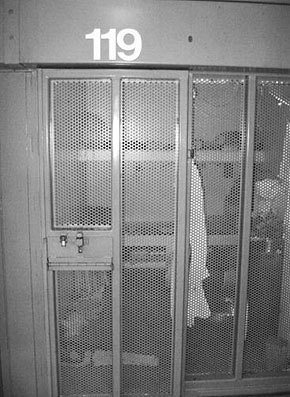
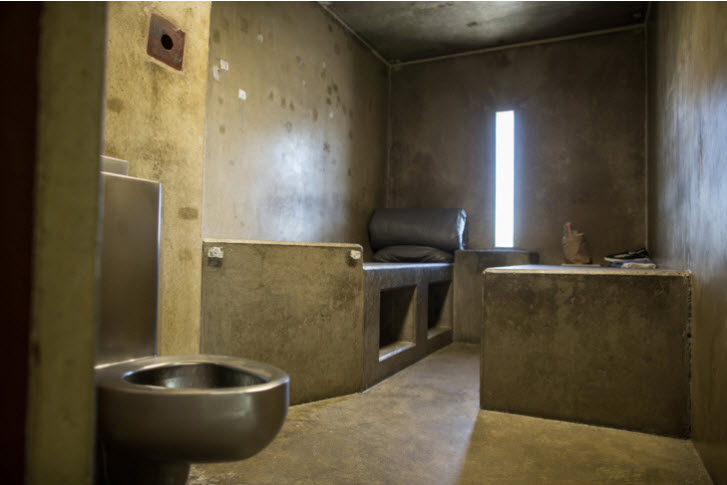
We bring you an update on the Pelican Bay Prison Solitary Confinement Case. As you may recall Pelican Bay Prison had more than 1000 prisoners in long term solitary confinement at 10-20 years or more. The Center for Constitutional Rights and its lead attorney Jules Lobel have been challenging this practice for a number of years since 2012. Recently, the state of California in an effort to blunt the lawsuit has transferred some of the named plaintiffs to other prisons. Their theory, once we’re rid of the plaintiffs maybe we’re rid of the lawsuit. CCR and Jules Lobel went out to California to argue that this is not a Constitutional practice. That transferring a person from Pelican Bay to another prison in California should not blunt the lawsuit and in fact CCR we should be able to challenge solitary confinement in those prisons as well. The judge agreed and now the CCR case will not just challenge Pelican Bay Prison solitary confinement practices but those in other prisons throughout California.
- Because of 3 hunger strikes and our litigation the California prison officials are now instituting reforms. They realize they have to do something.
- There are over 1000 people in solitary. When we started the case 500 people were there for over 10 years.
- Because of the reforms they’ve made under pressure from our litigation there are now only 230. Still 230 people for over 10 years is a huge amount.
- They’re also moving people out not only to general population prisons, but to other solitary units in other prisons. Other SHOES, its called Special Housing Unit.
- Four of our ten plaintiffs are moving to another SHOE to a place called Tahachapi and the defendants say, they’re no longer part of your case.
- That’s what the argument was about. The argument was about whether or not you can expand the case beyond Pelican Bay.
- If you were at Pelican Bay and transferred to another prison, still in solitary, you’re still part of our class.
- The judge accepted that we can expand the case, rejecting the state’s argument.
- We bifurcated the trial so we could have a relatively quick trial on Pelican Bay. The fundamental question for Pelican Bay trial is whether keeping people for a prolonged period of time in solitary confinement at Pelican Bay is cruel and unusual punishment.
- We also have a claim in that way that they are placed there. It violates due process.
- These guys only get reviews every six years. So, you stay in your cell for six years and then after six years somebody comes and reviews whether you should be kept in solitary.
- No state in the country has six years. Usually its 30 days, 90 days, six months, maybe at most a year.
- California unlike most states puts people into solitary simply because they’re a member of a gang or associated with a gang.
Guest – Attorney Jules Lobel, has litigated important issues regarding the application of international law in the U.S. courts. In the late 1980’s, he advised the Nicaraguan government on the development of its first democratic constitution, and has also advised the Burundi government on constitutional law issues. Professor Lobel is editor of a text on civil rights litigation and of a collection of essays on the U.S. Constitution, A Less Than Perfect Union (Monthly Review Press, 1988). He is author of numerous articles on international law, foreign affairs, and the U.S. Constitution in publications including Yale Law Journal, Harvard International Law Journal, Cornell Law Review, and Virginia Law Review. He is a member of the American Society of International Law.
——

Architect’s Human Rights Code of Ethics Petition
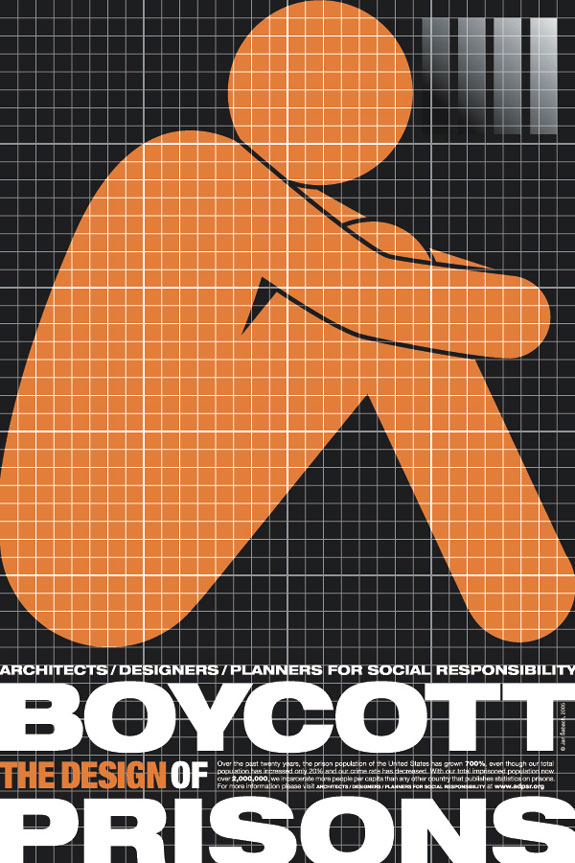
In our coverage of psychologists involved with torture continuing to hold their professional licenses to practice we look at a similar concern with licensed architects who design prisons, solitary confinement cells and death chambers. Research has show that the design of a prison can influence many aspects of prisoners lives including recidivism rates. Recently, the American Institute of Architects rejected a petition to censure members who design solitary confinement cells and death chambers.
Raphael Sperry:
- In 2013 when the UN Special Rapporteur on Torture announced that spending more than 15 days in solitary confinement was a human rights violation and we’re aware that people in the United States are routinely held in solitary for years if not decades, and that there had been dozens of supermax prisons that housed thousands of people in those conditions, specially designed for that purpose, that really tipped the scales.
- That was really shocking to realize the same tools that architects use everyday trying to make the world a better place for people can be used to torture and kill people.
- The question of what constitutes a torture chamber is complicated. There are many buildings that have been used to house prisoners in solitary confinement that were never designed for that purpose.
- There are a subset of prisons that are designed for solitary confinement. They’re usually called administrated segregation units.
- Supermax prisons are the most egregious. There’s no space for people to eat together. There are no tables with seats clustered around them even.
- The recreation spaces that prisoners have a right to go into for an hour a day, are shrunk down to size that they’re for just one person.
- You guys are probably familiar with ADX Prison in Florence, the Federal Supermax which is supposed to be the most secure supermax in the United States.
- In that facility they actually have showers in every cell. The prisoners then actually don’t have to get into the hallway. They might walk by somebody elses’ cell or walk by somebody elses’ cell to get to a shower.
- The AIA has a code of ethics for members and it already had a statement saying members should uphold human rights in all their professional responsibilities.
- It’s not directly enforceable. If members set out to design a space intended to kill somebody or to torture them or degrade them which is a human rights violation. AIA is not prepared to take any disciplinary action to someone who does that.
- We were asking them to simply add a rule that clarified if a member designed a space that is intended for human rights violations specifically execution and prolonged solitary confinement that it would be clear they’re in violation of the code of ethics and then AIA could take disciplinary action that include censure and expelling them from the institute.
- The National Board of Directors gets to set the ethics code for the whole organization including all the chapters. They took in our petition. They took in all the letters of support we sent in.
- Then they didn’t communicate with us . . they referred it to an internal group. They never let us know who was on that panel. They sent a brief letter back to me head of the ADPSR saying that they weren’t going to make the change and they were concerned about potential anti-trust violations and how hard it would to enforce.
- Lastly, they don’t want to restrict their members from designing any particular building type. I just found that to be the worst.
- To me if you’re going to be a professional and take on the responsibility of protecting public health, safety and welfare every time you put your pencil down then there should be limits to what you do with that specialized knowledge.
- To us its not a political issue, its a human rights issue and they said they’re an organization that’s for human rights. It didn’t seem right to us that they should pick and choose which human rights they’re ok with and which ones they would restrict.
Guest – Raphael Sperry, president of Architects / Designers / Planners for Social Responsibility (ADPSR), a 32-year old independent non-profit organization. He researches the intersection of architecture and planning with human rights with a special focus on prisons and jails, and advocates for design professionals to play a larger role in supporting human rights in the built environment. He directs ADPSR’s human rights advocacy, including ADPSR’s petition urging the AIA to amend their Code of Ethics and Professional Conduct to address buildings that violate human rights. He was the first architect to receive a Soros Justice Fellowship from the Open Society Foundations, hosted jointly by the University of California at Berkeley College of Environmental Design and Berkeley Law School, in 2012. He is an active member of the AIA Academy of Architecture for Justice and a leader of its subcommittee on sustainability.He holds an M.Arch. from the Yale School of Architecture and a BA summa cum Laude from Harvard University.
—————————————
Please help support Law and Disorder by clicking on Fractured Atlas graphic. This radio show is now a sponsored project of Fractured Atlas, a non-profit arts service organization. Contributions for the charitable purposes of Law and Disorder must be made payable to Fractured Atlas only and are tax-deductible to the extent permitted by law. You can donate as little as 5.00 a month.