Welcome to Law and Disorder Radio
Law and Disorder is a weekly independent civil liberties radio program airing on more than 150 stations and on Apple podcast. Law and Disorder provides timely legal perspectives on issues concerning civil liberties, privacy, right to dissent and practices of torture exercised by the US government and private corporations.
Law and Disorder February 16, 2015
Podcast: Play in new window | Download

City and County of San Francisco v. Sheehan
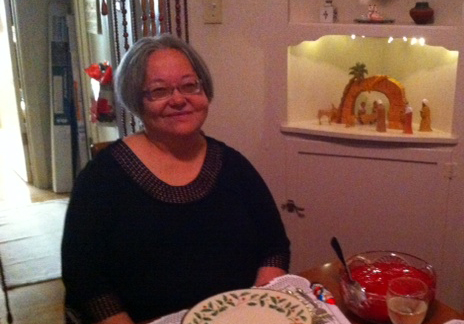
In early December of 2014, the Supreme court agreed to hear the case City and County of San Francisco v. Sheehan. The case involves San Francisco police officers who reported to a group home to transport Teresa Sheehan, who was known to be mentally ill, to mental health facility. The situation ended with police firing six shots on Sheehan. She survived and filed a lawsuit arguing that officers had a responsibility under federal law to consider her mental disability. The case is not about police criminal liability, this one is about whether police are obligated to take special precautions in using deadly force, and also in entering an individual’s home without a warrant or permission. Read Michael Avery’s observation about details of case.
Attorney Michael Avery:
- Teresa Sheehan is a woman in her mid-fifties who was living in a group home in San Francisco, a home for people with mental disabilities.
- Officers came to the house and ended up shooting her five times at point blank range.
- The case raises some issues for the federal courts in which the lower courts are in disagreement, and the court (Supreme Court) took the case hoping to resolve those disagreements.
- The police came because the social worker had become concerned with Ms Sheehan, and wanted to send her to a hospital for 72 hours of evaluation and requested the assistance of the police in transporting her to the hospital.
- Ms. Sheehan on the other hand didn’t want to be taken to the hospital, didn’t want the social worker in her room, did not want the police in her room, she just wanted to be left alone.
- In the course of asserting her right to be left alone, she threatened the police and the social worker with a knife.
- The police then ended up breaking through her door. Forcing open her door and when she was standing there with the knife, they tried to pepper spray her. That didn’t seem to have much effect on her and so they shot her five times.
- Miraculously she survived but now she’s permanently disabled and disfigured. One of the bullets entered the left side of her temple, shattered her eye socket and then exited through her mouth causing serious injuries to her jaw.
- Officers encounter people with mental disabilities extremely frequently. In large cities and towns in the United States its estimated 1 out every 15 people that the police interact with has some form of mental illness.
- Officers are trained to try to diffuse the incident, not to threaten the person, to ask open ended questions, to listen to what the person has to say, try to establish some rapport with the person, respect the person’s space and not crowd the person, and at the same allow the incident to go on as long as it has to in order to have a peaceful resolution.
- Several years ago I wrote an article called Unreasonable Seizures of Unreasonable People making the point that officers ought to be held to standard that requires them to follow their own training.
- When I saw this case was in the courts, I volunteered to provide some assistance to the lawyers in connection with the brief they were writing.
- There are two claims in the case. One is a claim under the Fourth Amendment of the Bill of Rights, which is the part that says government cannot make unreasonable searches of our home or seizures of our person and the other is a claim under the Americans With Disabilities Act.
- In effect they discriminated against her on the basis of her disability by not following their training and not making the accommodations that they were trained to make for a mentally ill person.
- Secondly, the argument is, when they forced open the door to her apartment and entered and used deadly force against her, they were not behaving reasonably and that again is based on the same idea it would have been reasonable to follow their training. Frankly, they just threw their training out the window.
- Oral argument is scheduled for March 23, 2015.
Guest – Civil rights lawyer Michael Avery, professor at Suffolk University Law School and former president of the National Lawyers Guild from 2003 to 2006. He’s also worked with the National Police Accountability Project.
—-
Lawyers You’ll Like: David Kairys
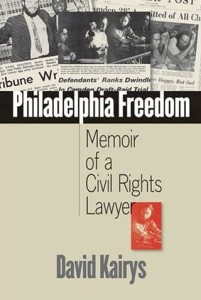
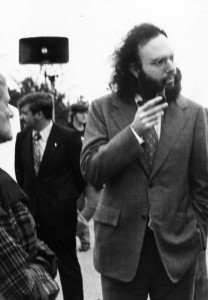
David Kairy began his career at the Philadelphia public defender’s office in the late 1960s. Since then, he’s been a leader in effort to fight discrimination and protect individual rights, now he’s regarded as one of the nation’s preeminent civil rights attorneys. David is a professor at the University of Temple Law School, where he teaches civil rights and constitutional law. He has written several books, including Philadelphia Freedom: Memoir of a Civil Rights Lawyer, which was published last year.
- We were of a number of young firms dedicated to civil rights and representation of progressive groups.
- The Camden 28, caught in the act of breaking into a Camden, New Jersey draft board and destroying all of the files. This was a Catholic Left action.
- FBI had informant in the group, who the FBI was paying on an hourly rate. The informant supplied the means to make the action happen.
- One hundred FBI agents sat around and waited til they destroyed all the files in the office. Many of the 28 were priests. There were more than 300 draft board raids during Vietnam.
- Father Michael Doyle said when your government is napalming children, the place you should be is in jail.
- Father Doyle and I strategized a way to start talking to the FBI informant Bob Hardy and eventually got an affidavit saying that the FBI manufactured this crime.
- I filed the affidavit and it was on the front page of the New York Times.
Guest – David Kairys, Professor of Law, the first James E. Beasley Chair (2001-07), and one of the nation’s leading civil rights lawyers. He authored Philadelphia Freedom, Memoir of a Civil Rights Lawyer and With Liberty and Justice for Some and co-authored the bestselling progressive critique of the law, The Politics of Law, and authored With Liberty and Justice for Some and over 35 articles and book chapters. His columns have appeared in major periodicals, and he has been profiled in the Chronicle of Higher Education, Wall Street Journal, and Philadelphia Inquirer Sunday Magazine. Kairys’s Public Nuisance Theory.
——————————————————-

Please help support Law and Disorder by clicking on Fractured Atlas graphic. This radio show is now a sponsored project of Fractured Atlas, a non-profit arts service organization. Contributions for the charitable purposes of Law and Disorder must be made payable to Fractured Atlas only and are tax-deductible to the extent permitted by law. You can donate as little as 5.00 a month.
Law and Disorder February 9, 2015
Coming Up Next Week Police Shooting Reaches Supreme Court Exclusive Michael Avery Interview
Podcast: Play in new window | Download
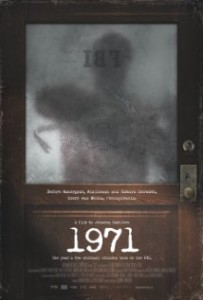
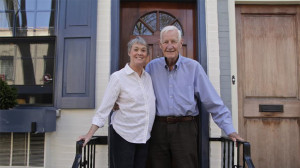
On March 8th 1971, a group of anonymous individuals calling themselves the Citizen’s Commission to Investigate the FBI, broke into an FBI field office in Media, Pennsylvania. They stole thousands of government documents. Among the documents was proof that the FBI under J. Edgar Hoover, was spying on law abiding citizens. The program is known as COINTELPRO and it was used to monitor, manipulate and disrupt social and political movements in the United States. The Citizens’ Commission to Investigate the FBI has been documented recently in a highly acclaimed film titled 1971, directed by Johanna Hamilton.
Johanna Hamilton:
- I consider myself to have the good fortune to have known Betty Medsger, the author of the Burglary, for many years.
- She and I had a personal relationship that long predated our professional collaboration.
- Over time she came to share the outlines of the story with me and it sounded completely remarkable.
- She introduced me to a few members of the Citizens Commission to Investigate the FBI. The 40th anniversary was approaching.
- They wanted the story, which was so little known, to have a larger life.
- To be clear, Betty worked many years on the book. She’s done remarkable and profound research and I joined much later and was the net beneficiary of so much of her research.
- There were four years where we worked in tandem.
- When I showed the film to the Citizens Commission, while the credits rolled, Keith (Keith Forsyth – the lock picker) especially, he got up and said, good job.
- It’s a period of history I’ve been fascinated with since I was a teenager. It was the story of these extraordinary ordinary individuals who had put everything on the line and taken such great personal risk to benefit democracy.
- They trained themselves for one night of crime. They steal all the documents in the office, leak them to the press. They send them to major newspapers, and to a couple politicians. In the end, the Washington Post is the only newspaper that decides to publish the first stories.
- Those first stories reveal with out question illegal government spying on citizens who are going about their daily lives and exercising their First Amendment rights.
- Betty wrote the first stories in the Washington Post and the story fades a little from the headlines. The Pentagon Papers explode 3 or 4 months later. Daniel Ellsberg is on the scene.
- Then our story picks up again.
- It seems inconceivable now but Hoover had been director for over 50 years, and that’s no longer possible.
- Some people who seen the film before say they were really moved by the Church Committee hearings.
- Attorney David Kairys is a huge figure in Philadelphia and yes back in the day he was contacted by two members of the Citizens Commission. He didn’t know what they had done, but if they got caught, they could call him day or night.
- We were reaching the tail end, or we thought we were reaching the tail end of the film when the Snowden revelations happened.
- The Snowden revelations were one thing, absolute bombshell, but prior to that we had a couple of other instances. Back in 2011, September, there were raids all across the country, animal rights activists, environmental groups. One night Brian Williams introduced the news and described these raids and said you know its reminiscent of Hoover back in the 1970s.
- We had whole scenes cut together with that footage and debated and deliberated on that. In the end erred on the side of excluding it.
- It’s opening here in New York City and will start rolling out across the country. If you check our website we update the cities that it will show at. It will be on PBS, Independent Lens at the end of May. 1971Film.com
Guest – Johanna Hamilton, director of the film 1971. She also co-produced Pray the Devil Back to Hell, which won Best Documentary at the Tribeca Film Festival in 2008 and was shortlisted for an Academy Award. Johanna has produced nonfiction programs for PBS, The History Channel, National Geographic, A&E, Discovery Channel, and The Washington Post/Newsweek Productions, including September’s Children, a documentary for PBS exploring how children around the world are affected by terrorism and war.
—–
Inspiring, and Awakening Political Activism in Youth
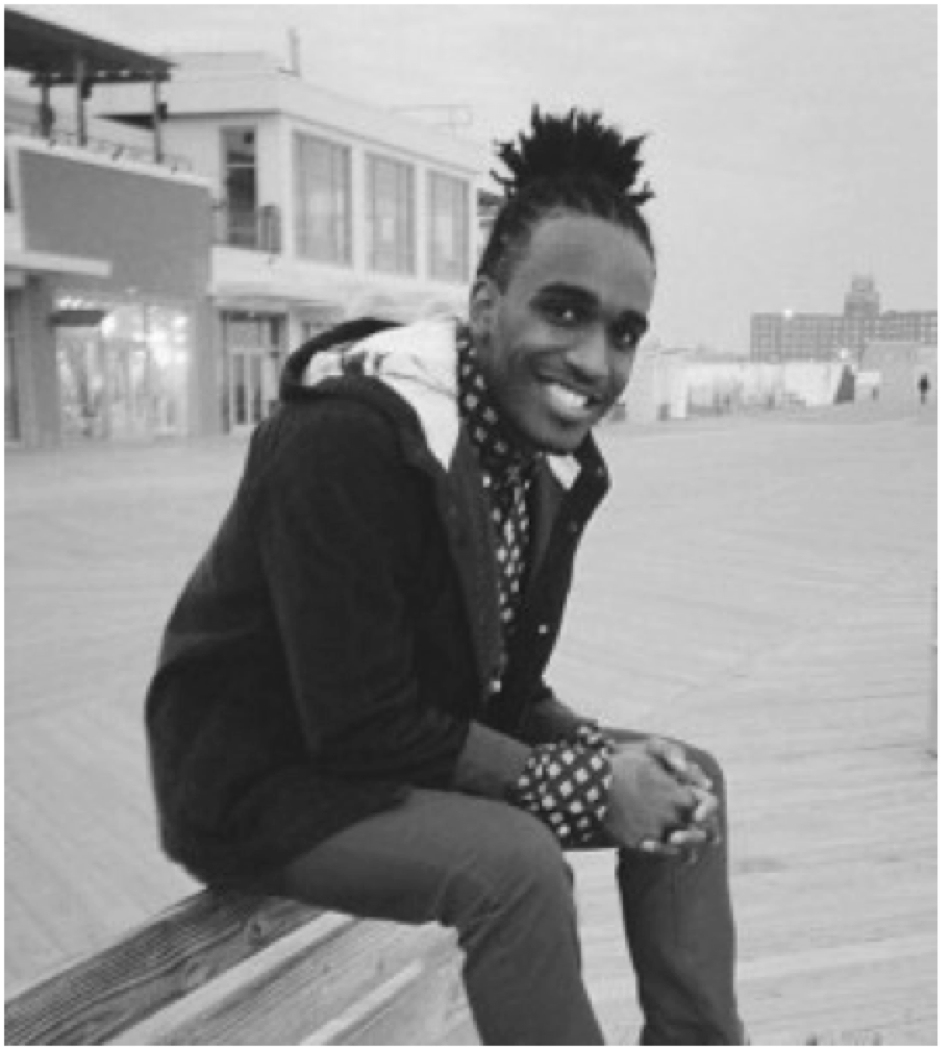
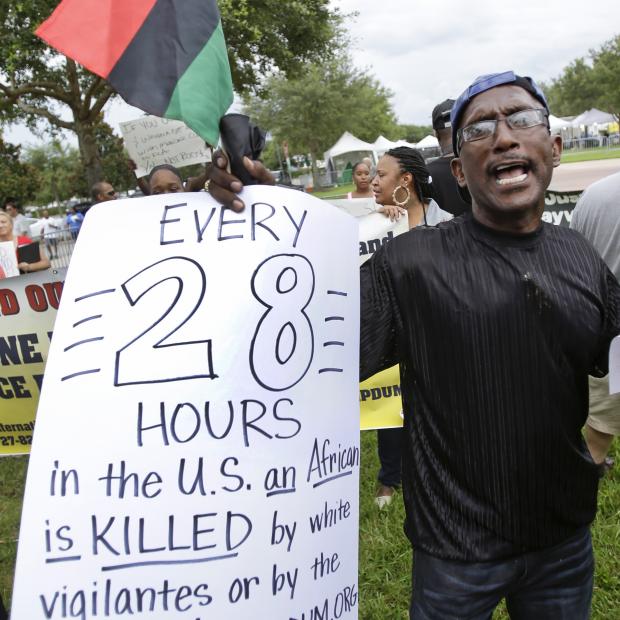
Young people across the nation have played a critical role in taking to the streets to protest social inequities, from Ferguson, Missouri to New York City. In a recent article in the journal Socialism and Democracy, “The Roots of Mass Incarceration: Locking Up Black Dissidents and Punishing the Poor,” writer, activist and youth pastor Nyle Fort describes how he became politically active and who inspired him. We talk with Nyle about the status of protest in this country, the forces of oppression, how young people are involved and how he helps inspire them.
- I graduated from Morehouse College and ended up going to seminary. I was already a licensed and ordained preacher but I wasn’t politicized yet.
- I had already been involved in the community via the church doing speaking engagements with youth and things like that.
- It wasn’t until I got into Princeton Theological Seminary that I began to get politicized.
- The way that it happened was I was taking an introductory seminary class called Systematic Theology with a professor Mark Taylor. In that class he actually had Mumia Abu-Jamal call in live from death row.
- When I heard him speak, I stopped in my seat. This man who I knew nothing of was speaking to me that was moving, not only me but I could tell the entire classroom and doing so by a 6 foot, by 10 foot cell. A cell that he had been in for 30 years, longer than I had been alive.
- Two weeks later I found myself through Mark Taylor at my first rally December 9, 2011. Two days after Mumia had been released from death row.
- I read the New Jim Crow very quickly, then Angela Davis’ works. That was really the beginning for me.
- I entered activism through a prison abolitionist lens, through Mumia.
- The rally for me was an embodiment of the things Mumia was talking about.
- I preach. I was at First Baptist Church in Lincoln Gardens. It’s one of the largest black churches in New Jersey. My style of ministry was evolving as I was being radicalized and politicized.
- I tried to do a lot of social justice work. We were writing letters to our incarcerated brothers and sisters as forms of religious activism.
- I discovered a prophetic religious tradition that comes from a black liberation theological perspective.
- When I was on the bus ride back from Ferguson I was really mad. Mad as hell because I felt there was a relative silence from the church, particularly the black church.
- I believe in love not as a word but as a work.
- When I engage with youth, I try to practice a love that is material. I tell young people, I love you more than they hate you.
- We have to deal the trauma and the pain that we inherit as black people living in the western world and all around the world.
- Love for me is a critical, not a politic that we can talk about, but a practice we can embody and engage in everyday. That has material life.
- We’re going to take Cornell West’s worlds seriously that justice is what love looks like in public, then we have to have a love that’s expansive enough to be material and to be felt.
- Black Lives Matter particularly as a network has articulated a feminist politic, a black feminist politic, a queer politic that is forcing us to live out our intersectionality.
- What we’re not talking about enough is that’s messy, and its not romantic.
- I think of oppression as institutionalized lovelessness. Let’s love each other in ways that causes each other to act.
- Twitter – @nylefort
Guest – Nyle Fort – Nyle is a Master’s of Divinity candidate at Princeton Theological Seminary, a youth pastor, freelance writer, and grassroots community organizer based in Newark, New Jersey. He was very active during the protests in Ferguson, Missouri and New York City.
—————————————————————-
Please help support Law and Disorder by clicking on Fractured Atlas graphic. This radio show is now a sponsored project of Fractured Atlas, a non-profit arts service organization. Contributions for the charitable purposes of Law and Disorder must be made payable to Fractured Atlas only and are tax-deductible to the extent permitted by law. You can donate as little as 5.00 a month.
Law and Disorder February 2, 2015
Podcast: Play in new window | Download
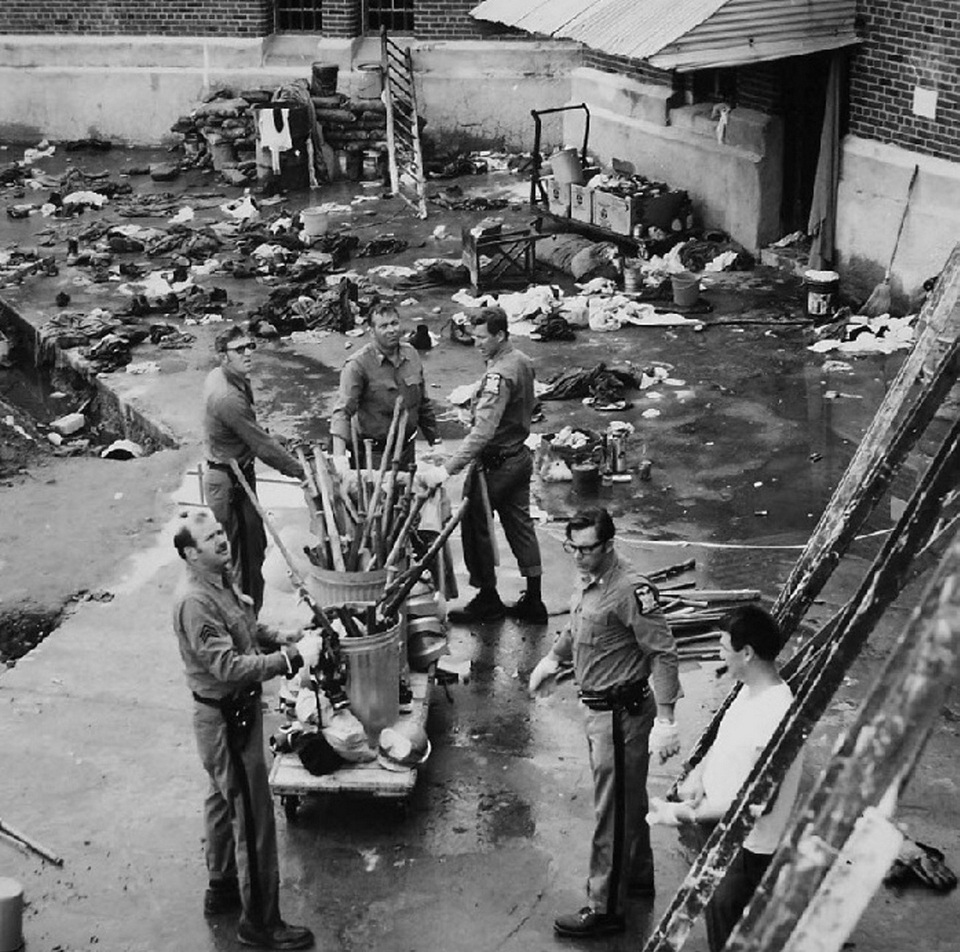
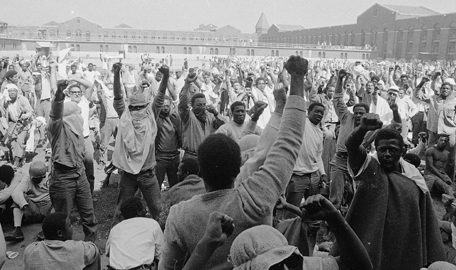
Special on Mass Incarceration : Socialism and Democracy – Lessons from Attica: From Prisoner Rebellion to Mass Incarceration and Back
Fyodor Dostoevsky’s observed that “the degree of civilization in a society can be judged by entering its prisons.” Our guest Dr. Heather Ann Thompson reports in her recent article Lessons from Attica: From Prisoner Rebellion to Mass Incarceration and Back, that according to the Prison Policy Initiative, by 2011 the United States was confining “more than 2.4 million people in 1719 state prisons, 102 federal prisons, 2259 juvenile correctional facilities, 3283 local jails, and 79 Indian Country jails as well as in military prisons, immigration detention facilities, civil commitment centers, and prisons in the U.S. territories.
- Its important to really examine the broader history of prisons and criminal justice because trying to explain how we became the world’s outlier with so many incarcerated and such a hugely disproportionate number being persons of color, we have a lot to explain.
- Something very clearly happened after the 1960s to our criminal justice system, even more specifically after 1971. Clearly it had a lot to do with the rebellions of that period.
- Sorting all that out is what I’ve been doing for the last decade.
- Just like had happened after the civil war, sort of the first great moment of civil rights unrest in this country when we had 4 million newly freed African Americans demanding a real voice in our society, and meaningful equality.
- The response of that society, in that case, in the South, was to change all the laws. To all of a sudden criminalize black spaces in new ways and almost overnight southern prison institutions not only exploded in population but they went from being all white to all black.
- You fast forward to the 1960s and I think something similar happened.
- Many northern politicians begin to conflate urban protest and unrest, the slow pace of the equality and gains with crime, and began a war on crime in 1964 with Lyndon Johnson before there was immediately impressive rise in crime.
- We need to know much more about the people that were inside the prison walls.
- What happened in the American prison system that we see today, what seems to be the ultimate control, the ultimate punitive penal state.
- One of the long standing lawyers in this case Elizabeth Fink fought this battle on behalf of the Attica brothers for decades and decades. These are the people who are the real repository of that history.
- My role as a scholar, what I tried to do was rescue for the American public, some of those hidden histories. You had a 4 day congregating thousands, 1300 men inside of a penal institution that were willing to stand together and black, Puerto Rican, white and say to the state, we’re willing to negotiate with you logically and in good faith to try to improve the conditions under which we live.
- What made it so really remarkable was the world’s attention was focused on it. Everybody was watching Attica.
- But ultimately, New York state was unwilling to give in on the most important demand which was amnesty.
- Amnesty for which once they surrendered, they would not be charged for any riot-related crimes that the state would alleged they’d committed and an assurance that they would not have reprisals.
- They – state troopers- retook the prison in an utter brutal fashion. They mowed down people first with tear gas then guns, handguns, deer slugs, shot guns, killing scores of people, wounding scores of people.
- Then, realizing the blood bath, officials stood outside and told the world, that the prisoners are the ones that killed the hostages, and from then on tried to control the story, cover up what really happened, that began the 40 year saga of trying to tell the truth of what happened at Attica.
- Had I not met people like Elizabeth Fink who could help me understand this story and had I not spent ten years digging in every knook and cranny to try to uncover the story, this would have been a difficult story to tell because the state has gone to enormous lengths to keep a lid on it.
Guest – Dr. Heather Ann Thompson, is a native Detroiter currently on faculty in the Departments of African American Studies and History at Temple University. In 2015 she will be joining the faculty of the University of Michigan in Ann Arbor. Thompson has just completed the first comprehensive history of the Attica Prison Rebellion of 1971 and its legacy for Pantheon Books.
—–
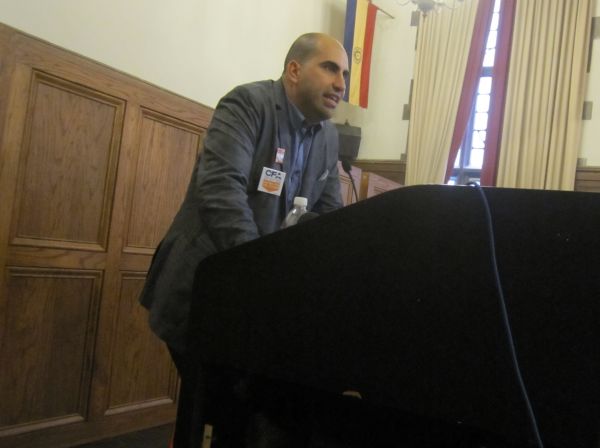
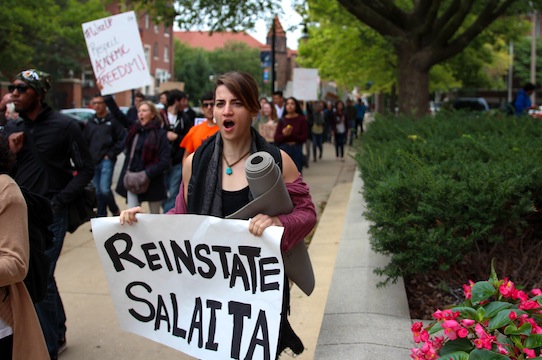
Professor Sues University of Illinois Over Firing for “Uncivil” Gaza Tweets
We bring you to a press conference held in New York City last week at the Center for Constitutional Rights. The Center is representing Professor Steven Salaita along with the Chicago civil rights law firm of Loevy & Loevy. Salaita was hired and then discharged before he could even start his job last summer at the University of Illinois. He was hired by the American Indian Studies program after a thorough vetting. After Israel attacked Gaza where some 2000 people were killed including 500 children. Salaita tweeted several what were termed “uncivil” messages on his twitter account. This was brought to the attention of Zionist donors to the University of Illinois who then pressured Chancellor Phyllis Wise to rescind the hiring. Professor Salaita’s case is probable the most important case in 50 years, not since the 60s when the Supreme Court overturned the non-communist loyalty oath has an issue of this importance arisen. Some 6000 professors have vowed to boycott the University of Illinois.
——-
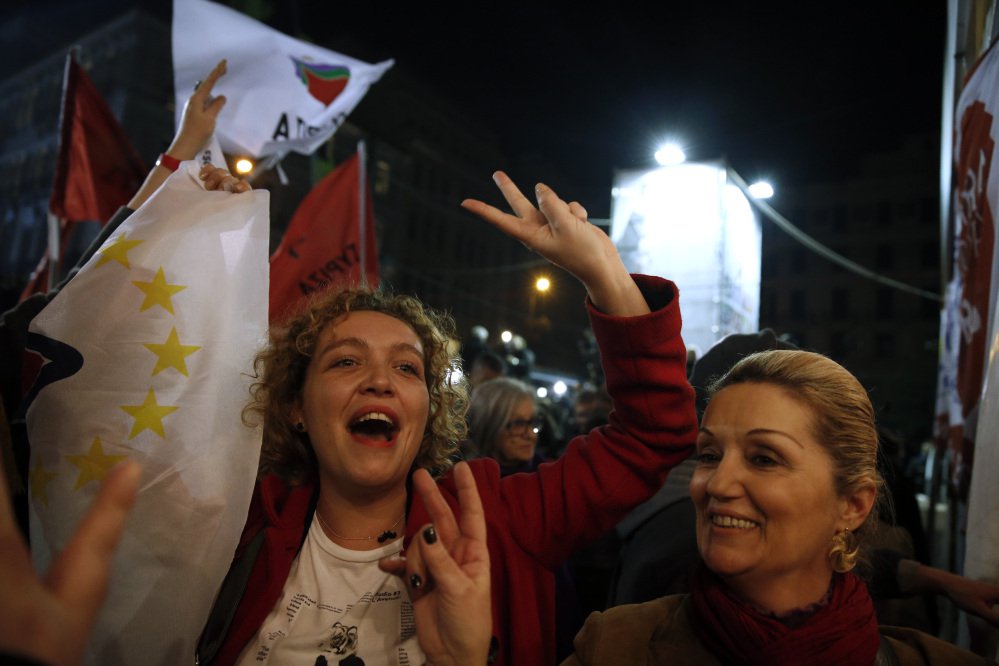
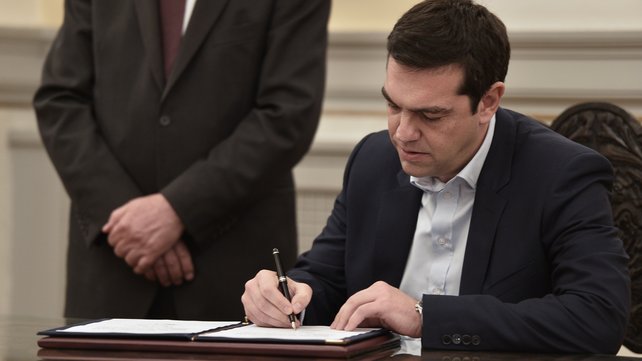
Greece’s Left-Wing Coalition Wins Majority
Last week in a historic election, the Greek people voted in the anti-austerity party of Syriza, led by Alexis Tsipiras winning a 149 seats of the 300 seat Parliament. In the previous 8 years, the Greek people have demonstrated massively, occupied government buildings and have gone on more than 30 general strikes. Now they’ve formed a party to take back power in government to effectuate a program that will call for cancellation of debt, nationalization of the banks, and expropriating closed factories. Will their attempt to alleviate much of the misery of the Greek population succeed? We’ll see.
Dan Georgakas:
- Austerity in Greece means 26 percent unemployment for at least 3 years, 60 percent unemployment for people under 30 which has caused 200 thousand college graduates to leave the country in the last 2 years.
- Greece had the lowest pensions in the EU.
- Wages which were the lowest in Europe were cut about a third.
- Prices in Greece are about the same in the EU elsewhere.
- 300 thousand businesses failed as of 2013.
- What austerity does, having taken away people’s money is raise the property tax and raise the gas and electric taxes.
- It’s a pretty desperate situation, food lines, there’s been a mass movement from the bottom.
- There are a lot of small left wing parties in Greece.
- What Syriza did was put together a coalition of left parties. That was very difficult to do because within the coalition there are Trotskyists, there are Euro-communists, environmentalists, anarcho-syndicalists and so getting to all those people into one room and agreeing on a program is not a very easy thing to do.
- But Syriza itself isn’t there for a traditional party. It is a coalition of parties that probably will transform in time perhaps into a coherent party.
- I would say that if anything characterizes the profile of Syriza its very anti-Stalinist. It wants to go from the base up and talks a lot about horizontalism.
- It’s quite a weak economy and say it will take decades to repair.
- In the minds of the leadership is capitalism and prosperity are incompatible.
- The steps they want to take are very modest, beginning with changing some of the cuts they made in the past, and beginning to deal with the corruption and tremendous waste of money.
- Same day he was inaugurated, he (Alexis Tsipras) went to Kaisariani where 300 Greeks were massacred by the Nazis as they were departing Athens. Most of the people massacred were communists or resistance fighters. Going there after being sworn as prime minister and laying a rose on the graves, he really served notice on the Germans that the days of us kowtowing and being bullied by you are really over and don’t you dare call us pigs anymore.
- People who contact me say that people are euphoric in Athens.
- We realize that the loans to Greece are really self serving. For instance, Goldman Sachs, arranged for Greece to enter the Eurozone in the first place by totally fraudulent cash arrangement.
- They loaned Greece money at a special rate so Greece could pay off its debt to look like it was solvent and then issued new bonds at even higher rates.
- pressproject.gr
Guest – Dan Georgakas, regular columnist for the National Herald, the leading Greek American weekly newspapero co-author of Detroit: I Do Mind Dying and coeditor of Solidarity Forever: An Oral History of the IWW. He was a frequent contributor to now defunct Journal of the Hellenic Diaspora and the Journal of Modern Hellenism. Dan has taught at NYU, CUNY, Van Arsdale Labor College, Columbia University and University of Oklahoma.
—————————————————————-
Please help support Law and Disorder by clicking on Fractured Atlas graphic. This radio show is now a sponsored project of Fractured Atlas, a non-profit arts service organization. Contributions for the charitable purposes of Law and Disorder must be made payable to Fractured Atlas only and are tax-deductible to the extent permitted by law. You can donate as little as 5.00 a month.