Welcome to Law and Disorder Radio
Law and Disorder is a weekly independent civil liberties radio program airing on more than 150 stations and on Apple podcast. Law and Disorder provides timely legal perspectives on issues concerning civil liberties, privacy, right to dissent and practices of torture exercised by the US government and private corporations.
Law and Disorder November 17, 2014
Podcast: Play in new window | Download
Updates:
- Michael Ratner: U.S. President Barack Obama To Seek Additional War Powers From Congress
——
ICC Says Gaza Still Occupied, Israel May Have Committed War Crimes, But Court Refuses To Hear
Attorney Michael Ratner:
- When I’m in Berlin I see there’s a ICC decision by the prosecutor.
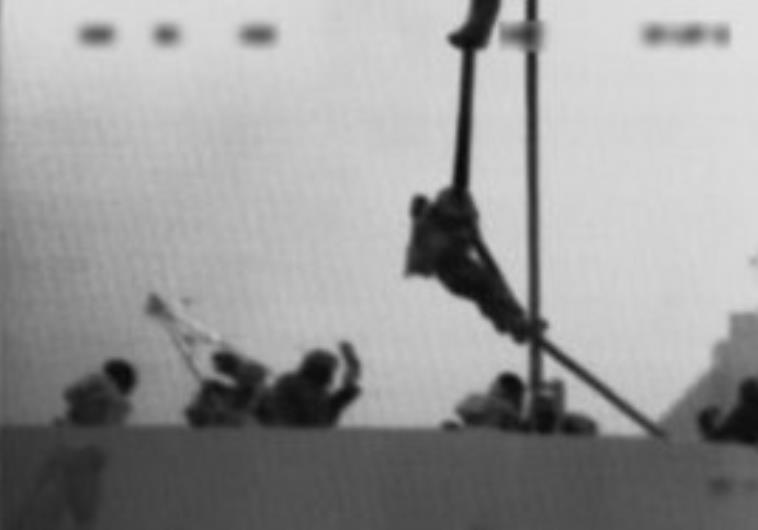
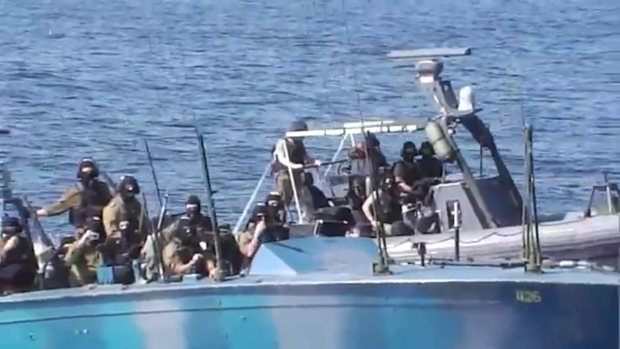
- People probably remember the attack on the Gaza flotilla, particularly the Mavi Marmara. One of 8 boats that were sent from Europe and other places, Turkey, to try and break the blockade that Israel had imposed on Gaza.
- Israel has been blockading Gaza forever essentially but it put in a very serious naval blockade in 2009 and no boats from the Mediterranean could approach within 20 miles of what Israel called its blockade.
- The Gaza Flotilla was established in 2010 to try and break the blockade it had 8 ships, one was named the Rachel Corrie.
- They were at least 80 miles away from Gaza, hadn’t even got into the blockaded territory when the Israeli commandos, the IDF made a raid on those boats.
- Particularly on the Mavimarmara which was a Turkish boat – the fact that the boat was registered in Comoros gave the ICC jurisdiction over the raid.
- People may recall the raid. Israeli commandos shimmied down on ropes from helicopters on to the Mavimarmara and they killed 9 people. A tenth died later.
- Ultimately, Comoros made a complaint to the ICC that – Israel attacked this flotilla even outside the 20 mile blockade zone, they committed war crimes. War crimes in that they were attacking civilian boats. War crimes in that they were killing civilians.
- Here I am sitting in Berlin thinking about the 76 anniversary of Kristallnacht, the tearing down of that wall, Raji Sourani from Gaza not being able to get in, and this ICC decision comes down.
- The ICC prosecutor says there’s a reasonable basis that war crimes were committed by the IDF in their attack on the Gaza Flotilla.
- The next sentence said as part of that finding Gaza was an occupied territory of Israel. That’s of great significance because when you’re an occupying force the laws of war apply. If you commit war crimes, if you kill people – civilians or intentionally targeting them or attack civilian objects.
- The third sentence is while we find that there was a reasonable basis that the IDF committed war crimes and that Israel continues to occupy Gaza despite its claim in 2005 that it left Gaza we are not going to take jurisdiction and further investigate the case, because the crimes were not essentially severe enough, big enough, enough of them . . . and therefore we’re not going to take this case.
- To look at them in an isolated way and not part of a stream of war crimes Israel has been committing since 1948 is outrageous.
- The Situation on Registered Vessels of the Union of the Comoros, the Hellenic Republic and the Kingdom of Cambodia
Law and Disorder Co-host Attorney Michael Ratner, President Emeritus of the Center for Constitutional Rights (CCR), a non-profit human rights litigation organization based in New York City and president of the European Center for Constitutional and Human Rights (ECCHR) based in Berlin. Ratner and CCR are currently the attorneys in the United States for publishers Julian Assange and Wikileaks. He was co-counsel in representing the Guantanamo Bay detainees in the United States Supreme Court, where, in June 2004, the court decided his clients have the right to test the legality of their detentions in court. Ratner is also a past president of the National Lawyers Guild and the author of numerous books and articles, including the books Who Killed Che? How the CIA Got Away With Murder, The Trial of Donald Rumsfeld: A Prosecution by Book, Against War with Iraq and Guantanamo: What the World Should Know, as well as a textbook on international human rights.
———
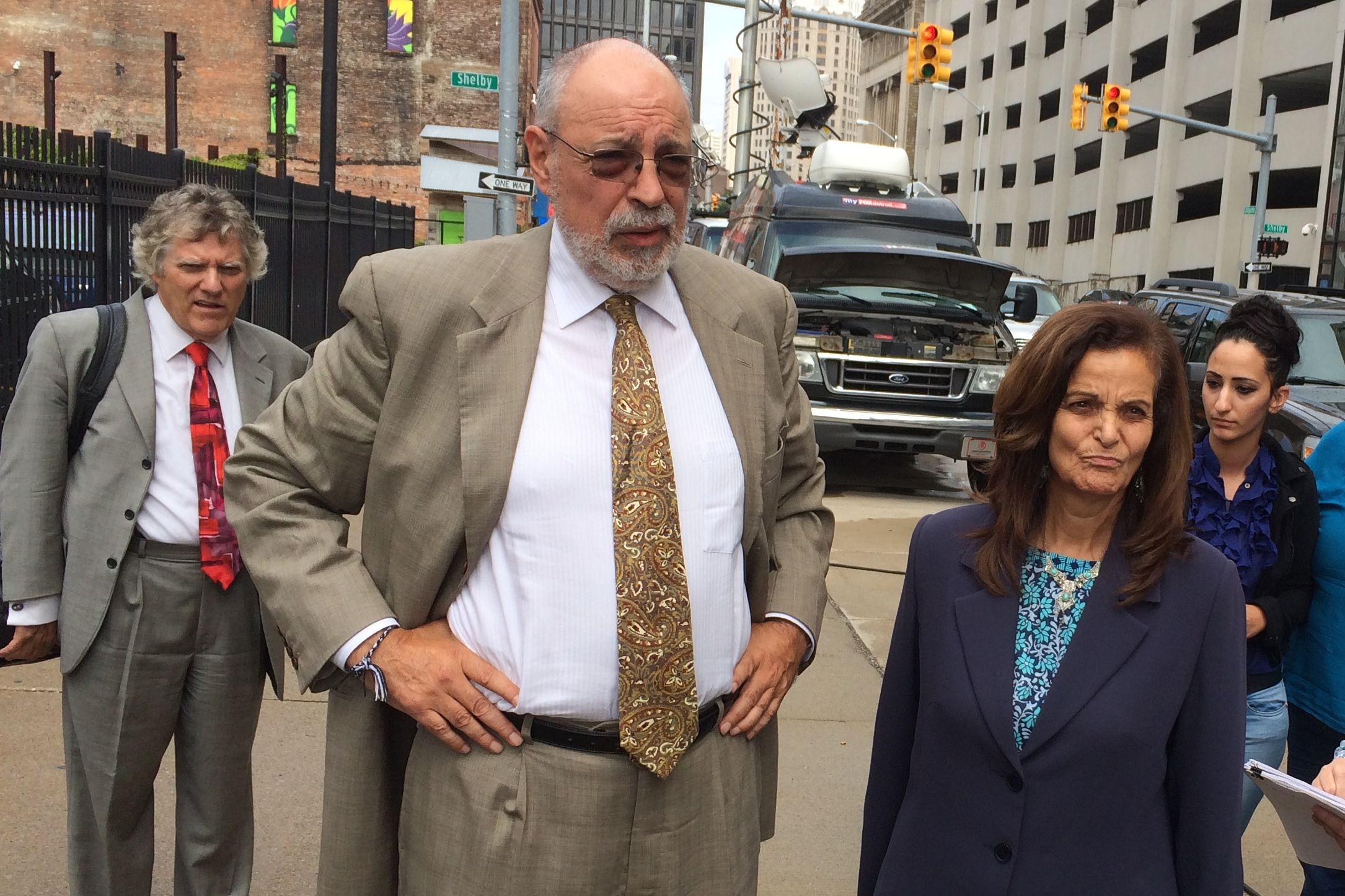
U.S. Government Finds 67-year-old Palestinian-American Rasmea Odeh Guilty
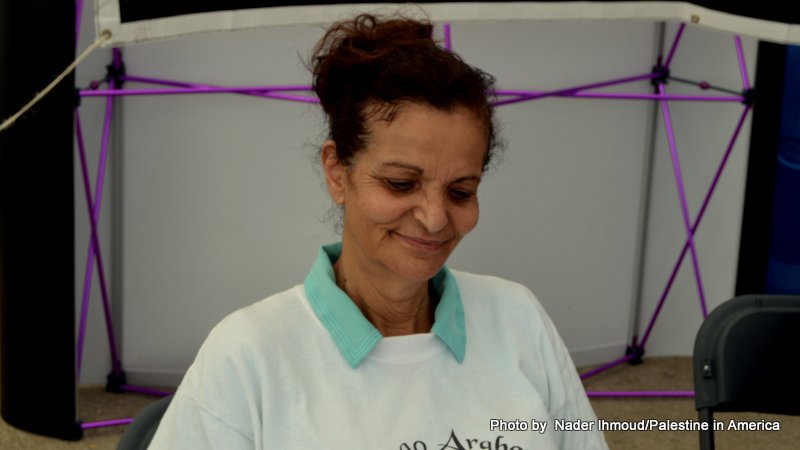
Earlier this summer we reported on Rasmea Odeh’s case. She’s a 67 year-old Palestinian American, community activist and teacher. In the fall of 2013, she was arrested by Department of Homeland Security for failing to disclose a 1969 conviction in an Israeli military court and charged with unlawful procurement of naturalization. Odeh, her father and fiancee were brutally tortured in an Israeli prison in 1969, which was related to a bombing in a Jerusalem supermarket. Israelis extracted a confession from Odeh and she spent 10 years in an Israeli prison where she was tortured and sexually assaulted.
Last week, Rasmea Odeh was found guilty of one count of Unlawful Procurement of Naturalization. For over a year, Rasmea, her supporters, and her legal team have been battling this unjust government prosecution, saying from the start that the immigration charge was nothing but a pretext to attack this icon of the Palestine liberation movement. And although there is real anger and disappointment in the jury’s verdict, it was known as early as October 27th that she would not get a full and fair trial, because Judge Gershwin Drain made it nearly impossible for her defense.
- This case emanates from the FBI and the US Attorney in Chicago investigating the work of the Arab American Action Network and other people who were doing Palestine solidarity work in the Chicago area and throughout the Midwest.
- They were bringing speakers here from Palestine to educate people
- As a result of that work they were targeted by the FBI. Ultimately in September of 2010, the homes 7 activists were invaded. All their political material was taken. There was a Grand Jury that convened and 23 activists were subpoenaed and they also sought the records of the Arab American Action Network.
- The U.S. Attorney of Chicago sent a request to Washington to look into the records of Odeh in Israel.
- After several years, the Israelis came up with documents that showed she was arrested in 1969, put on trial by a military tribunal in the Occupied Territories.
- . . found guilty, horrifically tortured, confessed as did her co-defendants, sentenced to life in prison, put in an Israeli prison, tried to escape in 1975, caught in a tunnel, trying to get out.
- As a result of this they looked at her Naturalization application and saw that she said no as to whether she had ever been arrested, convicted or in prison and the commenced a criminal investigation and indicted her 9 years after she had gotten her citizenship. Months before a statute of limitations would have run on this charge.
- We put forward a multi-level defense. One, we said that anything that was produced by the military court, the military judicial system was illegitimate, illegal – you’re tried by soldiers posing as judges. We said that she had been horrifically tortured and we had someone evaluate her over many days and hours, this woman who is one of the leading experts on torture said she (Rasmea) still suffers from PTSD.
- That would have caused her when she filled out the application to cognitively block what had happened to her 40 years prior in Israel and therefore she wasn’t intentionally lying.
- The judge refused all our motions, all our defense. He wouldn’t let her (Rasmea) testify about her torture, about her condition, or her innocence. All that was blocked by motions of the government.
- We went to trial basically with our hands tied behind our backs.
- What was a shock to me was the judge locked her up, pending sentencing. Now she sits in a county jail in Port Huron, Michigan for five months before the sentencing and obviously if the judge is not going to give her bail pending sentencing, he’s not going to give her bail pending appeal.
- Judge Gershwin Drain who is African American who at first was kind of sympathetic and supportive and initially said we were allowed to put on our PTSD expert and put on a PTSD defense. Then all of a sudden the government put a move to reconsider, he changed his mind and basically gutted our trial.
- We know of efforts all over the country to suppress student activity (around issues of Israel – Palestine)
- We have to convince the judge to let her out on an appeal bond. Even after all that if she’s sentenced, she’s going to go to prison and then when she’s done with her prison sentence, they’re going to put in her into immigration prison and they’re going to deport her.
Guest – Attorney Michael Deutsch, after clerking for United States Court of Appeals Judge Otto Kerner, Mr. Deutsch went into private practice, joining People’s Law Office in 1970 where he has represented political activists and victims of police and government civil rights violations. His advocacy has taken him all around the world, including to hearings in the United Nations. He has tried many civil and criminal cases in federal and state courts, and has written and argued numerous appeals, including several in the United States Supreme Court.
—–

Food Chains Documentary Film Opens Nationwide This Week
The documentary film Food Chains opens nationwide in the United States this month. The film brings you into the world of a Florida farmworker led effort to hold responsible the 4 trillion dollar global supermarket industry. The CIW is doing so through the Fair Food program. That’s the program which partners growers and retailers to improve working conditions for farm laborers in the United States. For years, farmworkers often endure abuse, wage theft, and have been beaten and sexually harassed. Food Chains’ producers include Eva Longoria and Eric Schlosser. Find out about screenings and action to take at www.ciw-online.org
Saturday November 22 – 1:00pm: Screening of Food Chains & Post-film Panel CIW-Quad Cinema (34 W 13th St) Food Chains also playing on Sat. Nov 22 at 7:45pm
Protest & March to Wendy’s Meet at Union Square Wendy’s (20 E. 14th St) Facebook
Guest – Gerardo Reyes Chavez, has worked in the fields since age 11, first as a farmer in Zacatecas, Mexico, and then in the fields of Florida picking oranges, tomatoes, and watermelons. He joined the Coalition of Immokalee Workers, a Florida-based human rights organization, shortly after his arrival in the United States in 2000, when his fellow farm worker roommates, who had previously escaped a violent slavery operation hidden in the swamp south of Immokalee, Florida, invited him to come to the CIW’s Wednesday evening community meetings.
——————————————————————————

Please help support Law and Disorder, the show is now a sponsored project of Fractured Atlas, a non-profit arts service organization. Contributions for the charitable purposes of Law and Disorder must be made payable to Fractured Atlas only and are tax-deductible to the extent permitted by law.
Law and Disorder November 10, 2014
Podcast: Play in new window | Download

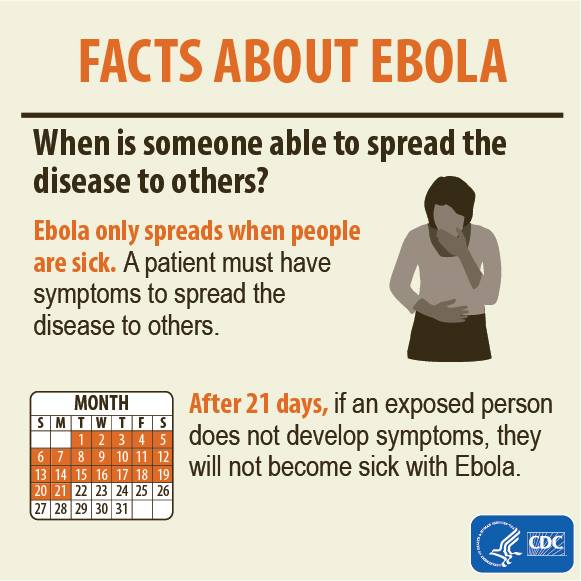
Civil Liberties Infringement In Wake Of Ebola Panic
The Ebola quarantine protocol in the United States is bringing issues of public health and individual constitutional rights to the front. The Center For Disease Control and Prevention has made clear that the Ebola virus doesn’t become contagious until symptoms appear. Even if symptoms are present, transmission of the disease requires contact with bodily fluids such as blood or vomit. Given this, if you are suspected of having the virus but don’t have any symptoms, can the state to issue a mandatory quarantine?
- What we’re seeing is the rush to policies driven instead of by legitimate public health concerns and Ebola is a legitimate serious public health concern, policy driven by fear.
- This is where civil liberties and good medicine go hand in hand.
- Good civil liberty policy is policy that respects individual liberty and does not curtail individual liberty unless there’s a real good reason to do so and there’s no way to protect society without doing so.
- We don’t object to quarantines under all circumstances.
- There are sometimes when the public health requires that society be protected from individuals who are infectious.
- If somebody is not infectious does not pose a danger to society by virtue of their physical condition well then, its unacceptable.
- If they show no signs of infection, that means they’re not contagious, they should not be quarantined, they should simply be monitored.
- Medical people don’t go and risk their lives to treat people who are facing horrific epidemic and then come to infect their friends.
- HIV was an epidemic in the United States, the response to Ebola is based on a tiny handful, a tragic handful to be sure, but a tiny handful of cases and is really way out of proportion and there’s this unspoken fear of related to coming from Africa – here, and it feels as there is a racial component, its just a feeling.
- What’s an appropriate health policy, driven by medicine not by fear?
- Some of the ACLU affiliates are pursuing FOIA requests to find out what policies are in place.
- We are pressing for the state of New York to relax its quarantine policies and make it a public health driven policy rather than a fear based policy.
Guest – Attorney Donna Lieberman, has been executive director of the New York Civil Liberties Union since December 2001. She has also served as the associate director (1988 – 1993) and founder/director of the NYCLU Reproductive Rights Project (1990 – 2000). Under Lieberman’s leadership the NYCLU has expanded the scope and depth of its work, supplementing and strengthening the pursuit of litigation with an aggressive legislative advocacy and a field organizing program that works on behalf of civil liberties and civil rights. As a result, the organization is widely recognized as the state’s leading voice for freedom, justice and equality, advocating for those whose rights and liberties have been denied, especially for those most marginalized by society.
——–
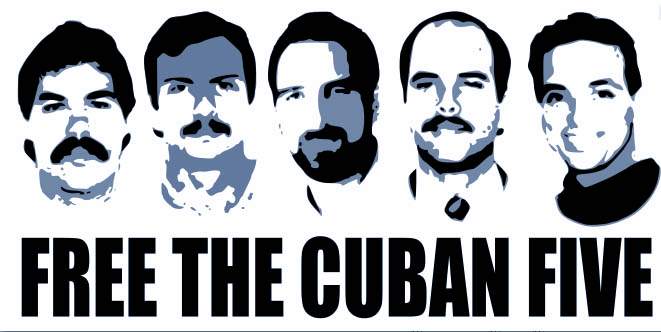
Cuba In The News, The Cuban Five and Exposing Journalists For Hire
Lately, Cuba and its relationship to the United States has been in the news. The New York Times alone had 4 editorials on Cuba. Several urged the reestablishment of diplomatic relations with Cuba which were severed more than 50 years ago. Another urged the prisoner exchange of the Cuban Five now 3, and Alan Gross, the American who has been in a Cuban prison for several years. Last year attorneys with the Partnership for the Civil Justice Fund filed a Freedom of Information Action lawsuit against the U.S. State Department for its refusal to produce responsive materials in its possession about secret payments by the U.S. government to Miami-based journalists who were “reporting” on the Cuban Five case before and during the trial and while the jury deliberated.
Attorney Mara Verheyden-Hilliard:
- The Cuban Five, are five Cuban men who came into the United States to basically learn what the terrorists in Miami were planning. Cuba is a country that has been subject to terrorist attacks for decade after decade.
- There have been bombings, planes shot down. A huge amount of death and destruction but it comes out of the United States from anti-Castro in Miami who are reeking terror on the people of Cuba.
- The U.S government has never taken action to stop these terror attacks that emanate from their shores. In fact the CIA has had been known to have at least some of these people on their payroll or working with them over the years.
- Ultimately, they (Cuban Five) uncovered information which was shared with the FBI, from the Cuban government to the FBI. What happened was the terrorists weren’t arrested, these men were arrested.
- They were charged with espionage offenses, put on trial and found guilty.
- The issue is . . they were tried in Miami, they were tried in this heated environment, tried in conditions that there was no way they could have gotten a fair trial. An issue that has been repeated over and over again in the years of appeals.
- What has been uncovered more recently is that the U.S. government had journalists on their payroll who were presenting themselves as independent journalists in Miami who filled the airwaves and newspapers with extremely hostile and inflammatory coverage of Cuba as well as the trial itself.
- There’s no way this couldn’t have had an impact, on the jury, on the jury pool, on the sitting jury.
- The U.S. government itself is prohibited by the Smith-Mundt Act of 1948 from funding activities to influence and propagandize public opinion.
- We live in a country where we’re free to be wire-tapped, spied on, to have the FBI infiltrating religious institutions and monitoring peaceful protests.
- Prisoner exchange: The fact is the Cuban Five were not attempting to undercut or destabilize the U.S. government. They were simply trying to get information about terrorist attacks emanating from the United States, hurting the people of their country. Alan Gross on the other hand was sent as part of a covert U.S. government operation into Cuba multiple times to material, satellites, phones, communication material, in an attempt to destabilize and over throw the Cuban government.
- We have fought for years with Freedom of Information Act demands and working in partnership with the National Committee to Free the Cuban Five and Gloria LaRiva who has led that organization. She is the key person in the National Committee to Free the Cuban Five that raised this issue, that spent a huge amount of time, going through records, going through the records, audio and visual of the different media, television and radio – and linking these together and doing research into these journalists and establishing what appeared to be this covert operation.
- Much of that material is up on a website called ReportersForHire.org
- Because the State Department was clearly holding material within a certain time period and had not searched their records at all for the material we demanded, we filed a lawsuit in Federal court, and that’s a lawsuit we’re still in the process of litigating.
- The issue of the blockade, which on its face, starving a population to try and force them to change their government is really criminal and a violation of international law.
- Standing on its own without the U.S. blockade, Cuba would thrive.
- Cuba is still there and has withstood and been strong through all of this.
- By lifting the blockade and allowing the U.S. to penetrate into Cuba with American capitalism would be another way of attempting to over throw the government of Cuba.
- A major major funding stream for these groups and these entities in Miami who are working against the people of Cuba and against the government of Cuba.
- US Army Col Lawrence Wilkerson Letter To Obama.
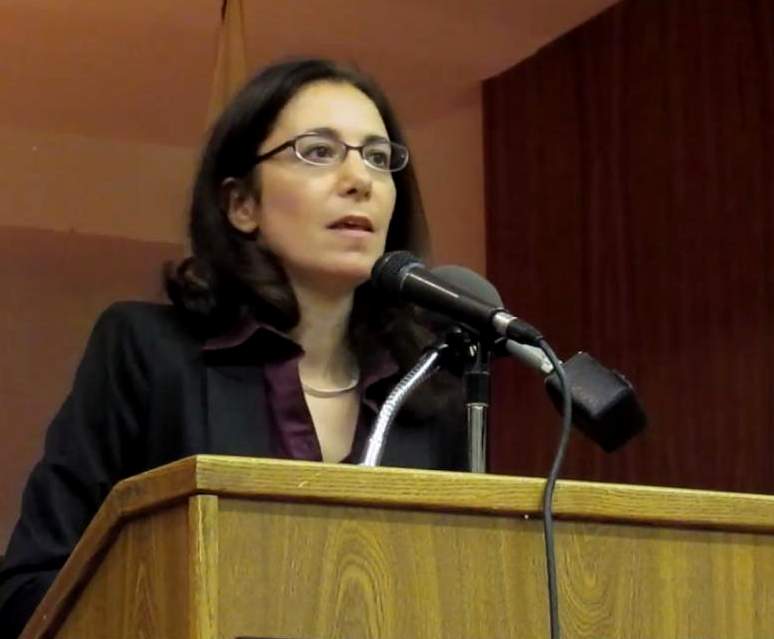
Guest – Mara Verheyden-Hilliard, co-chair of the Guild’s National Mass Defense Committee. co-founder of the Partnership for Civil Justice Fund in Washington, DC, she secured $13.7 million for about 700 of the 2000 IMF/World Bank protesters in Becker, et al. v. District of Columbia, et al., while also winning pledges from the District to improve police training about First Amendment issues. She won $8.25 million for approximately 400 class members in Barham, et al. v. Ramsey, et al. (alleging false arrest at the 2002 IMF/World Bank protests). She served as lead counsel in Mills, et al v. District of Columbia (obtaining a ruling that D.C.’s seizure and interrogation police checkpoint program was unconstitutional); in Bolger, et al. v. District of Columbia (involving targeting of political activists and false arrest by law enforcement based on political affiliation); and in National Council of Arab Americans, et al. v. City of New York, et al. (successfully challenging the city’s efforts to discriminatorily restrict mass assembly in Central Park’s Great Lawn stemming from the 2004 RNC protests.)
——

Locked Down, Locked Out: Why Prison Doesn’t Work and How We Can Do Better
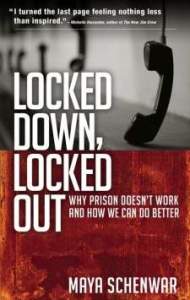
In this country there are 2.3 million Americans locked up in prison, and 95 percent of prisoners that are released emerge with very little opportunity to rebuild their lives. Our guest journalist Maya Schenwar has written about the social destruction of the prison industry and the community based initiatives to help former inmates in her book Locked Down, Locked Out: Why Prison Doesn’t Work and How We Can Do Better. Locked Down, Locked Out begins by examining the fundamental crisis of how prison breaks apart families and communities. These experiences relay the enormous damage caused by severing millions of people from family and community ties. In exploring alternatives to incarceration Maya suggests ways to provide resolution to victims while repairing communities of color.
- It started about ten years ago which was when my sister went to juvenile.
- I had been corresponding with someone on death row, and I had an inclination to write about this issue at the time was really on the margins of journalism.
- When my sister went to juvenile detention and I went to visit her I was immediately struck by the fact that this detention center was a jail.
- Fourteen year olds were being locked up.
- You’re taking people who have already been traumatized and putting them in the most isolating conditions, separating them from society in this way that can’t help create further trauma.
- Prison just doesn’t work. About 2/3 of people who are released from prison are re-arrested in 3 years.
- Instead of talking about the law, we’re going to be talking about the harm that was done to you. A very different thing.
- There needs to be a victim centric approach, something that takes the victim’s healing into consideration.
- Sometimes it gets lost in the conversation about mass incarceration that every single person occupying a prison is a human being and therefore has a constellation of connections with people on the outside when they go in.
- Prison becomes this process of breaking each of those links.
- When you’re communicating with a person in prison, you can’t call them they have to call you. You have no idea when they’ll be able to call you.
- Letters become the only reliable form of communication.
- It comes down to the community level, it comes down to erasing this idea we have that there is a one size fits all solution.
- So many of those problems stem from things we’re depriving people of in our society like housing, food, shelter. We have to think about providing those things as part of creating a society with less harm and less violence.
Guest – Maya Schenwar, is Truthout’s Editor-in-Chief. Her book, Locked Down, Locked Out: Why Prison Doesn’t Work and How We Can Do Better, Berrett-Koehler Publishers. Previously, she was a senior editor and reporter at Truthout, writing on US defense policy, the criminal justice system, campaign politics, and immigration reform. Prior to her work at Truthout, Maya was contributing editor at Punk Planet magazine.
—————————————————————————————
Please help support Law and Disorder, the show is now a sponsored project of Fractured Atlas, a non-profit arts service organization. Contributions for the charitable purposes of Law and Disorder must be made payable to Fractured Atlas only and are tax-deductible to the extent permitted by law.
Law and Disorder November 3, 2014
Podcast: Play in new window | Download
Updates
- Michael Ratner Reports On An Important Break In The Julian Assange Case
- Michael Ratner: Longest Case Of Pre-Trial Investigation In Swedish History In Which The Prosecutor Has Simply Sat On Her Hands.
- Michael Ratner: What Sweden Did Here Is Divert Attention From The Underlying Problem
- Michael Smith: United Nations And The Cuban Embargo Vote 2014
- Michael Ratner: Israeli Business Men Are All Over Cuba
——-
Blackwater Guards Found Guilty in 2007 Baghdad Killings
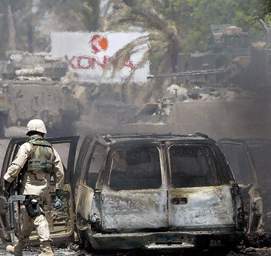
Since 2003, private military contractors have been awarded millions of dollars each year by the U.S. Government in contracts. Many of the military contractor personnel have engaged in atrocious war crimes with zero accountability. Last week a federal jury convicted 4 former Blackwater private security contractors on manslaughter charges and 1 for manslaughter and murder of 17 Iraqis in Baghdad on September 16, 2007. The men were prosecuted under the Military Extraterritorial Jurisdiction Act, a law that allows the U.S. courts to hear cases against contractors to the U.S. Department of Defense for crimes committed overseas. The men were originally hired as private security guards for U.S government employees. Lawyers for Blackwater, now known as Academi LLC argued that the men were simply returning fire to protect themselves.Several civil cases filed by victims injured in the shootings were settled in 2010.
- I think the verdict sends a very loud and large message to the globe that the American judicial system can operate properly.
- That American juries understand when they see war crimes, they understand when they hear about a massacre.
- We began working before the Abu-Ghraib photos were leaked. It began when Bob Woodward wrote a story for the Washington Post that revealed that the Bush Administration had decided to use torture as an instrument in the war.
- We viewed this outsourcing as a potential weak flank in a sense in order to use legal mechanisms, lawsuits in order to prevent this country from departing with its values.
- We were putting the evidence together before the photos leaked and suddenly we had a lot more evidence to sue the 2 government contractors L3 and CACI that were involved in the Abu-Ghraib torture.
- The Blackwater case fits into that rubrick where we brought several different law suits along with the Center for Constitutional Rights. We brought the seven law suits for the victims of the Nisour Square massacre as well as for many other victims.
- If you think about we’re going to the home turf of the wrong doers. The corporations are based in Virginia actually, and so we sued them in their home turf.
- There’s one (civil) case remaining that’s now being handled by Baher Azmy at CCR and they just got a win from the Fourth Circuit – again getting permission for the case to proceed.
- The vast majority of victims have settled with L3 paying 5.25 million.
- Blackwater is a mercenary company that basically earned over a billion dollars from the State Department.
- They were not at Abu Ghraib rather they were providing security for all of the diplomats and other Americans in Iraq.
- At the time they were owned by Erik Prince, operated without any oversight from the State Department and they were involved with a significant number of instances were unnecessary and excessive force was used.
- Erik Prince ended up entering into a settlement and all of those folks obtained compensation.
- Prince then sold the company, retained a revenue stream but the company became Academi.
- As a nation we continue to use these mercenaries and we continue to lack any regulation or oversight. Unfortunately, things didn’t change under the Obama Administration and under Secretary Clinton at the State Department
- What’s happened is there’s this terrible pattern where these companies have a lot of political influence and they continue to get enormous contracts and the State Department continues to outsource security without have a vibrant, or robust oversight function.
- Blackwater vehicles rolled into Nisour Square and they began to open fire with heavy automatic weaponry and they simply began to spray indiscriminatly. They began to shoot all over Nisour Square killing people nearby and injuring people as they fled. No provocation, no real reason they began shooting.
- One of the Blackwater men, a man named Jeremy Ridgeway actually stepped and told the truth early on, pled guilty and explained how this was in fact just indiscriminate shooting for no reason.
- In order to properly handle these matters I ended up creating my own firm.
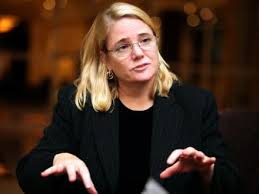
Guest – Attorney Susan Burke, represented plaintiffs in those civil cases and she joins us today to talk about criminal case, the sentence and the supporting evidence.
——
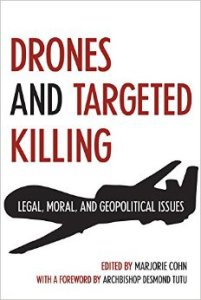
Drones and Targeted Killing: Legal, Moral and Geopolitical Issues
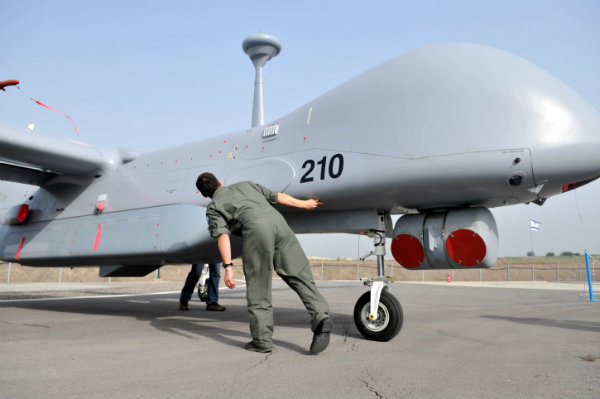
A powerful analysis on the use of drones for targeted assassination by the Obama Administration is explored in Professor Marjorie Cohn’s newly published book titled Drones and Targeted Killing: Legal, Moral, and Geopolitical Issues. It’s a collection of various disciplines including sociologists, legal scholars, and human rights activists that examine aspects of the U.S. policy of targeted killings with drones and other methods. The book documents civilian casualties, and discuses the first U.S. targeted killing lawsuit by the lawyer who brought the case.
- Drones have become the Obama Administration’s preferred weapon of choice.
- We rarely see images of the victims of drone strikes the overwhelming majority of whom are civilians.
- We don’t hear their stories because the media sanitizes their stories.
- We really don’t have a sense of the devastation that is reeked by drones.
- I thought it was important to put together a collection of different aspects of this drone policy. Is it legal? Is it moral? What are the political ramifications? Does it make us safer? Does it make us less safe?
- That Authorization for the Use of Military Force was very limited, it was only limited to groups and countries that supported the 911 attacks and Congress specifically rejected the Bush Administrations request for open ended military authority to deter and preempt any future acts of terrorism against the United States – and yet the Obama Administration has been relying on this as its legal authority.
- Targeted extrajudicial killings off the battle field are illegal.
- Richard Falk, the U.N. Special Rapporteur to the Palestinian Occupied Territories wrote a very and interesting and provocative chapter called Why Drones Are More Dangerous Than Nuclear Weapons.
- Medea Benjamin talked about stories of victims in Pakistan and Yemen and the tolls drones take on communities. The horror, the terror that children are sleeping with drones hovering overhead.
- Pardiss Kebriaei with the Center for Constitutional Rights that handled the first targeted killing case in the United States writes a chapter.
- Tom Hayden writes the conclusion about stopping the drones.
- Phyllis Bennis from the Institute of Policy Studies talks about the assassination as essential to the U.S. war strategy due to the militarization of our foreign policy.
- John Quigley from Ohio State University talks about the blowback from drones and how they actually make us less safe because when people see their families blown up, they resent the United States even more.
- He talks about the history of U.S. foreign policy and the resentment its caused in those countries against the United States.
- He (Barack Obama) has even expanded the use of drones in Iraq and Syria. He’s also using piloted aircraft. He’s also using the AUMF which does not apply at all.
- This ISIS and Khorasan, the current groups doing horrible things over there are not covered by the Authorization for the Use Of Military Force.
- He’s actually acting beyond what Congress has authorized to say nothing of it violating the U.N. charter.
- Only 4 percent of victims in Pakistan were members or even associated with Al-Qaeda which means the overwhelming number of 2400 who have been killed in Pakistan by drone strikes are civilians.
- The FAA Modernization and Reform Act of 2012 requires the FAA to integrate into U.S. airspace by September of 2015 to legalize commercial drones and some government agencies to use small drones. This is very very worrisome because of the privacy considerations primarily.
- There are two different drone strikes the U.S. carries out. One is called personality strikes, where they target suspected bad guys. They call them militants. That could mean anything.
- No due process, just take em out.
- The other type of attack is called signature strikes. That is a strike that is carried out in an area of suspicious activity. If you’re a male between the ages of 16-65 in a area of suspicious activity than you’re fair game, even though the Obama Administration doesn’t know your identity.
- First, there must be a legal basis for using lethal force, whether it is against a senior operational leader of a terrorist organization or the forces that organization is using or intends to use to conduct terrorist attacks.
- Second, the United States will use lethal force only against a target that poses a continuing, imminent threat to U.S. persons. It is simply not the case that all terrorists pose a continuing, imminent threat to U.S. persons; if a terrorist does not pose such a threat, the United States will not use lethal force.
- Third, the following criteria must be met before lethal action may be taken:
- Near certainty that the terrorist target is present;
- Near certainty that non-combatants will not be injured or killed;
- An assessment that capture is not feasible at the time of the operation;
- An assessment that the relevant governmental authorities in the country where action is contemplated cannot or will not effectively address the threat to U.S. persons; andAn assessment that no other reasonable alternatives exist to effectively address the threat to U.S. persons.
- Finally, whenever the United States uses force in foreign territories, international legal principles, including respect for sovereignty and the law of armed conflict, impose important constraints on the ability of the United States to act unilaterally – and on the way in which the United States can use force. The United States respects national sovereignty and international law.
Guest – Attorney Marjorie Cohn former president of the National Lawyers Guild. She lectures throughout the world on international human rights and U.S. foreign policy. A news consultant for CBS News and a legal analyst for Court TV, she also provides legal and political commentary on BBC, CNN, MSNBC, Fox News, NPR, Air America and Pacifica Radio. In addition, Professor Cohn is the author of Cowboy Republic: Six Ways the Bush Gang Has Defied the Law and co-author of Cameras in the Courtroom: Television and the Pursuit of Justice and Rules of Disengagement: The Politics and Honor of Military Dissent. Her latest book, The United States and Torture: Interrogation, Incarceration and Abuse, was published in January 2011 by NYU Press.
—————————————————————–