
Welcome to Law and Disorder Radio
Law and Disorder is a weekly independent civil liberties radio program airing on more than 150 stations and on Apple podcast. Law and Disorder provides timely legal perspectives on issues concerning civil liberties, privacy, right to dissent and practices of torture exercised by the US government and private corporations.
Law and Disorder October 13, 2014
Podcast: Play in new window | Download
Updates:
- Mumia Spurs Bill To Block Publicity-Seeking Criminals (Son of Sam Law)
- Guantanamo Bay Prisoner Files Historic Lawsuit Against Obama Over Force-Feeding
——
Lawyers You’ll Like – Charlie Abourezk
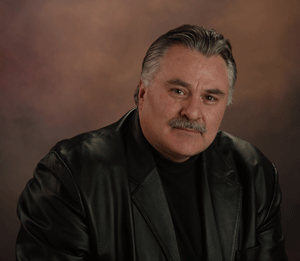
As part of our Lawyers You’ll Like series, we talk with attorney Charles Abourezk about his work with the Native American community in South Dakota. Charles is a trial attorney, author and film maker. His documentary A Tattoo On My Heart: The Warriors of Wounded Knee 1973 is a gripping documentation of those American Indian men and women involved in the siege. Charles is the Chief Justice of the Rosebud Sioux Tribe Supreme Court, he’s also member of South Dakota Advisory Committee to U.S. Commission on Civil Rights. He’s the son of James George Abourezk, former Democratic United States Representative and United States Senator where he was generally viewed as critical of US foreign policy in Israel and Palestinian.
- The Rosebud Sioux Tribe is the second largest tribe in South Dakota. There are nine total tribal governments in the state. It’s where I grew up.
- I spent most of my adult life on the Pine Ridge Reservation which has been the poorest county in the United States.
- I went to law school, long after I worked for a number of Indian organizations including a Native American NGO that worked at the UN in Category 2 status.
- The Pine Ridge Reservation is the second largest reservation in the United States, located in south western South Dakota. It’s a huge land mass, takes about an hour and a half to drive diagonally across the reservation. There’s very little economy. The geography is very poor, it lends itself to cattle grazing but not much in terms of raising crops.
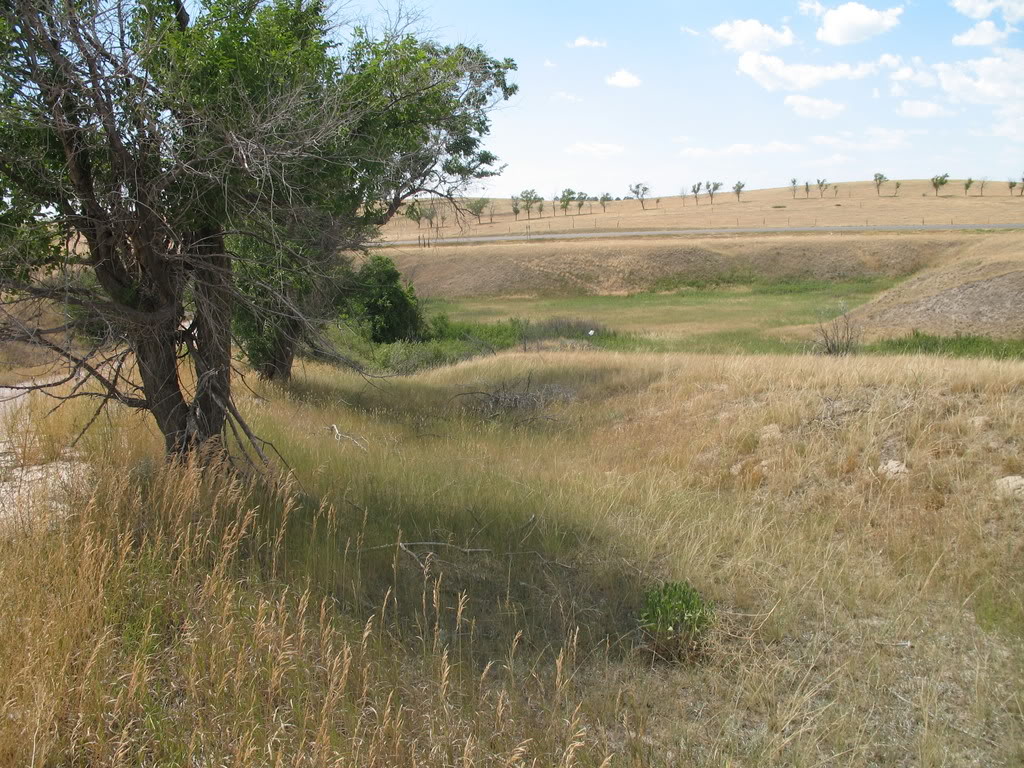
- Wounded Knee was the site of the 1890 massacre in which almost 300 American Indians from several different tribes were killed by the U.S. Army. They were surrounded and essentially murdered on that spot.
- So, in 1973, there had been a lot of racial discrimination and racially motivated killings of Indian people, the American Indian Movement returned and joined forces with the traditional people who had long been neglected on the reservation.
- As a result they decided to engage in a protest. They chose the site of the massacre at Wounded Knee, to stage that protest.
- They set up sort of a line there, with the government and US Marshalls, along with Dick Wilson’s followers who were armed and were called the goon squad and formed the other side of that line. The siege lasted 71 days.
- It finally dismantled and number of people were prosecuted as a result of that.
- At Wounded Knee, two Indian people killed and one Marshall wounded.
- We set up a recording studio right at the Wounded Knee school, and just took people’s stories. I did the interviews, they were really powerful. There were some stories that didn’t fit with the arc of the film but were incredible. I’m glad I documented it then, because I think of the people in the documentary, 7 or 8 have now passed away.
- I continue to be a strong advocate for tribal sovereignty, self determination and the rights of individuals especially within the dynamic of racial discrimination which at times in South Dakota have been as bad as the south is toward African Americans.
- I helped affirm and preserve the boundaries of the Yankton Sioux Reservation, that went up to the Supreme Court twice. I was the lead council when it finally concluded, we were able to win that one.
- I was a former Supreme Court Justice on the Pine Ridge Reservation for their Supreme Court and I retired from that position.
- Except for limited jurisdiction the Federal Government had on criminal matters, the civil jurisdiction for incidents which occur within the reservation lie with the tribal court as do criminal misdemeanors for tribal members and non tribal members meaning Indians from other tribes that happen to be living on the reservation.
- In the Native American view you can’t really have winners and losers, you have to try to restore the harmony or the balance within the tribe.
- The American government adopted the British style of colonialism as did the Israelis when they began to colonize parts of Palestine. It kind of goes in 4 steps.
- A disruption of traditional agriculture and food gathering, which out here was done in two ways, killing off the buffalo and secondly constraining them from moving around in a wide arc for hunting and gathering – by putting them on the reservation they stopped that.
- Transfer commonly owned land into private ownership, to turn land into a commodity that can be bought and sold. They did that through what’s called the Daws Act or the Allotment Act in the late 1800s.
- Theodore Roosevelt called that act a “might pulverizing machine” with which to break up the tribal mass.
- The third step was to develop a native ruling elite. In this case they first developed “paper chiefs” then in the 1930s developed modern tribal government.
- Last step, develop an educated elite. Of course any colonizer anywhere, that’s the step that always back fires.
- The American Indian Movement was born from the children of the parents who were relocated into cities trained as workers.
- They were the ones who came back home and joined forces with the traditional people and stood up against racism and in favor of tribal sovereignty and tribal self determination.
- You see many parallels with that and what’s happening to the Palestinians in the West Bank and Gaza. Dr William Julius Wilson
Guest – Charlie Abourezk, from Rapid City, South Dakota and is a trial attorney, longtime activist and community organizer in the native American community in South Dakota. He is also a documentary film maker, his most recent is the feature length documentary “A Tattoo On My Heart: The Warriors of Wounded Knee 1973” which played on public television stations around the United States. He is the current Chief Justice of the Rosebud Sioux Tribe’s Supreme Court and a member of the South Dakota Advisory Committee to the US Commission on Civil Rights. His client base is made up largely of Native Americans, tribal schools and Indian tribal governments, but he also represents plaintiffs in civil rights litigation. He will have a book coming out this next year entitled “A Mighty Pulverizing Machine: The Continuing Colonization of American Indians.”
——-
From Guantanamo to Wikileaks: Taking on the State In a Post 9/11 World.
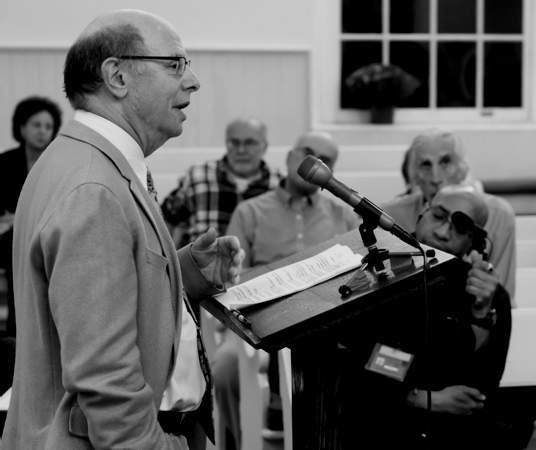
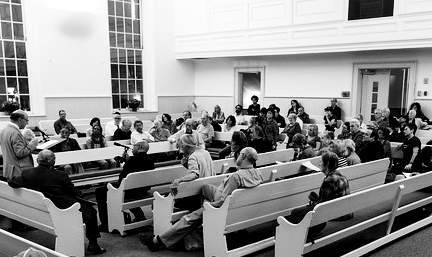
Our own Michael Ratner, President Emeritus, Center for Constitutional Rights (CCR), past president, National Lawyers Guild; Chair, European Center for Constitutional and Human Rights delivered a talk last week titled ‘From Guantanamo to Wikileaks: Taking on the State In a Post 9/11 World.’ Michael was honored with a PathMaker to Peace Award by the Brooklyn For Peace Organization for his consistent work in litigation against government spying and surveillance of activists including the targeting of Muslims particularly after 9/11.
Law and Disorder Co-host Attorney Michael Ratner, President Emeritus of the Center for Constitutional Rights (CCR), a non-profit human rights litigation organization based in New York City and president of the European Center for Constitutional and Human Rights (ECCHR) based in Berlin. Ratner and CCR are currently the attorneys in the United States for publishers Julian Assange and Wikileaks. He was co-counsel in representing the Guantanamo Bay detainees in the United States Supreme Court, where, in June 2004, the court decided his clients have the right to test the legality of their detentions in court. Ratner is also a past president of the National Lawyers Guild and the author of numerous books and articles, including the books Who Killed Che? How the CIA Got Away With Murder, The Trial of Donald Rumsfeld: A Prosecution by Book, Against War with Iraq and Guantanamo: What the World Should Know, as well as a textbook on international human rights.
———————————————————————————-

Please help support Law and Disorder, the show is now a sponsored project of Fractured Atlas, a non-profit arts service organization. Contributions for the charitable purposes of Law and Disorder must be made payable to Fractured Atlas only and are tax-deductible to the extent permitted by law.
Law and Disorder October 6, 2014
Podcast: Play in new window | Download
Updates:
- Michael Ratner: Moazzam Begg Freed After Terrorism Charges Dropped
- Michael Ratner: 149 Inmates In Guantanamo Bay Prison – 79 Approved For Transfer
——-
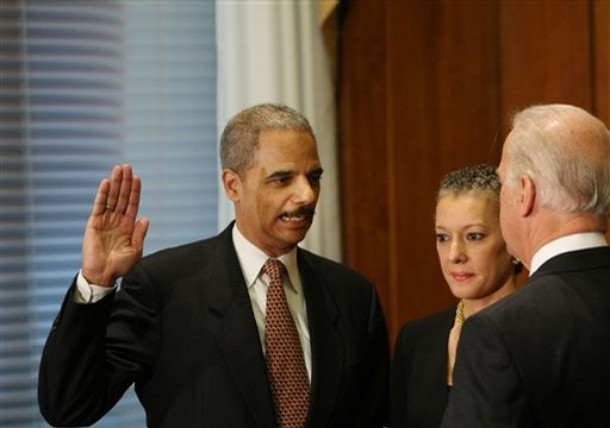

U.S. Attorney General Eric Holder Evaluation
Michael Ratner and Heidi Boghosian draw a balance sheet on the record of U.S. Attorney General Eric Holder.
- Holder approved drone killing of American citizen al-Awlaki without due process.
- Holder failed to prosecute any of the Bush Administration officials who were openly admitted torturers.
- Holder abrogated the responsibility in holding corporate criminals accountable. Wall Street.
- Holder settled with HSBC for 2 billion, the bank was caught laundering money for drug cartels yet no prosecution.
- With-Holder prosecuted whistleblowers, Chelsea Manning, Julian Assange, Edward Snowden, James Risen, Jeremy Hammond, Fox News Reporter,
Law and Disorder Co-host Attorney Heidi Boghosian, executive director of the A.J. Muste Memorial Institute, a nonprofit charitable foundation providing support to the nonviolent movement for social change. Before that she was executive director of the National Lawyers Guild. She is author of the book “Spying on Democracy: Government Surveillance, Corporate Power, and Public Resistance” (City Lights, 2013) as well as several reports on policing and the First Amendment.
Law and Disorder Co-host Attorney Michael Ratner, President Emeritus of the Center for Constitutional Rights (CCR), a non-profit human rights litigation organization based in New York City and president of the European Center for Constitutional and Human Rights (ECCHR) based in Berlin. Ratner and CCR are currently the attorneys in the United States for publishers Julian Assange and Wikileaks. He was co-counsel in representing the Guantanamo Bay detainees in the United States Supreme Court, where, in June 2004, the court decided his clients have the right to test the legality of their detentions in court. Ratner is also a past president of the National Lawyers Guild and the author of numerous books and articles, including the books Who Killed Che? How the CIA Got Away With Murder, The Trial of Donald Rumsfeld: A Prosecution by Book, Against War with Iraq and Guantanamo: What the World Should Know, as well as a textbook on international human rights.
——-
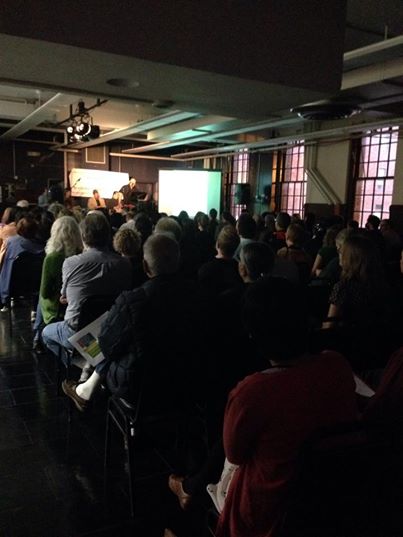
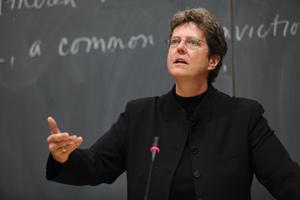
Academic Freedom & Political Dissent: A Conversation with Katherine Franke and the Community
We continue to report on Professor Steven Salaita’s case and the concerns regarding established principles of academic freedom. We hear a presentation by Katherine Franke, Professor of Law at Columbia University. Listeners may recall that Professor Salaita was unhired from the American Indian Studies program at the University of Illinois at Urbana-Champaign because of his statements on social media criticizing Israel’s conduct of military operations in Gaza. We reported last month on Law and Disorder that scholars from law schools around the country came out with a letter condemning the decision of the University of Illinois to unhire Professor Salaita. Katherine Franke discussed Salaita’s case at the University of Illinois at Urbana-Champaign late last month.
Speaker – Katherine Franke, Isidor and Seville Sulzbacher Professor of Law; Director, Center for Gender and Sexuality Law at Columbia University. She was awarded a 2011 Guggenheim Fellowship, and is among the nation’s leading scholars in the area of feminism, sexuality and race. In addition to her scholarly writing on sexual harassment, gender equality, sexual rights, and racial history, she writes regularly for a more popular audience in the Gender and Sexuality Law Blog. Franke is also on the Executive Committee for Columbia’s Institute for Research on Women and Gender, and the Center for Palestine Studies and teaches at a medium security women’s prison in Manhattan. Her legal career began as a civil rights lawyer, first specializing in HIV discrimination cases and then race and sex cases more generally. In the last 25 years she has authored briefs in cases addressing HIV discrimination, forced sterilization, same-sex sexual harassment, gender stereotyping, and transgender discrimination in the Supreme Court and other lower courts.
—————————————————————-
Please help support Law and Disorder, the show is now a sponsored project of Fractured Atlas, a non-profit arts service organization. Contributions for the charitable purposes of Law and Disorder must be made payable to Fractured Atlas only and are tax-deductible to the extent permitted by law.
Law and Disorder September 29, 2014
Podcast: Play in new window | Download
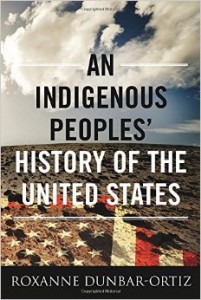
An Indigenous Peoples’ History of the United States
In the United States today, there are more than 500 federally recognized indigenous communities and nations comprising nearly three million people. These are the descendants of the 15 million people who once inhabited this land and are the subject of the latest book by Roxanne Dunbar-Ortiz. In An Indigenous Peoples’ History of the United States, Dunbar-Ortiz challenges the founding myth of the United States and shows how policy against the indigenous peoples was genocidal and imperialist—designed to crush the original inhabitants. Spanning more than 300 years, this classic bottom-up history significantly reframes how we view our past. Told from the viewpoint of the indigenous, it reveals how Native Americans, for centuries, actively resisted expansion of the U.S. empire.
- It’s absolutely necessary to know this history of settler colonialism and how it effects consciousness today of U.S. people and in the world because everyone is convinced of this myth of the United States and somehow its always going off the path of this destiny that has never been true in the first place.
- It’s like a fairy tale except its extremely deadly and dangerous.
- Other countries have romantic myths as their form of nationalism but they don’t control the world with this ideology.
- The myth is that it was a birth of settler democracy but we know from apartheid South Africa, we know from colonialism, particularly settler colonialism such as Israel.
- There are so many parallels with Israel because the Puritans and this became embedded in all settlers, had this idea of the new Jerusalem of Zion. They used that terminology.
- That God had given them this land to settle, it wasn’t just a right it was a responsibility to destiny, to the world.
- This made the native farmer and fisherman, ordinary people like other people in the world into savages and monsters, sort of like the Israelis to do the Palestinians today.
- Throughout the book I have a theme of the militarism and the counterinsurgency that attacks civilians and a food fight they call it, burns the food, supplies, the crops, burns the houses of the people in their towns, creates refugees. This then becomes the pattern.
- Every generation there is this Indian war. Vietnam looked like an Indian war, even the language they use – indian country for enemy territory, all of the weapons they name after native people.
- This is not how we think of the United States, supposedly a civilian country, the military is always under control of civilians but that civilian president is commander and chief of the armed forces.
- There’s also a theory, the Bering Strait the one entrance to the whole continent, which is absurd because all of the people on the coast were great seafaring people.
- A part of European imperialism say as the beginning of everything that it connected people up. Actually what it did was separate people each other and their tradition.
- My specialization is the southwest and central Mexico, Central America. I knew there were complex trade routes and roads all over the place, irrigation canals, how they developed agriculture.
- The first chapter, Follow the Corn, I did just that. I followed out of Mexico, the dispersion of corn agriculture all the way to Tierra Del Fuego to the sub Arctic and coast to coast.
- What you find in the Americas is when they get to the point of abusing the environment and become dictatorial, there tends to be revolts to overthrow, that was happening when Cortez came to Mexico.
- The Quetzalcoatl cult that took over the Aztec government became abusive and was doing slave raiding. Had done a wonderful job of dispersing trade routes. Cortez simply allied with the rebels and overthrew the central government.
- Course they couldn’t know his intentions of simply wiping out their civilization.
- When British colonialism came to North America with these peculiar characteristics of the puritan ideology settling in. With 2 centuries of settler colonialism they developed this idea of ownership.
- It went from owning human beings to the idea of owning the land.
- George Washington was a surveyor and you have to ask why was such a super wealthy – a lowly surveyor?
- Surveyors got to choose the best land, and got to mark it up. They had already developed this idea of a Platte, creating territories that would then become states once they had a majority settler population.
- That’s why it took so long for Oklahoma, Oklahoma was the 47th state, New Mexico, Arizona, these places that had a majority native population.
- It was rough being native in the United States, it still is. I grew up in Canadian county Oklahoma, my dad sharecropped, and was a tenant farmer throughout that area until the depression wiped it out.
- The people went to California as refugees.
- I’m cautious about the identity because native nationalism Cherokee or Onondaga or Shawnee or Creek Muskogee
- There was an instance in 1917, I think its one of the most important moments in US history and hardly anyone knows about it. Jack Womack and I had written about it Monthly Review, it was called the Green Corn Rebellion.
- That is the main demand, land base, nationhood, the ability to prosper and exist as people, not just as individuals being assimilated out, that’s another form of genocide.
Guest – Roxanne Dunbar-Ortiz, grew up in rural Oklahoma, the daughter of a farmer and half-Indian mother. She has been active in the American Indian Movement for more than four decades and is known for her lifelong commitment to national and international social justice issues. After receiving her PhD in history at the University of California at Los Angeles, she taught in the newly established Native American Studies Program at California State University and helped found the departments of Ethnic Studies and Women’s Studies. Her 1977 book The Great Sioux Nation was the fundamental document at the first international conference on Indians in the Americas, held at the United Nations’ headquarters in Geneva. She is the author or editor of seven books.
———
Academic Freedom Case: Professor Steven Salaita
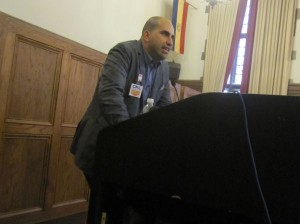
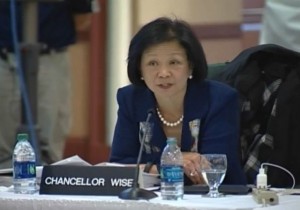
Last Thursday the University of Illinois at Urbana-Champaign Board of Trustees rejected Professor Steven Salaita’s candidacy for a tenured faculty appointment to the American Indian studies program. Initially we reported here on Law and Disorder that Professor Salaita was essentially dehired from the American Indian Studies program at the University of Illinois at Urbana-Champaign because of his statements on social media criticizing Israel’s conduct of military operations in Gaza. Emails within the University revealed under Freedom of Information Act Requests show that it was outside pressure from donors that influenced the University of Illinois Chancellor’s decision to dehire Salaita.
Professor Steven Salaita:
- I received the job offer at the end of September 2013, the first offer was for me to begin on June 2014 but because of my obligations to Virgina Tech and short time for moving we pushed it back to mid August.
- Everything was good to go, we set up movers, my classes were ready to teach they had been assigned to me. I ordered my textbooks, on August 2, I received a letter from the chancellor Phyllis Wise, telling me the termination was going to be withdrawn, so it left me scrambling for what to do, because I already resigned my position at Virginia Tech.
- So all of a sudden I didn’t have a job, at Illinois or Virginia Tech.
- Publicly released documents indicate that donor pressure played a large role in it.
- There’s been some consternation about my tweets about Operation Protective Edge, that’s Israel’s recent invasion of the Gaza Strip and I think that had a lot to do with the donor pressure.
- I think the university is pressing this idea of incivility in social media.
- I think one of the saddest parts of the whole affair is that I hadn’t had the opportunity to join them and become their colleague and work with them (Professors at the American Indian Studies Department) and they’ve been terrific throughout this entire affair.
- Academic hiring happens at the level of faculty, it happens at the level of department and search committees within departments will choose the hire, sometimes the entire department has to sign off on it.
- Then it gets kicked up the dean, then it will get kicked up to the provost or chancellor for their approval, that’s what we call democratic governance on campus.
- It’s kind of an allegory of the position of American Indian nations in the United States and Canada. They’re seen as not being able to make their own autonomous decisions. They’re not allowed to articulate their own practices of sovereignty without the oversight of authorities above them.
- The discourse they used in firing me is remarkable. To describe somebody who has been hired by an American Indian Studies Department as uncivil draws on hundreds of years of colonial discourse that I find shocking.
- It’s an allegory of history and politics that exist in microcosmic form within the framework of the University of Illinois.
- In this case civility means acquiescence to power, and incivility equates to dissent.
- In lots of ways my case has become something of an avatar, a flashpoint for people’s grievances.
- I could really easily be identified with BDS and I think within the past year, 2 things have happened that have caused Zionists to step up their game around this issue. One is the string of boycott resolutions that have been ratified by scholarly organizations by labor unions, by civil rights groups, by churches.
- I think the response to it is not engage on the issues, not to have conversations or debates about the issues but to shut down our side altogether. They don’t want to have debates, they want a silence.
- They don’t want to engage in conversation they want the discussion to be unilateral.
- Support Steven Salaita
Guest – Professor Steven Salaita, former associate professor of English at Virginia Tech. He is the author of six books and writes frequently about Arab Americans, Palestine, Indigenous Peoples, and decolonization. His current book project is entitled Images of Arabs and Muslims in the Age of Obama.Steven grew up in Bluefield, Virginia, to a mother from Nicaragua (by way of Palestine) and a father from Madaba, Jordan. Books by Salaita
—————————————————————————————
Please help support Law and Disorder, the show is now a sponsored project of Fractured Atlas, a non-profit arts service organization. Contributions for the charitable purposes of Law and Disorder must be made payable to Fractured Atlas only and are tax-deductible to the extent permitted by law.