Welcome to Law and Disorder Radio
Law and Disorder is a weekly independent civil liberties radio program airing on more than 150 stations and on Apple podcast. Law and Disorder provides timely legal perspectives on issues concerning civil liberties, privacy, right to dissent and practices of torture exercised by the US government and private corporations.
Law and Disorder June 30, 2014
Podcast: Play in new window | Download
Updates
- Supreme Court Rules Cell Phones Can’t Be Searched Without Warrant
- Oregon Federal Judge: Warrantless Bulk Surveillance Legal
- Oregon Federal Judge: No-Fly List Process Unconstitutional
- Center For Constitutional Rights No Fly List Case
- Michael Ratner: Assange Files Papers To Dismiss Warrant
- NJ Governor Chris “The Bridge” Christi Involved In Another Bridge Scandal
——
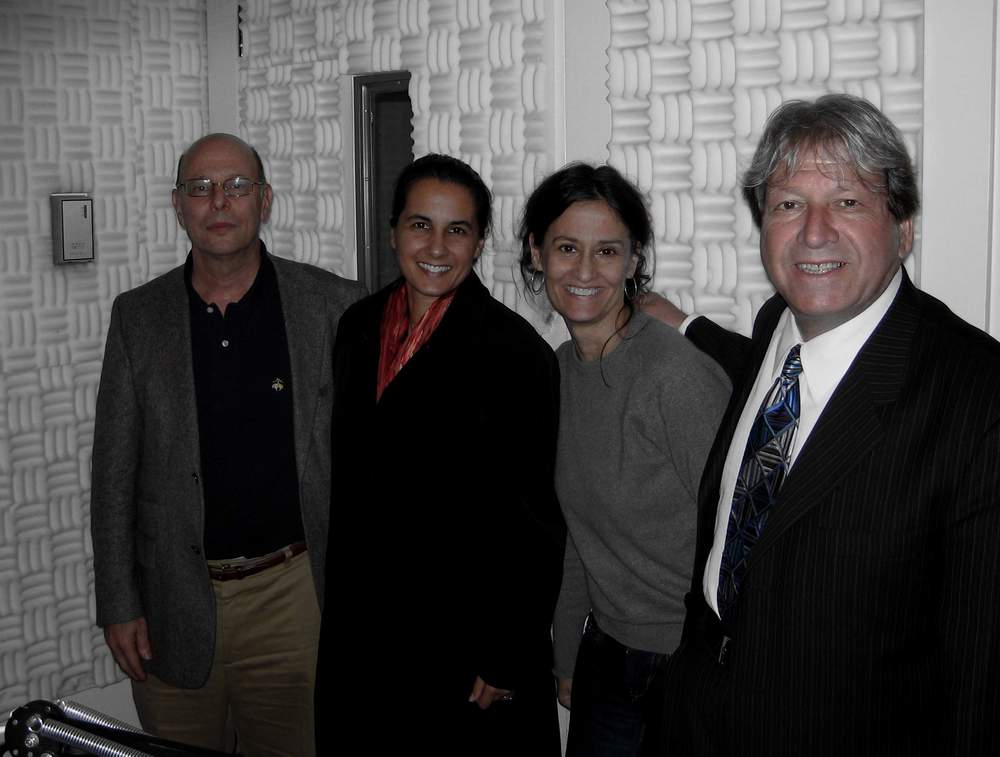
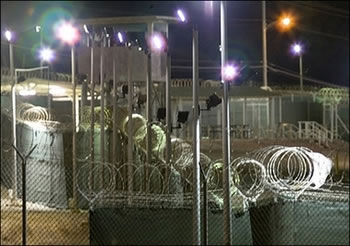
Michael Ratner Marks CCR Case Rasul v Bush: Courage To Stand Up At The Right Time
In early 2002, the Center for Constitutional Rights filed two habeas petitions, Rasul v. Bush and Habib v. Bush. This challenged the U.S. government’s practice of holding foreign nationals captured in connection with its war on Afghanistan and al-Qaeda in indefinite detention. This is without counsel and without the right to a trial or to know the charges against them. Michael Ratner then explains the timeline of how the Supreme Court, over the administration’s objections, agreed in November 2003 to hear the cases of the Guantanamo detainees, and also the case of al Odah v. Bush. This week’s anniversary marks the historic ruling on June 28th, 2004 that detainees have access to U.S. Courts to challenge their detention.
- We won that in June 28, 2004. We won it in a 6-3 decision. The Center for Constitutional Rights was the only human rights organization on the case. The only one willing to take that case.
- Many of my colleagues, not me, thought that would be the end of Guantanamo (Bay Prison)
- There are still 149 people left in Guantanamo, over half of them have been cleared for release. The reason I want to mark this is because it talks about a struggle that in some ways was successful and in some ways not successful.
- It also talks about the courage of these lawyers that started these cases in the thick of the most anger in the country and . . . fears that we would lose our fund raising.
- We thought at that time, as I said some of our friends, said that we would close Guantanamo. But since that time there’s been incredible stubborn resistance by all 3 branches of government.
- Bush first, then Obama, despite promises has failed to live up to them, promises to close Guantanamo. The courts are therefore useless now in this.
- Congress is going retrograde at a speed unimaginable, trying to ban every transfer for the rest of our days from Guantanamo.
- Within 2 months of the 911 attacks, President Bush issued Military Order Number 1. It’s November 13, 2001 Military Order, I thought a coup de tat happened in the country. It said the president had the authority to pick anyone, anywhere in the world. Hold them indefinitely, incommunicado and abolish habeas corpus.
- We tried to get other human rights organizations to do it. No one else to their shame would come aboard with the Center for Constitutional Rights.
- The Center for Constitutional Rights could’ve gone under for this. Let me be clear. It was a much smaller institution. It didn’t have that much funding. There was a high risk that we were going to get cut off completely.
- January 11, 2002, they take the people, the first plane load to Guantanamo.
- We never expected the Supreme Court to take the case in 2003. When it finally did, it accepted the case. It was argued in April 2004. It was decided in our favor on June 28.
- We then put out a call for other lawyers to join us. Over a hundred lawyers joined us immediately. 600 within a year or two. We then created what I call a mass movement of lawyers to fight this.
- As a result of the 2004 ruling, our first attorney went down (to Guantanamo) Gita Gutierrez. The big thing that Gita’s visit represented is that we found out about torture at Guantanamo.
- You begin to understand when a government does incommunicado detention in an offshore facility that doesn’t have any court review, there’s a reason, and the reason is almost entirely torture.
- There’s been no prosecution. Obama has given them all a huge pass unfortunately. It’s really damaging because what it has done for torture is its saying, torture isn’t necessarily illegal, Obama claims it’s illegal but he didn’t prosecute anybody.
- So, next time we have another “scare” like this people will say it’s a political issue, we can torture, it works, etc.
Guest – Law and Disorder Co-host Attorney Michael Ratner, President Emeritus of the Center for Constitutional Rights (CCR), a non-profit human rights litigation organization based in New York City and president of the European Center for Constitutional and Human Rights (ECCHR) based in Berlin. Ratner and CCR are currently the attorneys in the United States for publishers Julian Assange and Wikileaks. He was co-counsel in representing the Guantanamo Bay detainees in the United States Supreme Court, where, in June 2004, the court decided his clients have the right to test the legality of their detentions in court. Ratner is also a past president of the National Lawyers Guild and the author of numerous books and articles, including the books Who Killed Che? How the CIA Got Away With Murder, The Trial of Donald Rumsfeld: A Prosecution by Book, Against War with Iraq and Guantanamo: What the World Should Know, as well as a textbook on international human rights.
——-

Israel Increases Rate of Palestinian Home and Structure Demolition
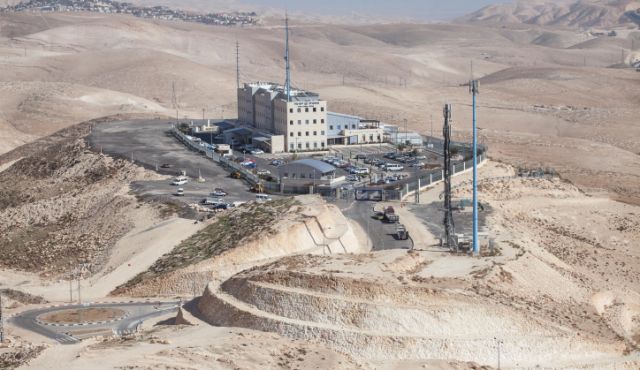
In the past few months, the Israeli government has stepped up its campaign of Palestinian home demolitions, specifically in the E1 area between Jerusalem and the Maale Adumim settlement. United Nations reports show 231 Palestinians had been displaced from their homes in early 2014. This is at a much quicker pace than 2013. Remember the demolishing of homes include livestock pens, fences, water reservoirs, schools, all vital to the livelihood and communal life of Palestinians. The Israeli Committee Against House Demolitions estimates since 1967, nearly 29 thousand Palestinian homes and livelihood structures were demolished in the Occupied Territories. However, at the same time the Israeli government has announced the construction of thousands of homes and buildings in the settlements of the West Bank and East Jerusalem.
- This is an area called E1, that’s the planner’s jargon.
- The significance of E1 is that it closes the last north south corridor the Palestinians have from the north of west bank to the south since they can’t come through Jerusalem.
- Even the United States say if Israel build in E1 and closes that corridor that’s the end of the two state solution.
- This guy Irwin Moskowitz who is a big casino out in California gives millions to the settlements. He bought for the Israeli government a 10 million dollar state of the art police station. It’s the main police headquarters for all the West Bank that is in the E1.
- There’s a whole infrastructure of roads leading to Jerusalem, but Israel has still refrained from actually building. The plan is to build 3,500 housing units that absolutely, thickly closes that corridor to Palestinians.
- The 2 state solution is gone but this (building of E1 area) would be an absolute measure of the ending of the 2 state solution.
- We’re trying to mobilize international civil society against the occupation. The occupation is not going to end because the Israeli public rise up and end it.
- They’re living the good life, they’re profiting from the occupation especially from the point of view of testing and developing and selling weapons systems tested on Palestinians.
- And the governments of the world aren’t doing their job. Governments manage conflicts, they don’t resolve conflicts.
- So I’m here in the United States to try to speak to activist groups, church groups because the churches here have a very strong moral voice.
- We’re dependent on the Palestinians for leadership on where to go next. Not being Palestinians, we can’t tell them what the solution is.
- I think its urgent we formulate a one state solution. A one democratic bi-national state.
- I think there has to be a bi-national component in which both peoples have a sense of self expression and limited self determination within the common country.
- You have to create structures of sharing power.
- I think the Palestinians would have the ability to achieve a fair amount of parity with Israel within a short amount of time if we create this consociational type of state.
- Israel is beginning to be more and more of an albatross around the American’s neck.
- Operation My Brother’s Keeper had nothing to do with these kids who disappeared. It was a stand alone operation that used the disappearance as a trigger for being launched. The whole idea was to crack down on Hamas, to weaken the PA to keep it dependent on Israel.
- I think what’s happening is we’re in the midst of collapse.
- Jeff@ICAHD.org
Guest – Dr. Jeff Halper, co-founder and Director of ICAHD, the Israeli Committee Against House Demolitions. He was born in 1946 in Minnesota and emigrated to Israel in 1973. Since then he has been a tireless advocate for justice and civil rights for all Israelis and Palestinians. He spent ten years as a community worker in Jerusalem aiding low-income Mizrahi families. He co-founded ICAHD in 1997 to help resist Israel’s strategy of house demolitions in the Occupied Palestinian Territory. He is the author of three books, ‘Between Redemption and Revival: The Jewish Yishuv in Jerusalem in the Nineteenth Century’, ‘An Israeli in Palestine: Resisting Possession, Redeeming Israel’, and ‘Obstacles to Peace: A reframing of the Palestinian – Israeli Conflict’. In 2006 Dr. Halper was nominated for the Nobel Peace Prize, citing ICAHD’s work “to liberate both the Palestinian and the Israeli people from the yoke of structural violence” and “to build equality between their people by recognizing and celebrating their common humanity.”
—————————————————————————-

Please help support Law and Disorder, the show is now a sponsored project of Fractured Atlas, a non-profit arts service organization. Contributions for the charitable purposes of Law and Disorder must be made payable to Fractured Atlas only and are tax-deductible to the extent permitted by law.
Law and Disorder June 23, 2014
Podcast: Play in new window | Download
Updates:
- Hosts Discuss “Liberal” Media Coverage Of Reigniting War In Iraq
- Imagine: Living In A Socialist U.S.A. Book Event- NYC Public Library June 23 6:30PM
——-

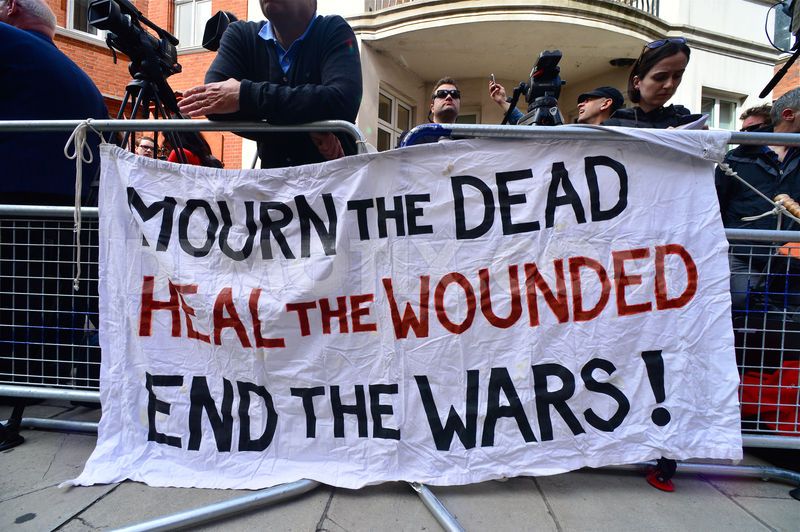
The 2 Year Anniversary of Wikileaks Julian Assange At The Ecuadorian Embassy
We mark the two year anniversary of Julian Assange being in custody at the Ecuadorian embassy. Our own Michael Ratner, cohost of this show is Julian Assange’s attorney. Michael describes the conditions Julian Assange is living in at the embassy, he explains the legal reasons why Julian is still there and lists the recent significant accomplishments of Wikileaks.
Co-host Attorney Michael Ratner:
- He’s sitting in the embassy with political asylum. It’s an apartment on the ground floor with about 6 or 8 rooms. He has one of those rooms. It’s small. There’s no outside space.
- He has a sun lamp.
- There are police outside, there are police out front when you walk in. They’re at every window. There’s a couple big police vans outside picking up every one of your conversations. That’s where Julian has been for two years.
- Julian has been in pretty good shape in there. He’s been functioning. Wikileaks has been functioning. A key thing that people have to understand is Wikileaks, Sarah Harrison, Julian and others saved Edward Snowden from going to prison in the United States.
- Remember he was in Hong Kong (Snowden). The U.S. issued a criminal complaint against him. Two counts of espionage, one count of theft of documents. There was an extradition request by the U.S. Hong Kong being part of China. The likelihood is at 90, 95 or 100 percent that Edward Snowden would have wound up in a U.S. jail.
- Instead of that, Wikileaks helped him gain asylum where he eventually did in Russia. Sarah Harrison accompanying him on the plane to Moscow.
- Another story we’ve covered, the Trans Pacific Partnership, that’s the trade agreement they’re trying to impose on countries particularly in the far East.
- What the U.S. just admitted, filed a brief in April 2014 in federal court. It was a brief in which they refuse to give up documents on a FOIA case. The claim was they couldn’t give them up because there’s a continuing investigation going. It was documents EPIC sought around Wikileaks.
- The Department of Justice said (in that brief) there’s an ongoing criminal national security investigation into Wikileaks and Julian Assange, its multi-subject and its ongoing.
- It’s been 4 years since the allegations of sexual misconduct have been made against Julian Assange by two women, but by particular, the prosecutor who seems to have vengeance to carry this out.
- Remember, they’re allegations, not charges. They’ve asked to extradite Julian Assange based on those allegations.
- Allegations from a prosecutor from another country are not sufficient to get someone extradited. We have the UK having changed the law so he can no longer be extradited.
- Ecuador has been extremely supportive of Julian.
- There’s a letter that will be sent in the next two days to our Attorney General Eric Holder by at least 30 human rights groups around the world.
- That letter wants to hold him to his words (Holder) that journalists and editors will not be subject to prosecution.
- It starts off with a demand to close all criminal investigations of Wikileaks and its Editor in Chief Julian Assange. It says they have to stop harassing and persecuting Julian and Wikileaks for publishing. FreeAssangeNow.org
Guest – Law and Disorder Co-host Attorney Michael Ratner, President Emeritus of the Center for Constitutional Rights (CCR), a non-profit human rights litigation organization based in New York City and president of the European Center for Constitutional and Human Rights (ECCHR) based in Berlin. Ratner and CCR are currently the attorneys in the United States for publishers Julian Assange and Wikileaks. He was co-counsel in representing the Guantanamo Bay detainees in the United States Supreme Court, where, in June 2004, the court decided his clients have the right to test the legality of their detentions in court. Ratner is also a past president of the National Lawyers Guild and the author of numerous books and articles, including the books The Trial of Donald Rumsfeld: A Prosecution by Book, Against War with Iraq and Guantanamo: What the World Should Know, as well as a textbook on international human rights.
——-
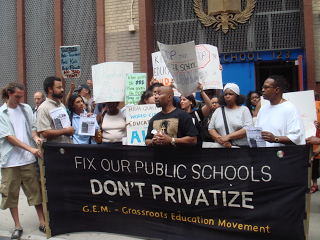
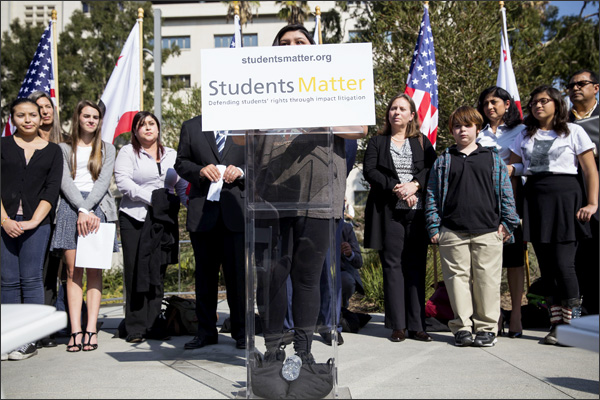
Shocking: California Court Rules Teacher Tenure Violates Student’s Right To Quality Education
David Welch, a Silicon Valley tech millionaire has been funding the movement and legal suit that led to the Vergara decision two weeks ago when a California court struck down a series of laws that grant tenure and other protections to public school teachers. Students Matter, an education reform group had sued on behalf of nine students arguing protections for substandard teachers have a disproportionate impact on children of color and low-income families. The decision that has identified teacher tenure as the cause of underachievement within inner city schools could have a larger influence in other states. Many see this decision as part of a strategy to transform the public education system into a major profit center. Examples include No Child Left Behind, Race to the Top, Common Core Curriculum, Charter Schools.
- The court ruled in California that teacher tenure is a violation of students’ right to a quality education.
- The ramifications are . . if we find students who are not doing well in school that the remedy is to remove that teacher and get a new teacher and anything that stands in the way of removing that teacher is therefore a violation of that student’s rights.
- Its actually going to have very negative consequences.
- We already have a problem holding on to great teachers. We have a problem holding on to teachers.
- Half of the teachers in this country leave the profession within five years. We’re literally bleeding teachers.
- A lot of wealthy people have taken an interest in transforming public schools in this country.
- Their idea that schooling should be run more like a business with more authority, power and decision making concentrated at the top with the workers, parents and students having little or no say on what goes on. Their job is to accomplish the task laid out before them by the millionaires and billionaires.
- One of the worst examples of course is Bill Gates who has been effectively setting education policy for the nation for several years now.
- You have this Silicon Valley millionaire who created a “parent group” and bringing this lawsuit you have a bunch of parents whose children are in charter schools and private schools arguing that their rights are being violated.
- They use their wealth to effect the changes that they want.
- They bypass any democratic process or debate or discussion about what our schools should be like.
- This is a famous ploy by the corporatizers is to wrap themselves in the robes of the civil rights movement and claim they’re getting justice on behalf of children.
- We have to remember that the civil rights movement was pro-union was very involved in unions.
- The corporate reformers want us to believe that we can get justice for kids by beating up on adults.
- If we can attack the union we can then get justice for the young people.
- That’s the tenure attack is eliminating an obstacle for anyone to speak back, to talk back.
- Without tenure, without unions, without those kinds of protections the people working in a school can never speak back, can never express themselves, can never protest or try to assert some other idea.
- Let’s talk about what its going to take to improve the teaching profession. Let’s talk about what its going to take to improve the conditions of teaching and learning.
- Teachers feel under attack. The things we’re putting on teacher’s shoulders right now are insane.
- We (teachers) were already suffering under Bush’s No Child Left Behind, then Obama doubled down on it and made it even worse. He raised the stakes of those high stakes tests even higher. Our whole platform is available at HowieHawkins.org
Guest – Brian Jones, taught elementary grades for nine years in New York City’s public schools, and is currently pursuing a PhD in Urban Education at the City University of New York Graduate Center. He is Green Party’s 2014 candidate for Lieutenant Governor of New York. Brian co-narrated the film, The Inconvenient Truth Behind Waiting for Superman, and has contributed to the book Education and Capitalism: Struggles for Learning and Liberation. He is a member of the Movement of Rank and File Educators: the social justice caucus of the United Federation of Teachers. Brian has also lent his voice to several audiobooks, including The John Carlos Story: The Sports Moment That Changed the World and Howard Zinn’s one-man play, Marx in Soho. Brian is the recipient of a 2012 Lannan Cultural Freedom Fellowship.
————————————————————–
Law and Disorder June 16, 2014
Podcast: Play in new window | Download
Updates:
- Michael Ratner: Sunni Muslims Have Taken Mosul, Second Biggest City In Iraq
- Judge Rules That California Teacher Tenure Laws Deprive Students Of Education
- Imagine: Living In A Socialist U.S.A. Book Event- NYC Public Library June 23 6:30PM
——–

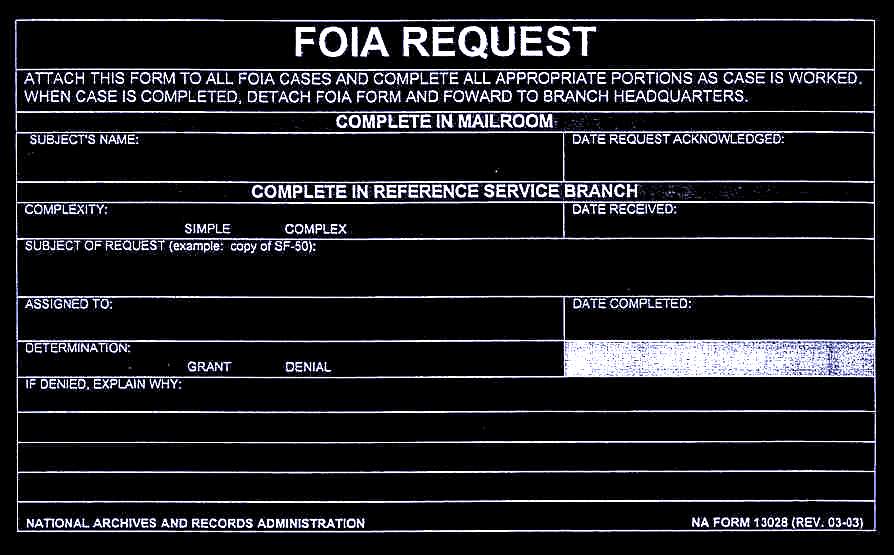
The Electronic Privacy Information Center, The NSA, FOIA Requests, And Wikileaks
The Electronic Privacy Information Center or EPIC is among a handful of organizations trying to reveal the massive surveillance of the National Security Agency. We talk about a few of EPIC’s most important cases being litigated that you may not have heard about. EPIC had filed a massive FOIA request on behalf of Wikileaks to the Criminal and National Security Divisions of the Department of Justice, and to the FBI asking for multiple records including any individuals targeted for surveillance for support for or interest in WikiLeaks. We talk about that and their lawsuit involving the NSA not being subject to FOIA requests plus a victory involving the Department of Homeland Security’s ability to deactivate wireless communications networks in a crisis.
- The FOIA requests we made five years ago for the NSA Cybersecurity Authority was a request that we sent to the NSA, litigated in the district court and on appeal in the DC Circuit last Friday just a few days before the government’s brief was due, they contacted us and said they were disclosing to us the document we had been trying to obtain.
- This is National Security Presidential Directive 54 and that outlines all the cyber security authorities for the federal agencies.
- The scope of our work is very much driven by our mission. Our mission is to focus public attention on emerging privacy and civil liberties issues.
- The FBI wants to put together the next generation identification system which will be the largest biometric database in the world and we think the implications for privacy and freedom are just staggering.
- Google also retains everybody’s search histories.
- We also do a lot of open government litigation so people can learn about these issues and we do a lot of amicus briefs.
- In our organization there’s actually deep division about Wikileaks. Some people think Julian Assange is a hero and some people would like to see him arrested.
- What was interesting to us about the Wikileaks case – we did see a persons of expressions of support for Wikileaks as core First Amendment speech.
- We became very interested through the FOIA with how the federal government was apparently intervening with private companies, bank payment companies, cloud service providers and others to try to chill the ability of Wikileaks supporters to contribute to the organization, to get access to hosted documents.
- We simply believe it was wrong for the government to simply discourage people their support or even their opposition.
- With the FOIA, one of the things you’re trying to do is get information out to the public and hope that others find that its useful.
- We think its a fundamental obligation for any internet company that collects personal data to stand up to the government when there are court orders.
- Our other case in the DC Circuit – this concerns a technique used in San Francisco basically to shut down cell phone service among people who had gathered at a protest to object to the police conduct that I think resulted in the death of a person on the BART system.
- Pursuant to a secret policy known as Standard Operating Protocol 303, somehow the Department of Homeland Security got the local telephone service to shut down cell phone service in the region and people couldn’t communicate and the protest was effectively stopped.
- Our FOIA request was for the policy which we think has to be made public. You can’t have a secret procedure that so deeply implicates First Amendment freedoms.
- We went laser focused after that one document and the DHS was throwing up all these law enforcement exemptions, 7E and 7F involving techniques and methods saying this was vitally important to protect public safety which was an interesting argument too.
- Submit FOIA requests – if a government agency has a reason to withhold a record, the burden is on the agency to justify the reason for the withholding.
Guest – Attorney Marc Rotenburg, Executive Director of the Electronic Privacy Information Center (EPIC) in Washington, DC. He teaches information privacy law at Georgetown University Law Center and has testified before Congress on many issues, including access to information, encryption policy, consumer protection, computer security, and communications privacy. He testified before the 9-11 Commission on “Security and Liberty: Protecting Privacy, Preventing Terrorism.” He has served on several national and international advisory panels, including the expert panels on Cryptography Policy and Computer Security for the OECD, the Legal Experts on Cyberspace Law for UNESCO, and the Countering Spam program of the ITU.
—–
Hundreds of California Prisoners in Isolation to Join Class Action Lawsuit
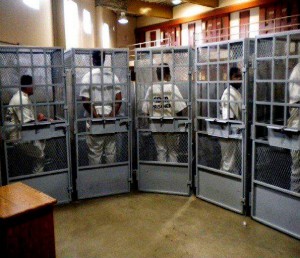
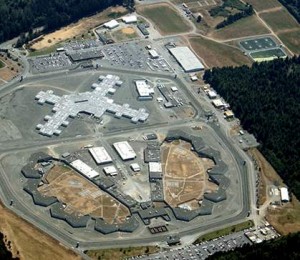
Last year we spoke with attorney Jules Lobel about his lawsuit challenging long term solitary confinement in California prisons. Recently, a federal judge in Oakland California ruled to agree to consider as part of that lawsuit if long term isolation violates a prisoners’ Eighth Amendment rights. Prisoners in prolonged solitary confinement at Pelican Bay prison can spend 22 to 24 hours a day in a cramped, concrete windowless cell. Mostly, they’re there for their alleged connection to gangs and their refusal to become government informants.
- Pelican Bay is a prison that holds over 1000 prisoners. It’s located on one of the most isolated sections of the United States coast line border between California and Oregon.
- It was deliberately placed there because most of the prisoners are from Los Angeles.
- It’s very hard for their friends and family to visit them.
- They spend virtually their whole day in an 80 square foot cell with no window.
- They virtually get no visitors, they can’t make any phone calls. They’re fairly isolated from the outside world and from each other.
- Many of my clients have been in this kind of cell for over a decade.
- California estimates there are about 225 that have been there for over a decade.
- A number of my clients have been there for over 2 decades.
- California puts them there not because they’ve done anything violent in prison, or in some cases they haven’t done anything violent outside of prison . . mainly drug offenses . . . but because they have an association could be very loose, could be because of having a tattoo or a piece of art work which suggests you’re in some way associated with a gang.
- The only way out was to become an informant and then you and your family were in grave danger of being killed or assaulted by the gang.
- Recently in California after 3 hunger strikes, pressure from the lawsuit, pressure from the legislature, has instituted some reforms so there are for some of the people a way at least to another solitaire prison or the general population.
- They come up for review once every six years in the system that’s currently in place.
- The Ninth Circuit court has said anything over 1 year is too long for reviews.
- There have been hundreds of law suits challenging various aspects of this situation in Pelican Bay, from the due process to they’re not given any chance to prove that they can get to its cruel and unusual punishment to keep people in there for 10-15-20 years.
- Now for the first time the judge has said I’m going to take this as a class action which means I’m going to look at the general policies that California is instituting and if we were to win, try to change the system.
- Our argument is that these conditions are cruel and unusual to keep people in for this long of time.
- We said we need to meet with all of our clients all together. We can’t meet with one individual then another individual.
- The state said that’s impossible, these people are so dangerous you can’t possibly meet with them all together, but the judge ordered it.
- We got a meeting, if you can imagine the cell that Hannibal was in? They put 10 of these cages side by side, and they put us in a big conference room. They mandated that we had to wear flak jackets. We were seated at a table with Marine outfits.
- What it really is is to force these guys to become informants, to make it as cruel as possible and the only way out is to become an informant.
- It essentially alters your personality. You die a social death.
- Our case, if we were to win would be the beginning of the death knell of solitary confinement in this country.
- 80 thousand prisoners as we speak are in some form of solitary in this country.
- One of the things about this case is that it requires substantial funding and we’re always looking for people to help with funding the case.
Guest – Attorney Jules Lobel, has litigated important issues regarding the application of international law in the U.S. courts. In the late 1980’s, he advised the Nicaraguan government on the development of its first democratic constitution, and has also advised the Burundi government on constitutional law issues. Professor Lobel is editor of a text on civil rights litigation and of a collection of essays on the U.S. Constitution, A Less Than Perfect Union (Monthly Review Press, 1988). He is author of numerous articles on international law, foreign affairs, and the U.S. Constitution in publications including Yale Law Journal, Harvard International Law Journal, Cornell Law Review, and Virginia Law Review. He is a member of the American Society of International Law.
——————————————————————-