Welcome to Law and Disorder Radio
Law and Disorder is a weekly independent civil liberties radio program airing on more than 150 stations and on Apple podcast. Law and Disorder provides timely legal perspectives on issues concerning civil liberties, privacy, right to dissent and practices of torture exercised by the US government and private corporations.
Law and Disorder September 8, 2014
Podcast: Play in new window | Download
Updates:
- Michael Ratner: The International Criminal Court, The International Court of Justice And Israeli War Crimes
- The Link: Can Palestine Bring Israeli Officials Before The International Criminal Court
- Michael Smith: Bounce Back From the Policies Of Israel Effecting Free Speech In U.S. Universities
——–
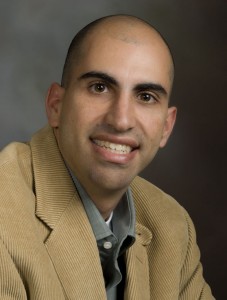
University of Illinois Chancellor Wise Going Forward With Salaita Appointment To Board of Trustees Vote
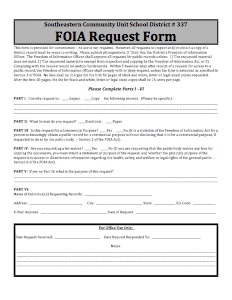
Last month, the University of Illinois rescinded the job offer of Professor Steven Salaita who wrote controversial social media posts about the war in Gaza. This raised serious concerns under established principles of academic freedom. Professor Salaita was basically dehired from the American Indian Studies program at the University of Illinois at Urbana-Champaign because of his statements on social media criticizing Israel’s conduct of military operations in Gaza. We reported weeks ago on Law and Disorder that scholars from law schools around the country came out with a very strong letter condemning the decision of the University of Illinois to dehire Professor Salaita. FOIA Email Link
- Professor Steven Salaita until recently was a tenured professor at Virgina Tech and was well known in English departments across the country and also among scholars who worked in colonialism and post colonialism studies. He developed a really rich body of work thinking about Native American rights, native people’s rights in the United States and connecting them to Palestinian rights in particular internationally.
- Read Professor Katherine Franke’s second letter here.
- He was a well sought after scholar and was hired by the University of Illinois in their American Indian Studies program in a process that started last fall.
- The department unanimously voted him an offer and this summer the university started to get pressure from outside donors, some of their alums and advocacy groups to not finalize the offer because of some tweets Professor Salaita sent out over the summer related to the Israeli attacks in Gaza.
- The emails to the chancellor were released showing that large six figure donors had seen those tweets or learned of them and said you cannot hire this guy or I will withdraw my future giving to the universities.
- So, the chancellor let Steven know that she was not going to finalize his offer even though they already negotiated his teaching schedule, he’s already rented an apartment, they had already negotiated his moving expenses.
- Right now he has no job, no income, no where to live.
- It’s the most recent iteration of what has been a rather well organized, well financed campaign in the United States in particular to purge the academy of scholars and even graduate students who are doing work that is either sympathetic to the idea of Palestinian sovereignty or rights or critical of Israeli state policy particularly the occupation.
- It was so obviously a violation of the fundamental right of academic freedom.
- I’ve only learned of his scholarship as a result of this campaign and his termination from the University of Illinois.
- I explain to Chancellor Wise in the letter that I sent, that not only will I not come to the university to speak in an official capacity but I will come to Urbana-Champaign and meet off campus with faculty and students, and members of the communities about these issues of academic freedom.
- Their strategy has been to portray any criticism of Israeli state policy or any criticism of political Zionism as uncivil or as a form of hate speech, but more importantly to appeal to a civility norm. That its not nice. That it creates an unwelcome learning environment for students, particularly jewish students.
- To see her parroting that language (Chancellor Wise) and for Chris Kennedy to parrot that language says to me that they’ve been reached by these organized operatives from the outside about how to message this termination.
- I don’t believe there is a civility norm at stake here and I think we actually shouldn’t have one in a university setting. We ought to take on uncivil ideas, ideas that are troubling, that are uncomfortable and unpack them in thoughtful scholarly ways.
- As these emails are coming out under the Freedom of Information Act Requests over the last few days its quite clear that civility is not what underwrote the decision to terminate him. It was really outside pressure from donors.
Guest – Katherine Franke, Isidor and Seville Sulzbacher Professor of Law; Director, Center for Gender and Sexuality Law at Columbia University. She was awarded a 2011 Guggenheim Fellowship, and is among the nation’s leading scholars in the area of feminism, sexuality and race. In addition to her scholarly writing on sexual harassment, gender equality, sexual rights, and racial history, she writes regularly for a more popular audience in the Gender and Sexuality Law Blog. Franke is also on the Executive Committee for Columbia’s Institute for Research on Women and Gender, and the Center for Palestine Studies and teaches at a medium security women’s prison in Manhattan. Her legal career began as a civil rights lawyer, first specializing in HIV discrimination cases and then race and sex cases more generally. In the last 25 years she has authored briefs in cases addressing HIV discrimination, forced sterilization, same-sex sexual harassment, gender stereotyping, and transgender discrimination in the Supreme Court and other lower courts.
———-
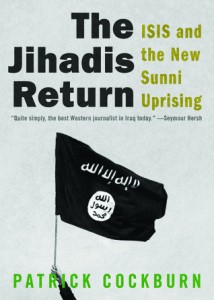
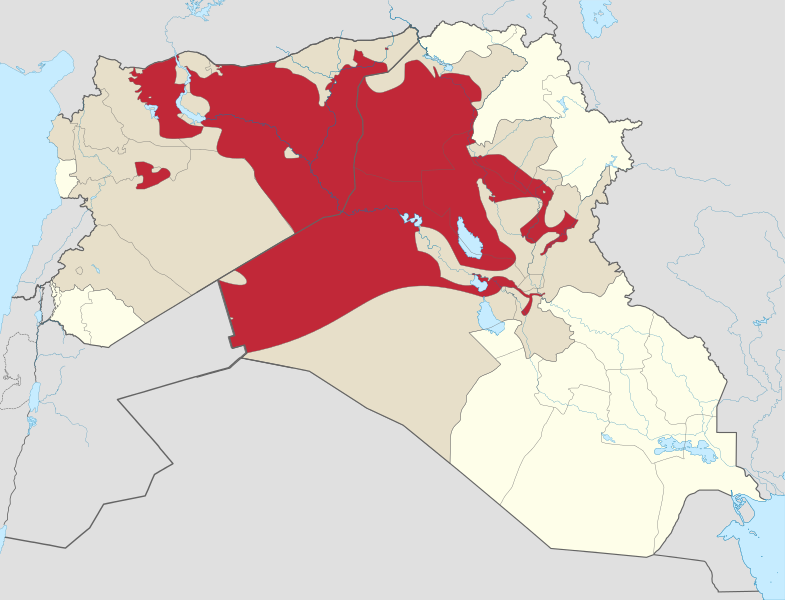
The Jihadis Return: ISIS and the New Sunni Uprising
In June of this year, the United States sent more troops to Iraq and carried out airstrikes to stop the advance of the Islamic State of Iraq and the Levant, known as ISIS into the Kurdish capitol Erbil. However, a more complicated situation has developed in Syria. The U.S., Western European, Saudi, and Arab Gulf policy is to overthrow Syrian President Bashar al-Assad, which is also the goal of ISIS and other jihadis in Syria. ISIS’s membership is between 10 and 17 thousand. We talk today with veteran Middle East correspondent Patrick Cockburn about his new book The Jihadis Return: ISIS and the New Sunni Uprising, about the origins of ISIS. We’ll also talk about the role of Saudi Arabia in the larger picture and in funding part of the Sunni terrorist groups, which was exposed by Wikileaks.
- The Islamic State of Iraq and the Levant, which has turned into the new caliphate in western-northern Iraq and western Syria. It has come out of Al-Qaeda in Iraq.
- This organization that was linked to Al-Qaeda but not formed by Al-Qaeda after the invasion of Iraq in 2003 is very anti-Shia, Sunni fundamentalist is extremely violent.
- What makes it so effective is its a mixture of religious fanaticism and military efficiency.
- Some of the senior people of ISIS are former security officers and special republican guard officers from Saddam Hussein’s time.
- ISIS is led by a core of people who fought the U.S. in Iraq, fought the Iraqi Army, this is after 2003 and then after 2011 fought in Syria.
- So, it’s quite an experienced group.
- It had been growing stronger in Iraq over the last 3 years. It launched a series of campaigns, one of which to break its members out of prison.
- It had taken over quite big territory in Iraq then it had moved into Syria.
- It’s present in both countries, but its main effort was in Iraq this year.
- It always had strength in Mosul City, even though the Iraqi Army was in theoretically in charge but it would still levy protection money on people.
- Maybe 8 million dollars a month. I know contract men there paying half a million dollars a month.
- It’s final take over was swift and devastating. I can’t think of an example in history when 350 thousand men in the Iraqi Army, 650 thousand police simply disintegrated under an attack from under 3000 ISIS fighters.
- What really changed in 2011 when you had the uprising in Syria, primarily the Sunni Arabs of Syria, Iraq politicians said it would spill over into Iraq.
- The U.S. and its allies to a substantial degree were responsible for this. They backed the uprising against Assad. Even when it was apparent in the last 2 years that Assad wasn’t going to go.
- Wahhabism is the Islamic variant practiced in Saudi Arabia.
- There’s always been an alliance over the last 300 years between the preachers of this very puritanical, fanatical, violent and bigoted variant of Islam and the House of Saud.
- What they believe is not that much different from what ISIS believes. It’s very anti-Shia, the Shia seen as heretics worthy of death. It’s anti-Christian, anti-Jewish and deeply intolerant.
- Without the policies of Saudi Arabia and Pakistan, there wouldn’t have been a 911.
- Bin Laden was part of the a Saudi elite.
- Rather amazingly, the Saudis were let off scott-free.
- Kuwait has been a major financial supporter of the Jihadis, so has UAE, so has Qatar, the gulf monarchies as a whole if you like and so has Turkey.
- The problem with Obama and the U.S. is they have to decide what side they’re on. In Iraq, they’re supporting the government against ISIS, they’re supporting the Kurds against ISIS.
- But in Syria, the main opponent of ISIS is the Assad government but the U.S. policy is to weaken and displace that government.
- In a way, (the U.S. policy actually assists ISIS)
Guest – Patrick Cockburn is currently Middle East correspondent for The Independent and worked previously for the Financial Times. He has written three books on Iraq’s recent history as well as a memoir, The Broken Boy and, with his son, a book on schizophrenia, Henry’s Demons, which was shortlisted for a Costa Award. He won the Martha Gellhorn Prize in 2005, the James Cameron Prize in 2006, and the Orwell Prize for Journalism in 2009.
————————————————————

Please help support Law and Disorder, the show is now a sponsored project of Fractured Atlas, a non-profit arts service organization. Contributions for the charitable purposes of Law and Disorder must be made payable to Fractured Atlas only and are tax-deductible to the extent permitted by law.
Law and Disorder September 1, 2014
Podcast: Play in new window | Download
Updates:
- Michael Ratner: The Dahiya Doctrine, Wikileaks and Julian Assange
- Michael Ratner: U.S. Is The Fundamental Supporter Of Israel War Crimes
- Major Free Speech Court Victory in Brooklyn Bridge Occupy Mass Arrest Class Action
- Update On H.Rap Brown Health And Treatment
——
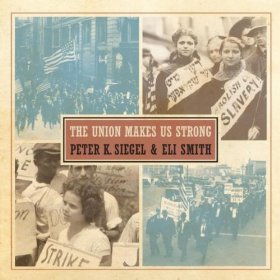
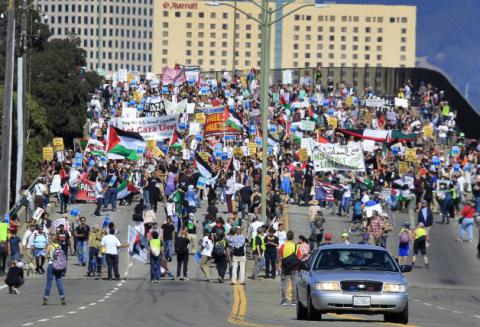
Labor Day Songs From The Union Makes Us Strong.
Michael Smith and Heidi Boghosian play songs from The Union Makes Us Strong album by Peter Siegel and Eli Smith to honor Labor Day 2014. The historical importance of these songs lie in the role they played in the creation of the union movement in the United States in the first half of the 20th century. They instrumental in propagating the attitudes and ideas the “class consciousness” that led working men and women by the thousands to recognize the need to stand together in solidarity. In short, they shaped a politicized working-class culture based more upon social than individual values.
Songs: There Is Power In the Union / The Preacher And The Slave / The Death of Mother Jones / Song For Bridges.
——
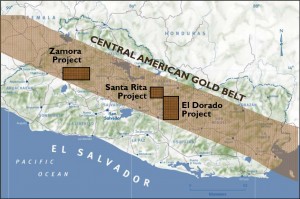
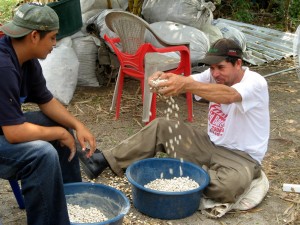
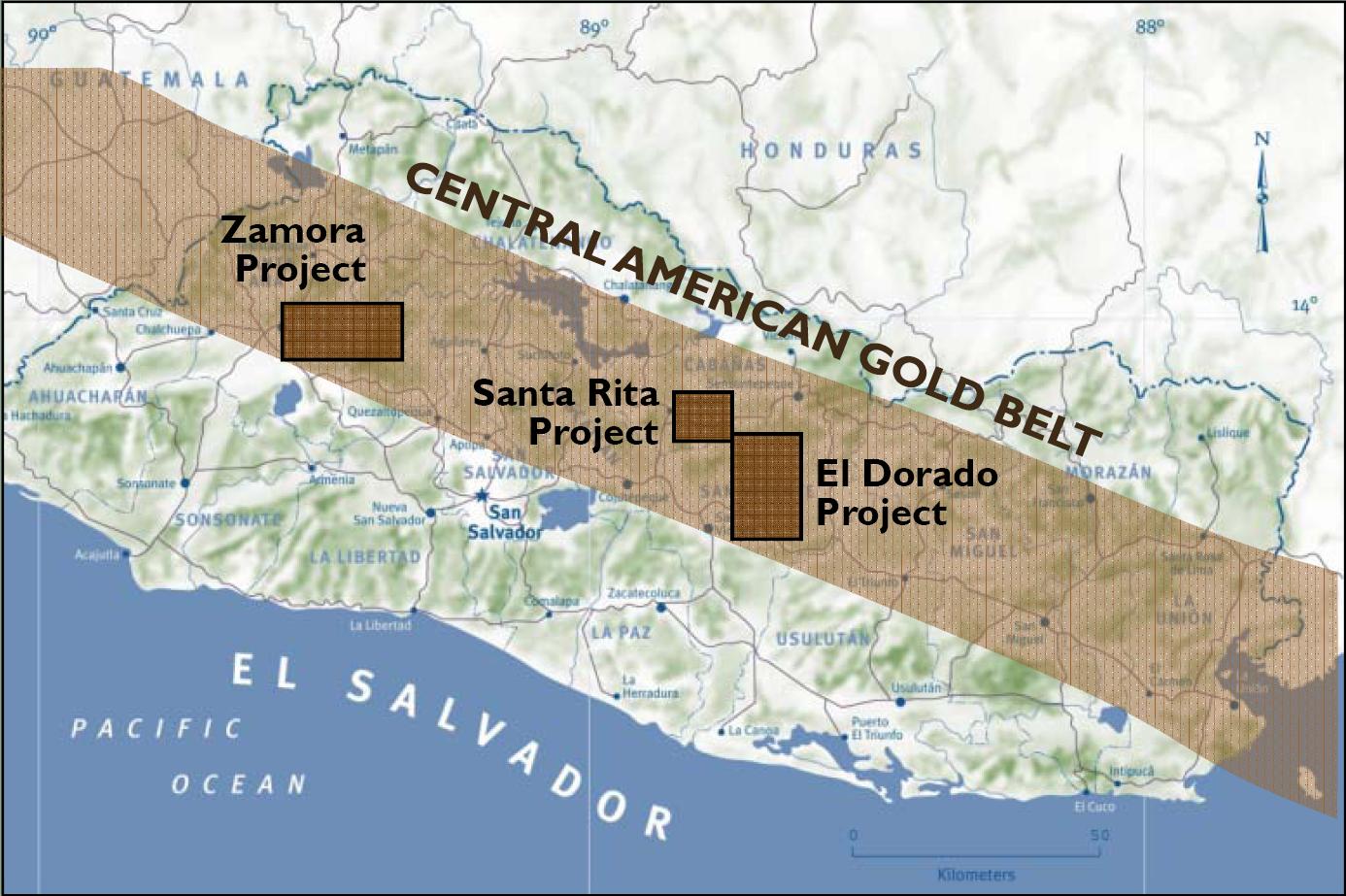
Non-GMO Seed Programs Help Poor Farmers In El Salvador Secede From Monsanto Monopoly
When you hear news reports about the mass migration of unaccompanied children coming across the Mexico – U.S. border, you usually don’t hear about the pressures that are driving the emigration. Today we look at some of the economic and agricultural reasons that cause migrations specifically in El Salvador. One organization helps poor farmers grow and market sees for corn and beans. This program is called the Mangrove Association where the government buys the seeds and distributes them for free to the 400 thousand farmers. However, these are non – GMO seeds, a preference that local communities and the El Salvadoran government had to fight for.
Professor of Law Eleanor Stein:
- My primary work over the last 10 years has been centered on climate change and what can be done to reverse that trend and to change the political climate in which those decisions get made.
- I was interested in this project in El Salvador because I understood that it was based in some local community groups in a very poverty stricken rural area in the southwestern part of the country and they were using very creative methods to develop more of a sustainable agriculture and also to take measures related to adaptation of their region as a result of climate change.
- CAFTA is a trade treaty which the U.S. and Central America are parties and the Dominican Republic and it governs very much like NAFTA. It governs the requirement for procurement of goods and services by governments in those regions.
- El Salvador is a very poor country. It’s still living with the results of a civil war that went from 1979 to 1992 that resulted in the death of almost 80 thousand people.
- When I say a civil war, that doesn’t really capture the full involvement of the U.S. government fully supporting the right wing counter insurgency forces.
- They (Salvadoran government) have put in place a seed program that began in 2012 that was meant to deal with tremendous problems in food insecurity, agricultural non-sustainability and poverty and lack of economic opportunity that exist in the rural areas.
- They’re cooperatives that produce seeds. They’re locally grown, they’re non-GMO and they are apparently more successful than the Monsanto varieties.
- They have a higher germination rate, and they’re much more hardy in their conditions of growth in El Salvador.
- Until fairly recently, Monsanto had been procuring almost all of its seeds from a Monsanto subsidiary in the region and from very few other producers and were arguable in violation of CAFTA because this was a direct procurement without bidding.
- The Millennial Challenge Corporation is a U.S. government agency which is basically a dispenser of aid in the form of grants to countries that have been defined as emerging potential democracies by the State Department.
- This aid package for every country it has been offered has been conditioned on the local government making certain changes. Legislative changes to bring the economy of the recipient country more in line with the neo-liberal trade policies.
- For example, they tried to get the El Salvadoran legislature to privatize water in their country.
- This is one of few places in the world where a region has been able to secede from the Monsanto monopoly.
- Mangrove Association.There were able to provide for free to more than 400 thousand farmers these very high quality seeds. This is a concrete effective local program that is really combating hunger and food insecurity and its at a time when tens of thousands of children from El Salvador are trying to emigrate to the United States because of not only violence but poverty and lack of opportunity in El Salvador.
- Both the violence and the poverty and the lack of economic development are rooted in the war in the history of El Salvador and the history of the U.S. role in that war.
- I think the underlying condition not only for the emigration but for the violence itself is the lack of infrastructure, the lack of development, the lack of opportunity that continues to haunt this country that was under the rule of an oligarchy for 60 or 70 years.
- We didn’t meet a single family that had indoor plumbing. People are living under really difficult conditions.
- www.eco-viva.org
Guest – Eleanor Stein, teaches a course called the Law of Climate Change: Domestic and Transnational at Albany Law School and SUNY Albany, in conjunction with the Environmental and Atmospheric Sciences Department at SUNY. Eleanor Stein is teaching transnational environmental law with a focus on catastrophic climate change. For ten years she served as an Administrative Law Judge at the New York State Public Service Commission in Albany, New York, where she presided over and mediated New York’s Renewable Portfolio Standard proceeding, a collaboration and litigation of over 150 parties, authoring in June 2004 a comprehensive decision recommending a landmark state environmental initiative to combat global warming with incentives for renewable resource-fueled power generation.
————————————————————–
Law and Disorder August 25, 2014
Podcast: Play in new window | Download
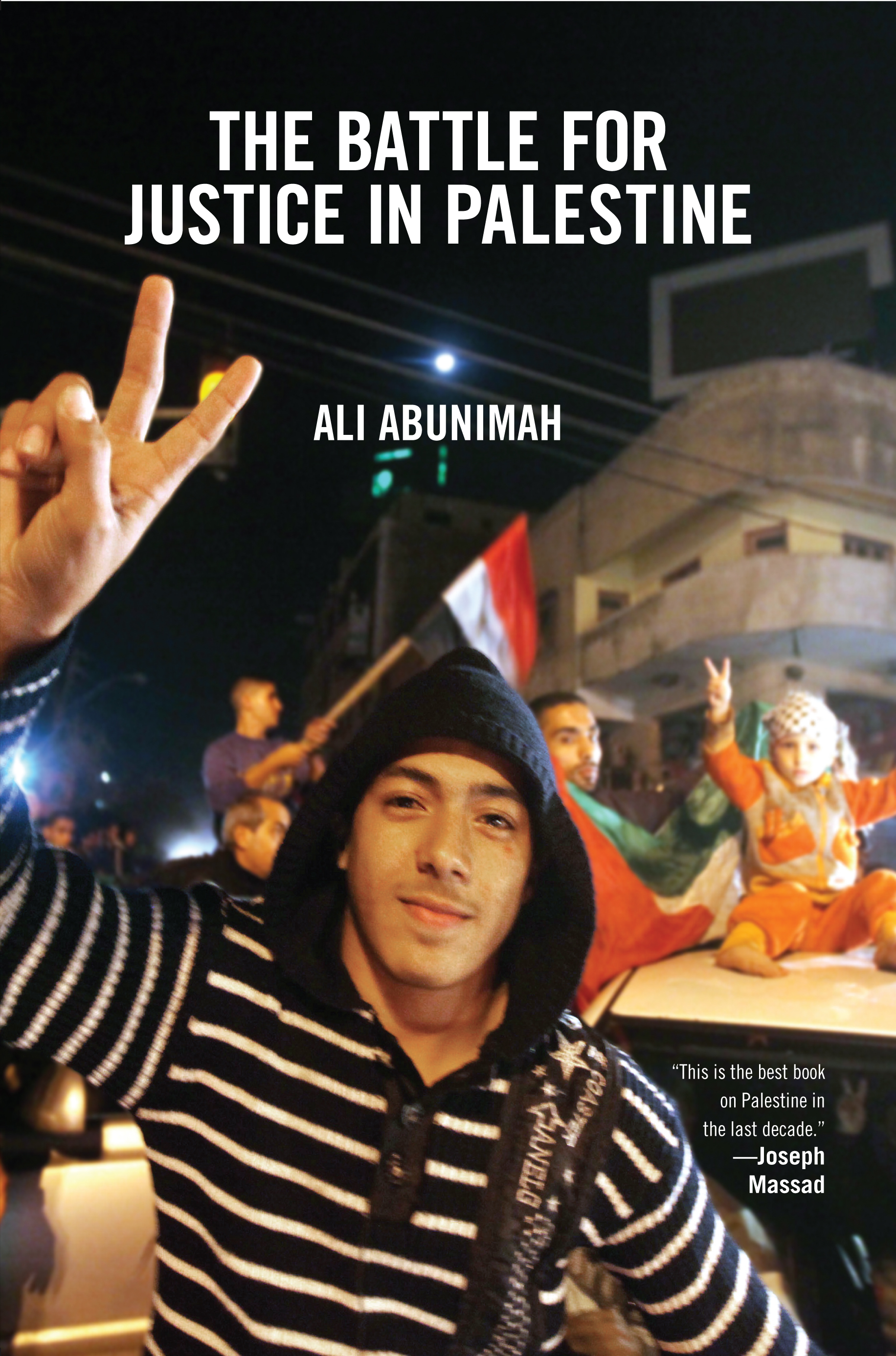
Ali Abunimah On Gaza, His New Book The Battle For Justice in Palestine and Censorship
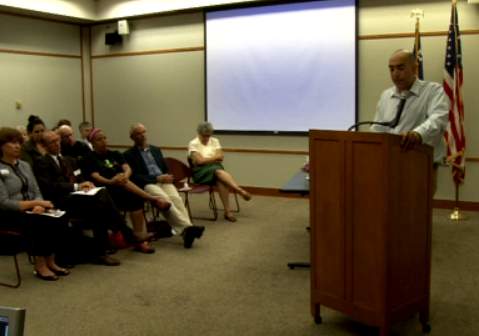
ElectronicIntifada co-founder Ali Abunimah is the author of new book The Battle For Justice in Palestine. He shares with hosts the recent news of what’s happening in Gaza, the resistance around the world, as well as on campus and in the United States. Ali was scheduled to speak at the Evanston Public Library in early August. The library later sent an email telling him he couldn’t be allowed to speak without an Israeli speaker to ensure balance. Neighbors for Peace an organization of antiwar activists based in the Chicago suburb of Evanston, Illinois who initially brought Abunimah to speak suspected the library’s director was pressured to censor the event. The event was canceled the following day and after some activism and demonstration, the presentation was rescheduled. Ali spoke about his recent book The Battle For Justice In Palestine, the event was packed. Last year at Brooklyn College a similar controversy erupted when Palestinian BDS advocate Omar Barghouti and University of California Berkeley philosopher and BDS supporter Judith Butler we’re scheduled to speak.
- The situation has gotten considerably worse (in Gaza) over the past year because of the coup in Egypt.
- The current regime in Egypt is very closely aligned with Israel. They’ve made it just impossible for 1.8 million people to live in Gaza.
- The demands from Palestinian civil society is lift the siege, open the crossing, allow farmers to farm, allow fishermen to fish, allow factories to function, allow travelers to travel, students to go to their universities, patients to reach their hospitals, allow medicines to come in, allow books to come in.
- You mentioned my book The Battle for Justice in Palestine. Well, there’s no way to get that book into Gaza.
- It’s also a siege on human contact, culture, education and nourishment. They killed now more than 2000 people in Gaza which is 1 out of every 1000 residents in Gaza.
- Entire families have been wiped out, nobody feels safe. This massacre Israel thought would break people’s will and get them to accept and go back under siege.
- But Israel won’t (lift the siege) it’s a matter of pride for them, it’s a matter of colonial control.
- The most frightening statement about where they’re (Israel) going was made more than 10 years ago. I wrote about this recently in an article called The Gaza Massacre Is The Price of Living In A Jewish State.
- At that time you hearing fantasy about Gaza becoming the new Singapore on the Mediterranean. The Israelis were saying to themselves that Gaza was going to become a giant holding pen for human beings who are not Jewish.
- If we’re going to wait for government to do the right thing or the UN to get its act together, then we’re doomed.
- Despite the multiple levels of complicity by this government in this country, and governments in Europe and the Arab world, something is happening.
- We’re not starting from zero we have a really important and sustained Boycott Divestment and Sanctions movement.
- They’re firing artillery, mortar shells that are designed to be indiscriminate into populated areas of Gaza with the intended consequence of causing widespread destruction.
- We have to go after the weapons manufacturer, we have to after the people who approve these sales from around the world and its because of public pressure that the UK announced last week that they will suspend armed exports to Israel if significant hostilities resume.
- Well now they have resumed, let’s see what they do.
- Look what’s happening just this week, an Israeli cargo ship was prevented from unloading for 4 days in Oakland because solidarity activists and unionized port workers have been working together to prevent that.
- Israel can only maintain its dominance over Palestinians through brute force and use of violence against Palestinians there, and through attempts to suppress debate, suppress political action on behalf of Palestinians in the United States and around the world.
- Mainstream media is more closed to Palestinian voices than what I’ve seen in 20 years. I used to get on CNN, I used to get on MSNBC.
- The librarian let me know that the event was canceled until they could get a pro-Israel speaker.
- There was such an uproar, it was amazing. They did a U-turn pretty quickly.
- As Israel and its apologists lobbies lose control of the narrative, lose control of the politics in this country, there is a more blatant resort to outright repression such as what is going on now at the University of Illinois and other institutions around the country.
- In that chapter I site an organization called the David Project, which is a Zionist group that’s been working for ten years attacking and targeting professors.
Guest – Ali Abunimah, a Palestinian American journalist who has been described as “the leading American proponent of a one-state solution to the Israeli-Palestinian conflict. A resident of Chicago who contributes regularly to such publications as The Chicago Tribune and The Los Angeles Times, he has also served as the Vice-President on the Board of Directors of the Arab American Action Network, is a fellow at the Palestine Center, and is co-founder of The Electronic Intifada.
———
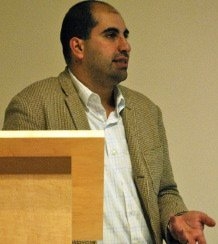
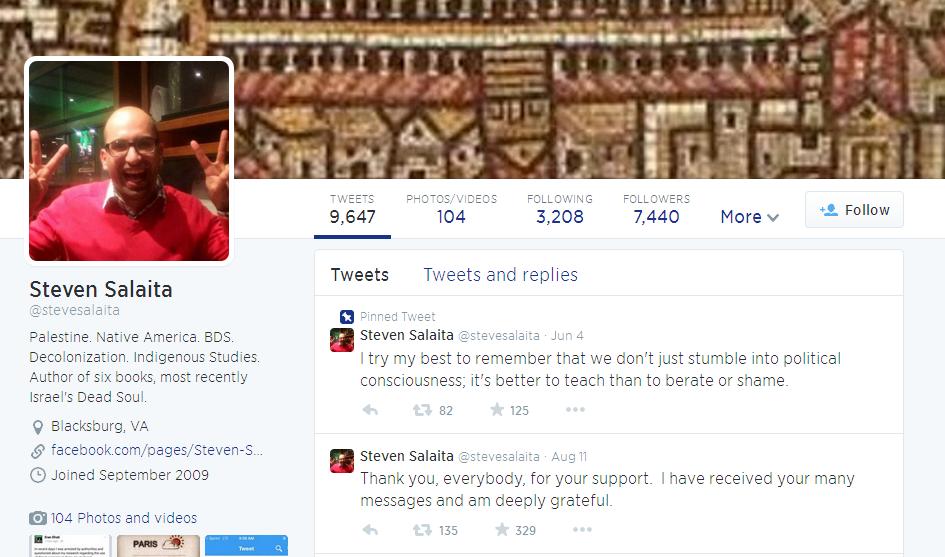
Top Legal Scholars Decry Chilling Effect of Dehiring Professor Steven Salaita
The University of Illinois has rescinded the job offer of the professor who wrote controversial social media posts about the war in Gaza. Professor Steven Salaita was essentially dehired from the American Indian Studies program at the University of Illinois at Urbana-Champaign because of his statements on social media criticizing Israel’s conduct of military operations in Gaza. This has raised serious concerns under established principles of academic freedom. Those principles are enshrined in Illinois law, in the U.S. Constitution, and in the written principles of the American Association of University Professors. Recently, scholars from law schools at Columbia, Cornell, Berkeley, Georgetown, and other universities have come out with a very strong letter condemning the decision of the University of Illinois to dehire Steven Salaita. Read letter here.
- Professor Salaita was made a tenured offer of appointment at the University of Illinois in their American Indian studies program last year. He accepted it and negotiated the terms of the offer. Then during the most recent assault on Gaza, he was active on twitter expressing his views on the Middle East and colonialism.
- The University of Illinois came under a tremendous amount of pressure to revoke the offer of employment to Professor Salaita.
- The offer wasn’t finalized, there’s usually a rubber stamp process where the department and the head of the university have to take appointment to the Board of Trustees.
- The chancellor of the university Phyllis Wise informed Professor Salaita that she would not be bringing his appointment to the Board of Trustees and was unwilling to finalize his appointment.
- He had already resigned his position at Virgina Tech and was getting ready to move. He’s a well known scholar, not only of American Indian studies but of colonialism more generally and has connected up the struggle for sovereignty and analysis of genocide and occupation in the United States to the struggles that the Palestinians have suffered in the Middle East.
- He certainly didn’t depart from views he expressed before but I think they, in the heat of the moment of this recent assault on Gaza, the university basically buckled and withdrew the offer, and he’s now without a job and an income.
- It’s because of his speech on the issue of war crimes that may have been committed by Israel in the assault on Gaza.
- His tweets have been rather even across the board I think in terms of criticizing the critics of Israel when they’ve overstepped but also criticizing Israel itself.
- He’s a fiery guy with strong opinions and rigorous academic critiques of colonialism and colonial violence.
- I thought it would be useful to add constitutional and legal analysis of the problem, situated historically in threats to free speech on campus. I drafted a letter for Constitutional law professors, not in which they would agree to boycott universities . . . more offering a constitutional analysis of retaliation against unpopular speech.
- The law in this area has been made by faculty and sometimes students.
- I brought it back to Urbana-Champaign and their own history of threats to free speech both during the McCarthy period when bills were introduced in Springfield to punish or purge people who had back then what they call Communist sympathies when working in public universities. In 1960, there was a professor in the biology department at Urbana-Champaign that had written and spoke about human sexuality and premarital sex, and had actually endorsed premarital sex.
- There are a couple of principles that are at stake here, one has to do with the state punishing any citizen for speaking on an unpopular topic and particularly punishing for the viewpoint they take.
- There’s another faculty member at the University of Illinois Kerry Nelson who has been a rather enthusiastic advocate of Israel’s right to attack Gaza. He said things that are quite inflammatory, he’s not been fired. He’s not been punished for the positions he’s taken on the Middle East.
- Viewpoint discrimination, that’s the first point. The second point is academic freedom. Universities are the primary bastion of protection. A domain where we protect the pursuit of unpopular ideas, controversial ideas, of ideas that might even be frightening.
- That is the commitment that we make as part of the academic endeavor. The point of that concept of academic freedom is that we don’t want to have a kind of orthodoxy or an official version of the truth.
- Dr. Wise comes out of a somewhat corporate background. She, I think is the poster woman if you will for the executive that is now leading universities and thinks of universities as a business.
- The presidents are making an economic calculation, that they can pay off someone like Salaita and satisfy their donors.
- We can’t just agree to do nothing which what a boycott is. In a way it’s the easiest thing to do.
- I would say I have a lot of faith in students.
Guest – Katherine Franke, Isidor and Seville Sulzbacher Professor of Law; Director, Center for Gender and Sexuality Law at Columbia University. She was awarded a 2011 Guggenheim Fellowship, and is among the nation’s leading scholars in the area of feminism, sexuality and race. In addition to her scholarly writing on sexual harassment, gender equality, sexual rights, and racial history, she writes regularly for a more popular audience in the Gender and Sexuality Law Blog. Franke is also on the Executive Committee for Columbia’s Institute for Research on Women and Gender, and the Center for Palestine Studies and teaches at a medium security women’s prison in Manhattan. Her legal career began as a civil rights lawyer, first specializing in HIV discrimination cases and then race and sex cases more generally. In the last 25 years she has authored briefs in cases addressing HIV discrimination, forced sterilization, same-sex sexual harassment, gender stereotyping, and transgender discrimination in the Supreme Court and other lower courts.
——
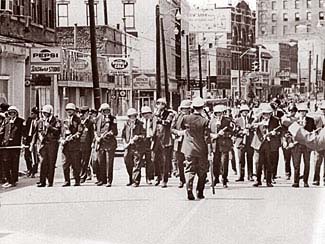
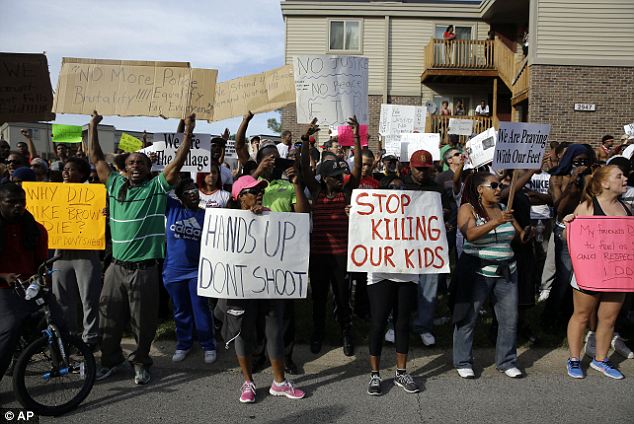
History Of Police Brutality And The Militarization of Local Law Enforcement
In the days since the uproar over the police shooting and killing of unarmed teenager Michael Brown, state and local law enforcement have been cycling through different approaches demonstrators in Ferguson, Missouri. They rolled out armored vehicles, while police in riot gear deployed tear gas, stun grenades and shotguns. Another decision permitted the Missouri State Highway Patrol to march with protestors. The National Guard was also ordered in. We examine the history and consequences of militarizing local law enforcement with Baruch College Civil Rights Professor Clarence Taylor.
- We can’t talk about a post civil rights era. These issues are still with us today.
- It’s the people on the ground, who have gone through this, that are fed up.
- It’s not just arguing for a black face in a high place.
- There is no requirement of the police of Ferguson to live in that community.
- Having black officers would change the nature of the investigation.
- This is something that’s been argued going back in the 1930s and the 1940s and people were organizing against police brutality.
- We should not take our eyes off the racial component of this.
- Police brutality would still go on without the militarization of the police.
- You throw all these new toys at the police department and once you have a big enough hammer, everything looks like a nail.
- Diversifying police departments is very very important and emphasizing more community policing.
Guest – Professor Clarence Taylor, His research is in modern civil rights, black power movements and African American religion. He’s the author of many books including co-editor of Civil Rights Since 1787: A Reader in the Black Struggle. He’s currently writing a history of police brutality in New York City from the 1930s to the 1960s. In 1991, Clarence received his PhD in American history and began teaching at Le Moyne College in Syracuse, New York. He reworked his dissertation into a book, The Black Churches of Brooklyn from the 19th Century to the Civil Rights Era, and it was published by Columbia University Press in 1994. In 1996, Clarence became a member of the history department and the African-New World Studies Program at Florida International University.
————————————————————