Welcome to Law and Disorder Radio
Law and Disorder is a weekly independent civil liberties radio program airing on more than 150 stations and on Apple podcast. Law and Disorder provides timely legal perspectives on issues concerning civil liberties, privacy, right to dissent and practices of torture exercised by the US government and private corporations.
Law and Disorder August 11, 2014
Podcast: Play in new window | Download
Updates:
- Attorney Michael Smith Remembers 69th Anniversary of U.S. Dropping A-Bombs On Japan
- Atomic Diplomacy: Hiroshima and Potsdam: The Use of the Atomic Bomb and the American Confrontation with Soviet Power
—–
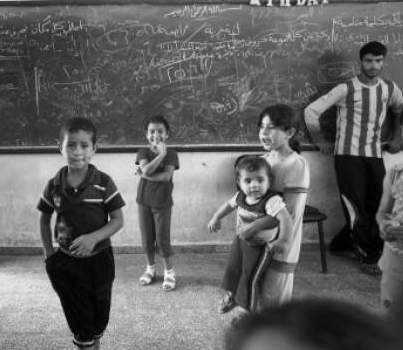
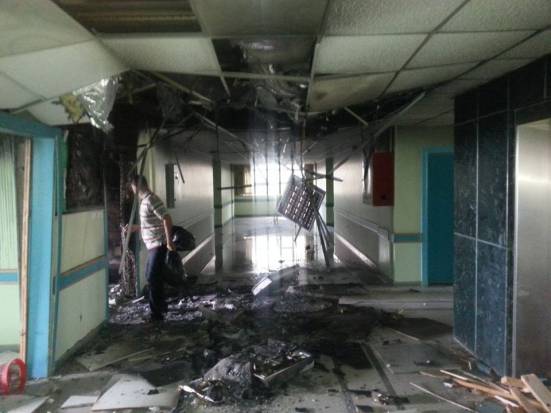
Ongoing reports of Israel engaging in senseless cruel violence against Palestinian people in Gaza throughout Operation Protective Edge is not a random bombing campaign but a strategic war experiment in colonial management as Greg Shupak explains in his recent article The Logic of Israeli Violence. Shupak points out the attacks on civilians fleeing for shelter, the bombing of the medical infrastructure, fishing boats and wheat mills, killing Arab speaking journalists are in the larger plan of ethnicide and to render the Palestinian people dependent. His article reminds readers that there is a measured plan of attack to systematically erase the historic memory of the Palestinian society.
- There’s good reason to believe according to some reporting by 97 Magazine and Max Blumenthal that the Israeli security forces knew quite perfectly well the teens were almost certainly killed as soon as they were abducted and yet they carried on this charade of pretending that they could be rescued in some way.
- Rocket fire from Hamas didn’t start until after Israel carried out strikes within Gaza, and carrying out various forms of killing Palestinian civilians and or people they described as militants.
- The rockets were a response to Israeli violence.
- Israeli propaganda has insinuated that these tunnels have in fact been used to kill Israeli civilians or that they may well be, but that simply has not happened.
- If the aim was to destroy tunnels, Egypt which is being ruled by a brutal regime, in its own right, was able to get rid of these tunnels without killing huge numbers of civilians.
- Israel’s aim vis a vis Gaza is to isolate Palestinians there from the outside world render them dependent on external benevolence and at the same time absolve Israel of responsibility toward them.
- The thesis I put forth about the current violence of Operation Protective Edge, is that one way Israel is attempting to achieve that goal, that goal of Jewish supremacy in historic Palestine with as much land as possible and as few Palestinians as possible is to aim to obliterate Palestinians as a people with the capacity to live independently in their homeland.
- The pattern of Israeli violence . . . is not only to kill and maim Palestinians but to impede their capacity to live autonomously in historic Palestine.
- It’s a settler colonial project.
- This is part of a longer term pattern. If you look at the work of Dr. Sarah Roy of Harvard she has documented extensively what she calls the deliberate de-development of the Gaza Strip economy. She has warned that Gazans are at risk for mass starvation.
- Five hospitals have been shut down. 24 health facilities have been damaged.
- We also that there’s been direct strikes on hospitals from Israeli fire.
- The ability of Palestinians to care for themselves has very much been undermined.
- Two thirds of Gaza’s wheat mills are inoperative, 3000 of its herders are in need of animal feed. We’ve seen fishermen attacked, we’ve seen attacks on agricultural sites, these are all part of those processes that Sarah Roy has talked about in the longer term.
- If religion is way for a cultural group to understand its identity then attacking the cultural institutions of that religion are ispo facto an attack on the people to have an identity.
- When you attack an educational institution you undermine the ability of a people to educate their young, to train them for future work, to train them to think critically, to develop artists, and inventors and so on.
- This to me is a very significant way for stifling a cultural groups independent existence.
- At its simplest, Israel can be seen as a giant military base for the United States.
Guest – Greg Shupak, a writer, activist and PhD candidate at the University of Guelph’s School of English and Theatre Studies. He teaches Media Studies at the University of Guelph, Ontario, Canada.
——–
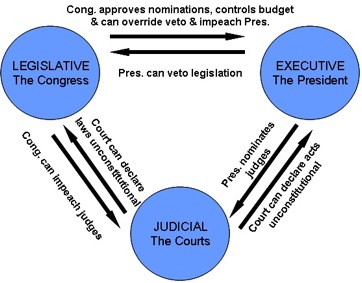
The National Security State: The End of Separation of Powers
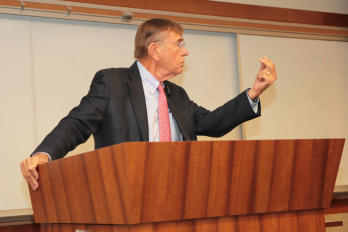
Retired Professor of Law from Duke University Michael Tigar joins hosts to talk about his recent article The National Security State: The End of Separation of Powers published in the latest Monthly Review Magazine. Michael has explained how the Executive branch of government has come to dominate both the Judicial and Legislative branches of the United States government. Attorney Michael Tigar has been working on social issues for many years, his books include Law and The Rise of Capitalism, Fighting Injustice, and Thinking About Terrorism: The Threat To Civil Liberties In Times of National Emergency.
- The basic principle of constitutional government that is established in our Constitution is that the actions of the legislative and executive branches, particularly the executive branch, are always reviewable by independently appointed judges and that the legality of whatever the executive branch does harms any protected interest, citizen or otherwise ought to be reviewable in the courts of the United States.
- The main thing about this is the harm to the judicial branch is in a real sense a self inflicted wound.
- That is to say judges confronted with assertions of executive power have proven inadequate to the task of restraining exercises of executive power
- We recall the massive illegality of the Japanese relocation at the beginning of the Second World War.
- It is now been shown that the premise upon which that relocation took place confining Japanese-Americans in concentration camps was false.
- At the time the Constitution was being debated Patrick Henry opposed the adoption of the Constitution on the ground that the ideal that independent judiciary could act as an effective check upon the exercise of executive power particularly military power was bound to be dis-proven in history.
- Law is legal ideology. That is to say its erected around social relations. In every time of recorded history there is a sense in which the formal guarantees that rules of law make about individual rights are simply lies the regime tells the people in order to sustain itself.
- That was the burden of book I wrote called Law and The Rise of Capitalism.
- The ideal that you rally people to the cause of social change by promising them liberty is also not new.
- The Cherokee people of Georgia read the Constitution and they said Aha, the Constitution guarantees that any group or individual can exercise certain social rights.
- So they drafted a Constitution for their nation and set up institutions then they brought suit against the state of Georgia to enforce these rights, that the letter of the American Constitution guaranteed that.
- What did Chief Justice Marshall say? What a minute, these are inferior and subject people. When the Constitution gives the right to all people, persons, citizens whatever, to bring lawsuits under Article 3 and to bring them to us, it wasn’t talking about these people.
- Michael Ratner you and others, courageous lawyers who have been struggling to get reviewablility of unlawful executive action should not give up the fight.
- The kinds of effort you make deserve support and turn out in historic context to be important.
- Historically the role of lawyers has been to articulate people’s claims for justice.
- What Edward Snowden and Julian Assange have done is reveal to the world fundamental defects in the way that the American political society has been operating and yet rather than saying thank you in some form of another, the government is hell-bent on prosecuting them.
Guest – Michael Tigar, a research professor of law. He holds expertise in Constitutional Law; Supreme Court; French legal system; criminal law and procedure; human rights. He is fluent in French. Tigar represented Terry Nichols in the Oklahoma City bombing trial. One of the most renowned lawyers in the country today, he has argued seven cases before the U.S. Supreme Court and more than 100 appellate cases. Tigar has written extensively about litigation, aspects of trial practice, criminal law, the death penalty, and the role of the criminal defense lawyer. His books include Fighting Injustice (ABA, 2002); Federal Appeals: Jurisdiction and Practice; and Examining Witnesses. In addition, he has written several plays about famous trials. Throughout his career, Tigar has been active in pro bono cases, the American Bar Association, continuing legal education programs, and international human rights. During the apartheid period, he went to South Africa to train black lawyers. Prior to joining AU, Tigar served as a professor at the University of Texas Law School.
—————————————————————————————–

Please help support Law and Disorder, the show is now a sponsored project of Fractured Atlas, a non-profit arts service organization. Contributions for the charitable purposes of Law and Disorder must be made payable to Fractured Atlas only and are tax-deductible to the extent permitted by law.
Law and Disorder August 4, 2014
Podcast: Play in new window | Download

Folk Music, Labor Movements and Radical Politics
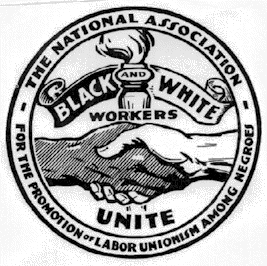
Especially in times of revolution or crisis, the role of music has been a defining element in telling the stories of labor movements, against the war in Vietnam and civil rights. Folk musician Eli Smith gave a presentation at the Left Forum this year on satirical songs of the IWW including the work of Joe Hill and many others. The early works of Pete Seeger, Woody Guthrie are a great place to start along with the lesser known work of John L. Handcox, and the Southern Tenant Farmers Union. It was the first racially integrated union in the South that used indigenous folk music to fight for the rights of sharecroppers.
Guest – Eli Smith, a banjo player, writer, researcher and promoter of folk music living in New York City. Eli is a Smithsonian Folkways recording artist and produces two folk festivals annually, the Brooklyn Folk Festival in the Spring and Washington Square Park Folk Festival in the Fall. He has appeared as a guest on terrestrial radio stations such as WBAI, WNYC, WKCR and WDST in New York and KPFA, KPFK and KUCI in California. Eli has presented panels and discussions on folk music at the Left Forum conference at Cooper Union and at the Podcamp podcasting conference in New York City. He has performed and recorded with his old time string band The Down Hill Strugglers, Peter Stampfel, John Cohen and Sam Shepard. The Down Hill Strugglers were recently featured on the soundtrack album to the Coen Brothers’ film “Inside Llewyn Davis,” which was produced by T Bone Burnett.
———
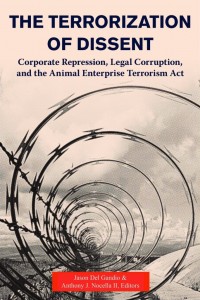
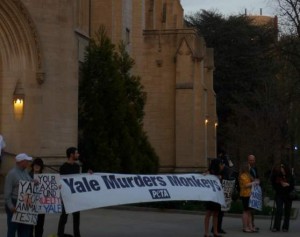
Terrorization of Dissent: Corporate Repression, Legal Corruption, and the Animal Enterprise Terrorism Act is a collection of essays by lawyers, scholars and activists that includes interviews with those who suffered from the AETA’s conspiracy provisions. Editors Jason Del Gandio and Anthony Nocella have compiled essential information to document how the Animal Enterprise Terrorism Act is a clear violation of the First Amendment. Specifically, the book documents how corporations and the U.S. Government conspire under this law to prosecute animal rights activists and acts of civil disobedience involving environmental issues under the specter of terrorism. Right now, according to Nocella and Del Gandio, corporate profit determines what can or can’t be done to animals and the environment.
- The importance of this act has really shaped how the government looks at one of the larger movements in the United States.
- The animal advocacy, animal rights, animal liberation movements have been demonized and stigmatized as terrorists, through the media and the government through this particular act.
- What are the effects of this law? Who influenced this act to be pushed into law? It wasn’t really government.
- There were main organizations that pushed this law into effect. The Animal Enterprise Protection Coalition, The Animal Legislative Exchange Council (ALEC) The Center for Consumer Freedom.
- Any logical CEO of a corporation will say I don’t want anything to threaten my product.
- That product in the case of animals is any where from circuses to sea world, to clothing, from leather to fur, to also eating.
- We can do away with circuses and fur and a lot of different clothing, but one thing we can’t live without is food.
- We have to look at the real conflict and that’s between food.
- Do we want people to have a plant based diet or an animal based diet?
- There are hundreds of billions of dollars protecting that paradigm of people eating meat, fish and chicken.
- If anyone threatens that industry, under the Animal Enterprise Terrorism Act, you’re deemed a terrorist.
- To wash away all the rhetoric that is what this law is specifically speaking about. That’s why it was expanded from the Animal Enterprise Protection Act to the Animal Enterprise Terrorism Act.
- CCR Condemns Terrorism Indictment for Activists Freeing Mink from Fur Farms
- The point is – regarding the book, law schools, political science departments, think tanks, need a text that comes from a variety of viewpoints specifically looking at the Animal Enterprise Terrorism Act.
- I think we have understand the difference between how corporations are influencing laws and literally writing the bills into laws and into effect, while political repression is really law enforcement and senators influencing laws.
- We’re not criminalizing activists like we did in the 70s and 80s, now we’re labeling them as terrorists.
- National Weekend of the Animal Enterprise Terrorism Act – Sept 5-6-7, 2014
- Website – The Institute For Critical Animal Studies
Guest – Anthony Nocella II, Ph.D., an intersectional academic-activist, is Senior Fellow of the Dispute Resolution Institute at the Hamline Law School, co-founder and Director of the Institute for Critical Animal Studies, and editor of the Peace Studies Journal. He has published more than sixteen books including Terrorists or Freedom Fighters?: Reflections on the Liberation of Animals (2004), Call to Compassion: Religious Perspectives on Animal Advocacy (2011), and Defining Critical Animal Studies: An Intersectional Social Justice Approach for Liberation (2014).
————————————————————————————-
Law and Disorder July 28, 2014
Podcast: Play in new window | Download
Updates:
- Palestine Center For Human Rights: Current War Statistics On Palestinian Death Toll
- Two Laws Under Geneva Conventions: First All Attacks Have To Distinguish Between Military Objectives and Civilian Objectives. Second: You Can’t Just Kill Civilians Who Aren’t Participating in A War
- Michael Smith: Cultural Ethnicide – Keep Expanding Until Israel Takes Over
- Cultural Genocide Case: Illan Pappe – Ethnic Cleansing Of Palestine
- Naomi Wolf Walks Out of Synagogue When Nothing Is Said About Gaza
- Demonstrations Against The Murder and Violence Against Palestinians
- Michael Ratner Admonishes JFRED Jews For Racial and Economic Justice and Other GroupsTo Step Forward
- Michael Ratner Pulls Apart NY Times Article: Crises Cascade and Converge, Testing Obama
——-
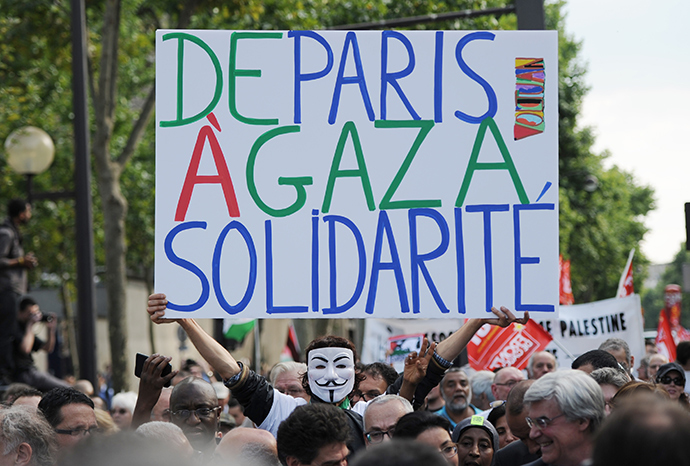

Michael Ratner Discusses 3 International Crimes That Can Be Attributed To Israel’s Actions Against Palestinians: Genocide, Apartheid and Crimes Against Humanity.
- First International Crime: Genocide – There are two elements, one is the mental element, what you’re thinking, and the mental element is intent to destroy in whole or in part. Then it defines who you want to destroy. A national group which would be the Palestinians. An ethnical group, which has a common cultural heritage, racial or religious group. Second is physical, it includes killing members of the group, serious body or mental harm to members of the group. Inflicting on the group conditions of life calculated to bring about its physical destruction in whole or in part.
- A key term when I say in whole or in part is important.
- It says the perpetrators, the Israelis in this case need not intend to destroy the entire group.
Destruction of only part of a group, members living in one region is also genocide. They tried to get rid of all the educated people. They tried to get rid of the leaders. It pretty clearly fits the legal definition. So we have the crime of genocide and genocide of course can be prosecuted in the International Court of Justice.
That can be prosecuted by states who have their own universal jurisdiction.
If an Israeli general or politician travels to a country that will actually enforce its genocide laws that person can be prosecuted under the Genocide Convention and the laws that flow from it. - Second International Crime: Apartheid – It’s defined as inhuman acts committed for the purpose of establishing and maintaining domination by one racial group of persons over any other racial group of persons and systematically oppressing them.
- Third International Crime: Crimes Against Humanity – It includes any of the following acts committed as part of a widespread or systematic attack directed against any civilian population. They include, murder, deportation or forcible transfer of population, imprisonment, enforced disappearance of persons, the crime of apartheid other inhumane acts of a similar character intentionally causing great suffering or serious bodily or mental injury.
Law and Disorder Co-host Attorney Michael Ratner, President Emeritus of the Center for Constitutional Rights (CCR), a non-profit human rights litigation organization based in New York City and president of the European Center for Constitutional and Human Rights (ECCHR) based in Berlin. Ratner and CCR are currently the attorneys in the United States for publishers Julian Assange and Wikileaks. He was co-counsel in representing the Guantanamo Bay detainees in the United States Supreme Court, where, in June 2004, the court decided his clients have the right to test the legality of their detentions in court. Ratner is also a past president of the National Lawyers Guild and the author of numerous books and articles, including the books Who Killed Che? How the CIA Got Away With Murder, The Trial of Donald Rumsfeld: A Prosecution by Book, Against War with Iraq and Guantanamo: What the World Should Know, as well as a textbook on international human rights.
——-

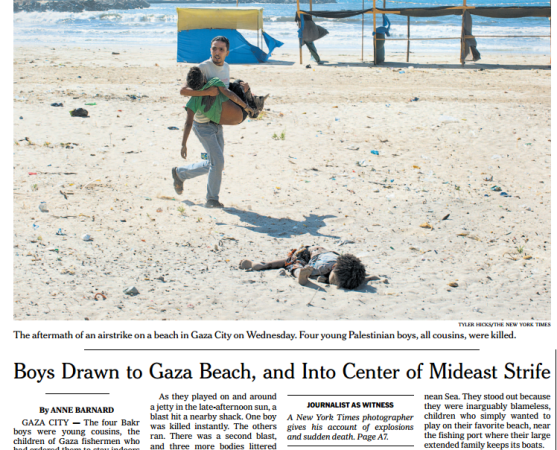
Western Media Coverage of Israel Gaza Violence
Last week we interviewed Phil Weiss of Mondoweiss and talked about the media’s role in reporting facts and detailing the history around the escalating violence against Palestinians by the Israeli military. Specifically in the discussion, Phil believed that what he considered better media analysis of the Middle East situation and some other factors, might prevent a ground assault against Gaza. Michael Ratner and Michael Smith both disagreed with Phil believing that it wasn’t just about media coverage or a little better media coverage but the question of a ground assault went to a much deeper issue. 3 hours later unfortunately Michael Smith and Michael Ratner were proven correct.
- I think the first thing you have to say of this issue is that the loss of human life has been overwhelmingly on one side.
- I think that needs to be clear in the coverage.
- What you’re getting is a coverage on the whole attempts to that treats both sides evenly as if the trauma is equally split between the two sides.
- The latest figure is 161 children killed in Gaza.
- And to treat the worries of Israelis as important or more important than the death of 161 kids I think is revolting.
- There was a poll a while back showing that when people heard the word “occupied territories” a lot of people think that the Palestinians are occupying Israeli territory because the media so rarely explain what’s going on.
- They’re not explaining what the situation is between Gaza and Israel and so you get coverage of the rockets as if they are the main problem.
- It’s really a cockeyed way of viewing the situation I think.
- We were talking about the headline that was changed in the New York Times after the beach massacre when Israel bombed kids playing soccer on the beach and killed 4 boys.
- The original headline was “Four Young Boys Killed Playing On Gaza Beach” which I might note leaves out the active subject of that sentence it doesn’t say who killed them.
- By the time it made it to print, the headline had been changed to “Boys Drawn To Gaza Beach And Into Center of Mideast Strife.”
- You see the underlying bias in these examples.
- Another is 13 Israeli soldiers, 70 others killed. A lot of readers are going to read that and when you say 13 soldiers and 70 others, you’re going to read that as 70 other Israelis who weren’t soldiers were killed.
- On MSNBC there was a contributor, a Palestinian American, Rula Jebreal, who was discussing this case and the coverage in general of MSNBC, and was critical of the amount of air time given to Israeli officials versus the amount of time given to Palestinians to discuss the conflict.
- After making these criticisms, within hours, she had her contract canceled by MSNBC.
- She was actually brought back on not as an MSNBC contributor but as a Palestinian journalist to talk to Chris Hayes, and Chris Hayes defended her firing.
- In this particular conflict 100 U.S. Senators voted to declare their support for Israel with no mention of the Palestinians who are dying.
- Michael Smith: 100 to zero. What does that say about democracy?
- I think its safe to say there’s more dissent in U.S. media than in U.S. government about the attack on Gaza.
- I think that the rise of social media has effected the coverage.
- When you’re doing a story about people treating war as a spectator sport and don’t mention that people are dying in the war, you are really treating war as a spectator sport.
- We’re writing about this daily on our blog FAIR.org. You can also hear us talking about these issues on Counterspin.
Guest – Jim Naurekas, Extra! Magazine Editor Since 1990, Jim Naureckas has been the editor of Extra!, FAIR’s monthly journal of media criticism. He is the co-author of The Way Things Aren’t: Rush Limbaugh’s Reign of Error, and co-editor of The FAIR Reader: An Extra! Review of Press and Politics in the ’90s. He is also the co-manager of FAIR’s website. He has worked as an investigative reporter for the newspaper In These Times, where he covered the Iran-Contra scandal, and was managing editor of the Washington Report on the Hemisphere, a newsletter on Latin America. Jim was born in Libertyville, Illinois, in 1964, and graduated from Stanford University in 1985 with a bachelor’s degree in political science. Since 1997 he has been married to Janine Jackson, FAIR’s program director.
————————————————————